



INTRODUCTION 
TO ACADEMIC 
READING 
DAVID DUNN
Skimming and scanning
What is skimming? 
• used to quickly find the main ideas of a text 
• 3-4 times faster than normal reading 
When might you use skimming? 
In what situations is it useful?
Typical skimming strategies 
• Read the first and last paragraphs of an article first. 
• Notice the titles and headings and subheadings. 
• Look at the illustrations, graphs or other visuals on the page. 
• Read the captions of the visuals. 
• Read the first sentence of each paragraph.
Now look at a copy of the front page of Monday’s 
Washington Post. 
Skim the page and tell the class which stories 
caught your attention and why
Scanning 
• Reading a train timetable 
• Looking on the VLD for the room number of your English class 
• Checking the price for those super cute shoes on Zalando
Scan the Washington Post front page 
and find the following information 
• How much does it cost? 
• What did Souza do? 
• What was the weather like in Washington on Tuesday? 
• On what page is the article about a dog? 
• What is Dawn White’s job title? 
• On what page is the TV guide? 
• What is the name of the scriptwriter of “State of Myths”? 
• What is Kames Clapper’s father’s name? 
• Find and explain these numbers: 
• 1-0 
• 0.3 % 
• 102 
• 297,000 
• 79/62
So what’s the difference 
between skimming and scanning?
So what’s the difference 
between skimming and scanning? 
When you skim, you read through an article three to four times faster 
than when you read each word. You skim when you want a quick idea of 
what’s in the text. 
Scanning refers to reading through material to find specific information. 
When you scan, you run your eyes over text or information to pull out 
specific words, phrases, or data. When you scan, you already know what 
you are looking for.
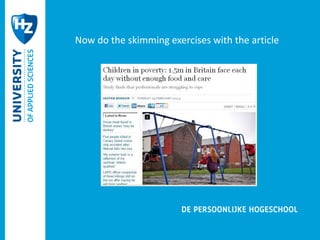
Now do the skimming exercises with the article
Remember! You always read with a purpose. 
Ask yourselves questions to focus your reading 
• Who is the story about? 
• What is “neglect”? 
• What is the cause? 
• How are social workers dealing with the problem? 
• What percentage of potentially neglected children 
are NOT being helped? 
• What may happen in the future? 
• How can the problem be fixed?* 
* After this quick skim read, go back and see how many new/useful words you could learn.
Useful resources for reading the news in English 
• 6 Q’s about the news – Learning with the New York Times 
• Dutchnews.nl – News from the Netherlands in English 
• BBC Learning English – News, quizzes, games
Take-home message 
You can read more effectively and efficiently 
by using simple strategies such as skimming and scanning.
Reading skills - skimming and scanning - class notes from week of 29 September 2014

Reading skills - skimming and scanning - class notes from week of 29 September 2014

  • 2.
    INTRODUCTION TO ACADEMIC READING DAVID DUNN
  • 3.
  • 4.
    What is skimming? • used to quickly find the main ideas of a text • 3-4 times faster than normal reading When might you use skimming? In what situations is it useful?
  • 5.
    Typical skimming strategies • Read the first and last paragraphs of an article first. • Notice the titles and headings and subheadings. • Look at the illustrations, graphs or other visuals on the page. • Read the captions of the visuals. • Read the first sentence of each paragraph.
  • 6.
    Now look ata copy of the front page of Monday’s Washington Post. Skim the page and tell the class which stories caught your attention and why
  • 7.
    Scanning • Readinga train timetable • Looking on the VLD for the room number of your English class • Checking the price for those super cute shoes on Zalando
  • 8.
    Scan the WashingtonPost front page and find the following information • How much does it cost? • What did Souza do? • What was the weather like in Washington on Tuesday? • On what page is the article about a dog? • What is Dawn White’s job title? • On what page is the TV guide? • What is the name of the scriptwriter of “State of Myths”? • What is Kames Clapper’s father’s name? • Find and explain these numbers: • 1-0 • 0.3 % • 102 • 297,000 • 79/62
  • 9.
    So what’s thedifference between skimming and scanning?
  • 10.
    So what’s thedifference between skimming and scanning? When you skim, you read through an article three to four times faster than when you read each word. You skim when you want a quick idea of what’s in the text. Scanning refers to reading through material to find specific information. When you scan, you run your eyes over text or information to pull out specific words, phrases, or data. When you scan, you already know what you are looking for.
  • 11.
    Now do theskimming exercises with the article
  • 12.
    Remember! You alwaysread with a purpose. Ask yourselves questions to focus your reading • Who is the story about? • What is “neglect”? • What is the cause? • How are social workers dealing with the problem? • What percentage of potentially neglected children are NOT being helped? • What may happen in the future? • How can the problem be fixed?* * After this quick skim read, go back and see how many new/useful words you could learn.
  • 13.
    Useful resources forreading the news in English • 6 Q’s about the news – Learning with the New York Times • Dutchnews.nl – News from the Netherlands in English • BBC Learning English – News, quizzes, games
  • 14.
    Take-home message Youcan read more effectively and efficiently by using simple strategies such as skimming and scanning.