Skimming and scanning
Reading comprehension
What do the terms mean?
Skimming & Scanning is a style of reading and
information processing.
Or
Skimming and scanning are reading
techniques that use rapid eye movement and
keywords to move quickly through text for
slightly different purposes.
What is skimming
• 1. It is a strategy that can be taught to students to
help them identify the main ideas in text.
• 2. It is important to correlate “skimming” to reading,
making it clear that it is not word-by-word reading.
• 3. Rather it is three to four times faster than
normal reading.
• 4. Generally, skimming is used to get through text
very quickly
•Consequently, skimming is used when
students have a lot of reading material to get
through, or have been assigned a task in an
activity that requires some quick reading first,
prior to completing the task. Skimming has
also been used as a strategy in research when
the student wants to determine if a text/article
is a resource than can be used
How is skimming done?
•When seeking specific information related to a
topic/theme or an answer to a question or a prompt,
it is best to employ skimming. The skill of skimming
allows for you to read the headings, titles,
subheadings and illustrations with captions, as well as
reading the first and last paragraph of a text/article.
Indeed, skimming works well to identify dates, names,
places or specific items. It also allows for the reader to
quickly review charts, tables and graphs.
Continue
• i. Read the title. If it is an article, check the author, publication
date, and source.
• ii. Read the introduction. If it is very long, read only the first
paragraph completely. Then, read only the first sentence of
every paragraph. That sentence will usually be the main idea of
that paragraph.
• iii. Read any headings and sub-‐headings. The headings,
when taken together, form an outline of the main topics
covered in the material.
• iv. Notice any pictures, charts, or graphs; they are usually
included to emphasize important dates or concepts.
• v. If you do not get enough information from the headings, or if you
are working with material that does not have headings, read the first
sentence of each paragraph.
• vi. Glance at the remainder of the paragraph.
• a. Notice any italicized or boldface words or phrases. These are key
terms.
• b. Look for lists of ideas within the text of the material. The author
may use numerals,
• such as (1), (2), (3) in the list, or signal words such as first, second, one
major cause, another cause, etc.
• vii. Read the summary or last paragraph.
What is scanning
• Scanning is a method of selective reading, when searching
for a particular fact or answer to a
• question. Scanning can best be described as a looking
rather than a reading process. It allows students
• to search for key words/concepts/ideas. More often than
not, the student knows exactly what he/she is
• looking for. So, the assigned task is finding out specific
information, such as finding the name of an
• individual in a telephone directory or looking for a word in a
dictionary.
How is scanning done
• When a student is asked to employ scanning in a task, this
process involves moving the eyes
• quickly through the text (or down a page) looking for
specific words and/or phrases. Scanning can
• also be used in a research project, where the student can
scan the text to determine whether it will
• provide the information, he/she is looking for. It is important
to note, once you have scanned a text, you
• might go back and skim the text to identify the main ideas
Continue
• i. State in your mind specifically the information for which
you are looking. Phrase it in question form, if possible.
• ii. Try to anticipate how the answer will appear and what
clues you might use to help you locate the answer.
• iii. Determine the organization of the material; it is your
most important clue to where to begin looking for
information. Especially when looking up information
contained in charts and tables, the organization of the
information is crucial to rapid scanning
• iv. Use headings and any other aids that will help you
identify which sections might contain the information for
which you are looking.
• v. Selectively read and skip through likely sections of the
passage, keeping in mind the specific question you formed
and your expectations of how the answer might appear.
Move your eyes down the page in a systematic way.
• vi. When you have found the needed information, carefully
read the sentences in which it appears in order to confirm
that you have located the correct information.
Examples of skimming and scanning
• Examples of scanning.
• 1. Find my name in the text.
• 2. Let me see if this dish is on menu.
• 3. Let me check where he used this term in the letter.
• 5. Police officer to the hotel manager” Did Johan Ally visit
your hotel in last week” Now the manager would use
scanning to find out that name.
• 6.Would you mind finding the meaning of word” apricity”.
The person would do scanning to find the word in hard copy
of the dictionary.
• Examples of skimming.
1. Reading newspaper
2. Quickly preview a book to determine whether its worth
reading.
3. Reading magazine/Buisnes or travelling brochures.
Non lingusitc devices
• Non-linguistic devices in reading comprehension refer to visual and
graphical elements that help readers understand and interpret text.
• 1. Headings and subheadings
• 2. Bold and italic text
• 3. Bullet points and numbered lists
• 4. Images (photos, diagrams, charts)
• 5. Graphs and tables
• 6. Infographics
• 7. Maps and timelines
• 8. Icons and symbols
What mean by inferences.
• Inferring meaning: making an educated guess or
drawing a conclusion based on indirect or implicit
information, using context, prior knowledge, and
reasoning to understand what's implied or
suggested, beyond the literal text.
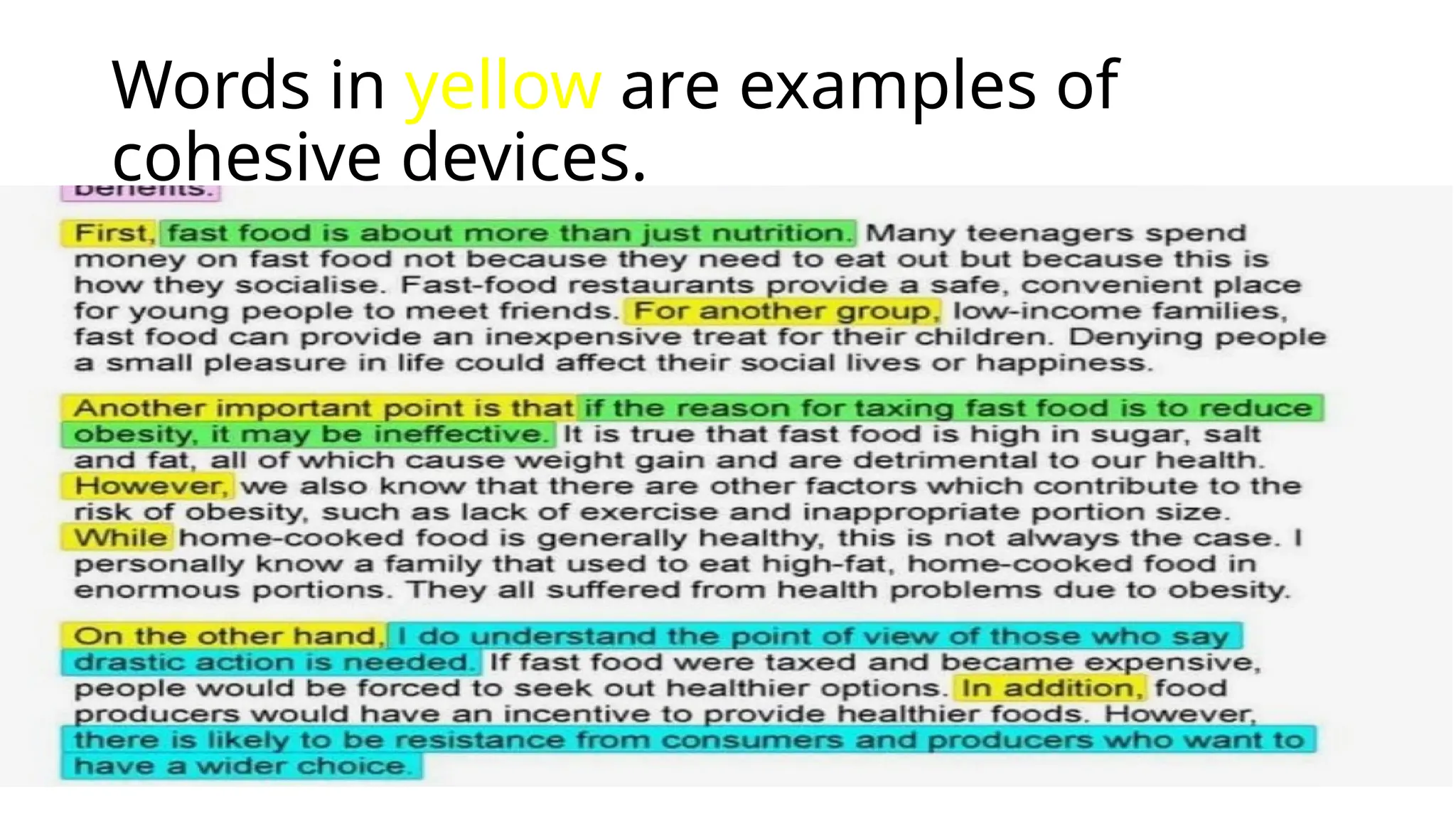
Cohesive devices
• Cohesive devices: words or phrases that connect ideas,
sentences, and paragraphs, making text more coherent and
easier to follow.(Linking words, transitionals, connecting
hooks can be the synonyms)
Words in yellow are examples of
cohesive devices.
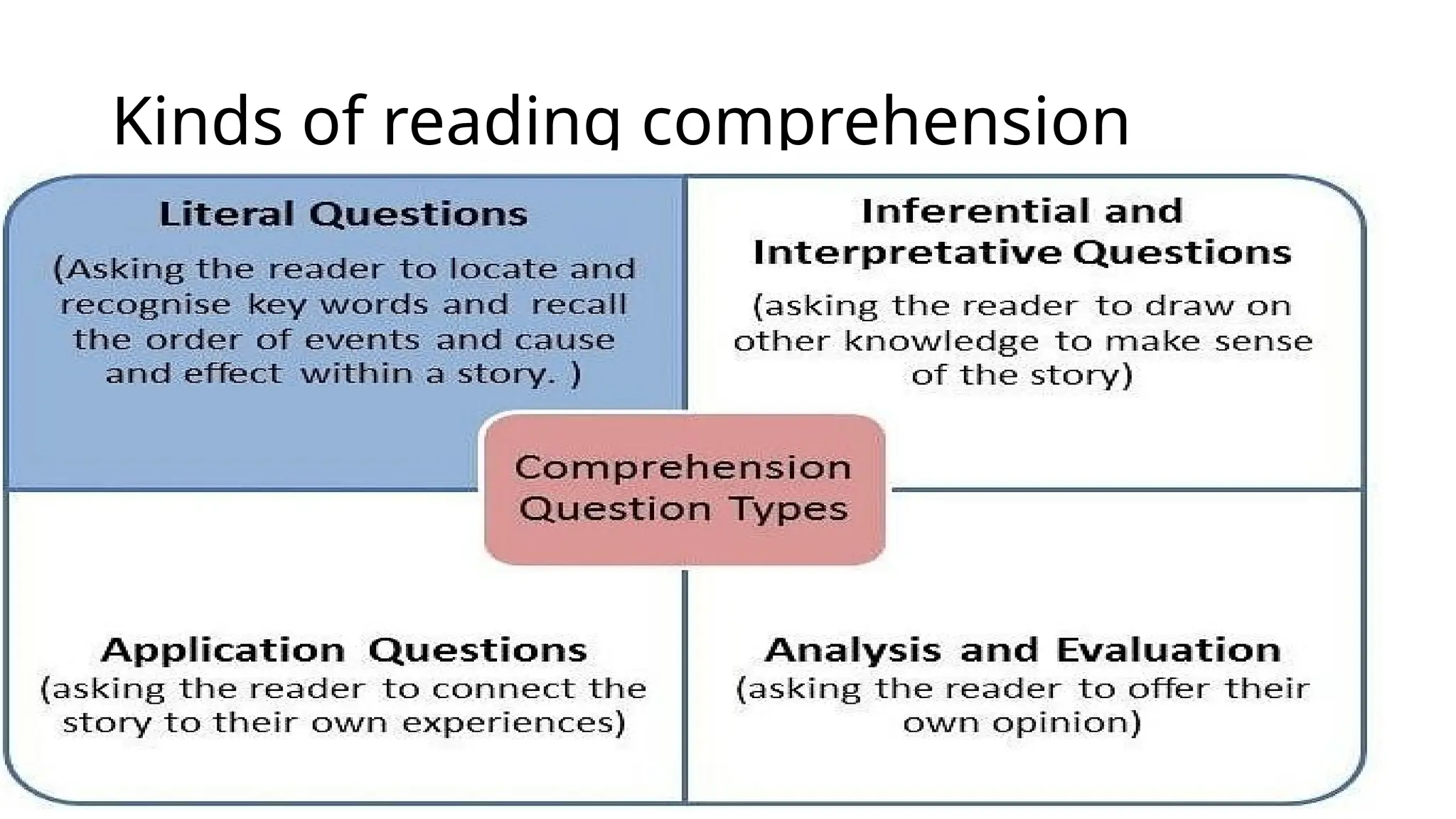
Kinds of reading comprehension

Reading comprehension, including Skimming and scanning.

  • 1.
  • 2.
    What do theterms mean? Skimming & Scanning is a style of reading and information processing. Or Skimming and scanning are reading techniques that use rapid eye movement and keywords to move quickly through text for slightly different purposes.
  • 3.
    What is skimming •1. It is a strategy that can be taught to students to help them identify the main ideas in text. • 2. It is important to correlate “skimming” to reading, making it clear that it is not word-by-word reading. • 3. Rather it is three to four times faster than normal reading. • 4. Generally, skimming is used to get through text very quickly
  • 4.
    •Consequently, skimming isused when students have a lot of reading material to get through, or have been assigned a task in an activity that requires some quick reading first, prior to completing the task. Skimming has also been used as a strategy in research when the student wants to determine if a text/article is a resource than can be used
  • 5.
    How is skimmingdone? •When seeking specific information related to a topic/theme or an answer to a question or a prompt, it is best to employ skimming. The skill of skimming allows for you to read the headings, titles, subheadings and illustrations with captions, as well as reading the first and last paragraph of a text/article. Indeed, skimming works well to identify dates, names, places or specific items. It also allows for the reader to quickly review charts, tables and graphs.
  • 6.
    Continue • i. Readthe title. If it is an article, check the author, publication date, and source. • ii. Read the introduction. If it is very long, read only the first paragraph completely. Then, read only the first sentence of every paragraph. That sentence will usually be the main idea of that paragraph. • iii. Read any headings and sub-‐headings. The headings, when taken together, form an outline of the main topics covered in the material. • iv. Notice any pictures, charts, or graphs; they are usually included to emphasize important dates or concepts.
  • 7.
    • v. Ifyou do not get enough information from the headings, or if you are working with material that does not have headings, read the first sentence of each paragraph. • vi. Glance at the remainder of the paragraph. • a. Notice any italicized or boldface words or phrases. These are key terms. • b. Look for lists of ideas within the text of the material. The author may use numerals, • such as (1), (2), (3) in the list, or signal words such as first, second, one major cause, another cause, etc. • vii. Read the summary or last paragraph.
  • 8.
    What is scanning •Scanning is a method of selective reading, when searching for a particular fact or answer to a • question. Scanning can best be described as a looking rather than a reading process. It allows students • to search for key words/concepts/ideas. More often than not, the student knows exactly what he/she is • looking for. So, the assigned task is finding out specific information, such as finding the name of an • individual in a telephone directory or looking for a word in a dictionary.
  • 9.
    How is scanningdone • When a student is asked to employ scanning in a task, this process involves moving the eyes • quickly through the text (or down a page) looking for specific words and/or phrases. Scanning can • also be used in a research project, where the student can scan the text to determine whether it will • provide the information, he/she is looking for. It is important to note, once you have scanned a text, you • might go back and skim the text to identify the main ideas
  • 10.
    Continue • i. Statein your mind specifically the information for which you are looking. Phrase it in question form, if possible. • ii. Try to anticipate how the answer will appear and what clues you might use to help you locate the answer. • iii. Determine the organization of the material; it is your most important clue to where to begin looking for information. Especially when looking up information contained in charts and tables, the organization of the information is crucial to rapid scanning
  • 11.
    • iv. Useheadings and any other aids that will help you identify which sections might contain the information for which you are looking. • v. Selectively read and skip through likely sections of the passage, keeping in mind the specific question you formed and your expectations of how the answer might appear. Move your eyes down the page in a systematic way. • vi. When you have found the needed information, carefully read the sentences in which it appears in order to confirm that you have located the correct information.
  • 12.
    Examples of skimmingand scanning • Examples of scanning. • 1. Find my name in the text. • 2. Let me see if this dish is on menu. • 3. Let me check where he used this term in the letter. • 5. Police officer to the hotel manager” Did Johan Ally visit your hotel in last week” Now the manager would use scanning to find out that name. • 6.Would you mind finding the meaning of word” apricity”. The person would do scanning to find the word in hard copy of the dictionary.
  • 13.
    • Examples ofskimming. 1. Reading newspaper 2. Quickly preview a book to determine whether its worth reading. 3. Reading magazine/Buisnes or travelling brochures.
  • 14.
    Non lingusitc devices •Non-linguistic devices in reading comprehension refer to visual and graphical elements that help readers understand and interpret text. • 1. Headings and subheadings • 2. Bold and italic text • 3. Bullet points and numbered lists • 4. Images (photos, diagrams, charts) • 5. Graphs and tables • 6. Infographics • 7. Maps and timelines • 8. Icons and symbols
  • 15.
    What mean byinferences. • Inferring meaning: making an educated guess or drawing a conclusion based on indirect or implicit information, using context, prior knowledge, and reasoning to understand what's implied or suggested, beyond the literal text.
  • 16.
    Cohesive devices • Cohesivedevices: words or phrases that connect ideas, sentences, and paragraphs, making text more coherent and easier to follow.(Linking words, transitionals, connecting hooks can be the synonyms)
  • 17.
    Words in yelloware examples of cohesive devices.
  • 18.
    Kinds of readingcomprehension