Proactive health andsafety measures
Proactive safety management is all
about keeping ahead of the game,
resolving any issues before an
incident or an accident occurs
Proactive health andsafety measures
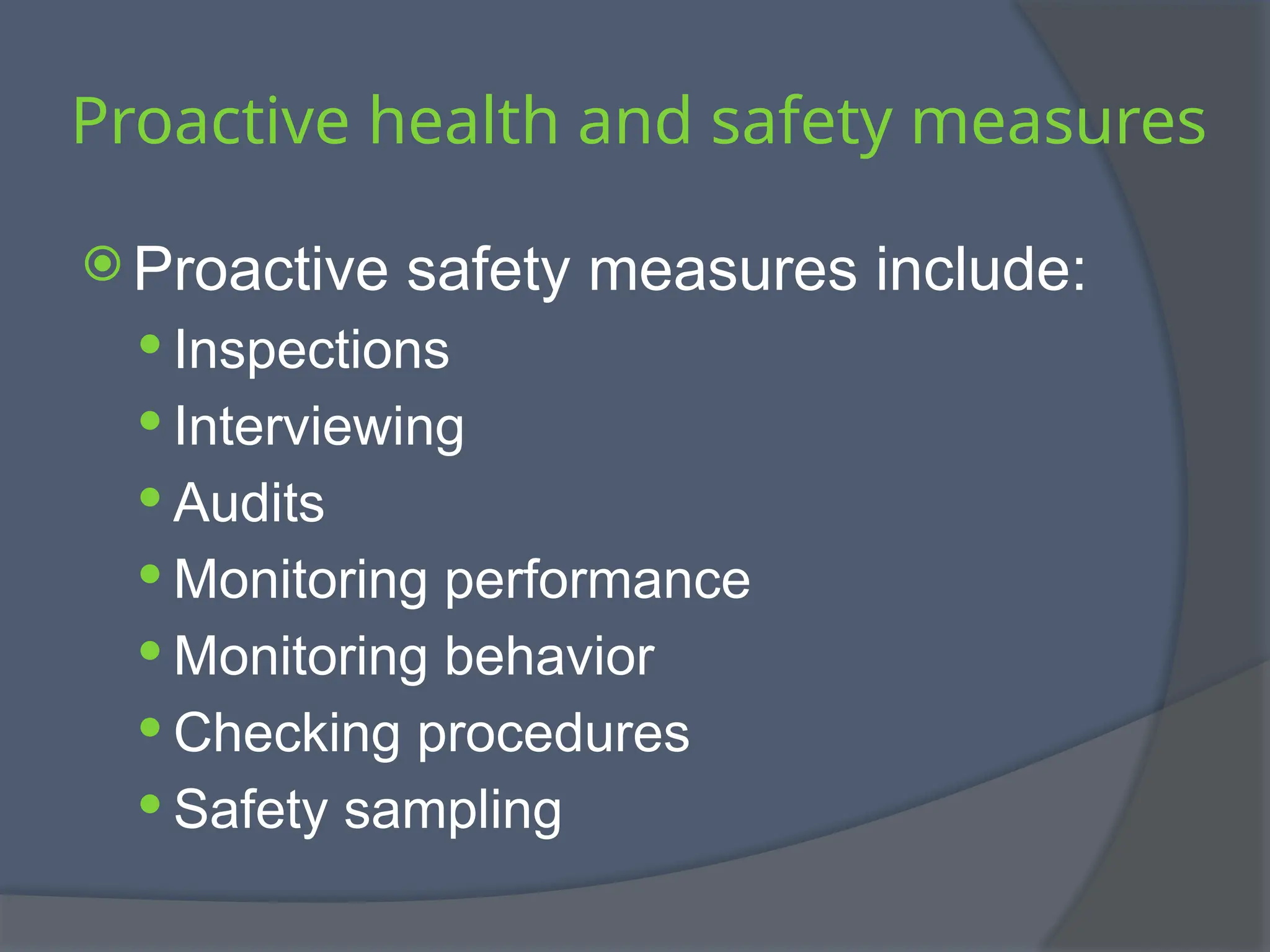
Proactive safety inspections, regular auditing,
ongoing training, near-miss reporting and
active supervision will all form part of a
proactive safety management structure.
An accident hasn't happened yet. You're
looking for areas where you could make
improvements. Tasks or activities that could
be safer.
6.
Proactive health andsafety
measures
In the short term, proactive safety
measures can seem more expensive.
You are spending time (and money) on
health and safety before any safety or
health issues may have developed.
7.
Proactive health andsafety measures
But you are also spending time (and money)
on your terms. There's no emergency. No one
is hurt. No HSE inspectors buzzing around.
No insurance companies are on the phone.
The benefits of a proactive safety regime are
that it will enforce a positive safety culture,
help to prevent accidents from occurring, and
improve health and safety budgeting.
8.
Reactive health andsafety measures
Reactive health and safety management is
about dealing with issues, accidents and
incidents when they occur.
Unlike proactive safety management, it's
too late to stop them.
Reactive safety measures are about
putting things right.
9.
Reactive health andsafety measures
Reactive safety measures include:
Accident reporting
Accident investigation
Incident investigation
Ill health and sickness reviews
Identifying trends
10.
Reactive health andsafety measures
With reactive health and safety measures, you
are taking action after things have gone wrong.
This often means there is more pressure to
take action quickly so work can continue and
people feel there is no risk of reoccurrence.
There may also be external pressure from
insurance companies, clients, and the HSE if
the incident is serious.
11.
Reactive health andsafety measures
In the long term, reactive safety measures
tend to be more costly. You will need to put
in place many of the same things that could
have been done before an accident
occurred, plus the extra costs, time and
resources associated with an accident.
12.
Which is best,proactive or reactive?
It might seem obvious by now that we
favour a proactive safety management
approach. It's almost always cheaper in the
long run, and of course, it's better to
prevent an accident before it happens than
wait for one to happen.
13.
For example,during a proactive safety sample of your
workforce, you might identify that a member of staff
needs more training to operate a machine safely.
In a reactive safety management system, you might
not identify the training requirement until an accident
occurs.
In both situations, you need to arrange the training.
The difference is, in the reactive example there may
also be costs associated with unplanned time off
work, the accident, and any damage caused.
14.
Proactive safetymanagement can be seen as
maintaining your health and safety standards
and performance, planning ahead and
scheduling the work needed to keep your
workforce safe.
The better you maintain your equipment, and
proactively replace it within the recommended
time frames, the less likely you will suffer an
unexpected breakdown. The better your
proactive safety management, the less chance
of an accident occurring..
15.
Be moreproactive, less reactive.
Think long-term
Reactive safety management and
monitoring is a measurement of failure when
something has gone wrong. Proactive safety
management and monitoring is a
measurement of success, a way to keep
things working right and safe.
16.
There isroom for both proactive and
reactive safety management within all
organisations, but the better your proactive
safety management becomes the less
reactive requirements you should have.