Key Tools:
• Safetyinspections & audits.
• Safety tours & walk-throughs.
• Safety observation reports (SOR).
• Permit-to-work reviews.
• Preventive maintenance Programs.
• Behavior based safety (BBS).
ACTIVE
MONITORING:
Identifying Issues Before They Happen
4.
BENEFITS
• Early hazardidentification before they lead to incidents.
• Reduction in lost time injury frequency rate (LTIFR).
• Regulatory adhere assurance under HSE & ILO guidance.
• Reinforcement of a positive safety culture.
• Aligns with Plan-Do-Check-Act (PDCA) cycle.
• Positive safety culture where prevention is prioritized.
• Supports continuous improvement by detecting trends early.
• Better contractor control via regular checks.
• Improved public reputation and stakeholder trust.
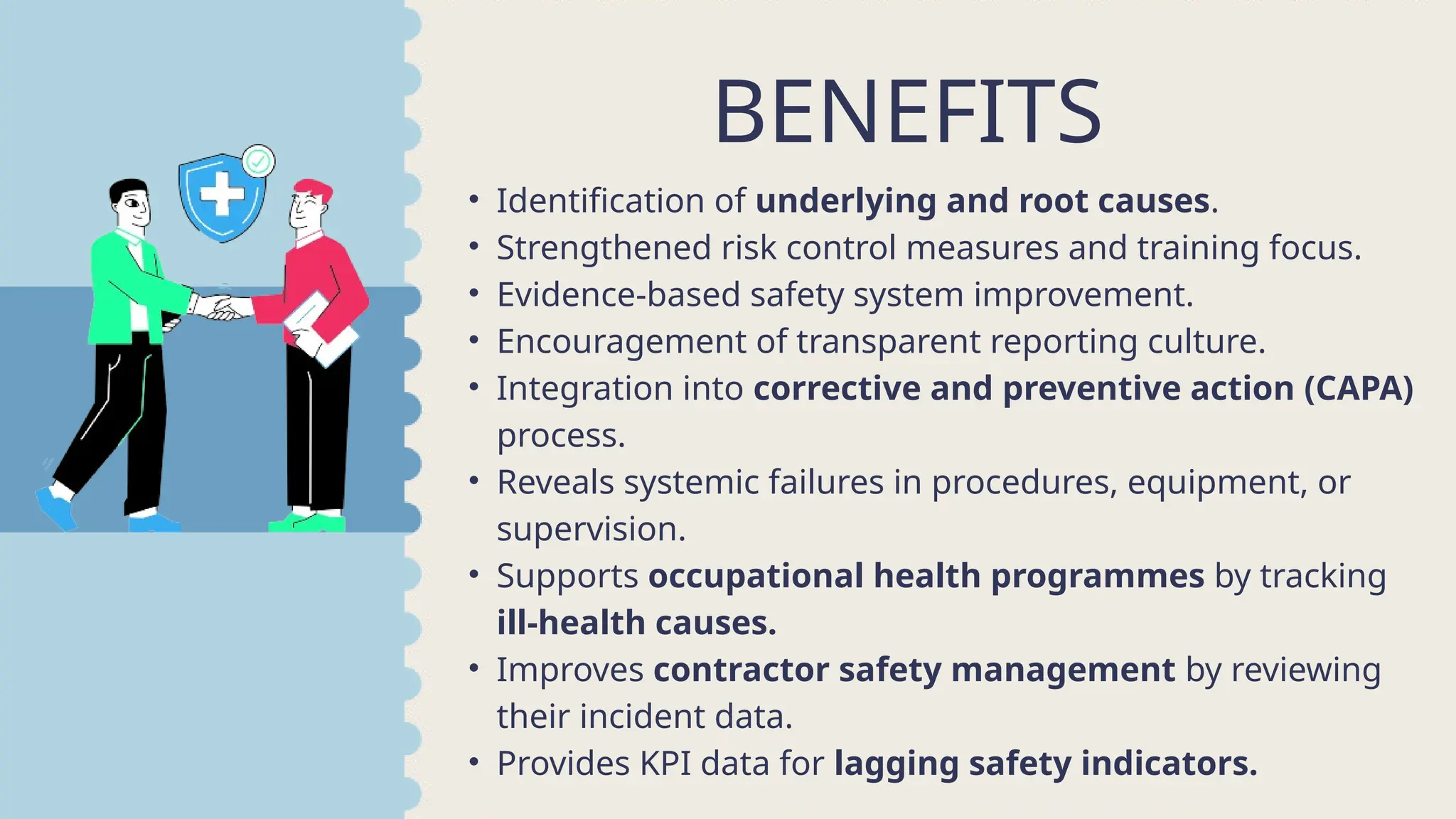
• Identification ofunderlying and root causes.
• Strengthened risk control measures and training focus.
• Evidence-based safety system improvement.
• Encouragement of transparent reporting culture.
• Integration into corrective and preventive action (CAPA)
process.
• Reveals systemic failures in procedures, equipment, or
supervision.
• Supports occupational health programmes by tracking
ill-health causes.
• Improves contractor safety management by reviewing
their incident data.
• Provides KPI data for lagging safety indicators.
BENEFITS
7.
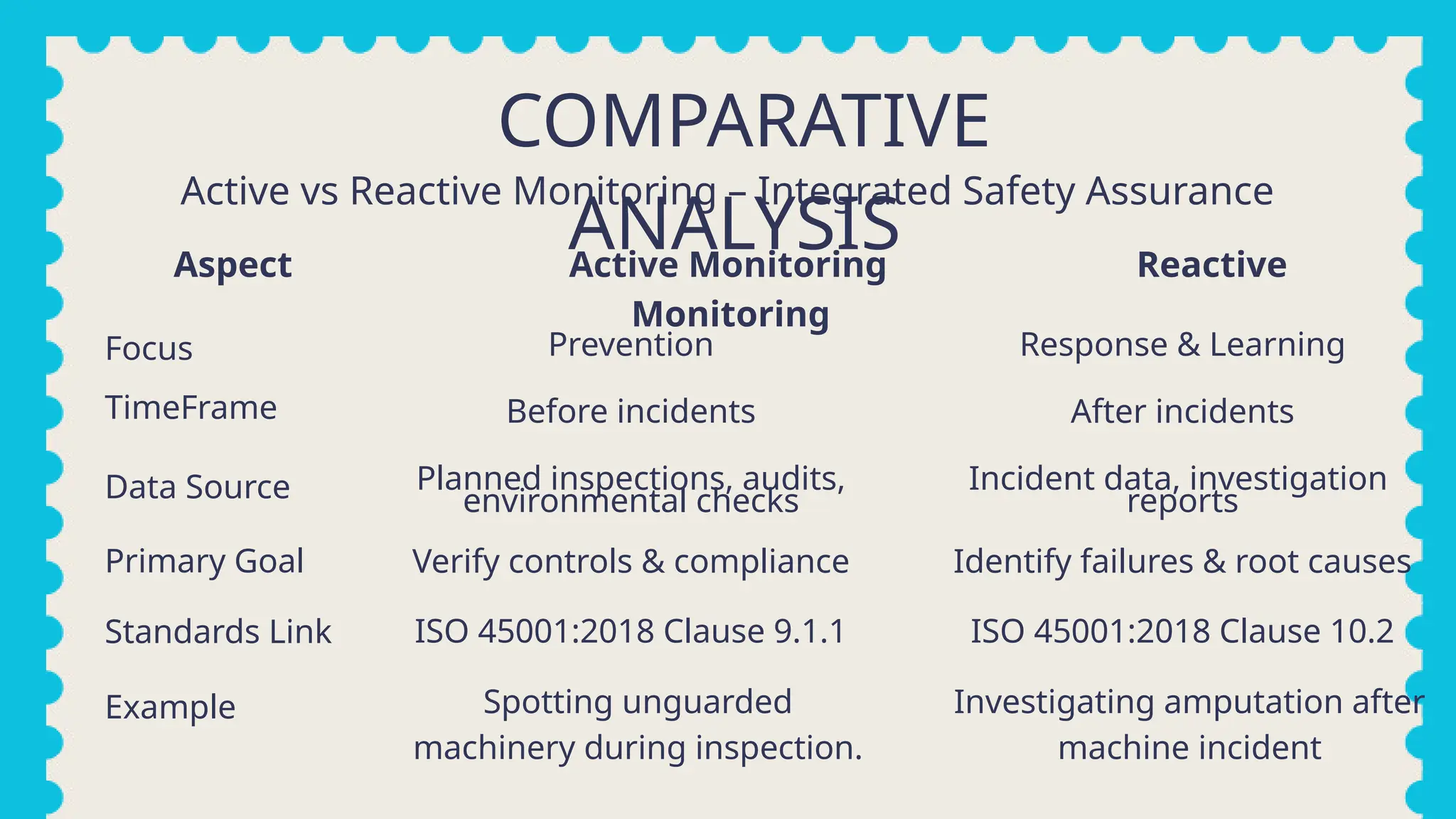
COMPARATIVE
ANALYSIS
Active vs ReactiveMonitoring – Integrated Safety Assurance
Aspect Active Monitoring Reactive
Monitoring
Focus
TimeFrame
Data Source
Primary Goal
Standards Link
Example
Prevention
Before incidents
Planned inspections, audits,
environmental checks
Verify controls & compliance
ISO 45001:2018 Clause 9.1.1
Spotting unguarded
machinery during inspection.
Response & Learning
After incidents
Incident data, investigation
reports
Identify failures & root causes
ISO 45001:2018 Clause 10.2
Investigating amputation after
machine incident