Rationalization
Rationalization
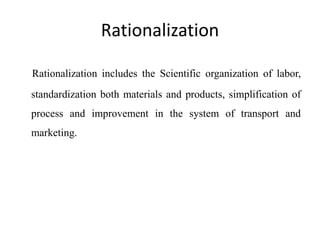
Rationalization includes the Scientific organization of labor,
standardization both materials and products, simplification of
process and improvement in the system of transport and
marketing.
Characteristics
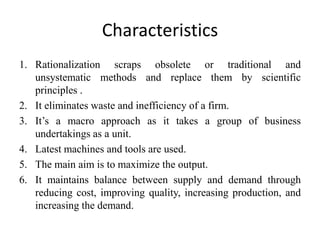
1. Rationalization scraps obsolete or traditional and
unsystematic methods and replace them by scientific
principles .
2. It eliminates waste and inefficiency of a firm.
3. It’s a macro approach as it takes a group of business
undertakings as a unit.
4. Latest machines and tools are used.
5. The main aim is to maximize the output.
6. It maintains balance between supply and demand through
reducing cost, improving quality, increasing production, and
increasing the demand.
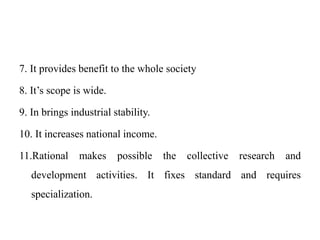
7. It provides benefit to the whole society
8. It’s scope is wide.
9. In brings industrial stability.
10. It increases national income.
11.Rational makes possible the collective research and
development activities. It fixes standard and requires
specialization.
Objectives
1. To secure maximum efficiency of labor with minimum effort.
2. To eliminate waste of raw material.
3. To simplify unnecessary distribution of commodity.
4. To provide goods at lower price.
5. To make greater stability and higher standard of life.
6. Large and fair distribution of remuneration to be fairly
distributed among the various categories of product.
Advantages
ADVANTAGES TO PRODUCERS
1. Increase in earning
2. Economy in Production
3. Mutual Industrial Co-operation
4. Economic stability
5. Industrial research and development
6. Advantages of Mechanization, Standardization and
specialization .
7. Congenial Atmosphere and Cordial labor Relation
ADVANTAGES TO WORKERS
1. Good working condition
2. Increase in wages
3. Enhance efficiency
4. More security and safety
5. Mutual co-opration
ADVANTAGES TO CONSUMERS
1. Quality of goods at cheaper price.
2. Convenience of choice
3. Increase in standard of living
ADVANTAGES TO THE NATION
1. Increase in national income
2. Proper utilization of nation’s resources
3. Better export potential
4. National prosperity
Disadvantages
GENERAL DISADVANTAGES
1. Leads to Monopolies
2. Exploitation of customer
3. Elimination of small scale industries
4. Problem of over production
Disadvantages to employers
1. Heavy capital investment
2. Continuous investment
3. Workers response may not be encouraging
4. Heavy tax burden
5. Fear of workers demand for more wages
DISADVANTAGES TO THE WORKERS
1. Fear of unemployment
2. Worker’s exploitation
3. Monotony
4. Wages not increased in proportion of workload
5. All demerits of scientific management

Rationalization.ppt

  • 1.
  • 2.
    Rationalization Rationalization includes theScientific organization of labor, standardization both materials and products, simplification of process and improvement in the system of transport and marketing.
  • 3.
    Characteristics 1. Rationalization scrapsobsolete or traditional and unsystematic methods and replace them by scientific principles . 2. It eliminates waste and inefficiency of a firm. 3. It’s a macro approach as it takes a group of business undertakings as a unit. 4. Latest machines and tools are used. 5. The main aim is to maximize the output. 6. It maintains balance between supply and demand through reducing cost, improving quality, increasing production, and increasing the demand.
  • 4.
    7. It providesbenefit to the whole society 8. It’s scope is wide. 9. In brings industrial stability. 10. It increases national income. 11.Rational makes possible the collective research and development activities. It fixes standard and requires specialization.
  • 5.
    Objectives 1. To securemaximum efficiency of labor with minimum effort. 2. To eliminate waste of raw material. 3. To simplify unnecessary distribution of commodity. 4. To provide goods at lower price. 5. To make greater stability and higher standard of life. 6. Large and fair distribution of remuneration to be fairly distributed among the various categories of product.
  • 6.
    Advantages ADVANTAGES TO PRODUCERS 1.Increase in earning 2. Economy in Production 3. Mutual Industrial Co-operation 4. Economic stability 5. Industrial research and development 6. Advantages of Mechanization, Standardization and specialization . 7. Congenial Atmosphere and Cordial labor Relation
  • 7.
    ADVANTAGES TO WORKERS 1.Good working condition 2. Increase in wages 3. Enhance efficiency 4. More security and safety 5. Mutual co-opration
  • 8.
    ADVANTAGES TO CONSUMERS 1.Quality of goods at cheaper price. 2. Convenience of choice 3. Increase in standard of living
  • 9.
    ADVANTAGES TO THENATION 1. Increase in national income 2. Proper utilization of nation’s resources 3. Better export potential 4. National prosperity
  • 10.
    Disadvantages GENERAL DISADVANTAGES 1. Leadsto Monopolies 2. Exploitation of customer 3. Elimination of small scale industries 4. Problem of over production
  • 11.
    Disadvantages to employers 1.Heavy capital investment 2. Continuous investment 3. Workers response may not be encouraging 4. Heavy tax burden 5. Fear of workers demand for more wages
  • 12.
    DISADVANTAGES TO THEWORKERS 1. Fear of unemployment 2. Worker’s exploitation 3. Monotony 4. Wages not increased in proportion of workload 5. All demerits of scientific management