IISSOO SSttaannddaarrdd 66557799 
DDeetteeccttiioonn ooff SSaallmmoonneellllaa 
Day 
1 
BPLS Agar 
modified 
24-48 h / 
35-37°C 
Any other 
Salmonella 
Agar 
Day 
2 
Day 
3 
Day 
4 
Day 
5 
Day 
6 
For confirmation take from each plate 5 suspected colonies 
and streak on Nutrient agar 18 - 24 h / 35 - 37 °C 
Biochemical / Serological Confirmation Tests 
TSI / Urea / Lysin / b-Gal / VP / Indol 
10 ml BPW to 
100 ml SC Broth 
24 h at 35 - 37 °C 48 h 
0.1 ml BPW to 
10 ml RVS Broth 
24 h / 42 °C 
BPLS Agar 
modified 
24-48 h / 
35-37°C 
Any other 
Salmonella 
Agar 
BPLS Agar 
modified 
24-48 h / 
35-37°C 
Any other 
Salmonella 
Agar 
25 g/ml test sample 
in 225 ml BPW 
16 - 20 h / 35 - 37 °C
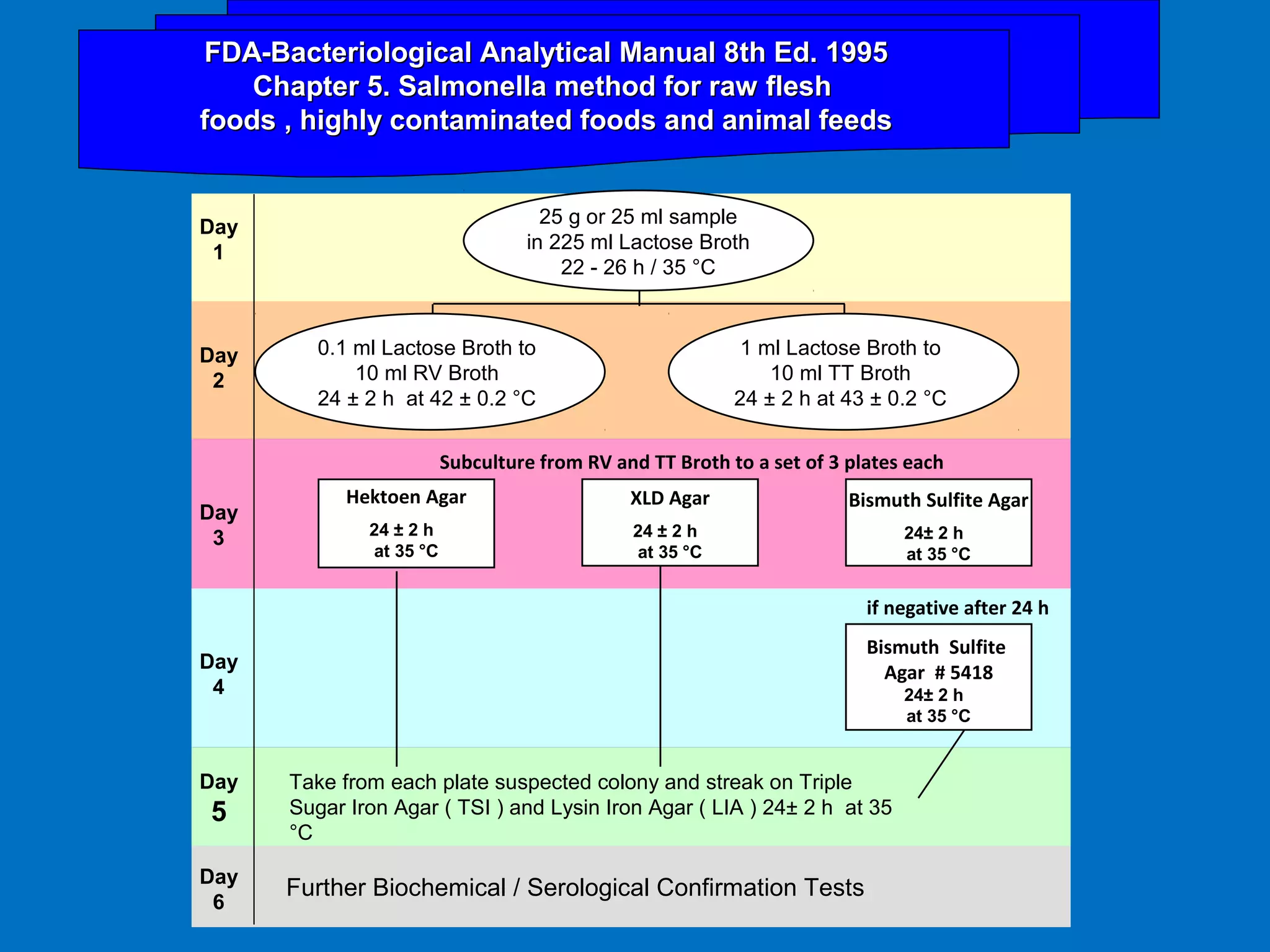
FDA-Bacteriological Analytical MMaannuuaall 88tthh EEdd.. 11999955 
CChhaapptteerr 55.. SSaallmmoonneellllaa mmeetthhoodd ffoorr rraaww fflleesshh 
ffooooddss ,, hhiigghhllyy ccoonnttaammiinnaatteedd ffooooddss aanndd aanniimmaall ffeeeeddss 
Day 
1 
Day 
2 
Day 
3 
Day 
4 
Day 
5 
Day 
6 
25 g or 25 ml sample 
in 225 ml Lactose Broth 
1 ml Lactose Broth to 
10 ml TT Broth 
24 ± 2 h at 43 ± 0.2 °C 
Subculture from RV and TT Broth to a set of 3 plates each 
Bismuth Sulfite Agar 
if negative after 24 h 
Take from each plate suspected colony and streak on Triple 
Sugar Iron Agar ( TSI ) and Lysin Iron Agar ( LIA ) 24± 2 h at 35 
°C 
Further Biochemical / Serological Confirmation Tests 
24± 2 h 
at 35 °C 
Bismuth Sulfite 
Agar # 5418 
24± 2 h 
at 35 °C 
0.1 ml Lactose Broth to 
10 ml RV Broth 
24 ± 2 h at 42 ± 0.2 °C 
22 - 26 h / 35 °C 
XLD Agar 
24 ± 2 h 
at 35 °C 
Hektoen Agar 
24 ± 2 h 
at 35 °C
Ba FDA-Bacctteerriioollooggiiccaall AAnnaallyyttiiccaall MMaannuuaall 88tthh EEdd.. 11999955 
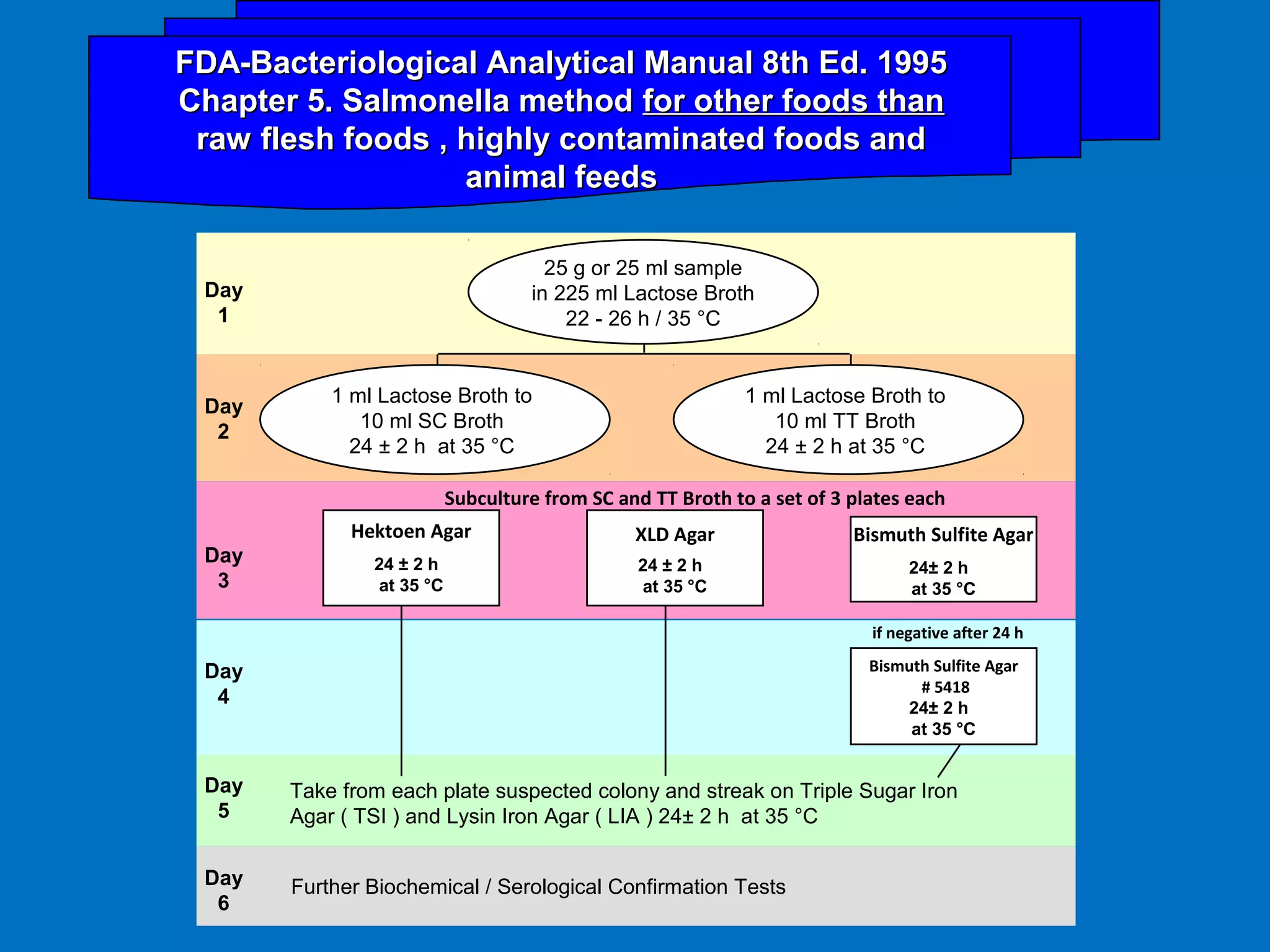
CChhaapptteerr 55.. SSaallmmoonneellllaa mmeetthhoodd ffoorr ootthheerr ffooooddss tthhaann 
rraaww fflleesshh ffooooddss ,, hhiigghhllyy ccoonnttaammiinnaatteedd ffooooddss aanndd 
aanniimmaall ffeeeeddss 
1 ml Lactose Broth to 
10 ml TT Broth 
24 ± 2 h at 35 °C 
1 ml Lactose Broth to 
10 ml SC Broth 
24 ± 2 h at 35 °C 
Day 
1 
25 g or 25 ml sample 
in 225 ml Lactose Broth 
22 - 26 h / 35 °C 
Day 
2 
Day 
3 
Day 
4 
Day 
5 
Subculture from SC and TT Broth to a set of 3 plates each 
if negative after 24 h 
Take from each plate suspected colony and streak on Triple Sugar Iron 
Agar ( TSI ) and Lysin Iron Agar ( LIA ) 24± 2 h at 35 °C 
Day 
6 
Further Biochemical / Serological Confirmation Tests 
Bismuth Sulfite Agar 
24± 2 h 
at 35 °C 
Bismuth Sulfite Agar 
# 5418 
24± 2 h 
at 35 °C 
XLD Agar 
24 ± 2 h 
at 35 °C 
Hektoen Agar 
24 ± 2 h 
at 35 °C
Stomacher
Kultur media 
Di dalam kapsul
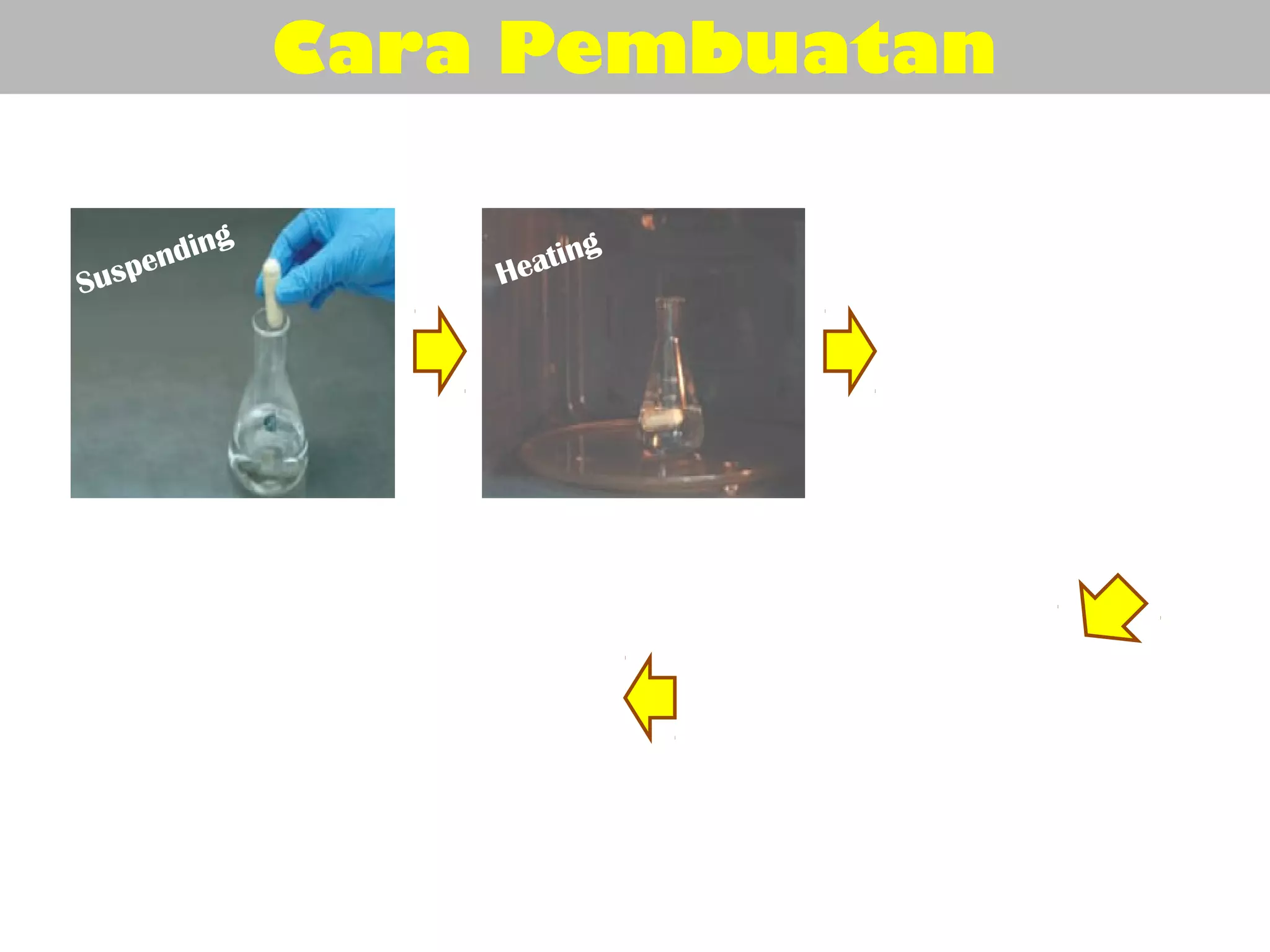
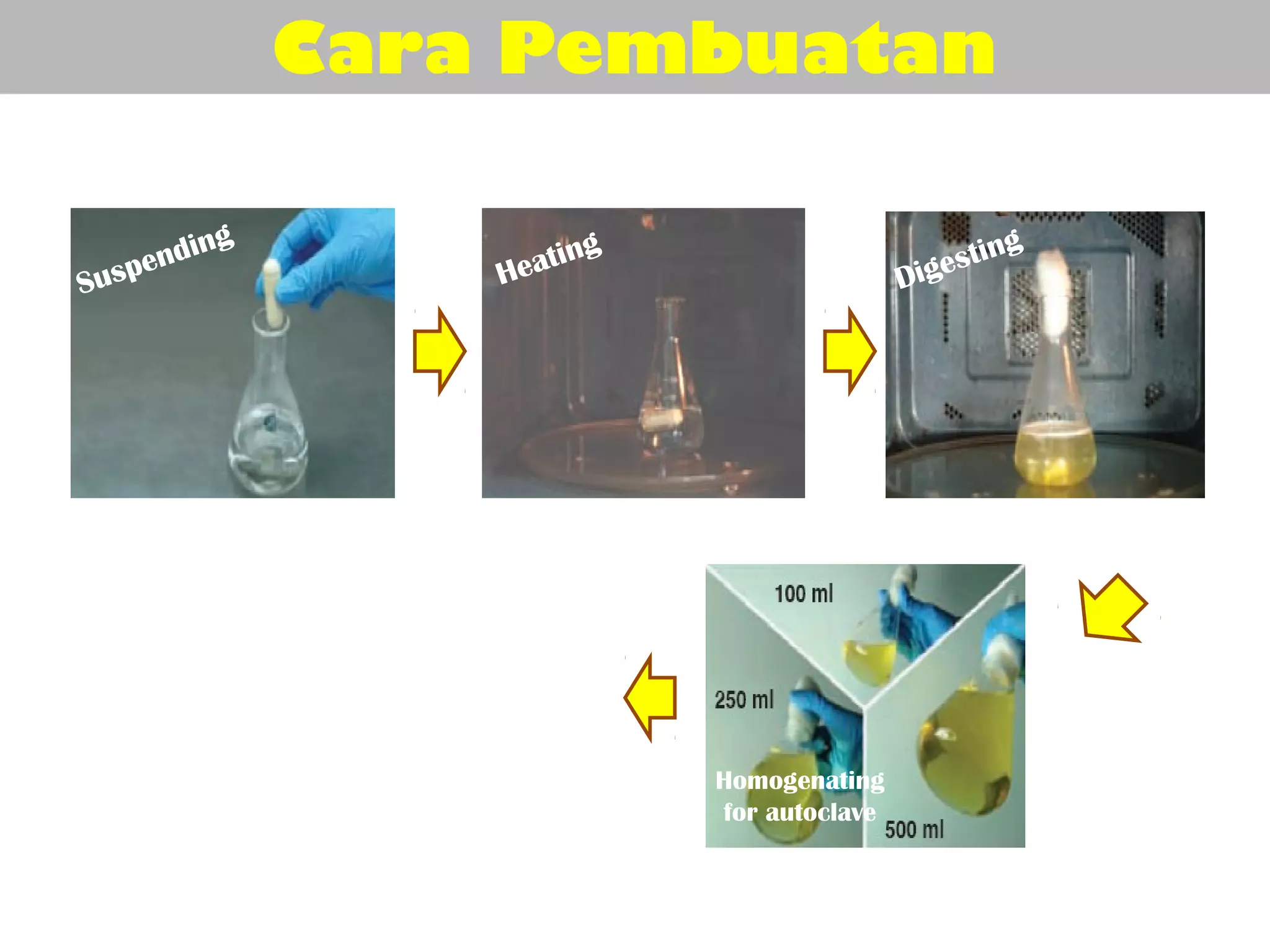
Cara Pembuatan 
Suspending 
Heating 
Digesting 
Homogenating 
for autoclave 
Homogenating 
after autoclave
Cara Pembuatan 
Suspending 
Heating 
Digesting 
Homogenating 
for autoclave 
Homogenating 
after autoclave
Cara Pembuatan 
Suspending 
Heating 
Digesting 
Homogenating 
for autoclave 
Homogenating 
after autoclave
Cara Pembuatan 
Suspending 
Heating 
Digesting 
Homogenating 
for autoclave
Cara Pembuatan 
Suspending 
Heating 
Digesting 
Homogenating 
for autoclave 
Homogenating 
after autoclave
Cara Pembuatan 
Suspending 
Heating 
Digesting 
Homogenating 
for autoclave 
Homogenating 
after autoclave
Kata Chromogenic berasal dari 
kata Chronos yang berarti warna 
dan genesis yang berarti 
pembuatan. 
Jika disatukan mungkin kata 
chromogenic berasal dari kata 
proses pembuatan warna atau 
proses pembuatan pigment.
Media mikrobiologi Chromogenik 
adalah media mikrobiologi yang 
digunakan untuk membedakan 
satu mikroorganisme dengan 
yang mikroorganisme lain 
dengan adanya perubahan warna 
yang jelas dengan bantuan 
substate chromogenic.
Penggunaan Chromogenic 
substrate seperti ONPG, X-Gal, 
X-Glu bersama dengan 
selektifitas dan sensitifitas 
media merupakan dasar dari 
prinsip sederhana dari media 
mikrobiologi chromogenic.
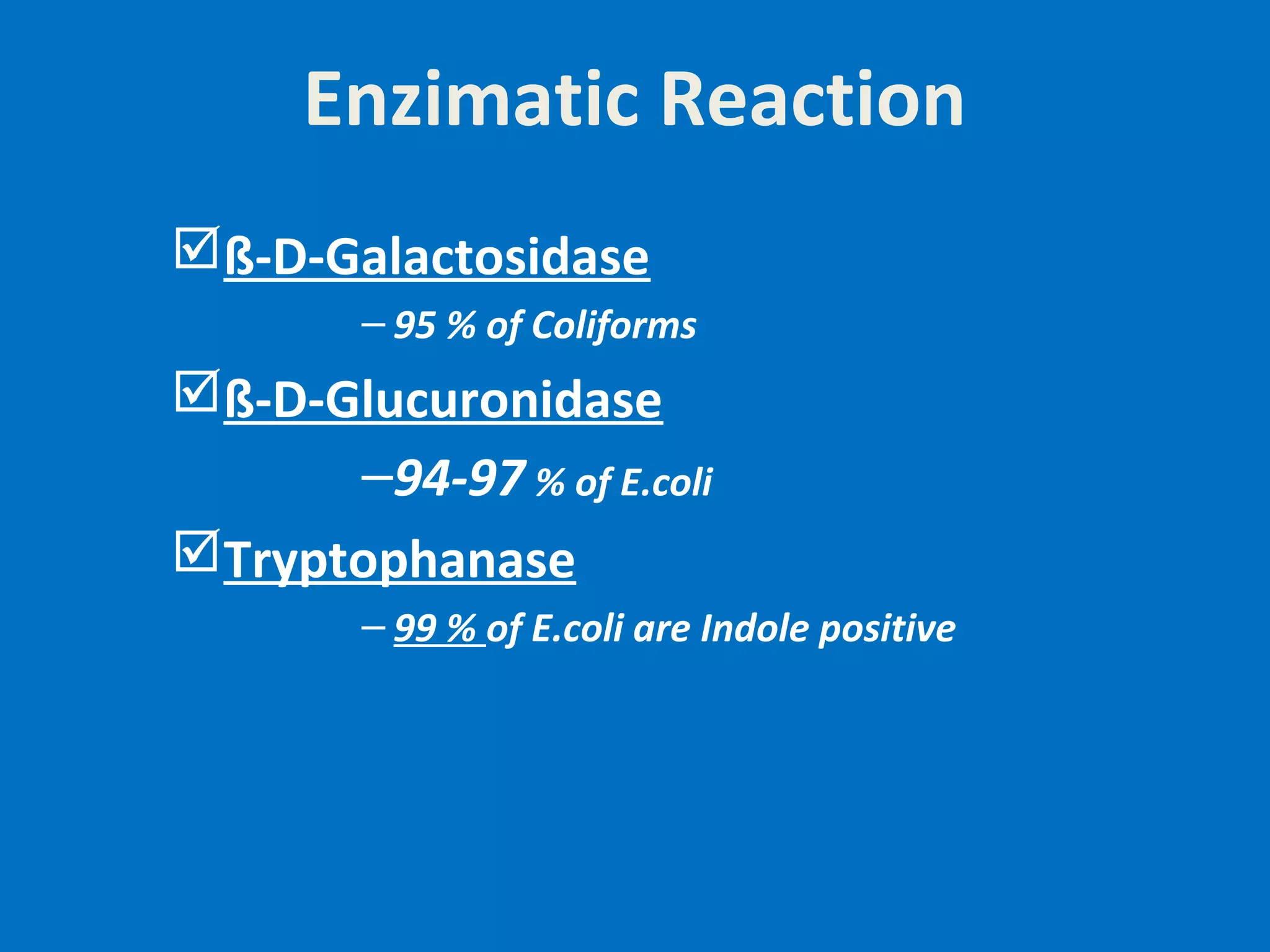
Enzimatic Reaction 
ß-D-Galactosidase 
– 95 % of Coliforms 
ß-D-Glucuronidase 
–94-97 % of E.coli 
Tryptophanase 
– 99 % of E.coli are Indole positive
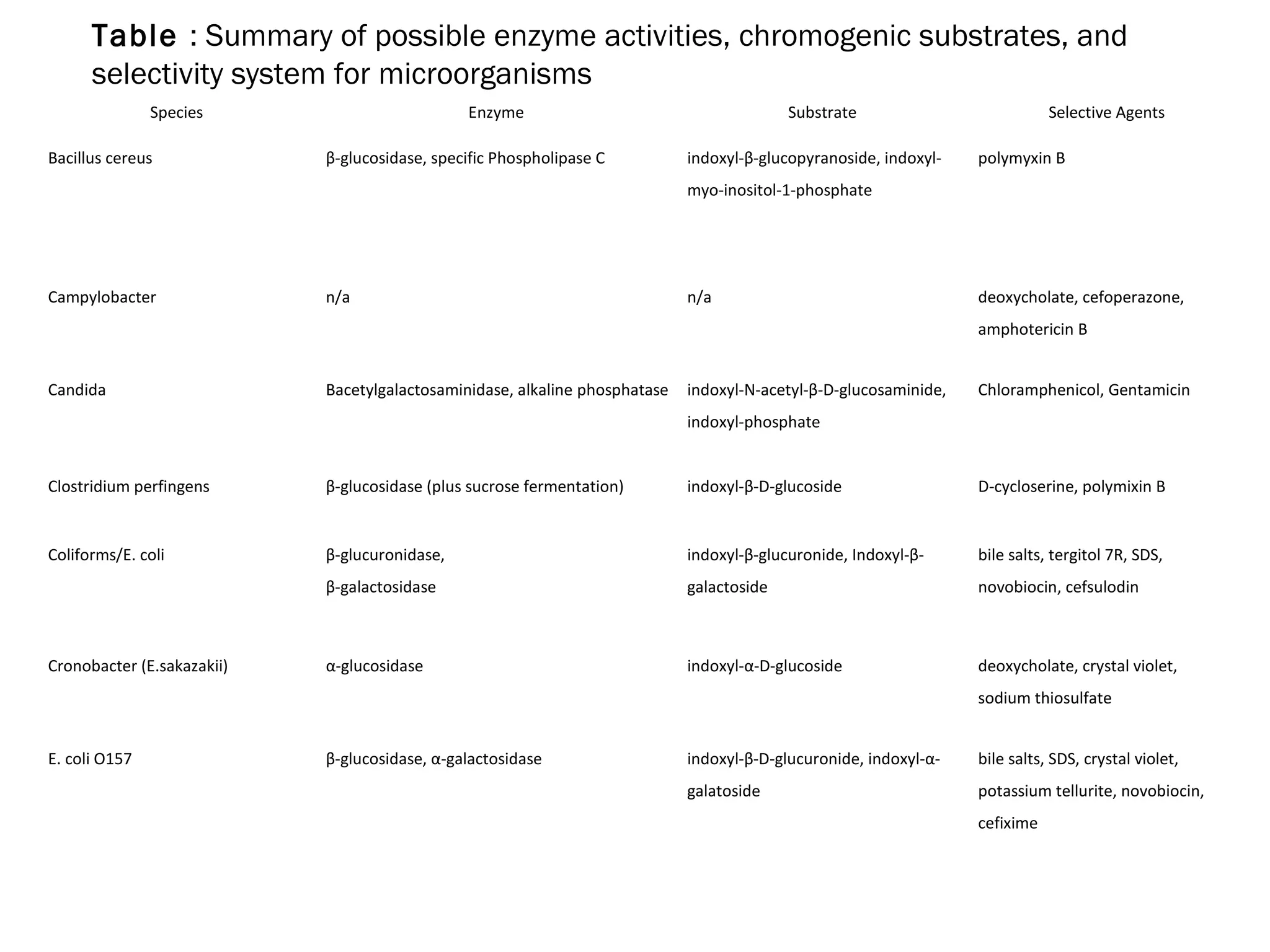
Table : Summary of possible enzyme activities, chromogenic substrates, and 
selectivity system for microorganisms 
Species Enzyme Substrate Selective Agents 
Bacillus cereus β-glucosidase, specific Phospholipase C indoxyl-β-glucopyranoside, indoxyl-myo- 
inositol-1-phosphate 
polymyxin B 
Campylobacter n/a n/a deoxycholate, cefoperazone, 
amphotericin B 
Candida Βacetylgalactosaminidase, alkaline phosphatase indoxyl-N-acetyl-β-D-glucosaminide, 
indoxyl-phosphate 
Chloramphenicol, Gentamicin 
Clostridium perfingens β-glucosidase (plus sucrose fermentation) indoxyl-β-D-glucoside D-cycloserine, polymixin B 
Coliforms/E. coli β-glucuronidase, 
β-galactosidase 
indoxyl-β-glucuronide, Indoxyl-β- 
galactoside 
bile salts, tergitol 7R, SDS, 
novobiocin, cefsulodin 
Cronobacter (E.sakazakii) α-glucosidase indoxyl-α-D-glucoside deoxycholate, crystal violet, 
sodium thiosulfate 
E. coli O157 β-glucosidase, α-galactosidase indoxyl-β-D-glucuronide, indoxyl-α- 
galatoside 
bile salts, SDS, crystal violet, 
potassium tellurite, novobiocin, 
cefixime
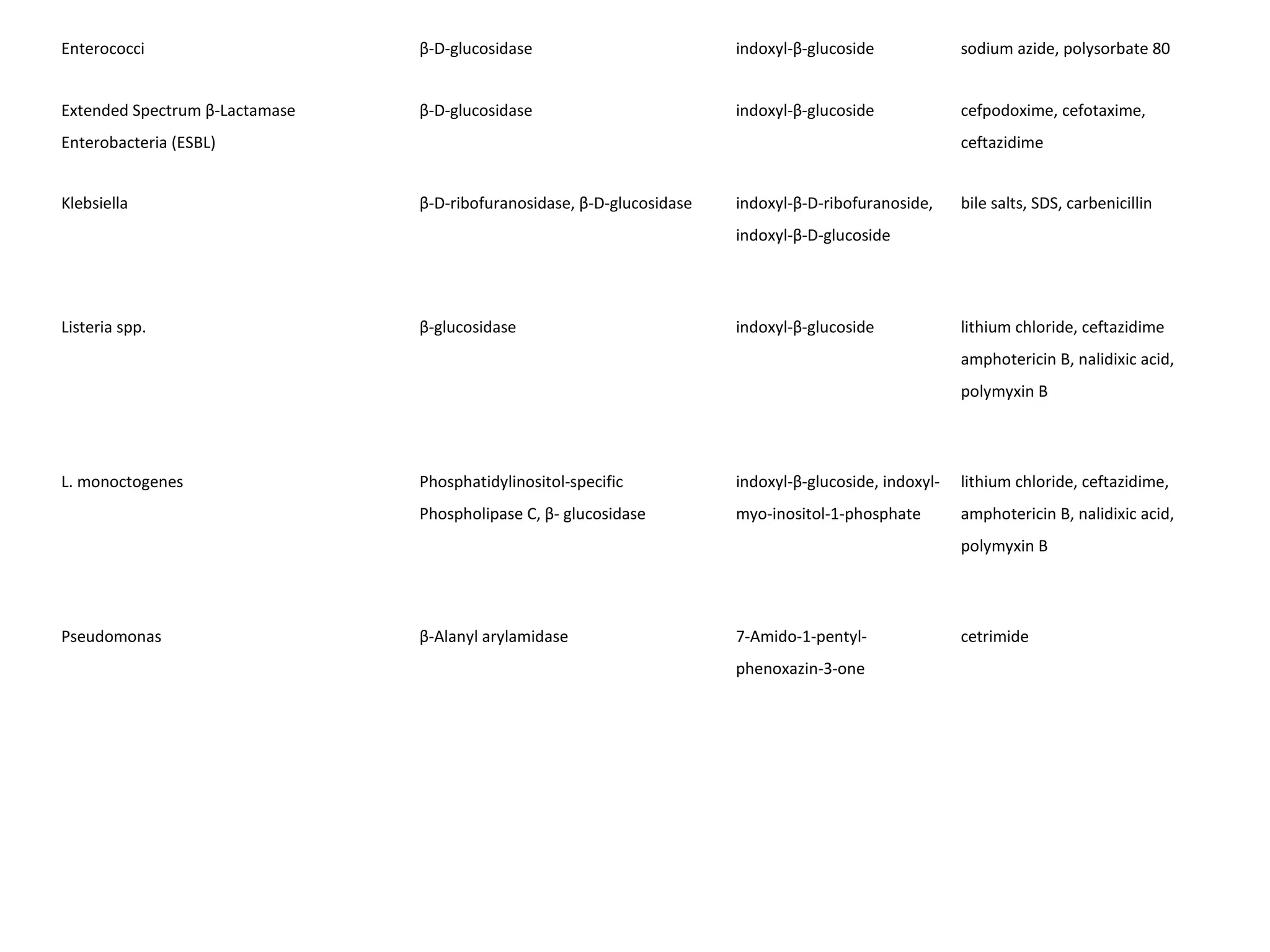
Enterococci β-D-glucosidase indoxyl-β-glucoside sodium azide, polysorbate 80 
Extended Spectrum β-Lactamase 
Enterobacteria (ESBL) 
β-D-glucosidase indoxyl-β-glucoside cefpodoxime, cefotaxime, 
ceftazidime 
Klebsiella β-D-ribofuranosidase, β-D-glucosidase indoxyl-β-D-ribofuranoside, 
indoxyl-β-D-glucoside 
bile salts, SDS, carbenicillin 
Listeria spp. β-glucosidase indoxyl-β-glucoside lithium chloride, ceftazidime 
amphotericin B, nalidixic acid, 
polymyxin B 
L. monoctogenes Phosphatidylinositol-specific 
Phospholipase C, β- glucosidase 
indoxyl-β-glucoside, indoxyl-myo- 
inositol-1-phosphate 
lithium chloride, ceftazidime, 
amphotericin B, nalidixic acid, 
polymyxin B 
Pseudomonas β-Alanyl arylamidase 7-Amido-1-pentyl-phenoxazin- 
3-one 
cetrimide
Salmonella α-galactosidase, lipase indoxyl-α-galactoside, indoxyl-fatty acid ester sodium deoxycholate 
MRSA (Methicillin Resistant 
Staphylococcus aureus) 
α-glucosidase indoxyl-α-D-glucopyranoside methicillin, high concentration of sodium 
chloride 
Staphylococcus aureus α-glucosidase, phosphatase, 
deoxyribonuclease 
indoxyl-α,D-glucoside, phenolphthalein 
phosphate, indoxyl-phosphate 
tellurite, lithium chloride 
Streptococci β-glucuronidase indoxyl-β-glucuronide sodium azide 
UTI (Urinary Tract Infections) β-glucosidase, 
β-galactosidase 
indoxyl-β-glucopyranoside, 
indoxyl-β-galactoside 
Vibrio β-glucosidase, β-galactosidase indoxyl-β-glucopside, indoxyl-β-galactoside, 
indoxyl-β-galactoside 
high concentration of sodium chloride, 
sodium thiosulphate, sodium citrate, 
sodium cholate 
VRE (Vancomycin Resistant 
Enterococci) 
α-glucosidase, 
β-glucosidase, 
β-galactosidase 
indoxyl-α-glucopyranoside, indoxyl-β- 
glucopyranoside, indoxyl-β-galactoside 
vancomycin 
Yeasts and Moulds β-N-acetylgalactosaminidase, β- 
xylosidase 
indoxyl-N-acetyl-β-D-glucosaminide, indoxyl- 
β-D-xyloside 
oxytetracycline
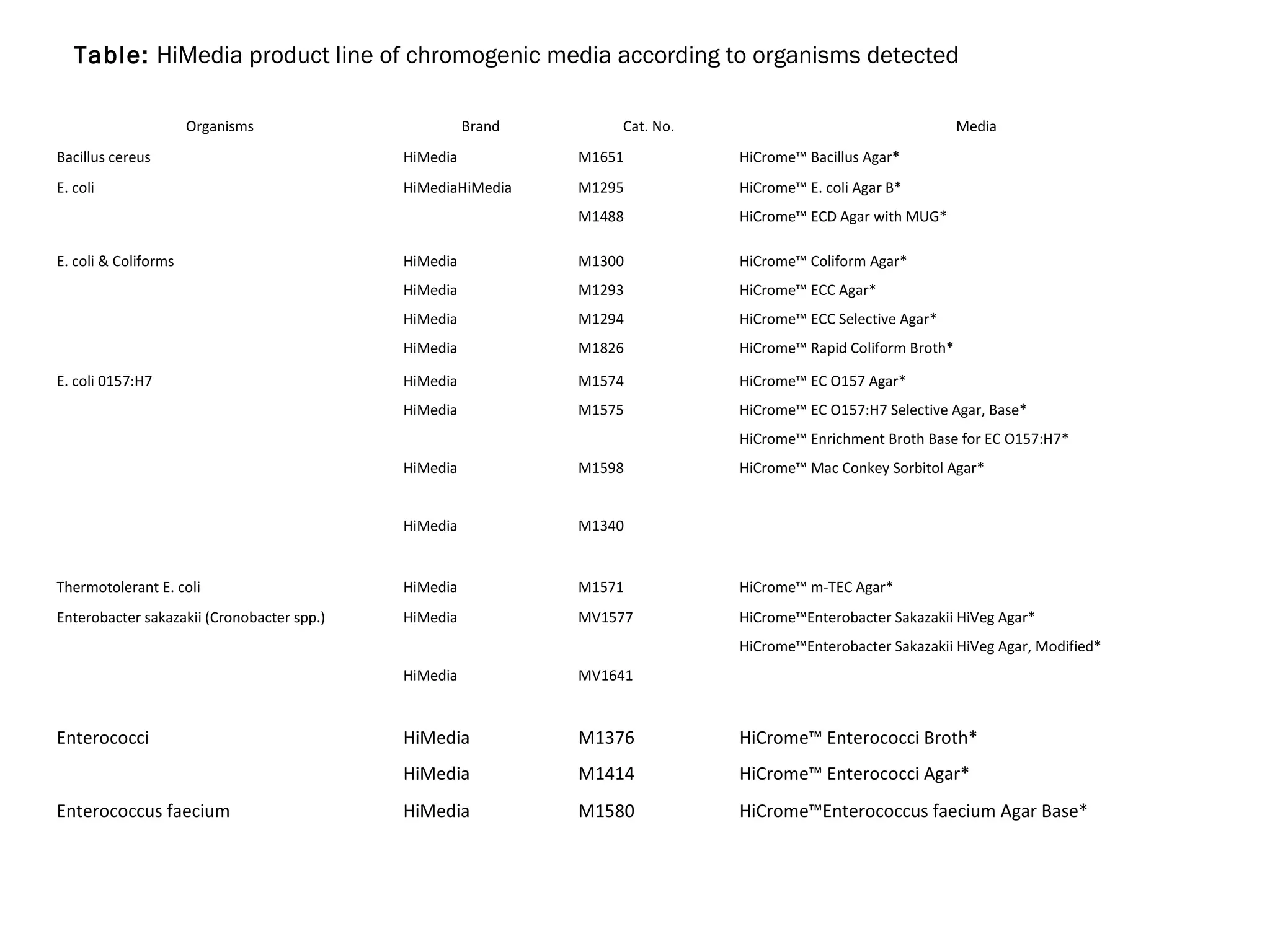
Table: HiMedia product line of chromogenic media according to organisms detected 
Organisms Brand Cat. No. Media 
Bacillus cereus HiMedia M1651 HiCrome™ Bacillus Agar* 
E. coli HiMediaHiMedia M1295 
M1488 
HiCrome™ E. coli Agar B* 
HiCrome™ ECD Agar with MUG* 
E. coli & Coliforms HiMedia 
HiMedia 
HiMedia 
HiMedia 
M1300 
M1293 
M1294 
M1826 
HiCrome™ Coliform Agar* 
HiCrome™ ECC Agar* 
HiCrome™ ECC Selective Agar* 
HiCrome™ Rapid Coliform Broth* 
E. coli 0157:H7 HiMedia 
HiMedia 
HiMedia 
HiMedia 
M1574 
M1575 
M1598 
M1340 
HiCrome™ EC O157 Agar* 
HiCrome™ EC O157:H7 Selective Agar, Base* 
HiCrome™ Enrichment Broth Base for EC O157:H7* 
HiCrome™ Mac Conkey Sorbitol Agar* 
Thermotolerant E. coli HiMedia M1571 HiCrome™ m-TEC Agar* 
Enterobacter sakazakii (Cronobacter spp.) HiMedia 
HiMedia 
MV1577 
MV1641 
HiCrome™Enterobacter Sakazakii HiVeg Agar* 
HiCrome™Enterobacter Sakazakii HiVeg Agar, Modified* 
Enterococci HiMedia 
HiMedia 
M1376 
M1414 
HiCrome™ Enterococci Broth* 
HiCrome™ Enterococci Agar* 
Enterococcus faecium HiMedia M1580 HiCrome™Enterococcus faecium Agar Base*
Table: HiMedia product line of chromogenic media according to organisms detected 
Klebsiella HiMedia MV1573 HiCrome™ Klebsiella Selective Agar Base* 
Listeria HiMedia M1417 HiCrome™ Listeria Agar Base, modified* 
Proteus, enteropathogenic gram-positive 
organisms 
HiMedia M1418 HiCrome™ UTI Agar, modified* 
Salmonella HiMedia 
HiMedia 
HiMedia 
HiMedia 
HiMedia 
M1393 
M1633 
M1634 
M1296 
M1466 
HiCrome™ MM Agar* 
HiCrome™ RajHans Medium, Modified* 
HiCrome™ Salmonella Agar* 
HiCrome™ Salmonella Agar, Improved* 
Staphylococcus aureus HiMedia M1468 HiCrome™ Aureus Agar Base* 
Methicillin-resistant Staph. aureus HiMedia M1674 HiCrome™ MeReSa Agar Base* 
Vibrio HiMedia MV1682 HiCrome™ Vibrio Agar* 
Yeasts and fungi HiMedia M1467 HiCrome™ OGYE Agar Base*
Table : Biochemical Tests on Disks and Strips 
Cat. No. Product Description 
DD015-1VL Bacitracin Disks Used in the presumptive identification of group A β-hemolytic streptococci. 
DD024-1VL Bile Esculin Disks For rapid detection of esculin hydrolysis in the presence of bile for differentiating group D streptococci from 
non-group 
D streptococci. 
DD040-1VL DMACA Indole Disks Used for the Indole test to determine the ability of an organism to split tryptophan into indole and α- 
aminopropionic acid. 
DD035-1VL Hippurate Disks Recommended in qualitative procedures to detect organisms possessing the enzyme hippurate hydrolase. 
DD019-1VL Kovac’s Reagent Strips Used to determine the ability of microorganisms, primarily Enterobacteriaceae, to split indole from the tryptophan 
molecule. 
DD042-1VL Nitrate Reagent Used to detect an organism’s ability to reduce nitrate. 
DD008-1VL ONPG Disks Used to detect the presence of β-galactosidase, an enzyme found in lactose-fermenting organisms. 
DD009-1VL Optochin Disks Optochin (ethyl hydrocuprein hydrochloride) is inhibitory for pneumococcal growth whereas other streptococci show 
good growth or a very small zone of inhibition. 
DD018-1VL Oxidase Disks 
DD036-1VL Sterile Disks Used to test a variety of antibiotics, carbohydrates, substrates, and antiseptics on bacteria in petri dishes. Soak a disk in 
a 
solution or apply some solution on the disks. 
DD022-1VL X + V Factor Disks Haemophilus species requiring both X and V factors exhibit growth only in the vicinity of the X +V factor disks. 
DD021-1VL V-Factor Disks
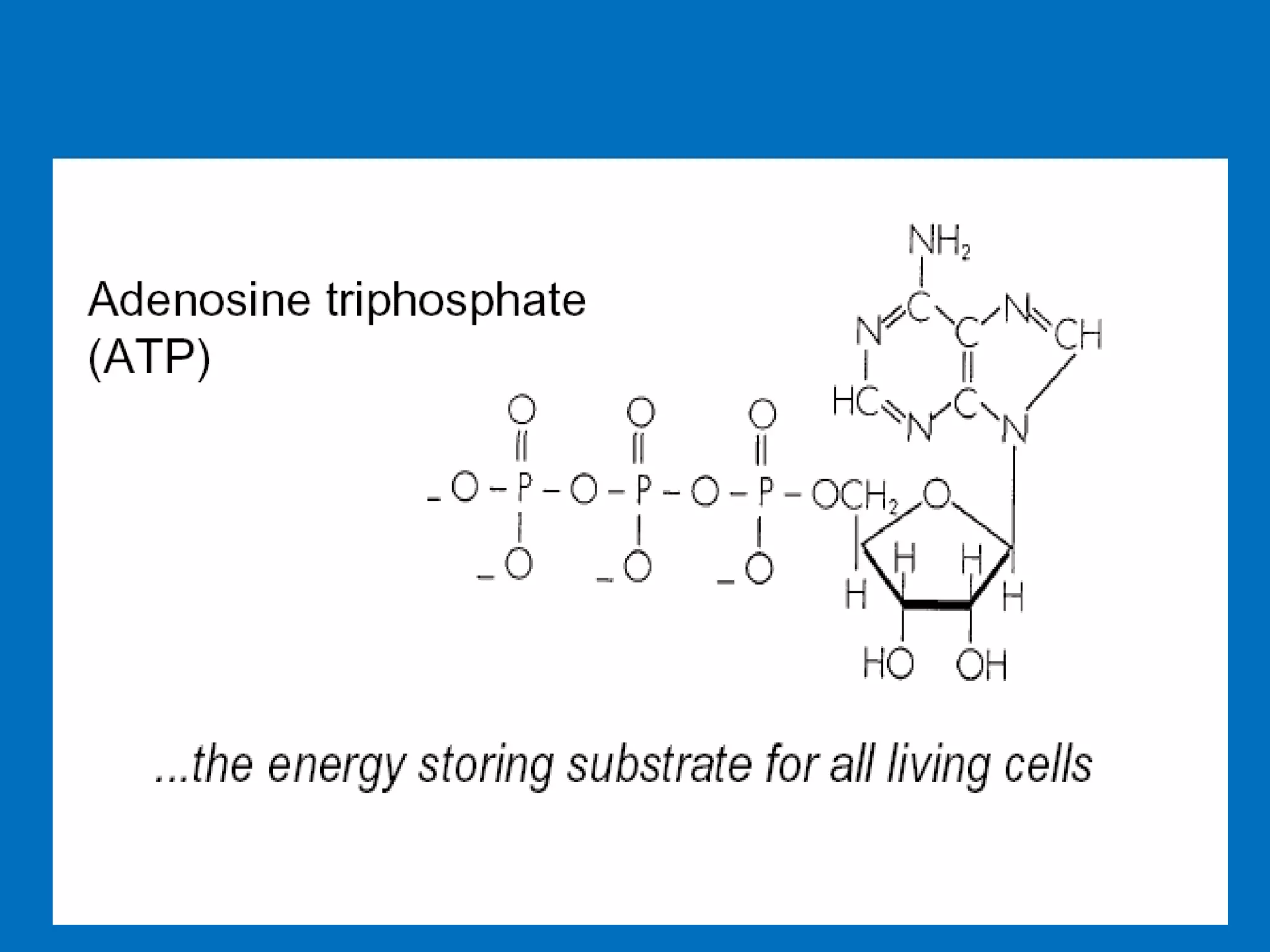
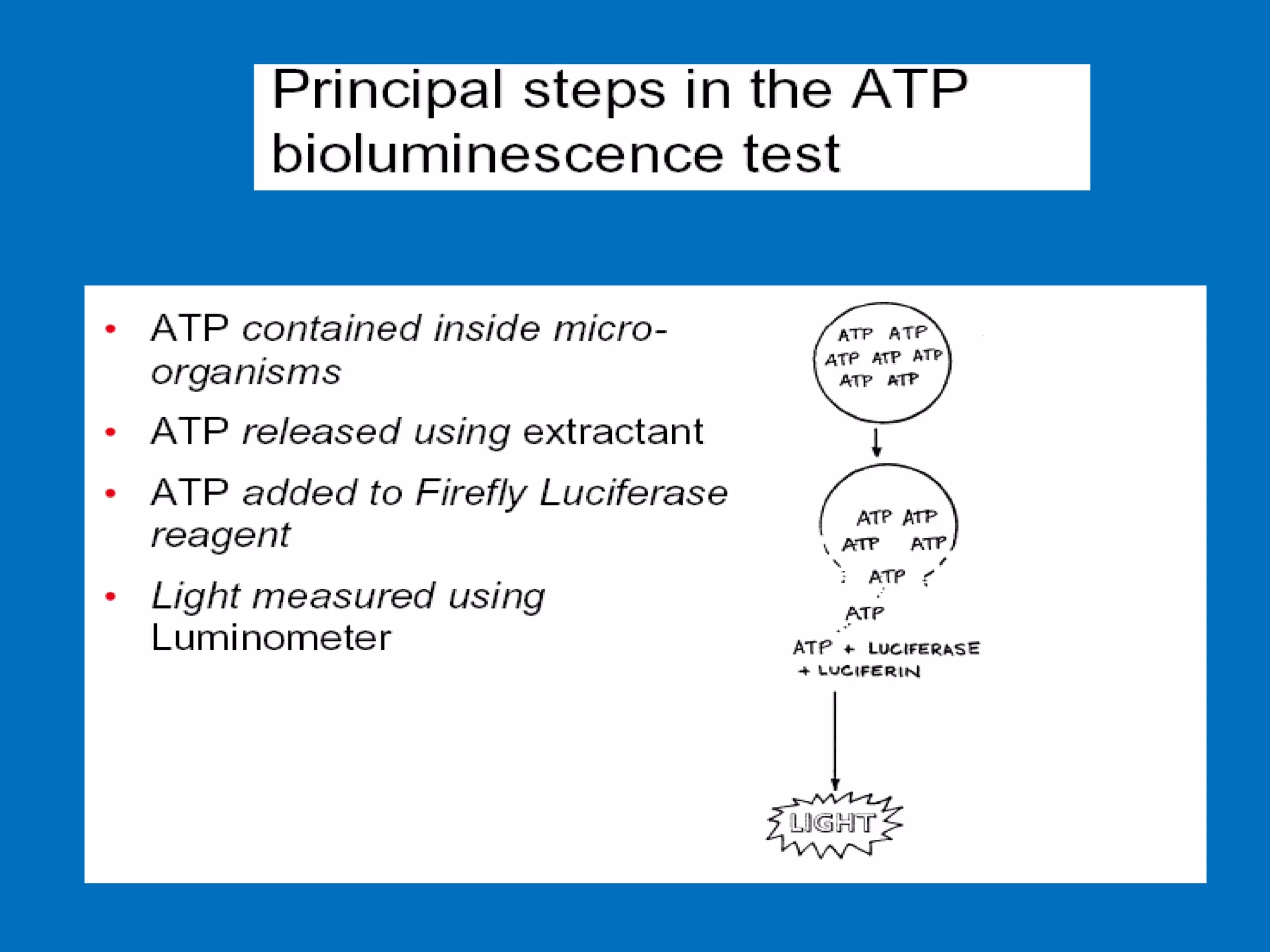
What Does ATP Detect ? 
Total Organic Living Soil : 
-Microbial 
-Animal 
-Plant 
-Human 
Information : 
Total Microbial Contamination 
+ 
Total Food Debris
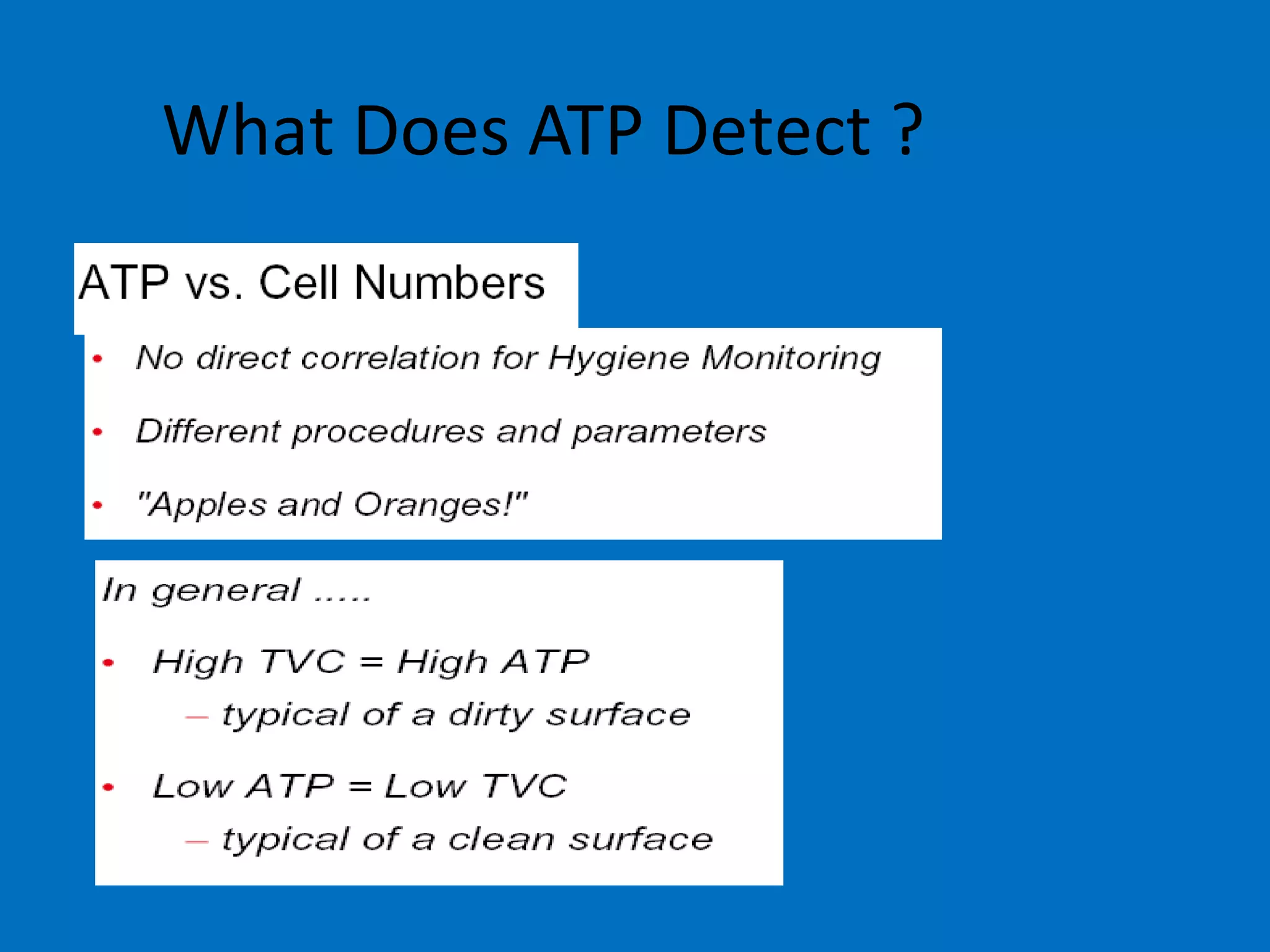
What Does ATP Detect ?
Our Website 
www.AlatAlatLaboratorium.com 
Toko Online Alat Laboratorium 
www.AlatAlatLaboratorium.com/Blog 
Panduan Memilih Alat Laboratorium 
www.AlatAlatLaboratorium.com/LaboratoriumMikrobiologi 
Daftar Peralatan Pembuatan Laboratorium Mikrobiologi 
www.AlatAlatLaboratorium.com/Memmert 
Informasi Product Memmert di Indonesia
Facebook : 
AlatAlatLaboratorium. 
Q+A Twitter : 
Alat2Lab. 
Telp/Sms : 
0852-6727-7949. 
E-mail : 
sales@AlatAlatLaboratorium.com.
THANK 
YOU!

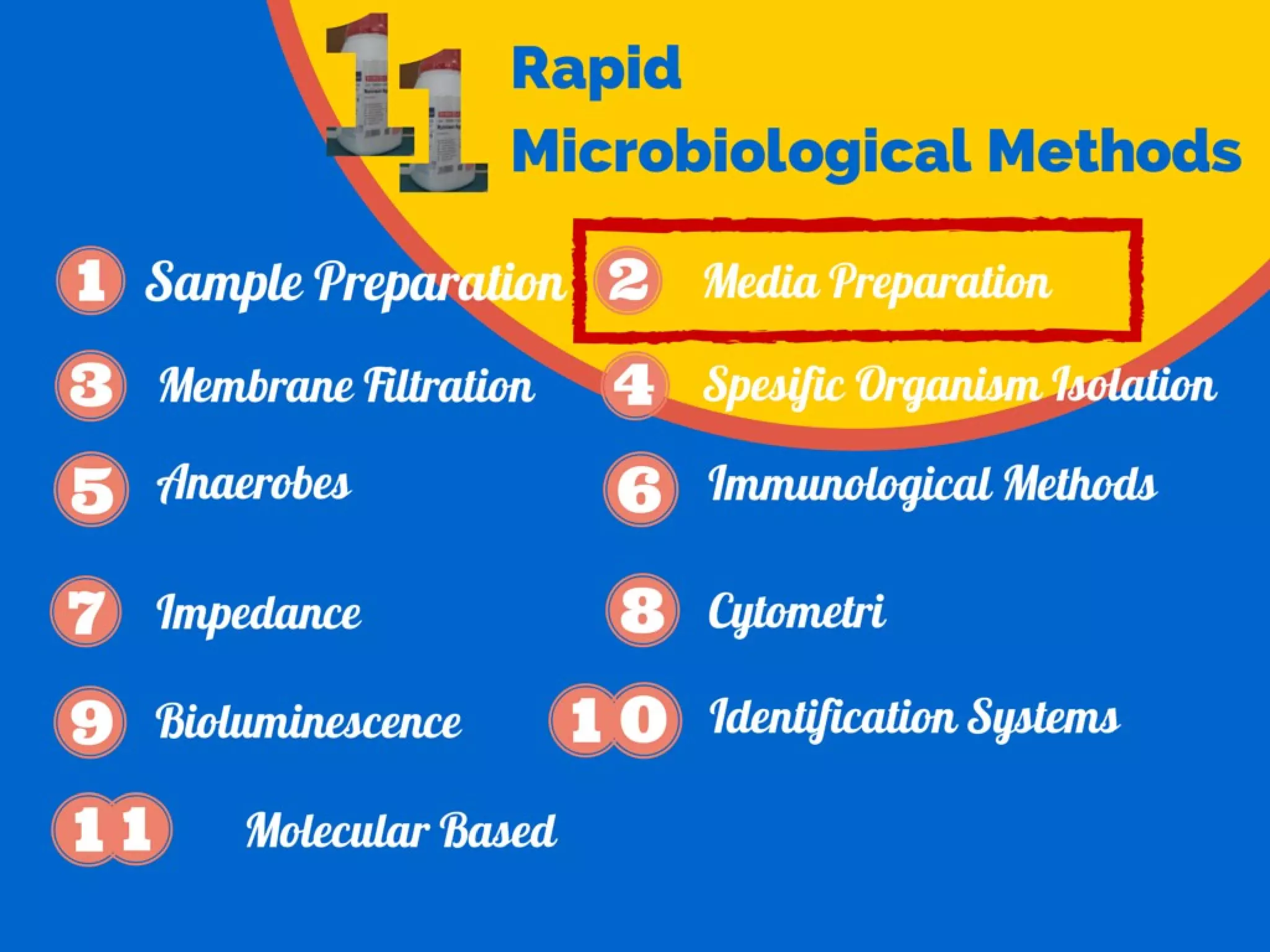
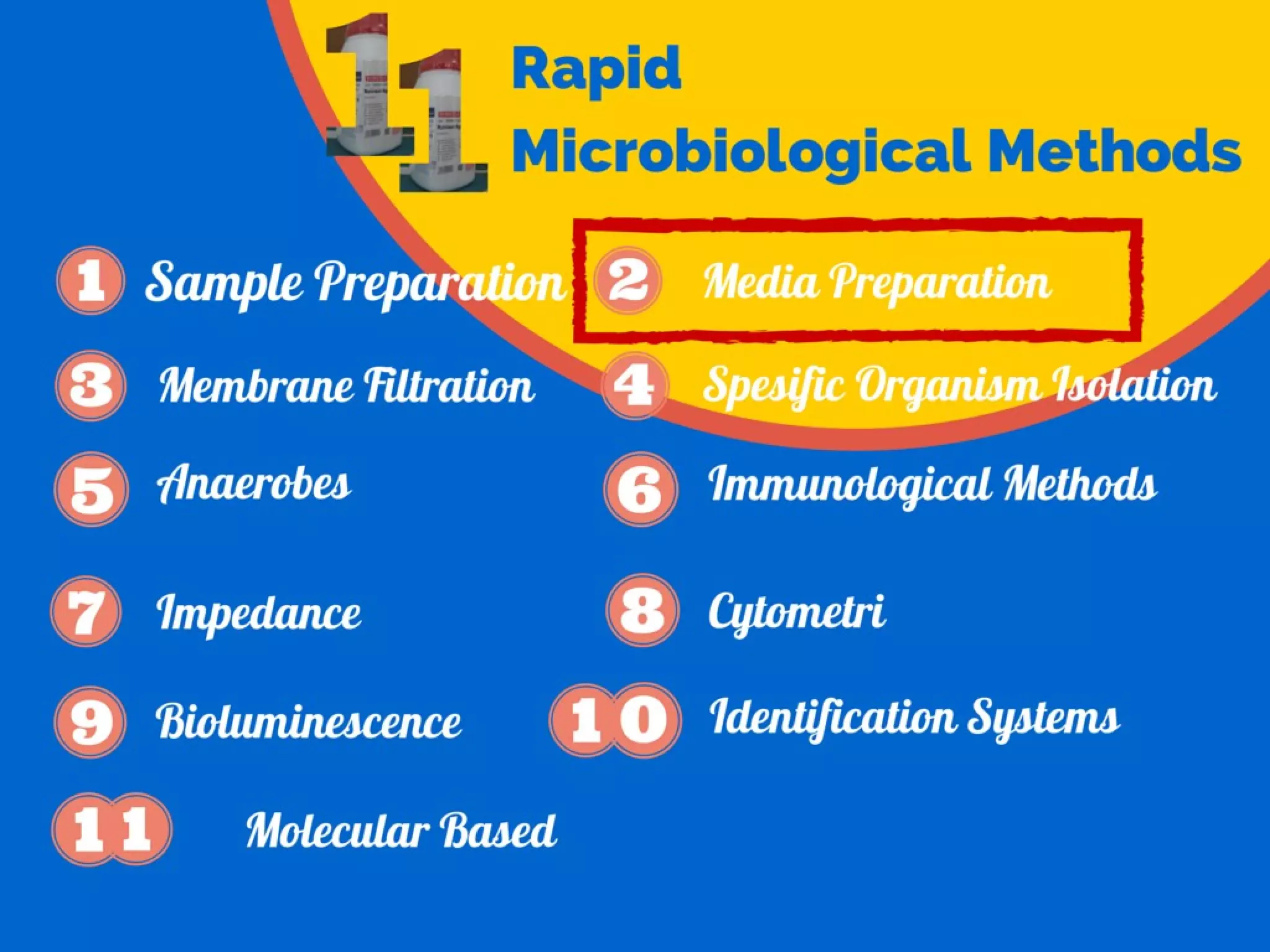
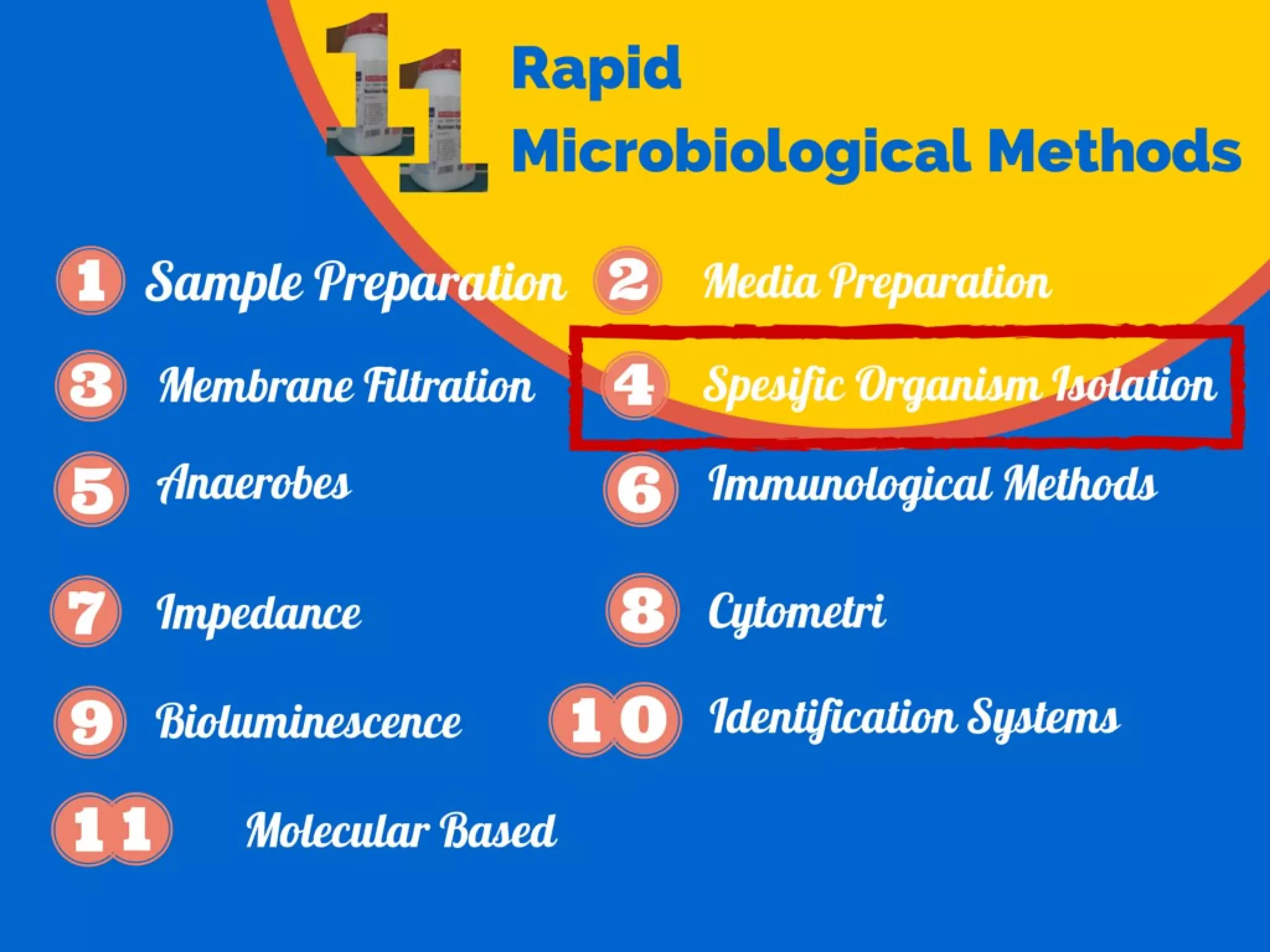
Rapid MIcrobiological Methods

  • 13.
    IISSOO SSttaannddaarrdd 66557799 DDeetteeccttiioonn ooff SSaallmmoonneellllaa Day 1 BPLS Agar modified 24-48 h / 35-37°C Any other Salmonella Agar Day 2 Day 3 Day 4 Day 5 Day 6 For confirmation take from each plate 5 suspected colonies and streak on Nutrient agar 18 - 24 h / 35 - 37 °C Biochemical / Serological Confirmation Tests TSI / Urea / Lysin / b-Gal / VP / Indol 10 ml BPW to 100 ml SC Broth 24 h at 35 - 37 °C 48 h 0.1 ml BPW to 10 ml RVS Broth 24 h / 42 °C BPLS Agar modified 24-48 h / 35-37°C Any other Salmonella Agar BPLS Agar modified 24-48 h / 35-37°C Any other Salmonella Agar 25 g/ml test sample in 225 ml BPW 16 - 20 h / 35 - 37 °C
  • 14.
    FDA-Bacteriological Analytical MMaannuuaall88tthh EEdd.. 11999955 CChhaapptteerr 55.. SSaallmmoonneellllaa mmeetthhoodd ffoorr rraaww fflleesshh ffooooddss ,, hhiigghhllyy ccoonnttaammiinnaatteedd ffooooddss aanndd aanniimmaall ffeeeeddss Day 1 Day 2 Day 3 Day 4 Day 5 Day 6 25 g or 25 ml sample in 225 ml Lactose Broth 1 ml Lactose Broth to 10 ml TT Broth 24 ± 2 h at 43 ± 0.2 °C Subculture from RV and TT Broth to a set of 3 plates each Bismuth Sulfite Agar if negative after 24 h Take from each plate suspected colony and streak on Triple Sugar Iron Agar ( TSI ) and Lysin Iron Agar ( LIA ) 24± 2 h at 35 °C Further Biochemical / Serological Confirmation Tests 24± 2 h at 35 °C Bismuth Sulfite Agar # 5418 24± 2 h at 35 °C 0.1 ml Lactose Broth to 10 ml RV Broth 24 ± 2 h at 42 ± 0.2 °C 22 - 26 h / 35 °C XLD Agar 24 ± 2 h at 35 °C Hektoen Agar 24 ± 2 h at 35 °C
  • 15.
    Ba FDA-Bacctteerriioollooggiiccaall AAnnaallyyttiiccaallMMaannuuaall 88tthh EEdd.. 11999955 CChhaapptteerr 55.. SSaallmmoonneellllaa mmeetthhoodd ffoorr ootthheerr ffooooddss tthhaann rraaww fflleesshh ffooooddss ,, hhiigghhllyy ccoonnttaammiinnaatteedd ffooooddss aanndd aanniimmaall ffeeeeddss 1 ml Lactose Broth to 10 ml TT Broth 24 ± 2 h at 35 °C 1 ml Lactose Broth to 10 ml SC Broth 24 ± 2 h at 35 °C Day 1 25 g or 25 ml sample in 225 ml Lactose Broth 22 - 26 h / 35 °C Day 2 Day 3 Day 4 Day 5 Subculture from SC and TT Broth to a set of 3 plates each if negative after 24 h Take from each plate suspected colony and streak on Triple Sugar Iron Agar ( TSI ) and Lysin Iron Agar ( LIA ) 24± 2 h at 35 °C Day 6 Further Biochemical / Serological Confirmation Tests Bismuth Sulfite Agar 24± 2 h at 35 °C Bismuth Sulfite Agar # 5418 24± 2 h at 35 °C XLD Agar 24 ± 2 h at 35 °C Hektoen Agar 24 ± 2 h at 35 °C
  • 63.
  • 71.
    Kultur media Didalam kapsul
  • 72.
    Cara Pembuatan Suspending Heating Digesting Homogenating for autoclave Homogenating after autoclave
  • 73.
    Cara Pembuatan Suspending Heating Digesting Homogenating for autoclave Homogenating after autoclave
  • 74.
    Cara Pembuatan Suspending Heating Digesting Homogenating for autoclave Homogenating after autoclave
  • 75.
    Cara Pembuatan Suspending Heating Digesting Homogenating for autoclave
  • 76.
    Cara Pembuatan Suspending Heating Digesting Homogenating for autoclave Homogenating after autoclave
  • 77.
    Cara Pembuatan Suspending Heating Digesting Homogenating for autoclave Homogenating after autoclave
  • 83.
    Kata Chromogenic berasaldari kata Chronos yang berarti warna dan genesis yang berarti pembuatan. Jika disatukan mungkin kata chromogenic berasal dari kata proses pembuatan warna atau proses pembuatan pigment.
  • 84.
    Media mikrobiologi Chromogenik adalah media mikrobiologi yang digunakan untuk membedakan satu mikroorganisme dengan yang mikroorganisme lain dengan adanya perubahan warna yang jelas dengan bantuan substate chromogenic.
  • 85.
    Penggunaan Chromogenic substrateseperti ONPG, X-Gal, X-Glu bersama dengan selektifitas dan sensitifitas media merupakan dasar dari prinsip sederhana dari media mikrobiologi chromogenic.
  • 86.
    Enzimatic Reaction ß-D-Galactosidase – 95 % of Coliforms ß-D-Glucuronidase –94-97 % of E.coli Tryptophanase – 99 % of E.coli are Indole positive
  • 87.
    Table : Summaryof possible enzyme activities, chromogenic substrates, and selectivity system for microorganisms Species Enzyme Substrate Selective Agents Bacillus cereus β-glucosidase, specific Phospholipase C indoxyl-β-glucopyranoside, indoxyl-myo- inositol-1-phosphate polymyxin B Campylobacter n/a n/a deoxycholate, cefoperazone, amphotericin B Candida Βacetylgalactosaminidase, alkaline phosphatase indoxyl-N-acetyl-β-D-glucosaminide, indoxyl-phosphate Chloramphenicol, Gentamicin Clostridium perfingens β-glucosidase (plus sucrose fermentation) indoxyl-β-D-glucoside D-cycloserine, polymixin B Coliforms/E. coli β-glucuronidase, β-galactosidase indoxyl-β-glucuronide, Indoxyl-β- galactoside bile salts, tergitol 7R, SDS, novobiocin, cefsulodin Cronobacter (E.sakazakii) α-glucosidase indoxyl-α-D-glucoside deoxycholate, crystal violet, sodium thiosulfate E. coli O157 β-glucosidase, α-galactosidase indoxyl-β-D-glucuronide, indoxyl-α- galatoside bile salts, SDS, crystal violet, potassium tellurite, novobiocin, cefixime
  • 88.
    Enterococci β-D-glucosidase indoxyl-β-glucosidesodium azide, polysorbate 80 Extended Spectrum β-Lactamase Enterobacteria (ESBL) β-D-glucosidase indoxyl-β-glucoside cefpodoxime, cefotaxime, ceftazidime Klebsiella β-D-ribofuranosidase, β-D-glucosidase indoxyl-β-D-ribofuranoside, indoxyl-β-D-glucoside bile salts, SDS, carbenicillin Listeria spp. β-glucosidase indoxyl-β-glucoside lithium chloride, ceftazidime amphotericin B, nalidixic acid, polymyxin B L. monoctogenes Phosphatidylinositol-specific Phospholipase C, β- glucosidase indoxyl-β-glucoside, indoxyl-myo- inositol-1-phosphate lithium chloride, ceftazidime, amphotericin B, nalidixic acid, polymyxin B Pseudomonas β-Alanyl arylamidase 7-Amido-1-pentyl-phenoxazin- 3-one cetrimide
  • 89.
    Salmonella α-galactosidase, lipaseindoxyl-α-galactoside, indoxyl-fatty acid ester sodium deoxycholate MRSA (Methicillin Resistant Staphylococcus aureus) α-glucosidase indoxyl-α-D-glucopyranoside methicillin, high concentration of sodium chloride Staphylococcus aureus α-glucosidase, phosphatase, deoxyribonuclease indoxyl-α,D-glucoside, phenolphthalein phosphate, indoxyl-phosphate tellurite, lithium chloride Streptococci β-glucuronidase indoxyl-β-glucuronide sodium azide UTI (Urinary Tract Infections) β-glucosidase, β-galactosidase indoxyl-β-glucopyranoside, indoxyl-β-galactoside Vibrio β-glucosidase, β-galactosidase indoxyl-β-glucopside, indoxyl-β-galactoside, indoxyl-β-galactoside high concentration of sodium chloride, sodium thiosulphate, sodium citrate, sodium cholate VRE (Vancomycin Resistant Enterococci) α-glucosidase, β-glucosidase, β-galactosidase indoxyl-α-glucopyranoside, indoxyl-β- glucopyranoside, indoxyl-β-galactoside vancomycin Yeasts and Moulds β-N-acetylgalactosaminidase, β- xylosidase indoxyl-N-acetyl-β-D-glucosaminide, indoxyl- β-D-xyloside oxytetracycline
  • 90.
    Table: HiMedia productline of chromogenic media according to organisms detected Organisms Brand Cat. No. Media Bacillus cereus HiMedia M1651 HiCrome™ Bacillus Agar* E. coli HiMediaHiMedia M1295 M1488 HiCrome™ E. coli Agar B* HiCrome™ ECD Agar with MUG* E. coli & Coliforms HiMedia HiMedia HiMedia HiMedia M1300 M1293 M1294 M1826 HiCrome™ Coliform Agar* HiCrome™ ECC Agar* HiCrome™ ECC Selective Agar* HiCrome™ Rapid Coliform Broth* E. coli 0157:H7 HiMedia HiMedia HiMedia HiMedia M1574 M1575 M1598 M1340 HiCrome™ EC O157 Agar* HiCrome™ EC O157:H7 Selective Agar, Base* HiCrome™ Enrichment Broth Base for EC O157:H7* HiCrome™ Mac Conkey Sorbitol Agar* Thermotolerant E. coli HiMedia M1571 HiCrome™ m-TEC Agar* Enterobacter sakazakii (Cronobacter spp.) HiMedia HiMedia MV1577 MV1641 HiCrome™Enterobacter Sakazakii HiVeg Agar* HiCrome™Enterobacter Sakazakii HiVeg Agar, Modified* Enterococci HiMedia HiMedia M1376 M1414 HiCrome™ Enterococci Broth* HiCrome™ Enterococci Agar* Enterococcus faecium HiMedia M1580 HiCrome™Enterococcus faecium Agar Base*
  • 91.
    Table: HiMedia productline of chromogenic media according to organisms detected Klebsiella HiMedia MV1573 HiCrome™ Klebsiella Selective Agar Base* Listeria HiMedia M1417 HiCrome™ Listeria Agar Base, modified* Proteus, enteropathogenic gram-positive organisms HiMedia M1418 HiCrome™ UTI Agar, modified* Salmonella HiMedia HiMedia HiMedia HiMedia HiMedia M1393 M1633 M1634 M1296 M1466 HiCrome™ MM Agar* HiCrome™ RajHans Medium, Modified* HiCrome™ Salmonella Agar* HiCrome™ Salmonella Agar, Improved* Staphylococcus aureus HiMedia M1468 HiCrome™ Aureus Agar Base* Methicillin-resistant Staph. aureus HiMedia M1674 HiCrome™ MeReSa Agar Base* Vibrio HiMedia MV1682 HiCrome™ Vibrio Agar* Yeasts and fungi HiMedia M1467 HiCrome™ OGYE Agar Base*
  • 92.
    Table : BiochemicalTests on Disks and Strips Cat. No. Product Description DD015-1VL Bacitracin Disks Used in the presumptive identification of group A β-hemolytic streptococci. DD024-1VL Bile Esculin Disks For rapid detection of esculin hydrolysis in the presence of bile for differentiating group D streptococci from non-group D streptococci. DD040-1VL DMACA Indole Disks Used for the Indole test to determine the ability of an organism to split tryptophan into indole and α- aminopropionic acid. DD035-1VL Hippurate Disks Recommended in qualitative procedures to detect organisms possessing the enzyme hippurate hydrolase. DD019-1VL Kovac’s Reagent Strips Used to determine the ability of microorganisms, primarily Enterobacteriaceae, to split indole from the tryptophan molecule. DD042-1VL Nitrate Reagent Used to detect an organism’s ability to reduce nitrate. DD008-1VL ONPG Disks Used to detect the presence of β-galactosidase, an enzyme found in lactose-fermenting organisms. DD009-1VL Optochin Disks Optochin (ethyl hydrocuprein hydrochloride) is inhibitory for pneumococcal growth whereas other streptococci show good growth or a very small zone of inhibition. DD018-1VL Oxidase Disks DD036-1VL Sterile Disks Used to test a variety of antibiotics, carbohydrates, substrates, and antiseptics on bacteria in petri dishes. Soak a disk in a solution or apply some solution on the disks. DD022-1VL X + V Factor Disks Haemophilus species requiring both X and V factors exhibit growth only in the vicinity of the X +V factor disks. DD021-1VL V-Factor Disks
  • 97.
    What Does ATPDetect ? Total Organic Living Soil : -Microbial -Animal -Plant -Human Information : Total Microbial Contamination + Total Food Debris
  • 98.
    What Does ATPDetect ?
  • 103.
    Our Website www.AlatAlatLaboratorium.com Toko Online Alat Laboratorium www.AlatAlatLaboratorium.com/Blog Panduan Memilih Alat Laboratorium www.AlatAlatLaboratorium.com/LaboratoriumMikrobiologi Daftar Peralatan Pembuatan Laboratorium Mikrobiologi www.AlatAlatLaboratorium.com/Memmert Informasi Product Memmert di Indonesia
  • 104.
    Facebook : AlatAlatLaboratorium. Q+A Twitter : Alat2Lab. Telp/Sms : 0852-6727-7949. E-mail : sales@AlatAlatLaboratorium.com.
  • 105.