Rapid Application Development
A p p r o a c h
Gr o u p :
BilalAhmed
AbdulAz iz
Introduction
Rad model heavily based on prototyping and iterative
development and no detail pre-planning is involve in
this model
• This model was first proposed by IBM in 1980,s.
• The software project which we can brake into modules can use this Rad
model.
• Development of each module requires basics SDLC Steps like waterfall Steps
RAD 2
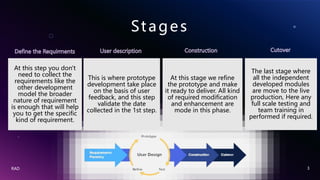
Stages
At this step you don't
need to collect the
requirements like the
other development
model the broader
nature of requirement
is enough that will help
you to get the specific
kind of requirement.
At this stage we refine
the prototype and make
it ready to deliver. All kind
of required modification
and enhancement are
mode in this phase.
The last stage where
all the independent
developed modules
are move to the live
production, Here any
full scale testing and
team training in
performed if required.
RAD 3
This is where prototype
development take place
on the basis of user
feedback, and this step
validate the date
collected in the 1st step.
ADVANTAGES
• Reduce development time.
• Encourages customer feedback.
• quick initial reviews.
• Easy to accommodate charging the requirements.
RAD 4
DISADVANTAGES
• Need of highly skilled team.
• customer involvement in required throughout the
RAD Model.
• implementable to only those projects which can be.
• Easy to accommodate charging the requirements
modularized.
RAD 5
Thank you
RAD 6

Rapid Application Development in Software Engineering

  • 1.
    Rapid Application Development Ap p r o a c h Gr o u p : BilalAhmed AbdulAz iz
  • 2.
    Introduction Rad model heavilybased on prototyping and iterative development and no detail pre-planning is involve in this model • This model was first proposed by IBM in 1980,s. • The software project which we can brake into modules can use this Rad model. • Development of each module requires basics SDLC Steps like waterfall Steps RAD 2
  • 3.
    Stages At this stepyou don't need to collect the requirements like the other development model the broader nature of requirement is enough that will help you to get the specific kind of requirement. At this stage we refine the prototype and make it ready to deliver. All kind of required modification and enhancement are mode in this phase. The last stage where all the independent developed modules are move to the live production, Here any full scale testing and team training in performed if required. RAD 3 This is where prototype development take place on the basis of user feedback, and this step validate the date collected in the 1st step.
  • 4.
    ADVANTAGES • Reduce developmenttime. • Encourages customer feedback. • quick initial reviews. • Easy to accommodate charging the requirements. RAD 4
  • 5.
    DISADVANTAGES • Need ofhighly skilled team. • customer involvement in required throughout the RAD Model. • implementable to only those projects which can be. • Easy to accommodate charging the requirements modularized. RAD 5
  • 6.