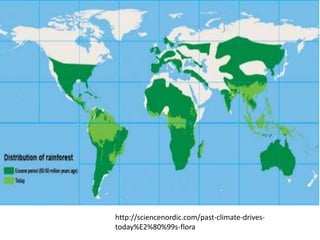
http://sciencenordic.com/past-climate-drives-
today%E2%80%99s-flora
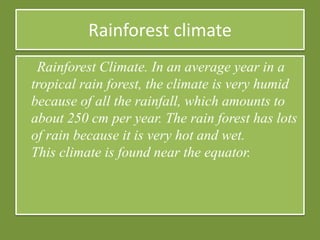
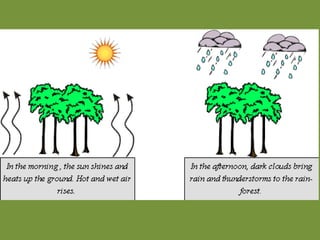
Rainforest climate
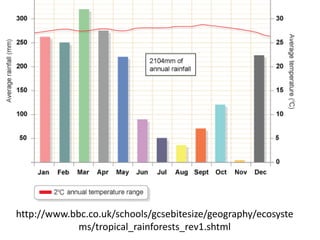
Rainforest Climate. In an average year in a
tropical rain forest, the climate is very humid
because of all the rainfall, which amounts to
about 250 cm per year. The rain forest has lots
of rain because it is very hot and wet.
This climate is found near the equator.
http://www.bbc.co.uk/schools/gcsebitesize/geography/ecosyste
ms/tropical_rainforests_rev1.shtml
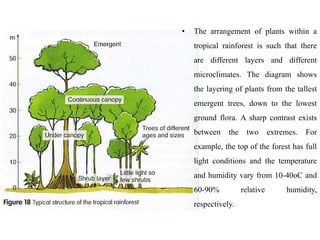
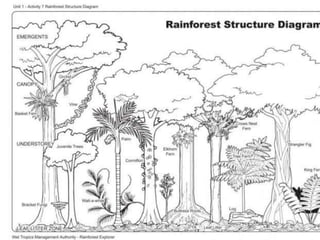
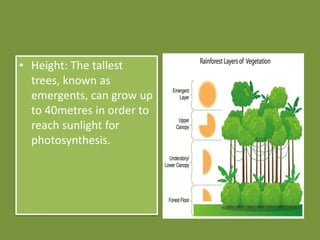
• The arrangement of plants within a
tropical rainforest is such that there
are different layers and different
microclimates. The diagram shows
the layering of plants from the tallest
emergent trees, down to the lowest
ground flora. A sharp contrast exists
between the two extremes. For
example, the top of the forest has full
light conditions and the temperature
and humidity vary from 10-40oC and
60-90% relative humidity,
respectively.
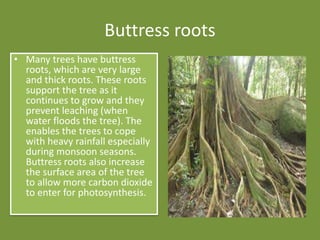
Buttress roots
• Many trees have buttress
roots, which are very large
and thick roots. These roots
support the tree as it
continues to grow and they
prevent leaching (when
water floods the tree). The
enables the trees to cope
with heavy rainfall especially
during monsoon seasons.
Buttress roots also increase
the surface area of the tree
to allow more carbon dioxide
to enter for photosynthesis.
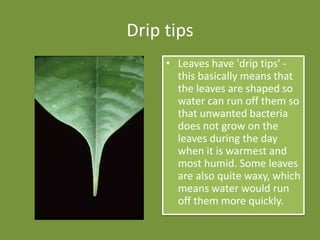
Drip tips
• Leaves have 'drip tips' -
this basically means that
the leaves are shaped so
water can run off them so
that unwanted bacteria
does not grow on the
leaves during the day
when it is warmest and
most humid. Some leaves
are also quite waxy, which
means water would run
off them more quickly.
• Height: The tallest
trees, known as
emergents, can grow up
to 40metres in order to
reach sunlight for
photosynthesis.
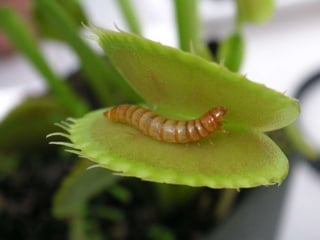
They have developed a mechanism in order
to eat insects. Venus flytraps snap shut on
any insects that land on them, where they
are then digested by the plant. Some plants
have developed flowers or leaves with
steep sides which means insects slide
down into the plant and cannot escape.
Some flowers produce a sweet nectar
which attracts insects into their trap. This
is ideal for plants who live further towards
the forest floor where there is less sunlight
for photosynthesis.
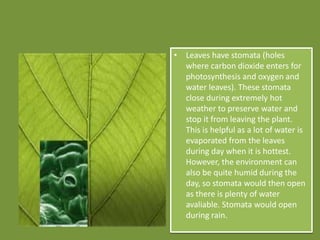
• Leaves have stomata (holes
where carbon dioxide enters for
photosynthesis and oxygen and
water leaves). These stomata
close during extremely hot
weather to preserve water and
stop it from leaving the plant.
This is helpful as a lot of water is
evaporated from the leaves
during day when it is hottest.
However, the environment can
also be quite humid during the
day, so stomata would then open
as there is plenty of water
avaliable. Stomata would open
during rain.
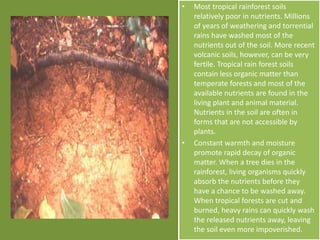
• Most tropical rainforest soils
relatively poor in nutrients. Millions
of years of weathering and torrential
rains have washed most of the
nutrients out of the soil. More recent
volcanic soils, however, can be very
fertile. Tropical rain forest soils
contain less organic matter than
temperate forests and most of the
available nutrients are found in the
living plant and animal material.
Nutrients in the soil are often in
forms that are not accessible by
plants.
• Constant warmth and moisture
promote rapid decay of organic
matter. When a tree dies in the
rainforest, living organisms quickly
absorb the nutrients before they
have a chance to be washed away.
When tropical forests are cut and
burned, heavy rains can quickly wash
the released nutrients away, leaving
the soil even more impoverished.
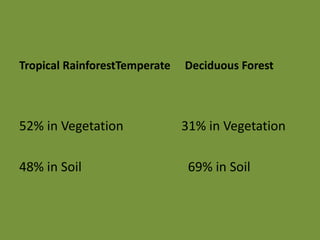
Tropical RainforestTemperate Deciduous Forest
52% in Vegetation 31% in Vegetation
48% in Soil 69% in Soil
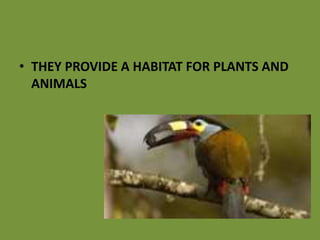
• THEY PROVIDE A HABITAT FOR PLANTS AND
ANIMALS
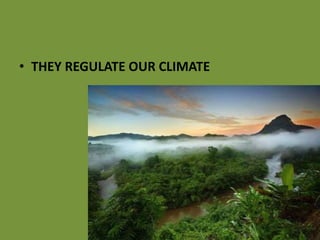
• THEY REGULATE OUR CLIMATE
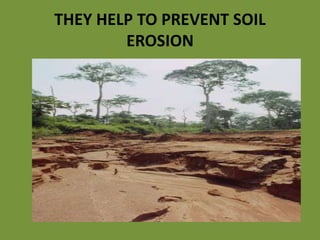
THEY HELP TO PREVENT SOIL
EROSION
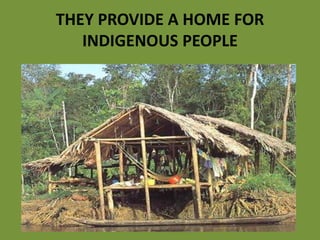
THEY PROVIDE A HOME FOR
INDIGENOUS PEOPLE
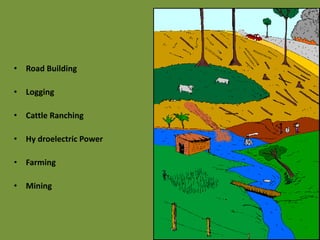
• Road Building
• Logging
• Cattle Ranching
• Hy droelectric Power
• Farming
• Mining
• National:
Deforestation can consume a country's only natural resource. If
deforestation is not managed in a sustainable manner a country's only
natural resource could be lost forever.
• Global:
Global Warming
Rainforest canopies absorb carbon dioxide which is a gas in the
atmosphere. When the rainforests are burned and cleared, the carbon is
released. Also, when trees are cut down they can no longer absorb carbon
dioxide. This means more carbon dioxide is in the atmosphere. Carbon
dioxide allows heat through the atmosphere (suns rays). However, it will
not allow reflected energy to escape from the atmosphere. This is called
the greenhouse effect and causes global warming.
How can the rainforest be managed
for sustainable development?
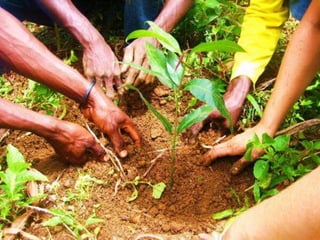
• Afforestation - Trees should be replanted in areas
of deforestation.
• Shifting Cultivation - Farmers should move on
after 2-3 years to allow the rainforest to recover.
• Rubber tapping - More sustainable methods of
exploiting the rainforest should be pursued e.g.
rubber tapping
• Measuring trees - Trees should only be cut down
when they reach a certain size. This will ensure
younger trees survive longer and will encourage
careful management of the rainforest.
Let’s save our rainforests!!!
And save us!!!

Rainforests

  • 2.
  • 3.
    Rainforest climate Rainforest Climate.In an average year in a tropical rain forest, the climate is very humid because of all the rainfall, which amounts to about 250 cm per year. The rain forest has lots of rain because it is very hot and wet. This climate is found near the equator.
  • 4.
  • 6.
    • The arrangementof plants within a tropical rainforest is such that there are different layers and different microclimates. The diagram shows the layering of plants from the tallest emergent trees, down to the lowest ground flora. A sharp contrast exists between the two extremes. For example, the top of the forest has full light conditions and the temperature and humidity vary from 10-40oC and 60-90% relative humidity, respectively.
  • 8.
    Buttress roots • Manytrees have buttress roots, which are very large and thick roots. These roots support the tree as it continues to grow and they prevent leaching (when water floods the tree). The enables the trees to cope with heavy rainfall especially during monsoon seasons. Buttress roots also increase the surface area of the tree to allow more carbon dioxide to enter for photosynthesis.
  • 9.
    Drip tips • Leaveshave 'drip tips' - this basically means that the leaves are shaped so water can run off them so that unwanted bacteria does not grow on the leaves during the day when it is warmest and most humid. Some leaves are also quite waxy, which means water would run off them more quickly.
  • 10.
    • Height: Thetallest trees, known as emergents, can grow up to 40metres in order to reach sunlight for photosynthesis.
  • 11.
    They have developeda mechanism in order to eat insects. Venus flytraps snap shut on any insects that land on them, where they are then digested by the plant. Some plants have developed flowers or leaves with steep sides which means insects slide down into the plant and cannot escape. Some flowers produce a sweet nectar which attracts insects into their trap. This is ideal for plants who live further towards the forest floor where there is less sunlight for photosynthesis.
  • 12.
    • Leaves havestomata (holes where carbon dioxide enters for photosynthesis and oxygen and water leaves). These stomata close during extremely hot weather to preserve water and stop it from leaving the plant. This is helpful as a lot of water is evaporated from the leaves during day when it is hottest. However, the environment can also be quite humid during the day, so stomata would then open as there is plenty of water avaliable. Stomata would open during rain.
  • 13.
    • Most tropicalrainforest soils relatively poor in nutrients. Millions of years of weathering and torrential rains have washed most of the nutrients out of the soil. More recent volcanic soils, however, can be very fertile. Tropical rain forest soils contain less organic matter than temperate forests and most of the available nutrients are found in the living plant and animal material. Nutrients in the soil are often in forms that are not accessible by plants. • Constant warmth and moisture promote rapid decay of organic matter. When a tree dies in the rainforest, living organisms quickly absorb the nutrients before they have a chance to be washed away. When tropical forests are cut and burned, heavy rains can quickly wash the released nutrients away, leaving the soil even more impoverished.
  • 14.
    Tropical RainforestTemperate DeciduousForest 52% in Vegetation 31% in Vegetation 48% in Soil 69% in Soil
  • 15.
    • THEY PROVIDEA HABITAT FOR PLANTS AND ANIMALS
  • 16.
    • THEY REGULATEOUR CLIMATE
  • 17.
    THEY HELP TOPREVENT SOIL EROSION
  • 18.
    THEY PROVIDE AHOME FOR INDIGENOUS PEOPLE
  • 20.
    • Road Building •Logging • Cattle Ranching • Hy droelectric Power • Farming • Mining
  • 21.
    • National: Deforestation canconsume a country's only natural resource. If deforestation is not managed in a sustainable manner a country's only natural resource could be lost forever. • Global: Global Warming Rainforest canopies absorb carbon dioxide which is a gas in the atmosphere. When the rainforests are burned and cleared, the carbon is released. Also, when trees are cut down they can no longer absorb carbon dioxide. This means more carbon dioxide is in the atmosphere. Carbon dioxide allows heat through the atmosphere (suns rays). However, it will not allow reflected energy to escape from the atmosphere. This is called the greenhouse effect and causes global warming.
  • 22.
    How can therainforest be managed for sustainable development? • Afforestation - Trees should be replanted in areas of deforestation. • Shifting Cultivation - Farmers should move on after 2-3 years to allow the rainforest to recover. • Rubber tapping - More sustainable methods of exploiting the rainforest should be pursued e.g. rubber tapping • Measuring trees - Trees should only be cut down when they reach a certain size. This will ensure younger trees survive longer and will encourage careful management of the rainforest.
  • 24.
    Let’s save ourrainforests!!! And save us!!!