Downloaded 19 times

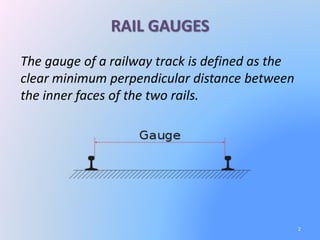
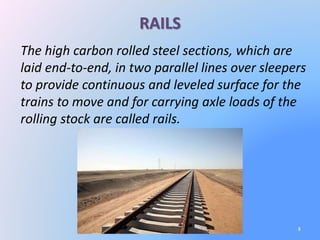
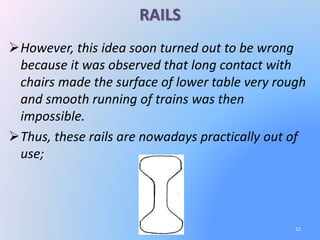
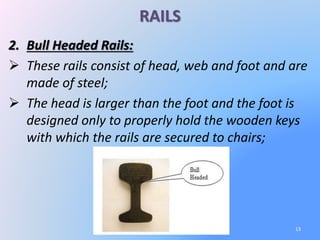
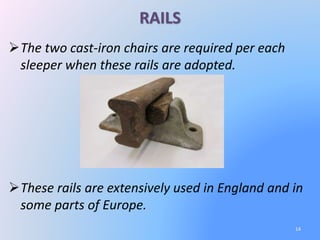
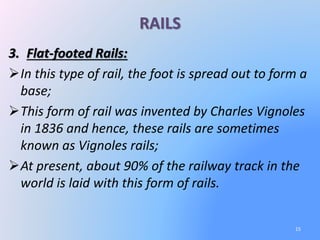

Rail gauges are defined as the minimum perpendicular distance between the inner faces of two rails. Key factors that affect rail gauge selection include traffic conditions, development needs of poor areas, desired speed of movement, construction costs, and terrain. Common rail gauges include broad, standard, metre, and narrow. Rails are high carbon steel sections laid end to end on sleepers to provide a continuous, level surface for train movement and load distribution. Common rail types are double headed, bull headed, and flat footed (Vignoles) rails, with flat footed rails now comprising around 90% of global track due to advantages like reduced costs and greater stiffness.


