radiation
Pollution
What is radiation pollution?
 Radiation pollution is caused by radioactive
substances which emit invisible radiation
released in the environment through human
activities.
 It is classified into being ionizing or non-
ionizing. Both types are harmful to humans
and other organisms.
 Nuclear power plants are one of the most
active sources.
SourceS
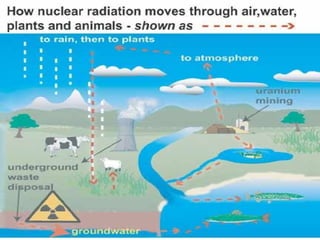
 Nuclear power plants
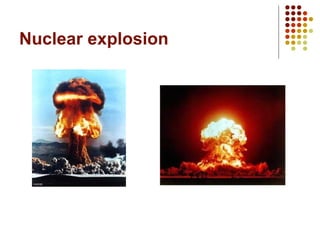
 Nuclear weapon
 Transportation of nuclear waste
 Disposal of nuclear waste
 Uranium mining
 Refining of radioactive substances
 Preparation of radioactive isotopes
Nuclear explosion
Nuclear power plant
Nuclear weapons
Uranium mining
TYPES OF POLLUTANTS
 Non-ionizing radiation is relatively long
wavelength electromagnetic radiation, such
as radio waves, microwaves, visible
radiation, ultraviolet radiation, and very
low electromagnetic fields.
 It is generally considered as less
dangerous than ionizing radiation.
 Ionizing radiation is the short wavelength
radiation emitted by certain unstable
isotopes during radioactive decay.
 This can cause other atoms to release
their electrons. These free electrons can
damage biochemicals, such as proteins,
lipids and nucleic acids including DNA
causing severe health problems, including
cancer and even death.
NATUrAL cAUSES
 Breathing of radon gas
 Other more mild forms of natural radioactive
elements include: radioactive materials in the
earth's crust, rays from the cosmos and trace
amounts of radioactivity in the body.
MAN-MADE cAUSES
medical procedures such as CT scans,X
rays and nuclear medicine
EFFEcTS
 skin irritation to death depending on how
much radiation is exposed to the body, what
parts of the body are exposed and how
strong the immune system is.
 blood component changes, nausea, vomiting,
fatigue, diarrhea and cancer
PREVENTION
 Disposing radioactive substances properly
• safety measures should be enforced strictly;
• leakages from nuclear reactors, careless
handling, transport and use of radioactive
fuels, fission products and radioactive
isotopes have to be totally stopped;
• there should be regular monitoring and
quantitative analysis through frequent
sampling in the risk areas;
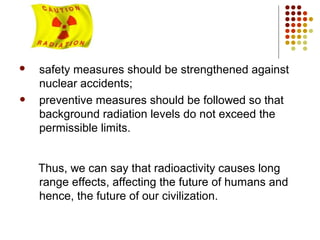
 safety measures should be strengthened against
nuclear accidents;
• preventive measures should be followed so that
background radiation levels do not exceed the
permissible limits.
Thus, we can say that radioactivity causes long
range effects, affecting the future of humans and
hence, the future of our civilization.
Radiation is the pollutant that is
more dangerous than any other
pollutant on earth. Exposure to
heavy doses of radiation causes skin
burns and suppression of bone
marrow functioning and increased to
radiation results in cancer.
Radiation pollution

Radiation pollution

  • 1.
  • 2.
    What is radiationpollution?  Radiation pollution is caused by radioactive substances which emit invisible radiation released in the environment through human activities.
  • 3.
     It isclassified into being ionizing or non- ionizing. Both types are harmful to humans and other organisms.  Nuclear power plants are one of the most active sources.
  • 5.
    SourceS  Nuclear powerplants  Nuclear weapon  Transportation of nuclear waste  Disposal of nuclear waste  Uranium mining  Refining of radioactive substances  Preparation of radioactive isotopes
  • 7.
  • 8.
  • 10.
  • 11.
  • 12.
    TYPES OF POLLUTANTS Non-ionizing radiation is relatively long wavelength electromagnetic radiation, such as radio waves, microwaves, visible radiation, ultraviolet radiation, and very low electromagnetic fields.  It is generally considered as less dangerous than ionizing radiation.
  • 13.
     Ionizing radiationis the short wavelength radiation emitted by certain unstable isotopes during radioactive decay.  This can cause other atoms to release their electrons. These free electrons can damage biochemicals, such as proteins, lipids and nucleic acids including DNA causing severe health problems, including cancer and even death.
  • 14.
    NATUrAL cAUSES  Breathingof radon gas  Other more mild forms of natural radioactive elements include: radioactive materials in the earth's crust, rays from the cosmos and trace amounts of radioactivity in the body. MAN-MADE cAUSES medical procedures such as CT scans,X rays and nuclear medicine
  • 15.
    EFFEcTS  skin irritationto death depending on how much radiation is exposed to the body, what parts of the body are exposed and how strong the immune system is.  blood component changes, nausea, vomiting, fatigue, diarrhea and cancer
  • 17.
    PREVENTION  Disposing radioactivesubstances properly • safety measures should be enforced strictly; • leakages from nuclear reactors, careless handling, transport and use of radioactive fuels, fission products and radioactive isotopes have to be totally stopped; • there should be regular monitoring and quantitative analysis through frequent sampling in the risk areas;
  • 18.
     safety measuresshould be strengthened against nuclear accidents; • preventive measures should be followed so that background radiation levels do not exceed the permissible limits. Thus, we can say that radioactivity causes long range effects, affecting the future of humans and hence, the future of our civilization.
  • 19.
    Radiation is thepollutant that is more dangerous than any other pollutant on earth. Exposure to heavy doses of radiation causes skin burns and suppression of bone marrow functioning and increased to radiation results in cancer.