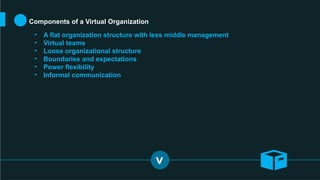
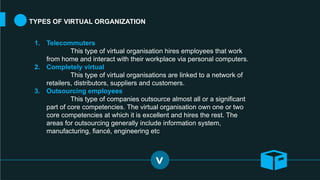
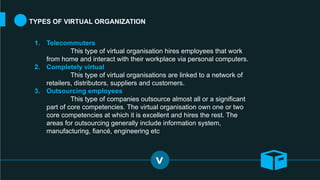
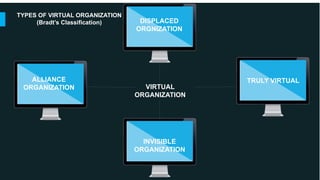
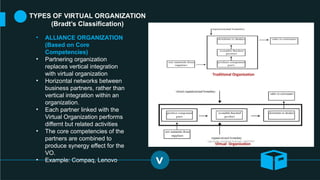
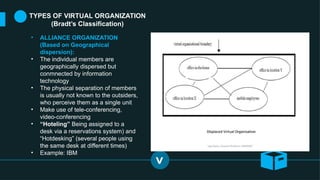
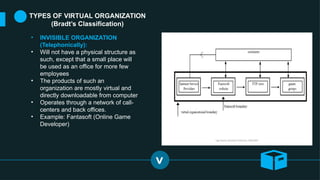
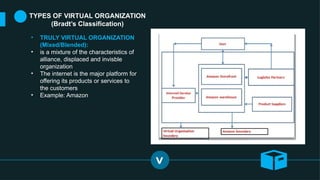
Virtual organizations (VOs) emerged in the late 1990s alongside the rise of the internet, characterized by flexible networks that transcend geographical limits and traditional organizational structures. They rely on electronic communication to operate and can vary in type, including telecommuters, completely virtual setups, and outsourcing firms. While VOs offer benefits like access to new markets and reduced costs, they also face challenges such as communication difficulties, isolation among employees, and security risks.