PTSD Stress
Secondary Trauma
Compassion Fatigue
14 Steps That Help
14 Steps That Help
Steve B. Reed, LPC, LMSW, LMFT

1
www.psychotherapy-center.com
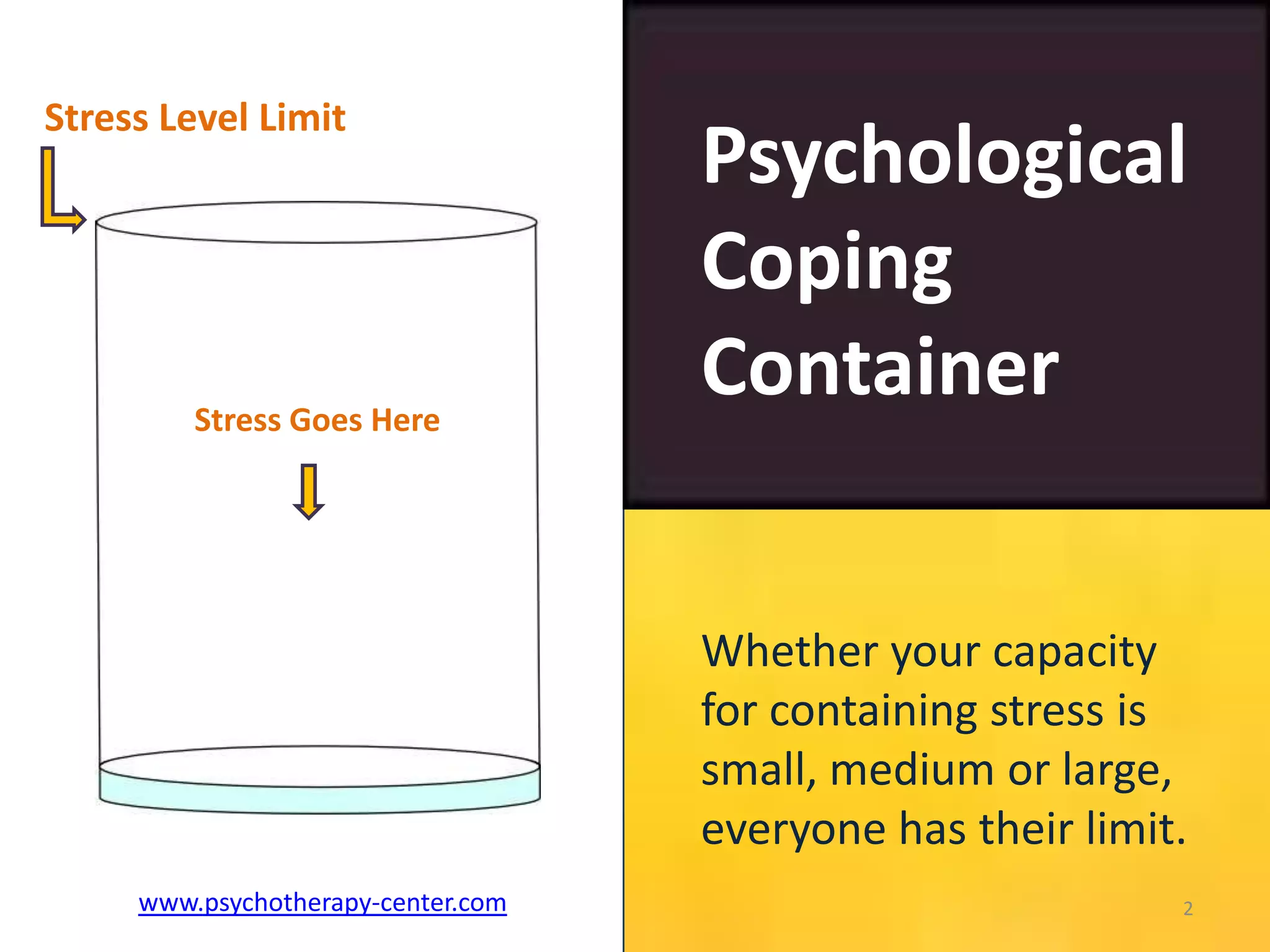
Stress Level Limit

Stress Goes Here

Psychological
Coping
Container
Whether your capacity
for containing stress is
small, medium or large,
everyone has their limit.

www.psychotherapy-center.com

2
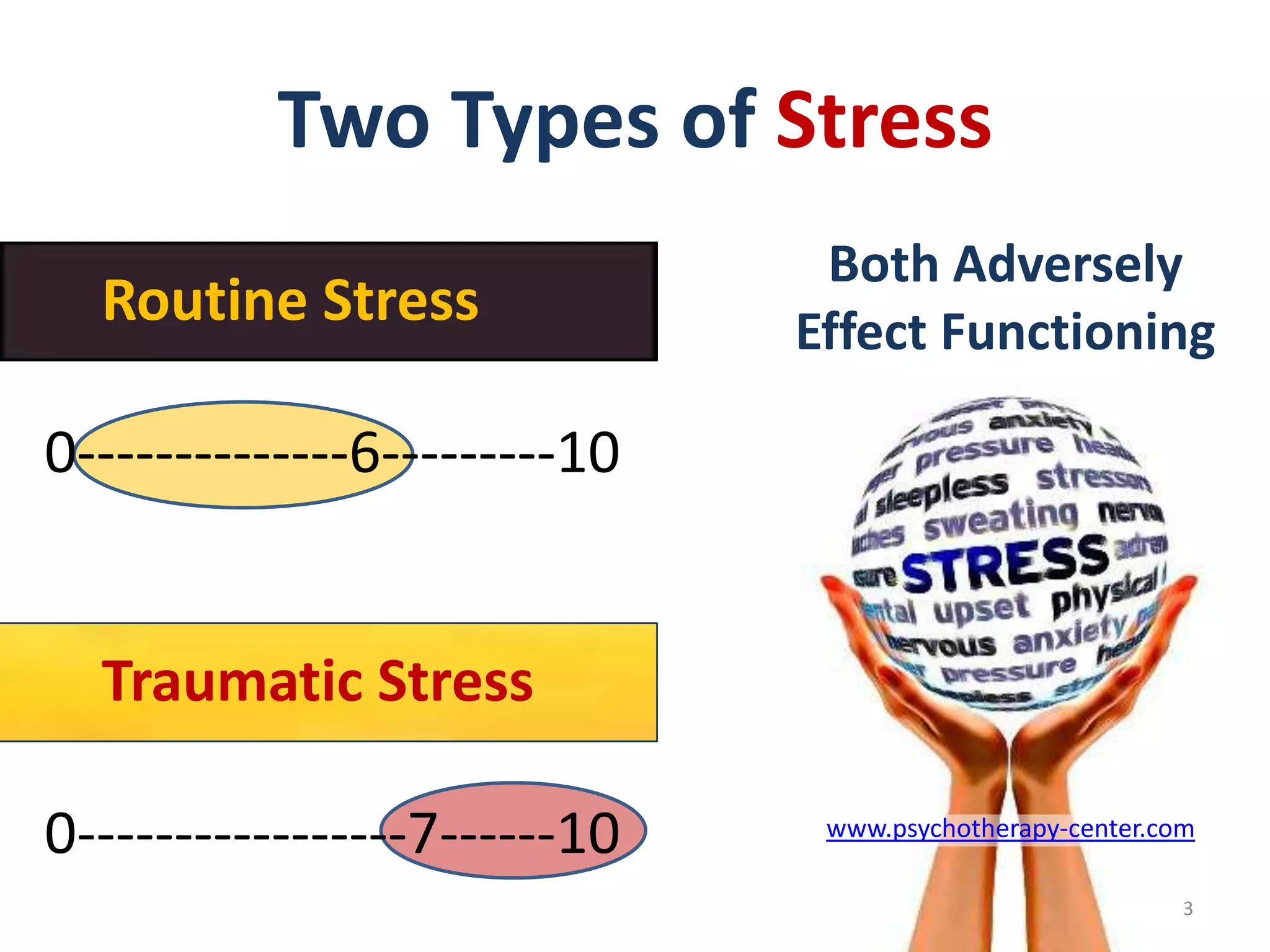
Two Types of Stress
Routine Stress

Both Adversely
Effect Functioning

0--------------6---------10

Traumatic Stress
0-----------------7------10

www.psychotherapy-center.com
3
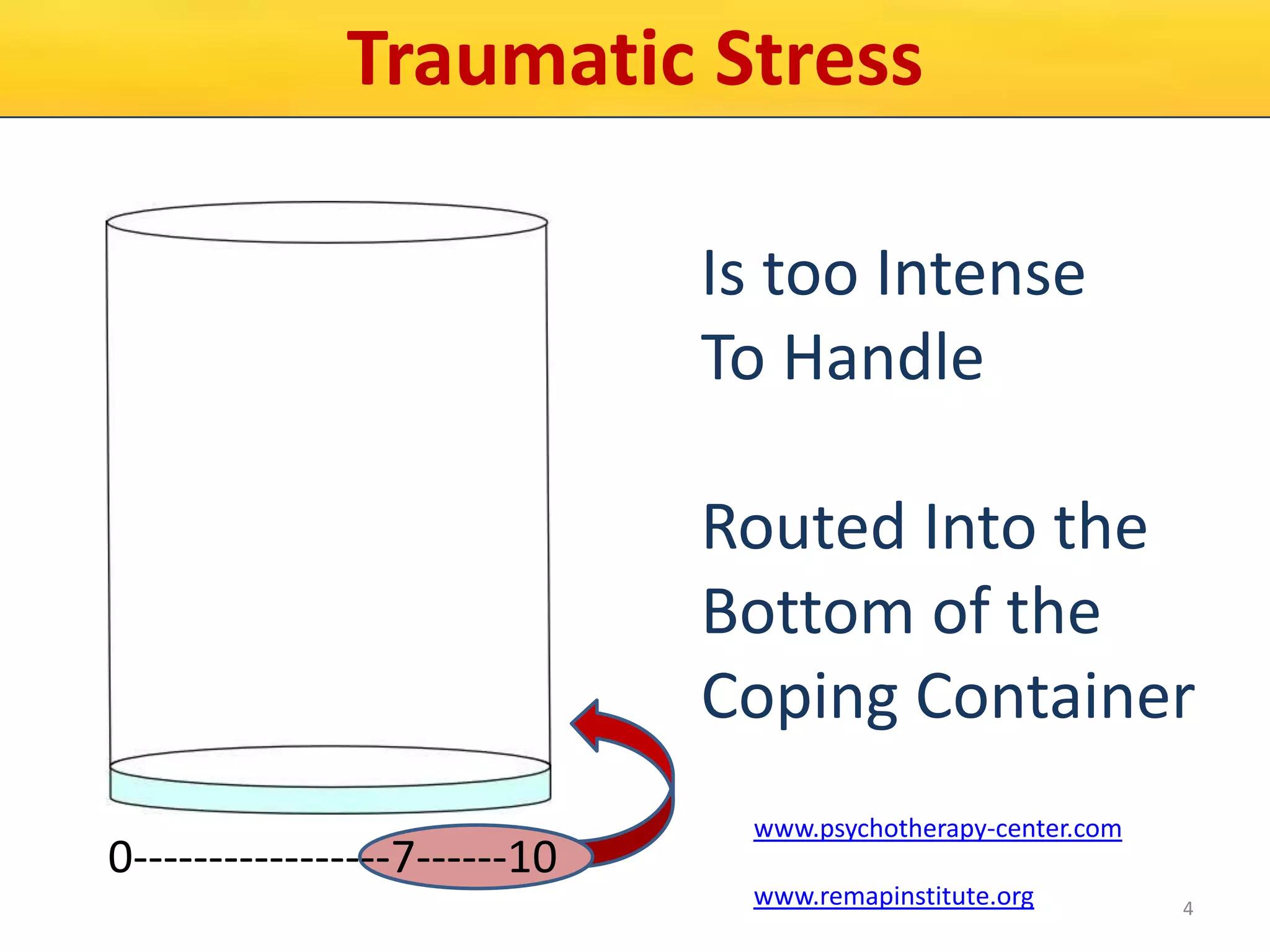
Traumatic Stress
Is too Intense
To Handle

Routed Into the
Bottom of the
Coping Container
0-----------------7------10

www.psychotherapy-center.com
www.remapinstitute.org

4
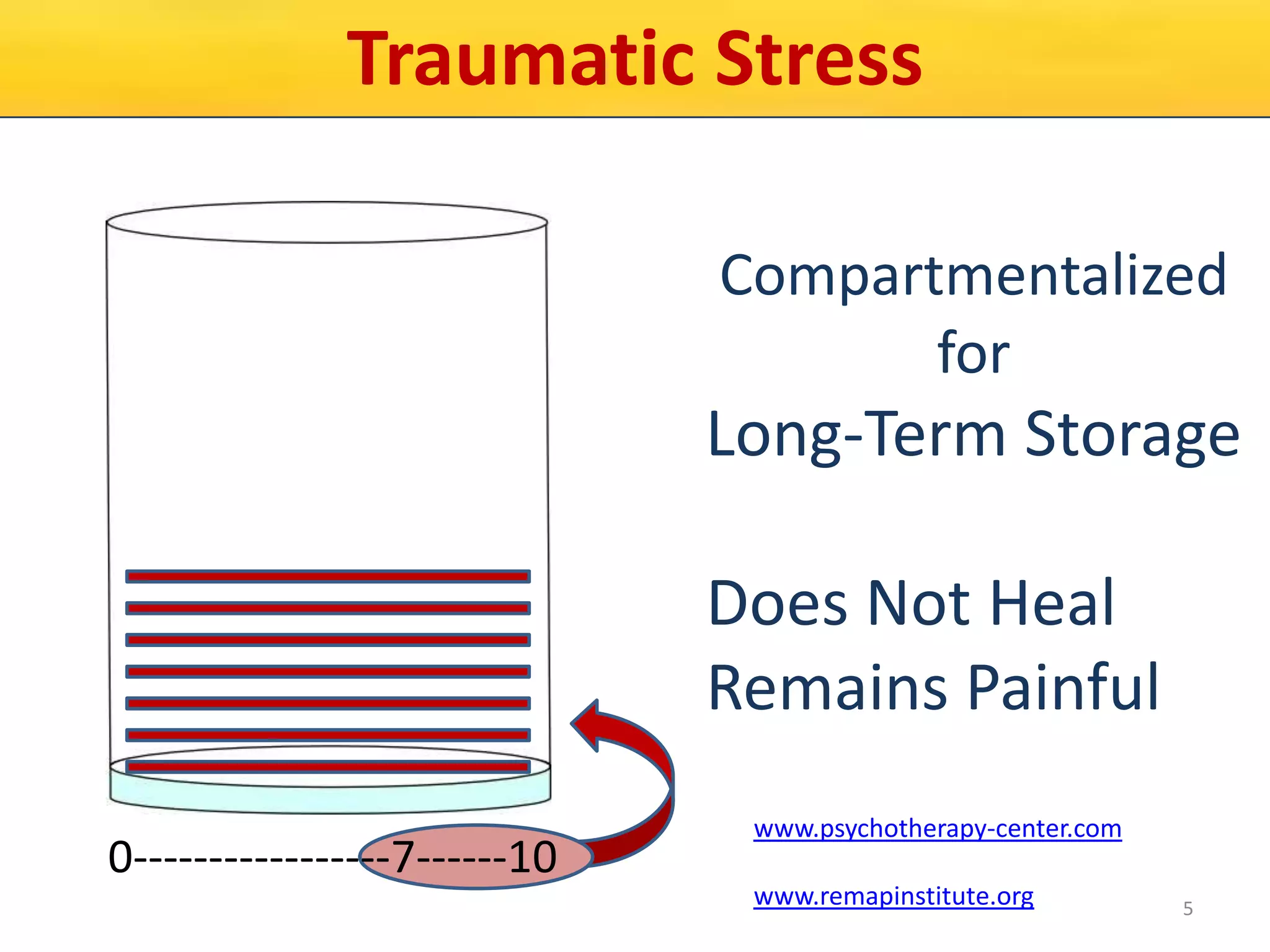
Traumatic Stress
Compartmentalized
for

Long-Term Storage
Does Not Heal
Remains Painful
0-----------------7------10

www.psychotherapy-center.com
www.remapinstitute.org

5
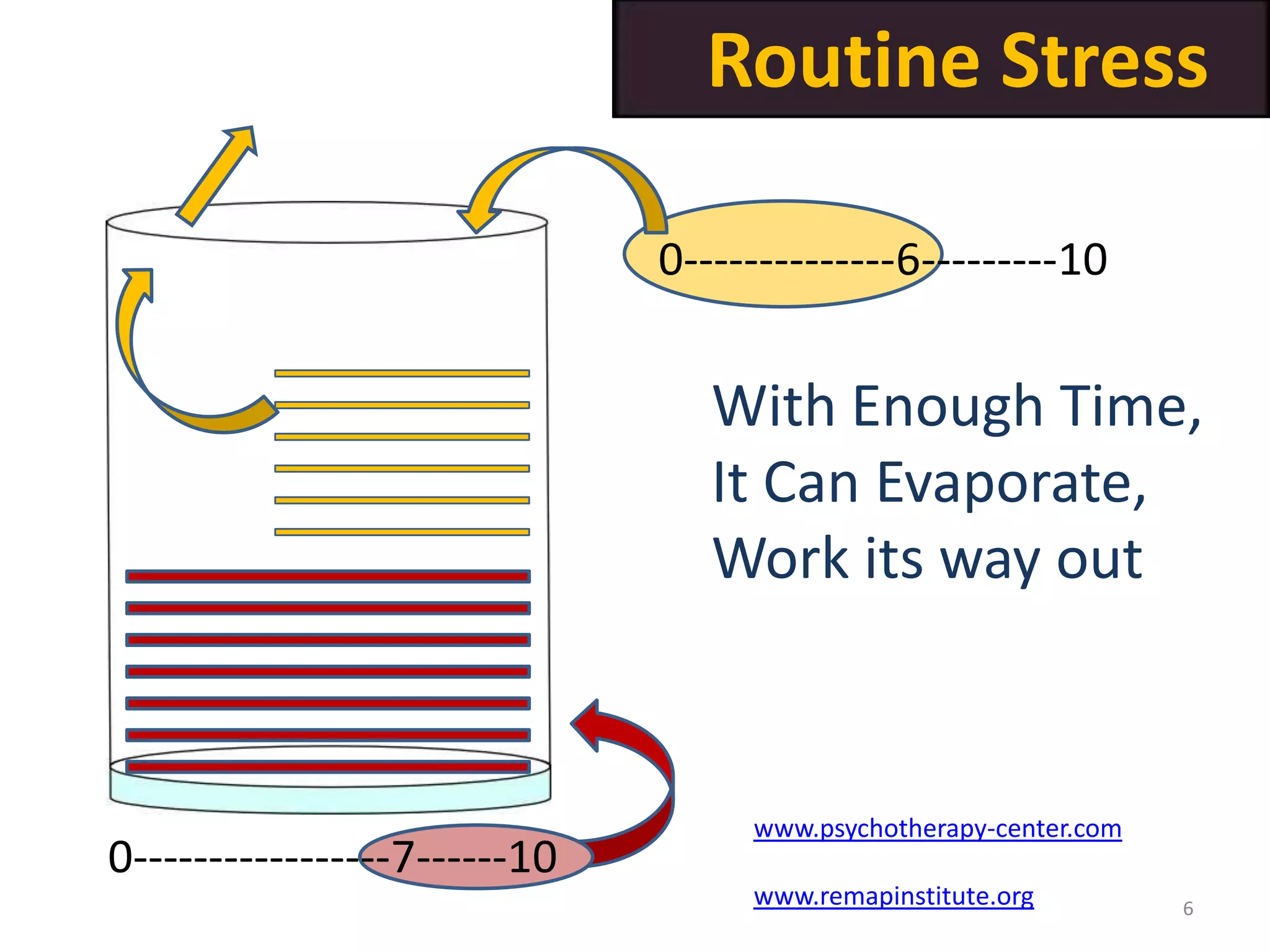
Routine Stress
0--------------6---------10

With Enough Time,
It Can Evaporate,
Work its way out

0-----------------7------10

www.psychotherapy-center.com
www.remapinstitute.org

6
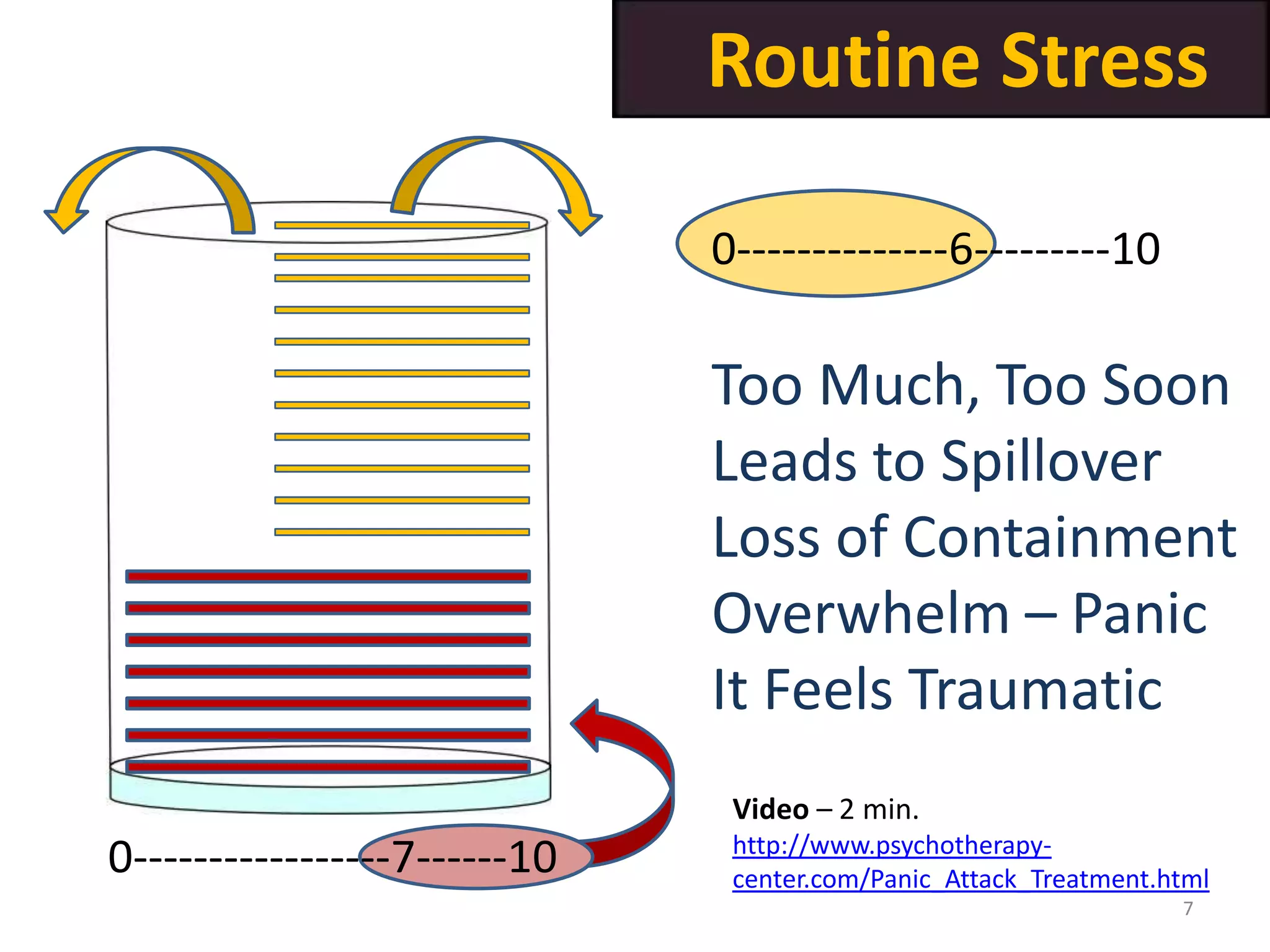
Routine Stress
0--------------6---------10

Too Much, Too Soon
Leads to Spillover
Loss of Containment
Overwhelm – Panic
It Feels Traumatic
Video – 2 min.

0-----------------7------10

http://www.psychotherapycenter.com/Panic_Attack_Treatment.html
7
Emotional Midbrain
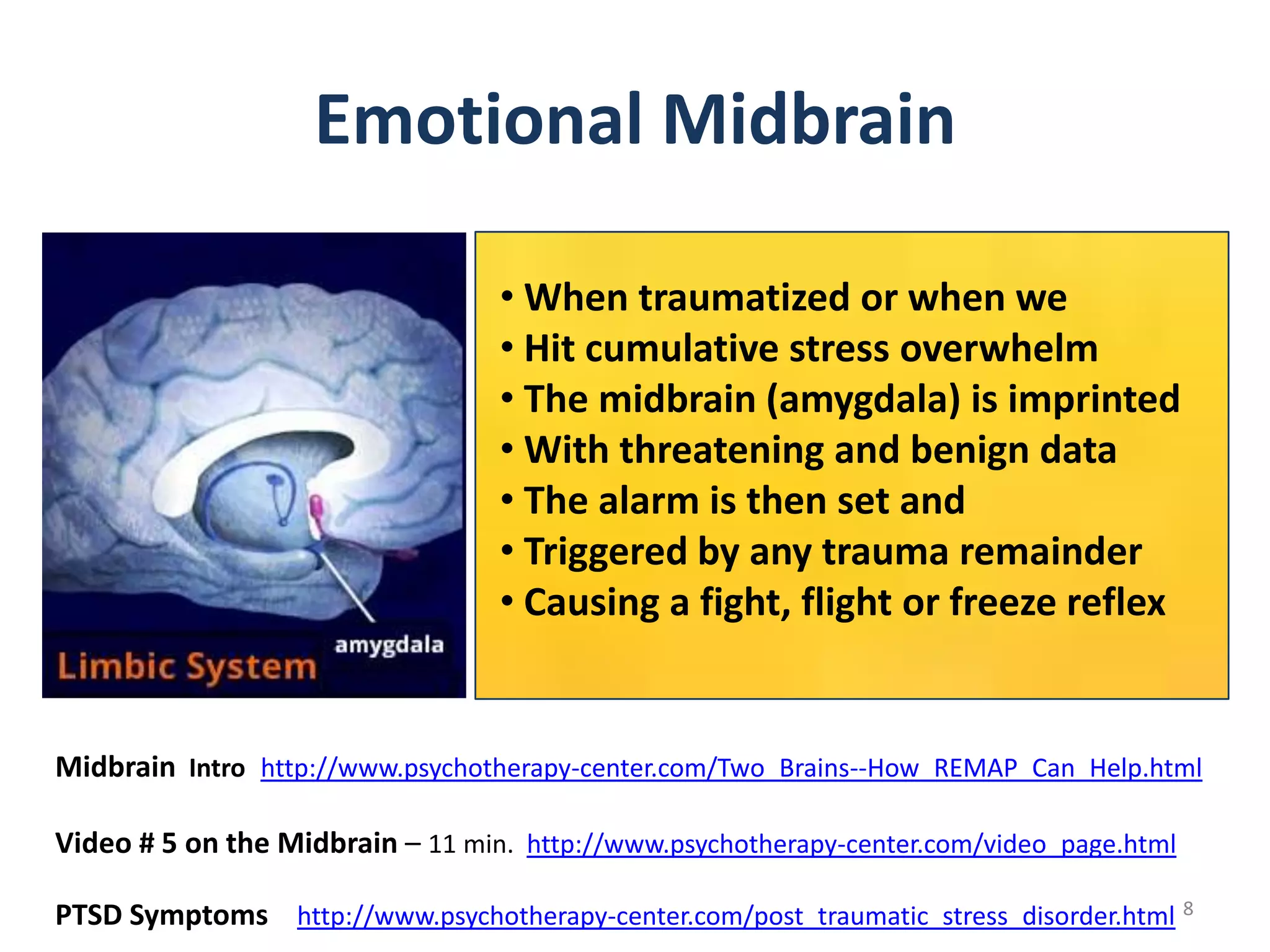
• When traumatized or when we
• Hit cumulative stress overwhelm
• The midbrain (amygdala) is imprinted
• With threatening and benign data
• The alarm is then set and
• Triggered by any trauma remainder
• Causing a fight, flight or freeze reflex

Midbrain Intro http://www.psychotherapy-center.com/Two_Brains--How_REMAP_Can_Help.html
Video # 5 on the Midbrain – 11 min. http://www.psychotherapy-center.com/video_page.html
PTSD Symptoms http://www.psychotherapy-center.com/post_traumatic_stress_disorder.html 8
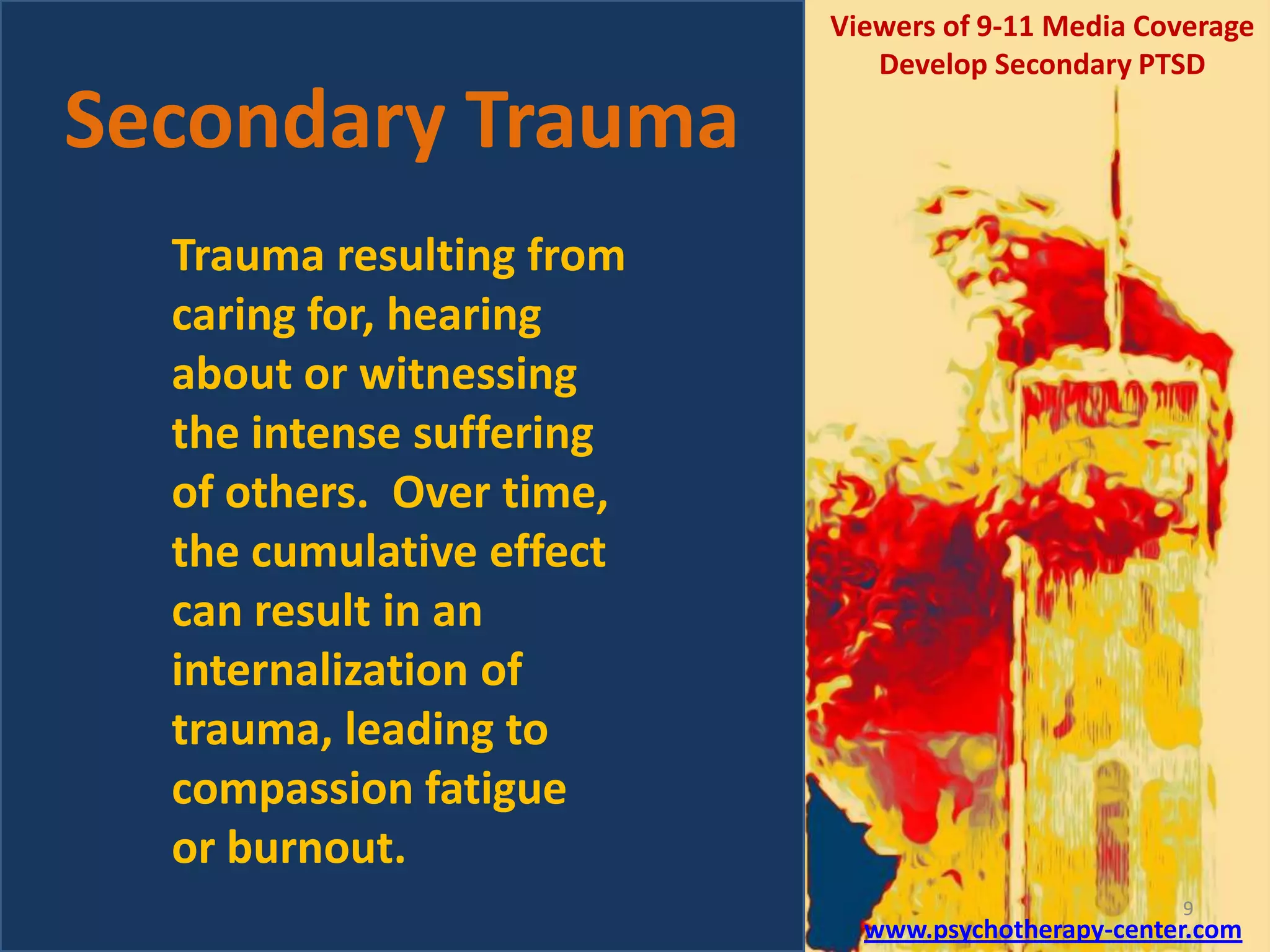
Secondary Trauma

Viewers of 9-11 Media Coverage
Develop Secondary PTSD

Trauma resulting from
caring for, hearing
about or witnessing
the intense suffering
of others. Over time,
the cumulative effect
can result in an
internalization of
trauma, leading to
compassion fatigue
or burnout.
9

www.psychotherapy-center.com
12 Ways to
Increase
Resilience
to Stress &
Secondary
Trauma
www.psychotherapy-center.com

10
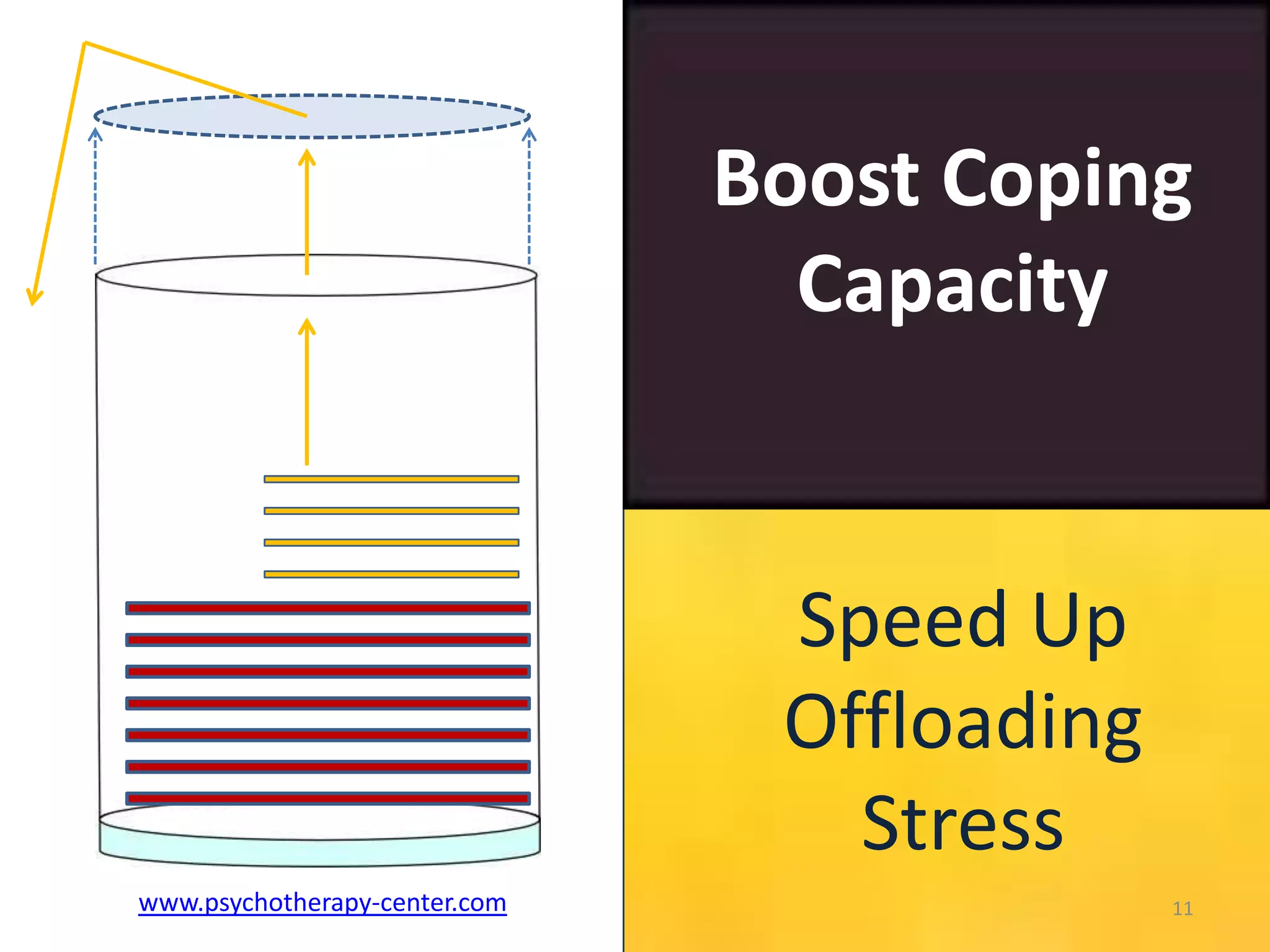
Boost Coping
Capacity

Speed Up
Offloading
Stress
www.psychotherapy-center.com

11
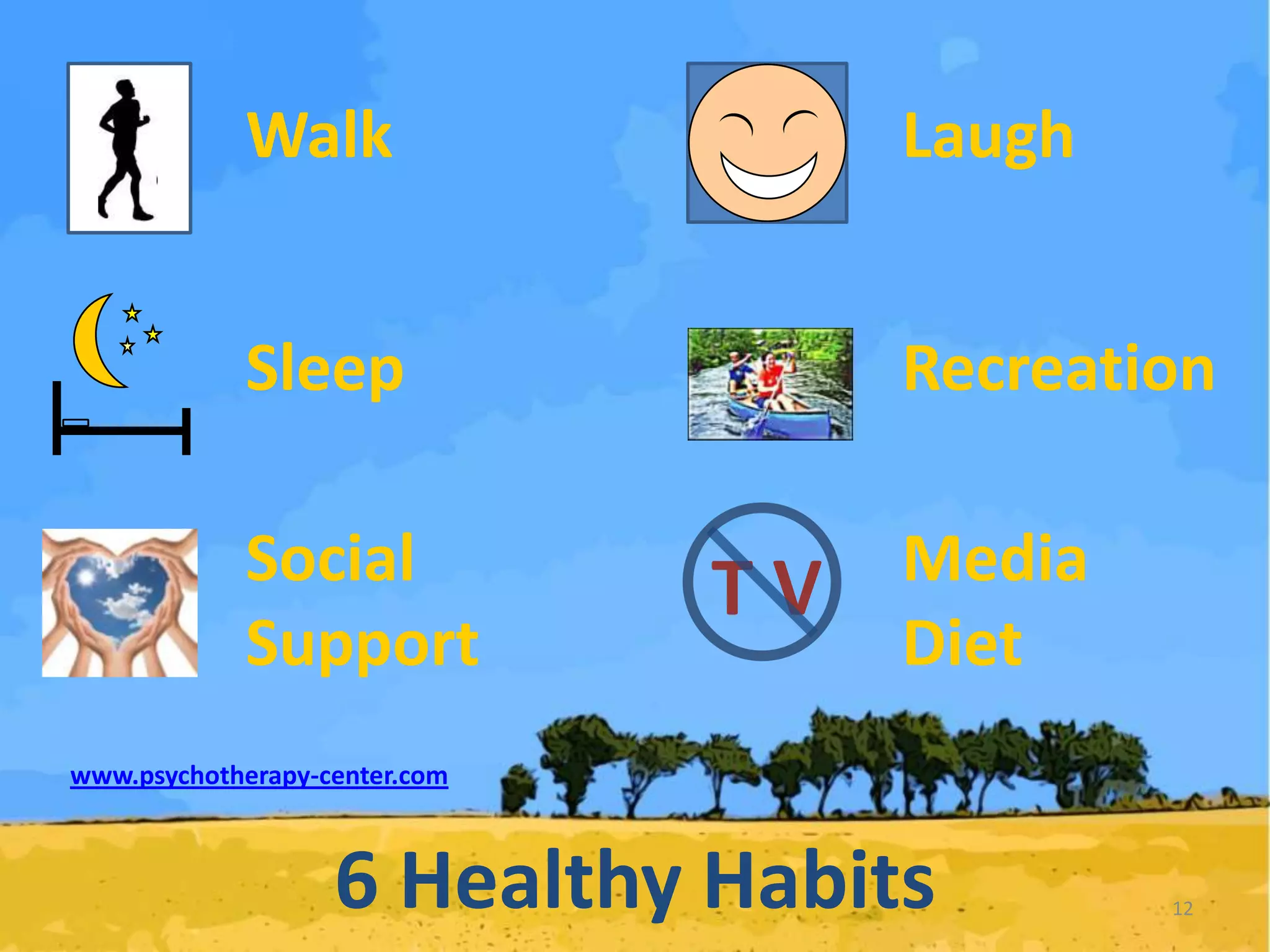
Walk

Laugh

Sleep

Recreation

Social
Support

Media
Diet

TV

www.psychotherapy-center.com

6 Healthy Habits

12
3 Ways to Manage the Mind
Change Your Expectations
Expect = Get

Expect = Get

Develop a Positive Filter
Look for What’s to Like – Attitude of Gratitude

Let the ANTs Go
Automatic Negative Thoughts
http://www.psychotherapy-center.com/cognitive-behavioral-therapy.html

13
3 Daily Mind-Body Practices
Stress-Relieving Breathing
Video # 1 – 11 min. Intro.
Video # 2 – 6.5 min. Exercise
http://www.psychotherapy-center.com/video_page.html

Mindfulness
Video # 3 – 7 min. Intro.
Video # 4 – 7.5 min. Exercise
http://www.psychotherapy-center.com/video_page.html

Quick REMAP
Video # 6 – 11 min.
http://www.psychotherapy-center.com/video_page.html
14
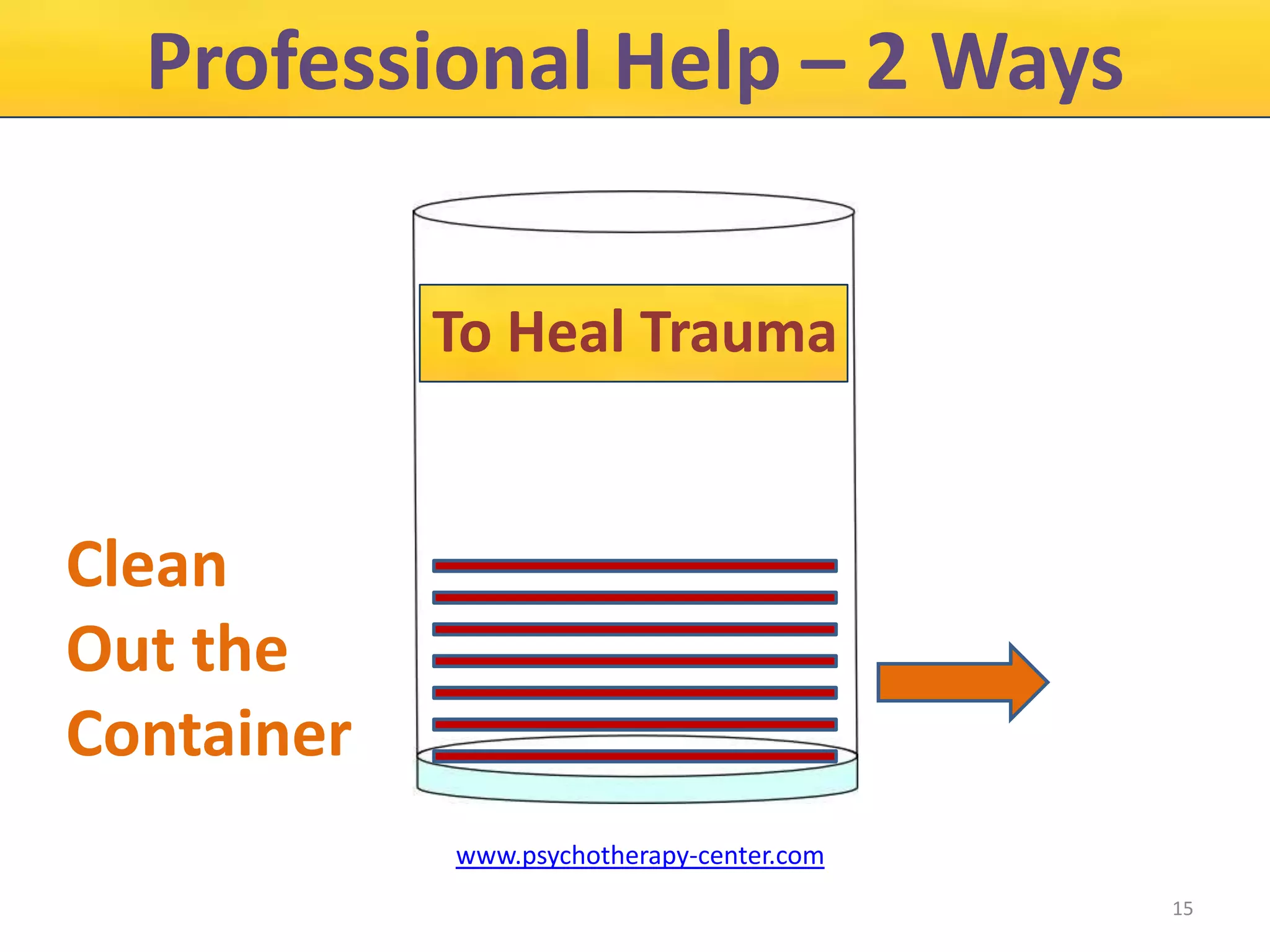
Professional Help – 2 Ways
To Heal Trauma

Clean
Out the
Container
www.psychotherapy-center.com
15
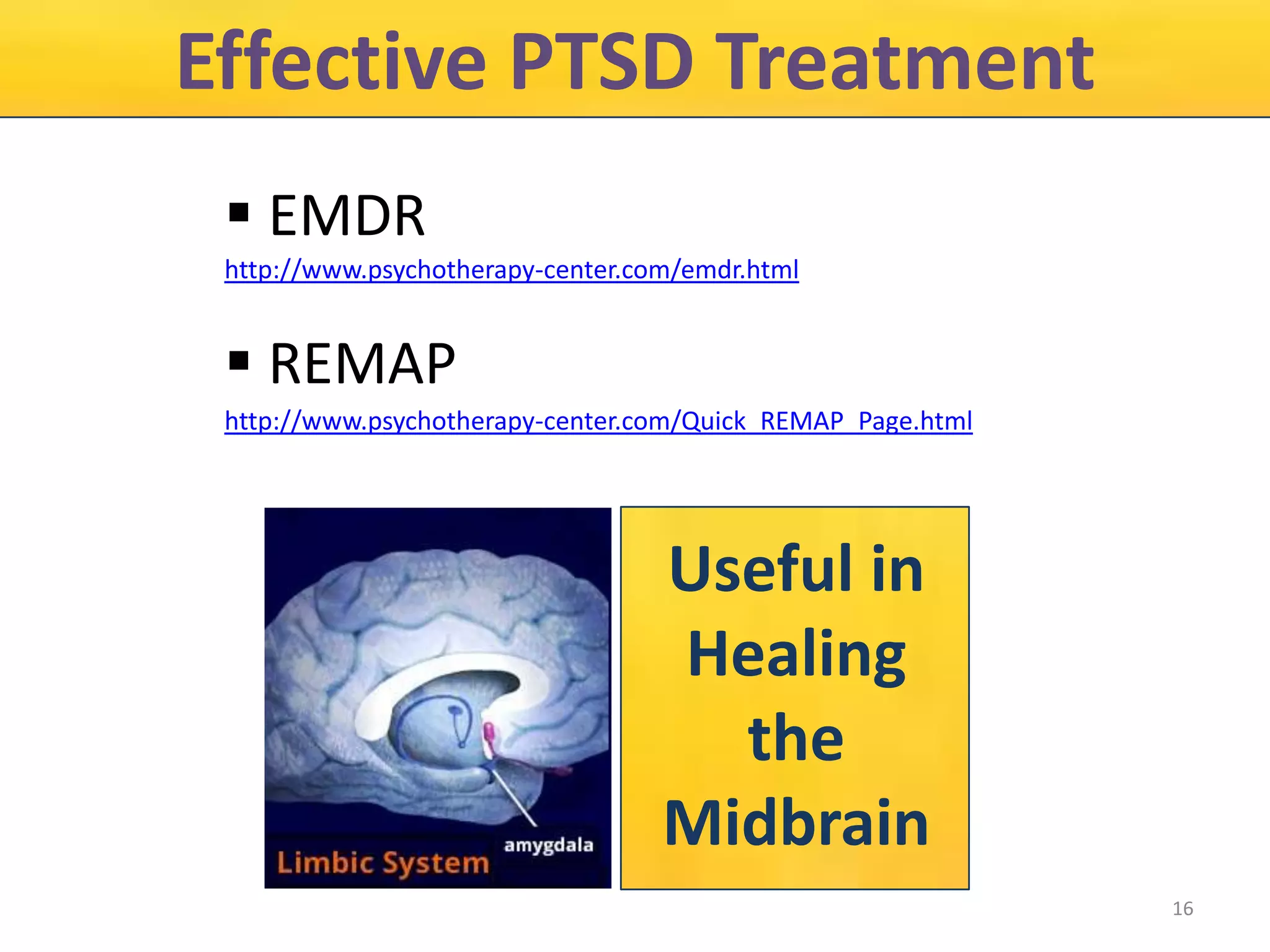
Effective PTSD Treatment
 EMDR
http://www.psychotherapy-center.com/emdr.html

 REMAP
http://www.psychotherapy-center.com/Quick_REMAP_Page.html

Useful in
Healing
the
Midbrain
16
More Links to Info. & Articles
Article: Overcoming a Firefighter’s Trauma Case Study
http://www.psychotherapy-center.com/REMAP_Case_Study-Firefighter_Trauma.html

SlideShare: PTSD War Trauma Treatment Case Studies
SlideShare : Treating Domestic Violence PTSD Case Study
http://www.psychotherapy-center.com/post_traumatic_stress_disorder.html

Article: Soothing the Sympathetic Nervous System -- REMAP Research
http://www.psychotherapy-center.com/remap-HRV_research1.html

17
Steve B. Reed, LPC, LMSW, LMFT
Please Share & Like
On Social Media

www.psychotherapy-center.com
stevereed@psychotherapy-center.com

18

PTSD, Stress, Secondary Trauma & Compassion Fatigue: 14 Steps That Help

  • 1.
    PTSD Stress Secondary Trauma CompassionFatigue 14 Steps That Help 14 Steps That Help Steve B. Reed, LPC, LMSW, LMFT 1 www.psychotherapy-center.com
  • 2.
    Stress Level Limit StressGoes Here Psychological Coping Container Whether your capacity for containing stress is small, medium or large, everyone has their limit. www.psychotherapy-center.com 2
  • 3.
    Two Types ofStress Routine Stress Both Adversely Effect Functioning 0--------------6---------10 Traumatic Stress 0-----------------7------10 www.psychotherapy-center.com 3
  • 4.
    Traumatic Stress Is tooIntense To Handle Routed Into the Bottom of the Coping Container 0-----------------7------10 www.psychotherapy-center.com www.remapinstitute.org 4
  • 5.
    Traumatic Stress Compartmentalized for Long-Term Storage DoesNot Heal Remains Painful 0-----------------7------10 www.psychotherapy-center.com www.remapinstitute.org 5
  • 6.
    Routine Stress 0--------------6---------10 With EnoughTime, It Can Evaporate, Work its way out 0-----------------7------10 www.psychotherapy-center.com www.remapinstitute.org 6
  • 7.
    Routine Stress 0--------------6---------10 Too Much,Too Soon Leads to Spillover Loss of Containment Overwhelm – Panic It Feels Traumatic Video – 2 min. 0-----------------7------10 http://www.psychotherapycenter.com/Panic_Attack_Treatment.html 7
  • 8.
    Emotional Midbrain • Whentraumatized or when we • Hit cumulative stress overwhelm • The midbrain (amygdala) is imprinted • With threatening and benign data • The alarm is then set and • Triggered by any trauma remainder • Causing a fight, flight or freeze reflex Midbrain Intro http://www.psychotherapy-center.com/Two_Brains--How_REMAP_Can_Help.html Video # 5 on the Midbrain – 11 min. http://www.psychotherapy-center.com/video_page.html PTSD Symptoms http://www.psychotherapy-center.com/post_traumatic_stress_disorder.html 8
  • 9.
    Secondary Trauma Viewers of9-11 Media Coverage Develop Secondary PTSD Trauma resulting from caring for, hearing about or witnessing the intense suffering of others. Over time, the cumulative effect can result in an internalization of trauma, leading to compassion fatigue or burnout. 9 www.psychotherapy-center.com
  • 10.
    12 Ways to Increase Resilience toStress & Secondary Trauma www.psychotherapy-center.com 10
  • 11.
  • 12.
  • 13.
    3 Ways toManage the Mind Change Your Expectations Expect = Get Expect = Get Develop a Positive Filter Look for What’s to Like – Attitude of Gratitude Let the ANTs Go Automatic Negative Thoughts http://www.psychotherapy-center.com/cognitive-behavioral-therapy.html 13
  • 14.
    3 Daily Mind-BodyPractices Stress-Relieving Breathing Video # 1 – 11 min. Intro. Video # 2 – 6.5 min. Exercise http://www.psychotherapy-center.com/video_page.html Mindfulness Video # 3 – 7 min. Intro. Video # 4 – 7.5 min. Exercise http://www.psychotherapy-center.com/video_page.html Quick REMAP Video # 6 – 11 min. http://www.psychotherapy-center.com/video_page.html 14
  • 15.
    Professional Help –2 Ways To Heal Trauma Clean Out the Container www.psychotherapy-center.com 15
  • 16.
    Effective PTSD Treatment EMDR http://www.psychotherapy-center.com/emdr.html  REMAP http://www.psychotherapy-center.com/Quick_REMAP_Page.html Useful in Healing the Midbrain 16
  • 17.
    More Links toInfo. & Articles Article: Overcoming a Firefighter’s Trauma Case Study http://www.psychotherapy-center.com/REMAP_Case_Study-Firefighter_Trauma.html SlideShare: PTSD War Trauma Treatment Case Studies SlideShare : Treating Domestic Violence PTSD Case Study http://www.psychotherapy-center.com/post_traumatic_stress_disorder.html Article: Soothing the Sympathetic Nervous System -- REMAP Research http://www.psychotherapy-center.com/remap-HRV_research1.html 17
  • 18.
    Steve B. Reed,LPC, LMSW, LMFT Please Share & Like On Social Media www.psychotherapy-center.com stevereed@psychotherapy-center.com 18