Aida Vargas De Jesús
BIOL-3095- Seminar in Scientific Literature
Department of Biology at UPR Cayey (RISE program)
Prof. Eneida Díaz Pérez
*
*
Anxiety in panic attacks (PAs)
*I. Causes
1. Neurological
2. Genetic by-products
*II. Predisposition
1. Genetics
2. Environmental/Social factors
*III. Physiological Symptoms
1. Spontaneous PAs
2. Induced PAs
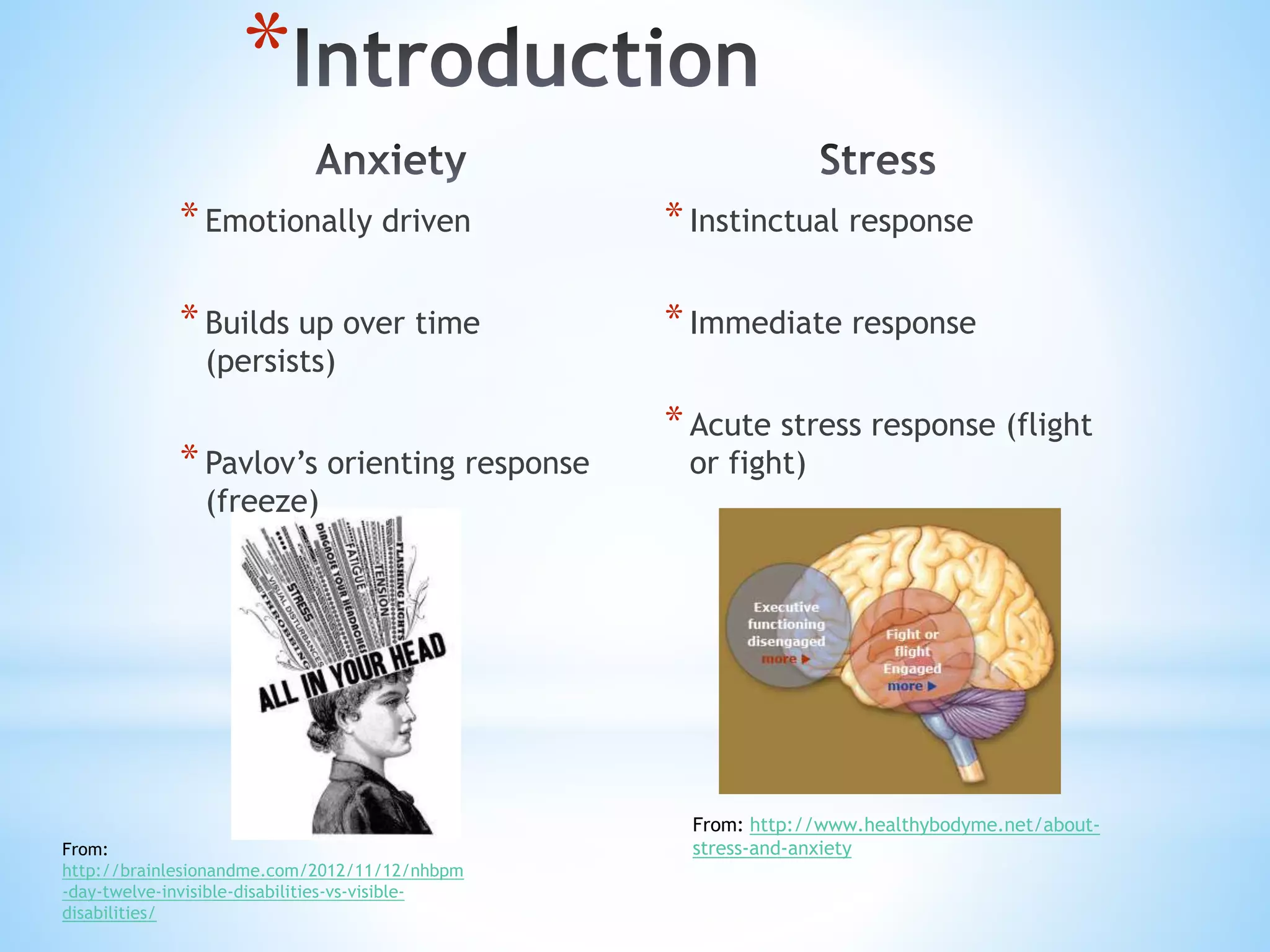
*Emotionally driven
*Builds up over time
(persists)
*Pavlov’s orienting response
(freeze)
*Instinctual response
*Immediate response
*Acute stress response (flight
or fight)
*
From: http://www.healthybodyme.net/about-
stress-and-anxietyFrom:
http://brainlesionandme.com/2012/11/12/nhbpm
-day-twelve-invisible-disabilities-vs-visible-
disabilities/
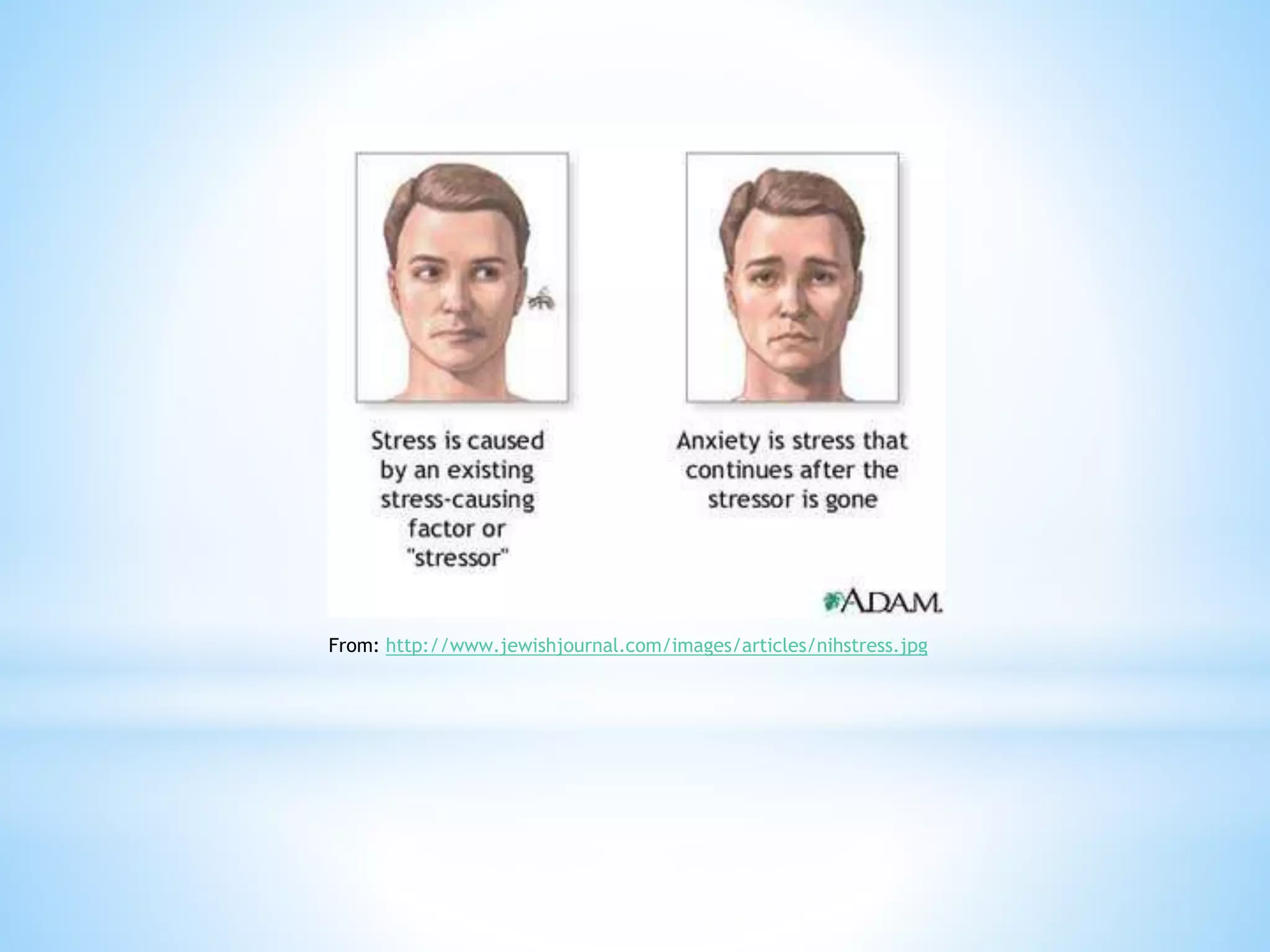
From: http://www.jewishjournal.com/images/articles/nihstress.jpg
*
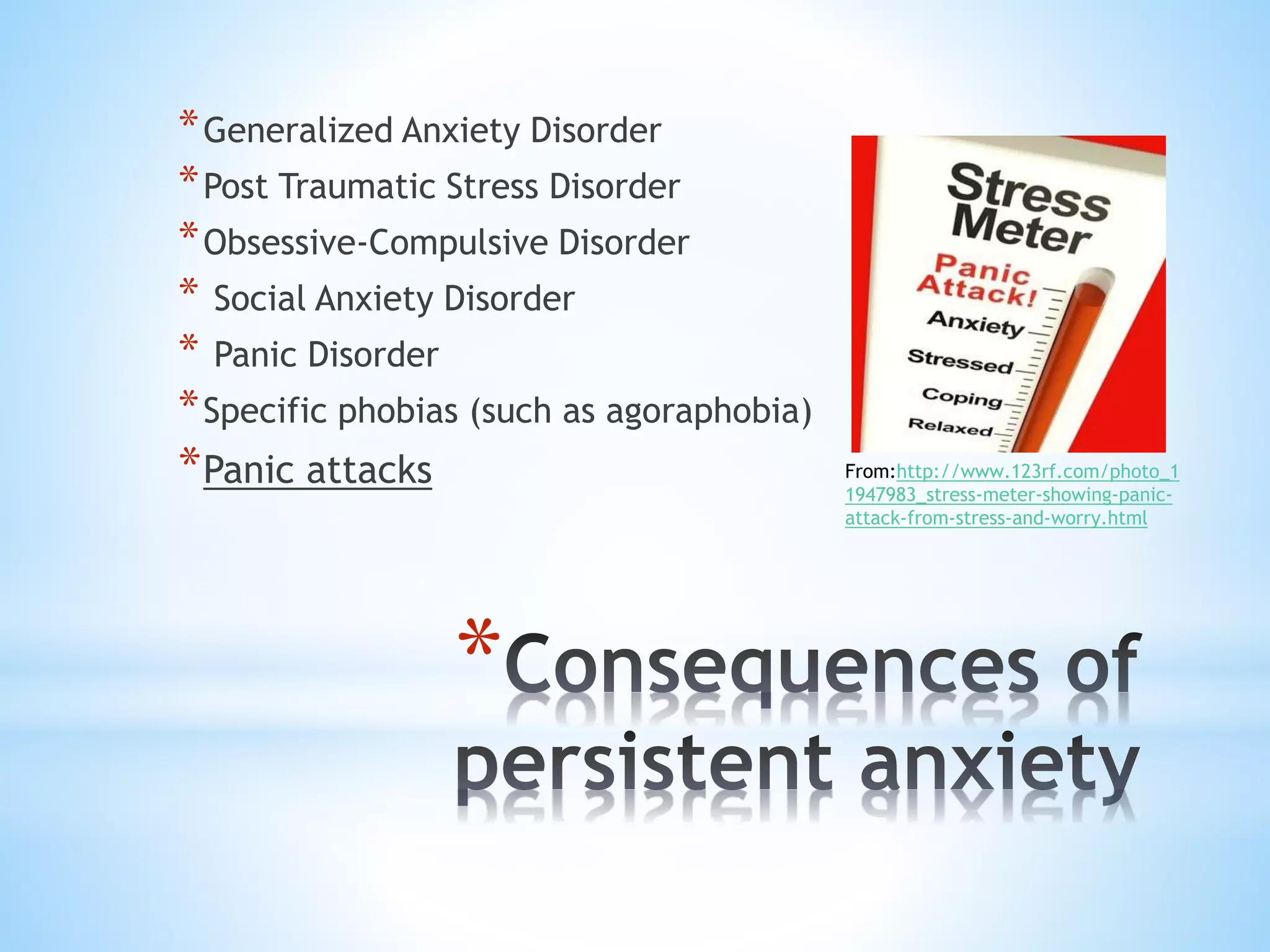
*Generalized Anxiety Disorder
*Post Traumatic Stress Disorder
*Obsessive-Compulsive Disorder
* Social Anxiety Disorder
* Panic Disorder
*Specific phobias (such as agoraphobia)
*Panic attacks From:http://www.123rf.com/photo_1
1947983_stress-meter-showing-panic-
attack-from-stress-and-worry.html
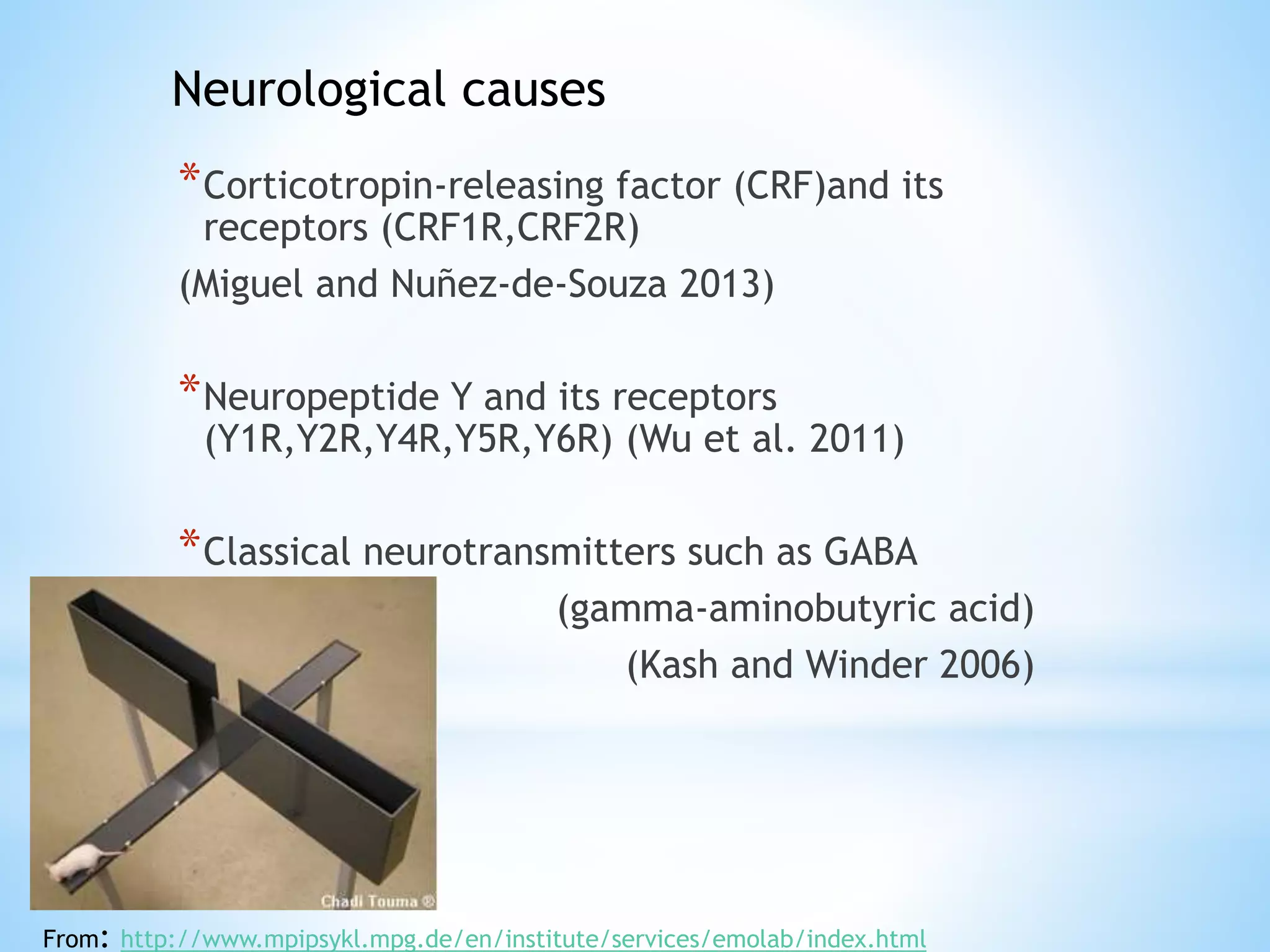
*Corticotropin-releasing factor (CRF)and its
receptors (CRF1R,CRF2R)
(Miguel and Nuñez-de-Souza 2013)
*Neuropeptide Y and its receptors
(Y1R,Y2R,Y4R,Y5R,Y6R) (Wu et al. 2011)
*Classical neurotransmitters such as GABA
(gamma-aminobutyric acid)
(Kash and Winder 2006)
Neurological causes
From: http://www.mpipsykl.mpg.de/en/institute/services/emolab/index.html
*
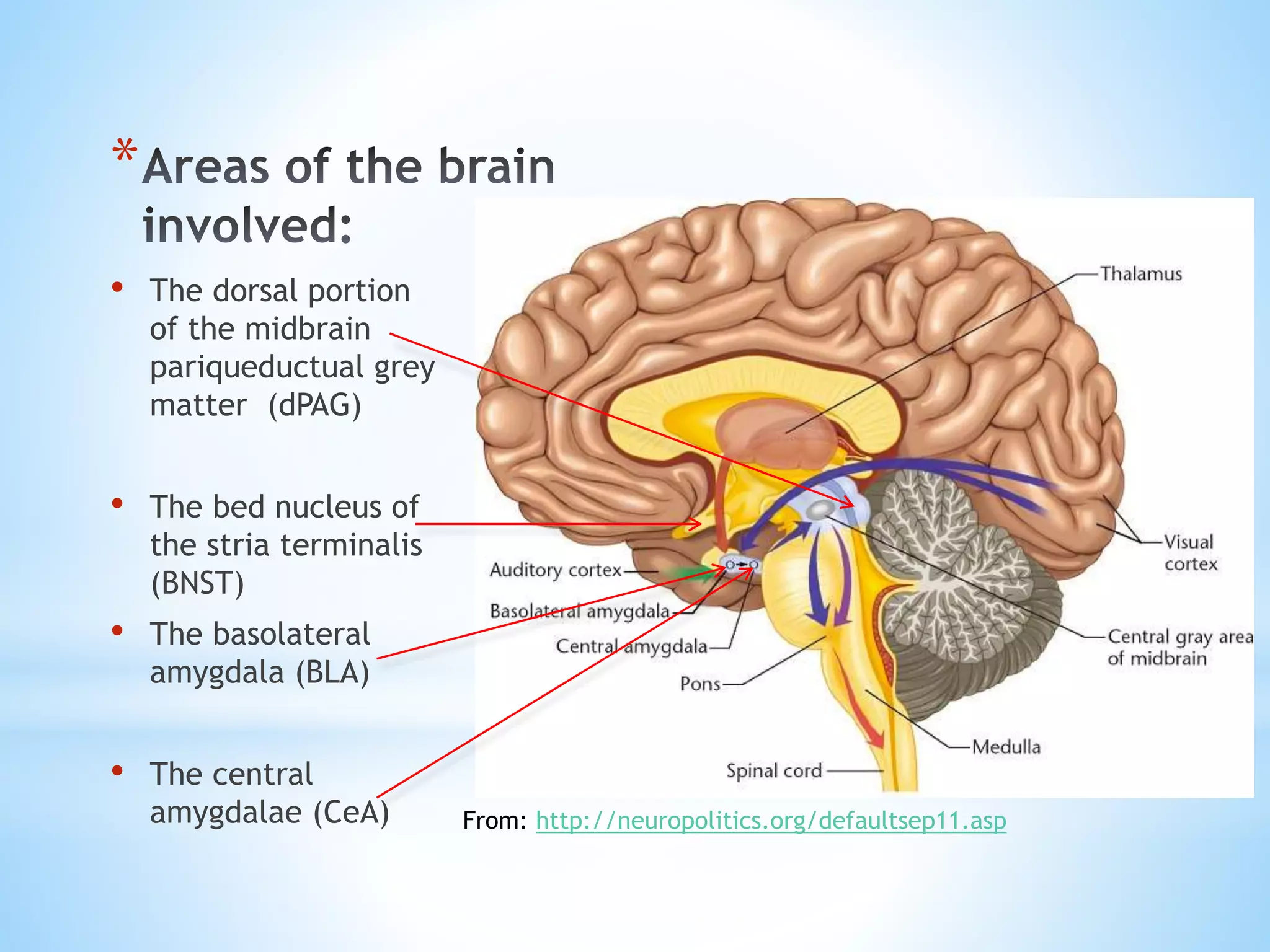
• The dorsal portion
of the midbrain
pariqueductual grey
matter (dPAG)
• The bed nucleus of
the stria terminalis
(BNST)
• The basolateral
amygdala (BLA)
• The central
amygdalae (CeA) From: http://neuropolitics.org/defaultsep11.asp
*
*DSM-IV for panic attacks (Diagnosis and Statistical
Manual IV)
*Induced panic attacks
-lack emotional response
-shows no changes in neurosteroid levels (Brambilla
et al. 2013)
*Spontaneous panic attacks
- large range in severity (fear driven)
-show linear relationship between distress and
physiological symptoms (Lewis and Drewett 2006)
*
*Genetic
-SNPrs4684677 in the preprogrelein gene, obestatin
protein is compromised
(Hansson et al. 2013)
-Children can inherit panic disorder
*Environmental or social factors
-Shyness and behavioral inhibitions
-Parental behavior (overprotective mothers)
-Children of a parent with major depression or
bipolar disorder have been connected to panic disorder
(Hirshfeld-Becker 2008)
*
* Neuropeptide Y and CRFs regulate anxiety levels within the
brain
* Panic attacks involve a large range of symptoms
(palpitations, trembling, choking sensation, nausea, sense of
unreality among others described in PSL-III-R).
* Severity of a panic attack is shaped by individual
circumstances
* Genetics, temperament and filial relationships contribute to
anxiety susceptibility.
*
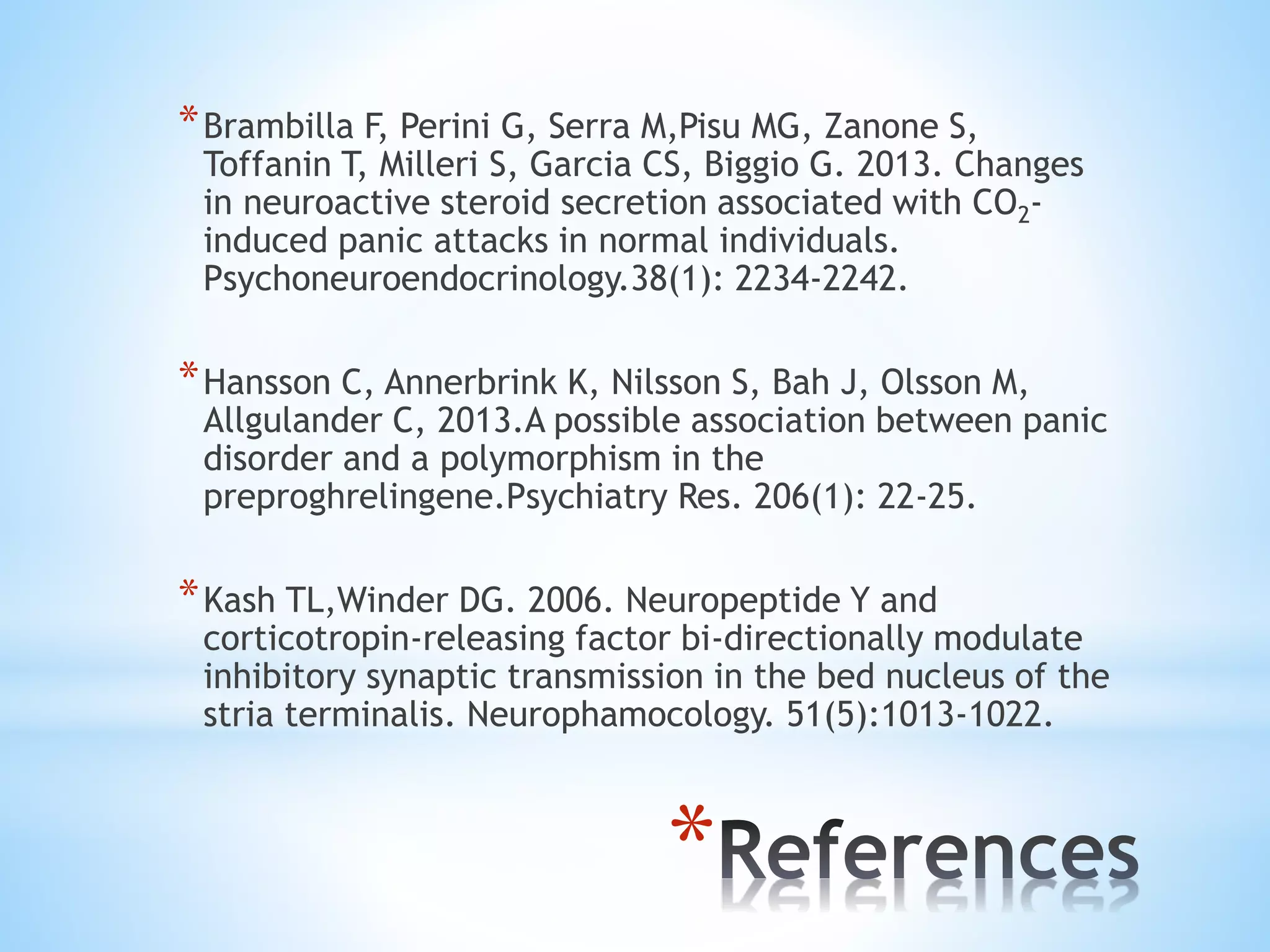
From: http://www.basipilates.com/rendezvous/blog/2013/09/how-pilates-can-help-with-anxiety/
Future panic attack studies:
 Direct approach to symptomology studies
 Focus on variables at different levels of
anxiety expression (interdisciplinary studies)
 Correlate the variables to physiological symptoms
*
*Brambilla F, Perini G, Serra M,Pisu MG, Zanone S,
Toffanin T, Milleri S, Garcia CS, Biggio G. 2013. Changes
in neuroactive steroid secretion associated with CO2-
induced panic attacks in normal individuals.
Psychoneuroendocrinology.38(1): 2234-2242.
*Hansson C, Annerbrink K, Nilsson S, Bah J, Olsson M,
Allgulander C, 2013.A possible association between panic
disorder and a polymorphism in the
preproghrelingene.Psychiatry Res. 206(1): 22-25.
*Kash TL,Winder DG. 2006. Neuropeptide Y and
corticotropin-releasing factor bi-directionally modulate
inhibitory synaptic transmission in the bed nucleus of the
stria terminalis. Neurophamocology. 51(5):1013-1022.
*Lewis LE, Drewett RF. 2006. Psychophysiological correlates
of anxiety: A single-case study. J Anxiety Disord. 20 (6): 829–
835.
*Miguel TT, Nuñes-de-Souza RL. 2011. Anxiogenic and
antinociceptive effects induced by corticotropin-releasing
factor (CRF) injections into the periaqueductal gray are
modulated by CRF1 receptor in mice. Horm Behav. 60(1):
292-300.
*Hirshfeld-Becker DR, Micco JA, Simoes NA, Henin A. 2008.
High risk studies and developmental antecedents of anxiety
disorders. Am J Med Genet C Semin Med Genet. 148C:99–117
*Wu G, Feder A, Wegener G, Bailey C, Saxena S, Charney D,
Mathe AA. 2011. Central functions of neuropeptideY in mood
and anxiety disorders. Expert Opin. Ther. Targets. 15(11):
1317-1331.

Anxiety and Physiological Symptoms of Panic Attacks final presentation

  • 1.
    Aida Vargas DeJesús BIOL-3095- Seminar in Scientific Literature Department of Biology at UPR Cayey (RISE program) Prof. Eneida Díaz Pérez *
  • 2.
    * Anxiety in panicattacks (PAs) *I. Causes 1. Neurological 2. Genetic by-products *II. Predisposition 1. Genetics 2. Environmental/Social factors *III. Physiological Symptoms 1. Spontaneous PAs 2. Induced PAs
  • 3.
    *Emotionally driven *Builds upover time (persists) *Pavlov’s orienting response (freeze) *Instinctual response *Immediate response *Acute stress response (flight or fight) * From: http://www.healthybodyme.net/about- stress-and-anxietyFrom: http://brainlesionandme.com/2012/11/12/nhbpm -day-twelve-invisible-disabilities-vs-visible- disabilities/
  • 4.
  • 5.
    * *Generalized Anxiety Disorder *PostTraumatic Stress Disorder *Obsessive-Compulsive Disorder * Social Anxiety Disorder * Panic Disorder *Specific phobias (such as agoraphobia) *Panic attacks From:http://www.123rf.com/photo_1 1947983_stress-meter-showing-panic- attack-from-stress-and-worry.html
  • 6.
    *Corticotropin-releasing factor (CRF)andits receptors (CRF1R,CRF2R) (Miguel and Nuñez-de-Souza 2013) *Neuropeptide Y and its receptors (Y1R,Y2R,Y4R,Y5R,Y6R) (Wu et al. 2011) *Classical neurotransmitters such as GABA (gamma-aminobutyric acid) (Kash and Winder 2006) Neurological causes From: http://www.mpipsykl.mpg.de/en/institute/services/emolab/index.html
  • 7.
    * • The dorsalportion of the midbrain pariqueductual grey matter (dPAG) • The bed nucleus of the stria terminalis (BNST) • The basolateral amygdala (BLA) • The central amygdalae (CeA) From: http://neuropolitics.org/defaultsep11.asp
  • 8.
    * *DSM-IV for panicattacks (Diagnosis and Statistical Manual IV) *Induced panic attacks -lack emotional response -shows no changes in neurosteroid levels (Brambilla et al. 2013) *Spontaneous panic attacks - large range in severity (fear driven) -show linear relationship between distress and physiological symptoms (Lewis and Drewett 2006)
  • 9.
    * *Genetic -SNPrs4684677 in thepreprogrelein gene, obestatin protein is compromised (Hansson et al. 2013) -Children can inherit panic disorder *Environmental or social factors -Shyness and behavioral inhibitions -Parental behavior (overprotective mothers) -Children of a parent with major depression or bipolar disorder have been connected to panic disorder (Hirshfeld-Becker 2008)
  • 10.
    * * Neuropeptide Yand CRFs regulate anxiety levels within the brain * Panic attacks involve a large range of symptoms (palpitations, trembling, choking sensation, nausea, sense of unreality among others described in PSL-III-R). * Severity of a panic attack is shaped by individual circumstances * Genetics, temperament and filial relationships contribute to anxiety susceptibility.
  • 11.
    * From: http://www.basipilates.com/rendezvous/blog/2013/09/how-pilates-can-help-with-anxiety/ Future panicattack studies:  Direct approach to symptomology studies  Focus on variables at different levels of anxiety expression (interdisciplinary studies)  Correlate the variables to physiological symptoms
  • 12.
    * *Brambilla F, PeriniG, Serra M,Pisu MG, Zanone S, Toffanin T, Milleri S, Garcia CS, Biggio G. 2013. Changes in neuroactive steroid secretion associated with CO2- induced panic attacks in normal individuals. Psychoneuroendocrinology.38(1): 2234-2242. *Hansson C, Annerbrink K, Nilsson S, Bah J, Olsson M, Allgulander C, 2013.A possible association between panic disorder and a polymorphism in the preproghrelingene.Psychiatry Res. 206(1): 22-25. *Kash TL,Winder DG. 2006. Neuropeptide Y and corticotropin-releasing factor bi-directionally modulate inhibitory synaptic transmission in the bed nucleus of the stria terminalis. Neurophamocology. 51(5):1013-1022.
  • 13.
    *Lewis LE, DrewettRF. 2006. Psychophysiological correlates of anxiety: A single-case study. J Anxiety Disord. 20 (6): 829– 835. *Miguel TT, Nuñes-de-Souza RL. 2011. Anxiogenic and antinociceptive effects induced by corticotropin-releasing factor (CRF) injections into the periaqueductal gray are modulated by CRF1 receptor in mice. Horm Behav. 60(1): 292-300. *Hirshfeld-Becker DR, Micco JA, Simoes NA, Henin A. 2008. High risk studies and developmental antecedents of anxiety disorders. Am J Med Genet C Semin Med Genet. 148C:99–117 *Wu G, Feder A, Wegener G, Bailey C, Saxena S, Charney D, Mathe AA. 2011. Central functions of neuropeptideY in mood and anxiety disorders. Expert Opin. Ther. Targets. 15(11): 1317-1331.