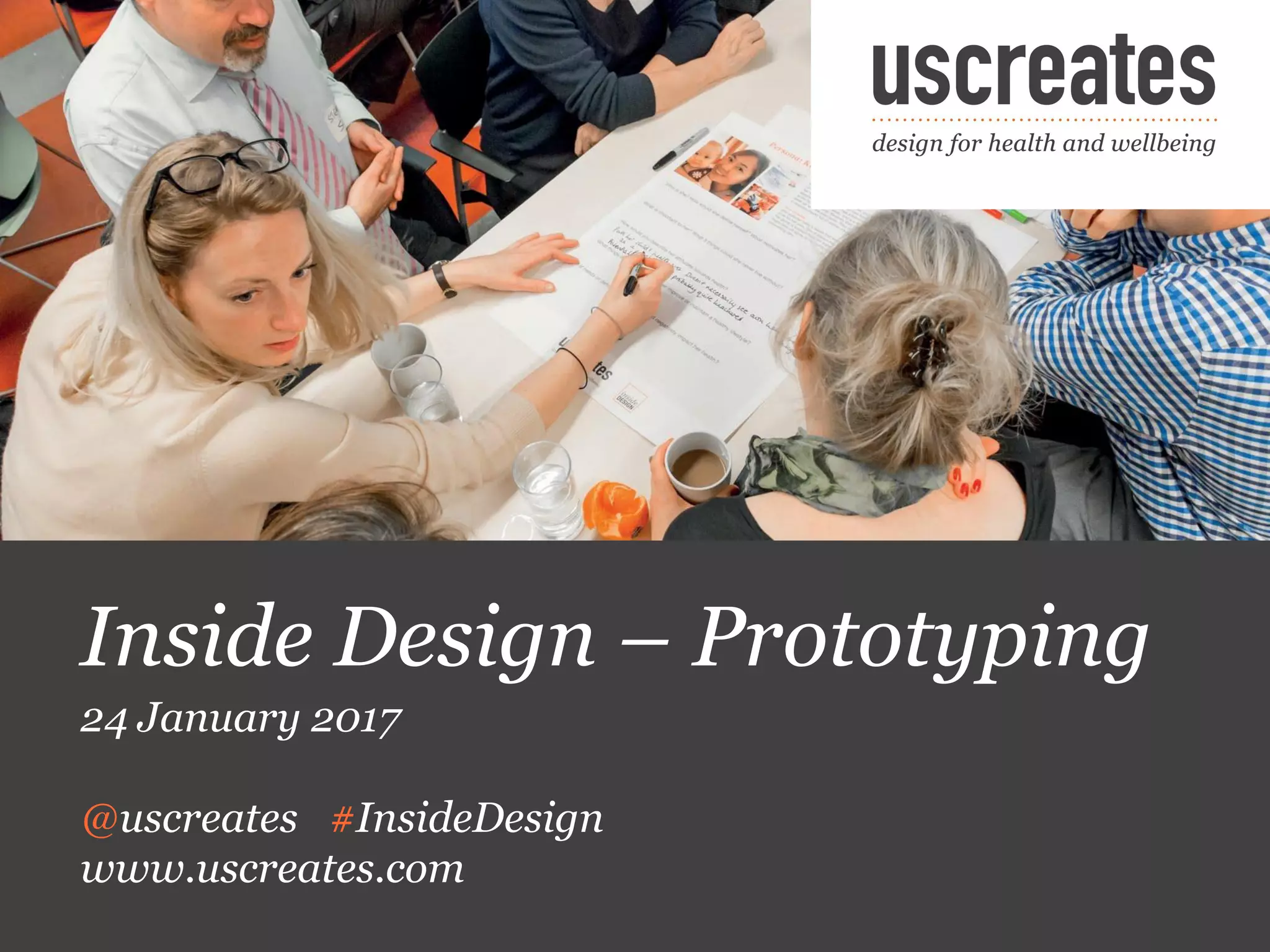
Inside Design – Prototyping
24 January 2017
@uscreates #InsideDesign
www.uscreates.com
Uscreates is a design led agency
creating better outcomes and
experiences in health and wellbeing.
Our Clients.
Introducing the value of prototyping.
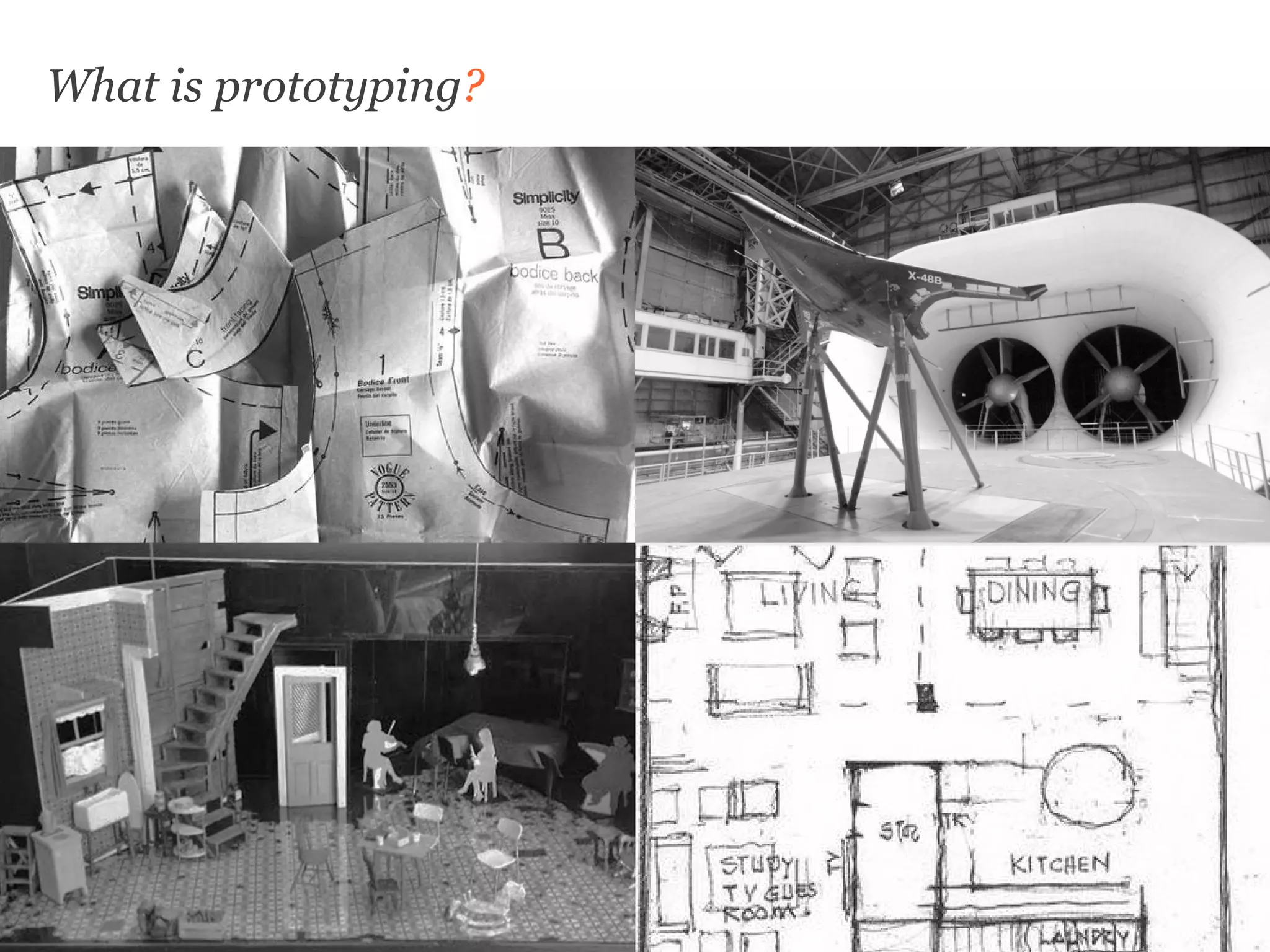
What is prototyping?
The process of mocking up an
idea quickly and with minimal
resource to assess and
improve its viability,
desirability and feasibility.
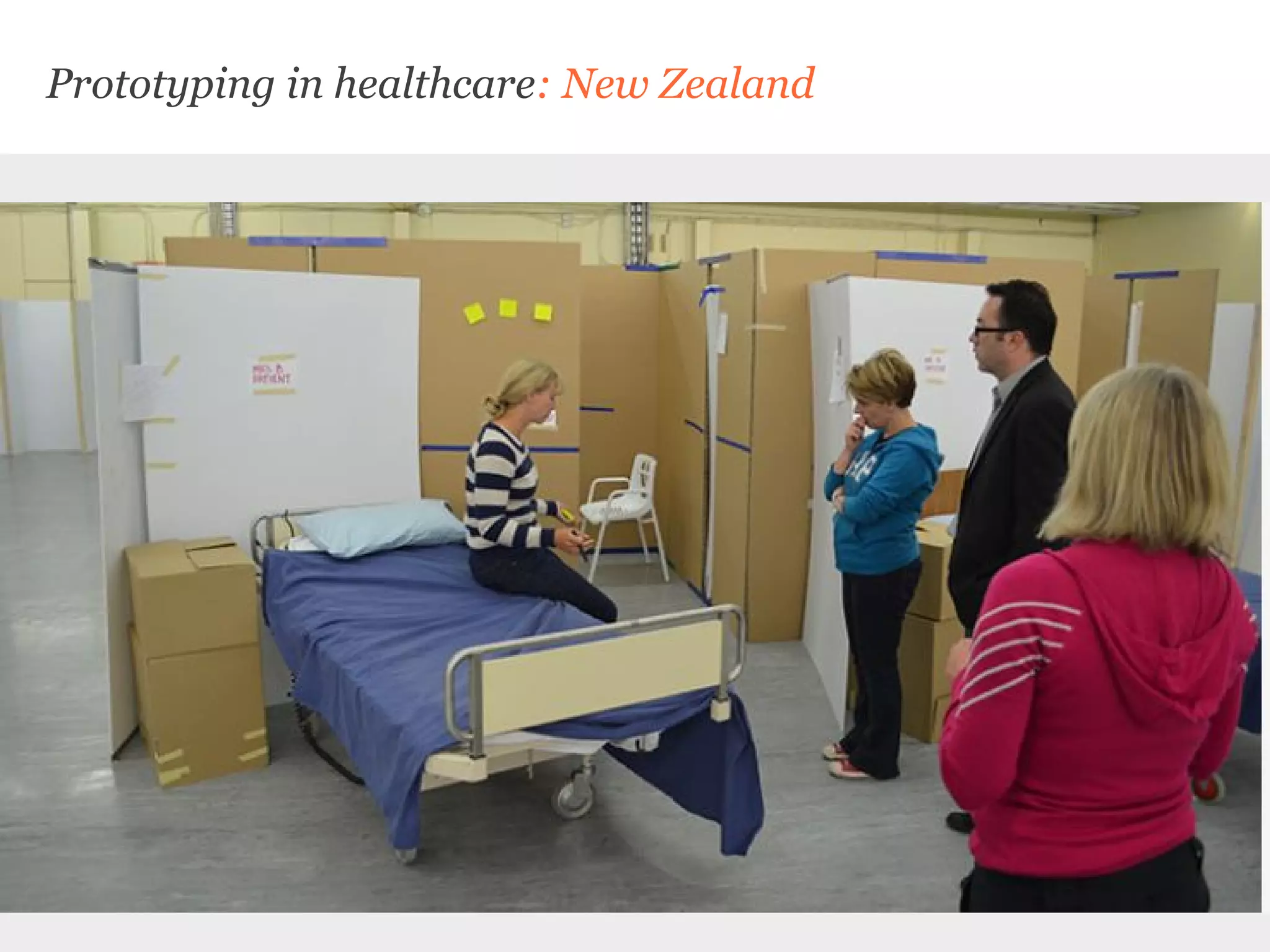
Prototyping in healthcare: New Zealand
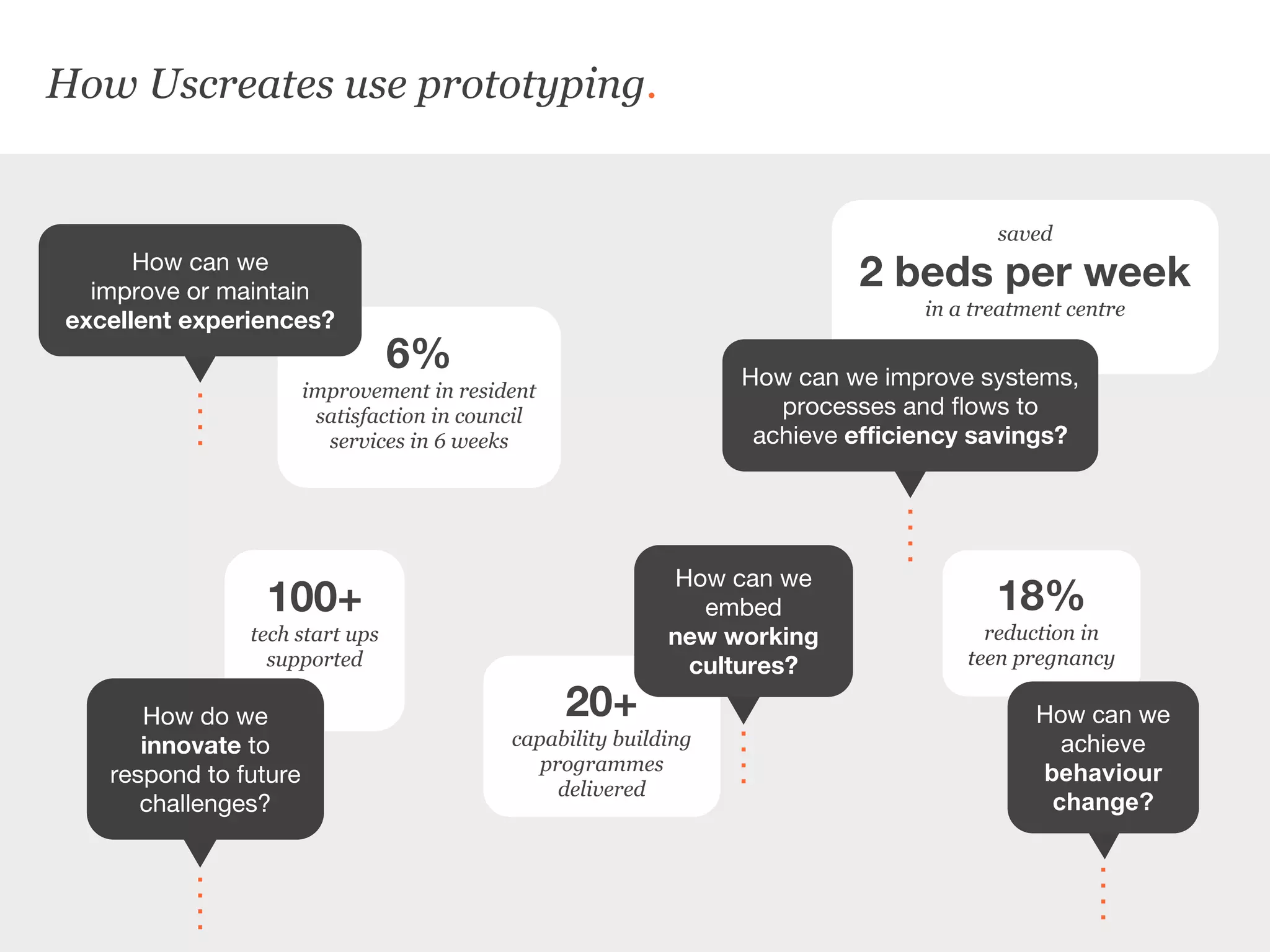
How Uscreates use prototyping.
6%
improvement in resident
satisfaction in council
services in 6 weeks
100+
tech start ups
supported
18%
reduction in
teen pregnancy
saved
2 beds per week
in a treatment centre
20+
capability building
programmes
delivered
How can we
improve or maintain
excellent experiences?
How do we
innovate to
respond to future
challenges?
How can we
achieve
behaviour
change?
How can we improve systems,
processes and flows to
achieve efficiency savings?
How can we
embed
new working
cultures?
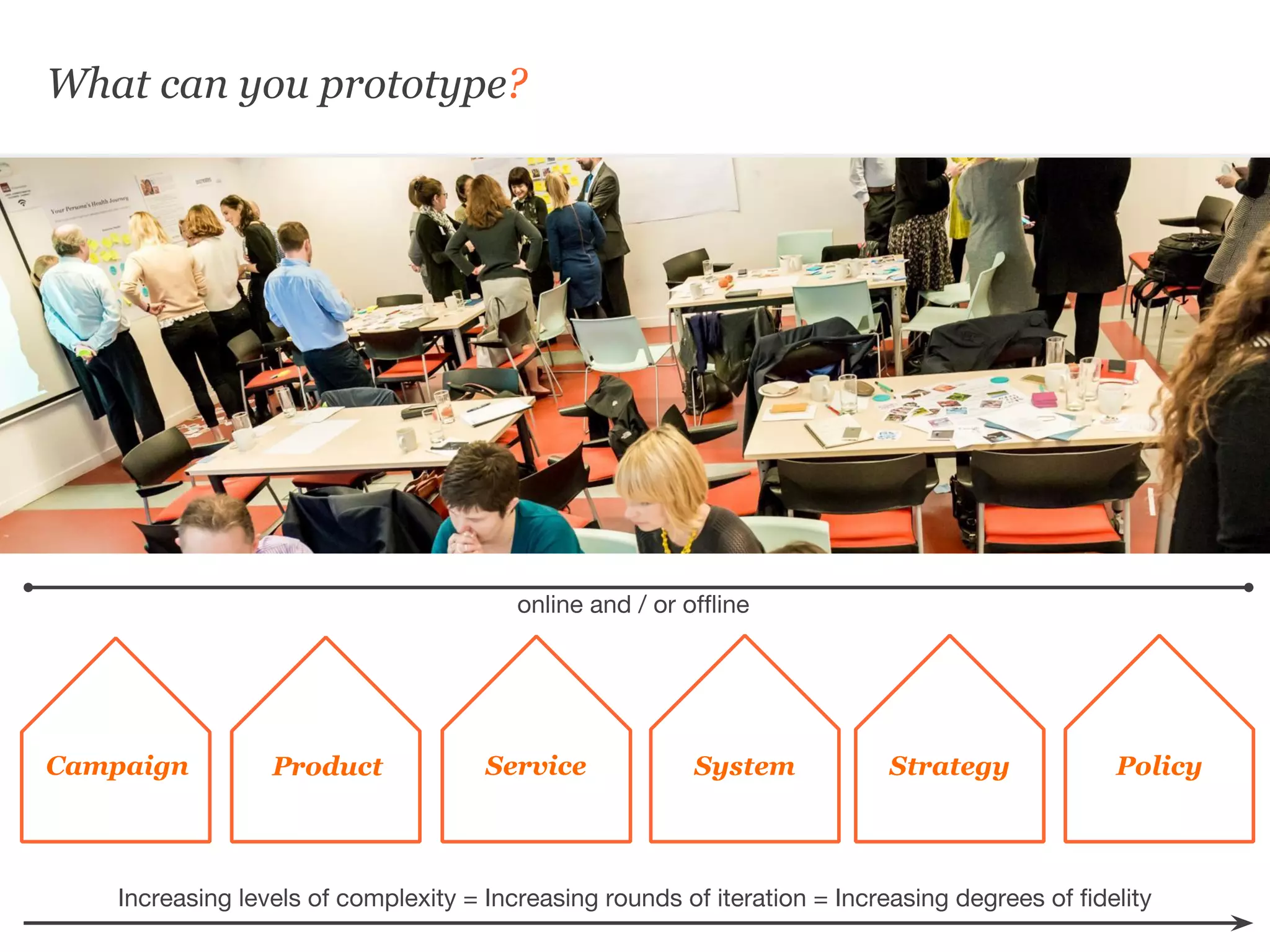
What can you prototype?
Campaign Product Service System Strategy Policy
online and / or offline
Increasing levels of complexity = Increasing rounds of iteration = Increasing degrees of fidelity
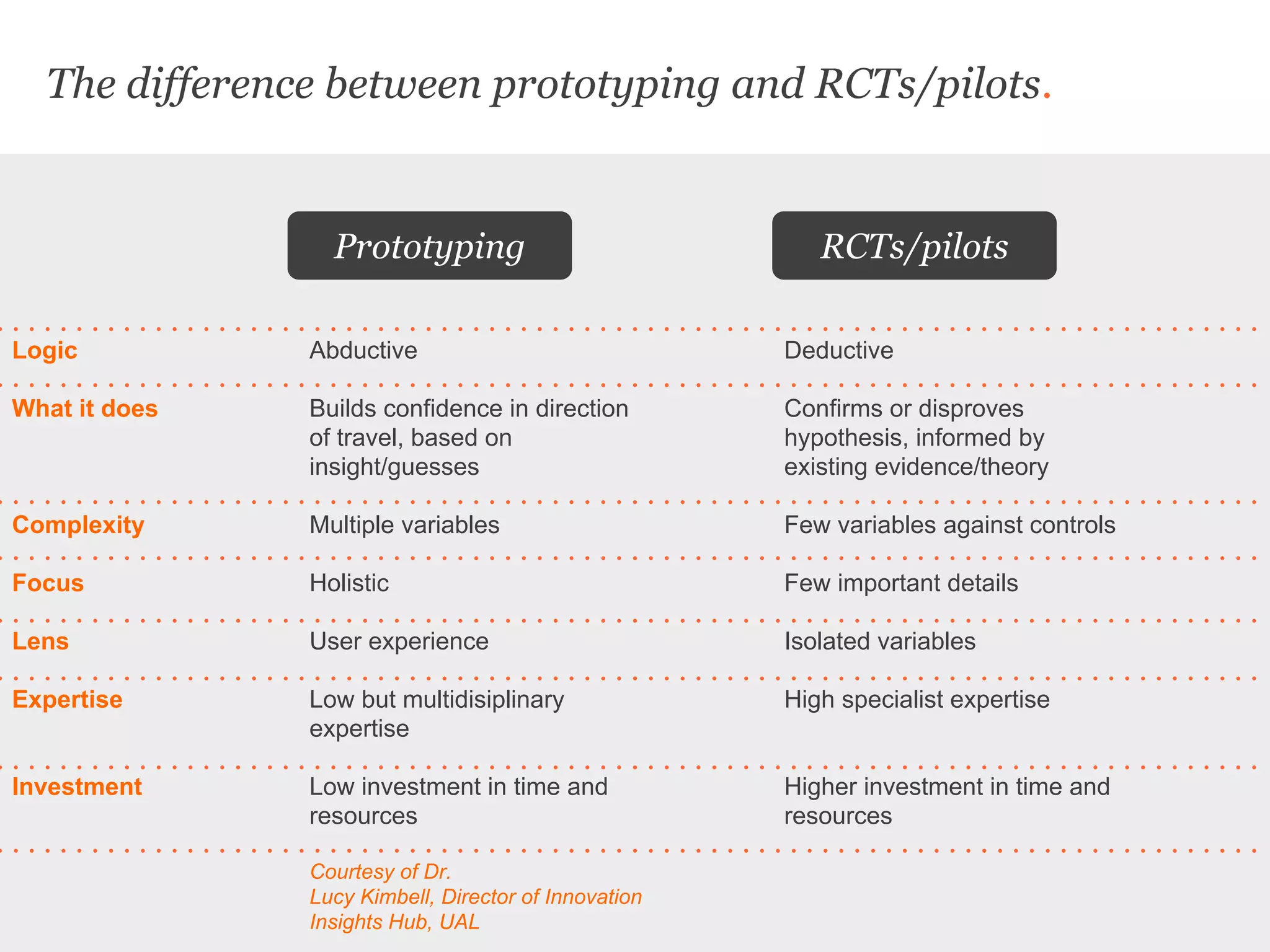
The difference between prototyping and RCTs/pilots.
Abductive
Builds confidence in direction
of travel, based on
insight/guesses
Multiple variables
Holistic
User experience
Low but multidisiplinary
expertise
Low investment in time and
resources
Courtesy of Dr.
Lucy Kimbell, Director of Innovation
Insights Hub, UAL
Prototyping RCTs/pilots
Deductive
Confirms or disproves
hypothesis, informed by
existing evidence/theory
Few variables against controls
Few important details
Isolated variables
High specialist expertise
Higher investment in time and
resources
Logic
What it does
Complexity
Focus
Lens
Expertise
Investment
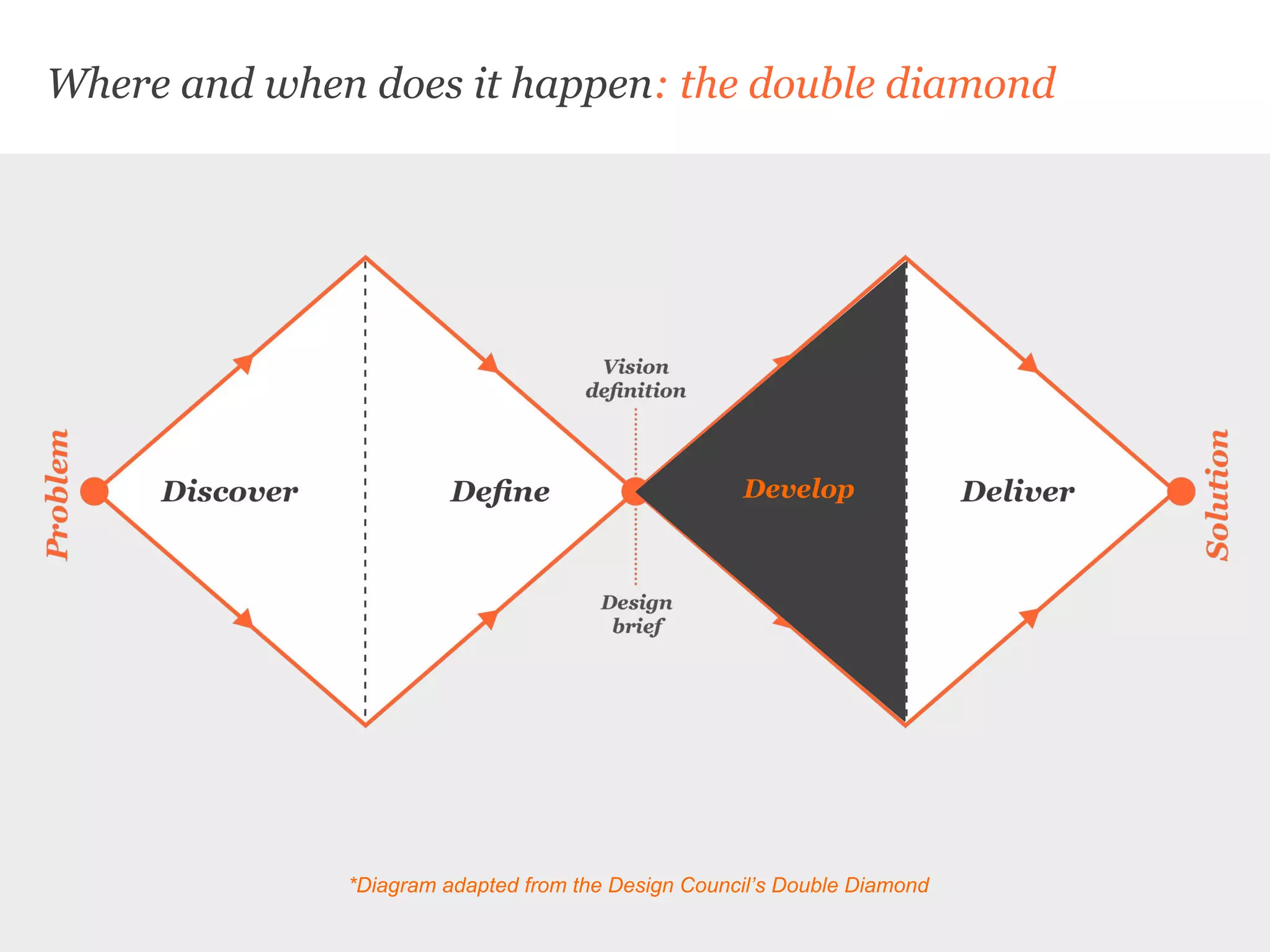
Where and when does it happen: the double diamond
*Diagram adapted from the Design Council’s Double Diamond
Develop
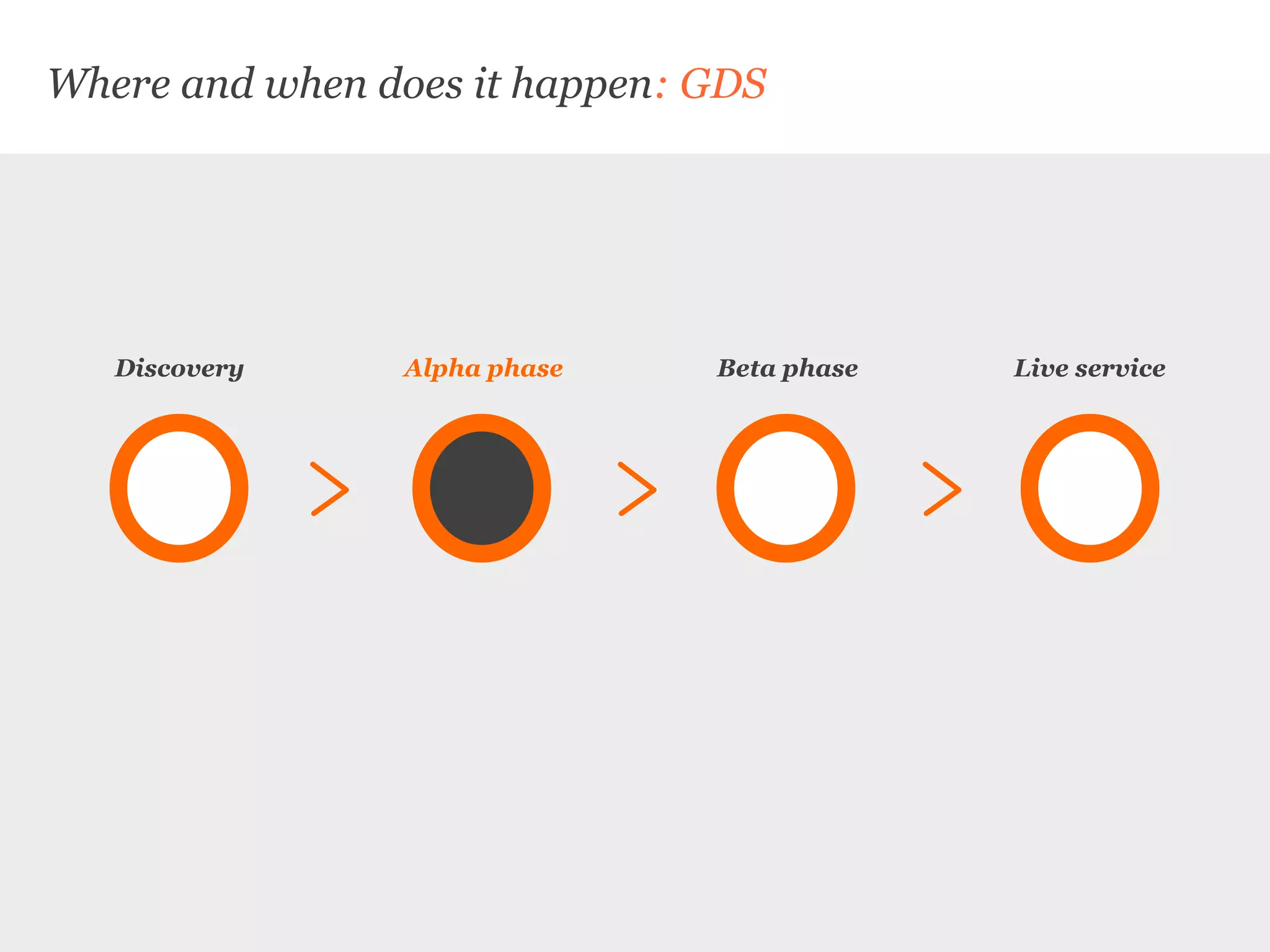
Where and when does it happen: GDS
Discovery Alpha phase Beta phase Live service
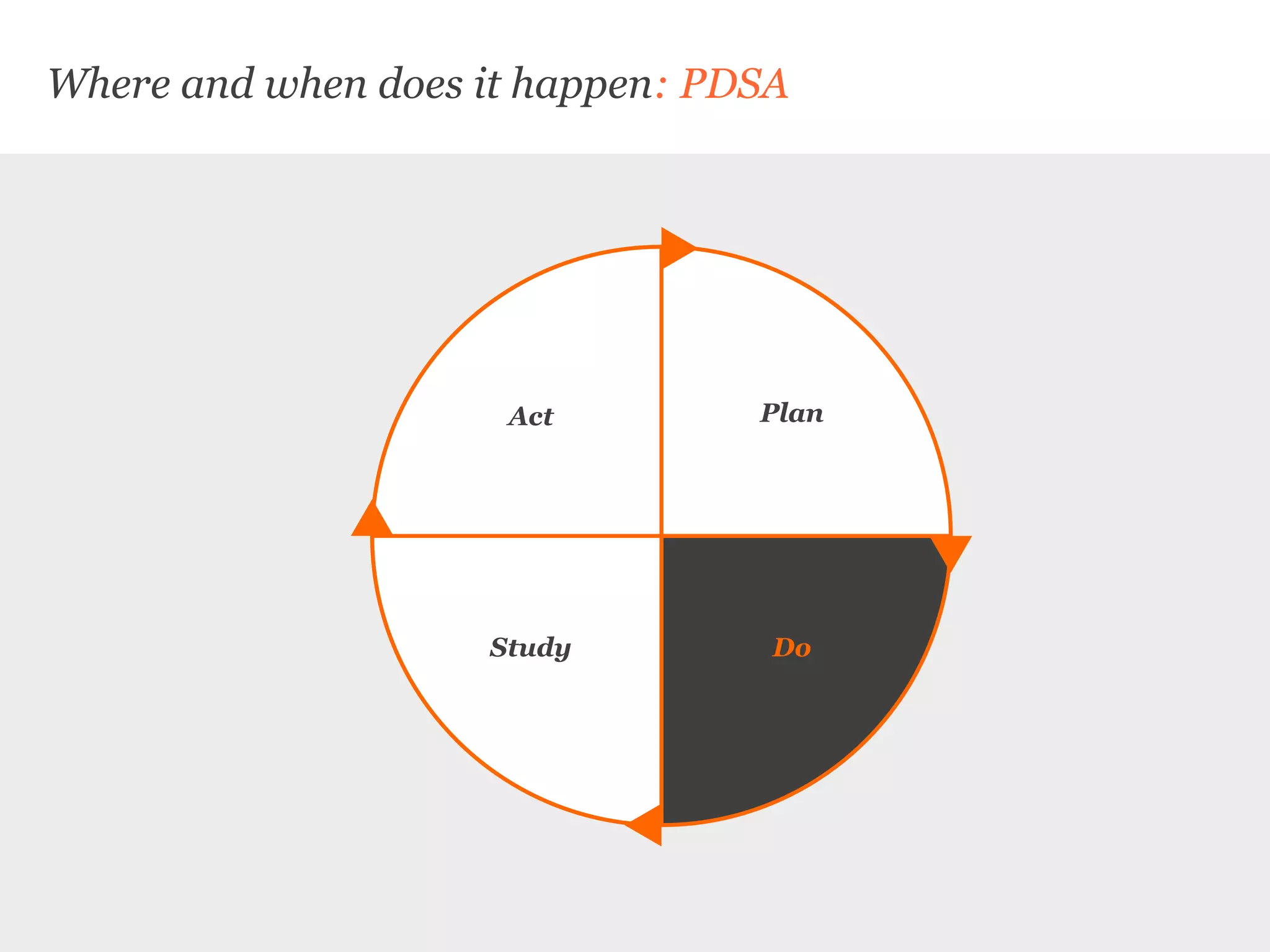
Where and when does it happen: PDSA
Plan
DoStudy
Act
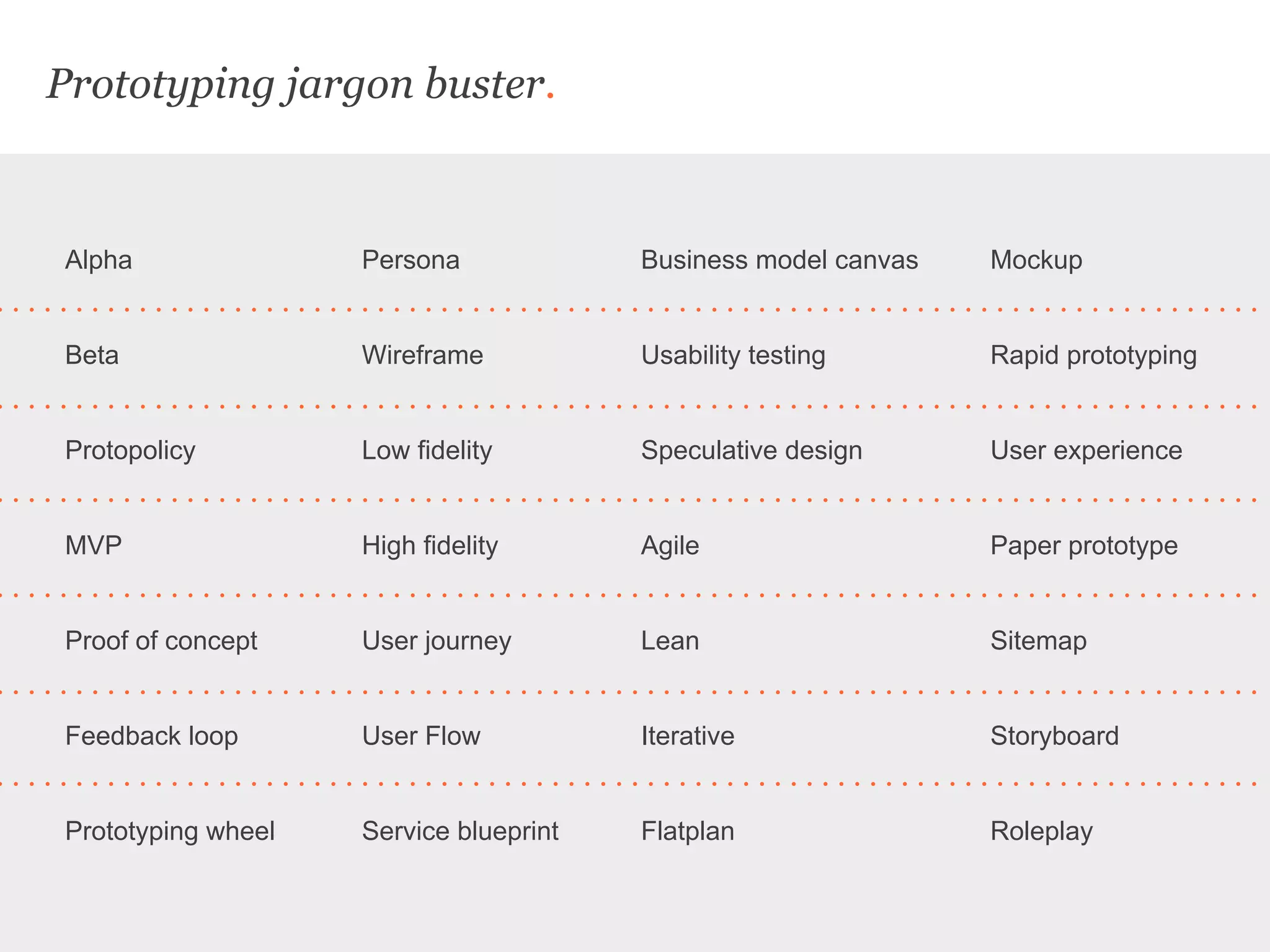
Prototyping jargon buster.
Alpha
Beta
Protopolicy
MVP
Proof of concept
Feedback loop
Prototyping wheel
Business model canvas
Usability testing
Speculative design
Agile
Lean
Iterative
Flatplan
Mockup
Rapid prototyping
User experience
Paper prototype
Sitemap
Storyboard
Roleplay
Persona
Wireframe
Low fidelity
High fidelity
User journey
User Flow
Service blueprint
Prototyping methods.
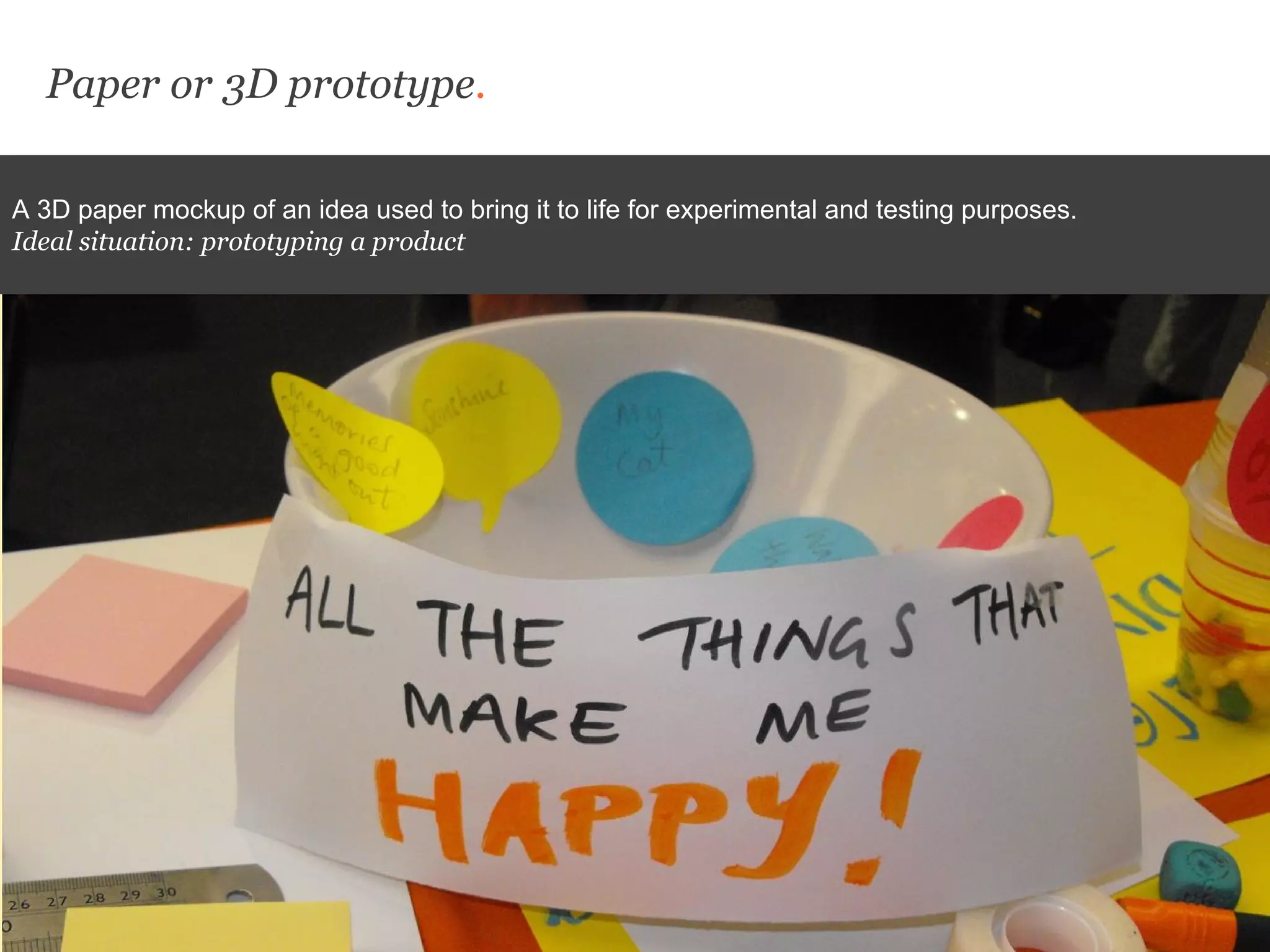
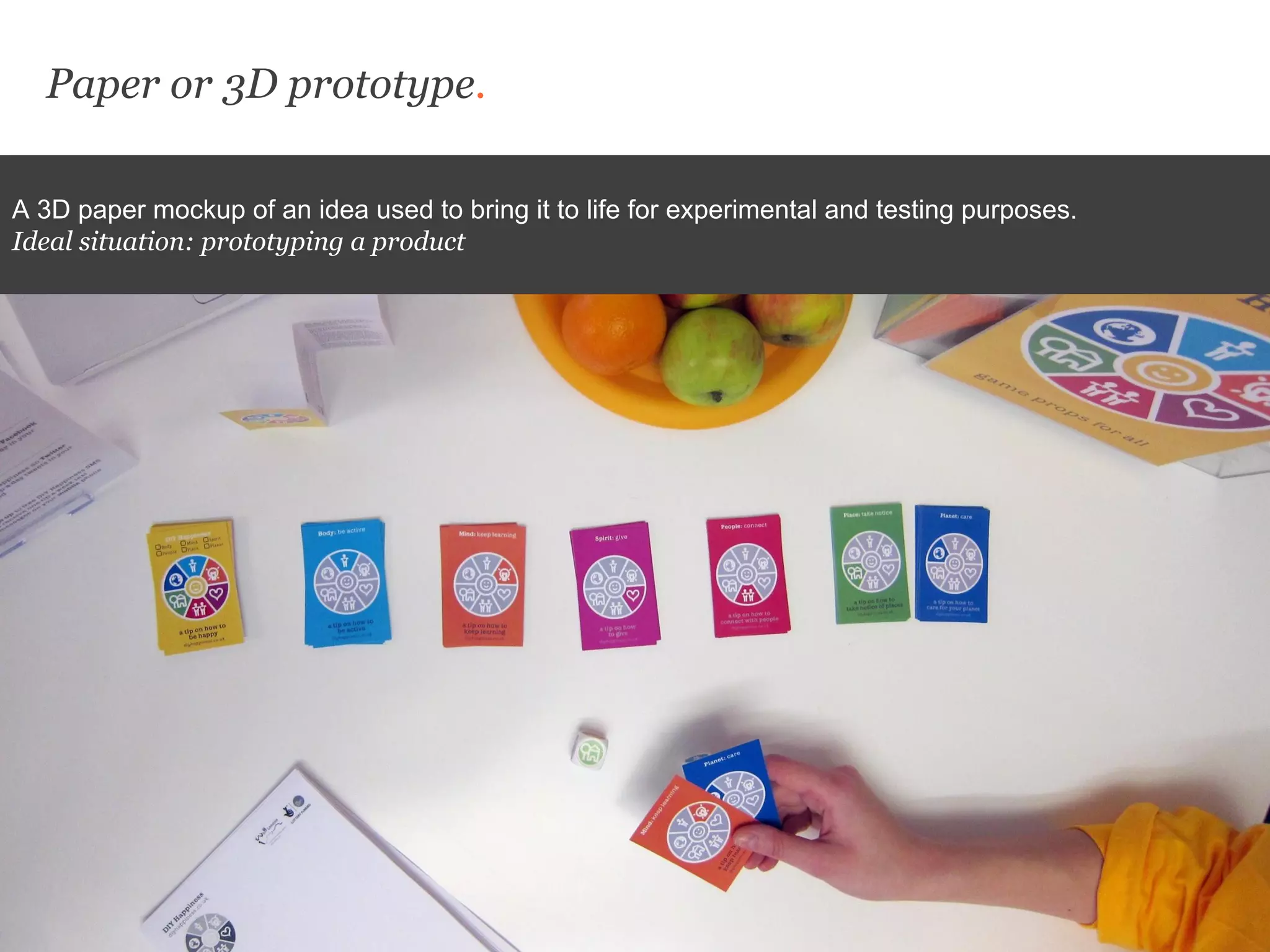
Paper or 3D prototype.
A 3D paper mockup of an idea used to bring it to life for experimental and testing purposes.
Ideal situation: prototyping a product
Paper or 3D prototype.
A 3D paper mockup of an idea used to bring it to life for experimental and testing purposes.
Ideal situation: prototyping a product
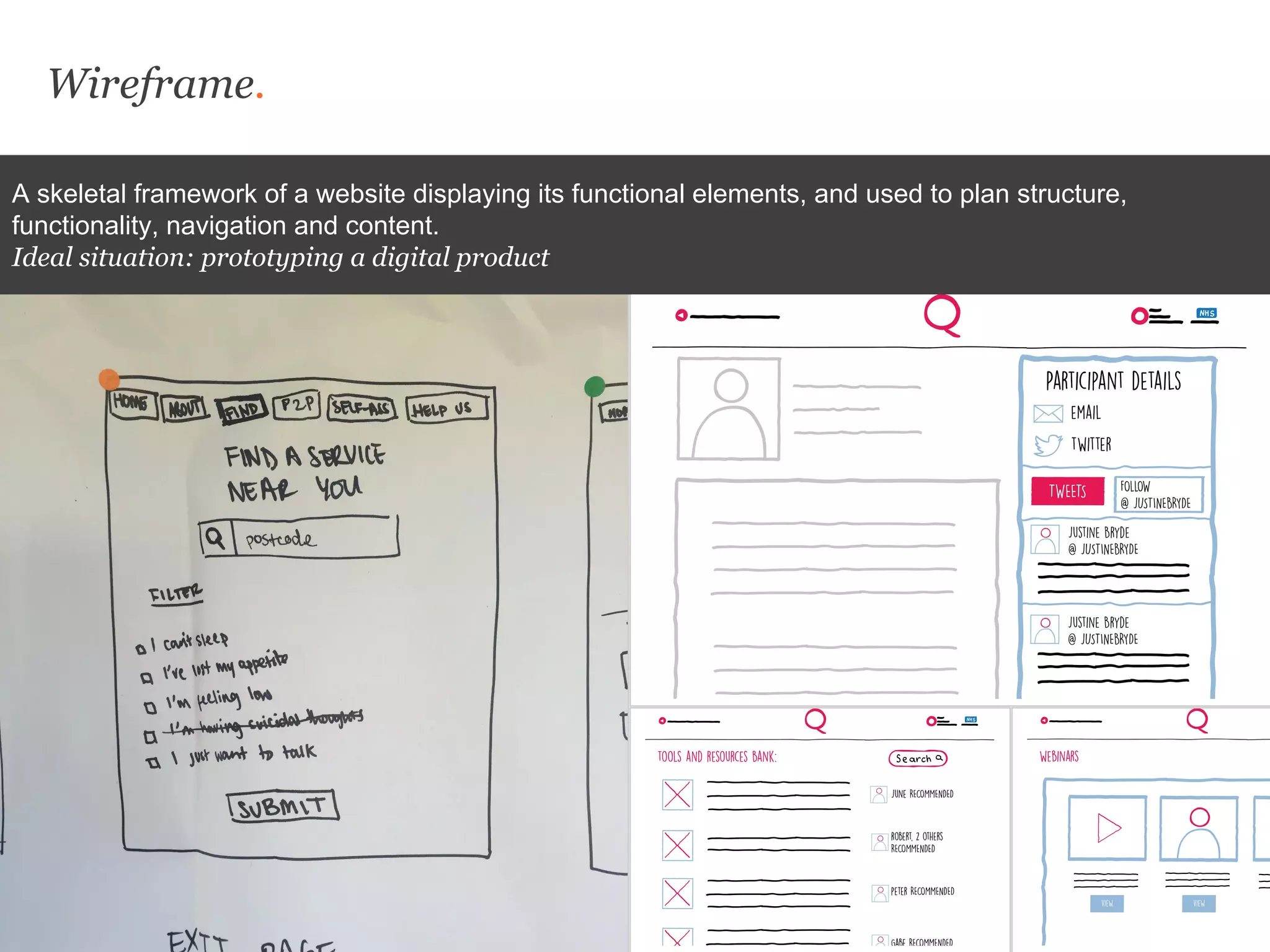
Wireframe.
A skeletal framework of a website displaying its functional elements, and used to plan structure,
functionality, navigation and content.
Ideal situation: prototyping a digital product
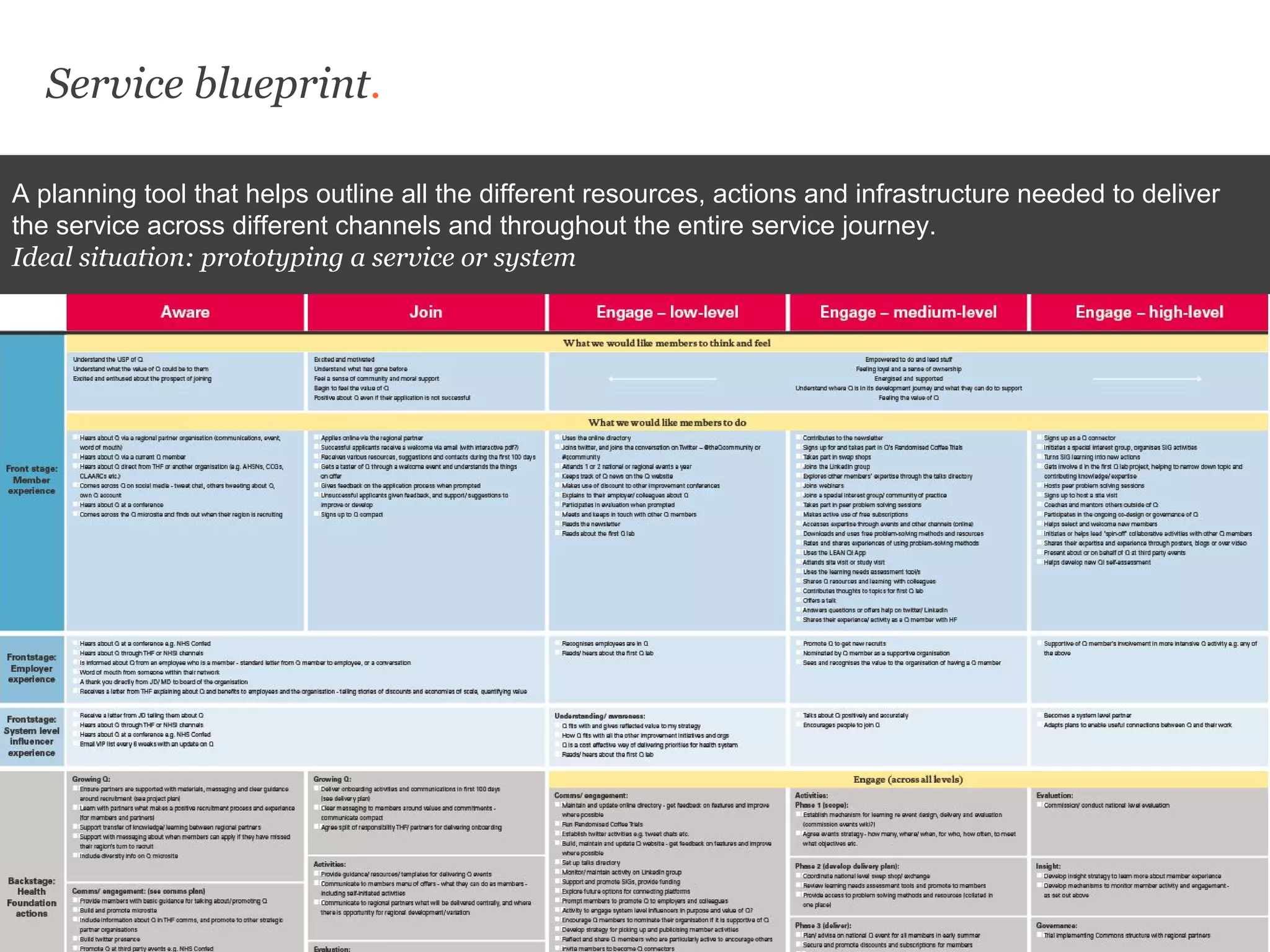
Service blueprint.
A planning tool that helps outline all the different resources, actions and infrastructure needed to deliver
the service across different channels and throughout the entire service journey.
Ideal situation: prototyping a service or system
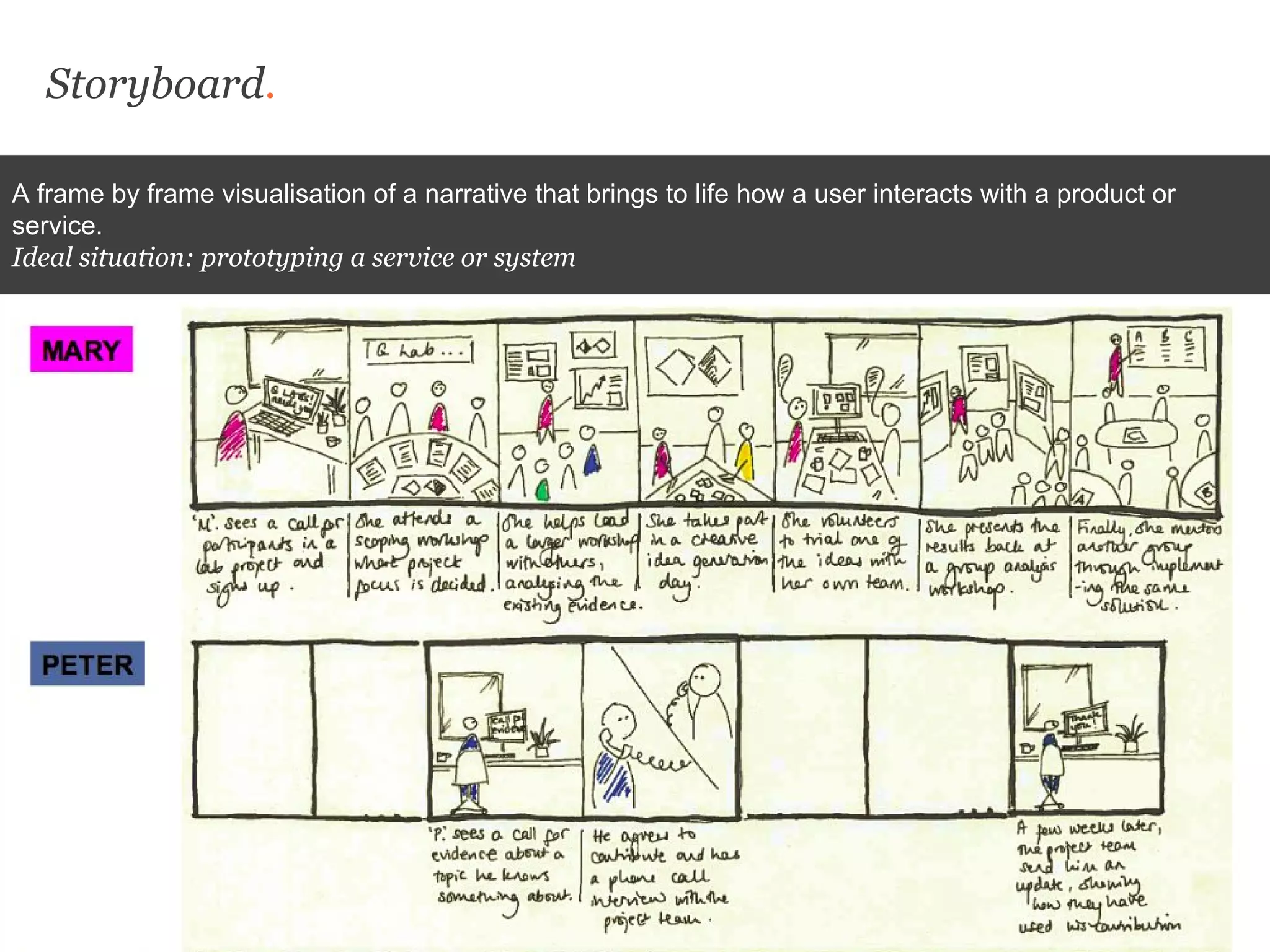
Storyboard.
A frame by frame visualisation of a narrative that brings to life how a user interacts with a product or
service.
Ideal situation: prototyping a service or system
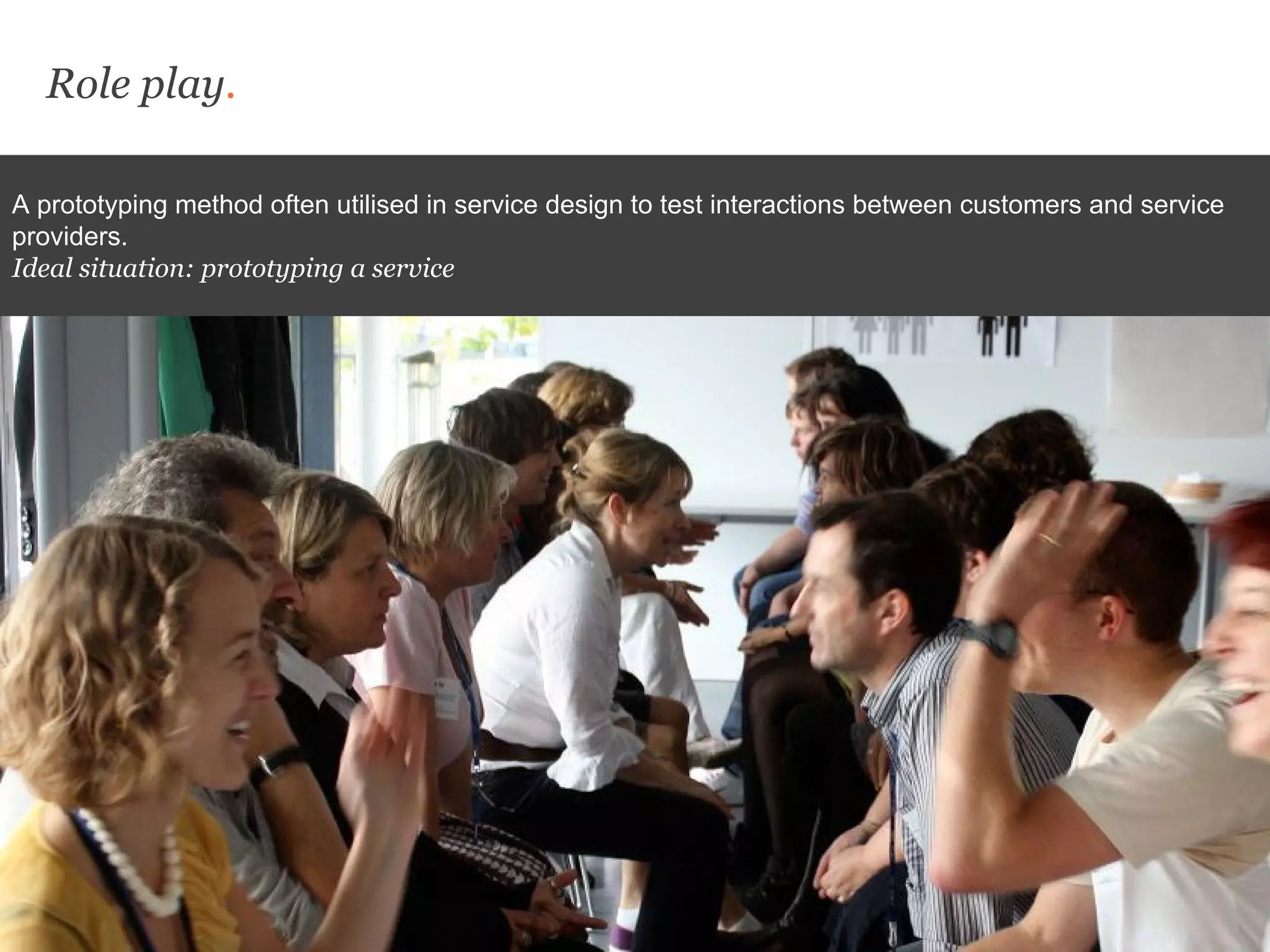
Role play.
A prototyping method often utilised in service design to test interactions between customers and service
providers.
Ideal situation: prototyping a service
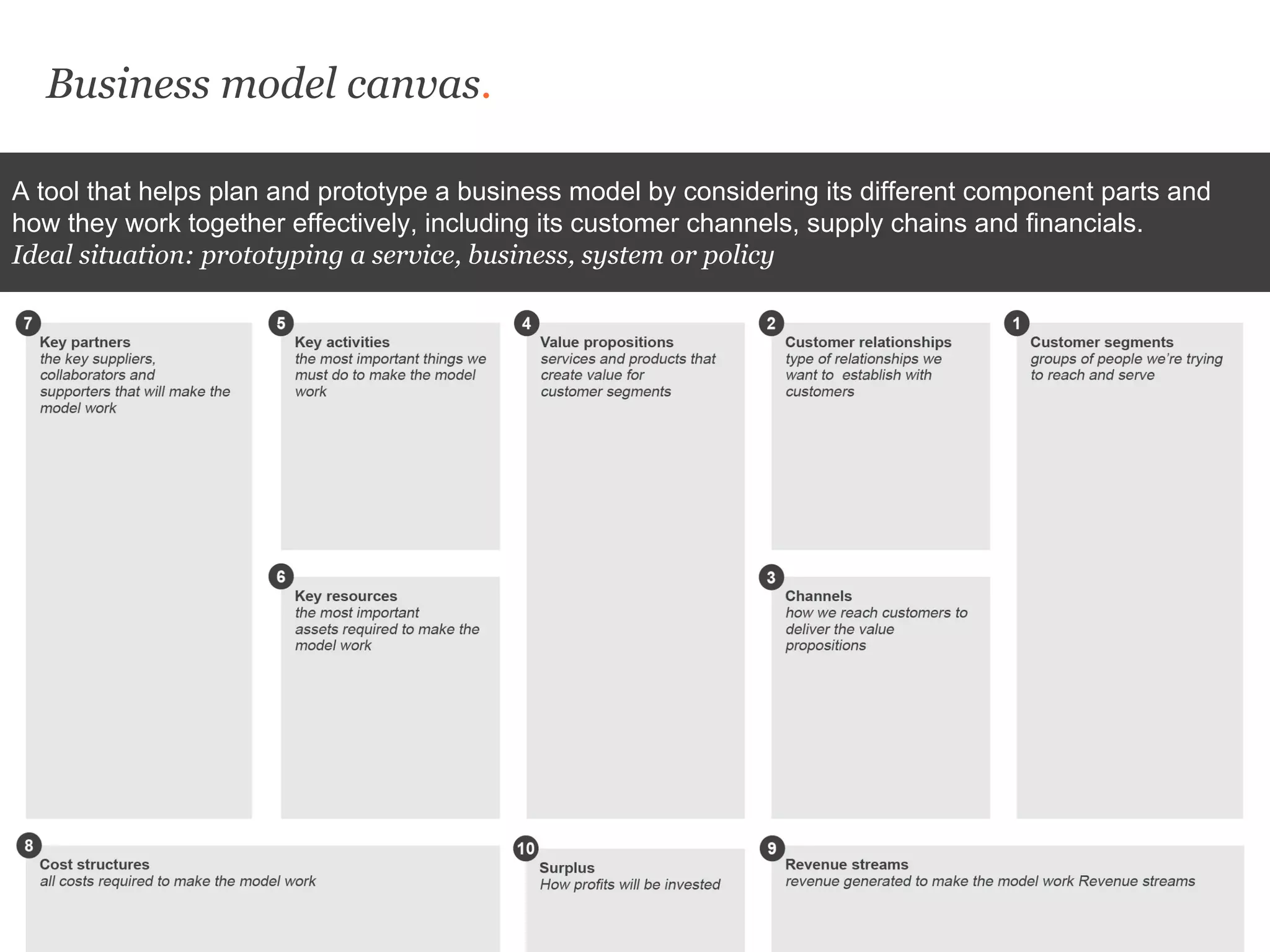
Business model canvas.
A tool that helps plan and prototype a business model by considering its different component parts and
how they work together effectively, including its customer channels, supply chains and financials.
Ideal situation: prototyping a service, business, system or policy
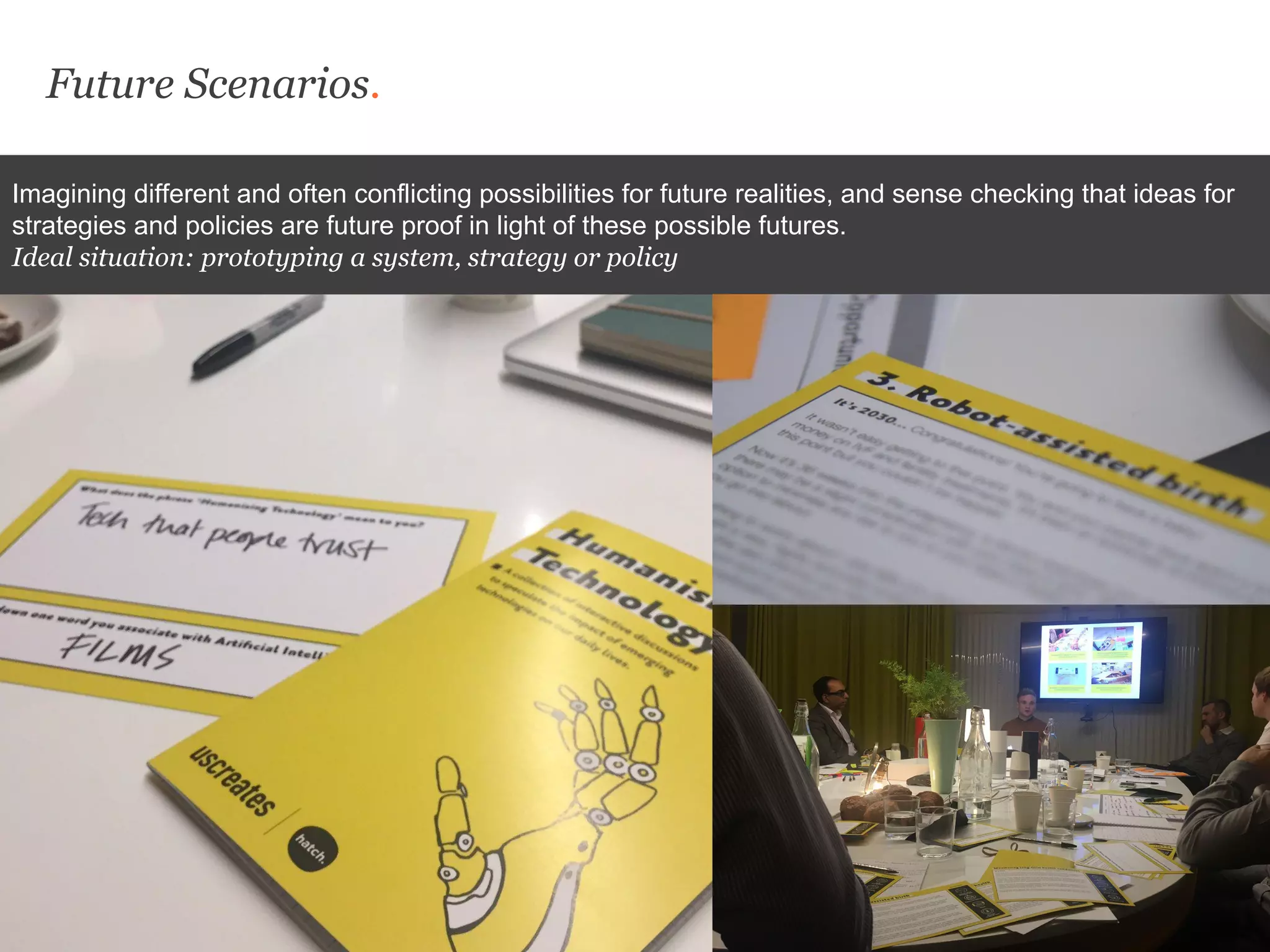
Future Scenarios.
Imagining different and often conflicting possibilities for future realities, and sense checking that ideas for
strategies and policies are future proof in light of these possible futures.
Ideal situation: prototyping a system, strategy or policy
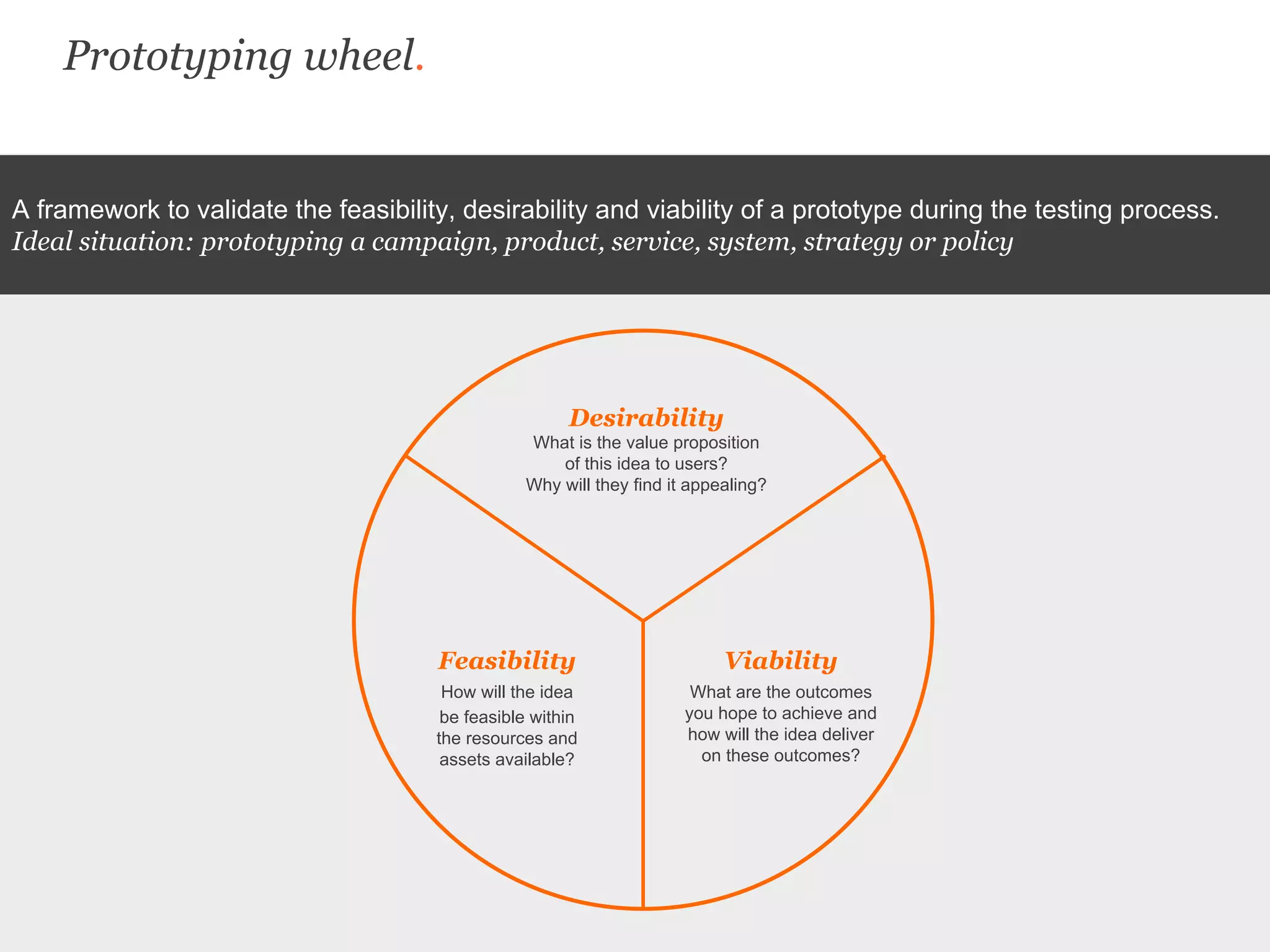
Prototyping wheel.
Desirability
What is the value proposition
of this idea to users?
Why will they find it appealing?
Feasibility
How will the idea
be feasible within
the resources and
assets available?
Viability
What are the outcomes
you hope to achieve and
how will the idea deliver
on these outcomes?
A framework to validate the feasibility, desirability and viability of a prototype during the testing process.
Ideal situation: prototyping a campaign, product, service, system, strategy or policy
Conclusion.
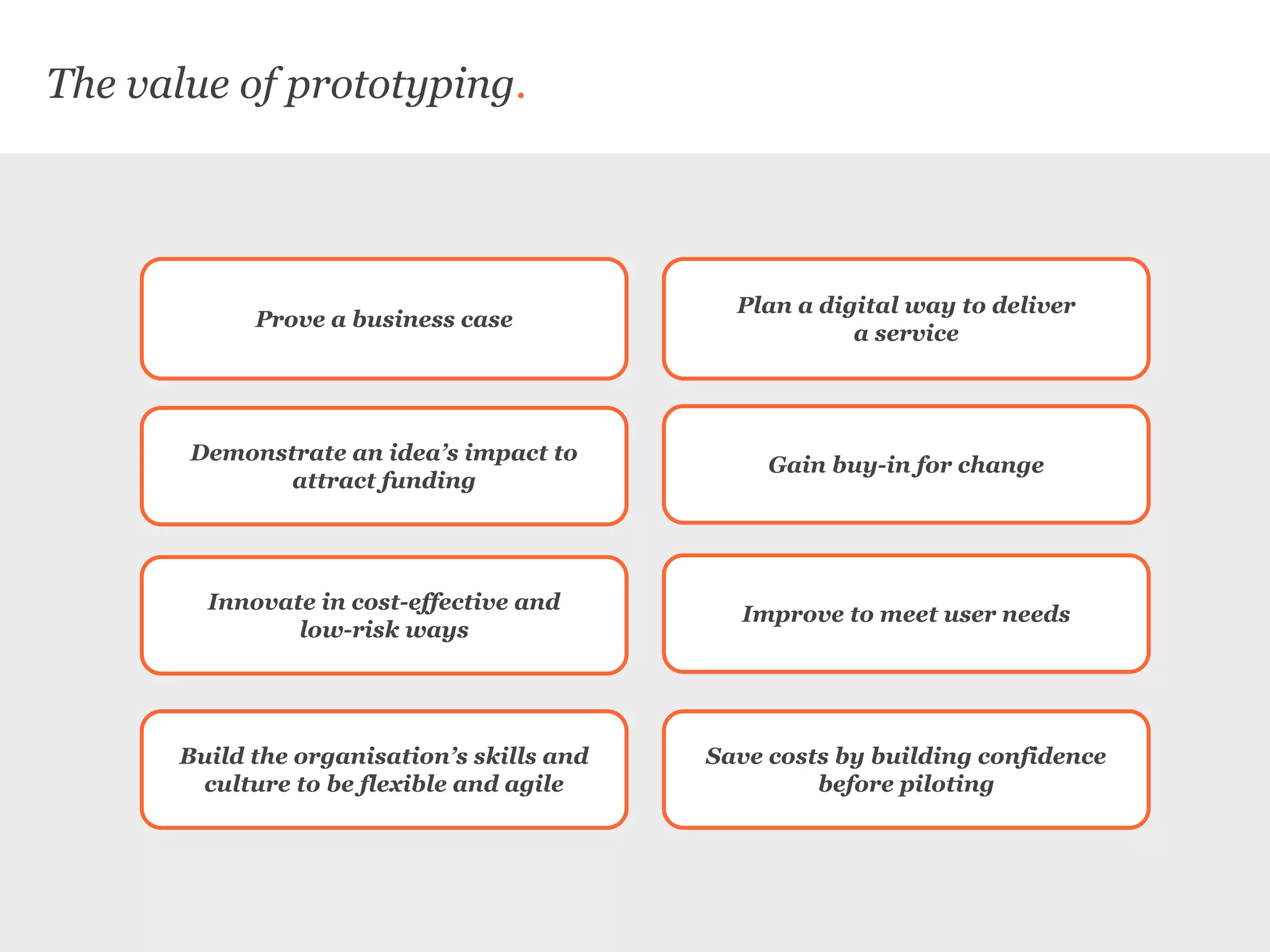
The value of prototyping.
Demonstrate an idea’s impact to
attract funding
Prove a business case
Gain buy-in for change
Plan a digital way to deliver
a service
Innovate in cost-effective and
low-risk ways
Improve to meet user needs
Build the organisation’s skills and
culture to be flexible and agile
Save costs by building confidence
before piloting
for more details contact:
Zoe Stanton (CCO)
zoe@uscreates.com
www.uscreates.com

Prototyping Design Pack

  • 1.
    Inside Design –Prototyping 24 January 2017 @uscreates #InsideDesign www.uscreates.com
  • 2.
    Uscreates is adesign led agency creating better outcomes and experiences in health and wellbeing.
  • 3.
  • 4.
    Introducing the valueof prototyping.
  • 5.
  • 6.
    What is prototyping? Theprocess of mocking up an idea quickly and with minimal resource to assess and improve its viability, desirability and feasibility.
  • 7.
  • 8.
    How Uscreates useprototyping. 6% improvement in resident satisfaction in council services in 6 weeks 100+ tech start ups supported 18% reduction in teen pregnancy saved 2 beds per week in a treatment centre 20+ capability building programmes delivered How can we improve or maintain excellent experiences? How do we innovate to respond to future challenges? How can we achieve behaviour change? How can we improve systems, processes and flows to achieve efficiency savings? How can we embed new working cultures?
  • 9.
    What can youprototype? Campaign Product Service System Strategy Policy online and / or offline Increasing levels of complexity = Increasing rounds of iteration = Increasing degrees of fidelity
  • 10.
    The difference betweenprototyping and RCTs/pilots. Abductive Builds confidence in direction of travel, based on insight/guesses Multiple variables Holistic User experience Low but multidisiplinary expertise Low investment in time and resources Courtesy of Dr. Lucy Kimbell, Director of Innovation Insights Hub, UAL Prototyping RCTs/pilots Deductive Confirms or disproves hypothesis, informed by existing evidence/theory Few variables against controls Few important details Isolated variables High specialist expertise Higher investment in time and resources Logic What it does Complexity Focus Lens Expertise Investment
  • 11.
    Where and whendoes it happen: the double diamond *Diagram adapted from the Design Council’s Double Diamond Develop
  • 12.
    Where and whendoes it happen: GDS Discovery Alpha phase Beta phase Live service
  • 13.
    Where and whendoes it happen: PDSA Plan DoStudy Act
  • 14.
    Prototyping jargon buster. Alpha Beta Protopolicy MVP Proofof concept Feedback loop Prototyping wheel Business model canvas Usability testing Speculative design Agile Lean Iterative Flatplan Mockup Rapid prototyping User experience Paper prototype Sitemap Storyboard Roleplay Persona Wireframe Low fidelity High fidelity User journey User Flow Service blueprint
  • 15.
  • 16.
    Paper or 3Dprototype. A 3D paper mockup of an idea used to bring it to life for experimental and testing purposes. Ideal situation: prototyping a product
  • 17.
    Paper or 3Dprototype. A 3D paper mockup of an idea used to bring it to life for experimental and testing purposes. Ideal situation: prototyping a product
  • 18.
    Wireframe. A skeletal frameworkof a website displaying its functional elements, and used to plan structure, functionality, navigation and content. Ideal situation: prototyping a digital product
  • 19.
    Service blueprint. A planningtool that helps outline all the different resources, actions and infrastructure needed to deliver the service across different channels and throughout the entire service journey. Ideal situation: prototyping a service or system
  • 20.
    Storyboard. A frame byframe visualisation of a narrative that brings to life how a user interacts with a product or service. Ideal situation: prototyping a service or system
  • 21.
    Role play. A prototypingmethod often utilised in service design to test interactions between customers and service providers. Ideal situation: prototyping a service
  • 22.
    Business model canvas. Atool that helps plan and prototype a business model by considering its different component parts and how they work together effectively, including its customer channels, supply chains and financials. Ideal situation: prototyping a service, business, system or policy
  • 23.
    Future Scenarios. Imagining differentand often conflicting possibilities for future realities, and sense checking that ideas for strategies and policies are future proof in light of these possible futures. Ideal situation: prototyping a system, strategy or policy
  • 24.
    Prototyping wheel. Desirability What isthe value proposition of this idea to users? Why will they find it appealing? Feasibility How will the idea be feasible within the resources and assets available? Viability What are the outcomes you hope to achieve and how will the idea deliver on these outcomes? A framework to validate the feasibility, desirability and viability of a prototype during the testing process. Ideal situation: prototyping a campaign, product, service, system, strategy or policy
  • 25.
  • 26.
    The value ofprototyping. Demonstrate an idea’s impact to attract funding Prove a business case Gain buy-in for change Plan a digital way to deliver a service Innovate in cost-effective and low-risk ways Improve to meet user needs Build the organisation’s skills and culture to be flexible and agile Save costs by building confidence before piloting
  • 27.
    for more detailscontact: Zoe Stanton (CCO) zoe@uscreates.com www.uscreates.com