Introduction to ProteinPurification
• Process of isolating a specific protein from a
complex mixture
• Essential for studying protein structure and
function
• Used in biotechnology, pharmaceuticals, and
research
• Requires multiple steps for purity and activity
retention
Chromatographic Techniques
Overview
• Powerfulmethods for high-resolution
purification
• Based on different protein properties (size,
charge, binding affinity)
• Includes SEC, affinity, ion exchange, and more
• Focus today: Size Exclusion & Lectin Affinity
10.
Size Exclusion Chromatography
(SEC)
•Separates based on molecular size
• Also known as gel filtration
• Larger proteins elute first
• No interaction with stationary phase
11.
SEC: Applications
• Molecularweight estimation
• Protein desalting
• Final polishing step in purification
• High-resolution separation of protein
complexes
12.
Lectin Affinity Chromatography
•Selective binding to sugar moieties
• Targets glycoproteins
• Uses immobilized lectins as ligands
• Highly specific and efficient
13.
Lectin Affinity: Advantages
•High specificity for glycosylated proteins
• Preserves biological activity
• Easy elution with sugar solutions
• Ideal for diagnostic and therapeutic proteins
14.
Comparison of Techniques
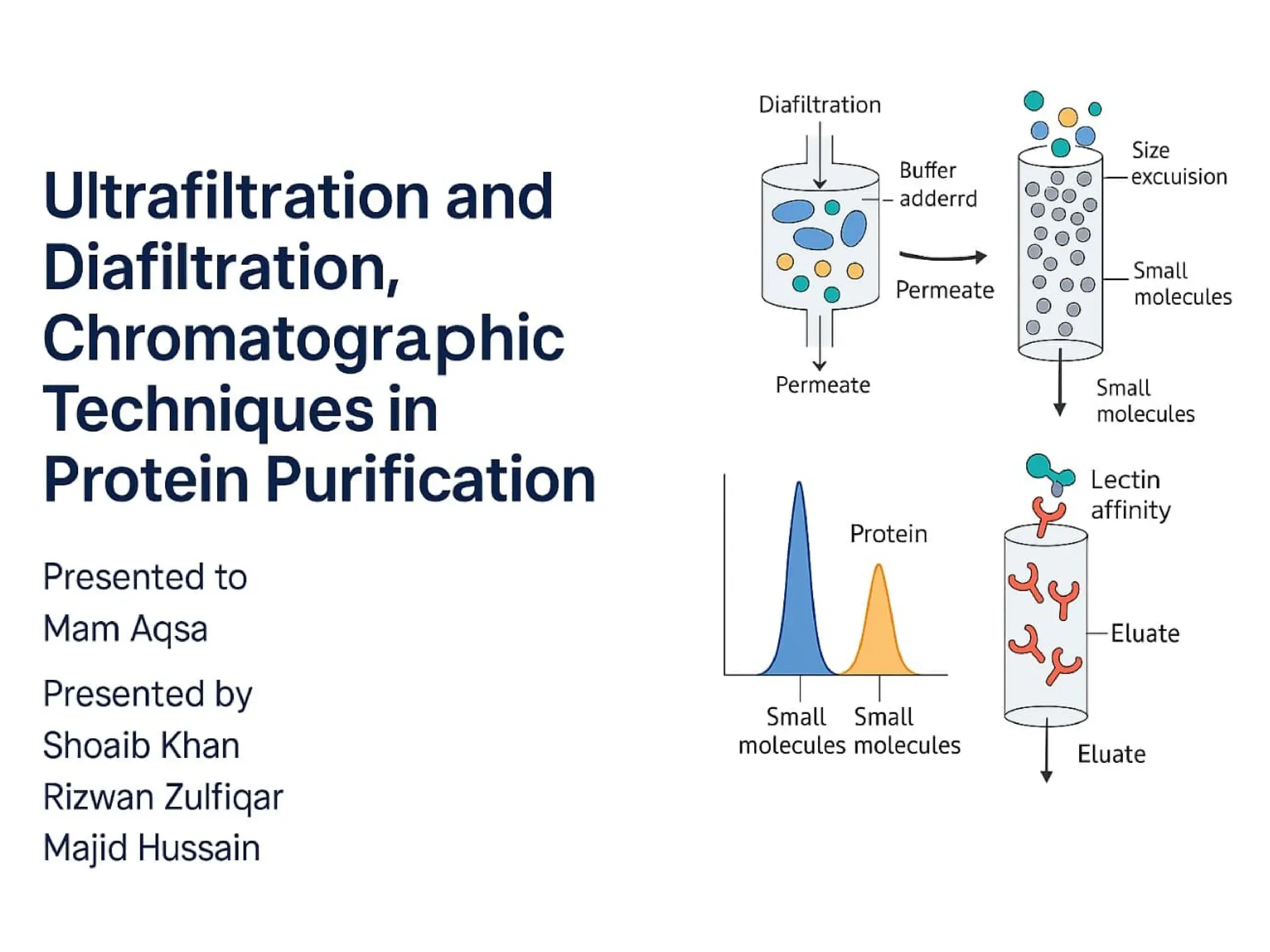
•Ultrafiltration: Size-based separation for
concentration
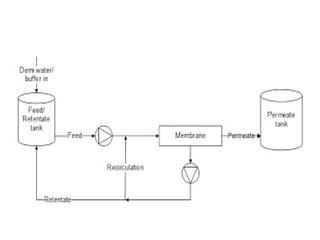
• Diafiltration: Gentle buffer exchange
• SEC: High-resolution size separation
• Lectin Affinity: Specific for glycoproteins
15.
Example Workflow
• Celllysis and crude extract
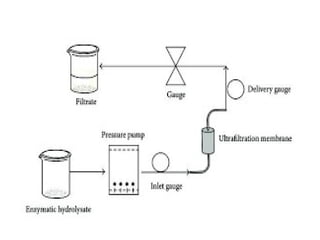
• Ultrafiltration for concentration
• Diafiltration for buffer exchange
• SEC and Lectin Affinity for final purification
16.
Conclusion
• Protein purificationis multi-step and method-
dependent
• Choosing right techniques ensures purity and
yield
• Ultrafiltration and chromatography are critical
tools
• Continuous optimization improves results