Protection Of 
Vulnerable Adults 
(POVA)
Definition 
vProtection of vulnerable adults(POVA) in 
England and Wales is a system that it is 
set out in the care standards act 2000. It 
is developed, promoted and controlled 
by the Department of Health for the 
purpose of putting a workforce ban on 
people who have been proven to have 
harmed vulnerable people in care.
When the act was put in 
place and why? 
vThis act was put in place in 2000. it was 
then updated in 2004 and then was 
updated again in 2006 and was 
implemented in England and Wales. 
vThey put this in place as there was a lot of 
abuse to adults that were vulnerable. 
This act makes sure that the risk of abuse 
is reduced.
Vulnerable adults. Who are 
they? 
People that are protected by the act are 
adults that are 18 years or over for example 
vMay be in need of community care 
services because of mental or other 
disability, age or illness … 
vUnable to take care of themselves or 
protect themselves from any serious 
harm or exploitation
Vulnerable adults. Who are 
they? 
vHas a physic disability which includes frail 
or chronic illness 
vMental illness e.g. dementia 
vLearning disability 
vMisuses drugs or alcohol 
vSocial or emotional problems 
vBehaviour issues
Overall 
vPersons vulnerability will depend on their 
circumstances and environment as 
each case must be judged on its merit. 
•
Abuse to vulnerable adults 
vCan be sexual or physical 
vThere could be a situation where it is witnessed(bullying or 
humiliating) 
vNot allowing to see their family or keep in contact 
vWithholding food, medication or money without permission 
•
Who may abuse them and 
where? 
vFamily member 
vPartner 
vService provider 
vNeighbour 
vFriend 
vStranger 
vVolunteer 
vThis can take place e.g. at home, in public, care 
home or hospital
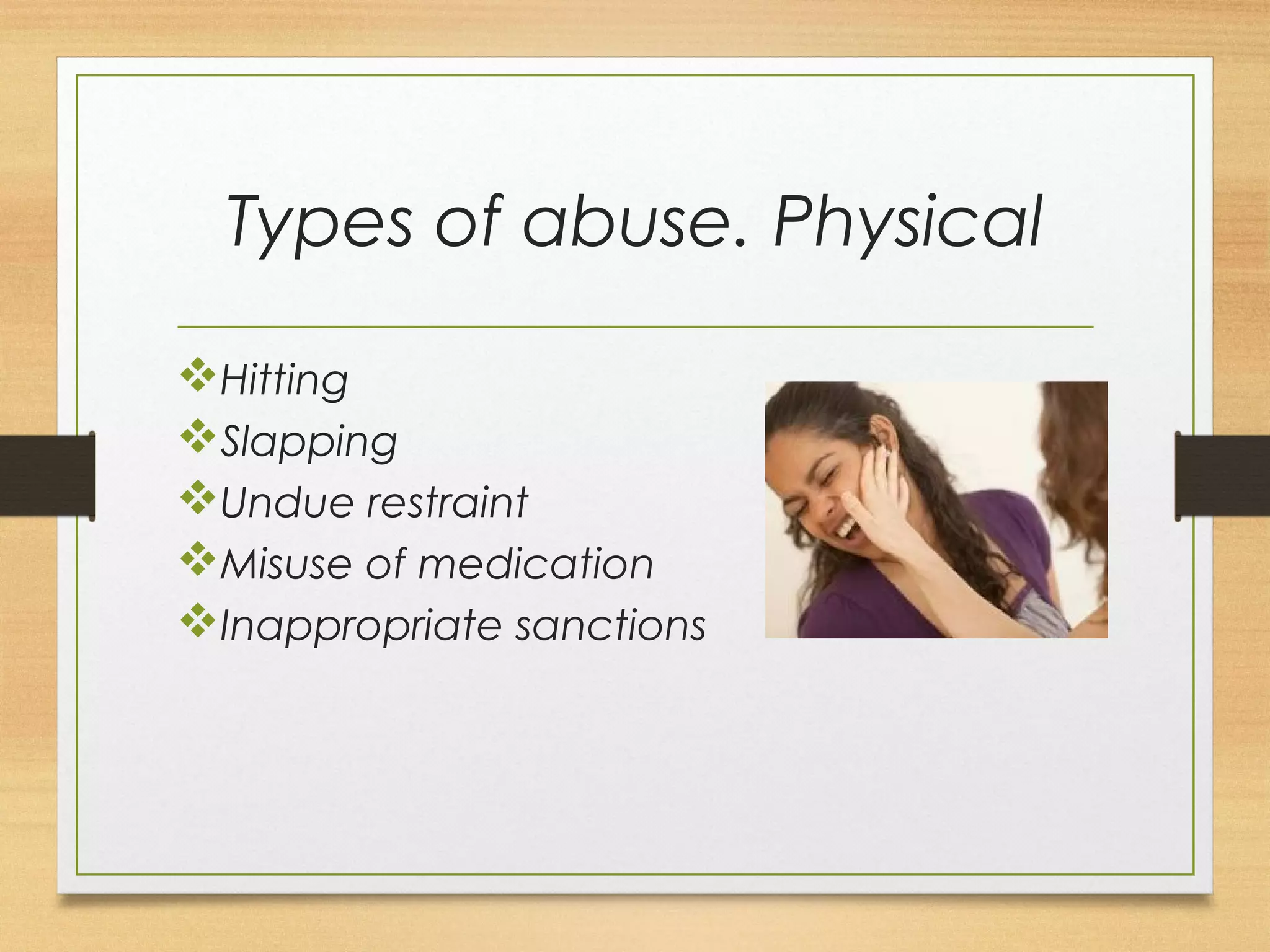
Types of abuse. Physical 
vHitting 
vSlapping 
vUndue restraint 
vMisuse of medication 
vInappropriate sanctions
Types of abuse. Sexual 
vRape and sexual assault 
vInappropriate touching 
vSexual acts which a vulnerable adult 
could has not or not consent to or 
pressured into it 
•
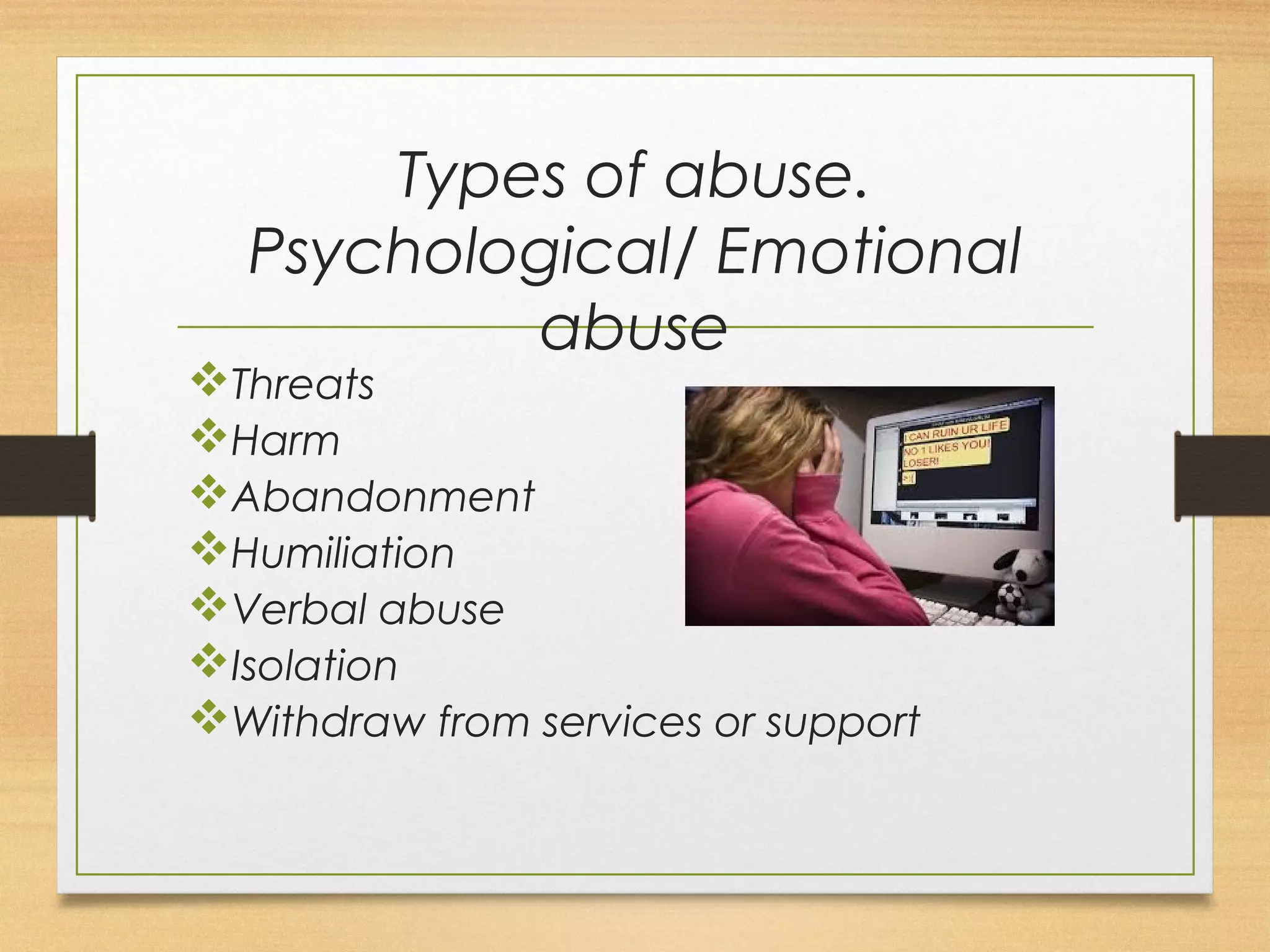
Types of abuse. 
Psychological/ Emotional 
abuse 
vThreats 
vHarm 
vAbandonment 
vHumiliation 
vVerbal abuse 
vIsolation 
vWithdraw from services or support
Types of abuse. Financial 
abuse 
vTheft 
vFraud 
vMisuse of benefits 
vPressure around wills and property
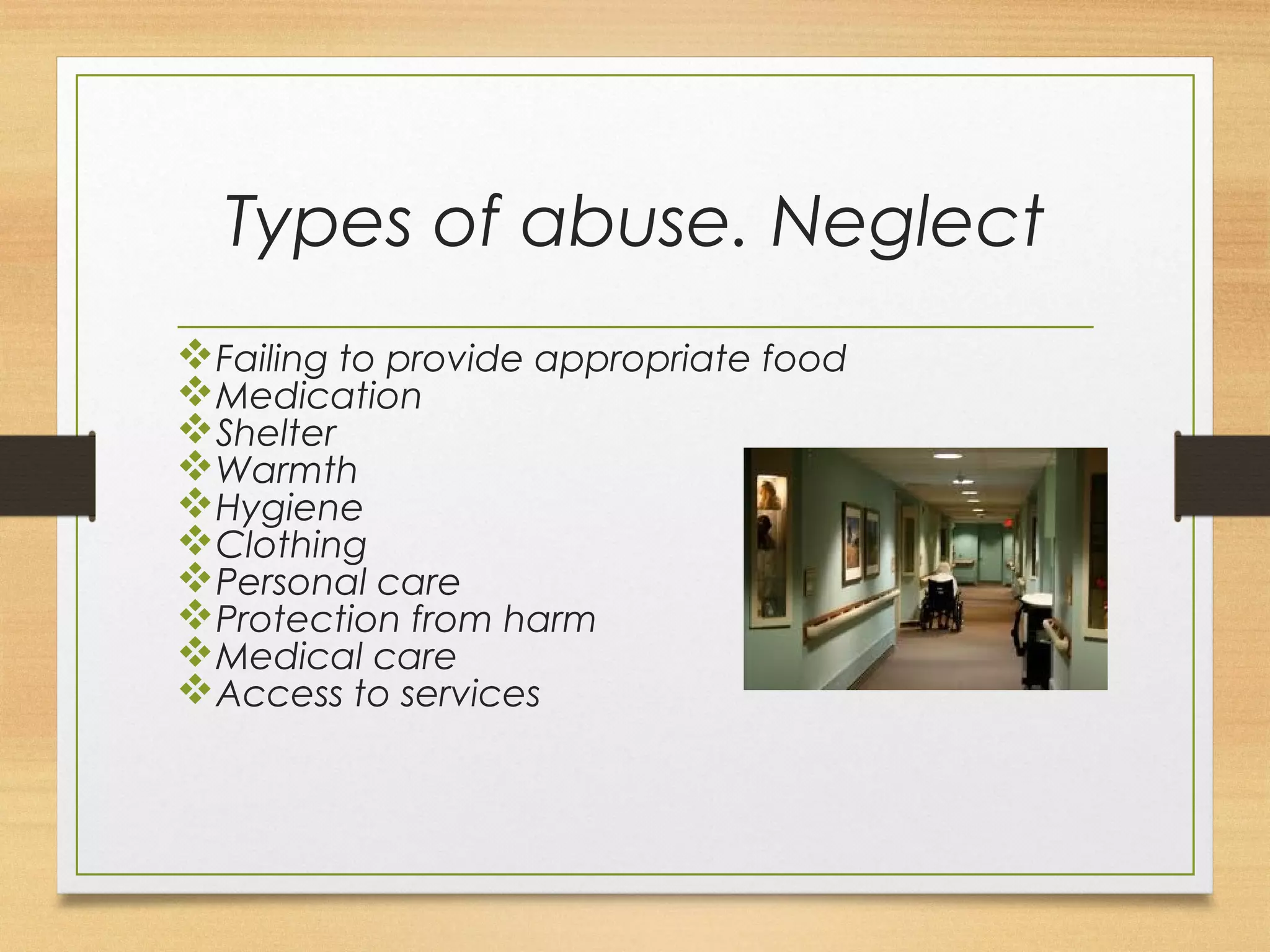
Types of abuse. Neglect 
vFailing to provide appropriate food 
vMedication 
vShelter 
vWarmth 
vHygiene 
vClothing 
vPersonal care 
vProtection from harm 
vMedical care 
vAccess to services
Types of abuse. 
Discriminatory abuse 
vExclusion from services available to all 
citizens 
vFailure to respect culture preferences 
vDenial of rights of rights to religious 
preferences.
Types of abuse. Institutional 
abuse 
vTo promote respect 
vDignity choice 
vHaving no privacy 
vInappropriate or poor care 
vPoor professional practise 
vDenial of right to medical or social care 
vLack of response to complaints
What to look for if they are 
getting abused? 
Adult abuse is not always as clear to identify as 
sometimes the nature of the abuse is invisible or the 
person is too scared to speak out. There are some ways 
to notice if they are getting abused they are: 
vUnexplained injuries, bruises, burns, wounds, cuts, 
changes in health 
vExcessive fears, withdrawn, agitated 
vSudden inability to pay bills, buy food or personal 
items 
vChanges in appetite or unusual weight gain or loss 
vPoor personal hygiene 
• 
• 
•
Effects that could happen? 
There are long term effects of abuse and they 
are: 
vAggressive/ violent behaviour 
vNonviolent criminal behaviour 
vSelf- injuries or suicidal behaviour 
vEmotional problems 
vInterpersonal problems e.g. shy, self- conscious
What will happen if abuse 
occurs under POVA? 
vAwareness 
make sure that all staff and volunteers are 
aware of the issues of POVA 
vPrevention 
Through awareness of good practise 
vReporting 
All staff are clear about steps to take 
vResponding 
Ensure action is taken to support and protect
Summary of the act? 
v CRB disclosures give employers information about an 
individual’s criminal records history, which informs their 
assessments about the individual’s suitability to work with 
children or vulnerable adults. 
v There are also three separate lists of persons who are barred 
from working with children or, as the case may be, 
vulnerable adults. These lists operate under different 
legislation and with different criteria and procedures: List 99 
(a list of those in respect of whom directions under section 
142 of the Education Act 2002 have been made), the 
Protection of Children Act (POCA) List (maintained under the 
Protection of Children Act 1999) and the Protection of 
Vulnerable Adults (POVA) List (maintained under Part 7 of the 
Care Standards Act 2000). Disqualification orders made by a 
court (under Part 2 of the Criminal Justice and Court Services 
Act 2000) also bar individuals from working with children.
Strength's 
vKeeps staff to a high level 
vMore people will be able to work more quickly 
as you can work before a CRB if you have a 
POVA(under supervision) 
vGives them the basic human rights 
vShows that discriminatory practises is wrong 
and against the law 
vMake sure they get the correct treatment they 
deserve
Weakness 
vCan’t change peoples attitudes 
vEven if you were made aware of it you 
maybe afraid to speak up 
v Not every care home is checked on 
POVA which mean they are vulnerable 
v
Here is a video about abuse 
to a vulnerable adult 
vFinancial-http:// 
www.youtube.com/watch?v=nlVpR8_6CLk 
vPhysical-http:// 
www.youtube.com/watch?v=2zcux_iIuOI 
vhttp://www.youtube.com/watch?v=ygi5UAiAQ0w 
vhttp://www.youtube.com/watch?v=vsoofNS_aUk 
vhttp://www.youtube.com/watch?v=PDbsffGL-KU

Protection of vulnerable adults presentation

  • 1.
  • 2.
    Definition vProtection ofvulnerable adults(POVA) in England and Wales is a system that it is set out in the care standards act 2000. It is developed, promoted and controlled by the Department of Health for the purpose of putting a workforce ban on people who have been proven to have harmed vulnerable people in care.
  • 3.
    When the actwas put in place and why? vThis act was put in place in 2000. it was then updated in 2004 and then was updated again in 2006 and was implemented in England and Wales. vThey put this in place as there was a lot of abuse to adults that were vulnerable. This act makes sure that the risk of abuse is reduced.
  • 4.
    Vulnerable adults. Whoare they? People that are protected by the act are adults that are 18 years or over for example vMay be in need of community care services because of mental or other disability, age or illness … vUnable to take care of themselves or protect themselves from any serious harm or exploitation
  • 5.
    Vulnerable adults. Whoare they? vHas a physic disability which includes frail or chronic illness vMental illness e.g. dementia vLearning disability vMisuses drugs or alcohol vSocial or emotional problems vBehaviour issues
  • 6.
    Overall vPersons vulnerabilitywill depend on their circumstances and environment as each case must be judged on its merit. •
  • 7.
    Abuse to vulnerableadults vCan be sexual or physical vThere could be a situation where it is witnessed(bullying or humiliating) vNot allowing to see their family or keep in contact vWithholding food, medication or money without permission •
  • 8.
    Who may abusethem and where? vFamily member vPartner vService provider vNeighbour vFriend vStranger vVolunteer vThis can take place e.g. at home, in public, care home or hospital
  • 9.
    Types of abuse.Physical vHitting vSlapping vUndue restraint vMisuse of medication vInappropriate sanctions
  • 10.
    Types of abuse.Sexual vRape and sexual assault vInappropriate touching vSexual acts which a vulnerable adult could has not or not consent to or pressured into it •
  • 11.
    Types of abuse. Psychological/ Emotional abuse vThreats vHarm vAbandonment vHumiliation vVerbal abuse vIsolation vWithdraw from services or support
  • 12.
    Types of abuse.Financial abuse vTheft vFraud vMisuse of benefits vPressure around wills and property
  • 13.
    Types of abuse.Neglect vFailing to provide appropriate food vMedication vShelter vWarmth vHygiene vClothing vPersonal care vProtection from harm vMedical care vAccess to services
  • 14.
    Types of abuse. Discriminatory abuse vExclusion from services available to all citizens vFailure to respect culture preferences vDenial of rights of rights to religious preferences.
  • 15.
    Types of abuse.Institutional abuse vTo promote respect vDignity choice vHaving no privacy vInappropriate or poor care vPoor professional practise vDenial of right to medical or social care vLack of response to complaints
  • 16.
    What to lookfor if they are getting abused? Adult abuse is not always as clear to identify as sometimes the nature of the abuse is invisible or the person is too scared to speak out. There are some ways to notice if they are getting abused they are: vUnexplained injuries, bruises, burns, wounds, cuts, changes in health vExcessive fears, withdrawn, agitated vSudden inability to pay bills, buy food or personal items vChanges in appetite or unusual weight gain or loss vPoor personal hygiene • • •
  • 17.
    Effects that couldhappen? There are long term effects of abuse and they are: vAggressive/ violent behaviour vNonviolent criminal behaviour vSelf- injuries or suicidal behaviour vEmotional problems vInterpersonal problems e.g. shy, self- conscious
  • 18.
    What will happenif abuse occurs under POVA? vAwareness make sure that all staff and volunteers are aware of the issues of POVA vPrevention Through awareness of good practise vReporting All staff are clear about steps to take vResponding Ensure action is taken to support and protect
  • 19.
    Summary of theact? v CRB disclosures give employers information about an individual’s criminal records history, which informs their assessments about the individual’s suitability to work with children or vulnerable adults. v There are also three separate lists of persons who are barred from working with children or, as the case may be, vulnerable adults. These lists operate under different legislation and with different criteria and procedures: List 99 (a list of those in respect of whom directions under section 142 of the Education Act 2002 have been made), the Protection of Children Act (POCA) List (maintained under the Protection of Children Act 1999) and the Protection of Vulnerable Adults (POVA) List (maintained under Part 7 of the Care Standards Act 2000). Disqualification orders made by a court (under Part 2 of the Criminal Justice and Court Services Act 2000) also bar individuals from working with children.
  • 20.
    Strength's vKeeps staffto a high level vMore people will be able to work more quickly as you can work before a CRB if you have a POVA(under supervision) vGives them the basic human rights vShows that discriminatory practises is wrong and against the law vMake sure they get the correct treatment they deserve
  • 21.
    Weakness vCan’t changepeoples attitudes vEven if you were made aware of it you maybe afraid to speak up v Not every care home is checked on POVA which mean they are vulnerable v
  • 22.
    Here is avideo about abuse to a vulnerable adult vFinancial-http:// www.youtube.com/watch?v=nlVpR8_6CLk vPhysical-http:// www.youtube.com/watch?v=2zcux_iIuOI vhttp://www.youtube.com/watch?v=ygi5UAiAQ0w vhttp://www.youtube.com/watch?v=vsoofNS_aUk vhttp://www.youtube.com/watch?v=PDbsffGL-KU