Care and support for caregivers:
           European perspectives

             Symposium, IFA Prague, 30 May 2012

                      Robert Anderson
Head of Living Conditions and Quality of Life Unit, EUROFOUND
                    President, EUROCARERS
23/07/2012                                                  1
Caregivers in the EU policy debate
    Role and contribution of informal carers begins to be
    visible, especially in long-term care.
    • Employment: Recruiting and retaining an adequately
      qualified and skilled care workforce; training
    • Social protection: For both formal and informal carers;
      pensions
    • Equal opportunities: Measures to reconcile employment
      with informal care
    • Health: Sustainability of care provision and quality of the
      care workforce; little attention to health of informal carers
23/07/2012                                                            2
Mainly unpaid care, often by workers
 Dominance of family and informal care in most Member States e.g. EU – 20m carers
 provide 20+ hours per week. 80% of care hours are provided by informal care,
 predominantly women 45+.
 •  In nearly all countries more than half of carers under 65 combine care with
    employment
 •  6% - 10% of employees are providing regular care, especially older (female) workers
    (13% - 16%)
 •  But among those with care responsibilities only half of women but 9 out of 10 men
    (are able to) work full-time
 •  Enabling access to employment of excluded carers

 Concerns (e.g. in the 2009 Communication on Alzheimer's disease; 2012 Employment
 Package) about shortages of carers, lack of support for informal carers, and risk of social
 exclusion for carers. Concerns amplified by economic crisis and any reductions in
 services.
23/07/2012                                                                               3
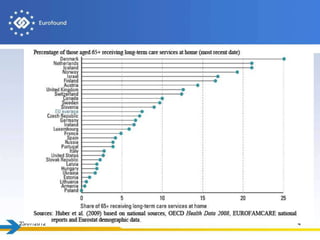
23/07/2012   4
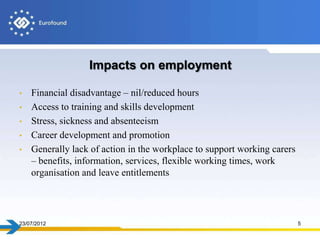
Impacts on employment

•   Financial disadvantage – nil/reduced hours
•   Access to training and skills development
•   Stress, sickness and absenteeism
•   Career development and promotion
•   Generally lack of action in the workplace to support working carers
    – benefits, information, services, flexible working times, work
    organisation and leave entitlements


23/07/2012                                                                5
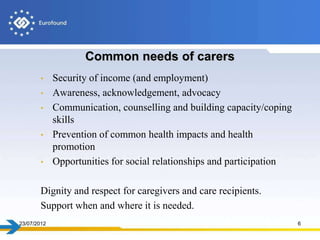
Common needs of carers
       •     Security of income (and employment)
       •     Awareness, acknowledgement, advocacy
       •     Communication, counselling and building capacity/coping
             skills
       •     Prevention of common health impacts and health
             promotion
       •     Opportunities for social relationships and participation

       Dignity and respect for caregivers and care recipients.
       Support when and where it is needed.
23/07/2012                                                              6
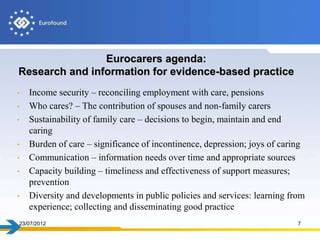
Eurocarers agenda:
Research and information for evidence-based practice
•   Income security – reconciling employment with care, pensions
•   Who cares? – The contribution of spouses and non-family carers
•   Sustainability of family care – decisions to begin, maintain and end
    caring
•   Burden of care – significance of incontinence, depression; joys of caring
•   Communication – information needs over time and appropriate sources
•   Capacity building – timeliness and effectiveness of support measures;
    prevention
•   Diversity and developments in public policies and services: learning from
    experience; collecting and disseminating good practice
23/07/2012                                                                 7
Strengthening cooperation in the EU
  Promote awareness and debate on care and its importance in the European
  model of society – European Year Active Ageing 2012.

  Use Structural Funds (especially Social Fund) for training of both formal and
  informal carers.

  Protect employment and promote equal opportunities for carers in
  employment – role for social partners as well as employment policy.

  Protect the rights of carers and provide support to organisations representing
  interest of carers

  Use the OMC for Social Protection to share best practice on how to optimise
  support for informal carers.

23/07/2012                                                                         8

1 anderson, rob

  • 1.
    Care and supportfor caregivers: European perspectives Symposium, IFA Prague, 30 May 2012 Robert Anderson Head of Living Conditions and Quality of Life Unit, EUROFOUND President, EUROCARERS 23/07/2012 1
  • 2.
    Caregivers in theEU policy debate Role and contribution of informal carers begins to be visible, especially in long-term care. • Employment: Recruiting and retaining an adequately qualified and skilled care workforce; training • Social protection: For both formal and informal carers; pensions • Equal opportunities: Measures to reconcile employment with informal care • Health: Sustainability of care provision and quality of the care workforce; little attention to health of informal carers 23/07/2012 2
  • 3.
    Mainly unpaid care,often by workers Dominance of family and informal care in most Member States e.g. EU – 20m carers provide 20+ hours per week. 80% of care hours are provided by informal care, predominantly women 45+. • In nearly all countries more than half of carers under 65 combine care with employment • 6% - 10% of employees are providing regular care, especially older (female) workers (13% - 16%) • But among those with care responsibilities only half of women but 9 out of 10 men (are able to) work full-time • Enabling access to employment of excluded carers Concerns (e.g. in the 2009 Communication on Alzheimer's disease; 2012 Employment Package) about shortages of carers, lack of support for informal carers, and risk of social exclusion for carers. Concerns amplified by economic crisis and any reductions in services. 23/07/2012 3
  • 4.
  • 5.
    Impacts on employment • Financial disadvantage – nil/reduced hours • Access to training and skills development • Stress, sickness and absenteeism • Career development and promotion • Generally lack of action in the workplace to support working carers – benefits, information, services, flexible working times, work organisation and leave entitlements 23/07/2012 5
  • 6.
    Common needs ofcarers • Security of income (and employment) • Awareness, acknowledgement, advocacy • Communication, counselling and building capacity/coping skills • Prevention of common health impacts and health promotion • Opportunities for social relationships and participation Dignity and respect for caregivers and care recipients. Support when and where it is needed. 23/07/2012 6
  • 7.
    Eurocarers agenda: Research andinformation for evidence-based practice • Income security – reconciling employment with care, pensions • Who cares? – The contribution of spouses and non-family carers • Sustainability of family care – decisions to begin, maintain and end caring • Burden of care – significance of incontinence, depression; joys of caring • Communication – information needs over time and appropriate sources • Capacity building – timeliness and effectiveness of support measures; prevention • Diversity and developments in public policies and services: learning from experience; collecting and disseminating good practice 23/07/2012 7
  • 8.
    Strengthening cooperation inthe EU Promote awareness and debate on care and its importance in the European model of society – European Year Active Ageing 2012. Use Structural Funds (especially Social Fund) for training of both formal and informal carers. Protect employment and promote equal opportunities for carers in employment – role for social partners as well as employment policy. Protect the rights of carers and provide support to organisations representing interest of carers Use the OMC for Social Protection to share best practice on how to optimise support for informal carers. 23/07/2012 8