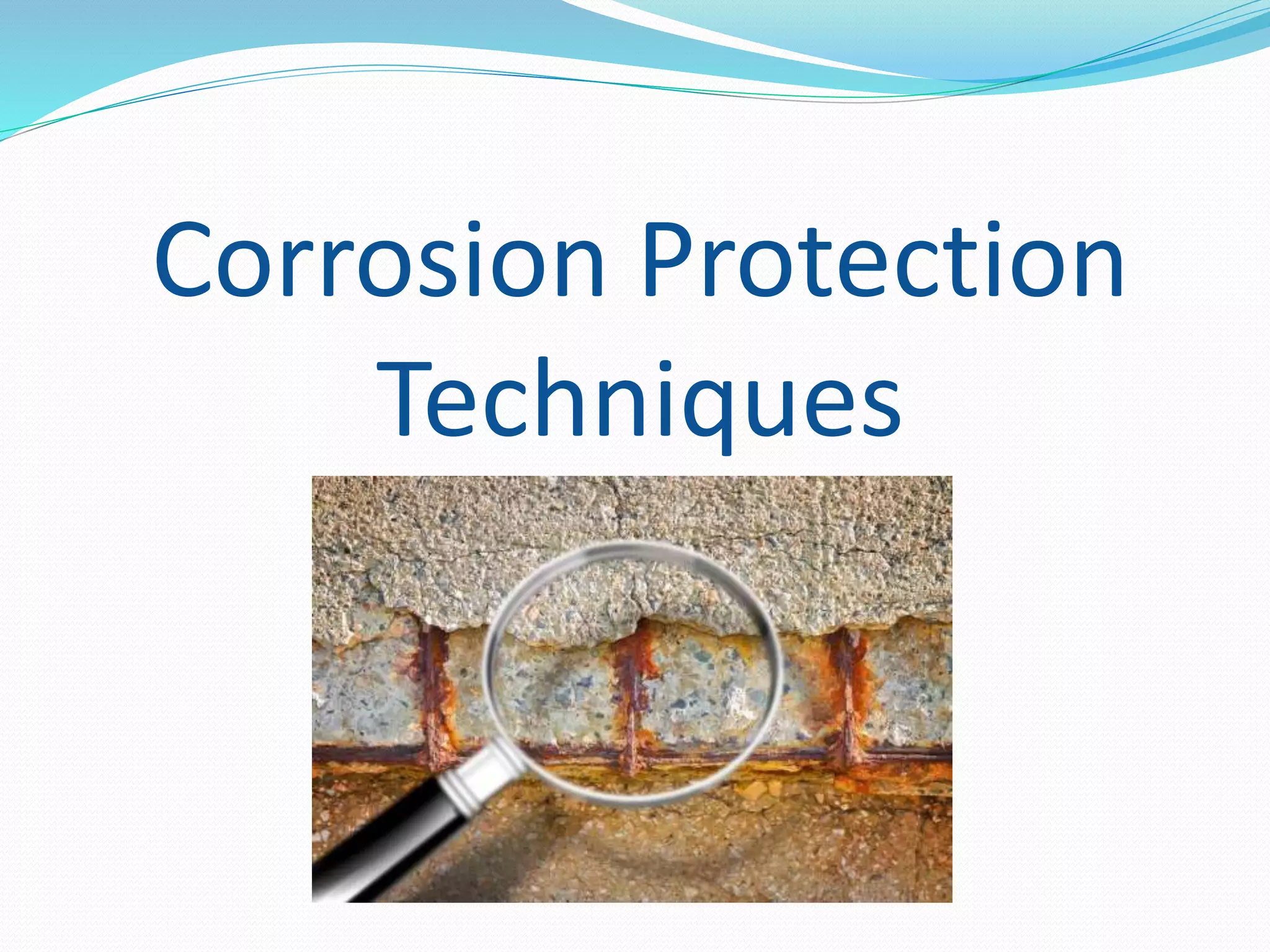
* Corrosion Protection Techniques
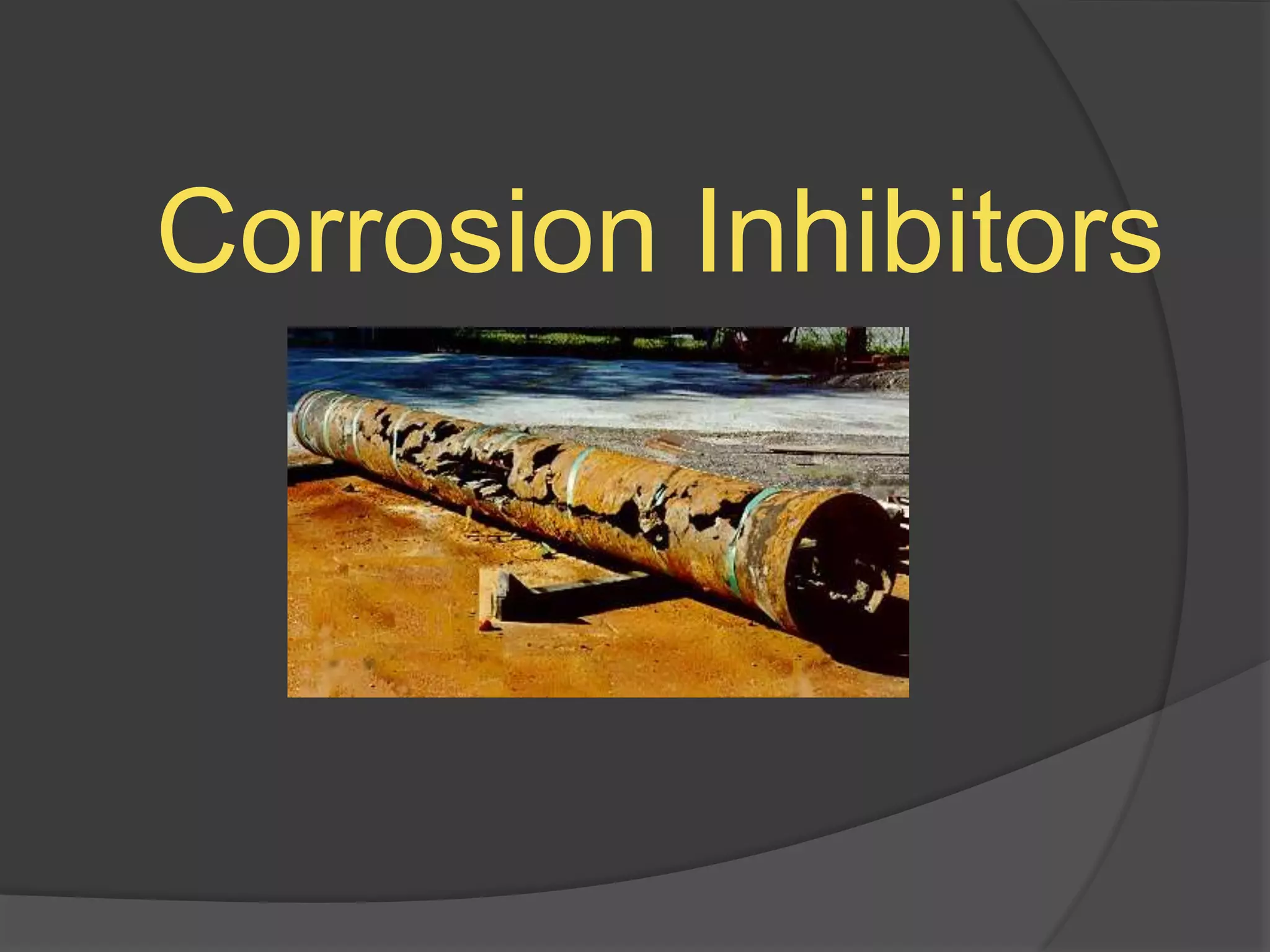
* Corrosion Inhibitors
* Concrete Coating
1. Corrosion Protection Techniques
2. Corrosion inhibitors.
3. Concrete Coatings.
4. Case study
Synopsis:-
Content...
 What is corrosion?
 Corrosion mechanism
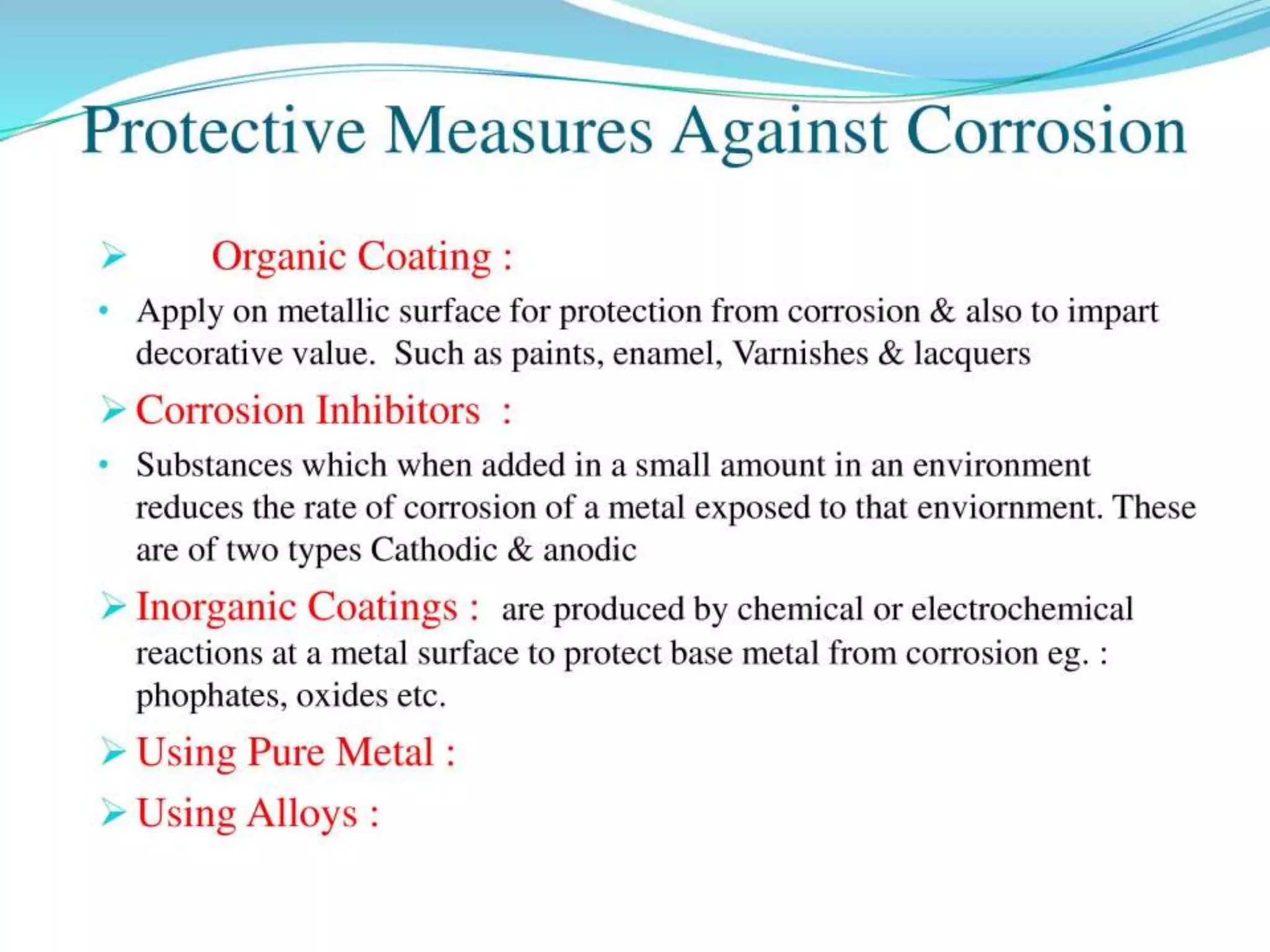
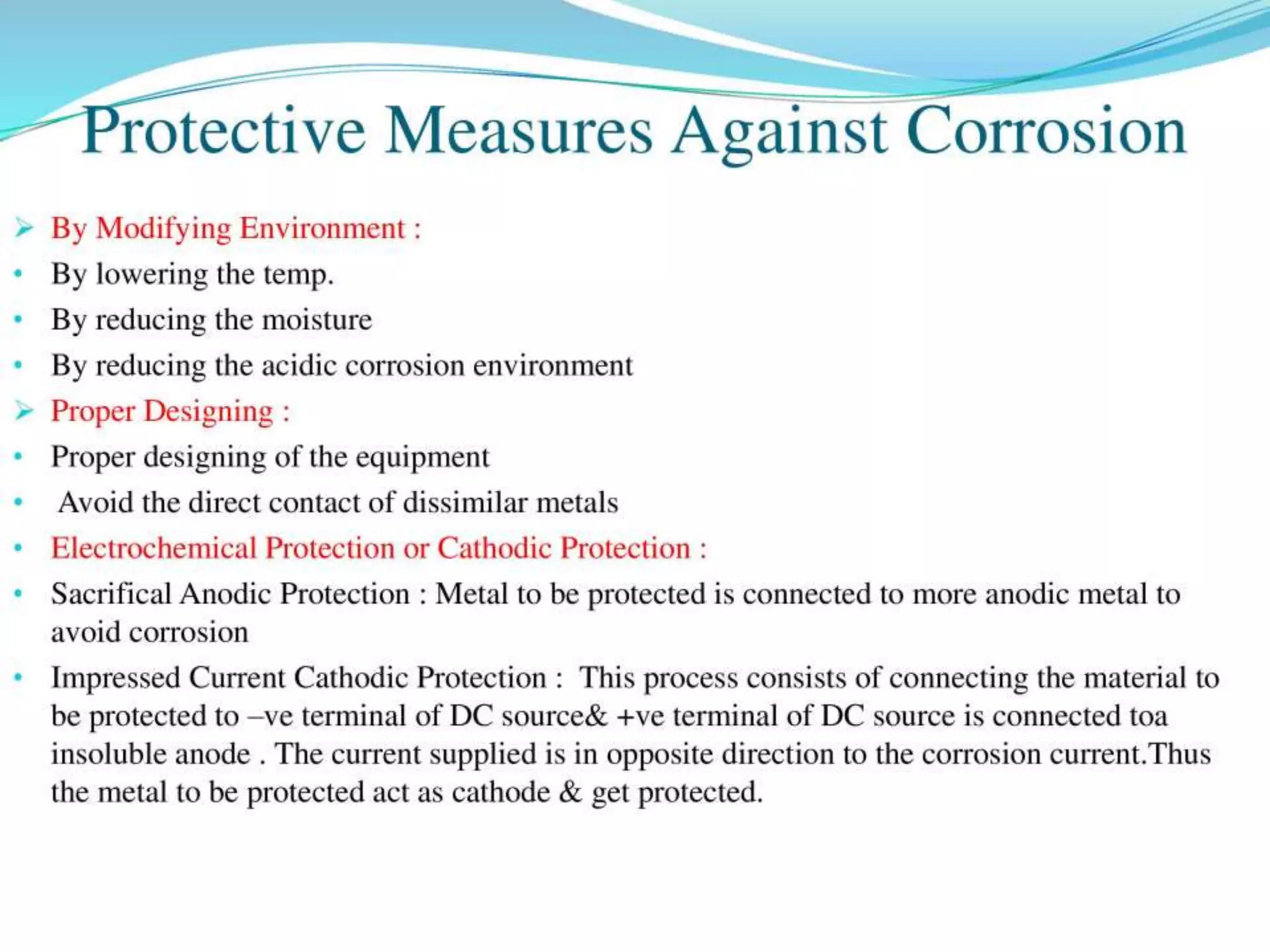
 Protective measures against corrosion
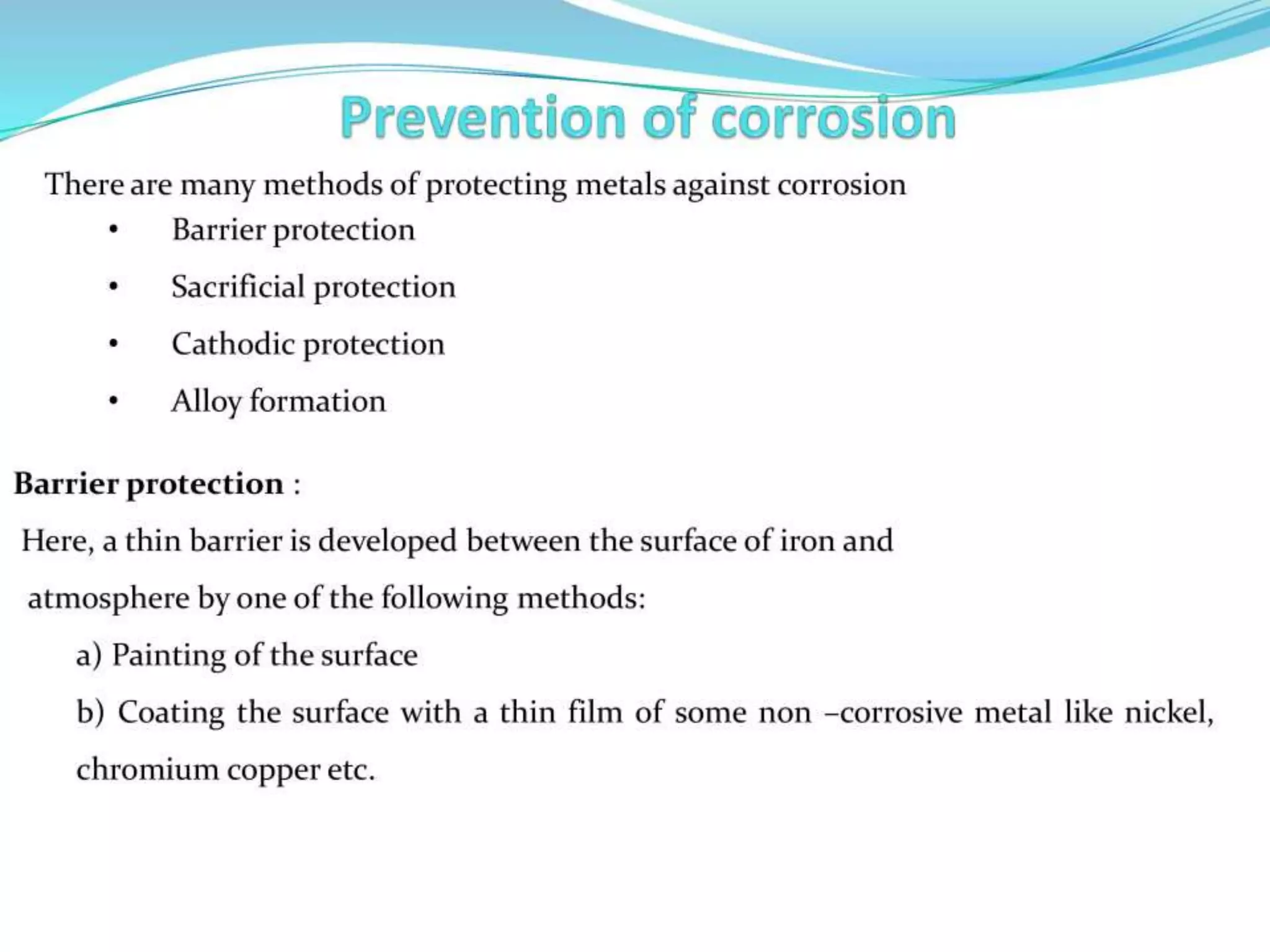
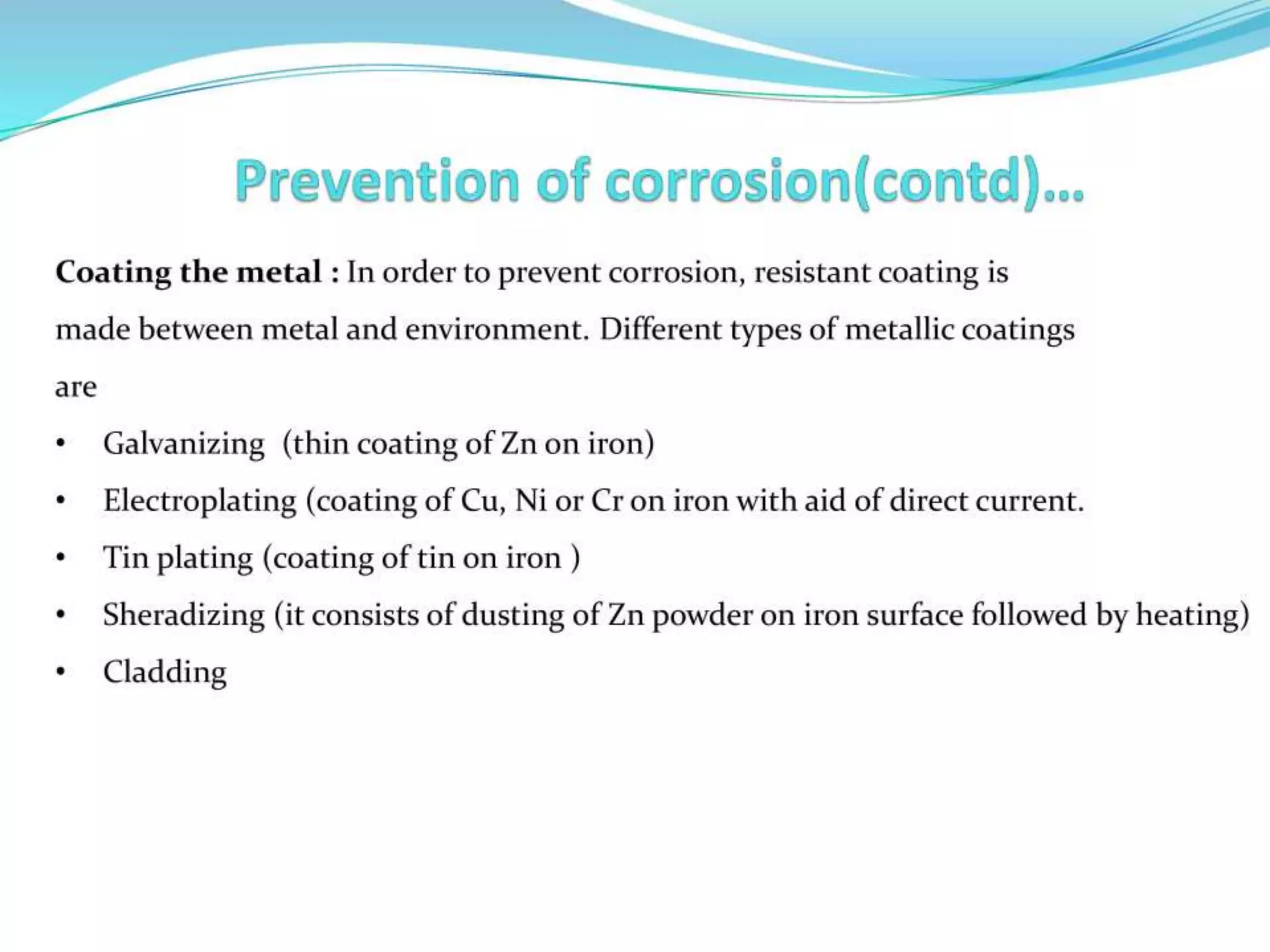
 Methods of protecting metals
 Corrosion inhibitors and types
 Advantages and disadvantages of corrosion inhibitors
 Concrete coating
 Types and where to use it
 Advantages and disadvantages of concrete coating
What is Corrosion?
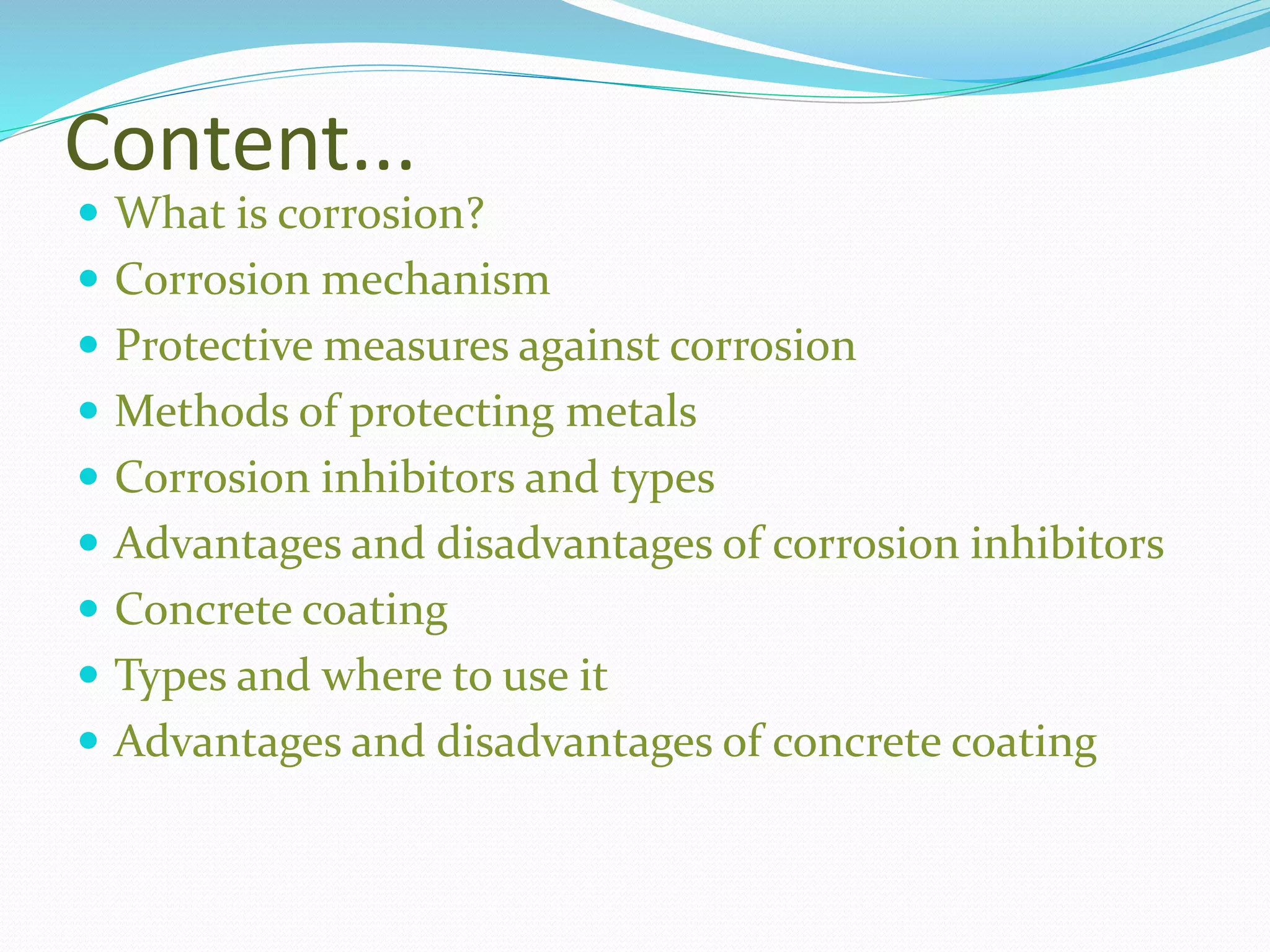
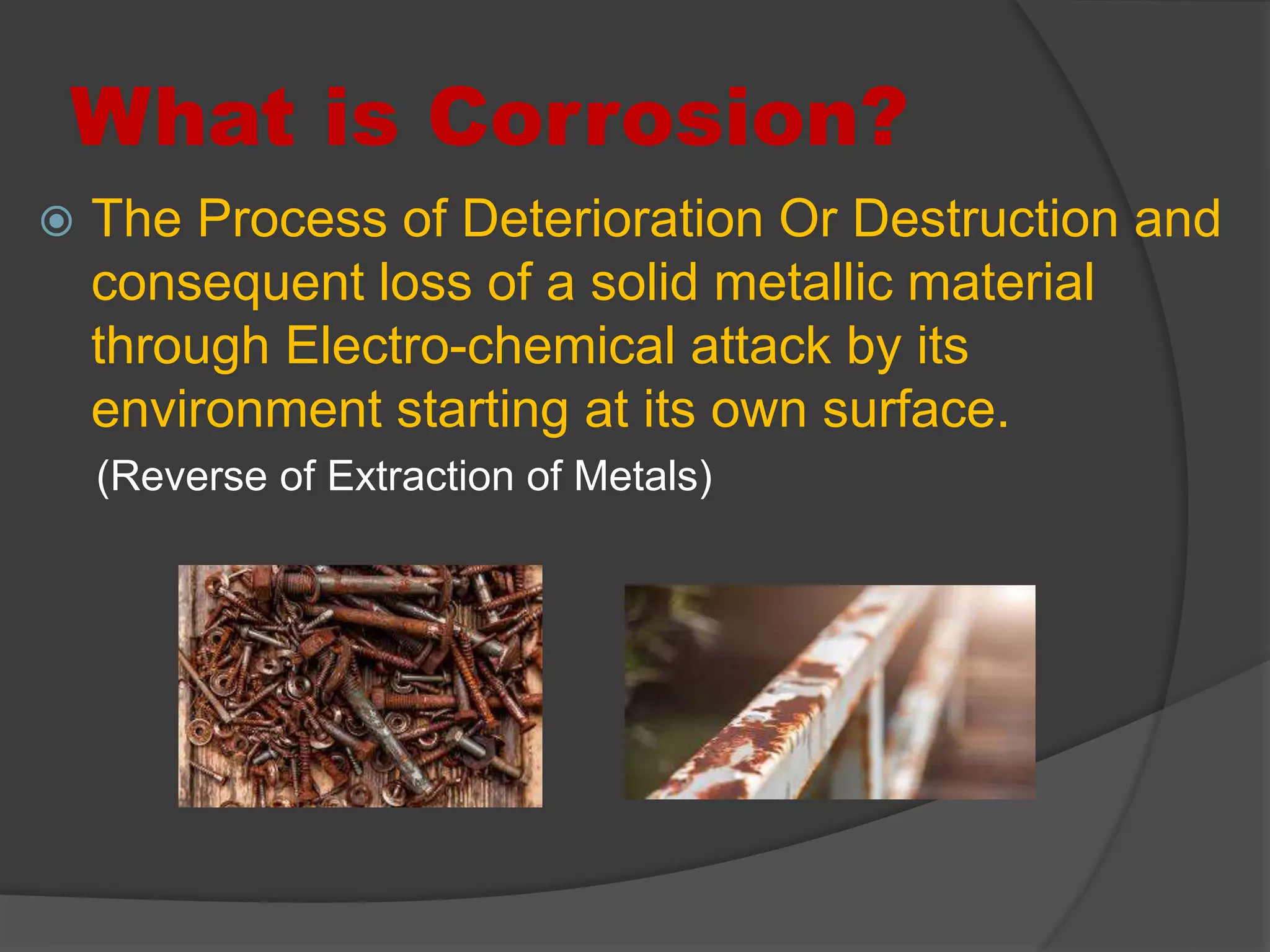
 The Process of Deterioration Or Destruction and
consequent loss of a solid metallic material
through Electro-chemical attack by its
environment starting at its own surface.
(Reverse of Extraction of Metals)
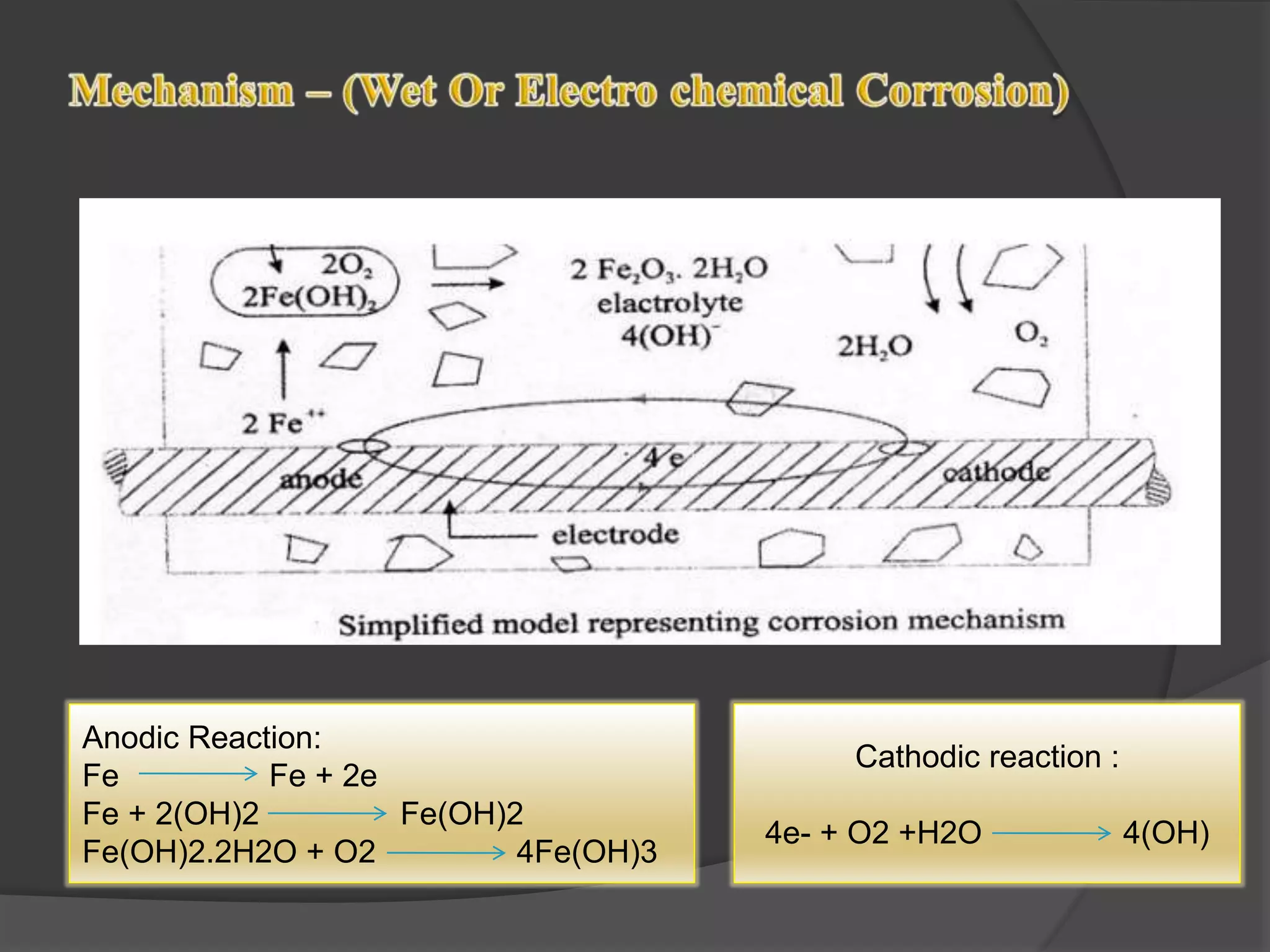
Anodic Reaction:
Fe Fe + 2e
Fe + 2(OH)2 Fe(OH)2
Fe(OH)2.2H2O + O2 4Fe(OH)3
Cathodic reaction :
4e- + O2 +H2O 4(OH)
Corrosion Protection
Techniques
Corrosion Inhibitors
Corrosion Inhibitors:
A corrosion inhibitor is an admixture
that is used in concrete to prevent the
metal, embedded in concrete from
corroding.
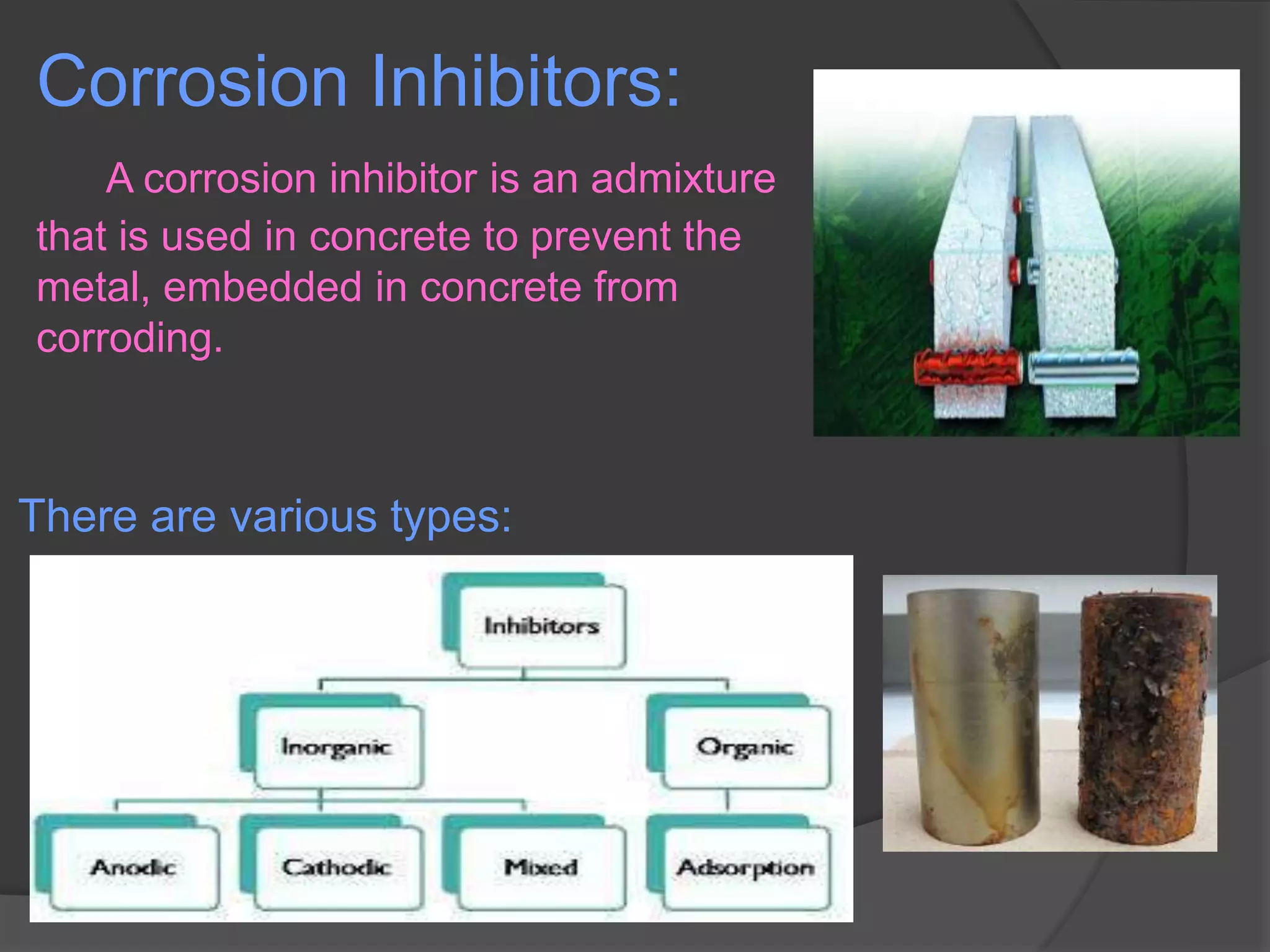
There are various types:
Organic
Adsorption: Protect the method by forming a hydrophobic film
on the metal surface.
Inorganic
Anode: Type forming a protective oxide film on surface of
metal.
Cathode: Slows down the cathodic reaction to rust the
diffusion of reducing species to metal surfaces.
Mixed: Film forming compounds that reduces both anode and
cathode reactions.
Advantages:
* Reduces the ions & mass adsorption onto metal
surface.
* Reduce the anodic reaction on metal surface.
* Easy to apply in the situ application.
Disadvantages:
* Expensive to use with large amount of liquid.
* May cause increase in corrosion if incorrectly used.
When to use corrosion inhibitors???
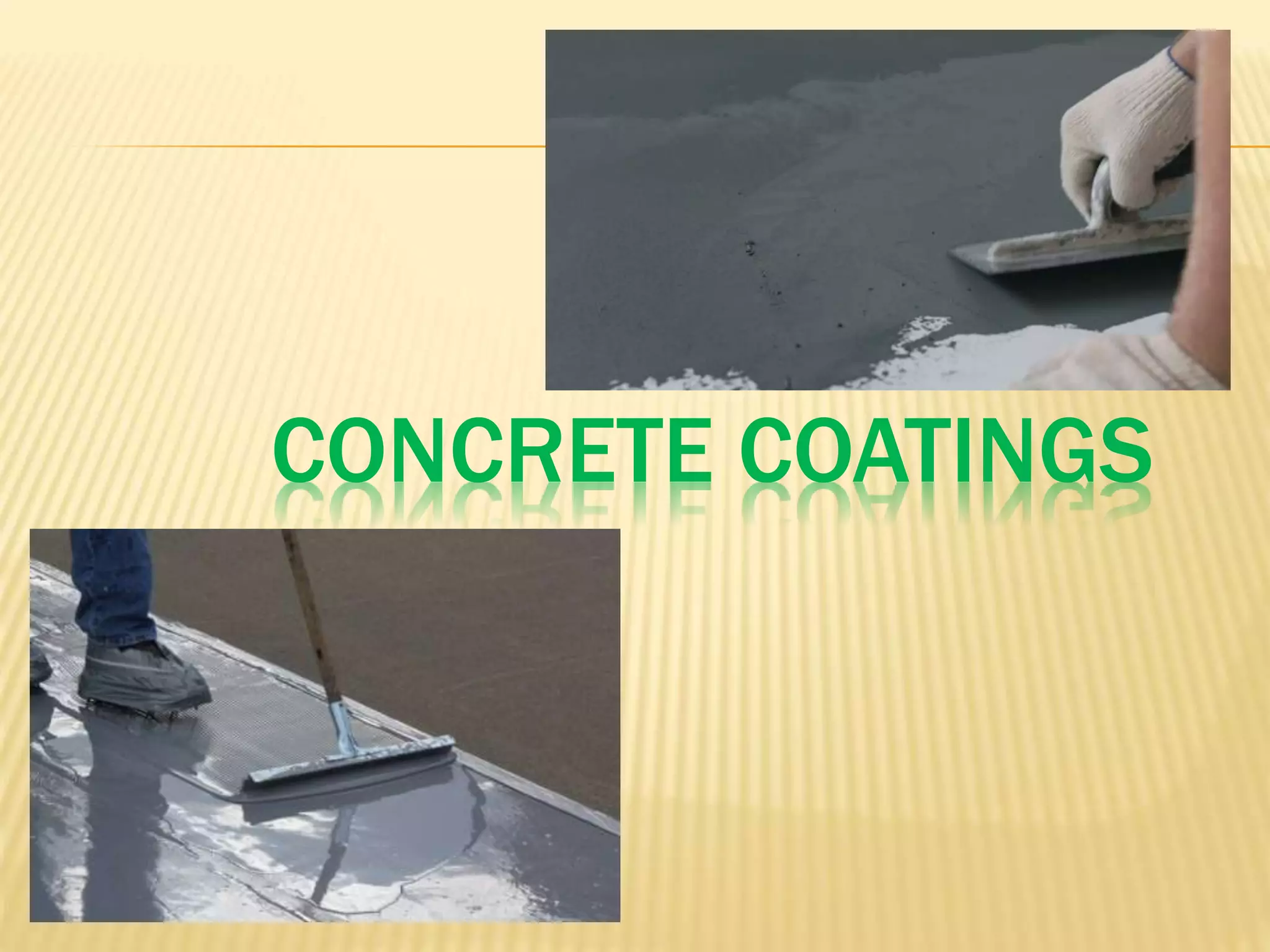
CONCRETE COATINGS
Concrete coatings: Liquid or semi-liquid that is applied to
cure concrete for aesthetic reasons as well as to make the
structure last longer and to reduce maintenance and repair
costs.
Types:
 Epoxy floor coatings.
 Polyurethane floor coatings.
 Polyaspartic floor coatings.
 Acrylic floor coatings.
Epoxy floor coatings:
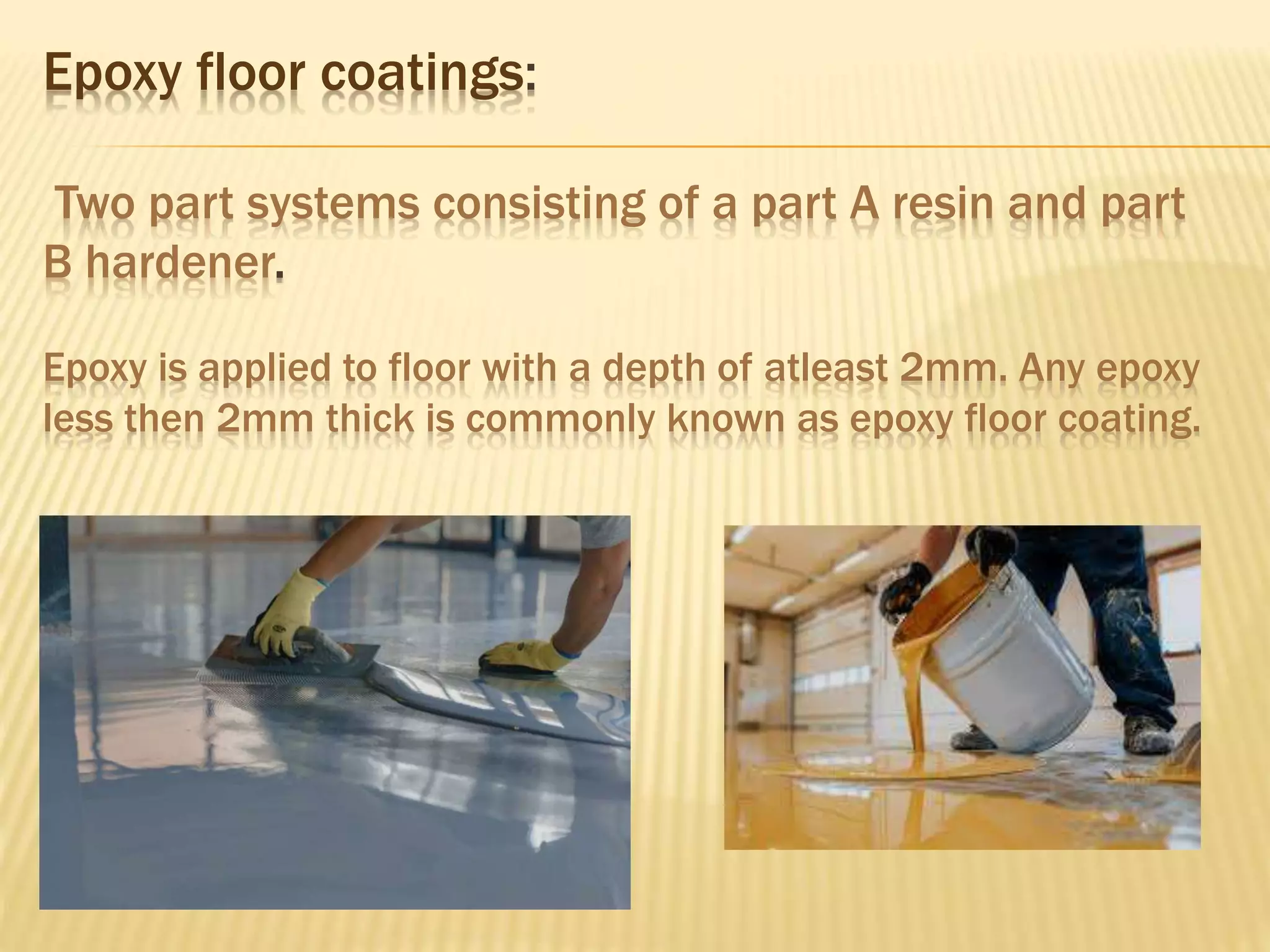
Two part systems consisting of a part A resin and part
B hardener.
Epoxy is applied to floor with a depth of atleast 2mm. Any epoxy
less then 2mm thick is commonly known as epoxy floor coating.
Types and where to apply them:
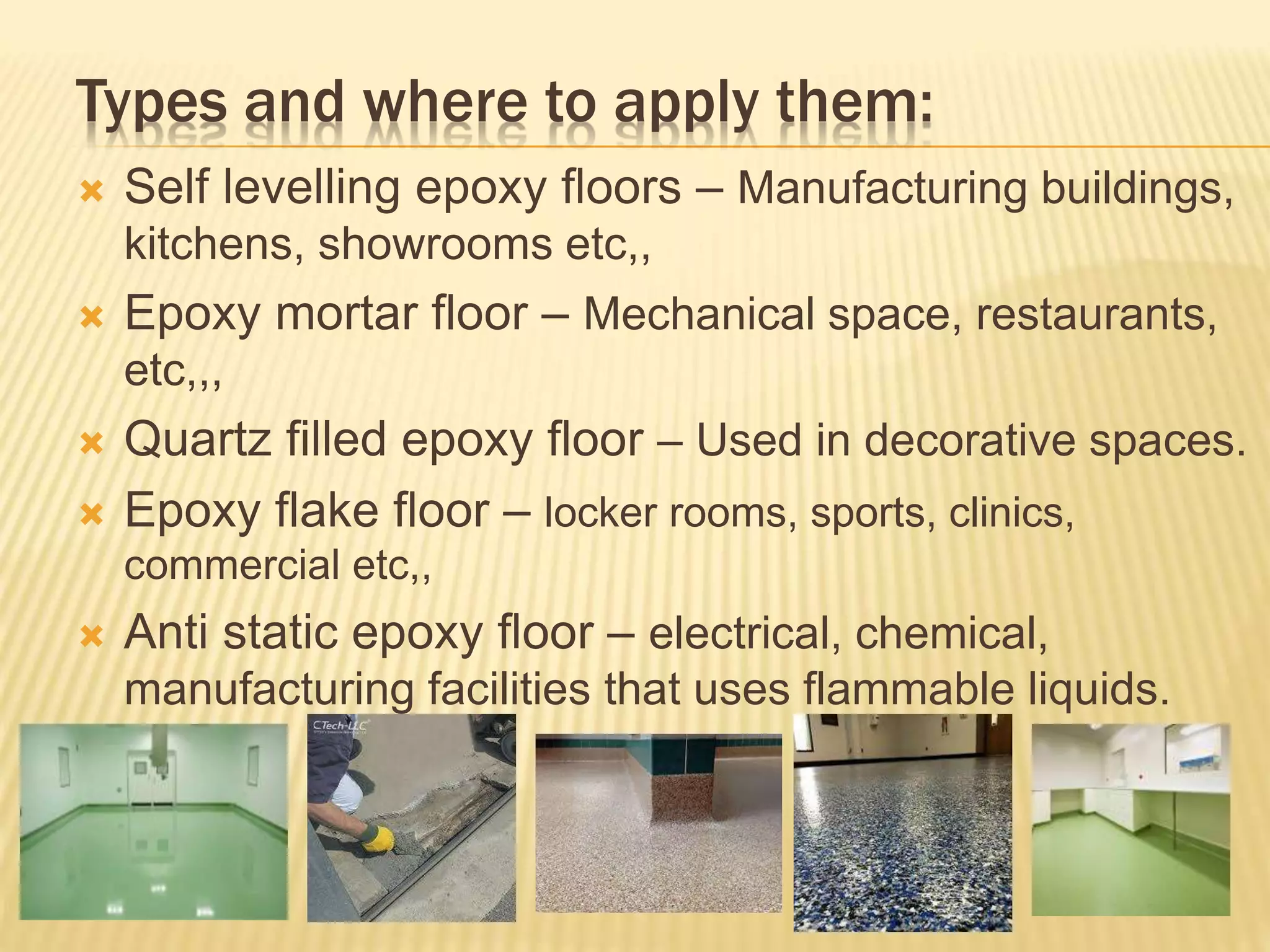
 Self levelling epoxy floors – Manufacturing buildings,
kitchens, showrooms etc,,
 Epoxy mortar floor – Mechanical space, restaurants,
etc,,,
 Quartz filled epoxy floor – Used in decorative spaces.
 Epoxy flake floor – locker rooms, sports, clinics,
commercial etc,,
 Anti static epoxy floor – electrical, chemical,
manufacturing facilities that uses flammable liquids.
Polymethane coating:
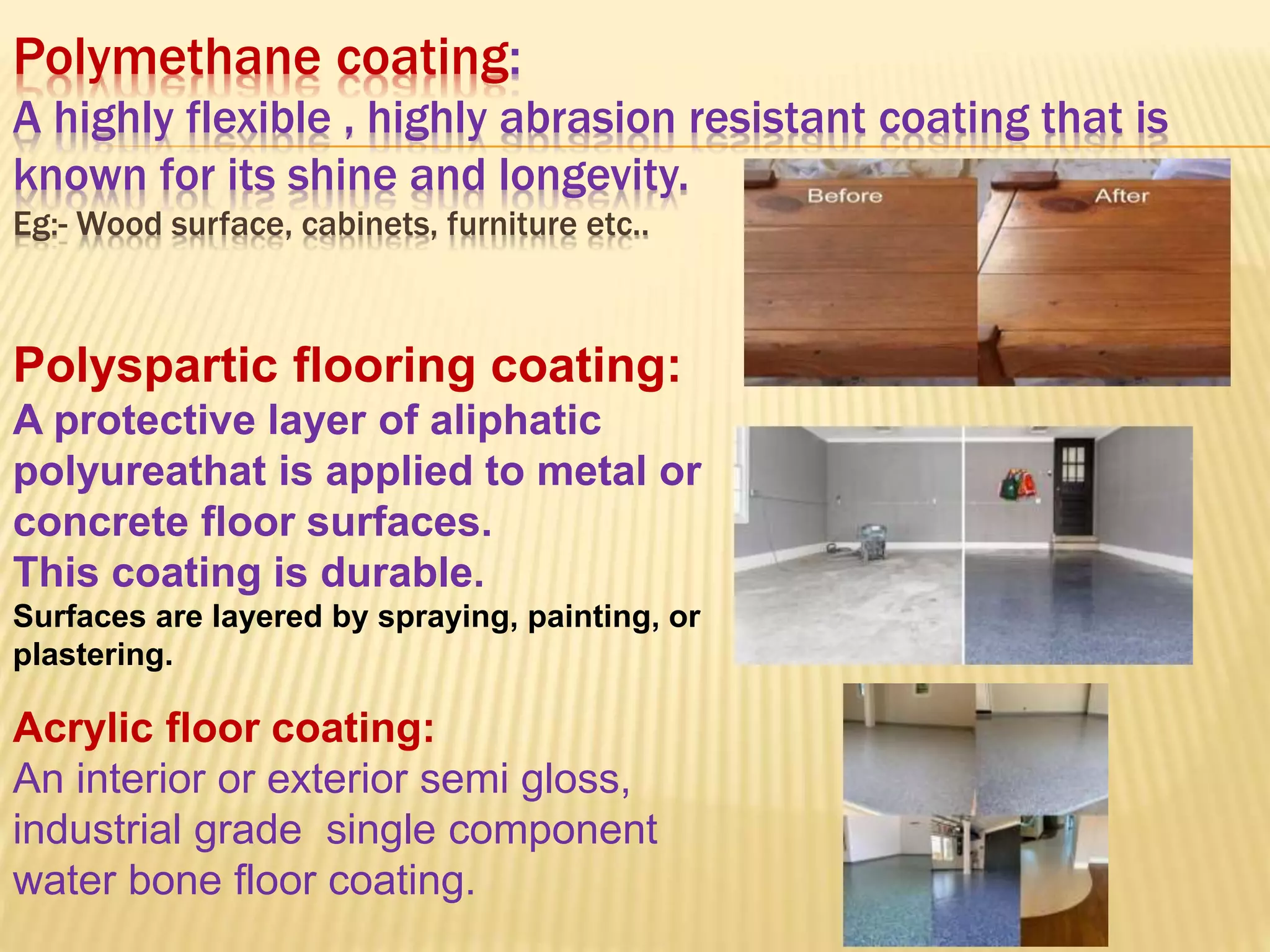
A highly flexible , highly abrasion resistant coating that is
known for its shine and longevity.
Eg:- Wood surface, cabinets, furniture etc..
Polyspartic flooring coating:
A protective layer of aliphatic
polyureathat is applied to metal or
concrete floor surfaces.
This coating is durable.
Surfaces are layered by spraying, painting, or
plastering.
Acrylic floor coating:
An interior or exterior semi gloss,
industrial grade single component
water bone floor coating.
ADVANTAGES OF CONCRETE COATING:
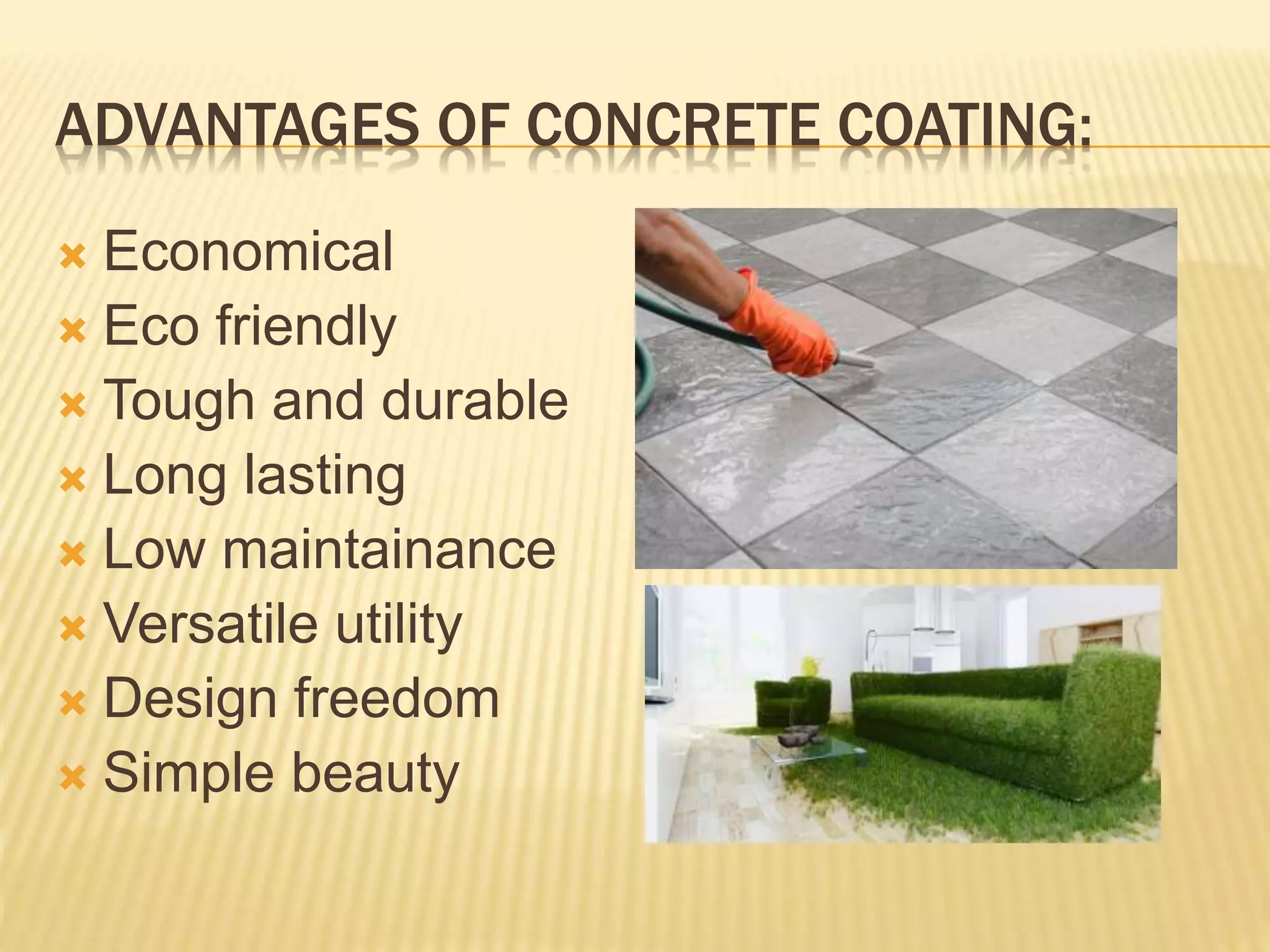
 Economical
 Eco friendly
 Tough and durable
 Long lasting
 Low maintainance
 Versatile utility
 Design freedom
 Simple beauty
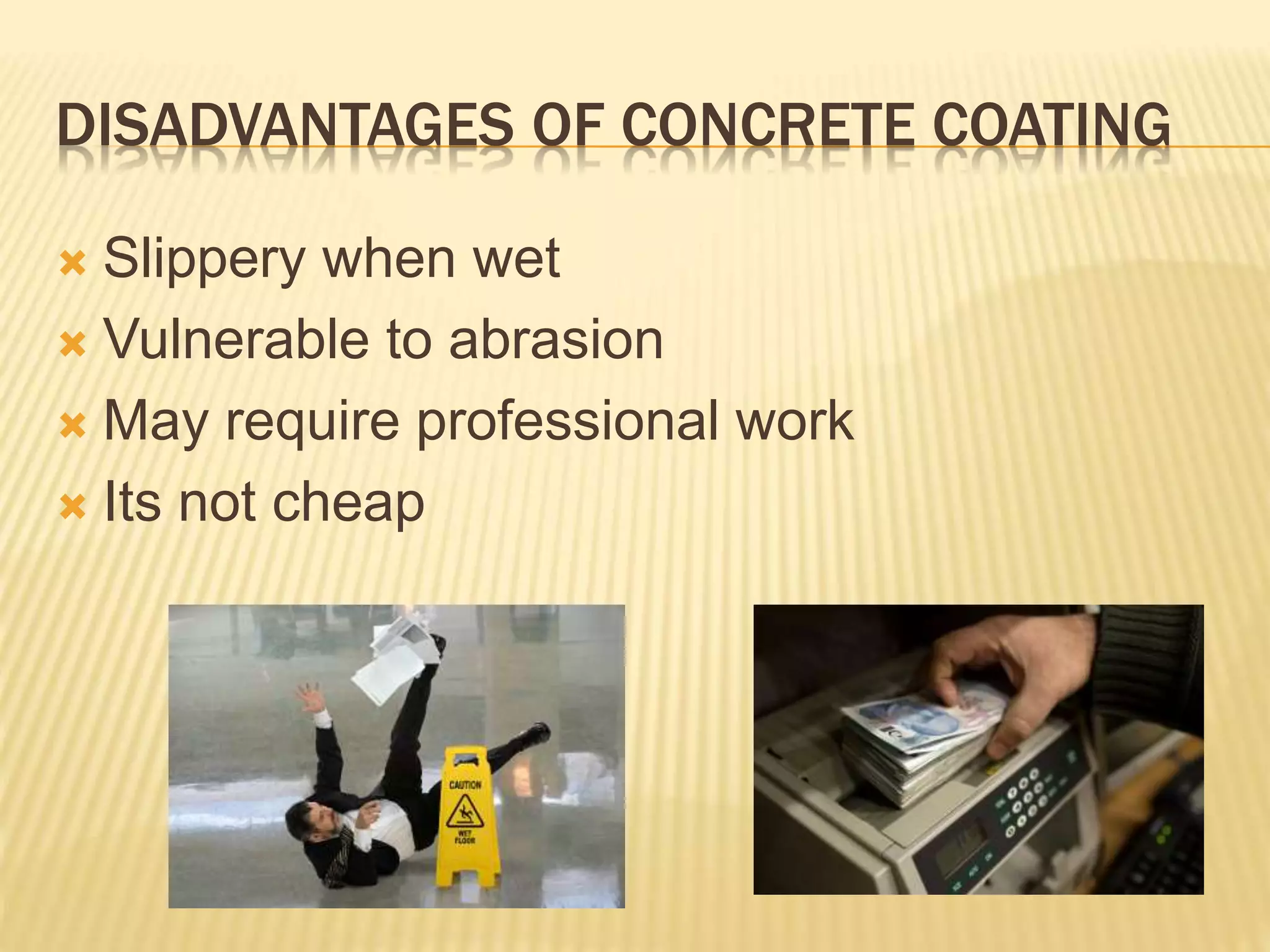
DISADVANTAGES OF CONCRETE COATING
 Slippery when wet
 Vulnerable to abrasion
 May require professional work
 Its not cheap
Protection Methods & Structural Health Monitoring

Protection Methods & Structural Health Monitoring

  • 1.
    * Corrosion ProtectionTechniques * Corrosion Inhibitors * Concrete Coating
  • 2.
    1. Corrosion ProtectionTechniques 2. Corrosion inhibitors. 3. Concrete Coatings. 4. Case study Synopsis:-
  • 3.
    Content...  What iscorrosion?  Corrosion mechanism  Protective measures against corrosion  Methods of protecting metals  Corrosion inhibitors and types  Advantages and disadvantages of corrosion inhibitors  Concrete coating  Types and where to use it  Advantages and disadvantages of concrete coating
  • 4.
    What is Corrosion? The Process of Deterioration Or Destruction and consequent loss of a solid metallic material through Electro-chemical attack by its environment starting at its own surface. (Reverse of Extraction of Metals)
  • 5.
    Anodic Reaction: Fe Fe+ 2e Fe + 2(OH)2 Fe(OH)2 Fe(OH)2.2H2O + O2 4Fe(OH)3 Cathodic reaction : 4e- + O2 +H2O 4(OH)
  • 6.
  • 15.
  • 16.
    Corrosion Inhibitors: A corrosioninhibitor is an admixture that is used in concrete to prevent the metal, embedded in concrete from corroding. There are various types:
  • 17.
    Organic Adsorption: Protect themethod by forming a hydrophobic film on the metal surface. Inorganic Anode: Type forming a protective oxide film on surface of metal. Cathode: Slows down the cathodic reaction to rust the diffusion of reducing species to metal surfaces. Mixed: Film forming compounds that reduces both anode and cathode reactions.
  • 18.
    Advantages: * Reduces theions & mass adsorption onto metal surface. * Reduce the anodic reaction on metal surface. * Easy to apply in the situ application. Disadvantages: * Expensive to use with large amount of liquid. * May cause increase in corrosion if incorrectly used. When to use corrosion inhibitors???
  • 19.
  • 20.
    Concrete coatings: Liquidor semi-liquid that is applied to cure concrete for aesthetic reasons as well as to make the structure last longer and to reduce maintenance and repair costs. Types:  Epoxy floor coatings.  Polyurethane floor coatings.  Polyaspartic floor coatings.  Acrylic floor coatings.
  • 21.
    Epoxy floor coatings: Twopart systems consisting of a part A resin and part B hardener. Epoxy is applied to floor with a depth of atleast 2mm. Any epoxy less then 2mm thick is commonly known as epoxy floor coating.
  • 22.
    Types and whereto apply them:  Self levelling epoxy floors – Manufacturing buildings, kitchens, showrooms etc,,  Epoxy mortar floor – Mechanical space, restaurants, etc,,,  Quartz filled epoxy floor – Used in decorative spaces.  Epoxy flake floor – locker rooms, sports, clinics, commercial etc,,  Anti static epoxy floor – electrical, chemical, manufacturing facilities that uses flammable liquids.
  • 23.
    Polymethane coating: A highlyflexible , highly abrasion resistant coating that is known for its shine and longevity. Eg:- Wood surface, cabinets, furniture etc.. Polyspartic flooring coating: A protective layer of aliphatic polyureathat is applied to metal or concrete floor surfaces. This coating is durable. Surfaces are layered by spraying, painting, or plastering. Acrylic floor coating: An interior or exterior semi gloss, industrial grade single component water bone floor coating.
  • 24.
    ADVANTAGES OF CONCRETECOATING:  Economical  Eco friendly  Tough and durable  Long lasting  Low maintainance  Versatile utility  Design freedom  Simple beauty
  • 25.
    DISADVANTAGES OF CONCRETECOATING  Slippery when wet  Vulnerable to abrasion  May require professional work  Its not cheap