INTRODUCTION TO PAINTS AND COATINGS
300758-FG02-DEL-15-01
For the Facilities and Infrastructure Professional
Paints & Coatings for DOD F&I
*hover over the underlined items for more details
 Department of Defense (DOD) manages 555,000 structures
• Buildings, structures, pipelines, pavement and port facilities
• Broad range of environmental severity zones (desert to
marine)
• Millions of Square Feet of painted steel, wood, aluminum &
concrete.
• Costs over $100 Million per year to maintain the exterior of
DOD’s building
• Paints & Coatings are addressed by numerous UFGS and
UFC 3-190-06
Introduction to Paints & Coatings
Paint can be defined as a mixture or dispersion of opaque pigments or powders in a
liquid or vehicle.
Coatings include other materials that can be considered paint-like in their use such as
varnishes and inorganic binders.
Modern classifications of paints:
• Architectural/Trade Sales - commonly recognized latex and alkyd paints sold in
retail stores.
• Industrial/Maintenance – may include anti-corrosive primers, machinery and
industrial enamels and other products that require more specialized application
equipment. Some trade sales type paints are also used in Industrial situations (i.e.
High Performance Architectural Coatings).
• Specialty – are generally very specific in their use, application and resistance
properties such as plastics coatings, coil coatings, and resistive coatings.
Paints & Coatings
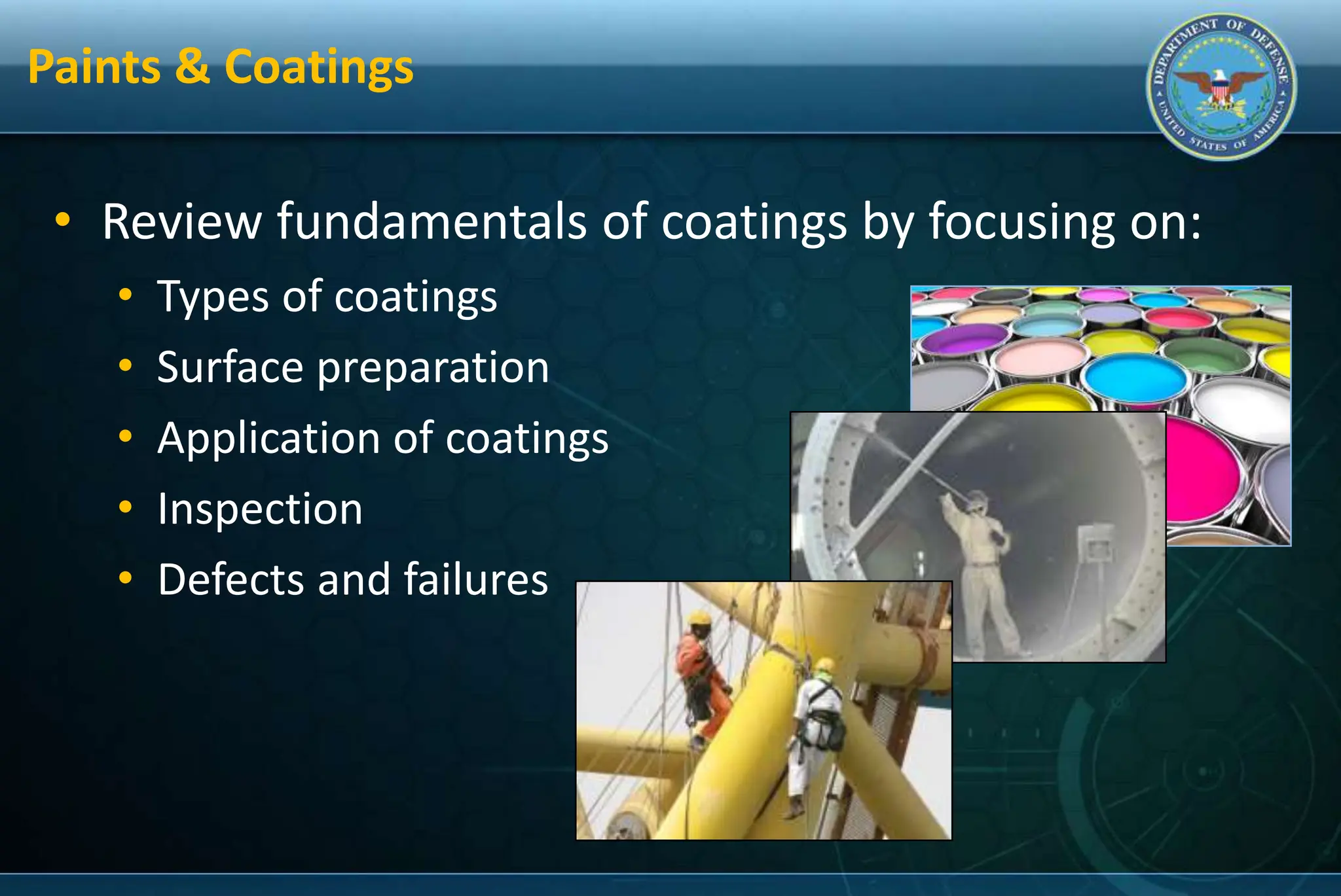
• Review fundamentals of coatings by focusing on:
• Types of coatings
• Surface preparation
• Application of coatings
• Inspection
• Defects and failures
Mechanisms of Corrosion Control by Coatings
• Barrier protection
• Chemical inhibitors
• Inhibitive Pigments
• Galvanic (cathodic) protection
• Zinc
• Galvanizing
• Metallizing
*hover over the underlined items for more details
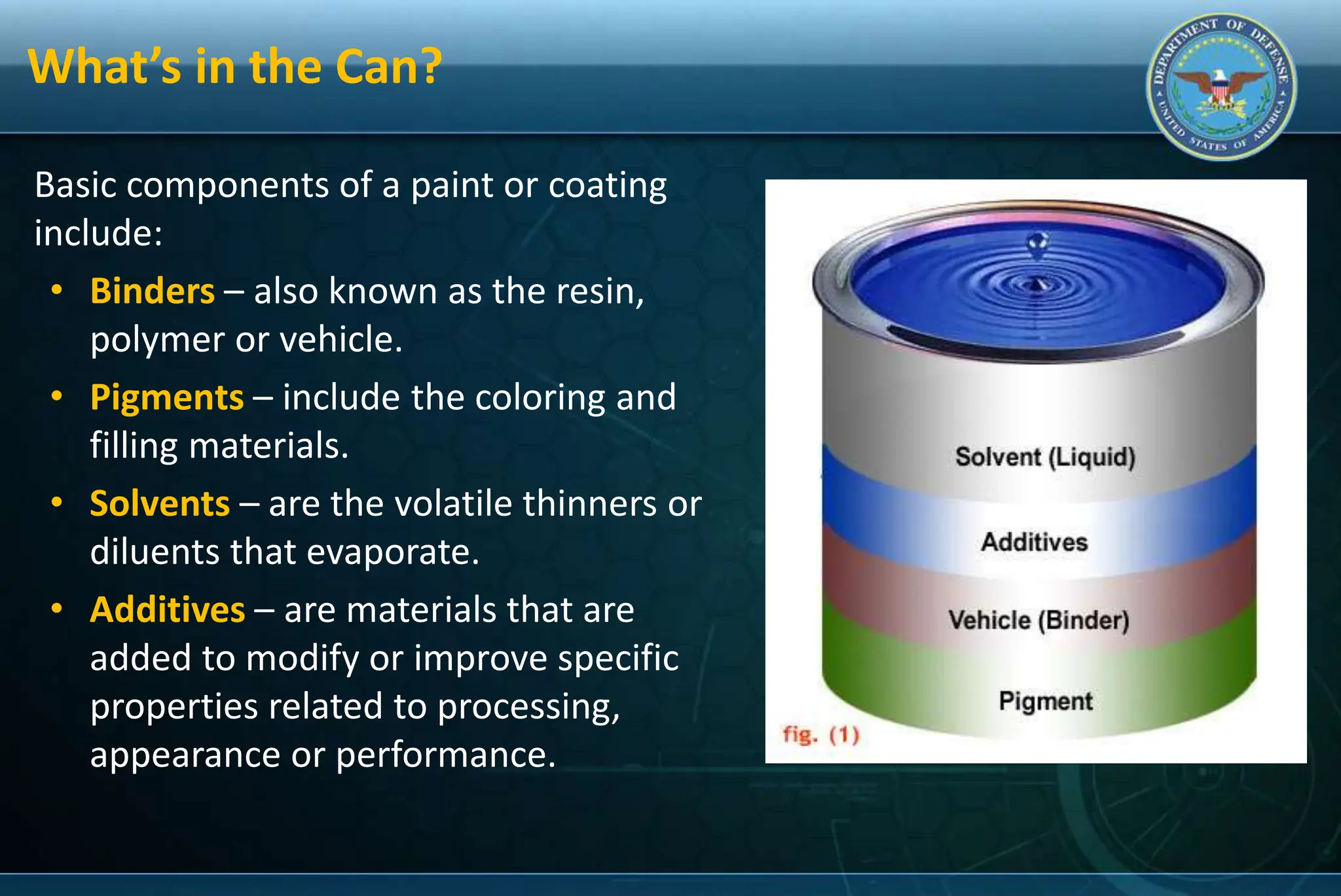
What’s in the Can?
Basic components of a paint or coating
include:
• Binders – also known as the resin,
polymer or vehicle.
• Pigments – include the coloring and
filling materials.
• Solvents – are the volatile thinners or
diluents that evaporate.
• Additives – are materials that are
added to modify or improve specific
properties related to processing,
appearance or performance.
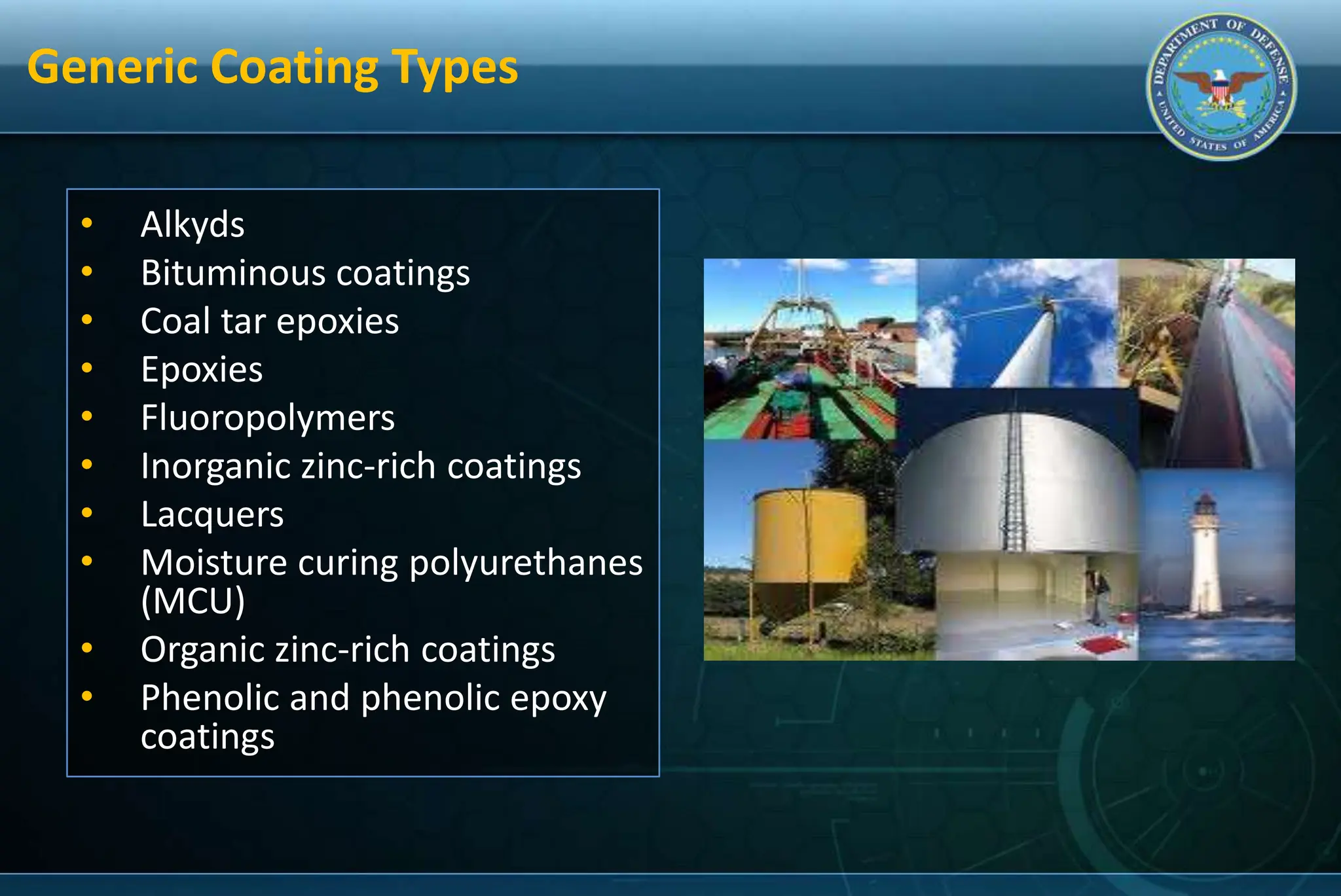
Generic Coating Types
• Alkyds
• Bituminous coatings
• Coal tar epoxies
• Epoxies
• Fluoropolymers
• Inorganic zinc-rich coatings
• Lacquers
• Moisture curing polyurethanes
(MCU)
• Organic zinc-rich coatings
• Phenolic and phenolic epoxy
coatings
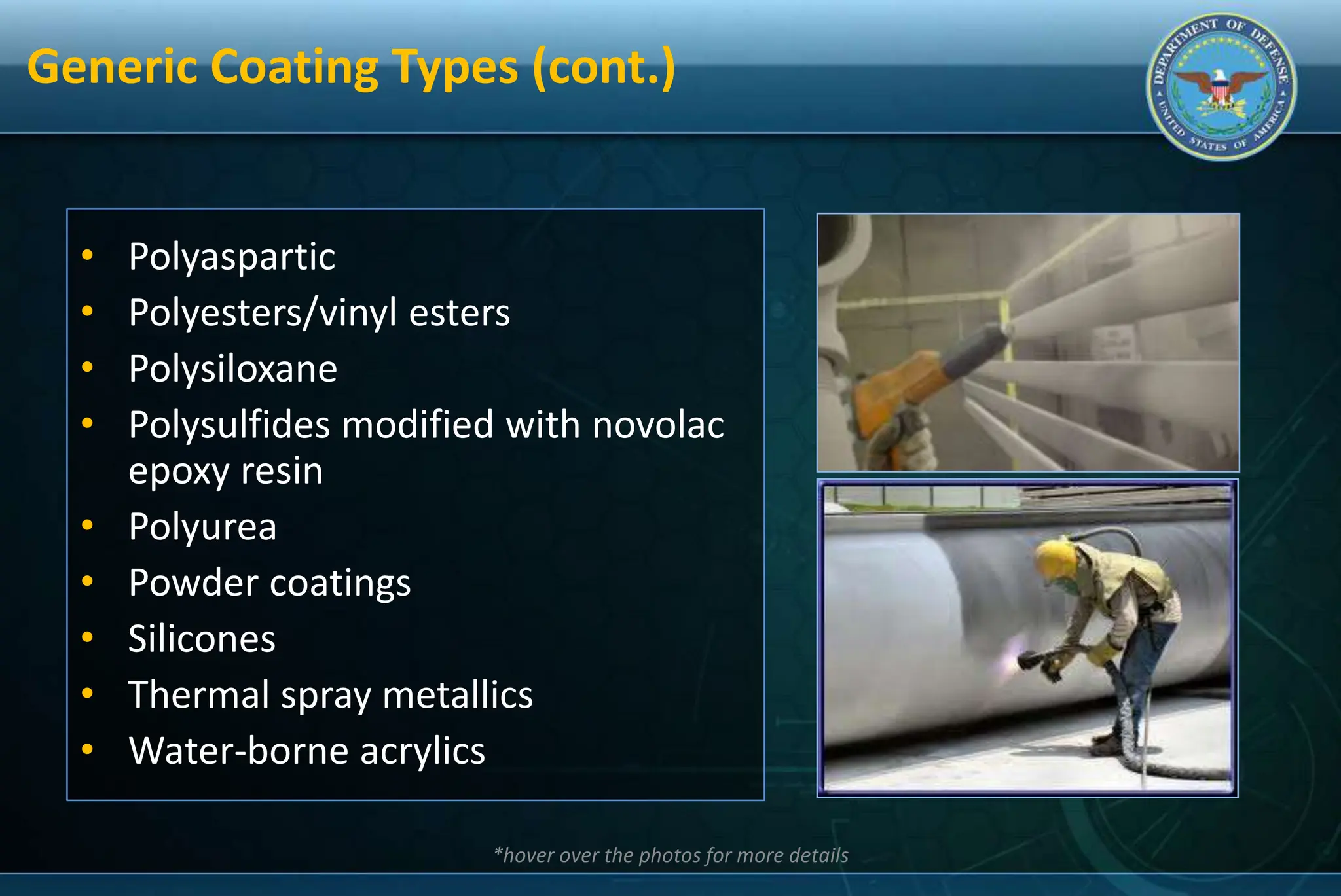
Generic Coating Types (cont.)
• Polyaspartic
• Polyesters/vinyl esters
• Polysiloxane
• Polysulfides modified with novolac
epoxy resin
• Polyurea
• Powder coatings
• Silicones
• Thermal spray metallics
• Water-borne acrylics
*hover over the photos for more details
Important Factors in Coating Selection
• Mission/operational needs
• Exterior weathering
• Water, fuel, solvent, or chemical resistance
• Abrasion, heat, or mildew resistance
• Appearance
• Drying time
• Ease of application and maintenance
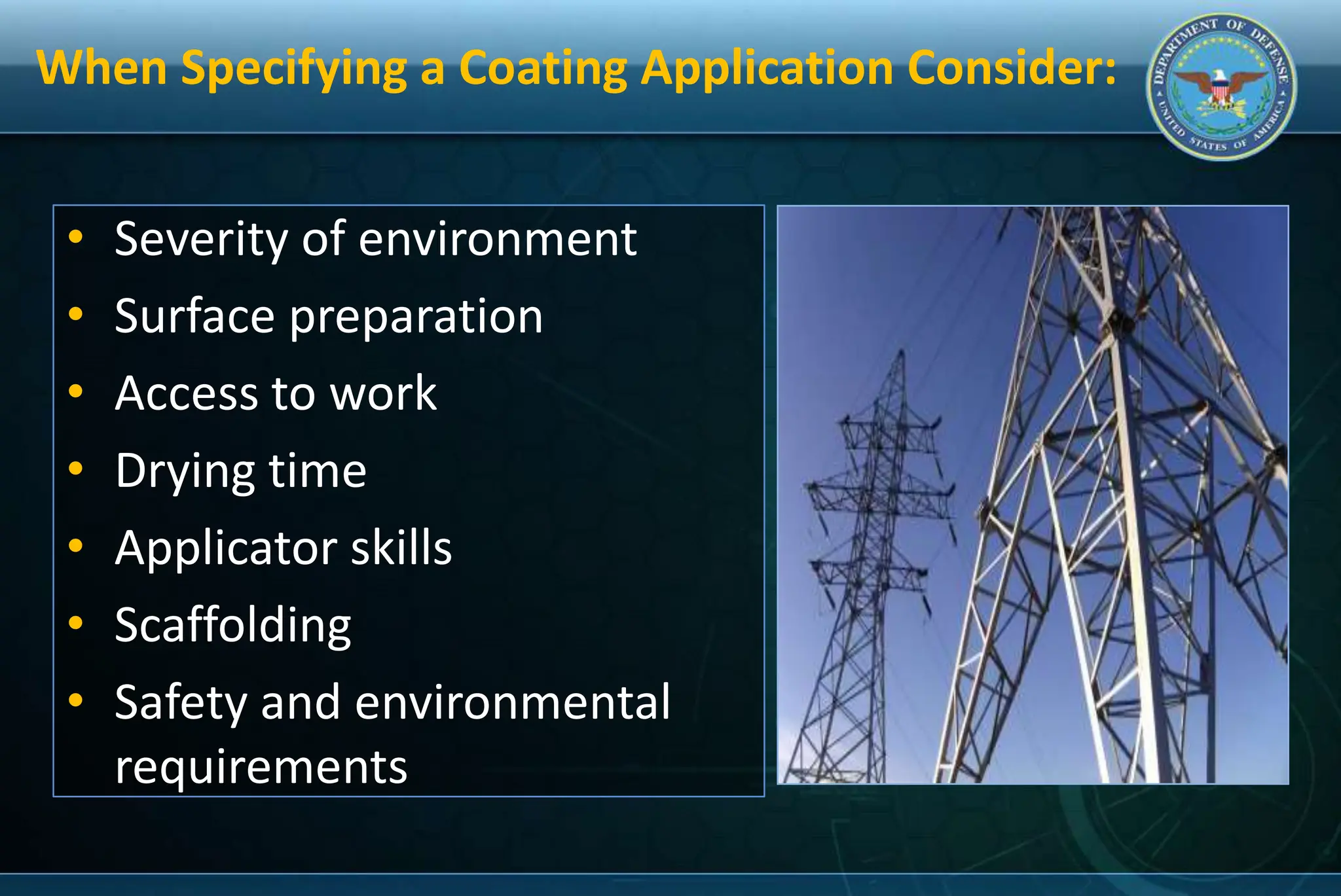
• Severity of environment
• Surface preparation
• Access to work
• Drying time
• Applicator skills
• Scaffolding
• Safety and environmental
requirements
When Specifying a Coating Application Consider:
Surface Preparation
The life of any coating system is directly impacted by the quality of
the prepared surface. The better the surface preparation, the
longer the life of the coating system
• Treatment of Surface Irregularities
• Pre-cleaning to remove surface contaminants
• Cleaning surfaces to desired levels
• Producing a surface profile (texture)
*hover over the underlined items for more details
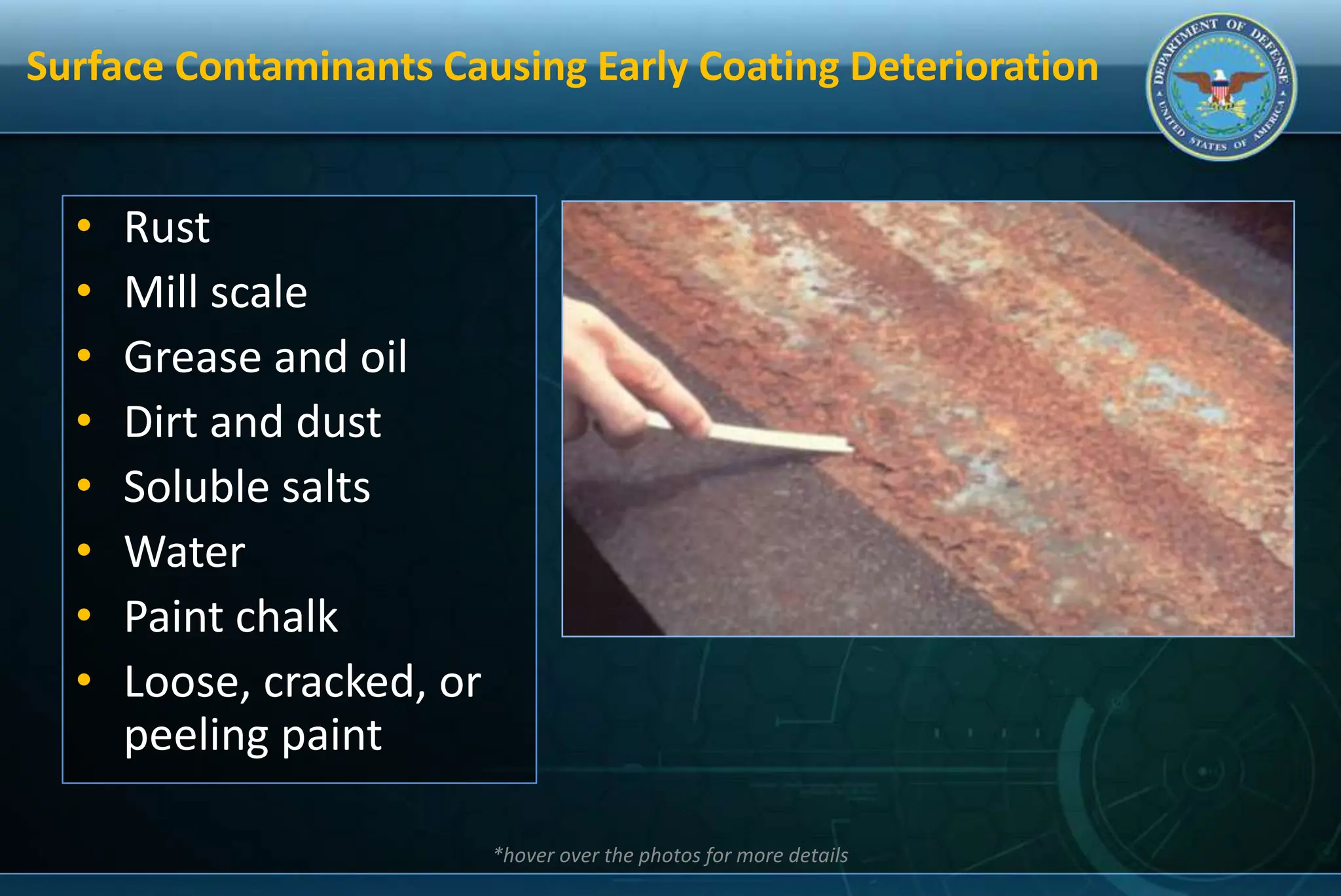
Surface Contaminants Causing Early Coating Deterioration
• Rust
• Mill scale
• Grease and oil
• Dirt and dust
• Soluble salts
• Water
• Paint chalk
• Loose, cracked, or
peeling paint
*hover over the photos for more details
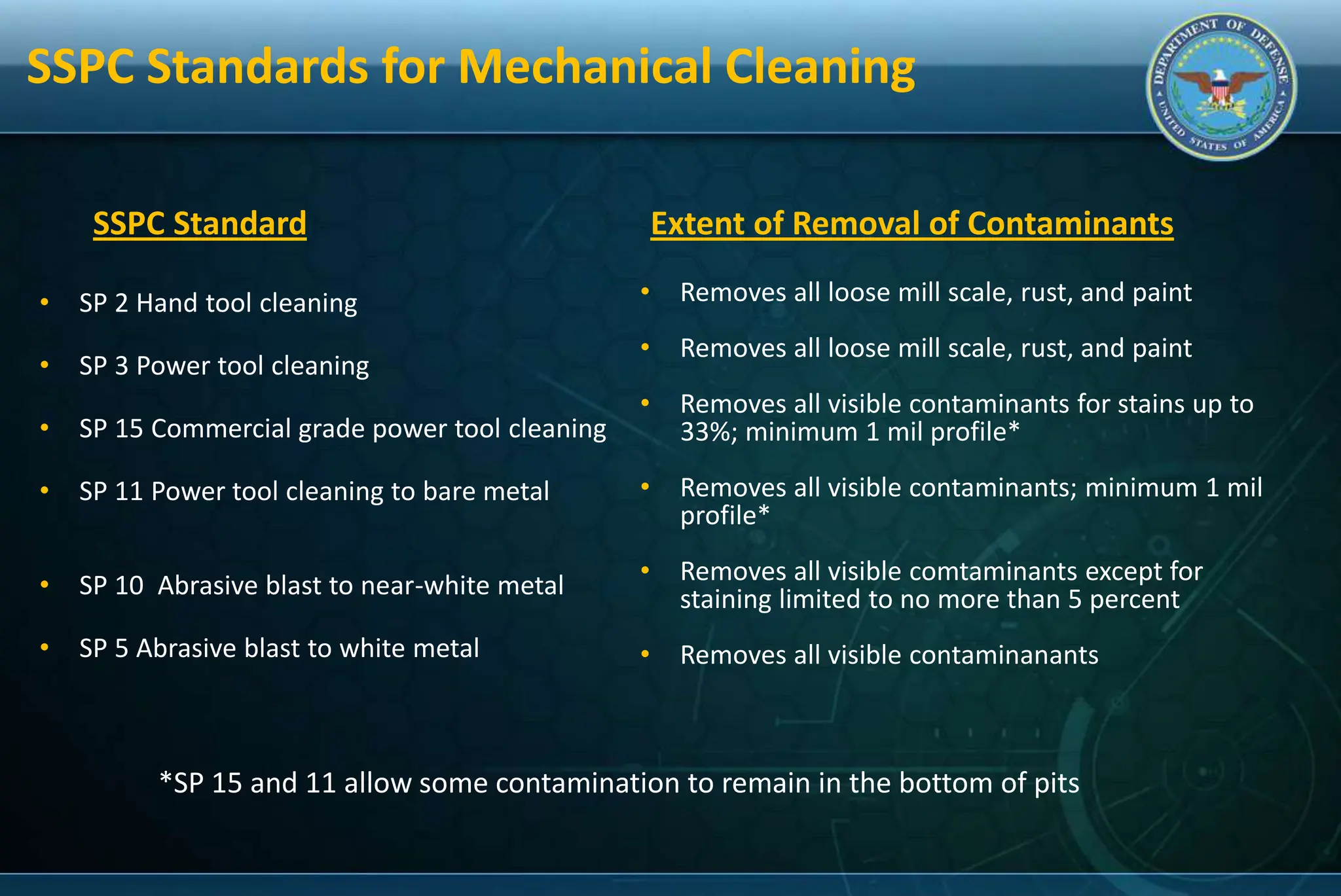
SSPC Standards for Mechanical Cleaning
*SP 15 and 11 allow some contamination to remain in the bottom of pits
SSPC Standard
• SP 2 Hand tool cleaning
• SP 3 Power tool cleaning
• SP 15 Commercial grade power tool cleaning
• SP 11 Power tool cleaning to bare metal
• SP 10 Abrasive blast to near-white metal
• SP 5 Abrasive blast to white metal
Extent of Removal of Contaminants
• Removes all loose mill scale, rust, and paint
• Removes all visible contaminants for stains up to
33%; minimum 1 mil profile*
• Removes all visible contaminants; minimum 1 mil
profile*
• Removes all visible comtaminants except for
staining limited to no more than 5 percent
• Removes all visible contaminanants
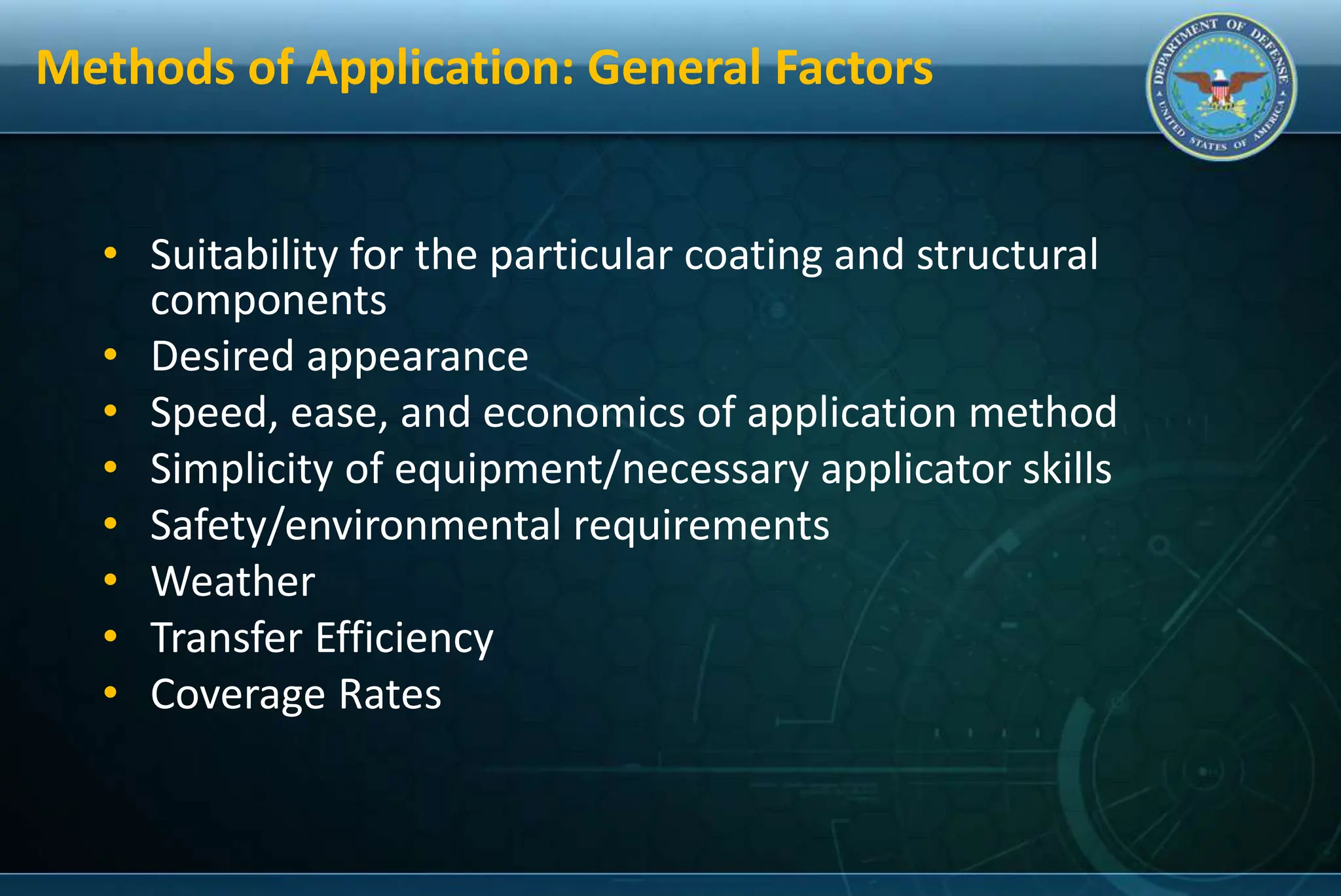
Methods of Application: General Factors
• Suitability for the particular coating and structural
components
• Desired appearance
• Speed, ease, and economics of application method
• Simplicity of equipment/necessary applicator skills
• Safety/environmental requirements
• Weather
• Transfer Efficiency
• Coverage Rates
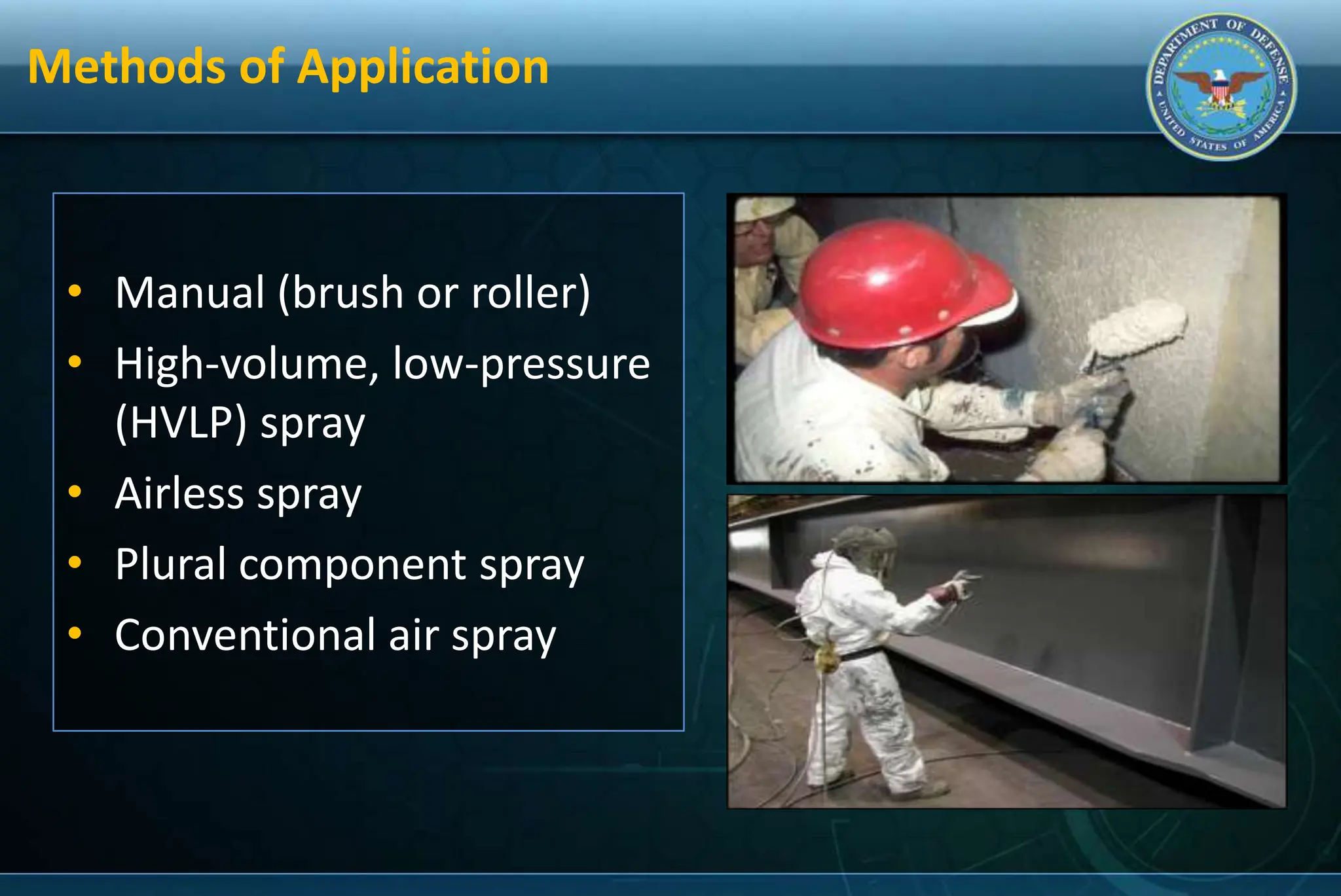
Methods of Application
• Manual (brush or roller)
• High-volume, low-pressure
(HVLP) spray
• Airless spray
• Plural component spray
• Conventional air spray
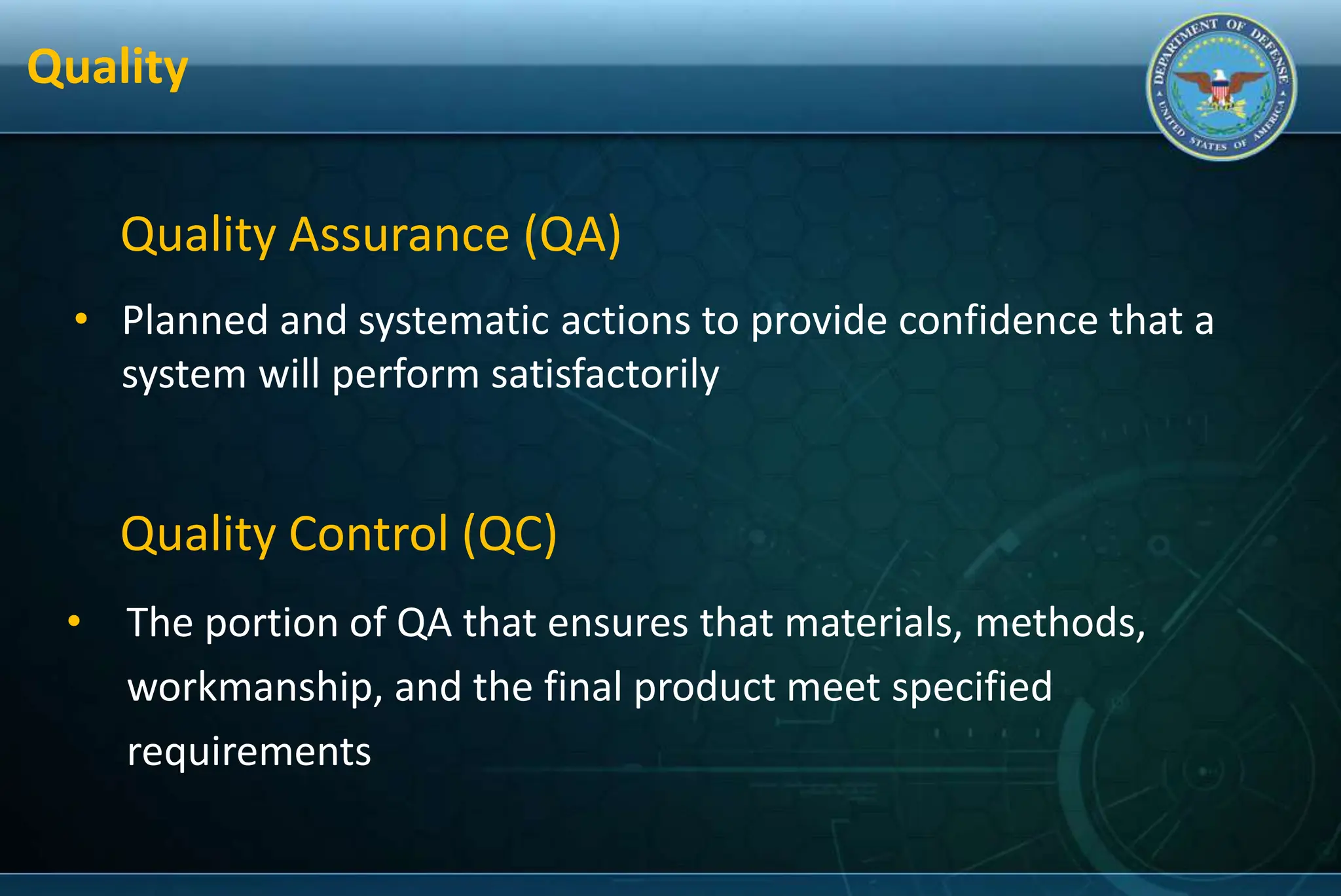
Quality
• Planned and systematic actions to provide confidence that a
system will perform satisfactorily
Quality Assurance (QA)
• The portion of QA that ensures that materials, methods,
workmanship, and the final product meet specified
requirements
Quality Control (QC)
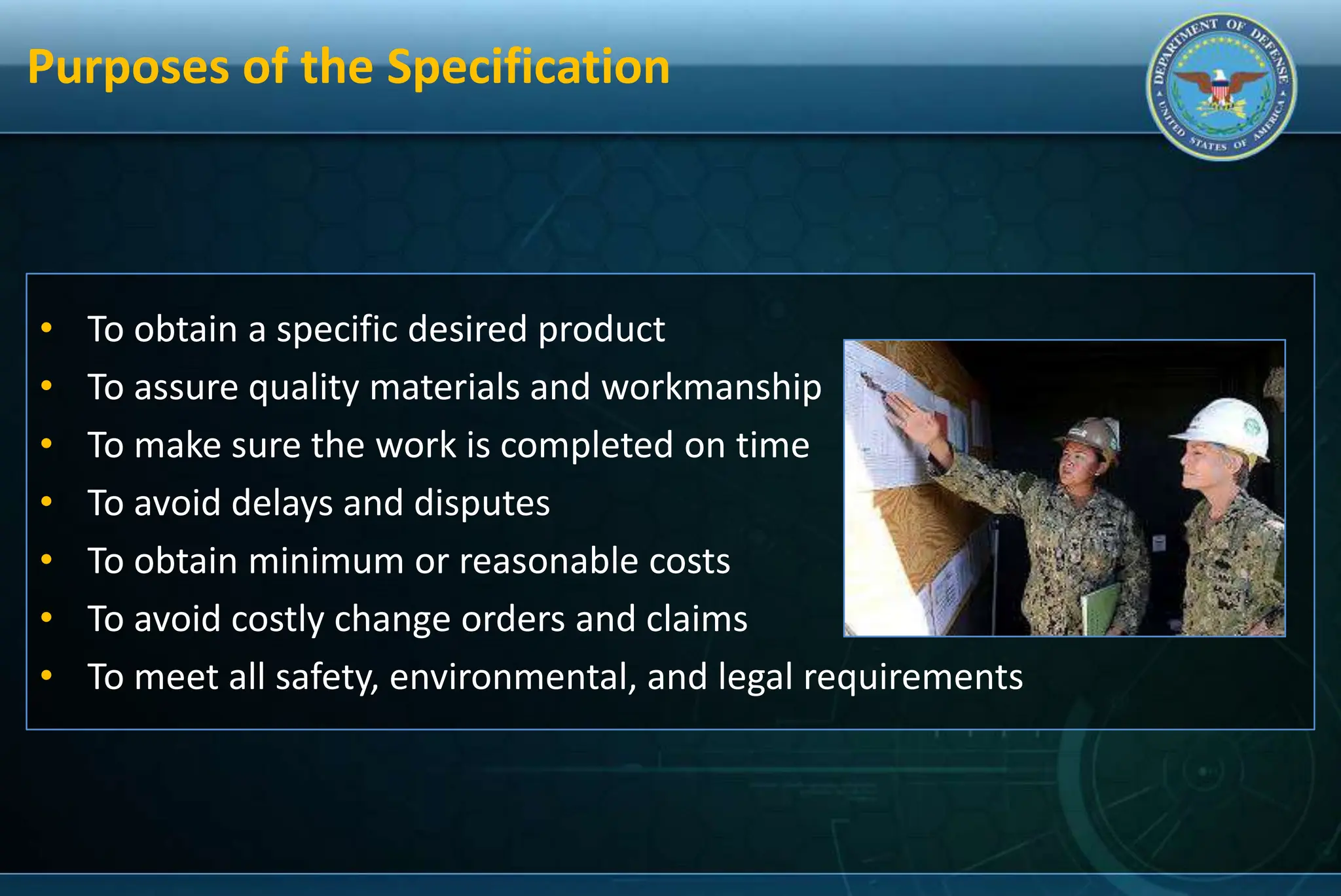
Purposes of the Specification
• To obtain a specific desired product
• To assure quality materials and workmanship
• To make sure the work is completed on time
• To avoid delays and disputes
• To obtain minimum or reasonable costs
• To avoid costly change orders and claims
• To meet all safety, environmental, and legal requirements
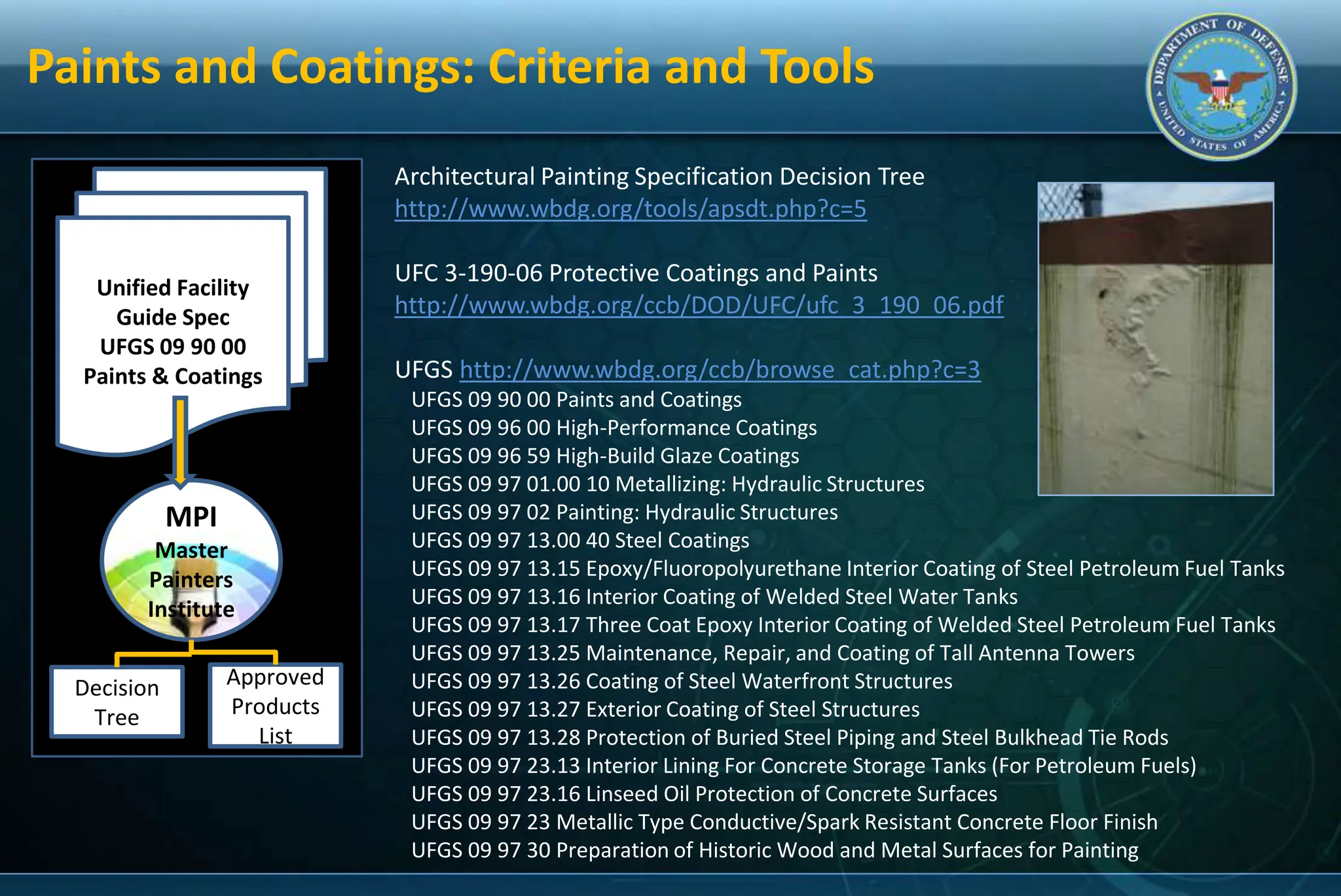
Unified Facility
Guide Spec
UFGS 09 90 00
Paints & Coatings
MPI
Master
Painters
Institute
Decision
Tree
Approved
Products
List
Architectural Painting Specification Decision Tree
http://www.wbdg.org/tools/apsdt.php?c=5
UFC 3-190-06 Protective Coatings and Paints
http://www.wbdg.org/ccb/DOD/UFC/ufc_3_190_06.pdf
UFGS http://www.wbdg.org/ccb/browse_cat.php?c=3
UFGS 09 90 00 Paints and Coatings
UFGS 09 96 00 High-Performance Coatings
UFGS 09 96 59 High-Build Glaze Coatings
UFGS 09 97 01.00 10 Metallizing: Hydraulic Structures
UFGS 09 97 02 Painting: Hydraulic Structures
UFGS 09 97 13.00 40 Steel Coatings
UFGS 09 97 13.15 Epoxy/Fluoropolyurethane Interior Coating of Steel Petroleum Fuel Tanks
UFGS 09 97 13.16 Interior Coating of Welded Steel Water Tanks
UFGS 09 97 13.17 Three Coat Epoxy Interior Coating of Welded Steel Petroleum Fuel Tanks
UFGS 09 97 13.25 Maintenance, Repair, and Coating of Tall Antenna Towers
UFGS 09 97 13.26 Coating of Steel Waterfront Structures
UFGS 09 97 13.27 Exterior Coating of Steel Structures
UFGS 09 97 13.28 Protection of Buried Steel Piping and Steel Bulkhead Tie Rods
UFGS 09 97 23.13 Interior Lining For Concrete Storage Tanks (For Petroleum Fuels)
UFGS 09 97 23.16 Linseed Oil Protection of Concrete Surfaces
UFGS 09 97 23 Metallic Type Conductive/Spark Resistant Concrete Floor Finish
UFGS 09 97 30 Preparation of Historic Wood and Metal Surfaces for Painting
Paints and Coatings: Criteria and Tools
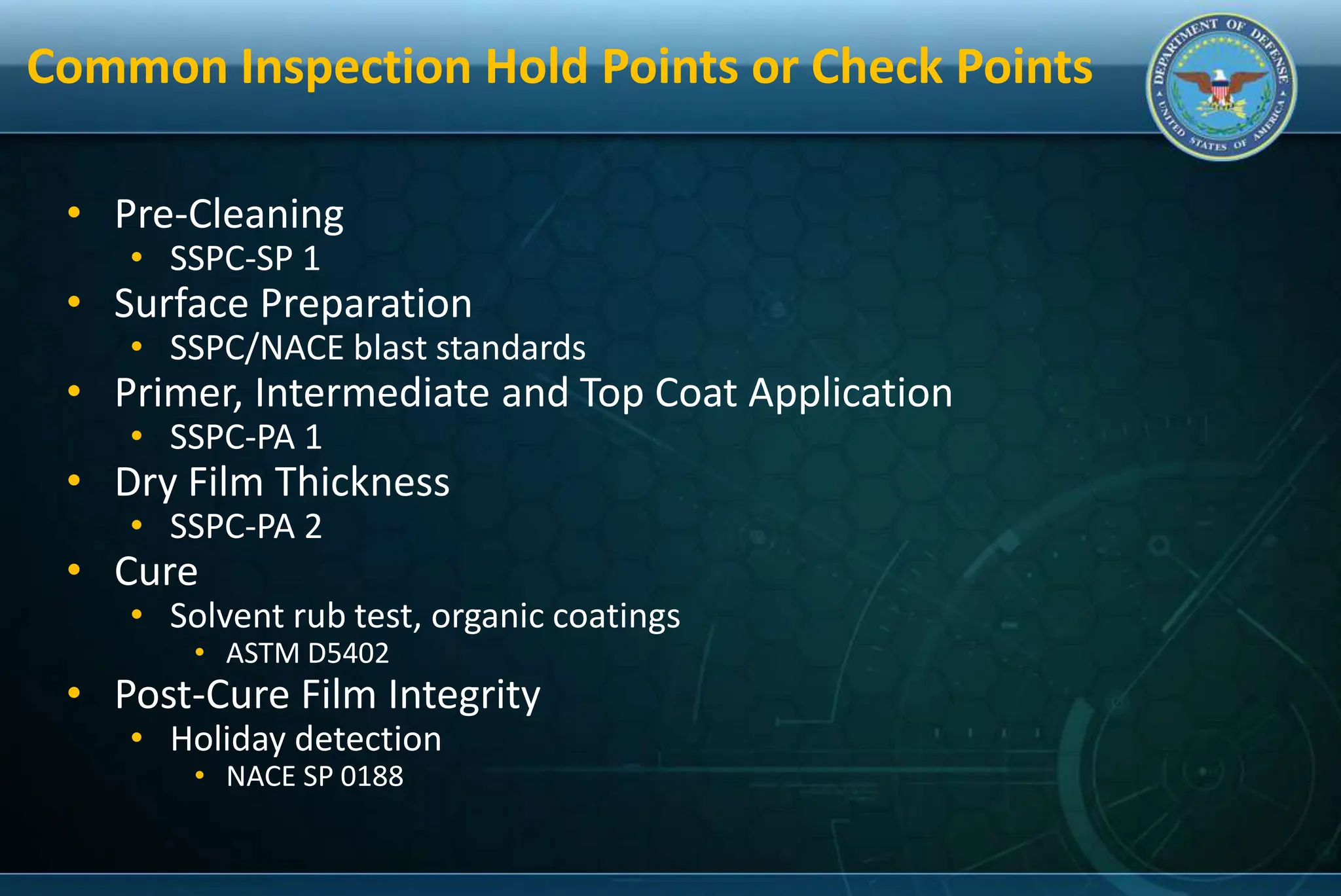
Common Inspection Hold Points or Check Points
• Pre-Cleaning
• SSPC-SP 1
• Surface Preparation
• SSPC/NACE blast standards
• Primer, Intermediate and Top Coat Application
• SSPC-PA 1
• Dry Film Thickness
• SSPC-PA 2
• Cure
• Solvent rub test, organic coatings
• ASTM D5402
• Post-Cure Film Integrity
• Holiday detection
• NACE SP 0188
Factors Accelerating Deterioration
• Structural design
• Substrate properties
• Materials deficiencies
• Surface preparation deficiencies
• Application deficiencies
• Curing deficiencies
*hover over the underlined items for more details
Deficiencies
• Incompatible coatings
• Low quality material
• Error in manufacture
• Expired shelf life
• Wrong coating for the wrong service
Surface Preparation Deficiencies
• Insufficient cleaning level
• Contaminated surfaces
• Profile too low or too high
Surface Preparation Deficiencies
Application Deficiencies
• Equipment inadequate or not functioning properly
• Ambient conditions outside recommended range
• Mixing, thinning, or straining inadequate
• Film thickness too low or high
• Inadequate induction time, expired pot life and recoat
window
• Unskilled applicator
Coating Incompatibilities
• Solvent in topcoat attacks undercoat
• Coating solvent causes bleeding of bituminous
product
• Rigid topcoat applied over flexible undercoat
• Water-borne product does not adhere to smooth
undercoat
Paints & Coatings in F&I
• Address coatings requirements early in the design process
• Understand the environmental stressors
• Get help with the Specification
• Selection of Paint
• Surface Prep
• Application
• Inspection
• Adopt a QA/QC program throughout the Build Process
• Create a Sustainment Program that includes Monitoring
and Maintenance
• Know where to get help from Service and DOD resources
Thomas - F& I Coating Vignette
CorrDefense.org
25
Where to go for help
This training is provided by the Office of the
Secretary Defense (OSD), Corrosion Policy and
Oversight Office (CPO)
References
• Corrosion Prevention and Control: A Program Management
Guide for Selecting Materials, Spiral 2 (2nd Edition),
AMMTIAC, Sept 2006
• Master Painters Institute (MPI)
• NACE
• SSPC
• FICES Report, July 2013

Introduction to Paints and Coatings .pdf

  • 1.
    INTRODUCTION TO PAINTSAND COATINGS 300758-FG02-DEL-15-01 For the Facilities and Infrastructure Professional
  • 2.
    Paints & Coatingsfor DOD F&I *hover over the underlined items for more details  Department of Defense (DOD) manages 555,000 structures • Buildings, structures, pipelines, pavement and port facilities • Broad range of environmental severity zones (desert to marine) • Millions of Square Feet of painted steel, wood, aluminum & concrete. • Costs over $100 Million per year to maintain the exterior of DOD’s building • Paints & Coatings are addressed by numerous UFGS and UFC 3-190-06
  • 3.
    Introduction to Paints& Coatings Paint can be defined as a mixture or dispersion of opaque pigments or powders in a liquid or vehicle. Coatings include other materials that can be considered paint-like in their use such as varnishes and inorganic binders. Modern classifications of paints: • Architectural/Trade Sales - commonly recognized latex and alkyd paints sold in retail stores. • Industrial/Maintenance – may include anti-corrosive primers, machinery and industrial enamels and other products that require more specialized application equipment. Some trade sales type paints are also used in Industrial situations (i.e. High Performance Architectural Coatings). • Specialty – are generally very specific in their use, application and resistance properties such as plastics coatings, coil coatings, and resistive coatings.
  • 4.
    Paints & Coatings •Review fundamentals of coatings by focusing on: • Types of coatings • Surface preparation • Application of coatings • Inspection • Defects and failures
  • 5.
    Mechanisms of CorrosionControl by Coatings • Barrier protection • Chemical inhibitors • Inhibitive Pigments • Galvanic (cathodic) protection • Zinc • Galvanizing • Metallizing *hover over the underlined items for more details
  • 6.
    What’s in theCan? Basic components of a paint or coating include: • Binders – also known as the resin, polymer or vehicle. • Pigments – include the coloring and filling materials. • Solvents – are the volatile thinners or diluents that evaporate. • Additives – are materials that are added to modify or improve specific properties related to processing, appearance or performance.
  • 7.
    Generic Coating Types •Alkyds • Bituminous coatings • Coal tar epoxies • Epoxies • Fluoropolymers • Inorganic zinc-rich coatings • Lacquers • Moisture curing polyurethanes (MCU) • Organic zinc-rich coatings • Phenolic and phenolic epoxy coatings
  • 8.
    Generic Coating Types(cont.) • Polyaspartic • Polyesters/vinyl esters • Polysiloxane • Polysulfides modified with novolac epoxy resin • Polyurea • Powder coatings • Silicones • Thermal spray metallics • Water-borne acrylics *hover over the photos for more details
  • 9.
    Important Factors inCoating Selection • Mission/operational needs • Exterior weathering • Water, fuel, solvent, or chemical resistance • Abrasion, heat, or mildew resistance • Appearance • Drying time • Ease of application and maintenance
  • 10.
    • Severity ofenvironment • Surface preparation • Access to work • Drying time • Applicator skills • Scaffolding • Safety and environmental requirements When Specifying a Coating Application Consider:
  • 11.
    Surface Preparation The lifeof any coating system is directly impacted by the quality of the prepared surface. The better the surface preparation, the longer the life of the coating system • Treatment of Surface Irregularities • Pre-cleaning to remove surface contaminants • Cleaning surfaces to desired levels • Producing a surface profile (texture) *hover over the underlined items for more details
  • 12.
    Surface Contaminants CausingEarly Coating Deterioration • Rust • Mill scale • Grease and oil • Dirt and dust • Soluble salts • Water • Paint chalk • Loose, cracked, or peeling paint *hover over the photos for more details
  • 13.
    SSPC Standards forMechanical Cleaning *SP 15 and 11 allow some contamination to remain in the bottom of pits SSPC Standard • SP 2 Hand tool cleaning • SP 3 Power tool cleaning • SP 15 Commercial grade power tool cleaning • SP 11 Power tool cleaning to bare metal • SP 10 Abrasive blast to near-white metal • SP 5 Abrasive blast to white metal Extent of Removal of Contaminants • Removes all loose mill scale, rust, and paint • Removes all loose mill scale, rust, and paint • Removes all visible contaminants for stains up to 33%; minimum 1 mil profile* • Removes all visible contaminants; minimum 1 mil profile* • Removes all visible comtaminants except for staining limited to no more than 5 percent • Removes all visible contaminanants
  • 14.
    Methods of Application:General Factors • Suitability for the particular coating and structural components • Desired appearance • Speed, ease, and economics of application method • Simplicity of equipment/necessary applicator skills • Safety/environmental requirements • Weather • Transfer Efficiency • Coverage Rates
  • 15.
    Methods of Application •Manual (brush or roller) • High-volume, low-pressure (HVLP) spray • Airless spray • Plural component spray • Conventional air spray
  • 16.
    Quality • Planned andsystematic actions to provide confidence that a system will perform satisfactorily Quality Assurance (QA) • The portion of QA that ensures that materials, methods, workmanship, and the final product meet specified requirements Quality Control (QC)
  • 17.
    Purposes of theSpecification • To obtain a specific desired product • To assure quality materials and workmanship • To make sure the work is completed on time • To avoid delays and disputes • To obtain minimum or reasonable costs • To avoid costly change orders and claims • To meet all safety, environmental, and legal requirements
  • 18.
    Unified Facility Guide Spec UFGS09 90 00 Paints & Coatings MPI Master Painters Institute Decision Tree Approved Products List Architectural Painting Specification Decision Tree http://www.wbdg.org/tools/apsdt.php?c=5 UFC 3-190-06 Protective Coatings and Paints http://www.wbdg.org/ccb/DOD/UFC/ufc_3_190_06.pdf UFGS http://www.wbdg.org/ccb/browse_cat.php?c=3 UFGS 09 90 00 Paints and Coatings UFGS 09 96 00 High-Performance Coatings UFGS 09 96 59 High-Build Glaze Coatings UFGS 09 97 01.00 10 Metallizing: Hydraulic Structures UFGS 09 97 02 Painting: Hydraulic Structures UFGS 09 97 13.00 40 Steel Coatings UFGS 09 97 13.15 Epoxy/Fluoropolyurethane Interior Coating of Steel Petroleum Fuel Tanks UFGS 09 97 13.16 Interior Coating of Welded Steel Water Tanks UFGS 09 97 13.17 Three Coat Epoxy Interior Coating of Welded Steel Petroleum Fuel Tanks UFGS 09 97 13.25 Maintenance, Repair, and Coating of Tall Antenna Towers UFGS 09 97 13.26 Coating of Steel Waterfront Structures UFGS 09 97 13.27 Exterior Coating of Steel Structures UFGS 09 97 13.28 Protection of Buried Steel Piping and Steel Bulkhead Tie Rods UFGS 09 97 23.13 Interior Lining For Concrete Storage Tanks (For Petroleum Fuels) UFGS 09 97 23.16 Linseed Oil Protection of Concrete Surfaces UFGS 09 97 23 Metallic Type Conductive/Spark Resistant Concrete Floor Finish UFGS 09 97 30 Preparation of Historic Wood and Metal Surfaces for Painting Paints and Coatings: Criteria and Tools
  • 19.
    Common Inspection HoldPoints or Check Points • Pre-Cleaning • SSPC-SP 1 • Surface Preparation • SSPC/NACE blast standards • Primer, Intermediate and Top Coat Application • SSPC-PA 1 • Dry Film Thickness • SSPC-PA 2 • Cure • Solvent rub test, organic coatings • ASTM D5402 • Post-Cure Film Integrity • Holiday detection • NACE SP 0188
  • 20.
    Factors Accelerating Deterioration •Structural design • Substrate properties • Materials deficiencies • Surface preparation deficiencies • Application deficiencies • Curing deficiencies *hover over the underlined items for more details
  • 21.
    Deficiencies • Incompatible coatings •Low quality material • Error in manufacture • Expired shelf life • Wrong coating for the wrong service Surface Preparation Deficiencies • Insufficient cleaning level • Contaminated surfaces • Profile too low or too high Surface Preparation Deficiencies
  • 22.
    Application Deficiencies • Equipmentinadequate or not functioning properly • Ambient conditions outside recommended range • Mixing, thinning, or straining inadequate • Film thickness too low or high • Inadequate induction time, expired pot life and recoat window • Unskilled applicator
  • 23.
    Coating Incompatibilities • Solventin topcoat attacks undercoat • Coating solvent causes bleeding of bituminous product • Rigid topcoat applied over flexible undercoat • Water-borne product does not adhere to smooth undercoat
  • 24.
    Paints & Coatingsin F&I • Address coatings requirements early in the design process • Understand the environmental stressors • Get help with the Specification • Selection of Paint • Surface Prep • Application • Inspection • Adopt a QA/QC program throughout the Build Process • Create a Sustainment Program that includes Monitoring and Maintenance • Know where to get help from Service and DOD resources
  • 25.
    Thomas - F&I Coating Vignette CorrDefense.org 25 Where to go for help
  • 26.
    This training isprovided by the Office of the Secretary Defense (OSD), Corrosion Policy and Oversight Office (CPO)
  • 27.
    References • Corrosion Preventionand Control: A Program Management Guide for Selecting Materials, Spiral 2 (2nd Edition), AMMTIAC, Sept 2006 • Master Painters Institute (MPI) • NACE • SSPC • FICES Report, July 2013