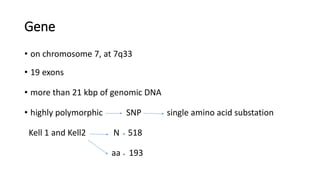
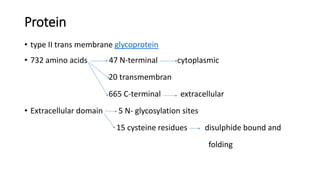
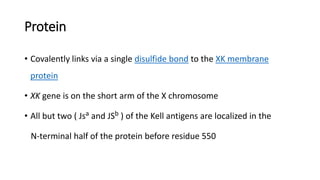
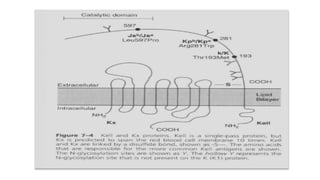
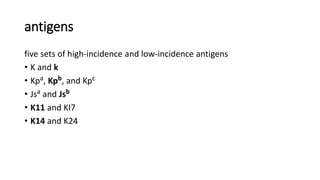
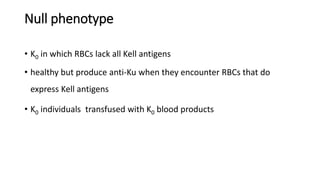
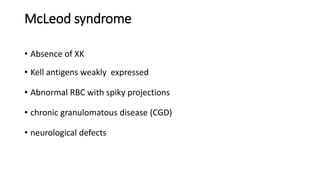
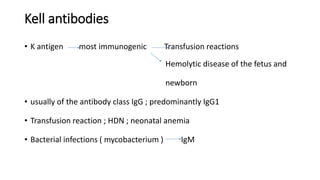
This document discusses the Kell blood group system, which is clinically significant for transfusion medicine after ABO and Rh. It has 32 antigens that can cause hemolytic disease of the fetus and newborn as well as transfusion reactions. The Kell blood group system involves antigens on red blood cells determined by genes on chromosome 7. The protein forms complexes with other proteins and has glycosylation sites. Five sets of high-incidence and low-incidence antigens exist. Those with the null phenotype lack all Kell antigens. Testing donors can help ensure safe transfusions by matching these antigens.