Prolapse
Dr P.Pallavee
• At the end of the class you should be able to
diagnose and manage a case of pelvic organ
prolapse
Case scenario
• A 43 yr old para 3 presents to opd with complaints of
mass descending per vaginum for one year and
difficulty in initiating micturition.
• What details will you ask in history?
History
• History of
presenting
complaints
• History of
precipitating factor
• Obstetric history
• Menstrual history
A. chronic cough ,
B. constipation,
C. abdominal mass
A. number of deliveries
B. place of delivery
C. prolonged labour
D. instrumental delivery
E. big babies
F. sepsis
G. lack of perineal exercise
H. early resumption of heavy work
I. short inter pregnancy interval
A. postmenopausal status
B. menstrual abnormalities
A. Duration of prolapse
B. rate of increase of severity
C. bladder and bowel problems
D. irreducibility of prolapse
E. discharge per vaginum,postcoital bleeding
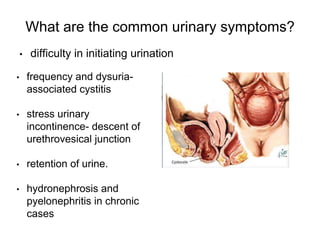
What are the common urinary symptoms?
• frequency and dysuria-
associated cystitis
• stress urinary
incontinence- descent of
urethrovesical junction
• retention of urine.
• hydronephrosis and
pyelonephritis in chronic
cases
• difficulty in initiating urination
What important things you will note in examination?
• General examination
• Abdominal examination
• Pelvic examination
• Nutritional status
• anemia
• mental status
• lymphadenopathy
• Mass,
• hernial sites,
• free fluid
• inspection of external genitalia
• eliciting stress incontinence
• examination of prolapse
• bimanual pelvic examination
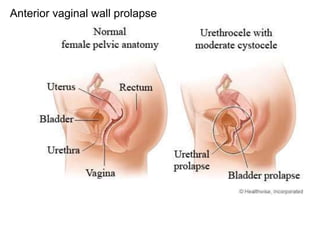
Anterior vaginal wall prolapse
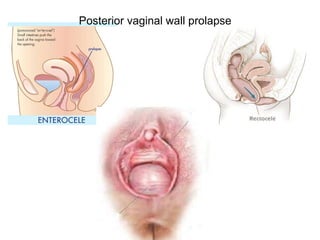
Posterior vaginal wall prolapse
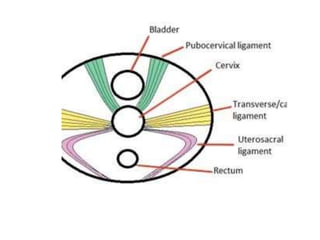
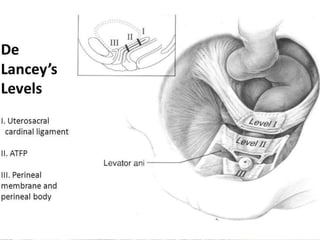
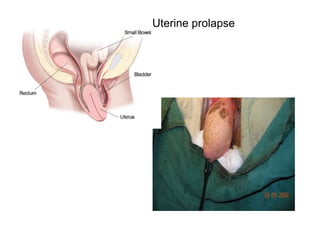
Uterine prolapse
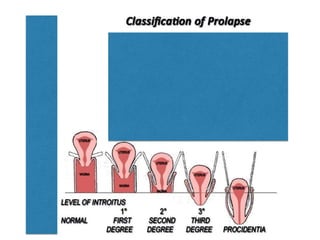
classification of prolapse
• Shaws
• Malpas
• Jeffcoates
• Baden walker
• POP-Q
SHAWS
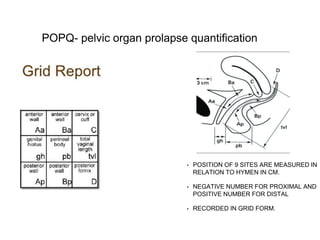
• POSITION OF 9 SITES ARE MEASURED IN
RELATION TO HYMEN IN CM.
• NEGATIVE NUMBER FOR PROXIMAL AND
POSITIVE NUMBER FOR DISTAL
• RECORDED IN GRID FORM.
POPQ- pelvic organ prolapse quantification
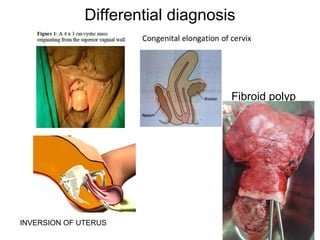
Differential diagnosis
INVERSION OF UTERUS
Fibroid polyp
How will you investigate?
• Baseline assessment- hemogram,urine routine
• urine culture and sensitivity.
• pap smear
• preoperative assessment
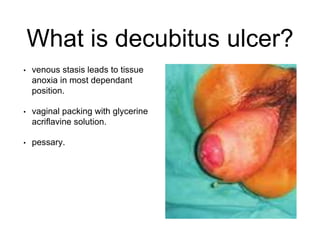
What is decubitus ulcer?
• venous stasis leads to tissue
anoxia in most dependant
position.
• vaginal packing with glycerine
acriflavine solution.
• pessary.
Management
• Aim is to restore normal anatomy, maintain visceral
function
• Reconstruction of normal supports
• Womens wish of retaining menstrual and
childbearing function will influence choice of
operation
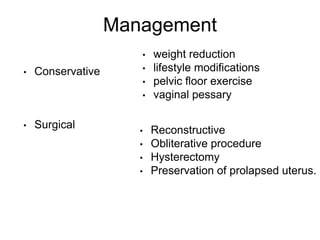
Management
• Conservative
• Surgical
• weight reduction
• lifestyle modifications
• pelvic floor exercise
• vaginal pessary
• Reconstructive
• Obliterative procedure
• Hysterectomy
• Preservation of prolapsed uterus.
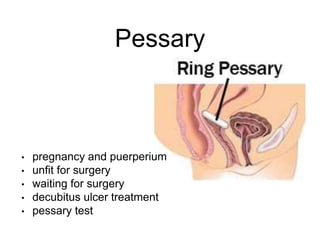
Pessary
• pregnancy and puerperium
• unfit for surgery
• waiting for surgery
• decubitus ulcer treatment
• pessary test
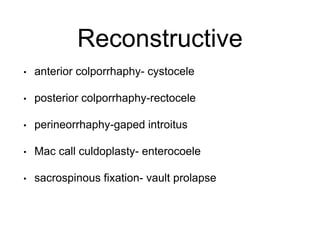
Reconstructive
• anterior colporrhaphy- cystocele
• posterior colporrhaphy-rectocele
• perineorrhaphy-gaped introitus
• Mac call culdoplasty- enterocoele
• sacrospinous fixation- vault prolapse
Obliterative procedure
• Le forts colpocleisis- elderly frail women not fit for
major surgery.
Hysterectomy
• women who have completed family not desirous of
future childbearing or menstrual functions
• associated uterine pathology like fibroid.
• not the corrective surgery for prolapse should be
accompanied by anatomical correction of defects.
Preservation of Prolapsed uterus
• FOTHERGILL/MANCHESTER
A. amputation of cervix
B. cardinal ligaments cut and
fixed anteriorly to cervix
C. anterior colporrhaphy
D. if required post
colpoperineorrhaphy
• SLING SURGERIES
[nulliparous prolapse]
Thank you

Prolapse - 1

  • 1.
  • 2.
    • At theend of the class you should be able to diagnose and manage a case of pelvic organ prolapse
  • 3.
    Case scenario • A43 yr old para 3 presents to opd with complaints of mass descending per vaginum for one year and difficulty in initiating micturition. • What details will you ask in history?
  • 4.
    History • History of presenting complaints •History of precipitating factor • Obstetric history • Menstrual history A. chronic cough , B. constipation, C. abdominal mass A. number of deliveries B. place of delivery C. prolonged labour D. instrumental delivery E. big babies F. sepsis G. lack of perineal exercise H. early resumption of heavy work I. short inter pregnancy interval A. postmenopausal status B. menstrual abnormalities A. Duration of prolapse B. rate of increase of severity C. bladder and bowel problems D. irreducibility of prolapse E. discharge per vaginum,postcoital bleeding
  • 5.
    What are thecommon urinary symptoms? • frequency and dysuria- associated cystitis • stress urinary incontinence- descent of urethrovesical junction • retention of urine. • hydronephrosis and pyelonephritis in chronic cases • difficulty in initiating urination
  • 6.
    What important thingsyou will note in examination? • General examination • Abdominal examination • Pelvic examination • Nutritional status • anemia • mental status • lymphadenopathy • Mass, • hernial sites, • free fluid • inspection of external genitalia • eliciting stress incontinence • examination of prolapse • bimanual pelvic examination
  • 10.
  • 11.
  • 12.
  • 13.
    classification of prolapse •Shaws • Malpas • Jeffcoates • Baden walker • POP-Q
  • 14.
  • 15.
    • POSITION OF9 SITES ARE MEASURED IN RELATION TO HYMEN IN CM. • NEGATIVE NUMBER FOR PROXIMAL AND POSITIVE NUMBER FOR DISTAL • RECORDED IN GRID FORM. POPQ- pelvic organ prolapse quantification
  • 16.
  • 17.
    How will youinvestigate? • Baseline assessment- hemogram,urine routine • urine culture and sensitivity. • pap smear • preoperative assessment
  • 18.
    What is decubitusulcer? • venous stasis leads to tissue anoxia in most dependant position. • vaginal packing with glycerine acriflavine solution. • pessary.
  • 19.
    Management • Aim isto restore normal anatomy, maintain visceral function • Reconstruction of normal supports • Womens wish of retaining menstrual and childbearing function will influence choice of operation
  • 20.
    Management • Conservative • Surgical •weight reduction • lifestyle modifications • pelvic floor exercise • vaginal pessary • Reconstructive • Obliterative procedure • Hysterectomy • Preservation of prolapsed uterus.
  • 21.
    Pessary • pregnancy andpuerperium • unfit for surgery • waiting for surgery • decubitus ulcer treatment • pessary test
  • 22.
    Reconstructive • anterior colporrhaphy-cystocele • posterior colporrhaphy-rectocele • perineorrhaphy-gaped introitus • Mac call culdoplasty- enterocoele • sacrospinous fixation- vault prolapse
  • 23.
    Obliterative procedure • Leforts colpocleisis- elderly frail women not fit for major surgery.
  • 24.
    Hysterectomy • women whohave completed family not desirous of future childbearing or menstrual functions • associated uterine pathology like fibroid. • not the corrective surgery for prolapse should be accompanied by anatomical correction of defects.
  • 25.
    Preservation of Prolapseduterus • FOTHERGILL/MANCHESTER A. amputation of cervix B. cardinal ligaments cut and fixed anteriorly to cervix C. anterior colporrhaphy D. if required post colpoperineorrhaphy • SLING SURGERIES [nulliparous prolapse]
  • 26.

Editor's Notes

  • #6 difficulty in emptying bladder and difficulty increases with straining because bladder base and trigone descend below level of urethra. digital reduction to void completely