BENEFITS
MAP
Project Selection: Traceability
between project outcomes
and intended benefits.
A D I T I D H A G A T
C R E A T E D B Y
TOPICS
02
03
04
05
06
07
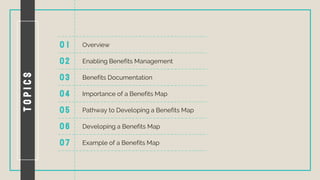
0 1 Overview
Benefits Documentation
Importance of a Benefits Map
Pathway to Developing a Benefits Map
Developing a Benefits Map
Enabling Benefits Management
Example of a Benefits Map
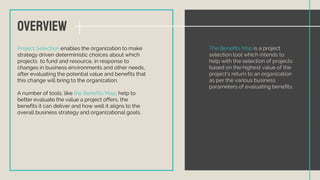
The Benefits Map is a project
selection tool which intends to
help with the selection of projects
based on the highest value of the
project’s return to an organization
as per the various business
parameters of evaluating benefits.
Project Selection enables the organization to make
strategy driven deterministic choices about which
projects to fund and resource, in response to
changes in business environments and other needs,
after evaluating the potential value and benefits that
this change will bring to the organization.
A number of tools, like the Benefits Map, help to
better evaluate the value a project offers, the
benefits it can deliver and how well it aligns to the
overall business strategy and organizational goals.
Overview
ENABLINGBENEFITS MANAGEMENT
B u s i n e s s b e n e f i t s a s a
m e a s u r e o f v a l u e
Effective Project Selection ensures that the
outcome of any project contributes to the long
term viability of the organization by delivering
both short term and long term value.
The Management Team of the organization must
assess the value promise of each of its project
opportunities in order to prevent an over
commitment of its limited resources and ensure
that the intended business objectives are realized
from the investment being made in the project.
The British European Standard (BSI) describes
value as the relationship between the
satisfaction of need and the resources used to
achieve that satisfaction.
Value management can be described in terms
of Benefits Management as:
Value = Business Benefits Achieved
Resources Expended
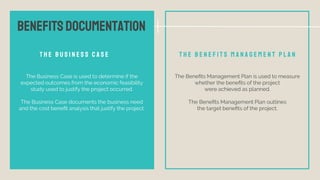
T H E B U S I N E S S C A S E
The Business Case is used to determine if the
expected outcomes from the economic feasibility
study used to justify the project occurred.
The Business Case documents the business need
and the cost benefit analysis that justify the project.
T H E B E N E F I T S M A N A G E M E N T P L A N
The Benefits Management Plan is used to measure
whether the benefits of the project
were achieved as planned.
The Benefits Management Plan outlines
the target benefits of the project.
BENEFITSDOCUMENTATION
ImportanceofaBENEFITS map
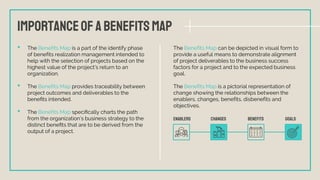
The Benefits Map can be depicted in visual form to
provide a useful means to demonstrate alignment
of project deliverables to the business success
factors for a project and to the expected business
goal.
The Benefits Map is a pictorial representation of
change showing the relationships between the
enablers, changes, benefits, disbenefits and
objectives.
• The Benefits Map is a part of the identify phase
of benefits realization management intended to
help with the selection of projects based on the
highest value of the project’s return to an
organization.
• The Benefits Map provides traceability between
project outcomes and deliverables to the
benefits intended.
• The Benefits Map specifically charts the path
from the organization’s business strategy to the
distinct benefits that are to be derived from the
output of a project.
enablers changes benefits goals
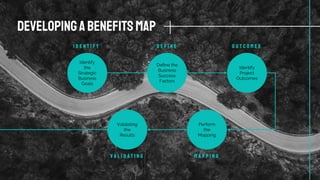
Identify
the
Strategic
Business
Goals
Validating
the
Results
Define the
Business
Success
Factors
Perform
the
Mapping
Identify
Project
Outcomes
I d e n t i f y
v a l i d a t i n g
d e f i n e
m a p p i n g
o u t c o m e s
DevelopingaBENEFITS map
I D E N T I F Y T H E
S T R A T E G I C
B U S I N E S S G O A L S
D E F I N E T H E
B U S I N E S S S U C C E S S
F A C T O R S
I D E N T I F Y
P R O J E C T
O U T C O M E S
P E R F O R M
T H E
M A P P I N G
V A L I D A T I N G
T H E
R E S U L T S
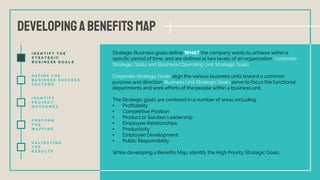
Strategic Business goals define WHAT the company wants to achieve within a
specific period of time, and are defined at two levels of an organization: Corporate
Strategic Goals and Business/Operating Unit Strategic Goals.
Corporate Strategic Goals align the various business units toward a common
purpose and direction. Business Unit Strategic Goals serve to focus the functional
departments and work efforts of the people within a business unit.
The Strategic goals are centered in a number of areas including:
• Profitability
• Competitive Position
• Product or Solution Leadership
• Employee Relationships
• Productivity
• Employee Development
• Public Responsibility
While developing a Benefits Map, identify the High Priority Strategic Goals.
DevelopingaBENEFITS map
I D E N T I F Y T H E
S T R A T E G I C
B U S I N E S S G O A L S
D E F I N E T H E
B U S I N E S S S U C C E S S
F A C T O R S
I D E N T I F Y
P R O J E C T
O U T C O M E S
P E R F O R M
T H E
M A P P I N G
V A L I D A T I N G
T H E
R E S U L T S
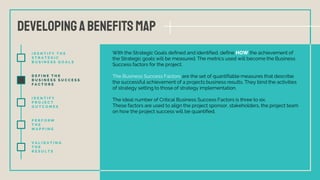
With the Strategic Goals defined and identified, define HOW the achievement of
the Strategic goals will be measured. The metrics used will become the Business
Success factors for the project.
The Business Success Factors are the set of quantifiable measures that describe
the successful achievement of a projects business results. They bind the activities
of strategy setting to those of strategy implementation.
The ideal number of Critical Business Success Factors is three to six.
These factors are used to align the project sponsor, stakeholders, the project team
on how the project success will be quantified.
DevelopingaBENEFITS map
I D E N T I F Y T H E
S T R A T E G I C
B U S I N E S S G O A L S
D E F I N E T H E
B U S I N E S S S U C C E S S
F A C T O R S
I D E N T I F Y
P R O J E C T
O U T C O M E S
P E R F O R M
T H E
M A P P I N G
V A L I D A T I N G
T H E
R E S U L T S
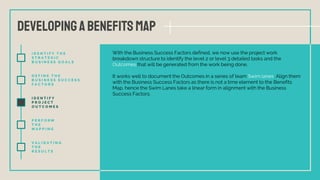
With the Business Success Factors defined, we now use the project work
breakdown structure to identify the level 2 or level 3 detailed tasks and the
Outcomes that will be generated from the work being done.
It works well to document the Outcomes in a series of team Swim lanes. Align them
with the Business Success Factors as there is not a time element to the Benefits
Map, hence the Swim Lanes take a linear form in alignment with the Business
Success Factors.
DevelopingaBENEFITS map
I D E N T I F Y T H E
S T R A T E G I C
B U S I N E S S G O A L S
D E F I N E T H E
B U S I N E S S S U C C E S S
F A C T O R S
I D E N T I F Y
P R O J E C T
O U T C O M E S
P E R F O R M
T H E
M A P P I N G
V A L I D A T I N G
T H E
R E S U L T S
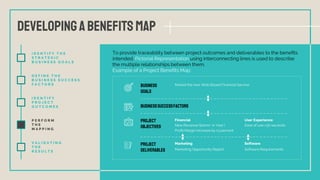
To provide traceability between project outcomes and deliverables to the benefits
intended, Pictorial Representation using interconnecting lines is used to describe
the multiple relationships between them.
Example of a Project Benefits Map:
BusinessSuccessfactors
Business
goals
Market the new Web Based Financial Service
Project
objectives
Financial
New Revenue $10mn in Year I
Profit Margin increase by 13 percent
User Experience
Ease of use <30 seconds
Project
deliverables
Marketing Software
Marketing Opportunity Report Software Requirements
DevelopingaBENEFITS map
I D E N T I F Y T H E
S T R A T E G I C
B U S I N E S S G O A L S
D E F I N E T H E
B U S I N E S S S U C C E S S
F A C T O R S
I D E N T I F Y
P R O J E C T
O U T C O M E S
P E R F O R M
T H E
M A P P I N G
V A L I D A T I N G
T H E
R E S U L T S
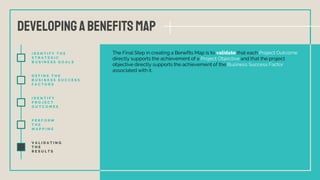
The Final Step in creating a Benefits Map is to validate that each Project Outcome
directly supports the achievement of a Project Objective and that the project
objective directly supports the achievement of the Business Success Factor
associated with it.
THANKS!
A D I T I D H A G A T
C R E A T E D B Y
Email: Aditi_Dhagat2000@outlook.com
LinkedIn: https://in.linkedin.com/in/aditi-dhagat-9bb80910a
C o n t e n t a n d d e s i g n

Project Selection: The Benefits Map

  • 1.
    BENEFITS MAP Project Selection: Traceability betweenproject outcomes and intended benefits. A D I T I D H A G A T C R E A T E D B Y
  • 2.
    TOPICS 02 03 04 05 06 07 0 1 Overview BenefitsDocumentation Importance of a Benefits Map Pathway to Developing a Benefits Map Developing a Benefits Map Enabling Benefits Management Example of a Benefits Map
  • 3.
    The Benefits Mapis a project selection tool which intends to help with the selection of projects based on the highest value of the project’s return to an organization as per the various business parameters of evaluating benefits. Project Selection enables the organization to make strategy driven deterministic choices about which projects to fund and resource, in response to changes in business environments and other needs, after evaluating the potential value and benefits that this change will bring to the organization. A number of tools, like the Benefits Map, help to better evaluate the value a project offers, the benefits it can deliver and how well it aligns to the overall business strategy and organizational goals. Overview
  • 4.
    ENABLINGBENEFITS MANAGEMENT B us i n e s s b e n e f i t s a s a m e a s u r e o f v a l u e Effective Project Selection ensures that the outcome of any project contributes to the long term viability of the organization by delivering both short term and long term value. The Management Team of the organization must assess the value promise of each of its project opportunities in order to prevent an over commitment of its limited resources and ensure that the intended business objectives are realized from the investment being made in the project. The British European Standard (BSI) describes value as the relationship between the satisfaction of need and the resources used to achieve that satisfaction. Value management can be described in terms of Benefits Management as: Value = Business Benefits Achieved Resources Expended
  • 5.
    T H EB U S I N E S S C A S E The Business Case is used to determine if the expected outcomes from the economic feasibility study used to justify the project occurred. The Business Case documents the business need and the cost benefit analysis that justify the project. T H E B E N E F I T S M A N A G E M E N T P L A N The Benefits Management Plan is used to measure whether the benefits of the project were achieved as planned. The Benefits Management Plan outlines the target benefits of the project. BENEFITSDOCUMENTATION
  • 6.
    ImportanceofaBENEFITS map The BenefitsMap can be depicted in visual form to provide a useful means to demonstrate alignment of project deliverables to the business success factors for a project and to the expected business goal. The Benefits Map is a pictorial representation of change showing the relationships between the enablers, changes, benefits, disbenefits and objectives. • The Benefits Map is a part of the identify phase of benefits realization management intended to help with the selection of projects based on the highest value of the project’s return to an organization. • The Benefits Map provides traceability between project outcomes and deliverables to the benefits intended. • The Benefits Map specifically charts the path from the organization’s business strategy to the distinct benefits that are to be derived from the output of a project. enablers changes benefits goals
  • 7.
    Identify the Strategic Business Goals Validating the Results Define the Business Success Factors Perform the Mapping Identify Project Outcomes I de n t i f y v a l i d a t i n g d e f i n e m a p p i n g o u t c o m e s DevelopingaBENEFITS map
  • 8.
    DevelopingaBENEFITS map I DE N T I F Y T H E S T R A T E G I C B U S I N E S S G O A L S D E F I N E T H E B U S I N E S S S U C C E S S F A C T O R S I D E N T I F Y P R O J E C T O U T C O M E S P E R F O R M T H E M A P P I N G V A L I D A T I N G T H E R E S U L T S Strategic Business goals define WHAT the company wants to achieve within a specific period of time, and are defined at two levels of an organization: Corporate Strategic Goals and Business/Operating Unit Strategic Goals. Corporate Strategic Goals align the various business units toward a common purpose and direction. Business Unit Strategic Goals serve to focus the functional departments and work efforts of the people within a business unit. The Strategic goals are centered in a number of areas including: • Profitability • Competitive Position • Product or Solution Leadership • Employee Relationships • Productivity • Employee Development • Public Responsibility While developing a Benefits Map, identify the High Priority Strategic Goals.
  • 9.
    DevelopingaBENEFITS map I DE N T I F Y T H E S T R A T E G I C B U S I N E S S G O A L S D E F I N E T H E B U S I N E S S S U C C E S S F A C T O R S I D E N T I F Y P R O J E C T O U T C O M E S P E R F O R M T H E M A P P I N G V A L I D A T I N G T H E R E S U L T S With the Strategic Goals defined and identified, define HOW the achievement of the Strategic goals will be measured. The metrics used will become the Business Success factors for the project. The Business Success Factors are the set of quantifiable measures that describe the successful achievement of a projects business results. They bind the activities of strategy setting to those of strategy implementation. The ideal number of Critical Business Success Factors is three to six. These factors are used to align the project sponsor, stakeholders, the project team on how the project success will be quantified.
  • 10.
    DevelopingaBENEFITS map I DE N T I F Y T H E S T R A T E G I C B U S I N E S S G O A L S D E F I N E T H E B U S I N E S S S U C C E S S F A C T O R S I D E N T I F Y P R O J E C T O U T C O M E S P E R F O R M T H E M A P P I N G V A L I D A T I N G T H E R E S U L T S With the Business Success Factors defined, we now use the project work breakdown structure to identify the level 2 or level 3 detailed tasks and the Outcomes that will be generated from the work being done. It works well to document the Outcomes in a series of team Swim lanes. Align them with the Business Success Factors as there is not a time element to the Benefits Map, hence the Swim Lanes take a linear form in alignment with the Business Success Factors.
  • 11.
    DevelopingaBENEFITS map I DE N T I F Y T H E S T R A T E G I C B U S I N E S S G O A L S D E F I N E T H E B U S I N E S S S U C C E S S F A C T O R S I D E N T I F Y P R O J E C T O U T C O M E S P E R F O R M T H E M A P P I N G V A L I D A T I N G T H E R E S U L T S To provide traceability between project outcomes and deliverables to the benefits intended, Pictorial Representation using interconnecting lines is used to describe the multiple relationships between them. Example of a Project Benefits Map: BusinessSuccessfactors Business goals Market the new Web Based Financial Service Project objectives Financial New Revenue $10mn in Year I Profit Margin increase by 13 percent User Experience Ease of use <30 seconds Project deliverables Marketing Software Marketing Opportunity Report Software Requirements
  • 12.
    DevelopingaBENEFITS map I DE N T I F Y T H E S T R A T E G I C B U S I N E S S G O A L S D E F I N E T H E B U S I N E S S S U C C E S S F A C T O R S I D E N T I F Y P R O J E C T O U T C O M E S P E R F O R M T H E M A P P I N G V A L I D A T I N G T H E R E S U L T S The Final Step in creating a Benefits Map is to validate that each Project Outcome directly supports the achievement of a Project Objective and that the project objective directly supports the achievement of the Business Success Factor associated with it.
  • 13.
    THANKS! A D IT I D H A G A T C R E A T E D B Y Email: Aditi_Dhagat2000@outlook.com LinkedIn: https://in.linkedin.com/in/aditi-dhagat-9bb80910a C o n t e n t a n d d e s i g n