Project Management
     for Training
                Jeffrey Keefer
            July 7, 2009—Class 2

                 jk904@nyu.edu
         X75.9952.001—Spring 2008
         Tuesdays, 6:30pm – 8:30pm
 Location: http://www.epsilen.com/crs/096318
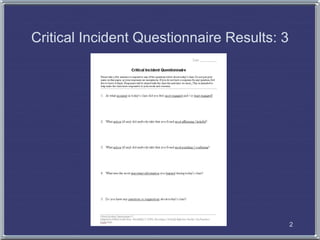
Critical Incident Questionnaire Results: 3


                                             2
Day 6: Sunday, August 2,
                      5:00-6:30


http://www.flickr.com/photos/88903556@N00/182296479/sizes/m/   3
“The Training Proposal” Handout


                                  4
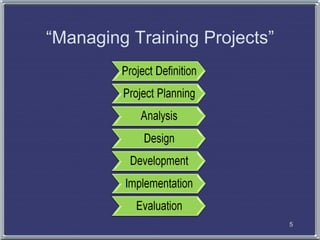
“Managing Training Projects”


                               5
Final Project (Training Plan)
1. Identify a learning
   need

3. Create a Training
   Plan for it
   – ADDIE
   – Project Life Cycle


5. Present it (via PPT)
                                   6
Let’s Review Project Terms. . .
•   Project
•   Project Management
•   Stakeholders
•   Project Manager
•   Project Team
•   Sponsor


                              7
“Traditional” ADDIE


                      8
ADDIE Model
ADDIE Training Cycle
ADDIE is the standard model of the
training design process:
  1.   Analyze (the need)
  2.   Design (the objectives and strategy)
  3.   Develop (the training program itself)
  4.   Implement (the training design)
  5.   Evaluate (if the objectives were met)


                                               10
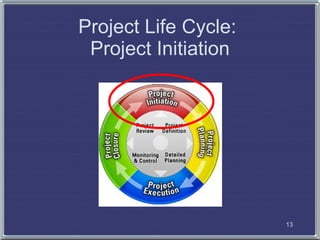
Project Life Cycle


The Project Life Cycle
includes the phases of
the project from the
beginning to the end

This can also be
thought of in ADDIE
terms

                               11
PMI Project Management Knowledge Areas

1.   Project Integration Management
2.   Project Scope Management
3.   Project Time Management
4.   Project Cost Management
5.   Project Quality Management
6.   Project Human Resource Management
7.   Project Communications Management
8.   Project Risk Management
9.   Project Procurement Management


                                              12
Project Life Cycle:
 Project Initiation


                      13
Project Initiation
             (Scoping the Project)
• Project Request
   – Project Concept Document

• Establish Goals and Objectives

• Identify Success Criteria

• List Assumptions, Risks, and Obstacles

• Project Roles defined
   – includes project team and customer
                                           14
Project Charter
                  (Project Definition)
• Formal document that acknowledges and recognizes
  a project exists
• Includes:
   –   Statement of work
   –   Product scope description
   –   Strategic plan
   –   Project overview
   –   Project objectives
   –   Requirements
   –   Business Justification
   –   Resources / cost estimates
   –   Roles and responsibilities
   –   Sign-off

                                                 15
Organizational Context


                         16
Project Parameters

1.   Scope
2.   Time
3.   Cost
4.   Resources
5.   Quality
Scope


  A statement that defines
the boundaries of the project.
Time


The deadline for a project
Cost


The budget for doing the project
The Triple Constraint


                        21
Resources


Assets (people, equipment, materials)
        that can be scheduled
Quality


       The degree to which
 a set of inherent characteristics
fulfill requirements (ISO 9000)
Scope Creep


Scope Creep is any
change in the project
not in the original plan.


                                24
Break


        25
Agenda
•   Review CIQ
•   Final Class Date / Time Change
•   Discuss—“The Training Proposal” handout
•   Discuss—Managing Training Projects
•   Final Project Overview
•   Project Terms Review
•   ADDIE
•   PMI Project Management Knowledge Areas
•   Project Initiation & Charter
•   Organizational Context
•   The Triple Constraint
•   BREAK
•   Project Goals, Objectives, and Scope
•   Organizations—PMI & ASTD
•   CIQ


                                              26
Project Goal
• Project goals provide purpose and
  direction

• SMART Goals
  – Specific
  – Measurable
  – Attainable
  – Realistic
  – Time-bound

                                      27
Project Objectives


Objectives are more detailed
    versions of the goal


                               28
Success Criteria

• The measurable business value that
  results from the project:
  – Increased value
  – Reduced costs
  – Improved service

• What must happen for the customer
  and team to agree the project is a   29
  success
Assumptions, Risks, and Obstacles


Assumptions:
  –   Technological
  –   Environmental
  –   Interpersonal
  –   Cultural
  –   Causal relationship
Risks

Obstacles                            30
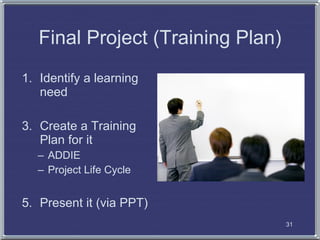
Final Project (Training Plan)
1. Identify a learning
   need

3. Create a Training
   Plan for it
   – ADDIE
   – Project Life Cycle


5. Present it (via PPT)
                                   31
Project Charter &
Project Concept Document


                           32
Discuss Learning Need
  (Final Project Ideas)


                          33
34
Critical Incident Questionnaire
                  (CIQ) Online


       http://www.surveymonkey.com/s.aspx?sm


(v6)                                      35
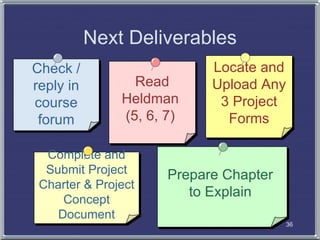
Next Deliverables
Check /                     Locate and
reply in         Read       Upload Any
course         Heldman       3 Project
 forum         (5, 6, 7)      Forms

  Complete and
  Submit Project      Prepare Chapter
 Charter & Project
                         to Explain
     Concept
    Document
                                         36

Project Management for Training - Class 2

  • 1.
    Project Management for Training Jeffrey Keefer July 7, 2009—Class 2 jk904@nyu.edu X75.9952.001—Spring 2008 Tuesdays, 6:30pm – 8:30pm Location: http://www.epsilen.com/crs/096318
  • 2.
  • 3.
    Day 6: Sunday,August 2, 5:00-6:30 http://www.flickr.com/photos/88903556@N00/182296479/sizes/m/ 3
  • 4.
  • 5.
  • 6.
    Final Project (TrainingPlan) 1. Identify a learning need 3. Create a Training Plan for it – ADDIE – Project Life Cycle 5. Present it (via PPT) 6
  • 7.
    Let’s Review ProjectTerms. . . • Project • Project Management • Stakeholders • Project Manager • Project Team • Sponsor 7
  • 8.
  • 9.
  • 10.
    ADDIE Training Cycle ADDIEis the standard model of the training design process: 1. Analyze (the need) 2. Design (the objectives and strategy) 3. Develop (the training program itself) 4. Implement (the training design) 5. Evaluate (if the objectives were met) 10
  • 11.
    Project Life Cycle TheProject Life Cycle includes the phases of the project from the beginning to the end This can also be thought of in ADDIE terms 11
  • 12.
    PMI Project ManagementKnowledge Areas 1. Project Integration Management 2. Project Scope Management 3. Project Time Management 4. Project Cost Management 5. Project Quality Management 6. Project Human Resource Management 7. Project Communications Management 8. Project Risk Management 9. Project Procurement Management 12
  • 13.
    Project Life Cycle: Project Initiation 13
  • 14.
    Project Initiation (Scoping the Project) • Project Request – Project Concept Document • Establish Goals and Objectives • Identify Success Criteria • List Assumptions, Risks, and Obstacles • Project Roles defined – includes project team and customer 14
  • 15.
    Project Charter (Project Definition) • Formal document that acknowledges and recognizes a project exists • Includes: – Statement of work – Product scope description – Strategic plan – Project overview – Project objectives – Requirements – Business Justification – Resources / cost estimates – Roles and responsibilities – Sign-off 15
  • 16.
  • 17.
    Project Parameters 1. Scope 2. Time 3. Cost 4. Resources 5. Quality
  • 18.
    Scope Astatement that defines the boundaries of the project.
  • 19.
  • 20.
    Cost The budget fordoing the project
  • 21.
  • 22.
    Resources Assets (people, equipment,materials) that can be scheduled
  • 23.
    Quality The degree to which a set of inherent characteristics fulfill requirements (ISO 9000)
  • 24.
    Scope Creep Scope Creepis any change in the project not in the original plan. 24
  • 25.
  • 26.
    Agenda • Review CIQ • Final Class Date / Time Change • Discuss—“The Training Proposal” handout • Discuss—Managing Training Projects • Final Project Overview • Project Terms Review • ADDIE • PMI Project Management Knowledge Areas • Project Initiation & Charter • Organizational Context • The Triple Constraint • BREAK • Project Goals, Objectives, and Scope • Organizations—PMI & ASTD • CIQ 26
  • 27.
    Project Goal • Projectgoals provide purpose and direction • SMART Goals – Specific – Measurable – Attainable – Realistic – Time-bound 27
  • 28.
    Project Objectives Objectives aremore detailed versions of the goal 28
  • 29.
    Success Criteria • Themeasurable business value that results from the project: – Increased value – Reduced costs – Improved service • What must happen for the customer and team to agree the project is a 29 success
  • 30.
    Assumptions, Risks, andObstacles Assumptions: – Technological – Environmental – Interpersonal – Cultural – Causal relationship Risks Obstacles 30
  • 31.
    Final Project (TrainingPlan) 1. Identify a learning need 3. Create a Training Plan for it – ADDIE – Project Life Cycle 5. Present it (via PPT) 31
  • 32.
    Project Charter & ProjectConcept Document 32
  • 33.
    Discuss Learning Need (Final Project Ideas) 33
  • 34.
  • 35.
    Critical Incident Questionnaire (CIQ) Online http://www.surveymonkey.com/s.aspx?sm (v6) 35
  • 36.
    Next Deliverables Check / Locate and reply in Read Upload Any course Heldman 3 Project forum (5, 6, 7) Forms Complete and Submit Project Prepare Chapter Charter & Project to Explain Concept Document 36