A guide to understanding
Lean Six Sigma
By Group50.com
In today’s global marketplace, competing for survival has become an
imperative for any business. However, senior leaders have understood that
survival is not enough; rather, they have to strive for excellence if they
want to sustain, lead the market, and sustain growth. And sustainable
development can only be achieved with the relentless stewardship of
resources.
Businesses can not only improve quality but can also become sustainable
by adopting a proven methodology called Lean Six Sigma.
By adhering to this business
strategy, businesses can streamline
their processes to achieve
sustainable and exemplary
performance..
In this article, we are providing you with an
insight on the approach, so you can
empower your business to reap benefits of
sustainable double digit improvements in
performance
The definition of Lean Six Sigma
Lean Six Sigma is a conceptual framework that combines the
benefits of both Lean manufacturing techniques and Six
Sigma. Lean aims at reducing waste, by eliminating waste,
transportation, inventory, production and defects.
On the other hand, Six Sigma focuses on improving quality and
consistency of those products/processes/services that customers value
most by eradicating defects and process variation.
When properly implemented, this technique can help businesses
streamline their operations, resulting in increased revenue, improved
collaboration and reduced costs.
Simply put, Lean Six Sigma focuses the
business on problems, defects, flaws,
etc., in any business process and
eliminates them to maximize
performance at all levels of the business
and the P&L.
How does the Lean Six Sigma work?
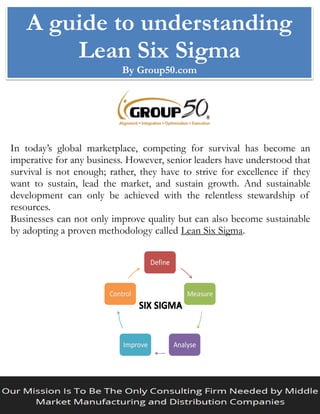
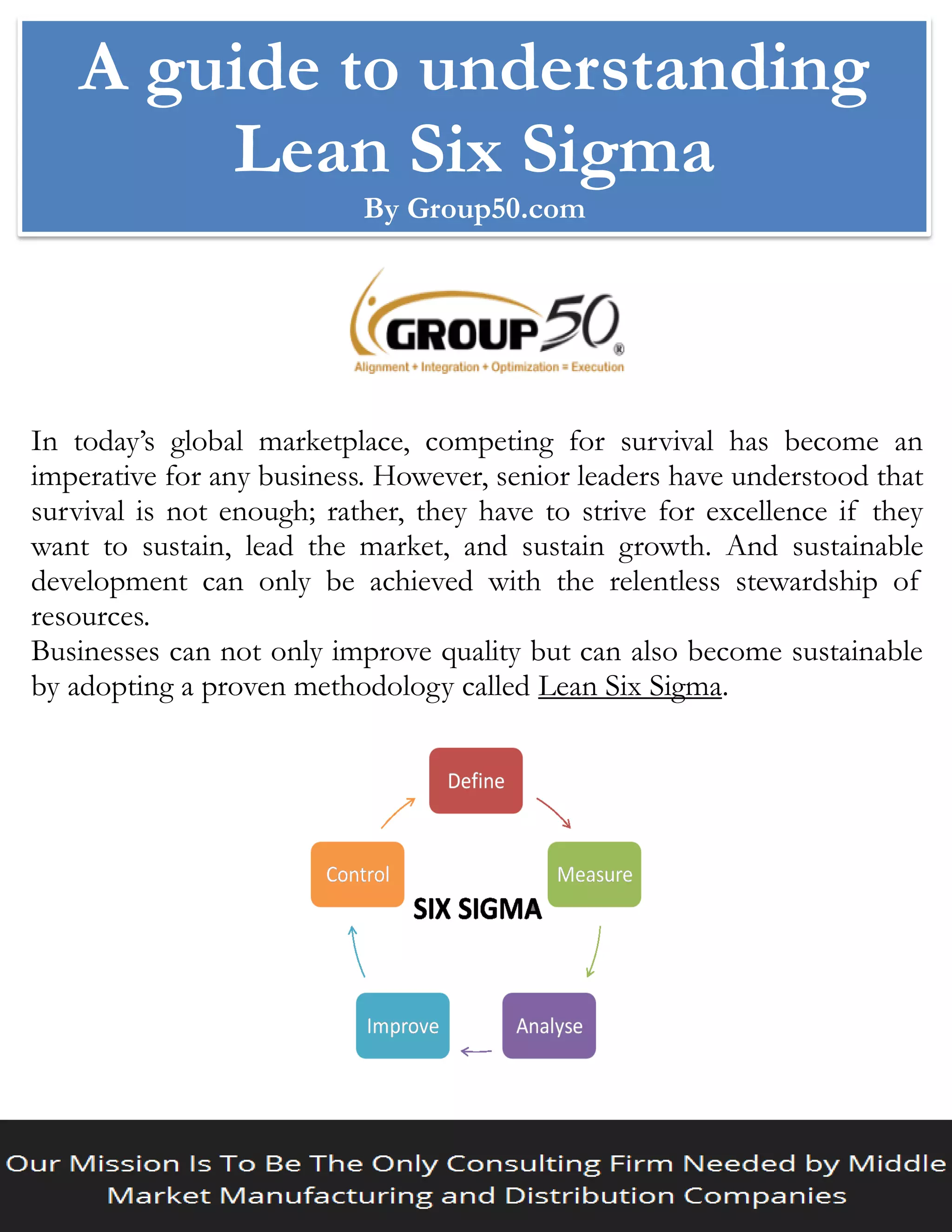
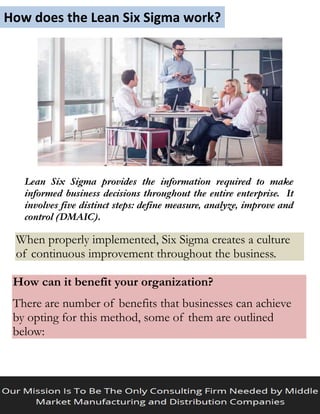
Lean Six Sigma provides the information required to make
informed business decisions throughout the entire enterprise. It
involves five distinct steps: define measure, analyze, improve and
control (DMAIC).
When properly implemented, Six Sigma creates a culture
of continuous improvement throughout the business.
How can it benefit your organization?
There are number of benefits that businesses can achieve
by opting for this method, some of them are outlined
below:
Value for the Customer:
It helps you improve quality and delivery of your
product/service, which creates value for customers.
Enhanced workforce productivity and morale
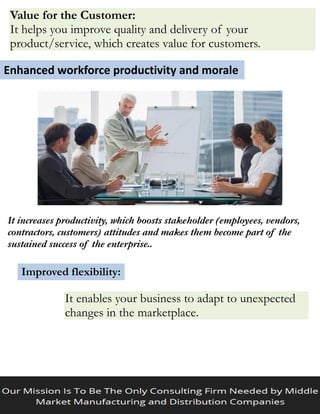
It increases productivity, which boosts stakeholder (employees, vendors,
contractors, customers) attitudes and makes them become part of the
sustained success of the enterprise..
Improved flexibility:
It enables your business to adapt to unexpected
changes in the marketplace.
Standards-driven achievement:
All aspects of corporate operations, including personnel
training, problem-solving, project management and
monitoring are streamlined, resulting in sustainable
achievement.
Encouragement of innovation
When all processes are streamlined, you will get opportunity to
spend more time on innovating throughout the business..
A significant amount of training and experience is required to
make the best of Lean Six Sigma. Lean Six
Sigma is not a “do it today”, or “flavor of the month” process. It
requires a strategic commitment throughout the organization
starting with the senior leadership team. It needs to become part
of the culture and part of every business process.
You can approach a renowned manufacturing consulting
company in the US. For further assistance check out our website
www.group50.com

Project Management Consulting Firms

  • 1.
    A guide tounderstanding Lean Six Sigma By Group50.com In today’s global marketplace, competing for survival has become an imperative for any business. However, senior leaders have understood that survival is not enough; rather, they have to strive for excellence if they want to sustain, lead the market, and sustain growth. And sustainable development can only be achieved with the relentless stewardship of resources. Businesses can not only improve quality but can also become sustainable by adopting a proven methodology called Lean Six Sigma.
  • 2.
    By adhering tothis business strategy, businesses can streamline their processes to achieve sustainable and exemplary performance.. In this article, we are providing you with an insight on the approach, so you can empower your business to reap benefits of sustainable double digit improvements in performance The definition of Lean Six Sigma Lean Six Sigma is a conceptual framework that combines the benefits of both Lean manufacturing techniques and Six Sigma. Lean aims at reducing waste, by eliminating waste, transportation, inventory, production and defects. On the other hand, Six Sigma focuses on improving quality and consistency of those products/processes/services that customers value most by eradicating defects and process variation.
  • 3.
    When properly implemented,this technique can help businesses streamline their operations, resulting in increased revenue, improved collaboration and reduced costs. Simply put, Lean Six Sigma focuses the business on problems, defects, flaws, etc., in any business process and eliminates them to maximize performance at all levels of the business and the P&L.
  • 4.
    How does theLean Six Sigma work? Lean Six Sigma provides the information required to make informed business decisions throughout the entire enterprise. It involves five distinct steps: define measure, analyze, improve and control (DMAIC). When properly implemented, Six Sigma creates a culture of continuous improvement throughout the business. How can it benefit your organization? There are number of benefits that businesses can achieve by opting for this method, some of them are outlined below:
  • 5.
    Value for theCustomer: It helps you improve quality and delivery of your product/service, which creates value for customers. Enhanced workforce productivity and morale It increases productivity, which boosts stakeholder (employees, vendors, contractors, customers) attitudes and makes them become part of the sustained success of the enterprise.. Improved flexibility: It enables your business to adapt to unexpected changes in the marketplace.
  • 6.
    Standards-driven achievement: All aspectsof corporate operations, including personnel training, problem-solving, project management and monitoring are streamlined, resulting in sustainable achievement. Encouragement of innovation When all processes are streamlined, you will get opportunity to spend more time on innovating throughout the business..
  • 7.
    A significant amountof training and experience is required to make the best of Lean Six Sigma. Lean Six Sigma is not a “do it today”, or “flavor of the month” process. It requires a strategic commitment throughout the organization starting with the senior leadership team. It needs to become part of the culture and part of every business process. You can approach a renowned manufacturing consulting company in the US. For further assistance check out our website www.group50.com