Project Management and Product DevelopmentApparel Quality ManagementAbhishekAbhishek Chaubey
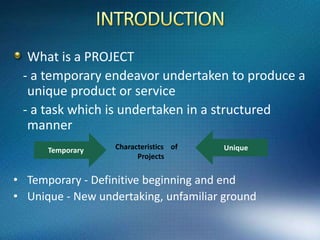
INTRODUCTIONWhat is a PROJECT   - a temporary endeavor undertaken to produce a unique product or service   - a task which is undertaken in a structured mannerTemporary - Definitive beginning and end
Unique - New undertaking, unfamiliar groundUniqueTemporaryCharacteristics    of Projects
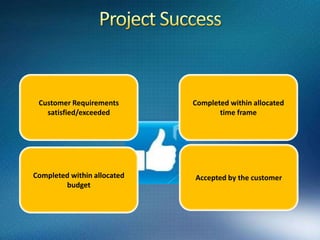
Project SuccessCustomer Requirements satisfied/exceededCompleted within allocated time frameAccepted by the customerCompleted within allocated budget
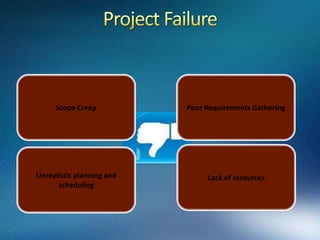
Project FailureScope CreepPoor Requirements GatheringLack of resourcesUnrealistic planning and scheduling
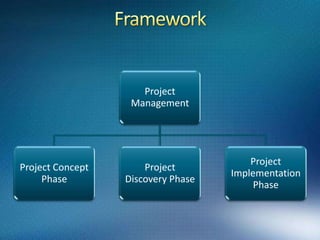
Framework
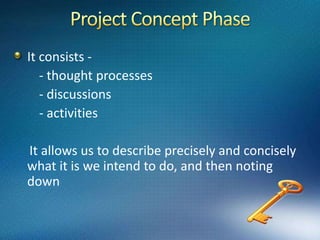
Project Concept PhaseIt consists -        - thought processes        - discussions        - activities      It allows us to describe precisely and concisely what it is we intend to do, and then noting down
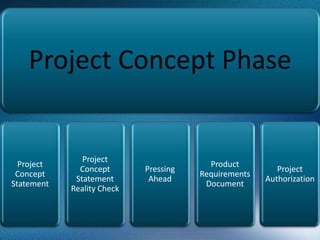
Project Concept Statement Essentials       - statement of goals      - project schedule      - resource constraintsA project concept statement is always short and to the point .
Project Concept Statement Reality CheckEssentials        - real world consideration       - setting priorities       - controlling events       - decision makingPressing Ahead      transition from one project phase to next marking  a milestone
Product Requirements DocumentShowcases broad outline of the projectProduct –project focus , resulting deliverableProject Leaders and Project Champions        - describe their mental picture of the product or service intended to produceDescription – subject to refinement and outright change
Project Authorization Companion to product requirements documentIncludes a concise description of the resources and an estimate of the time likely to be required to undertake and complete the Discovery Phase.
Project Discovery PhaseAnalyze the key issues related to product feasibilityViability in the marketplaceAnalysis Matrix         - aids in balancing the twin goals of low cost and small size         - presents the percentage contribution thereby highlighting the important contributors
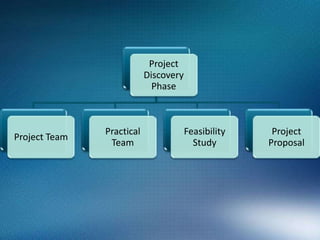
Project TeamCenter of approachResponsible for managementplays an important part in the execution of the entire project from concept to introduction.Team Composition depends on –        - nature of the project        - makeup of the sponsoring organization        - time phase of the undertaking
Project TeamTeam of five or six people is responsible for guiding the project and making sure that the needs of their respective constituencies are put forward and responded to appropriatelyHead of team – project leader
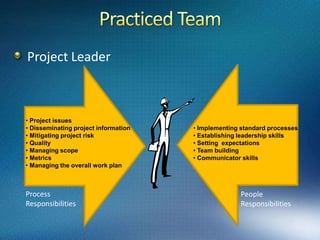
Practiced TeamProject Leader  Project issues
 Disseminating project information
 Mitigating project risk
 Quality
 Managing scope
 Metrics
 Managing the overall work plan
 Implementing standard processes
 Establishing leadership skills
 Setting  expectations
 Team building
 Communicator skillsProcess ResponsibilitiesPeople Responsibilities
Feasibility StudyThe objective of the feasibility study is to answer the question:              - Is it possible to successfully complete this project ?              - Is it possible to use the current state of technology              - Is the goal achievable given the skills and the resources that are available
Establishing Feasibility in the marketplaceaccording to the needs of the real world in which the product must compete The best—perhaps the only—way in which this can be done is to be there to talk to, interact with, and respond to potential customers for     the planned product.
Focus GroupStructured techniqueRepresents a specific customer population and whose discussion is focused on a well-defined questionObjective           - to secure customer feedback and  enhance marketability
Establish Feasibility – A Sacred TrustIn the final analysis, feasibility addresses many questions –              - Does it work ?              - Is it reliable ?              - Is it affordable ?              - Is the schedule realistic ?              - Is it possible to meet the target manufacturing cost ?              - Will the costumers buy it ?PROJECT MANAGERPressing AheadMoving from discovery phase to the implementation phase           - to go or not to go ?
Project Proposalhelps move a project from the Discovery Phase to the Implementation PhaseInfo required –         - Product Concept                The product concept is fleshed out beyond the few sentences suggested earlier in the development process. Still the concept is short and to the point.
- Marketing StrategyOutlines the marketing approach. Is it direct or through dealers? What are the plans for marketing communication and sales? What are the customer benefits, etc.?Target SpecsOne product is small and simple to use, yet the target specifications are complex and detailed, especially details of the application and user interface specifications.
Pricing and CompetitionThere could be no direct competition for the unit. But there is plenty of indirect competition. Target pricing is based on a combination of competitive market factors and target manufacturing cost.Engineering Approach This is a detailed description of the product, including several figures.
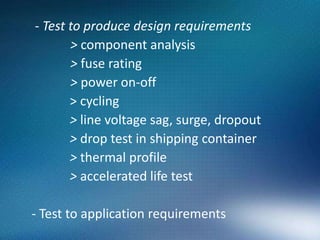
Engineering Estimate of Manufacturing Cost- initial cost estimate and it is usually made by the engineering staff on the basis of the cost of parts and an experienced estimate of what it will take to assemble and test the package for shipment. Later, during the Implementation Phase, the cost will be re-estimated and established by the manufacturing staff on the basis of detailed documentation produced by engineering
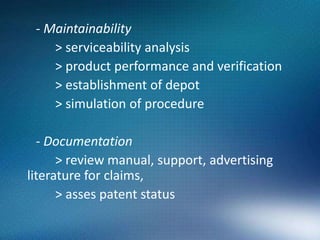
Reliability , Installation and Estimated Warranty CostThis an estimate by engineering of the reliability to be expected and the installationand warranty costs to be anticipated. Later during the Implementation Phase, the reliability figures will be established by the QA department by calculation and testing methodology. Similarly, the Service organization will establish installation and warranty costs for the product.
Scheduleshowcases the path and the procedures to be followed .Development Costincludes an estimate of the cost of the engineering staff over the period of time outlined in the schedule
Capital Cost and Toolingincludes the estimate of expenses for capital equipment that will be required to undertake the project. Engineering or manufacturing and Specialized tooling is also included in this estimateRisk Factors and Risk Managementis a thorough review of the risks that exist in a given development going forward.
Product Functional SpecsStatement of requirementsIdentification  of list of deliverablesInitial buildupEventual acceptance
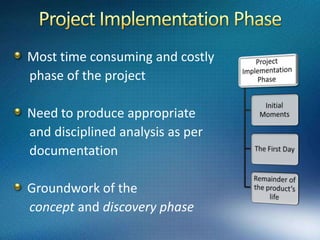
Project Implementation PhaseMost time consuming and costly      phase of the projectNeed to produce appropriate      and disciplined analysis as per     documentation Groundwork of the      concept and discovery phase
Initial Moments        - customer gains the critical first impression        - exposure         - self directing operating session        - product packaging and documentation

Project management

  • 1.
    Project Management andProduct DevelopmentApparel Quality ManagementAbhishekAbhishek Chaubey
  • 2.
    INTRODUCTIONWhat is aPROJECT - a temporary endeavor undertaken to produce a unique product or service - a task which is undertaken in a structured mannerTemporary - Definitive beginning and end
  • 3.
    Unique - Newundertaking, unfamiliar groundUniqueTemporaryCharacteristics of Projects
  • 5.
    Project SuccessCustomer Requirementssatisfied/exceededCompleted within allocated time frameAccepted by the customerCompleted within allocated budget
  • 6.
    Project FailureScope CreepPoorRequirements GatheringLack of resourcesUnrealistic planning and scheduling
  • 7.
  • 8.
    Project Concept PhaseItconsists - - thought processes - discussions - activities It allows us to describe precisely and concisely what it is we intend to do, and then noting down
  • 10.
    Project Concept StatementEssentials - statement of goals - project schedule - resource constraintsA project concept statement is always short and to the point .
  • 11.
    Project Concept StatementReality CheckEssentials - real world consideration - setting priorities - controlling events - decision makingPressing Ahead transition from one project phase to next marking a milestone
  • 12.
    Product Requirements DocumentShowcasesbroad outline of the projectProduct –project focus , resulting deliverableProject Leaders and Project Champions - describe their mental picture of the product or service intended to produceDescription – subject to refinement and outright change
  • 13.
    Project Authorization Companionto product requirements documentIncludes a concise description of the resources and an estimate of the time likely to be required to undertake and complete the Discovery Phase.
  • 14.
    Project Discovery PhaseAnalyzethe key issues related to product feasibilityViability in the marketplaceAnalysis Matrix - aids in balancing the twin goals of low cost and small size - presents the percentage contribution thereby highlighting the important contributors
  • 16.
    Project TeamCenter ofapproachResponsible for managementplays an important part in the execution of the entire project from concept to introduction.Team Composition depends on – - nature of the project - makeup of the sponsoring organization - time phase of the undertaking
  • 17.
    Project TeamTeam offive or six people is responsible for guiding the project and making sure that the needs of their respective constituencies are put forward and responded to appropriatelyHead of team – project leader
  • 18.
  • 19.
  • 20.
  • 21.
  • 22.
  • 23.
  • 24.
    Managing theoverall work plan
  • 25.
  • 26.
  • 27.
    Setting expectations
  • 28.
  • 29.
    Communicator skillsProcessResponsibilitiesPeople Responsibilities
  • 30.
    Feasibility StudyThe objectiveof the feasibility study is to answer the question: - Is it possible to successfully complete this project ? - Is it possible to use the current state of technology - Is the goal achievable given the skills and the resources that are available
  • 31.
    Establishing Feasibility inthe marketplaceaccording to the needs of the real world in which the product must compete The best—perhaps the only—way in which this can be done is to be there to talk to, interact with, and respond to potential customers for the planned product.
  • 32.
    Focus GroupStructured techniqueRepresentsa specific customer population and whose discussion is focused on a well-defined questionObjective - to secure customer feedback and enhance marketability
  • 33.
    Establish Feasibility –A Sacred TrustIn the final analysis, feasibility addresses many questions – - Does it work ? - Is it reliable ? - Is it affordable ? - Is the schedule realistic ? - Is it possible to meet the target manufacturing cost ? - Will the costumers buy it ?PROJECT MANAGERPressing AheadMoving from discovery phase to the implementation phase - to go or not to go ?
  • 34.
    Project Proposalhelps movea project from the Discovery Phase to the Implementation PhaseInfo required – - Product Concept The product concept is fleshed out beyond the few sentences suggested earlier in the development process. Still the concept is short and to the point.
  • 35.
    - Marketing StrategyOutlinesthe marketing approach. Is it direct or through dealers? What are the plans for marketing communication and sales? What are the customer benefits, etc.?Target SpecsOne product is small and simple to use, yet the target specifications are complex and detailed, especially details of the application and user interface specifications.
  • 36.
    Pricing and CompetitionTherecould be no direct competition for the unit. But there is plenty of indirect competition. Target pricing is based on a combination of competitive market factors and target manufacturing cost.Engineering Approach This is a detailed description of the product, including several figures.
  • 37.
    Engineering Estimate ofManufacturing Cost- initial cost estimate and it is usually made by the engineering staff on the basis of the cost of parts and an experienced estimate of what it will take to assemble and test the package for shipment. Later, during the Implementation Phase, the cost will be re-estimated and established by the manufacturing staff on the basis of detailed documentation produced by engineering
  • 38.
    Reliability , Installationand Estimated Warranty CostThis an estimate by engineering of the reliability to be expected and the installationand warranty costs to be anticipated. Later during the Implementation Phase, the reliability figures will be established by the QA department by calculation and testing methodology. Similarly, the Service organization will establish installation and warranty costs for the product.
  • 39.
    Scheduleshowcases the pathand the procedures to be followed .Development Costincludes an estimate of the cost of the engineering staff over the period of time outlined in the schedule
  • 40.
    Capital Cost andToolingincludes the estimate of expenses for capital equipment that will be required to undertake the project. Engineering or manufacturing and Specialized tooling is also included in this estimateRisk Factors and Risk Managementis a thorough review of the risks that exist in a given development going forward.
  • 41.
    Product Functional SpecsStatementof requirementsIdentification of list of deliverablesInitial buildupEventual acceptance
  • 42.
    Project Implementation PhaseMosttime consuming and costly phase of the projectNeed to produce appropriate and disciplined analysis as per documentation Groundwork of the concept and discovery phase
  • 43.
    Initial Moments - customer gains the critical first impression - exposure - self directing operating session - product packaging and documentation