Statistical Evaluation Using Design of
Experiments of Total Organic Carbon Analysis
(TOC) to Combine Cleaning Agent Method with
Drug Product Methods
g
Peter W l h Nik j Vasoya, M i
P t Walsh, Nikunj V
Mariann N
Neverovitch,
it h
and Antonio Fernandez
Analytical and Bioanalytical Development,
BristolBristol-Myers Squibb Co., New Brunswick NJ
19th November, 2013

1
Outline


Cleaning Background



Current Practice & Project Goal
j



Design of Experiments (DoE)



Data Analysis & Results



Risk Analysis



Conclusion

2
Why Do We Clean?
y
Cleaning is important

Equipment

Every time we make a batch of Drug
Product we have a chance of
contamination from the previous batch
We avoid this by cleaning in-between
inruns with detergent. Then in order to
verify it’s clean we take a swab and test it
it s
for API/detergent.

3
What Is Considered Clean?
Cleaned Equipment
The equipment is considered clean if the swab sample is below
its worst case Permitted Residue Limit (PRL). This is calculated
from the contaminant’s Subject Exposure Limit (SEL) provided
by a toxicologist.

Cleaning Agent Limit:
PRL Limit: 13.5 parts per million Carbon (ppmC)
Cleaning Limit: 1.00 ppmC (Alert Cleaning Limit)

4
Total Organic Carbon Analysis
g
y
The TOC method is nonnonspecific in that it analyzes
how much organic carbon
is i
i in a solution.
l ti
This means ANY and ALL
contamination will be
accounted for in one
analysis.

5
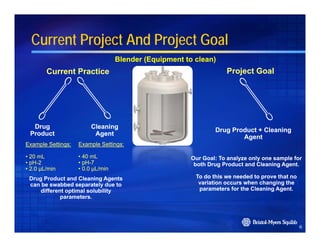
Current Project And Project Goal
j
j
Blender (Equipment to clean)

Current Practice

Drug
Product

Cleaning
Agent

Example Settings:

• 40 mL
• pH-7
pH• 0.0 µL/min

Drug Product + Cleaning
Agent

Example Settings:

• 20 mL
• pH-2
pH• 2.0 µL/min

Project Goal

Drug Product and Cleaning Agents
can be swabbed separately due to
different optimal solubility
parameters.

Our Goal: To analyze only one sample for
both Drug Product and Cleaning Agent.
To do this we needed to prove that no
variation occurs when changing the
parameters for the Cleaning Agent.

6
Design of Experiment (DoE)
g
p
(
)
Full Factorial DoE was conducted with 3 factors, 2 levels,
and 5 replicates in the statistical program Minitab
Run
Order

Water
pH

Diluent
Volume (mL)

Oxidizer Flow
Rate (µL/min)

Cleaning Agent
Results (ppmC)

1

2

15

4.8

0.92

2

7

35

0.0
00

1.00
1 00

3

7

35

4.8

0.94

4

7

15

4.8

0.93

5

2

35

4.8

0.92

6

2

15

0.0

1.01

7

2

35

0.0

1.02

8

7

15

0.0

1.01
7
Main Effects Plots
DoE results for Cleaning Agent
Little to NO
slope!

Very slight
Variation for
Oxidizer
Lowest
Reading
Observed was
0.15 ppmC
less than
theoretical
8
Interaction Plots
DoE results for Cleaning Agent

- No angles!
- Lines are
almost
p
y
completely
overlapping!

9
Q
Quantifying Oxidizer Variation
y g
Oxidizer was individually varied for Cleaning Agent
Oxidizer Variation
2.00

TOC (ppmC)

1.75
1.50
1 50
1.25
1.00
0.75
0.50
0.25
0.00
0

0.5

1

1.5

2

2.5

3

3.5

4

4.5

Oxidizer Flow Rate (µL/min)

 Average Deviation at 4.8 Oxidizer: 0.08 ppmC less than
theoretical
 Worst case error was observed during DoE with 0.15
ppmC l
C less th theoretical
than th
ti l
10
Risk Analysis
y
Using alert limit, i.e. 1.00 ppmC which means re-clean the equipment if
reTOC is 1 ppmC or higher. Therefore, the worst case scenario would be
pp
higher.
g
,
accepting a sample at 1 ppm when its contamination is actually 1.15
ppmC.
ppmC. However, the actual PRL Limit is 13.5 ppmC.
13. ppmC.

Therefore the
detergent
g
contamination will
ALWAYS be well
within the PRL limit.

NO RISK!

11
Conclusion
Based on the data gathered we conclude
there is NO significant variation when
changing parameters for both detergents.
detergents
Therefore, we can combine analysis of
Th
f
bi
l i f
Detergent with API.

12

Lean Clean - Total Organic Carbon Analysis for Cleaning Validation in Pharmaceutical Manufacturing.

  • 1.
    Statistical Evaluation UsingDesign of Experiments of Total Organic Carbon Analysis (TOC) to Combine Cleaning Agent Method with Drug Product Methods g Peter W l h Nik j Vasoya, M i P t Walsh, Nikunj V Mariann N Neverovitch, it h and Antonio Fernandez Analytical and Bioanalytical Development, BristolBristol-Myers Squibb Co., New Brunswick NJ 19th November, 2013 1
  • 2.
    Outline  Cleaning Background  Current Practice& Project Goal j  Design of Experiments (DoE)  Data Analysis & Results  Risk Analysis  Conclusion 2
  • 3.
    Why Do WeClean? y Cleaning is important Equipment Every time we make a batch of Drug Product we have a chance of contamination from the previous batch We avoid this by cleaning in-between inruns with detergent. Then in order to verify it’s clean we take a swab and test it it s for API/detergent. 3
  • 4.
    What Is ConsideredClean? Cleaned Equipment The equipment is considered clean if the swab sample is below its worst case Permitted Residue Limit (PRL). This is calculated from the contaminant’s Subject Exposure Limit (SEL) provided by a toxicologist. Cleaning Agent Limit: PRL Limit: 13.5 parts per million Carbon (ppmC) Cleaning Limit: 1.00 ppmC (Alert Cleaning Limit) 4
  • 5.
    Total Organic CarbonAnalysis g y The TOC method is nonnonspecific in that it analyzes how much organic carbon is i i in a solution. l ti This means ANY and ALL contamination will be accounted for in one analysis. 5
  • 6.
    Current Project AndProject Goal j j Blender (Equipment to clean) Current Practice Drug Product Cleaning Agent Example Settings: • 40 mL • pH-7 pH• 0.0 µL/min Drug Product + Cleaning Agent Example Settings: • 20 mL • pH-2 pH• 2.0 µL/min Project Goal Drug Product and Cleaning Agents can be swabbed separately due to different optimal solubility parameters. Our Goal: To analyze only one sample for both Drug Product and Cleaning Agent. To do this we needed to prove that no variation occurs when changing the parameters for the Cleaning Agent. 6
  • 7.
    Design of Experiment(DoE) g p ( ) Full Factorial DoE was conducted with 3 factors, 2 levels, and 5 replicates in the statistical program Minitab Run Order Water pH Diluent Volume (mL) Oxidizer Flow Rate (µL/min) Cleaning Agent Results (ppmC) 1 2 15 4.8 0.92 2 7 35 0.0 00 1.00 1 00 3 7 35 4.8 0.94 4 7 15 4.8 0.93 5 2 35 4.8 0.92 6 2 15 0.0 1.01 7 2 35 0.0 1.02 8 7 15 0.0 1.01 7
  • 8.
    Main Effects Plots DoEresults for Cleaning Agent Little to NO slope! Very slight Variation for Oxidizer Lowest Reading Observed was 0.15 ppmC less than theoretical 8
  • 9.
    Interaction Plots DoE resultsfor Cleaning Agent - No angles! - Lines are almost p y completely overlapping! 9
  • 10.
    Q Quantifying Oxidizer Variation yg Oxidizer was individually varied for Cleaning Agent Oxidizer Variation 2.00 TOC (ppmC) 1.75 1.50 1 50 1.25 1.00 0.75 0.50 0.25 0.00 0 0.5 1 1.5 2 2.5 3 3.5 4 4.5 Oxidizer Flow Rate (µL/min)  Average Deviation at 4.8 Oxidizer: 0.08 ppmC less than theoretical  Worst case error was observed during DoE with 0.15 ppmC l C less th theoretical than th ti l 10
  • 11.
    Risk Analysis y Using alertlimit, i.e. 1.00 ppmC which means re-clean the equipment if reTOC is 1 ppmC or higher. Therefore, the worst case scenario would be pp higher. g , accepting a sample at 1 ppm when its contamination is actually 1.15 ppmC. ppmC. However, the actual PRL Limit is 13.5 ppmC. 13. ppmC. Therefore the detergent g contamination will ALWAYS be well within the PRL limit. NO RISK! 11
  • 12.
    Conclusion Based on thedata gathered we conclude there is NO significant variation when changing parameters for both detergents. detergents Therefore, we can combine analysis of Th f bi l i f Detergent with API. 12