Profiting In A LinkedIn  Economy Dannielle Blumenthal, Ph.D. @thinkbrandfirst July 2011 Please feel free to reuse and adapt this presentation with attribution. All opinions my own.
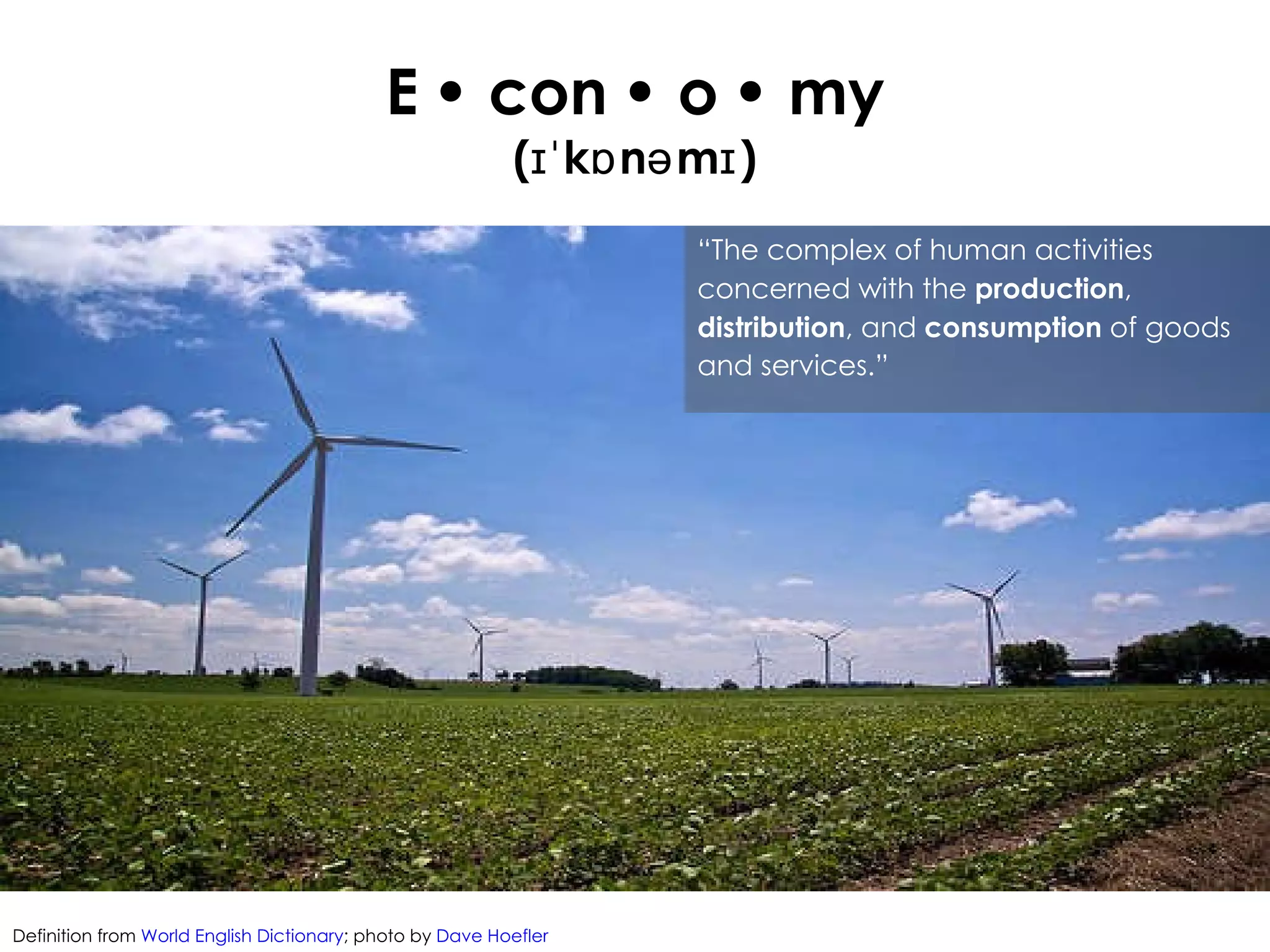
E    con    o    my (ɪˈkɒnəmɪ) “ The complex of human activities concerned with the  production ,  distribution , and  consumption  of goods and services.” Definition from  World English Dictionary ; photo by  Dave Hoefler
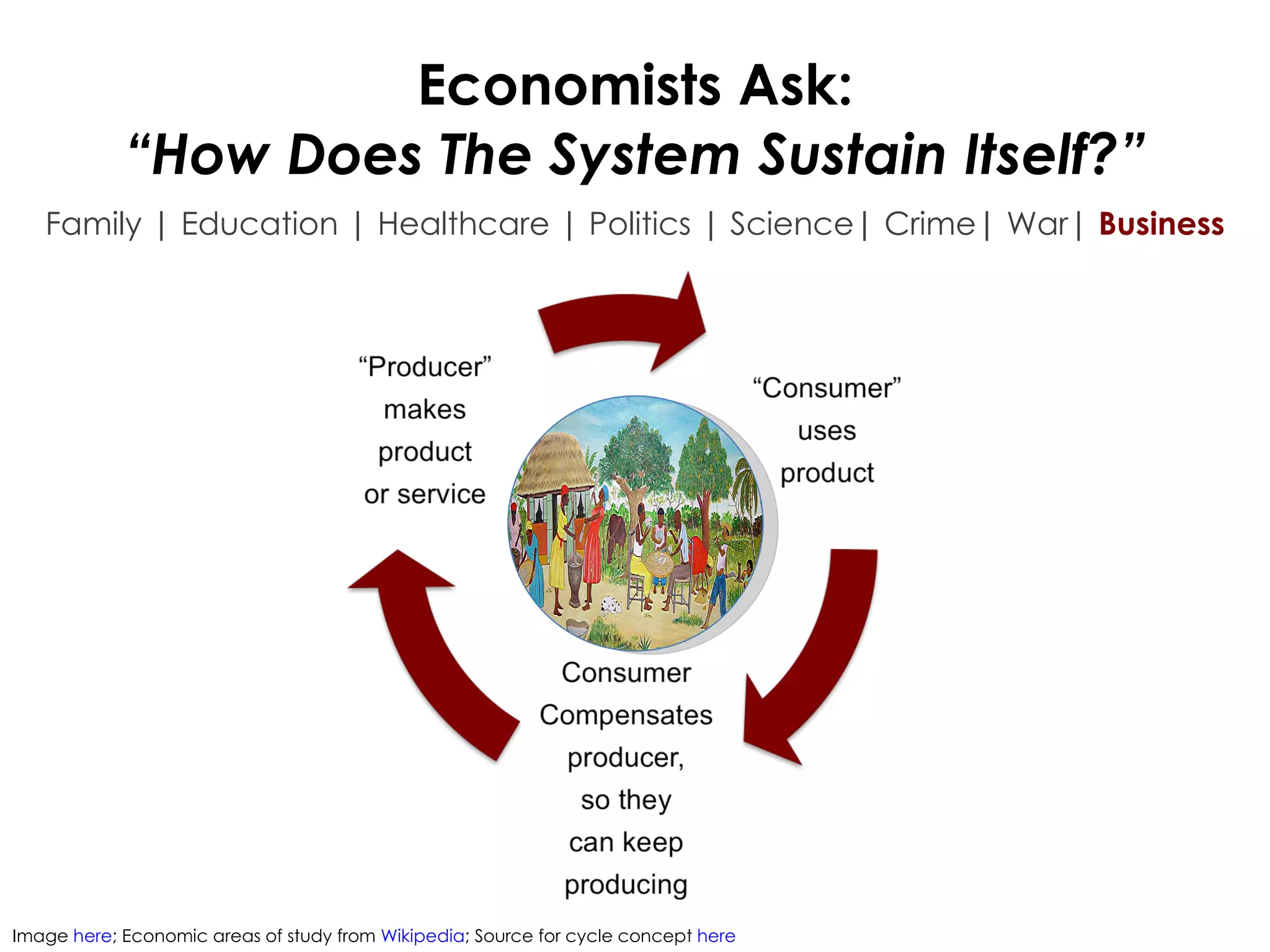
Economists Ask: “How Does The System Sustain Itself?” Family | Education | Healthcare | Politics | Science| Crime| War|  Business Image  here ; Economic areas of study from  Wikipedia ; Source for cycle concept  here
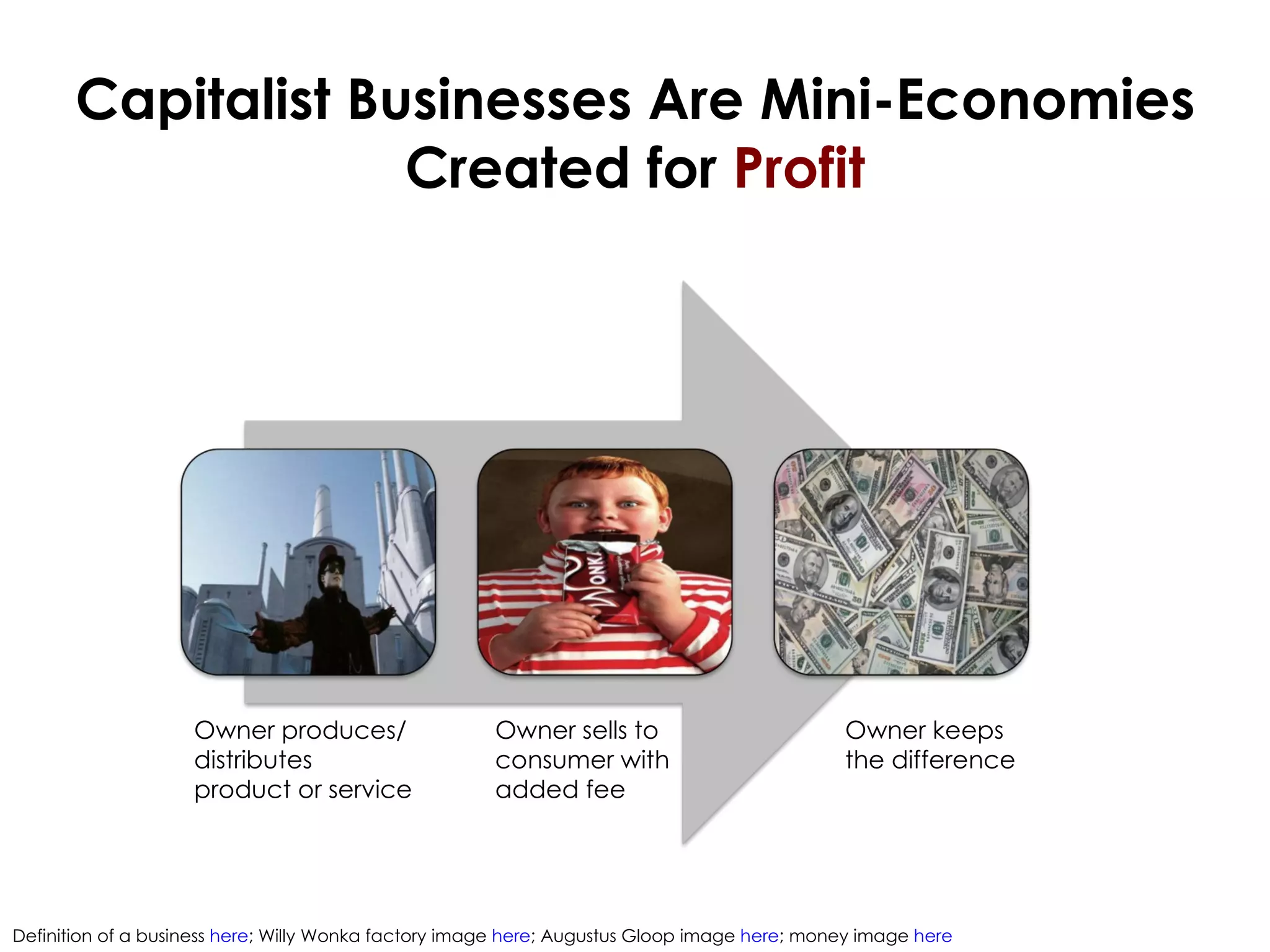
Capitalist Businesses Are Mini-Economies Created for  Profit Definition of a business  here ; Willy Wonka factory image  here ; Augustus Gloop image  here ; money image  here Owner produces/distributes product or service Owner sells to consumer with added fee Owner keeps the difference
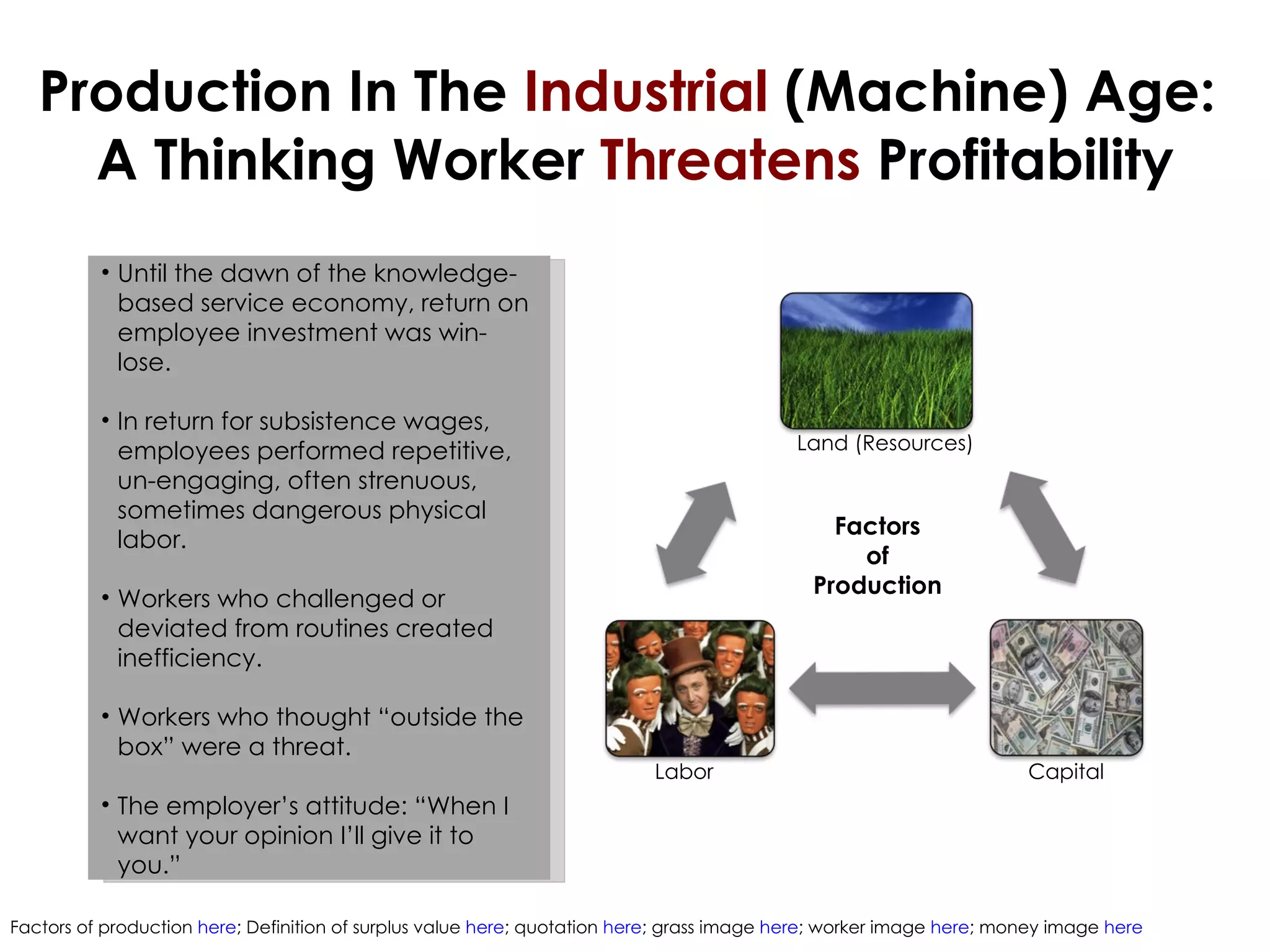
Production In The  Industrial  (Machine) Age:  A Thinking Worker  Threatens  Profitability Factors of production  here ; Definition of surplus value  here ; quotation  here ; grass image  here ; worker image  here ; money image  here Land (Resources) Labor Capital Factors of Production Until the dawn of the knowledge-based service economy, return on employee investment was win-lose. In return for subsistence wages, employees performed repetitive, un-engaging, often strenuous, sometimes dangerous physical labor. Workers who challenged or deviated from routines created inefficiency. Workers who thought “outside the box” were a threat.  The employer’s attitude: “When I want your opinion I’ll give it to you.”
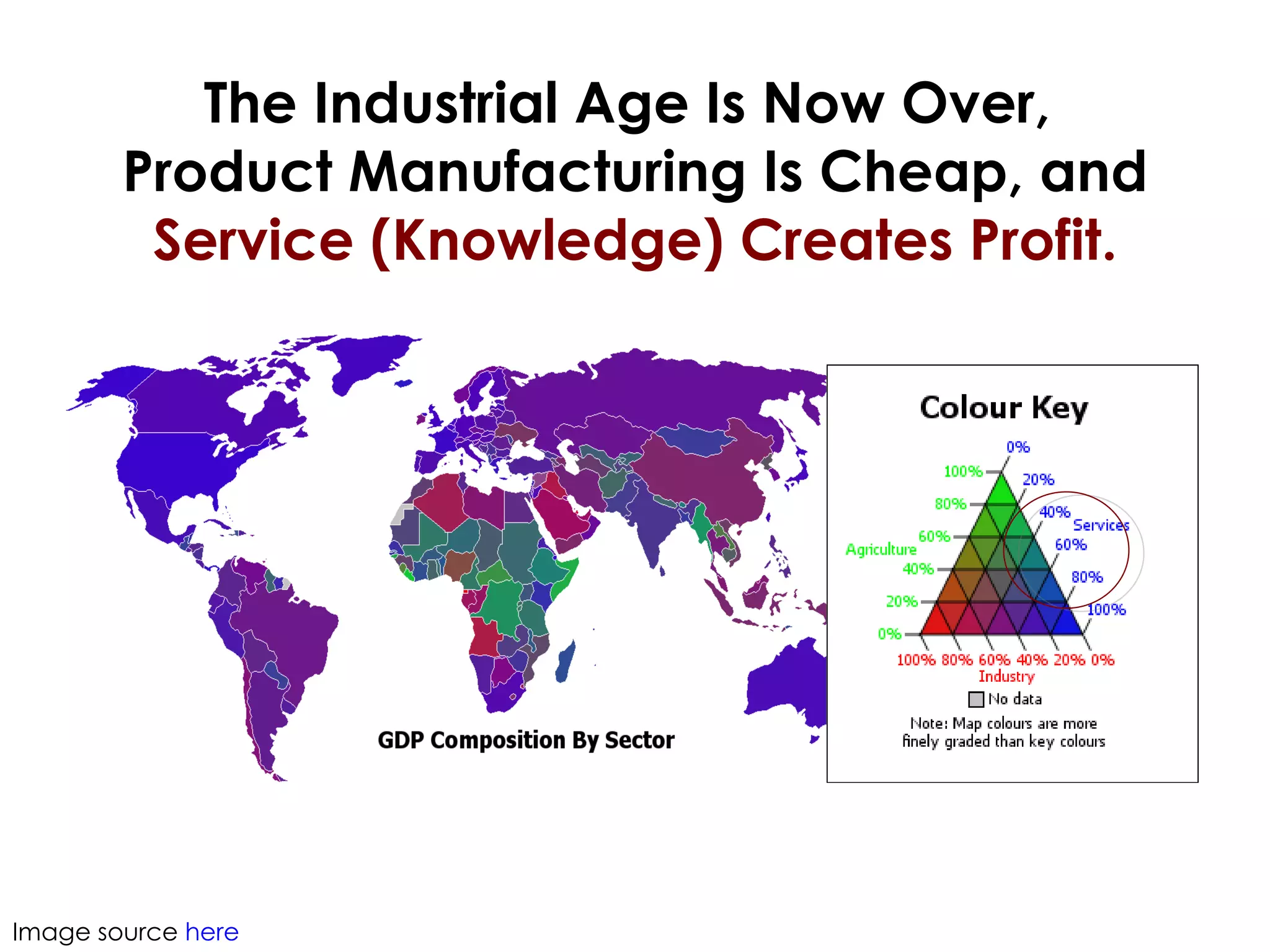
The Industrial Age Is Now Over,  Product Manufacturing Is Cheap, and  Service (Knowledge) Creates Profit. Image source  here
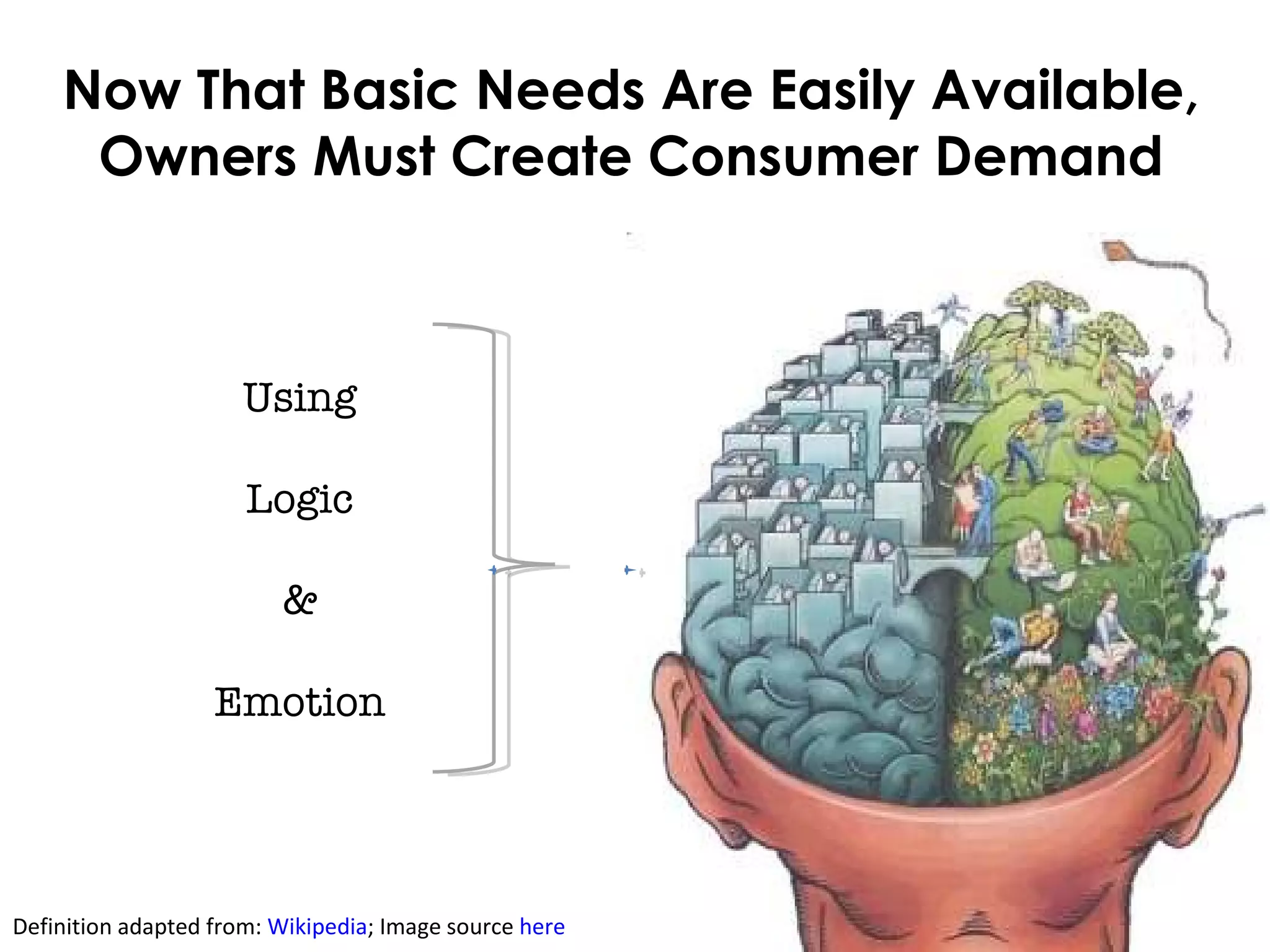
Now That Basic Needs Are Easily Available, Owners Must Create Consumer Demand Definition adapted from:  Wikipedia ; Image source  here Using Logic & Emotion
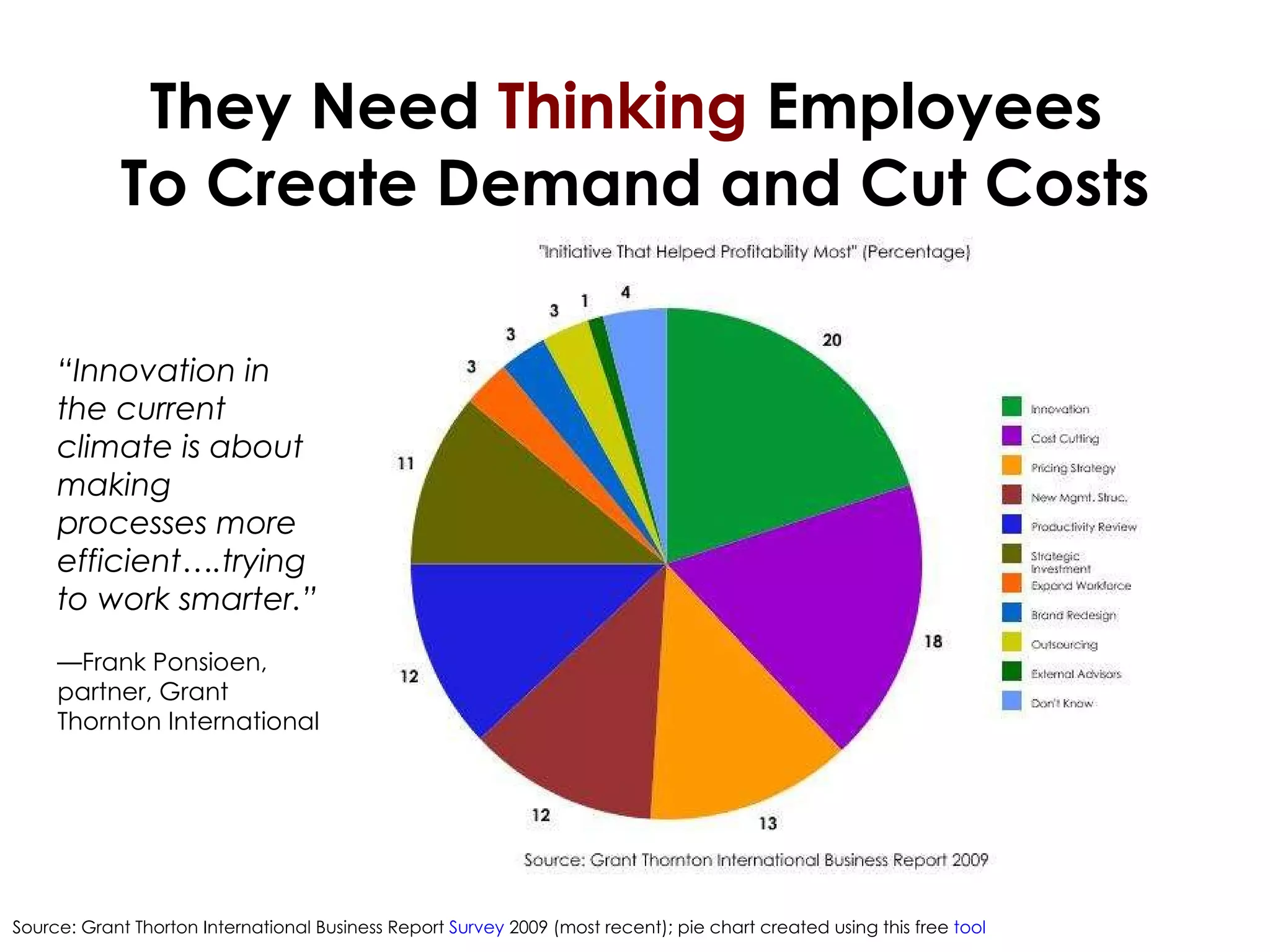
They Need  Thinking  Employees  To Create Demand and Cut Costs Source: Grant Thorton International Business Report  Survey  2009 (most recent); pie chart created using this free  tool “ Innovation in the current climate is about making processes more efficient….trying to work smarter.” — Frank Ponsioen, partner, Grant Thornton International
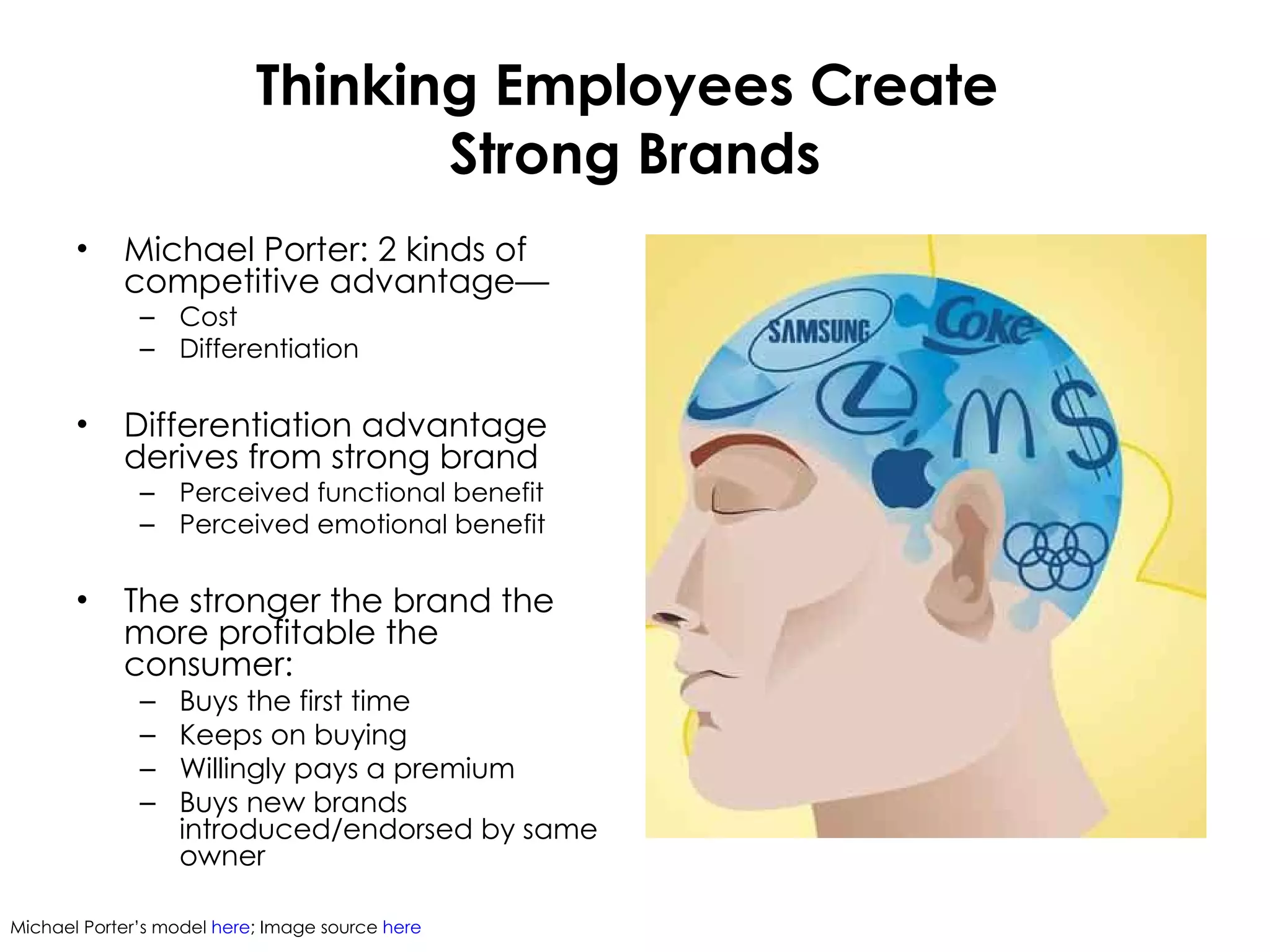
Thinking Employees Create  Strong Brands Michael Porter: 2 kinds of competitive advantage— Cost Differentiation Differentiation advantage derives from strong brand Perceived functional benefit Perceived emotional benefit The stronger the brand the more profitable the consumer: Buys the first time Keeps on buying Willingly pays a premium Buys new brands introduced/endorsed by same owner Michael Porter’s model  here ; Image source  here
Throughout The Business Cycle,  Profit Is Created  Through Brainpower Production: During the Industrial Age, employers made money by manipulating vulnerable employees into submission In the information age, they make money by harnessing employees’ brainpower on their behalf Consumption: Business owners depend on employees to cut costs and create customer demand The brands employees create attract customers to pay more and buy frequently Customers willingly pay a premium based on the perception of value Definition of profit  here ; image source  here
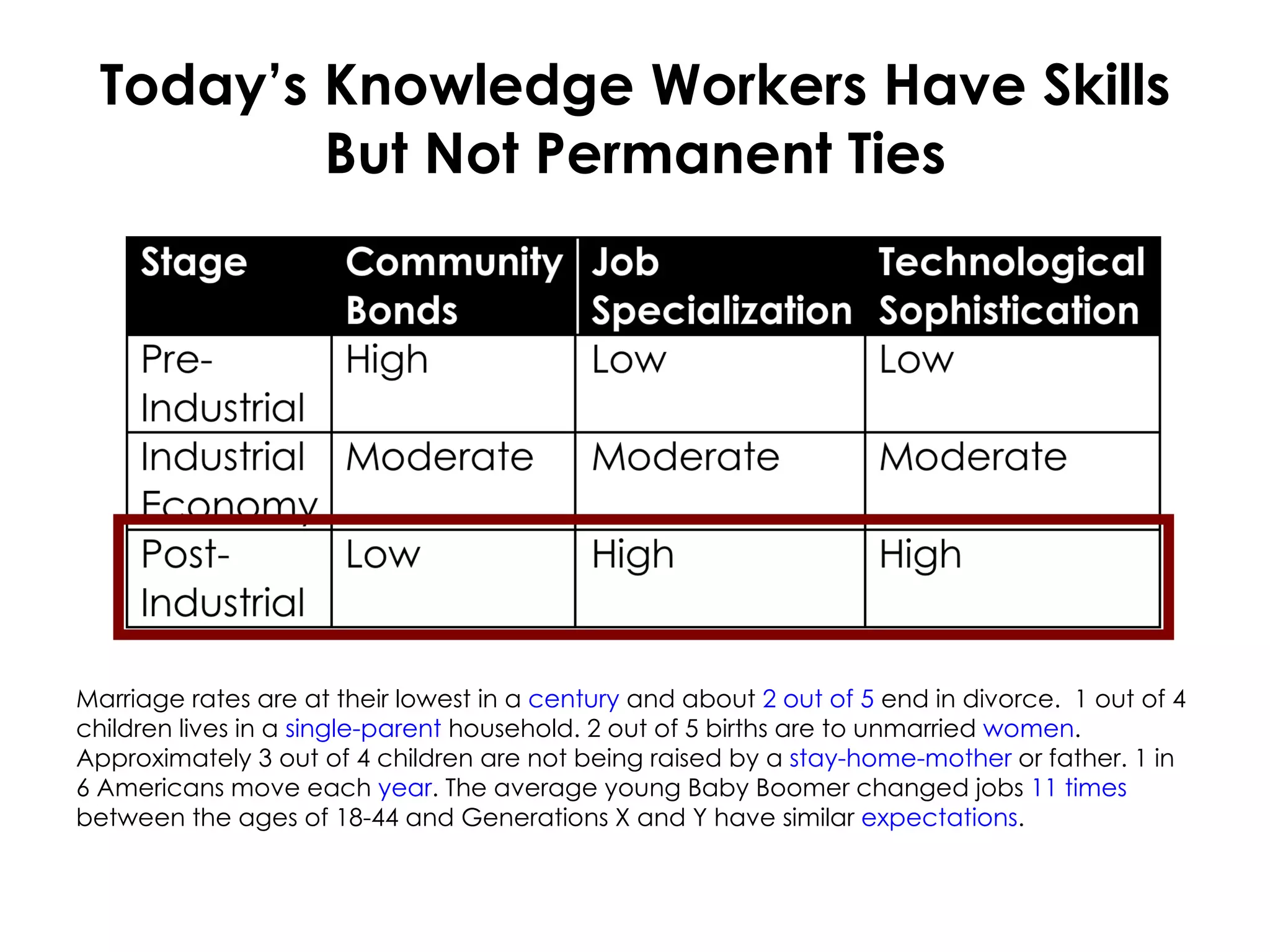
Today’s Knowledge Workers Have Skills But Not Permanent Ties Marriage rates are at their lowest in a  century  and about  2 out of 5  end in divorce.  1 out of 4 children lives in a  single-parent  household. 2 out of 5 births are to unmarried  women . Approximately 3 out of 4 children are not being raised by a  stay-home-mother  or father. 1 in 6 Americans move each  year . The average young Baby Boomer changed jobs  11 times  between the ages of 18-44 and Generations X and Y have similar  expectations .
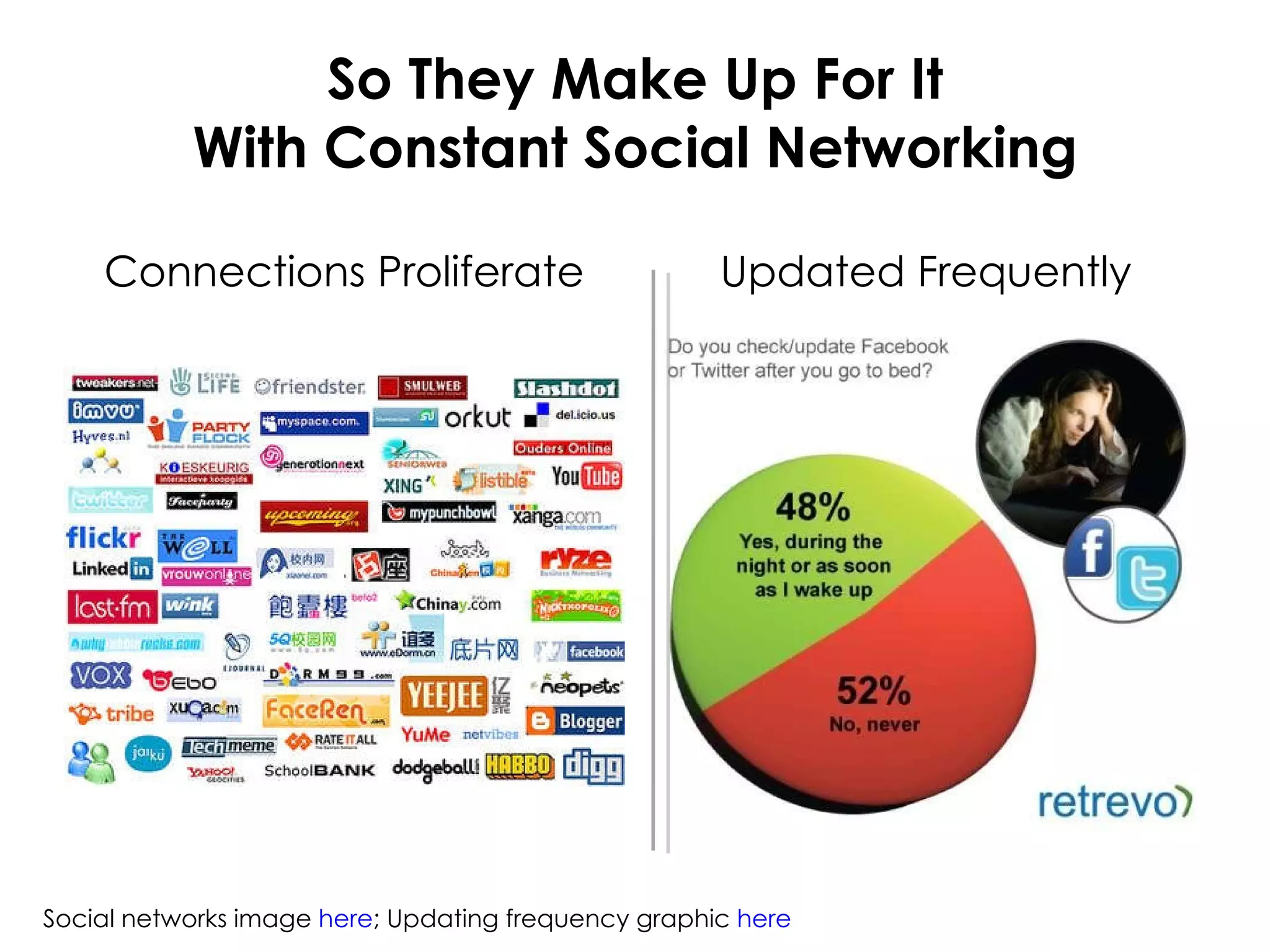
So They Make Up For It With Constant Social Networking Connections Proliferate Updated Frequently Social networks image  here ; Updating frequency graphic  here
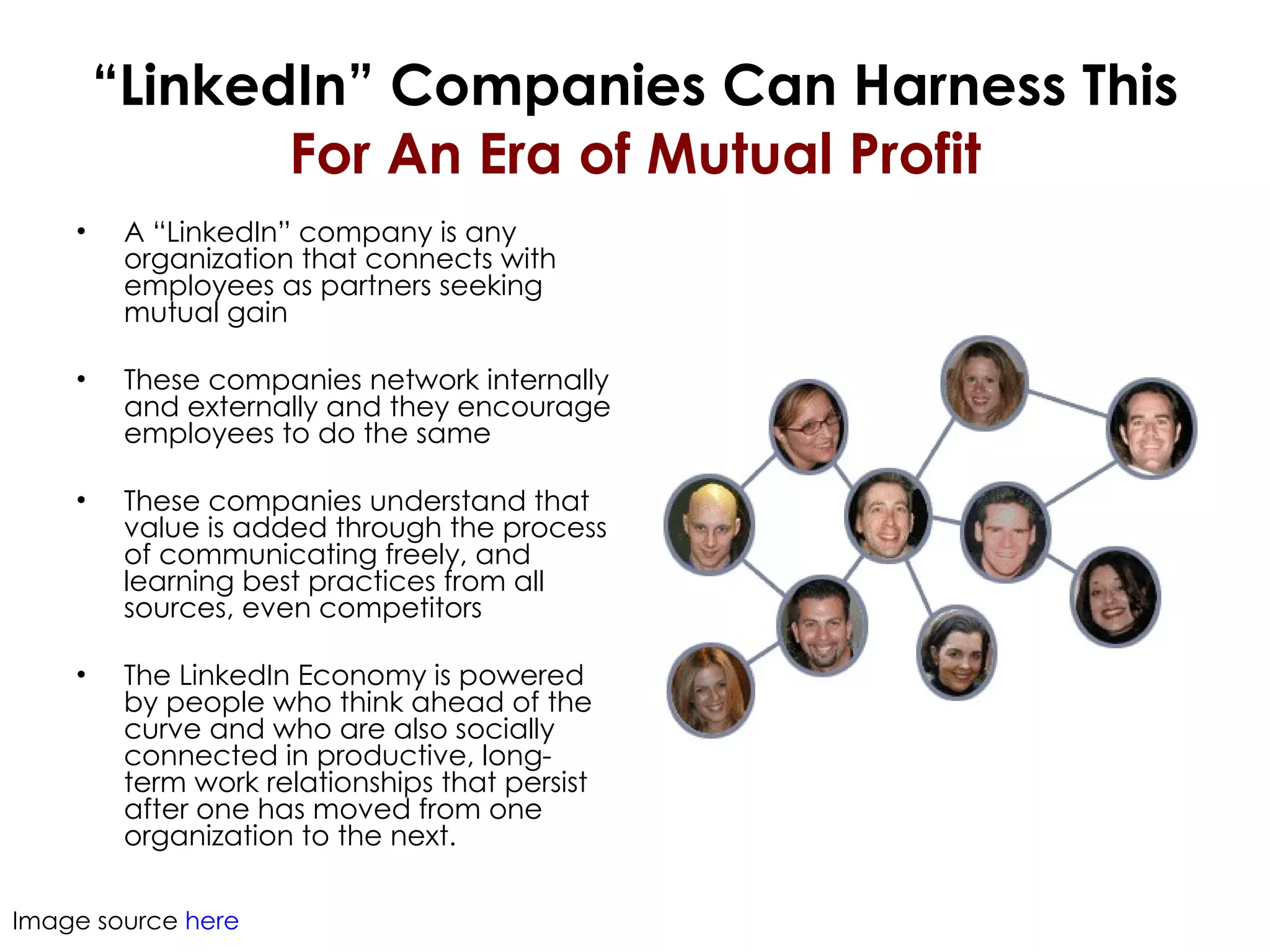
“ LinkedIn” Companies Can Harness This For An Era of Mutual Profit A “LinkedIn” company is any organization that connects with employees as partners seeking mutual gain These companies network internally and externally and they encourage employees to do the same These companies understand that value is added through the process of communicating freely, and learning best practices from all sources, even competitors The LinkedIn Economy is powered by people who think ahead of the curve and who are also socially connected in productive, long-term work relationships that persist after one has moved from one organization to the next.  Image source  here
How Can They Do It? It is no longer necessary to exploit employees to make a profit. Rather, profit is gained when they are encouraged to self-actualize.  Employee innovation and cost-cutting builds their careers and their employers’ bottom line. Work achievements are bolstered when both sides invest emotionally in the relationship.  To make the most of this opportunity, communicate with employees about what the company’s goals are, how employees can help, what the rewards are, and who exemplifies corporate success.  Image source  here
Good Luck!

Profiting In A LinkedIn Economy

  • 1.
    Profiting In ALinkedIn Economy Dannielle Blumenthal, Ph.D. @thinkbrandfirst July 2011 Please feel free to reuse and adapt this presentation with attribution. All opinions my own.
  • 2.
    E  con  o  my (ɪˈkɒnəmɪ) “ The complex of human activities concerned with the production , distribution , and consumption of goods and services.” Definition from World English Dictionary ; photo by Dave Hoefler
  • 3.
    Economists Ask: “HowDoes The System Sustain Itself?” Family | Education | Healthcare | Politics | Science| Crime| War| Business Image here ; Economic areas of study from Wikipedia ; Source for cycle concept here
  • 4.
    Capitalist Businesses AreMini-Economies Created for Profit Definition of a business here ; Willy Wonka factory image here ; Augustus Gloop image here ; money image here Owner produces/distributes product or service Owner sells to consumer with added fee Owner keeps the difference
  • 5.
    Production In The Industrial (Machine) Age: A Thinking Worker Threatens Profitability Factors of production here ; Definition of surplus value here ; quotation here ; grass image here ; worker image here ; money image here Land (Resources) Labor Capital Factors of Production Until the dawn of the knowledge-based service economy, return on employee investment was win-lose. In return for subsistence wages, employees performed repetitive, un-engaging, often strenuous, sometimes dangerous physical labor. Workers who challenged or deviated from routines created inefficiency. Workers who thought “outside the box” were a threat. The employer’s attitude: “When I want your opinion I’ll give it to you.”
  • 6.
    The Industrial AgeIs Now Over, Product Manufacturing Is Cheap, and Service (Knowledge) Creates Profit. Image source here
  • 7.
    Now That BasicNeeds Are Easily Available, Owners Must Create Consumer Demand Definition adapted from: Wikipedia ; Image source here Using Logic & Emotion
  • 8.
    They Need Thinking Employees To Create Demand and Cut Costs Source: Grant Thorton International Business Report Survey 2009 (most recent); pie chart created using this free tool “ Innovation in the current climate is about making processes more efficient….trying to work smarter.” — Frank Ponsioen, partner, Grant Thornton International
  • 9.
    Thinking Employees Create Strong Brands Michael Porter: 2 kinds of competitive advantage— Cost Differentiation Differentiation advantage derives from strong brand Perceived functional benefit Perceived emotional benefit The stronger the brand the more profitable the consumer: Buys the first time Keeps on buying Willingly pays a premium Buys new brands introduced/endorsed by same owner Michael Porter’s model here ; Image source here
  • 10.
    Throughout The BusinessCycle, Profit Is Created Through Brainpower Production: During the Industrial Age, employers made money by manipulating vulnerable employees into submission In the information age, they make money by harnessing employees’ brainpower on their behalf Consumption: Business owners depend on employees to cut costs and create customer demand The brands employees create attract customers to pay more and buy frequently Customers willingly pay a premium based on the perception of value Definition of profit here ; image source here
  • 11.
    Today’s Knowledge WorkersHave Skills But Not Permanent Ties Marriage rates are at their lowest in a century and about 2 out of 5 end in divorce. 1 out of 4 children lives in a single-parent household. 2 out of 5 births are to unmarried women . Approximately 3 out of 4 children are not being raised by a stay-home-mother or father. 1 in 6 Americans move each year . The average young Baby Boomer changed jobs 11 times between the ages of 18-44 and Generations X and Y have similar expectations .
  • 12.
    So They MakeUp For It With Constant Social Networking Connections Proliferate Updated Frequently Social networks image here ; Updating frequency graphic here
  • 13.
    “ LinkedIn” CompaniesCan Harness This For An Era of Mutual Profit A “LinkedIn” company is any organization that connects with employees as partners seeking mutual gain These companies network internally and externally and they encourage employees to do the same These companies understand that value is added through the process of communicating freely, and learning best practices from all sources, even competitors The LinkedIn Economy is powered by people who think ahead of the curve and who are also socially connected in productive, long-term work relationships that persist after one has moved from one organization to the next. Image source here
  • 14.
    How Can TheyDo It? It is no longer necessary to exploit employees to make a profit. Rather, profit is gained when they are encouraged to self-actualize. Employee innovation and cost-cutting builds their careers and their employers’ bottom line. Work achievements are bolstered when both sides invest emotionally in the relationship. To make the most of this opportunity, communicate with employees about what the company’s goals are, how employees can help, what the rewards are, and who exemplifies corporate success. Image source here
  • 15.

Editor's Notes

  • #4 http://www.duxcollege.com.au/images/news/scaling_12.jpg