Download to read offline
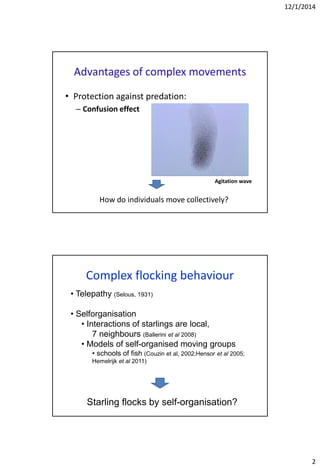
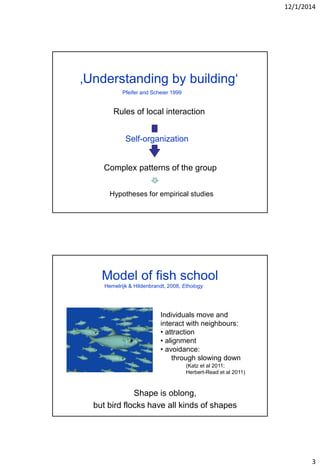
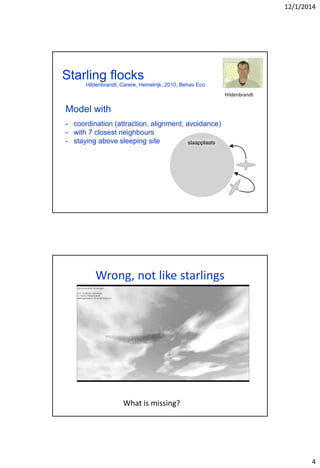
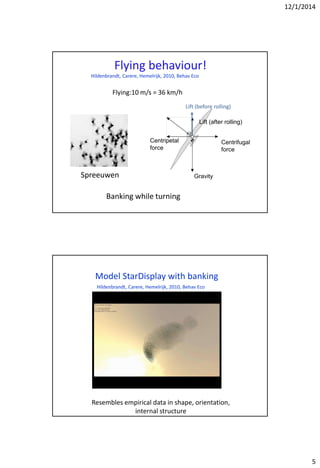
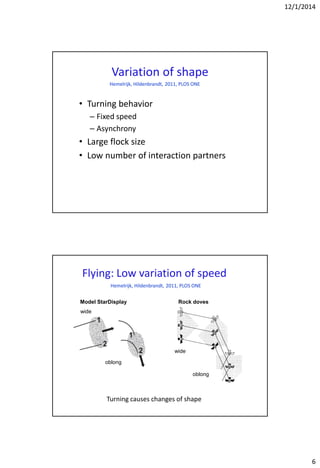
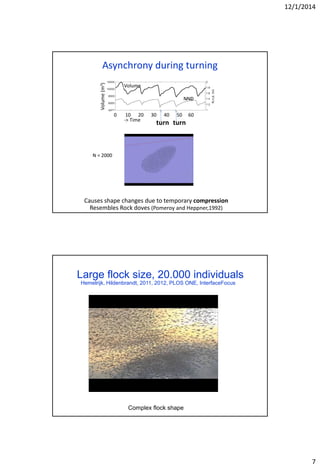
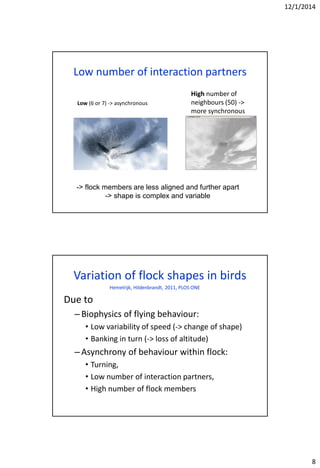
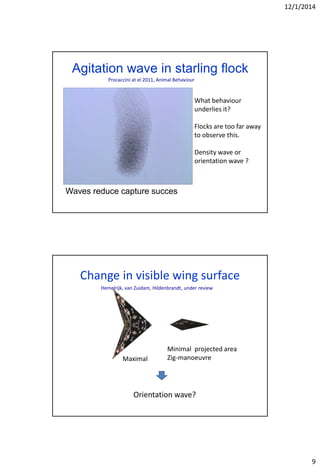
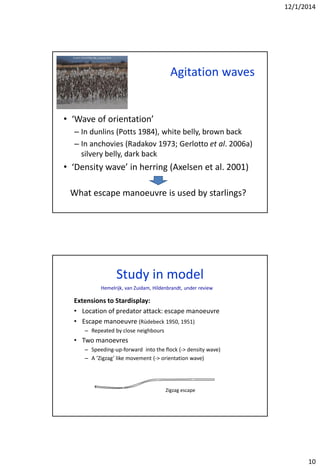
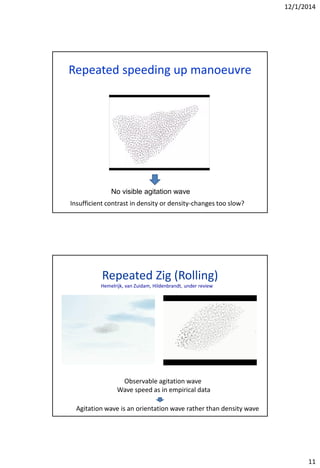
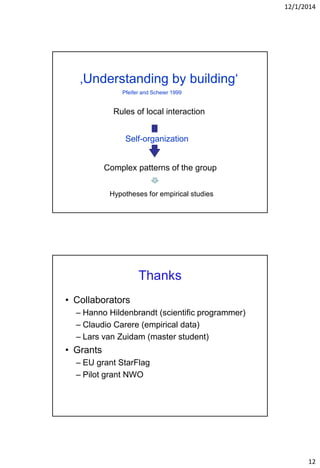

1. This document discusses research into how starling flocks form complex flocking behaviors through self-organization and local interactions between individuals. 2. A computer model called StarDisplay was able to replicate the shapes, internal structures, and variations in shape of empirical starling flocks by including behaviors like banking while turning and differences in speed. 3. The model also showed that asynchronous behaviors during turning, large flock sizes, and fewer interaction partners between individuals could lead to more complex and variable flock shapes, matching observations of birds.


