PROCESS OF FORMATION
02
TERM 3, WEEK 2
We are learning about how landscapes and landforms are formed.
We will know the different processes that happen when landscapes and lanforms
are created and changed.
LEARNING
INTENTION
The Formation of Landforms:
The Earth's surface is diverse and strange. It is also always changing.
There are processes at work that continuously sculpt and change the
landscape. In future, the Earth's surface will look very different from the way
that it looks today.
• Changes can be slow (e.g. The formation of Mountains)
• Changes can be rapid (e.g. An earthquake can quickly change the Earth's
surface)
https://www.clickview.net/secondary/videos/7336963/the-formation-of-landforms
The Types of Changes that occur
• There are two types of changes that occur that create and alter
landforms. These are:
1. Exogenic processes (happen on the outside of Earth's surface)
2. Endogenic processes (happen inside the Earth's surface)
Exogenic Processes
• Exogenic processes occur on the outside of the Earth's surface.
• There are three types of external processes that occur.
1. Weathering - the break down of rocks into smaller pieces due to temperature
changes, ice, roots of plants and the actions of living beings.
2. Erosion – the wearing away of the Earth's surface by water, wind and ice.
3. Sedimentation - The fragments and small pieces of rocks that settle at the bottom of
liquid and are deposited because they can no longer be dragged.
Weathering and erosion form valleys, cliffs, gulfs and canyons.
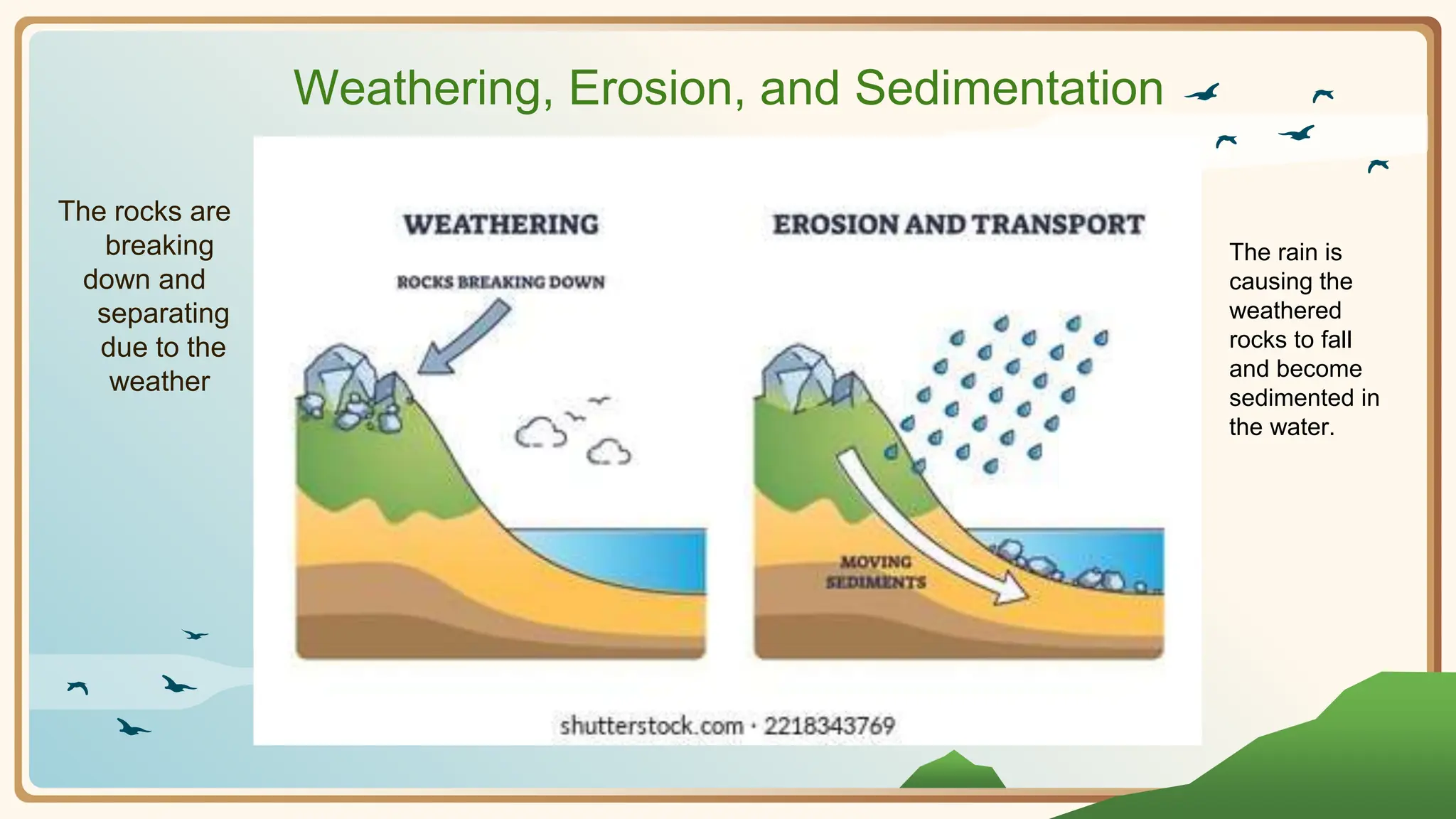
Weathering, Erosion, and Sedimentation
The rocks are
breaking
down and
separating
due to the
weather
The rain is
causing the
weathered
rocks to fall
and become
sedimented in
the water.
Endogenic Processes
• Endogenic processes occur underneath the Earth's surface.
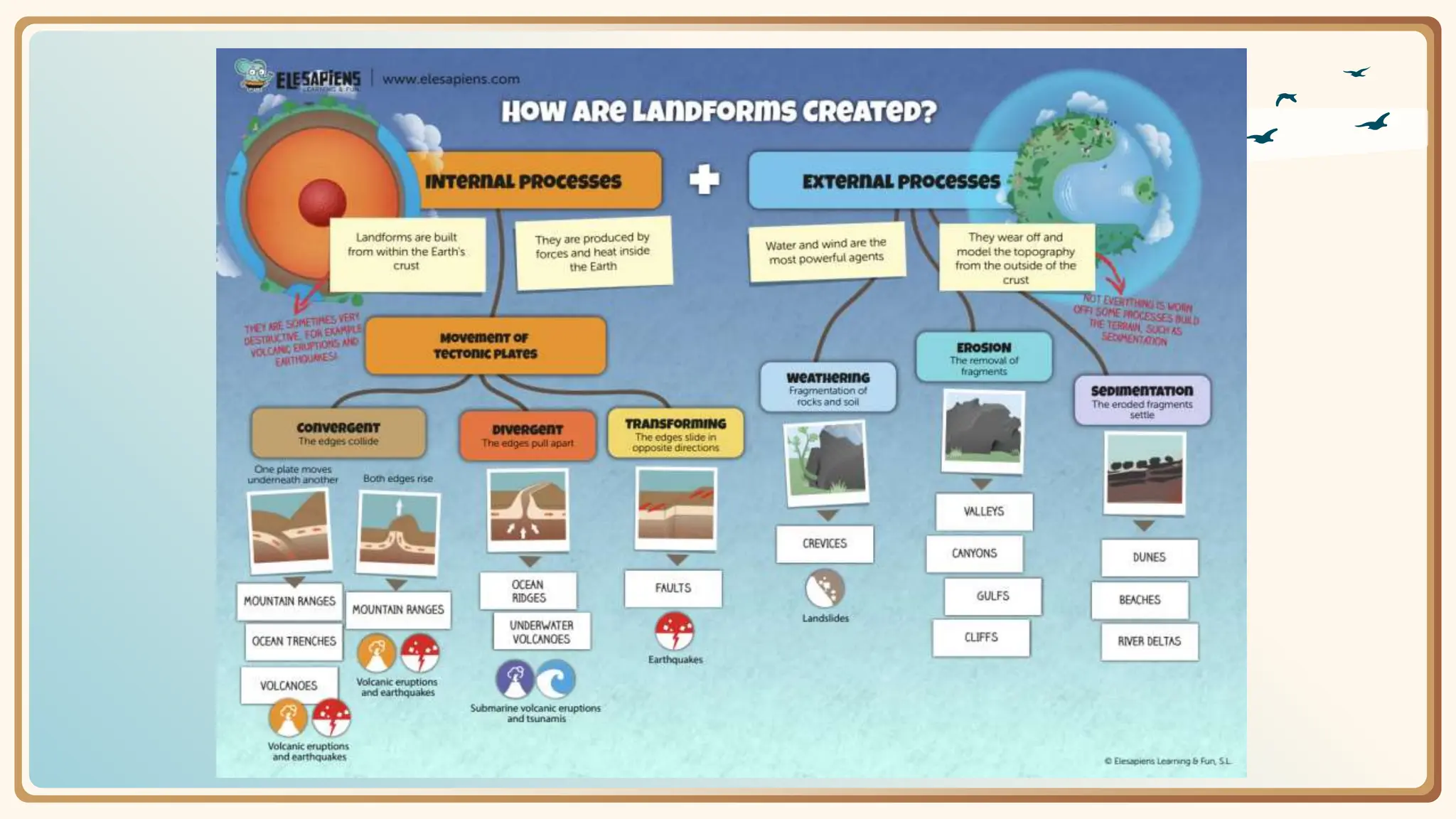
• Landforms are built from within the Earth's crust. They are produced by forces and
heat inside the Earth's crust. This causes the tectonic plates to move, creating a
range of landforms.
1. Convergent: When the edges collide.
e.g. Volcanoes, earthquakes, mountain ranges are formed
2. Divergent: When the edges pull apart.
e.g. Underwater volcanic eruptions and tsunamis
3. Transforming: When the edges slide in opposite directions.
E.g. Earthquakes
https://www.youtube.com/watch?v=8iaXljsMItY
A video to recap:

Processes that affect landscapes and landforms PowerPoint

  • 1.
  • 2.
    We are learningabout how landscapes and landforms are formed. We will know the different processes that happen when landscapes and lanforms are created and changed. LEARNING INTENTION
  • 3.
    The Formation ofLandforms: The Earth's surface is diverse and strange. It is also always changing. There are processes at work that continuously sculpt and change the landscape. In future, the Earth's surface will look very different from the way that it looks today. • Changes can be slow (e.g. The formation of Mountains) • Changes can be rapid (e.g. An earthquake can quickly change the Earth's surface) https://www.clickview.net/secondary/videos/7336963/the-formation-of-landforms
  • 4.
    The Types ofChanges that occur • There are two types of changes that occur that create and alter landforms. These are: 1. Exogenic processes (happen on the outside of Earth's surface) 2. Endogenic processes (happen inside the Earth's surface)
  • 5.
    Exogenic Processes • Exogenicprocesses occur on the outside of the Earth's surface. • There are three types of external processes that occur. 1. Weathering - the break down of rocks into smaller pieces due to temperature changes, ice, roots of plants and the actions of living beings. 2. Erosion – the wearing away of the Earth's surface by water, wind and ice. 3. Sedimentation - The fragments and small pieces of rocks that settle at the bottom of liquid and are deposited because they can no longer be dragged. Weathering and erosion form valleys, cliffs, gulfs and canyons.
  • 6.
    Weathering, Erosion, andSedimentation The rocks are breaking down and separating due to the weather The rain is causing the weathered rocks to fall and become sedimented in the water.
  • 7.
    Endogenic Processes • Endogenicprocesses occur underneath the Earth's surface. • Landforms are built from within the Earth's crust. They are produced by forces and heat inside the Earth's crust. This causes the tectonic plates to move, creating a range of landforms. 1. Convergent: When the edges collide. e.g. Volcanoes, earthquakes, mountain ranges are formed 2. Divergent: When the edges pull apart. e.g. Underwater volcanic eruptions and tsunamis 3. Transforming: When the edges slide in opposite directions. E.g. Earthquakes
  • 9.