Chapter 14
Epilogue

prof.dr.ir. Wil van der Aalst
www.processmining.org
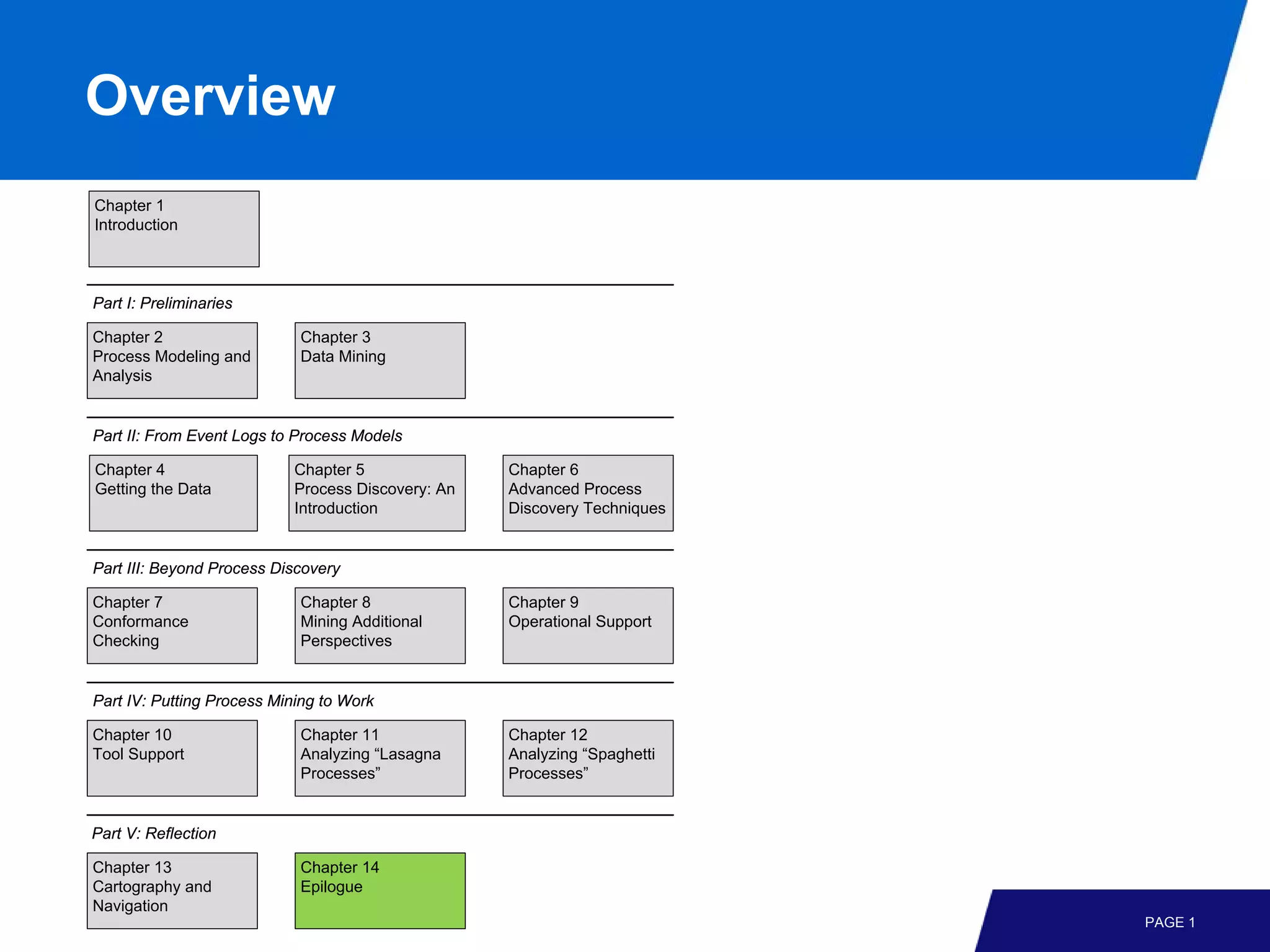
Overview
Chapter 1
Introduction


Part I: Preliminaries

Chapter 2                   Chapter 3
Process Modeling and        Data Mining
Analysis


Part II: From Event Logs to Process Models

Chapter 4                  Chapter 5               Chapter 6
Getting the Data           Process Discovery: An   Advanced Process
                           Introduction            Discovery Techniques


Part III: Beyond Process Discovery

Chapter 7                   Chapter 8              Chapter 9
Conformance                 Mining Additional      Operational Support
Checking                    Perspectives


Part IV: Putting Process Mining to Work

Chapter 10                  Chapter 11             Chapter 12
Tool Support                Analyzing “Lasagna     Analyzing “Spaghetti
                            Processes”             Processes”


Part V: Reflection

Chapter 13                  Chapter 14
Cartography and             Epilogue
Navigation
                                                                          PAGE 1
Process Mining: A bridge between data
mining and business process management


                                    PAGE 2
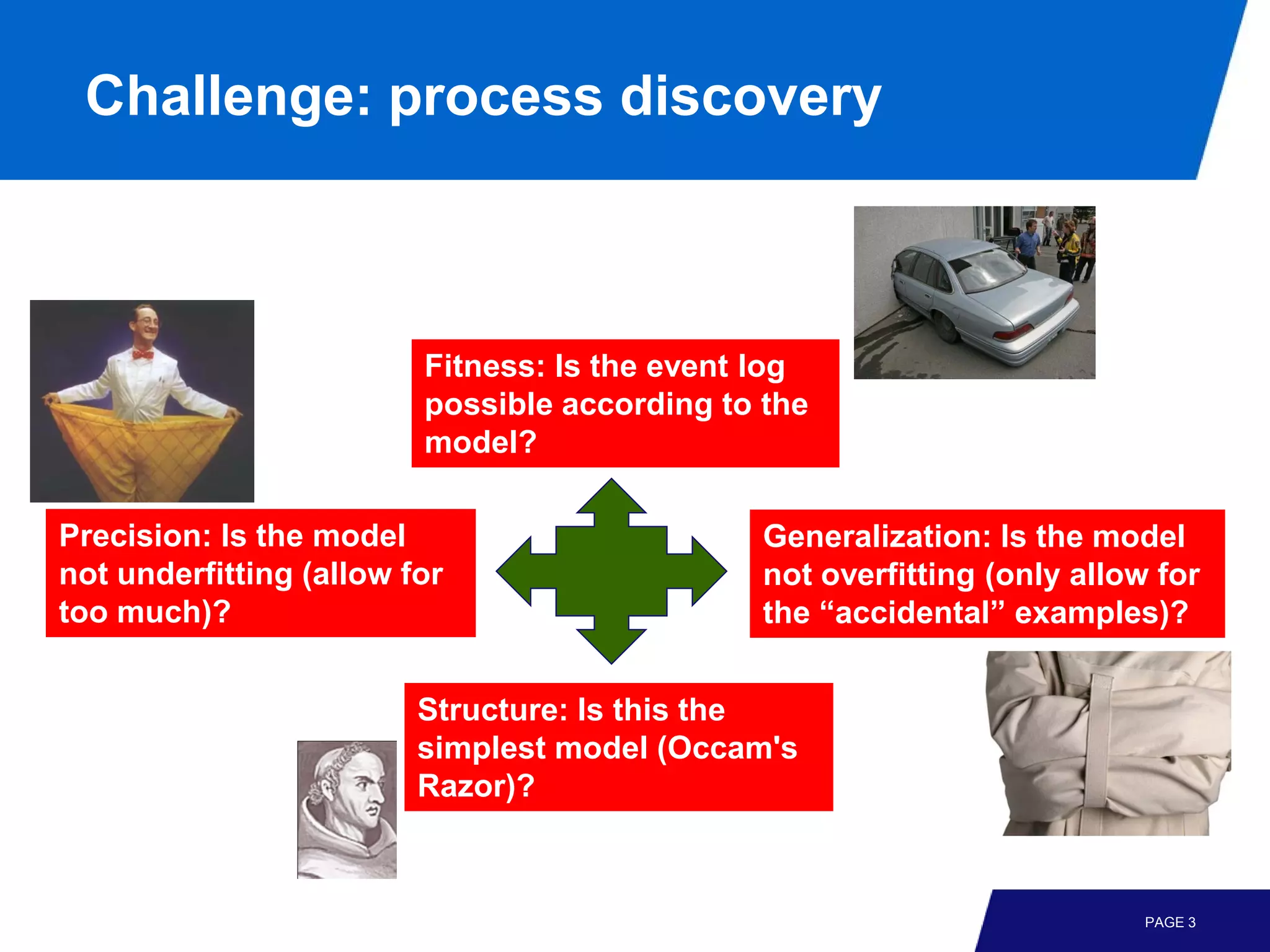
Challenge: process discovery


                         Fitness: Is the event log
                         possible according to the
                         model?

Precision: Is the model                        Generalization: Is the model
not underfitting (allow for                    not overfitting (only allow for
too much)?                                     the “accidental” examples)?


                         Structure: Is this the
                         simplest model (Occam's
                         Razor)?


                                                                          PAGE 3
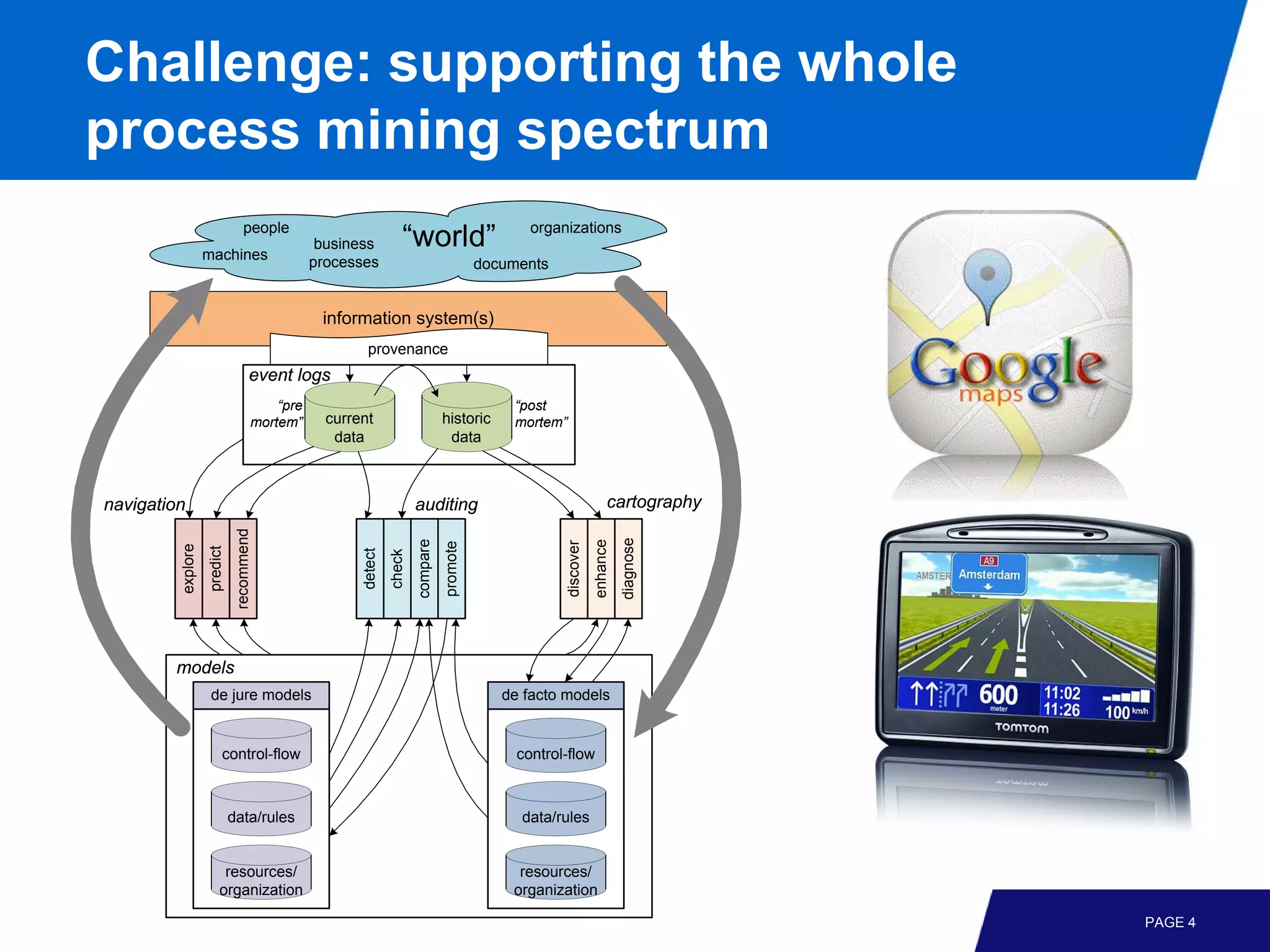
Challenge: supporting the whole
process mining spectrum
                                  people                                                            organizations
                   machines
                                                  business           “world”
                                                 processes                                   documents


                                                  information system(s)
                                                         provenance
                                     event logs
                                          “pre                                                   “post
                                      mortem”      current                         historic      mortem”
                                                    data                            data


navigation                                                               auditing                                          cartography
                              recommend


                                                                                                                                diagnose
                                                                         compare


                                                                                                                      enhance
                                                                                                           discover
                                                                                   promote
         explore
                   predict


                                                        detect
                                                                 check


        models
                    de jure models                                                              de facto models


                         control-flow                                                             control-flow


                             data/rules                                                           data/rules


                        resources/                                                                resources/
                       organization                                                              organization

                                                                                                                                           PAGE 4
Start Today!

• The threshold to start an (off-line) process mining
  project is really low.
• Most organizations have event data hidden in their
  systems.
• Once the data is located, conversion is typically easy.
  For instance, software tools such as ProMimport, Nitro,
  XESame, and OpenXES support the conversion of
  different sources to MXML or XES.
• The freely available open-source process mining tool
  ProM can be downloaded from www.processmining.org.
  ProM can be applied to any MXML or XES file and
  supports all of the process mining techniques
  mentioned.
                                                     PAGE 5
Experience the “magic” of
   process mining, i.e.,
discovering and improving
processes based on facts
    rather than fiction!


                            PAGE 6
PAGE 7

Process Mining - Chapter 14 - Epilogue

  • 1.
    Chapter 14 Epilogue prof.dr.ir. Wilvan der Aalst www.processmining.org
  • 2.
    Overview Chapter 1 Introduction Part I:Preliminaries Chapter 2 Chapter 3 Process Modeling and Data Mining Analysis Part II: From Event Logs to Process Models Chapter 4 Chapter 5 Chapter 6 Getting the Data Process Discovery: An Advanced Process Introduction Discovery Techniques Part III: Beyond Process Discovery Chapter 7 Chapter 8 Chapter 9 Conformance Mining Additional Operational Support Checking Perspectives Part IV: Putting Process Mining to Work Chapter 10 Chapter 11 Chapter 12 Tool Support Analyzing “Lasagna Analyzing “Spaghetti Processes” Processes” Part V: Reflection Chapter 13 Chapter 14 Cartography and Epilogue Navigation PAGE 1
  • 3.
    Process Mining: Abridge between data mining and business process management PAGE 2
  • 4.
    Challenge: process discovery Fitness: Is the event log possible according to the model? Precision: Is the model Generalization: Is the model not underfitting (allow for not overfitting (only allow for too much)? the “accidental” examples)? Structure: Is this the simplest model (Occam's Razor)? PAGE 3
  • 5.
    Challenge: supporting thewhole process mining spectrum people organizations machines business “world” processes documents information system(s) provenance event logs “pre “post mortem” current historic mortem” data data navigation auditing cartography recommend diagnose compare enhance discover promote explore predict detect check models de jure models de facto models control-flow control-flow data/rules data/rules resources/ resources/ organization organization PAGE 4
  • 6.
    Start Today! • Thethreshold to start an (off-line) process mining project is really low. • Most organizations have event data hidden in their systems. • Once the data is located, conversion is typically easy. For instance, software tools such as ProMimport, Nitro, XESame, and OpenXES support the conversion of different sources to MXML or XES. • The freely available open-source process mining tool ProM can be downloaded from www.processmining.org. ProM can be applied to any MXML or XES file and supports all of the process mining techniques mentioned. PAGE 5
  • 7.
    Experience the “magic”of process mining, i.e., discovering and improving processes based on facts rather than fiction! PAGE 6
  • 8.