NEW PRACTICES &
TECHNOLOGIES SUPPORTING
PIPELINE ASSET LIFE-CYCLE
MANAGEMENT
Overview of Integrity
          Program


          Monterrey
          November 2009


Confidential
Program Overview


Program Scope
Pemex Refining is in the process
of implementing a best practices
multi-year integrity management
program for it’s more than
14,000 km of hazardous liquids
and crude oil pipelines
Program Overview


      Objective
      The purpose is to improve and
      maintain the safe, reliable
      operation of the pipeline system
      through risk based management
      and execution of integrity
      activities


Confidential
Program Overview


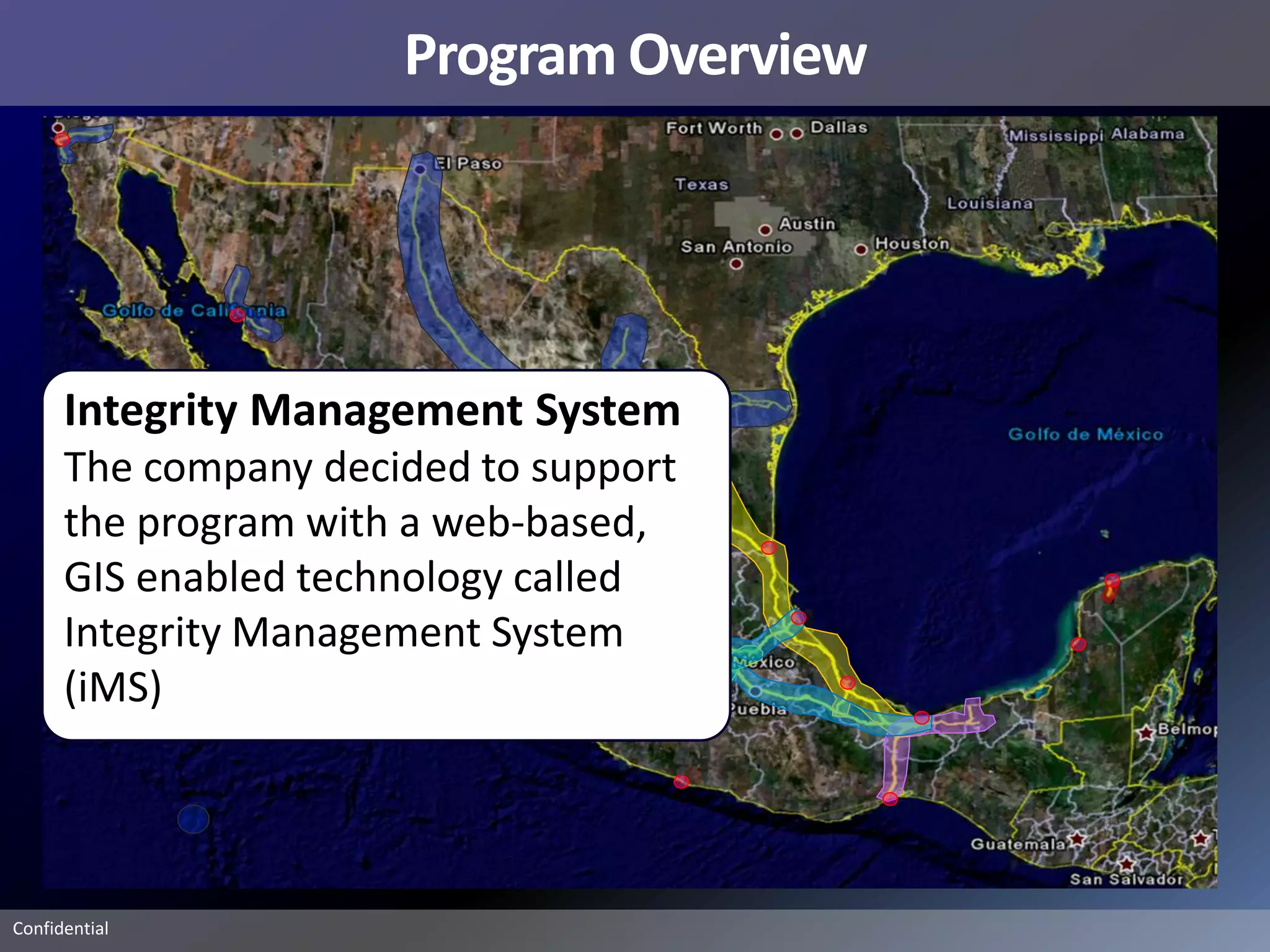
      Integrity Management System
      The company decided to support
      the program with a web-based,
      GIS enabled technology called
      Integrity Management System
      (iMS)


Confidential
Program Overview


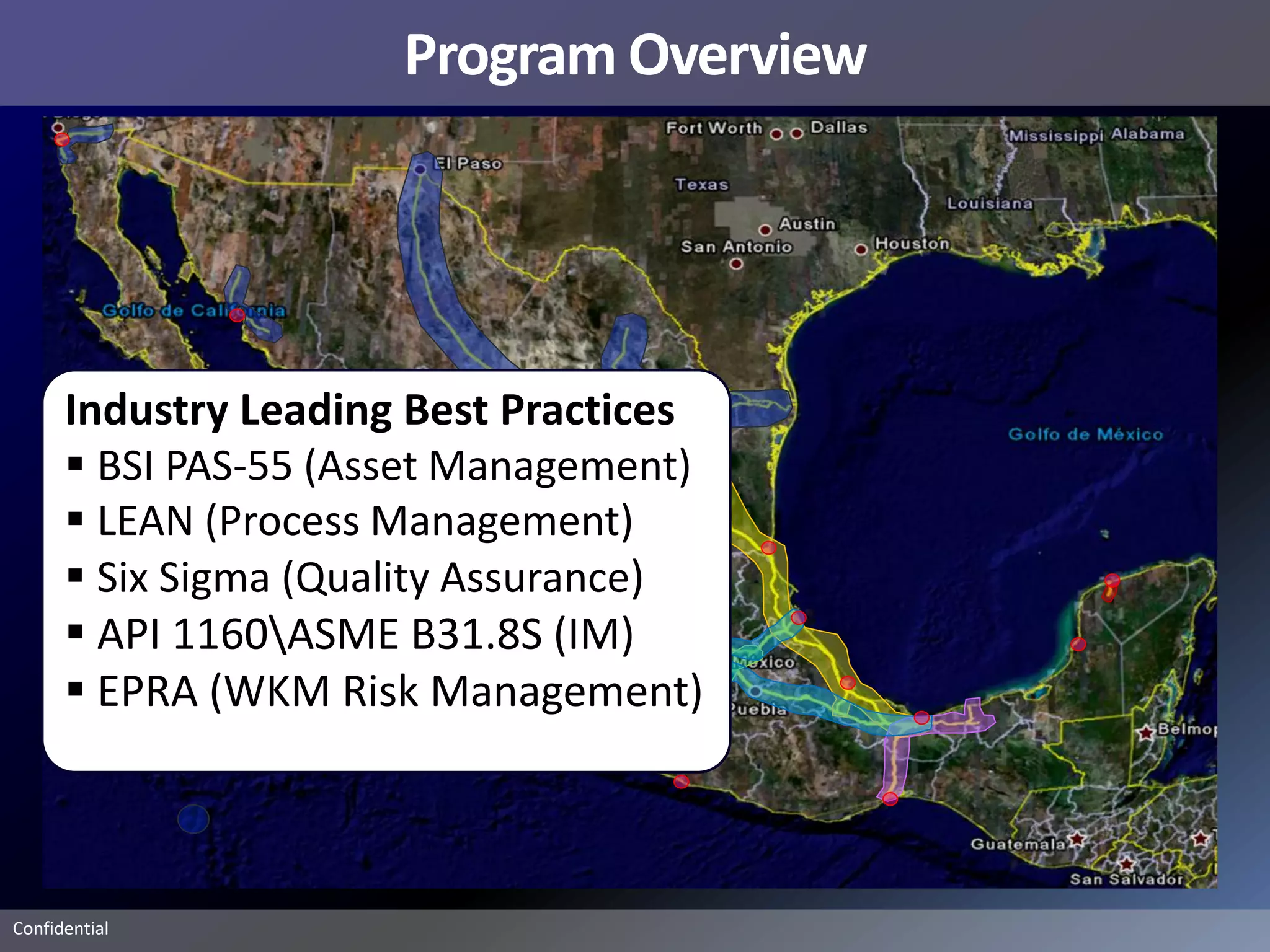
      Industry Leading Best Practices
       BSI PAS-55 (Asset Management)
       LEAN (Process Management)
       Six Sigma (Quality Assurance)
       API 1160ASME B31.8S (IM)
       EPRA (WKM Risk Management)


Confidential
Program Overview


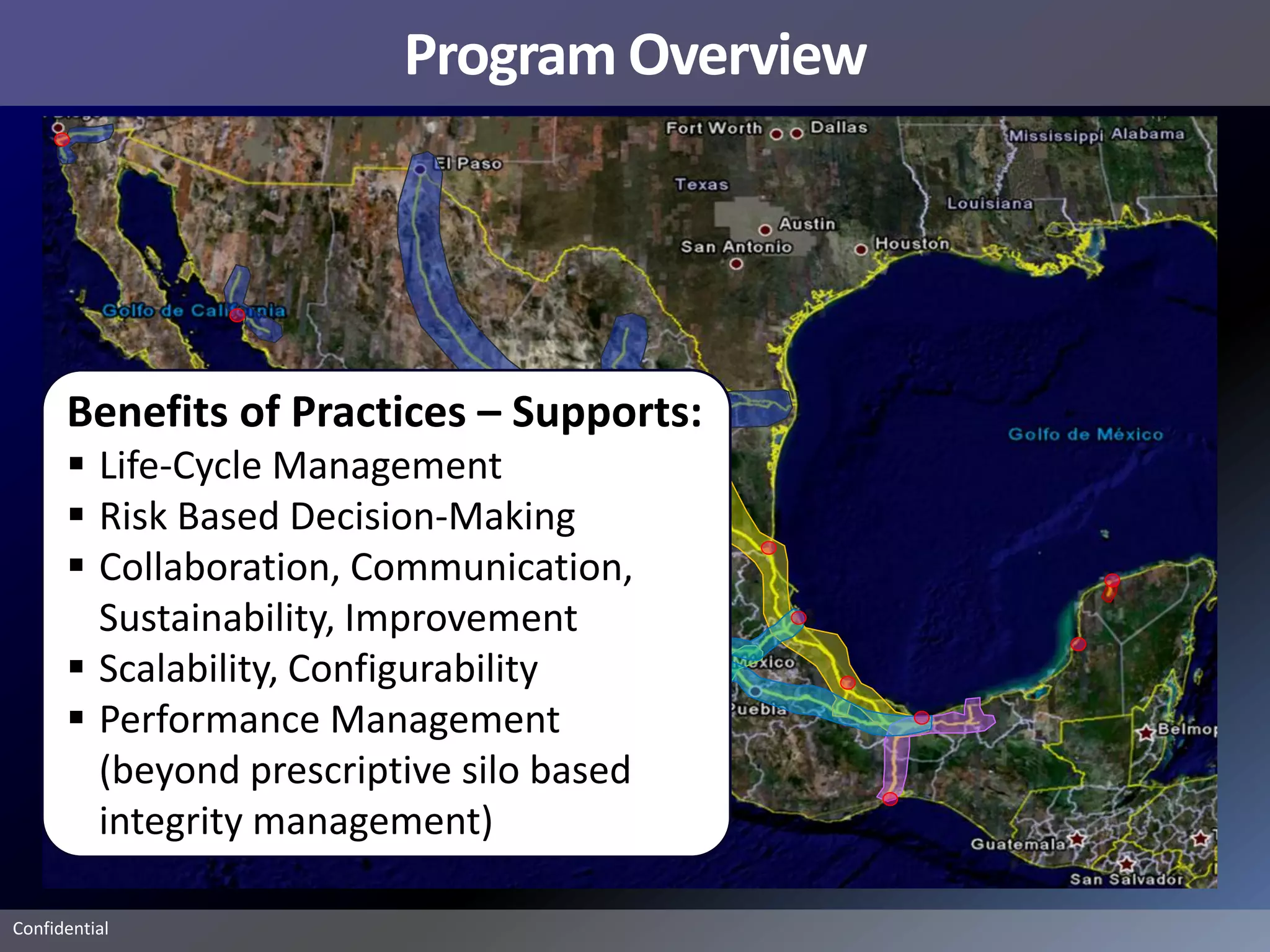
      Benefits of Practices – Supports:
       Life-Cycle Management
       Risk Based Decision-Making
       Collaboration, Communication,
        Sustainability, Improvement
       Scalability, Configurability
       Performance Management
        (beyond prescriptive silo based
        integrity management)

Confidential
Asset Management
          Framework


          Monterrey
          November 2009


Confidential
Asset Management Framework
                                       BSI PAS-55

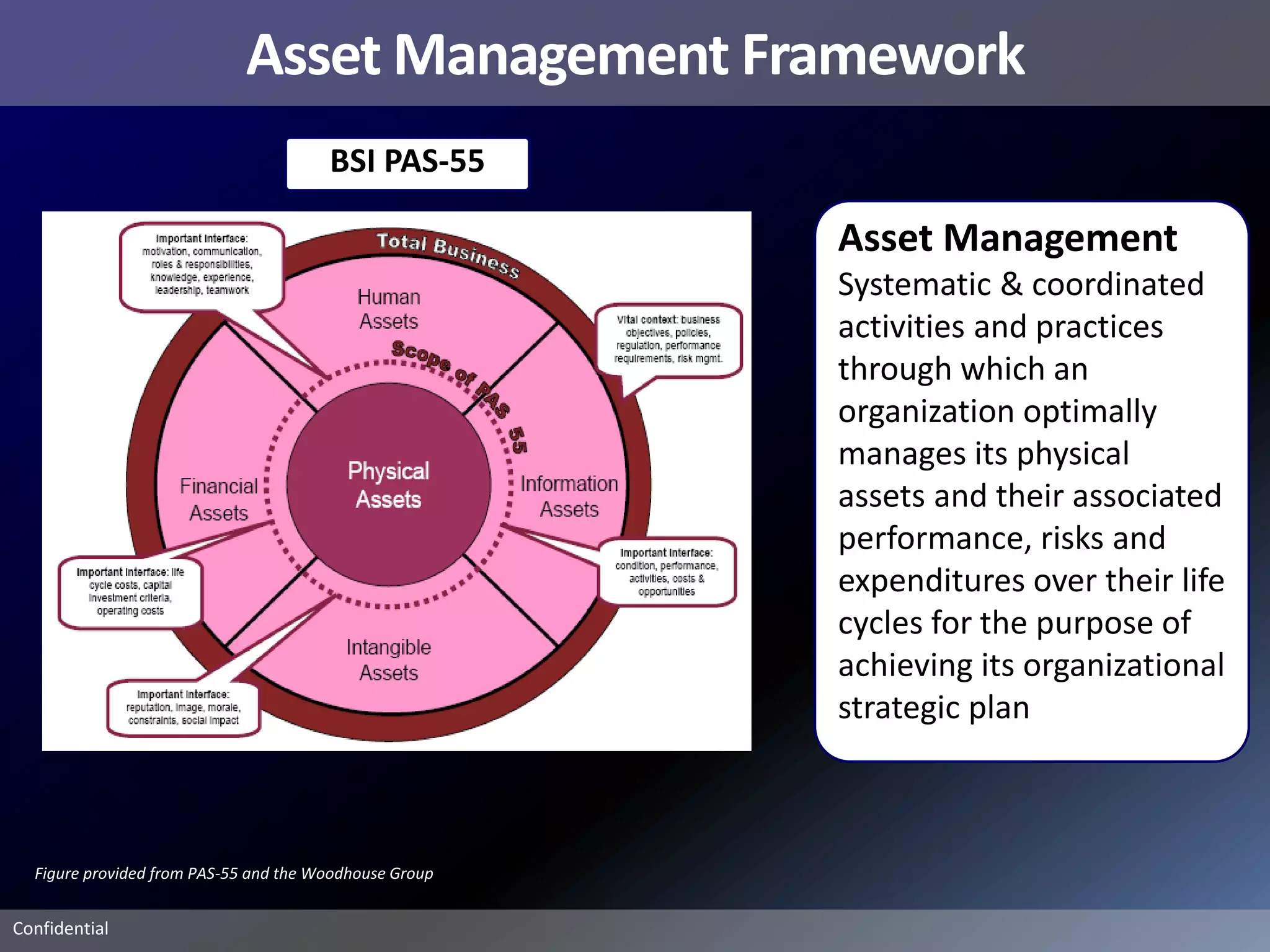
                                                        Asset Management
                                                        Systematic & coordinated
                                                        activities and practices
                                                        through which an
                                                        organization optimally
                                                        manages its physical
                                                        assets and their associated
                                                        performance, risks and
                                                        expenditures over their life
                                                        cycles for the purpose of
                                                        achieving its organizational
                                                        strategic plan


  Figure provided from PAS-55 and the Woodhouse Group


Confidential
Asset Management Framework

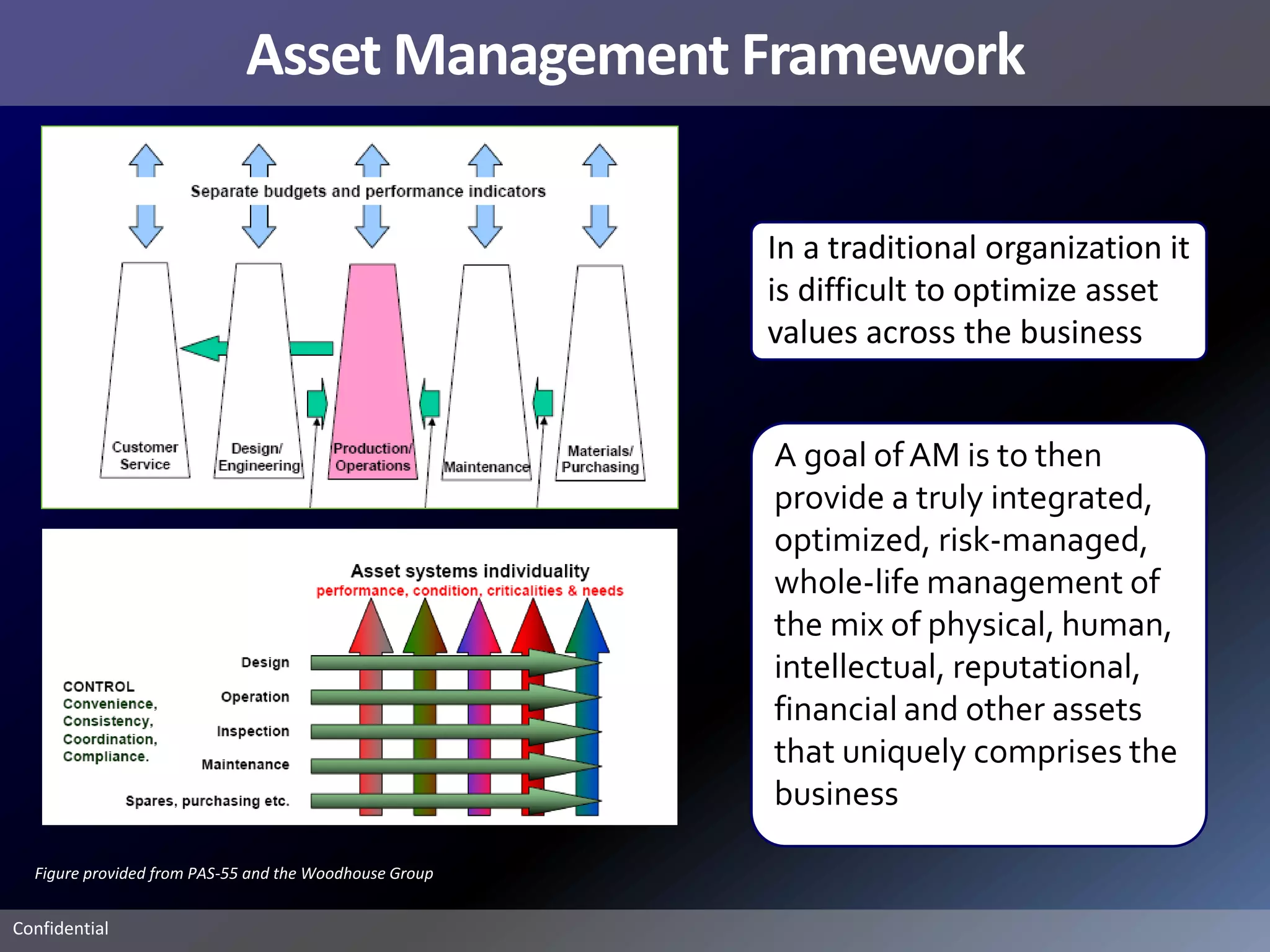
                                                        In a traditional organization it
                                                        is difficult to optimize asset
                                                        values across the business


                                                        A goal of AM is to then
                                                        provide a truly integrated,
                                                        optimized, risk-managed,
                                                        whole-life management of
                                                        the mix of physical, human,
                                                        intellectual, reputational,
                                                        financial and other assets
                                                        that uniquely comprises the
                                                        business

  Figure provided from PAS-55 and the Woodhouse Group


Confidential
Asset Management Framework

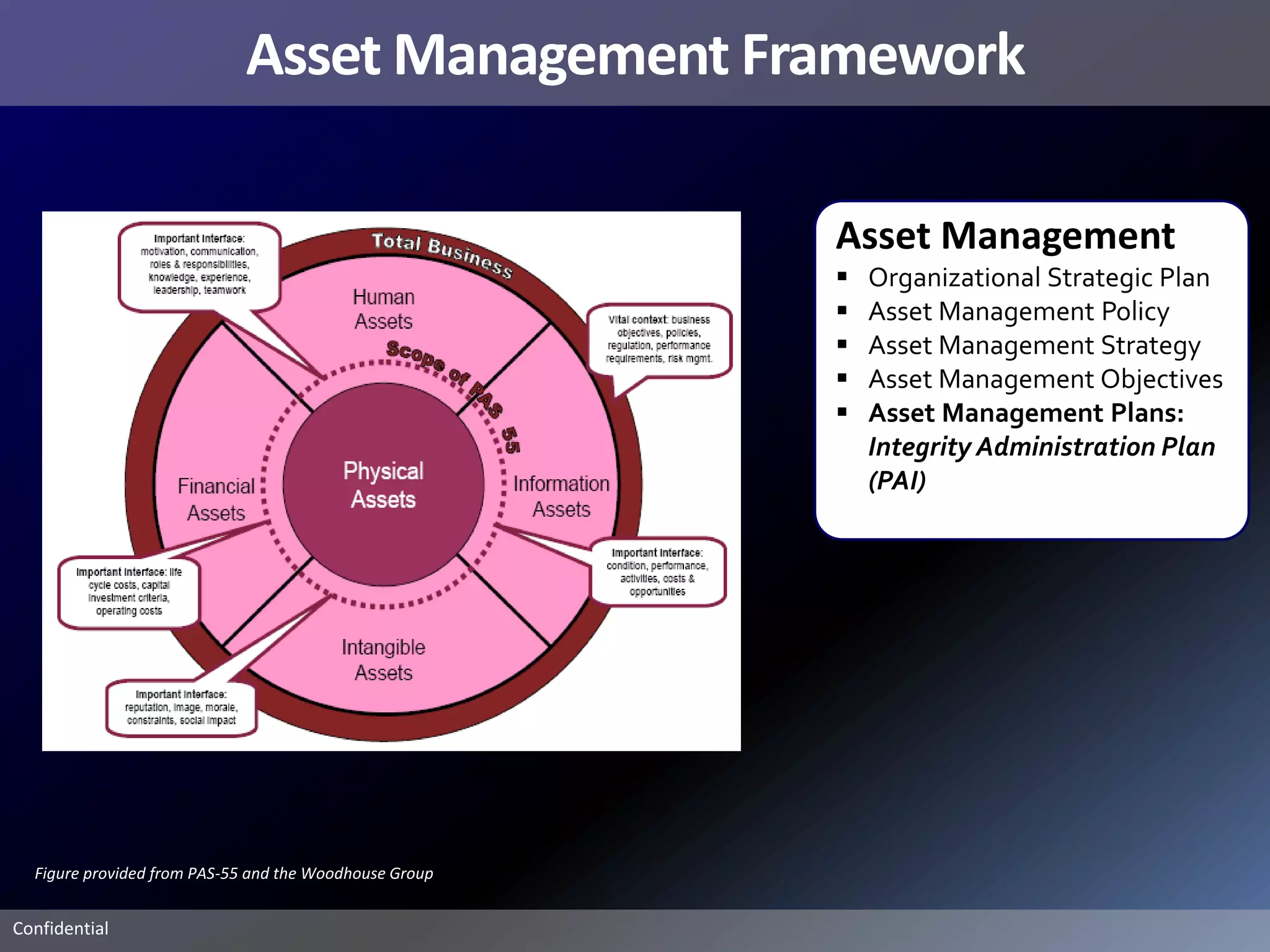
                                                        Asset Management
                                                           Organizational Strategic Plan
                                                           Asset Management Policy
                                                           Asset Management Strategy
                                                           Asset Management Objectives
                                                           Asset Management Plans:
                                                            Integrity Administration Plan
                                                            (PAI)


  Figure provided from PAS-55 and the Woodhouse Group


Confidential
Asset Management Framework

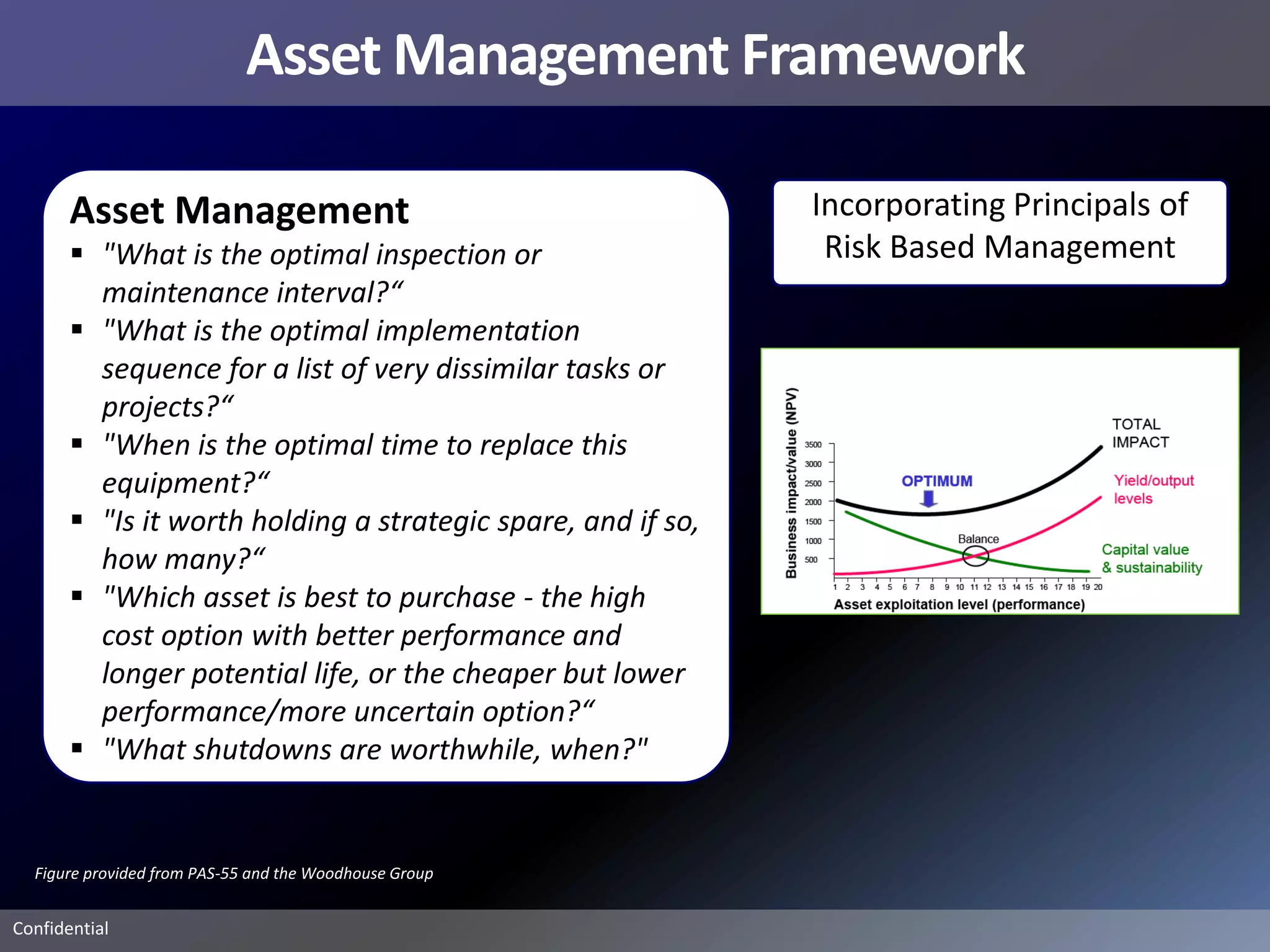
       Asset Management                                       Incorporating Principals of
        "What is the optimal inspection or                    Risk Based Management
         maintenance interval?“
        "What is the optimal implementation
         sequence for a list of very dissimilar tasks or
         projects?“
        "When is the optimal time to replace this
         equipment?“
        "Is it worth holding a strategic spare, and if so,
         how many?“
        "Which asset is best to purchase - the high
         cost option with better performance and
         longer potential life, or the cheaper but lower
         performance/more uncertain option?“
        "What shutdowns are worthwhile, when?"


  Figure provided from PAS-55 and the Woodhouse Group


Confidential
Asset Management Framework
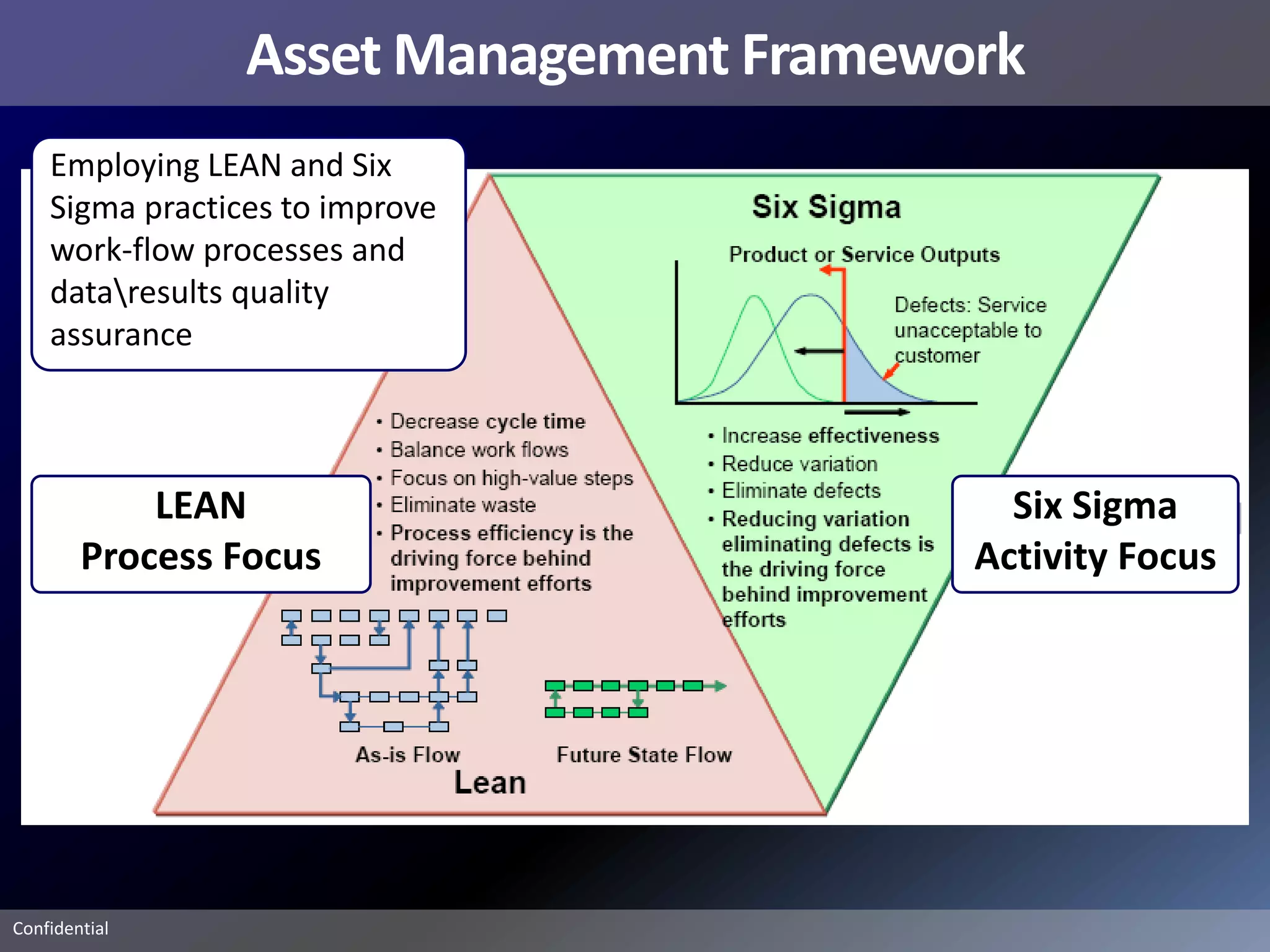
    Employing LEAN and Six
    Sigma practices to improve
    work-flow processes and
    dataresults quality
    assurance


            LEAN                           Six Sigma
        Process Focus                    Activity Focus


Confidential
Process Management

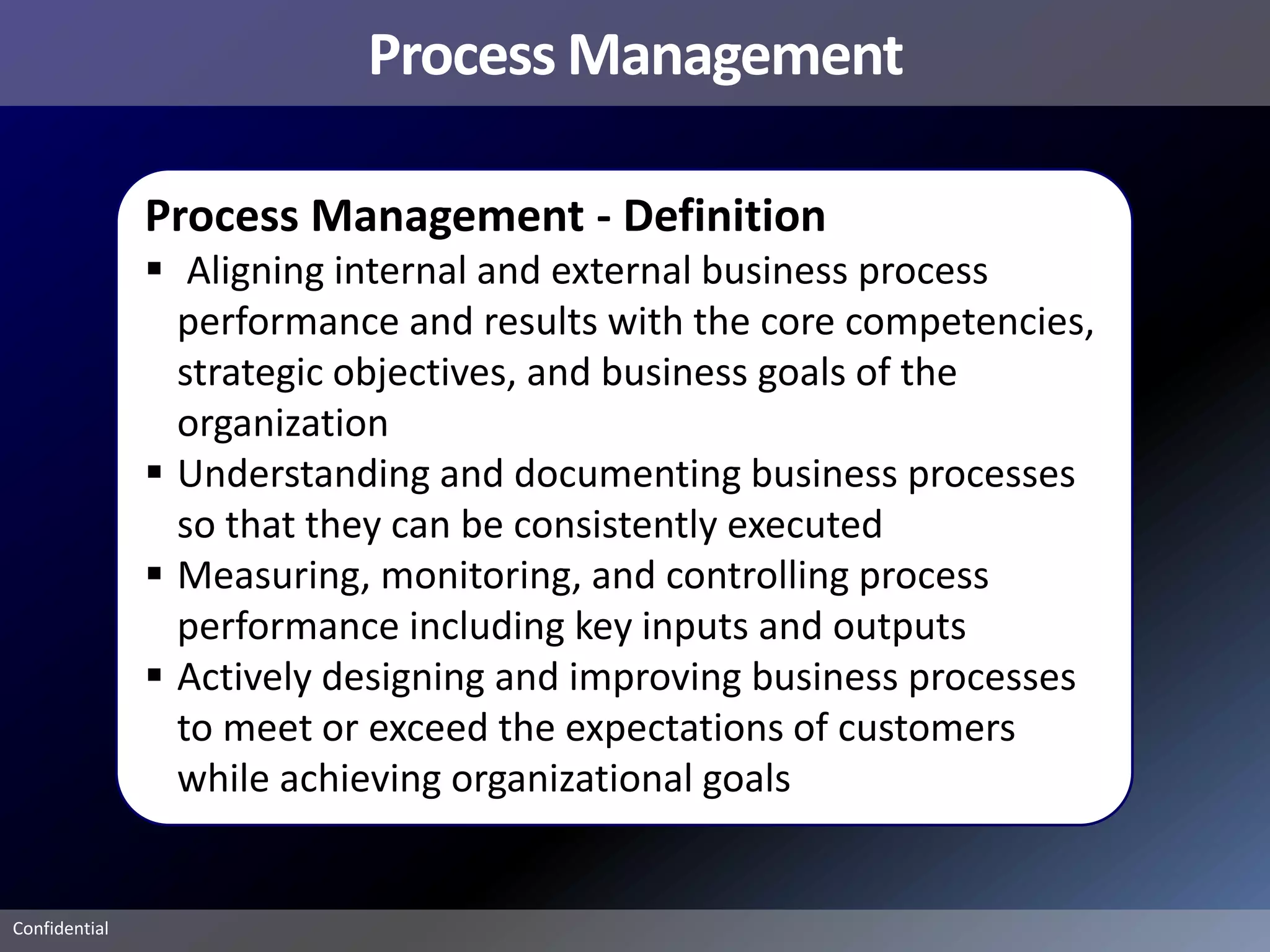
               Process Management - Definition
                Aligning internal and external business process
                 performance and results with the core competencies,
                 strategic objectives, and business goals of the
                 organization
                Understanding and documenting business processes
                 so that they can be consistently executed
                Measuring, monitoring, and controlling process
                 performance including key inputs and outputs
                Actively designing and improving business processes
                 to meet or exceed the expectations of customers
                 while achieving organizational goals


Confidential
Process Management
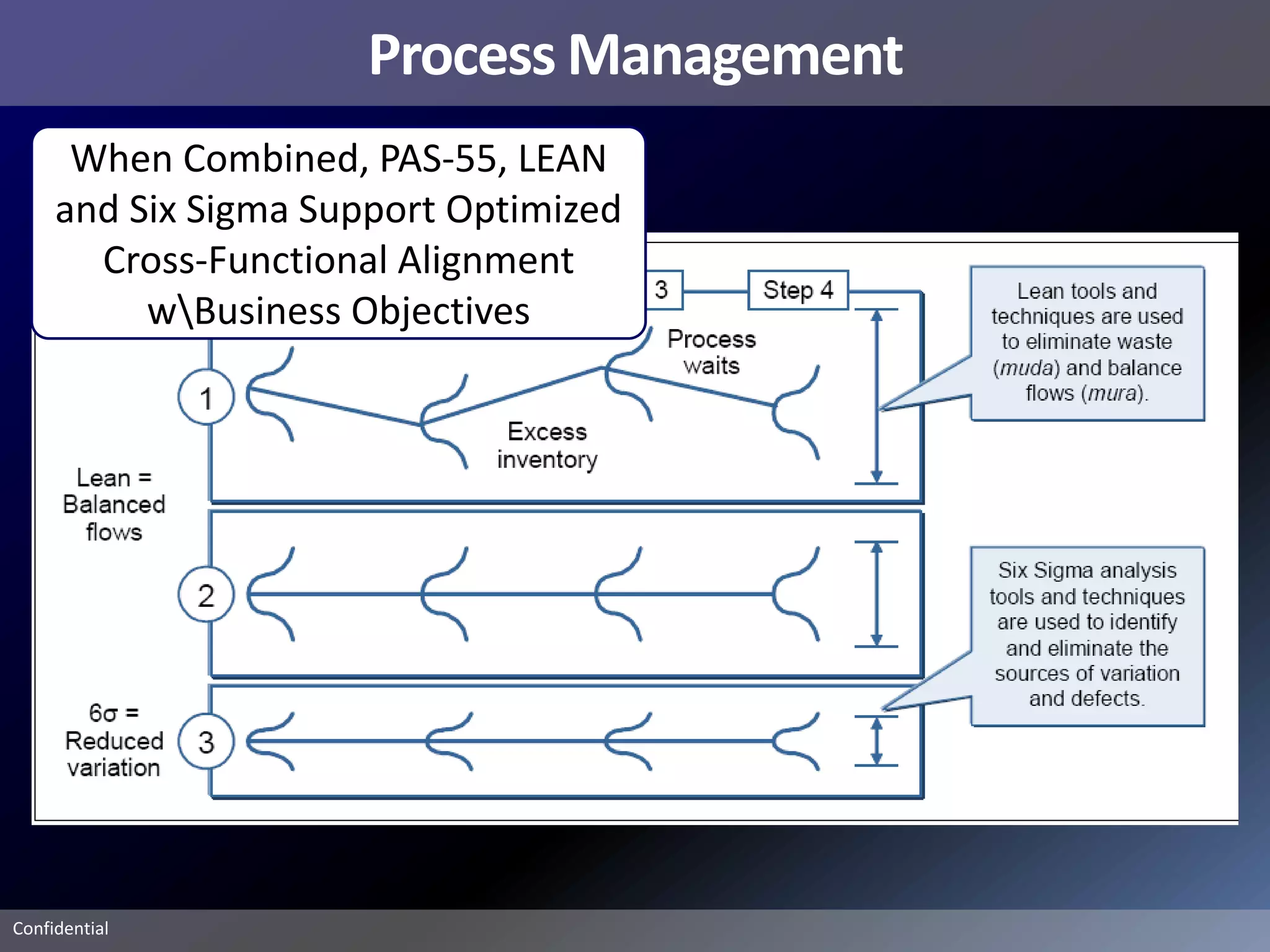
      When Combined, PAS-55, LEAN
     and Six Sigma Support Optimized
       Cross-Functional Alignment
          wBusiness Objectives


Confidential
Process Management
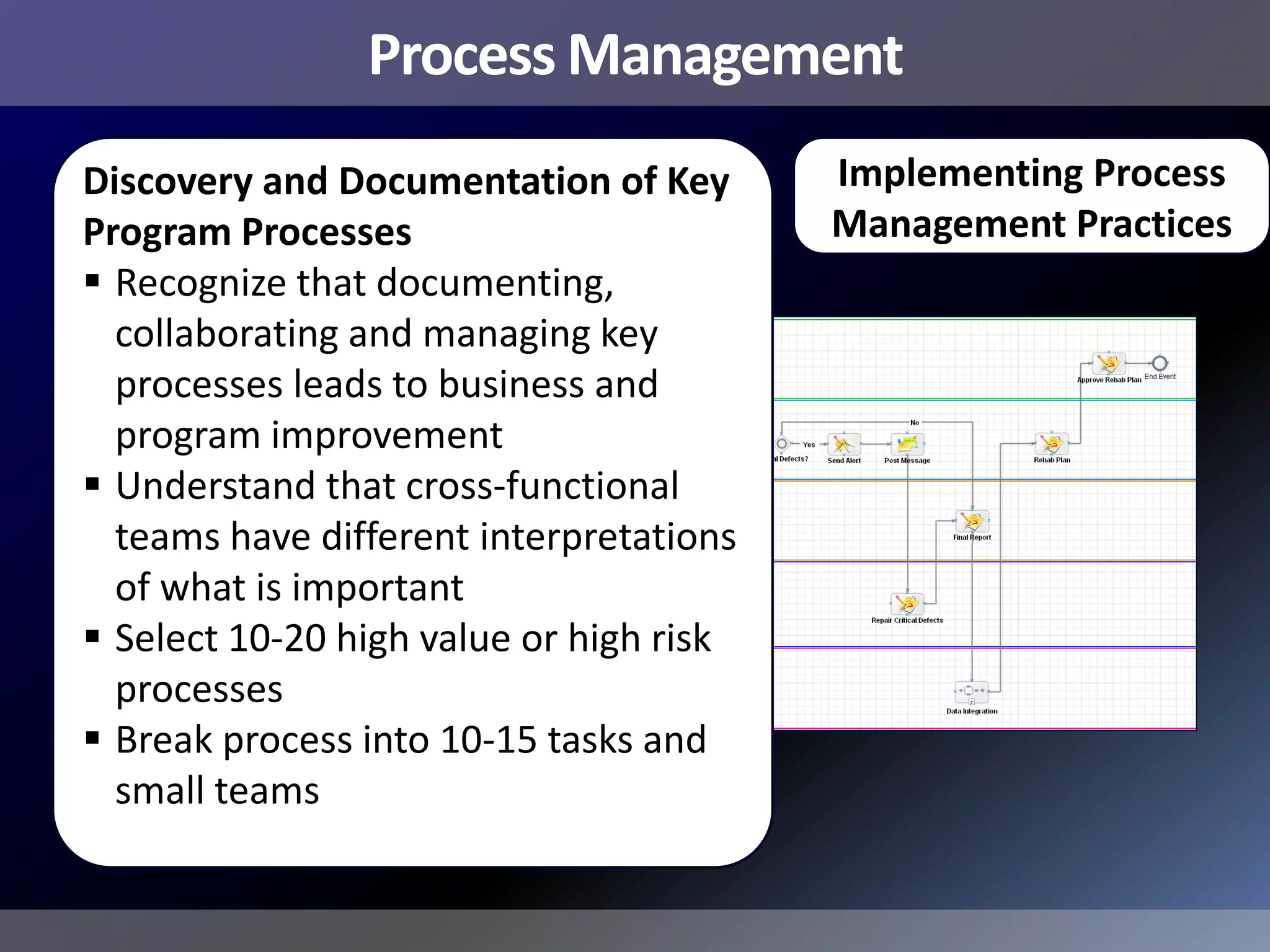
Discovery and Documentation of Key       Implementing Process
Program Processes                        Management Practices
 Recognize that documenting,
  collaborating and managing key
  processes leads to business and
  program improvement
 Understand that cross-functional
  teams have different interpretations
  of what is important
 Select 10-20 high value or high risk
  processes
 Break process into 10-15 tasks and
  small teams
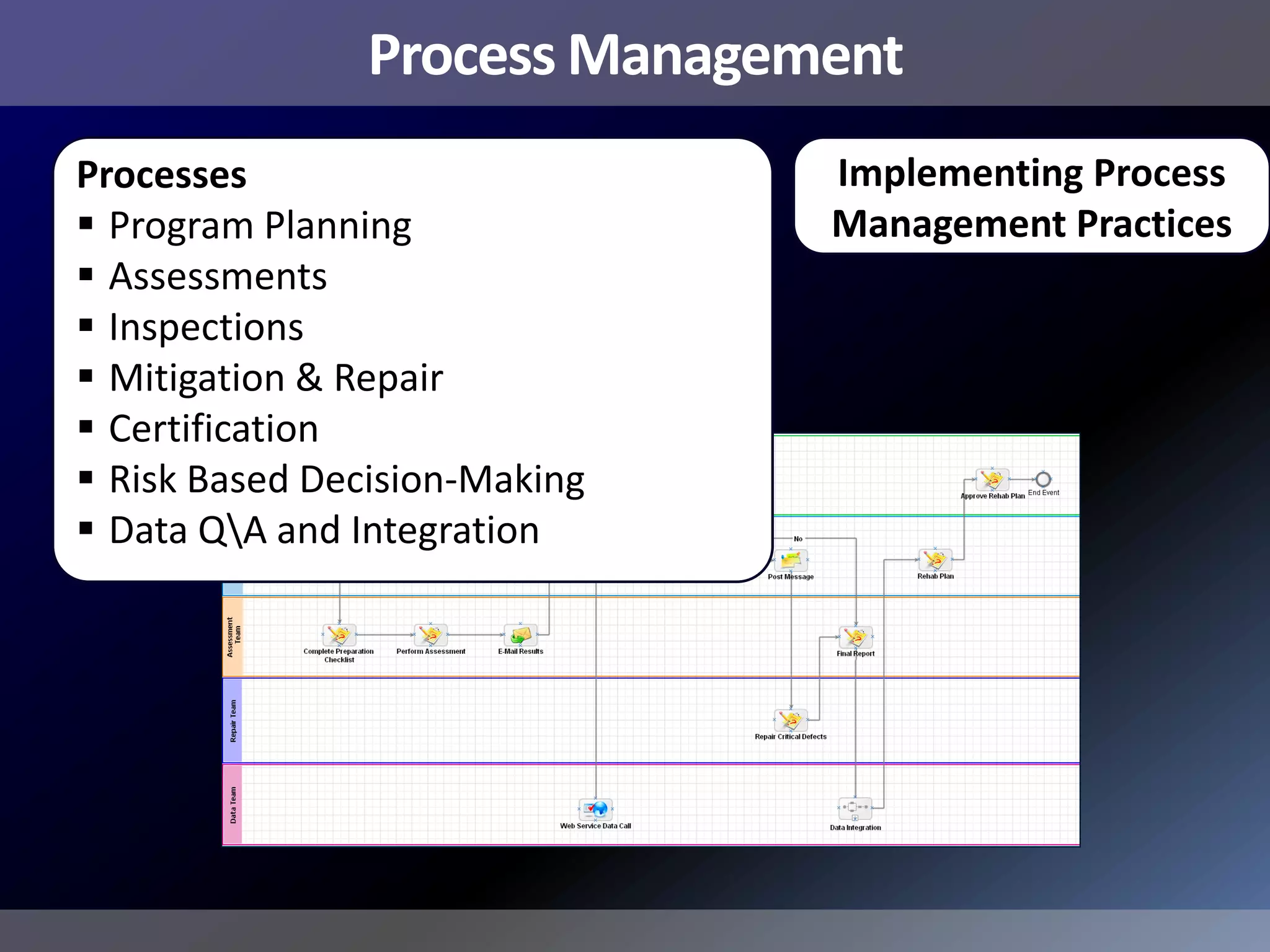
Process Management
Processes                      Implementing Process
 Program Planning             Management Practices
 Assessments
 Inspections
 Mitigation & Repair
 Certification
 Risk Based Decision-Making
 Data QA and Integration
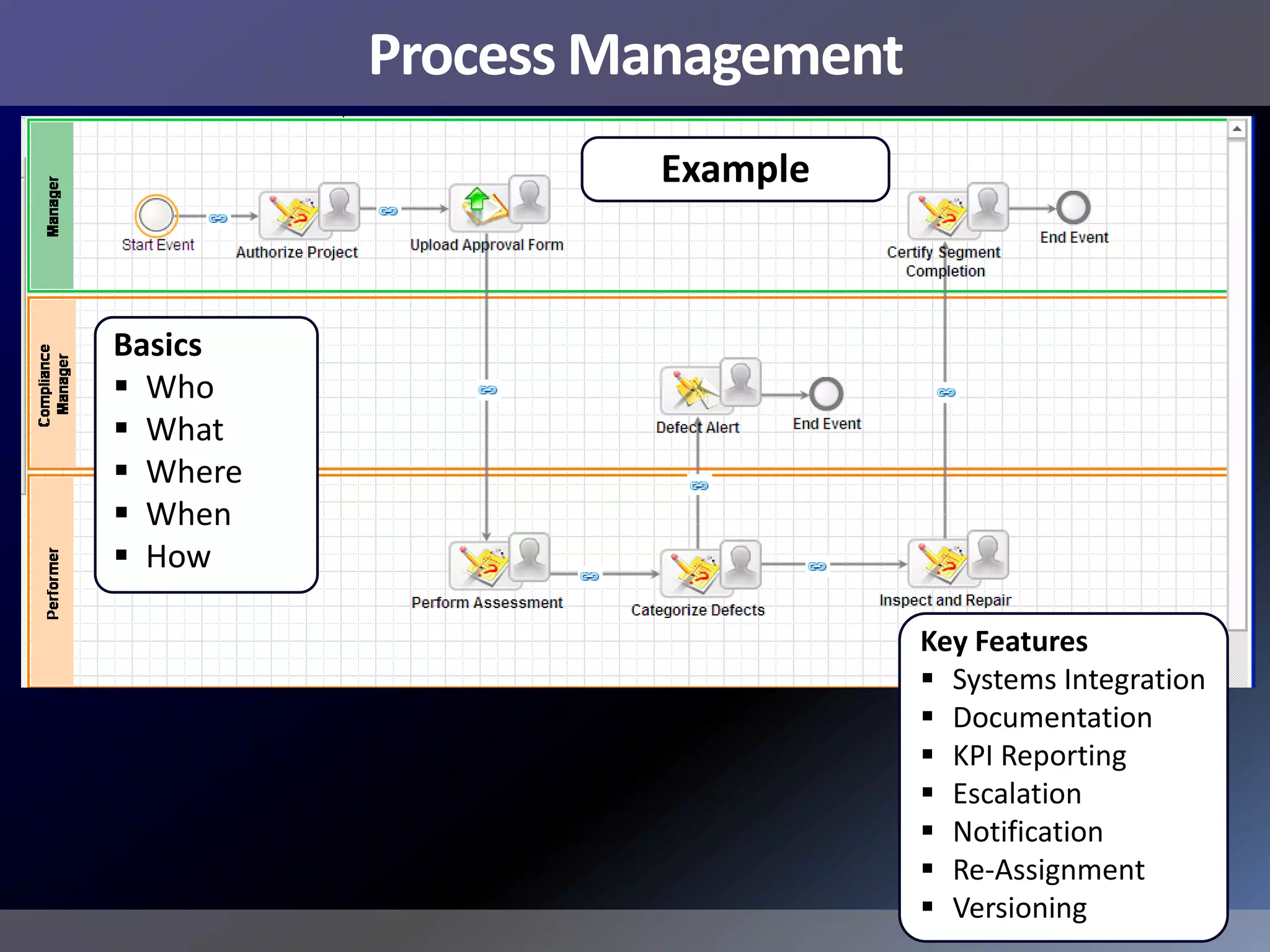
Process Management
                   Example


Basics
 Who
 What
 Where
 When
 How

                               Key Features
                                Systems Integration
                                Documentation
                                KPI Reporting
                                Escalation
                                Notification
                                Re-Assignment
                                Versioning
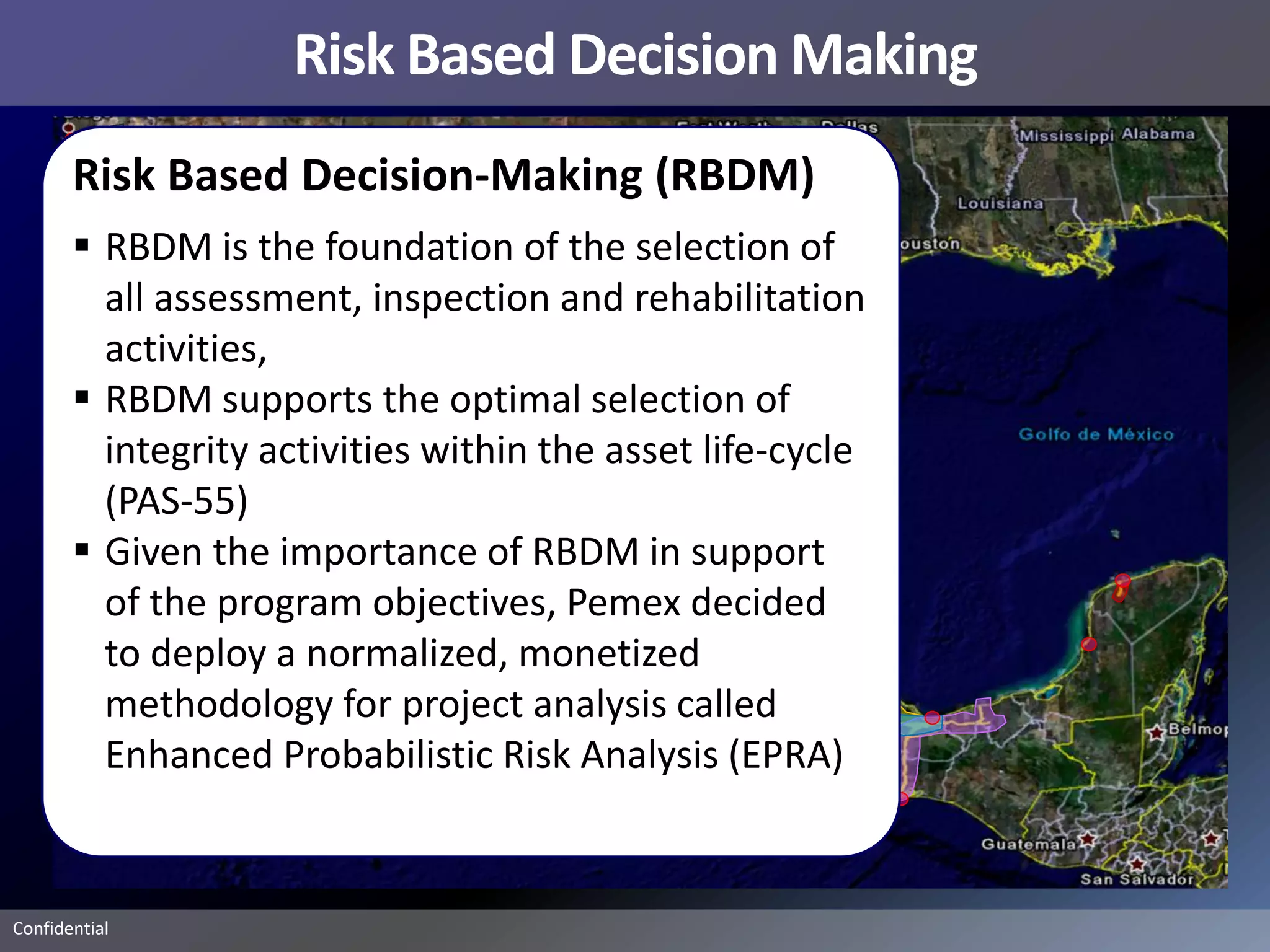
Risk Based Decision Making
       Risk Based Decision-Making (RBDM)
        RBDM is the foundation of the selection of
         all assessment, inspection and rehabilitation
         activities,
        RBDM supports the optimal selection of
         integrity activities within the asset life-cycle
         (PAS-55)
        Given the importance of RBDM in support
         of the program objectives, Pemex decided
         to deploy a normalized, monetized
         methodology for project analysis called
         Enhanced Probabilistic Risk Analysis (EPRA)


Confidential
Risk Based Decision Making
                                                 PFIM LOF Algorithm Structure
                                                                                                                Broaden KPI’s to AM Life-
          Threat         EC         IC         SCC        TPD     WOF        MFG        CON           IO
                                                                                                                Cycle
                                                                                                                EQ
          Categories
                                                                                                                 What is value of asset
                                                                                                                   given it’s operational risk
          Variable                  Exposure                    Mitigation                 Resistance
                                                                                                                   profile, required
          Categories
                                                                                                                   maintenance investments
          Attributes                                                                                               and business value?
          Attribute
          Score                E1         E2     E3         M1        M2     M3       R1         R2        R3

          Variable
          Weight              WE1        WE2    WE3

                                                                                           
                         Exposure =                        Mitigation =                      Resistance =
                         (VariableE1 * WE1) + …            1 – [(1 - VariableM1) * …         1 – [(1 - VariableR1) * …
                         (VariableEn * WEn)                (1 - VariableMn)                  (1 - VariableRn)


    WOF Threat Score =           (Exposure)           *      (1 - Mitigation)     *    (1 – Resistance)


    LOF Score = 1 – [(1-EC) * (1-IC) * (1-SCC) * (1-TPD) * (1-WOF) * (1-MFG) * (1-CON) * (1-IO) * (1-EQ)]


                                                ROF Score = LOF Score * COF Score


Confidential
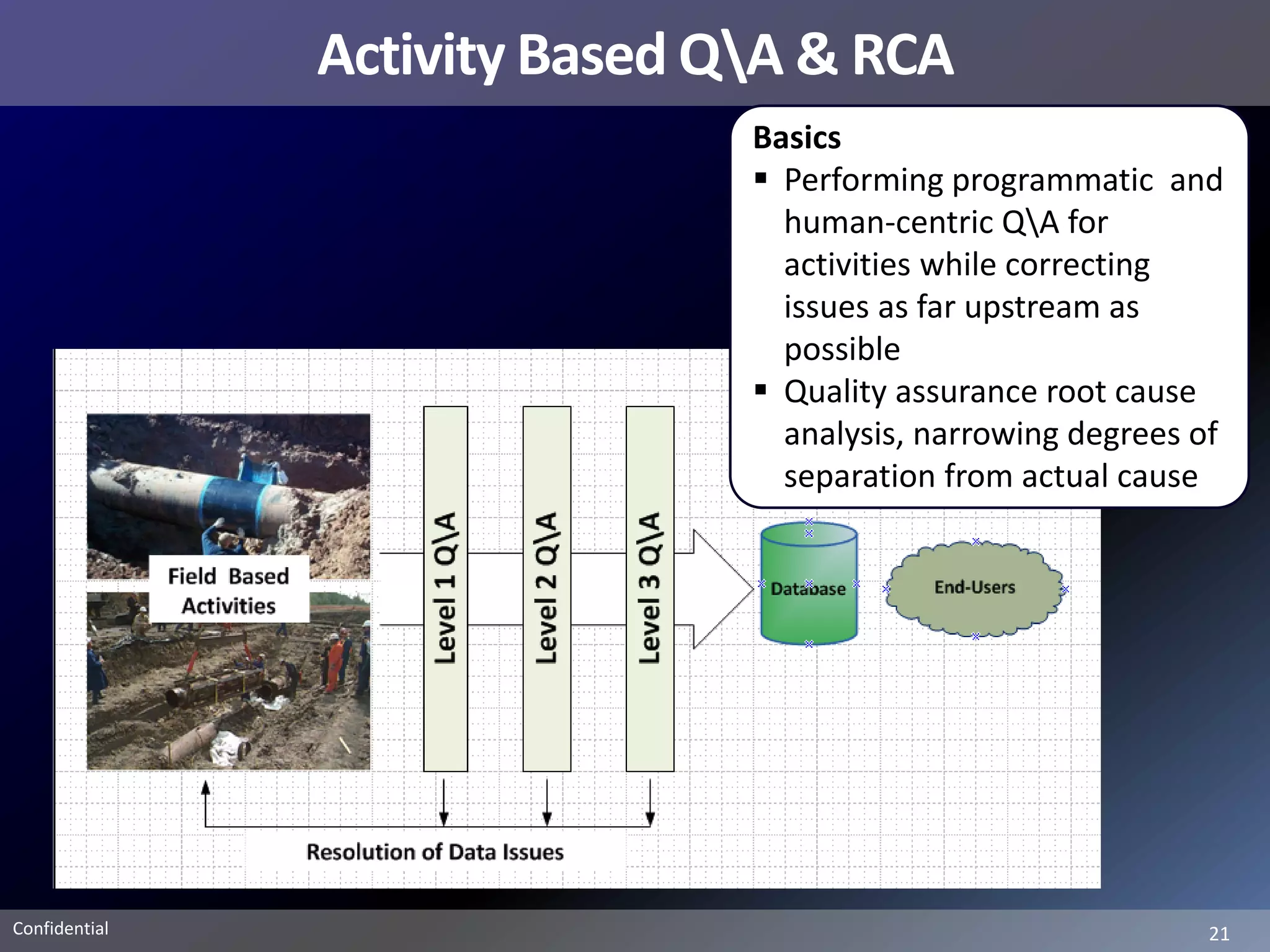
Activity Based QA & RCA
                               Basics
                                Performing programmatic and
                                 human-centric QA for
                                 activities while correcting
                                 issues as far upstream as
                                 possible
                                Quality assurance root cause
                                 analysis, narrowing degrees of
                                 separation from actual cause


Confidential                                                 21
Activity Based QA & RCA
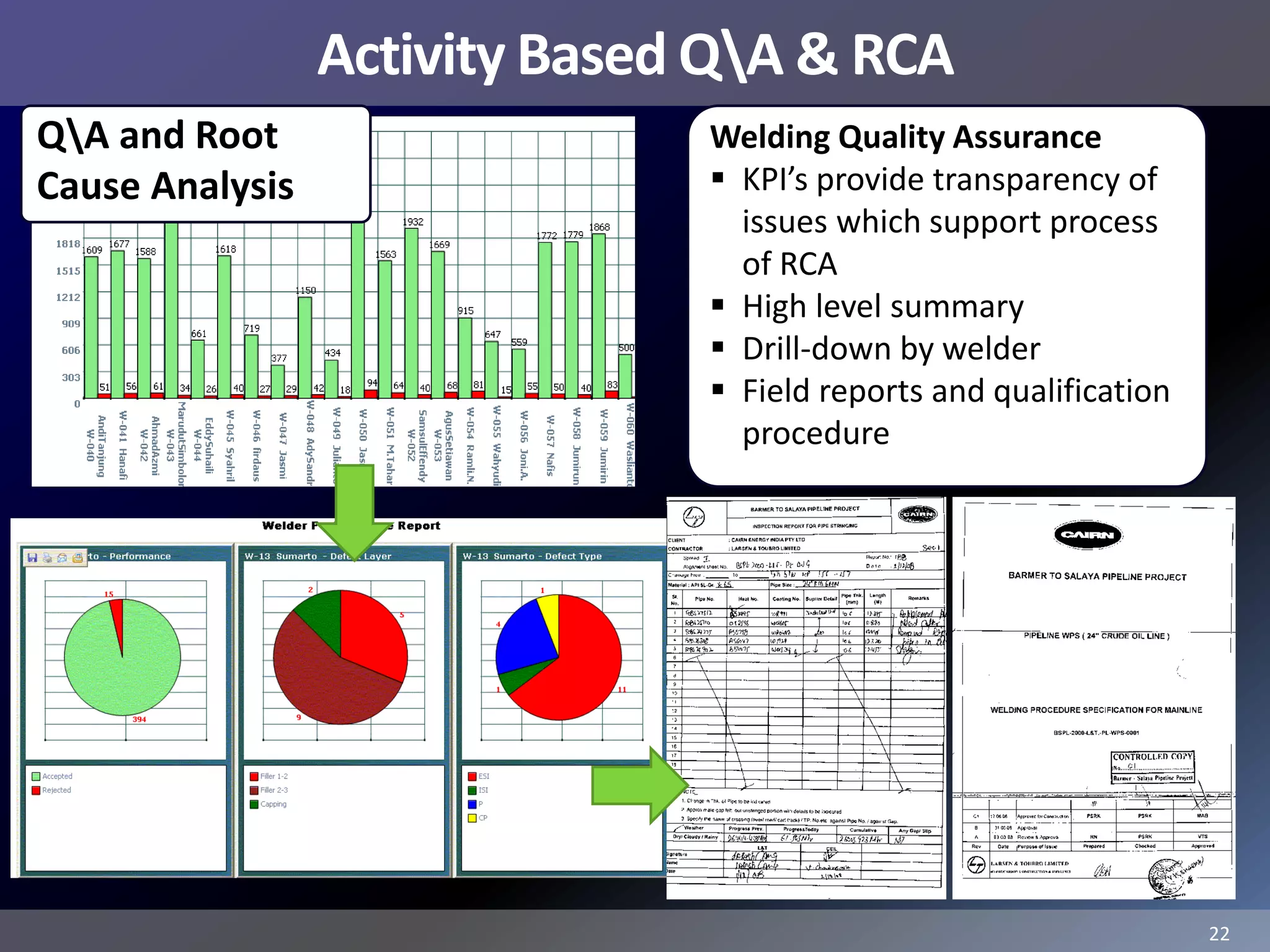
QA and Root                   Welding Quality Assurance
Cause Analysis                  KPI’s provide transparency of
                                 issues which support process
                                 of RCA
                                High level summary
                                Drill-down by welder
                                Field reports and qualification
                                 procedure


                                                                   22
Summary


 Pemex Refining is in the process of starting year one
  of program using the practices and technologies
  provided in this presentation
 Extensive guidance for the asset management
  practitioner is available through the following
  resources:
     IAM - http://www.theiam.org/
     BPM - http://www.bpminstitute.org/
     LEAN - http://www.lean.org
     Six Sigma - http://www.isixsigma.com


                                                          23
Questions?

Process Centric Integrity Management

  • 1.
    NEW PRACTICES & TECHNOLOGIESSUPPORTING PIPELINE ASSET LIFE-CYCLE MANAGEMENT
  • 2.
    Overview of Integrity Program Monterrey November 2009 Confidential
  • 3.
    Program Overview Program Scope PemexRefining is in the process of implementing a best practices multi-year integrity management program for it’s more than 14,000 km of hazardous liquids and crude oil pipelines
  • 4.
    Program Overview Objective The purpose is to improve and maintain the safe, reliable operation of the pipeline system through risk based management and execution of integrity activities Confidential
  • 5.
    Program Overview Integrity Management System The company decided to support the program with a web-based, GIS enabled technology called Integrity Management System (iMS) Confidential
  • 6.
    Program Overview Industry Leading Best Practices  BSI PAS-55 (Asset Management)  LEAN (Process Management)  Six Sigma (Quality Assurance)  API 1160ASME B31.8S (IM)  EPRA (WKM Risk Management) Confidential
  • 7.
    Program Overview Benefits of Practices – Supports:  Life-Cycle Management  Risk Based Decision-Making  Collaboration, Communication, Sustainability, Improvement  Scalability, Configurability  Performance Management (beyond prescriptive silo based integrity management) Confidential
  • 8.
    Asset Management Framework Monterrey November 2009 Confidential
  • 9.
    Asset Management Framework BSI PAS-55 Asset Management Systematic & coordinated activities and practices through which an organization optimally manages its physical assets and their associated performance, risks and expenditures over their life cycles for the purpose of achieving its organizational strategic plan Figure provided from PAS-55 and the Woodhouse Group Confidential
  • 10.
    Asset Management Framework In a traditional organization it is difficult to optimize asset values across the business A goal of AM is to then provide a truly integrated, optimized, risk-managed, whole-life management of the mix of physical, human, intellectual, reputational, financial and other assets that uniquely comprises the business Figure provided from PAS-55 and the Woodhouse Group Confidential
  • 11.
    Asset Management Framework Asset Management  Organizational Strategic Plan  Asset Management Policy  Asset Management Strategy  Asset Management Objectives  Asset Management Plans: Integrity Administration Plan (PAI) Figure provided from PAS-55 and the Woodhouse Group Confidential
  • 12.
    Asset Management Framework Asset Management Incorporating Principals of  "What is the optimal inspection or Risk Based Management maintenance interval?“  "What is the optimal implementation sequence for a list of very dissimilar tasks or projects?“  "When is the optimal time to replace this equipment?“  "Is it worth holding a strategic spare, and if so, how many?“  "Which asset is best to purchase - the high cost option with better performance and longer potential life, or the cheaper but lower performance/more uncertain option?“  "What shutdowns are worthwhile, when?" Figure provided from PAS-55 and the Woodhouse Group Confidential
  • 13.
    Asset Management Framework Employing LEAN and Six Sigma practices to improve work-flow processes and dataresults quality assurance LEAN Six Sigma Process Focus Activity Focus Confidential
  • 14.
    Process Management Process Management - Definition  Aligning internal and external business process performance and results with the core competencies, strategic objectives, and business goals of the organization  Understanding and documenting business processes so that they can be consistently executed  Measuring, monitoring, and controlling process performance including key inputs and outputs  Actively designing and improving business processes to meet or exceed the expectations of customers while achieving organizational goals Confidential
  • 15.
    Process Management When Combined, PAS-55, LEAN and Six Sigma Support Optimized Cross-Functional Alignment wBusiness Objectives Confidential
  • 16.
    Process Management Discovery andDocumentation of Key Implementing Process Program Processes Management Practices  Recognize that documenting, collaborating and managing key processes leads to business and program improvement  Understand that cross-functional teams have different interpretations of what is important  Select 10-20 high value or high risk processes  Break process into 10-15 tasks and small teams
  • 17.
    Process Management Processes Implementing Process  Program Planning Management Practices  Assessments  Inspections  Mitigation & Repair  Certification  Risk Based Decision-Making  Data QA and Integration
  • 18.
    Process Management Example Basics  Who  What  Where  When  How Key Features  Systems Integration  Documentation  KPI Reporting  Escalation  Notification  Re-Assignment  Versioning
  • 19.
    Risk Based DecisionMaking Risk Based Decision-Making (RBDM)  RBDM is the foundation of the selection of all assessment, inspection and rehabilitation activities,  RBDM supports the optimal selection of integrity activities within the asset life-cycle (PAS-55)  Given the importance of RBDM in support of the program objectives, Pemex decided to deploy a normalized, monetized methodology for project analysis called Enhanced Probabilistic Risk Analysis (EPRA) Confidential
  • 20.
    Risk Based DecisionMaking PFIM LOF Algorithm Structure Broaden KPI’s to AM Life- Threat EC IC SCC TPD WOF MFG CON IO Cycle EQ Categories  What is value of asset given it’s operational risk Variable Exposure Mitigation Resistance profile, required Categories maintenance investments Attributes and business value? Attribute Score E1 E2 E3 M1 M2 M3 R1 R2 R3 Variable Weight WE1 WE2 WE3    Exposure = Mitigation = Resistance = (VariableE1 * WE1) + … 1 – [(1 - VariableM1) * … 1 – [(1 - VariableR1) * … (VariableEn * WEn) (1 - VariableMn) (1 - VariableRn) WOF Threat Score = (Exposure) * (1 - Mitigation) * (1 – Resistance) LOF Score = 1 – [(1-EC) * (1-IC) * (1-SCC) * (1-TPD) * (1-WOF) * (1-MFG) * (1-CON) * (1-IO) * (1-EQ)] ROF Score = LOF Score * COF Score Confidential
  • 21.
    Activity Based QA& RCA Basics  Performing programmatic and human-centric QA for activities while correcting issues as far upstream as possible  Quality assurance root cause analysis, narrowing degrees of separation from actual cause Confidential 21
  • 22.
    Activity Based QA& RCA QA and Root Welding Quality Assurance Cause Analysis  KPI’s provide transparency of issues which support process of RCA  High level summary  Drill-down by welder  Field reports and qualification procedure 22
  • 23.
    Summary  Pemex Refiningis in the process of starting year one of program using the practices and technologies provided in this presentation  Extensive guidance for the asset management practitioner is available through the following resources:  IAM - http://www.theiam.org/  BPM - http://www.bpminstitute.org/  LEAN - http://www.lean.org  Six Sigma - http://www.isixsigma.com 23
  • 24.