Procedures of the
Cardiovascular System


Nathaniel Namowicz
Biology 120
Valve Replacement

● Removal and replacement of a defective heart valve with an artificial or
biological valve.

● Invasive procedure performed under general anesthesia, a large cut is made
to the breastbone to reach the heart and aorta. The heart is stopped and the
CS is connected to a heart-lung bypass machine to continue oxygenating the
blood.


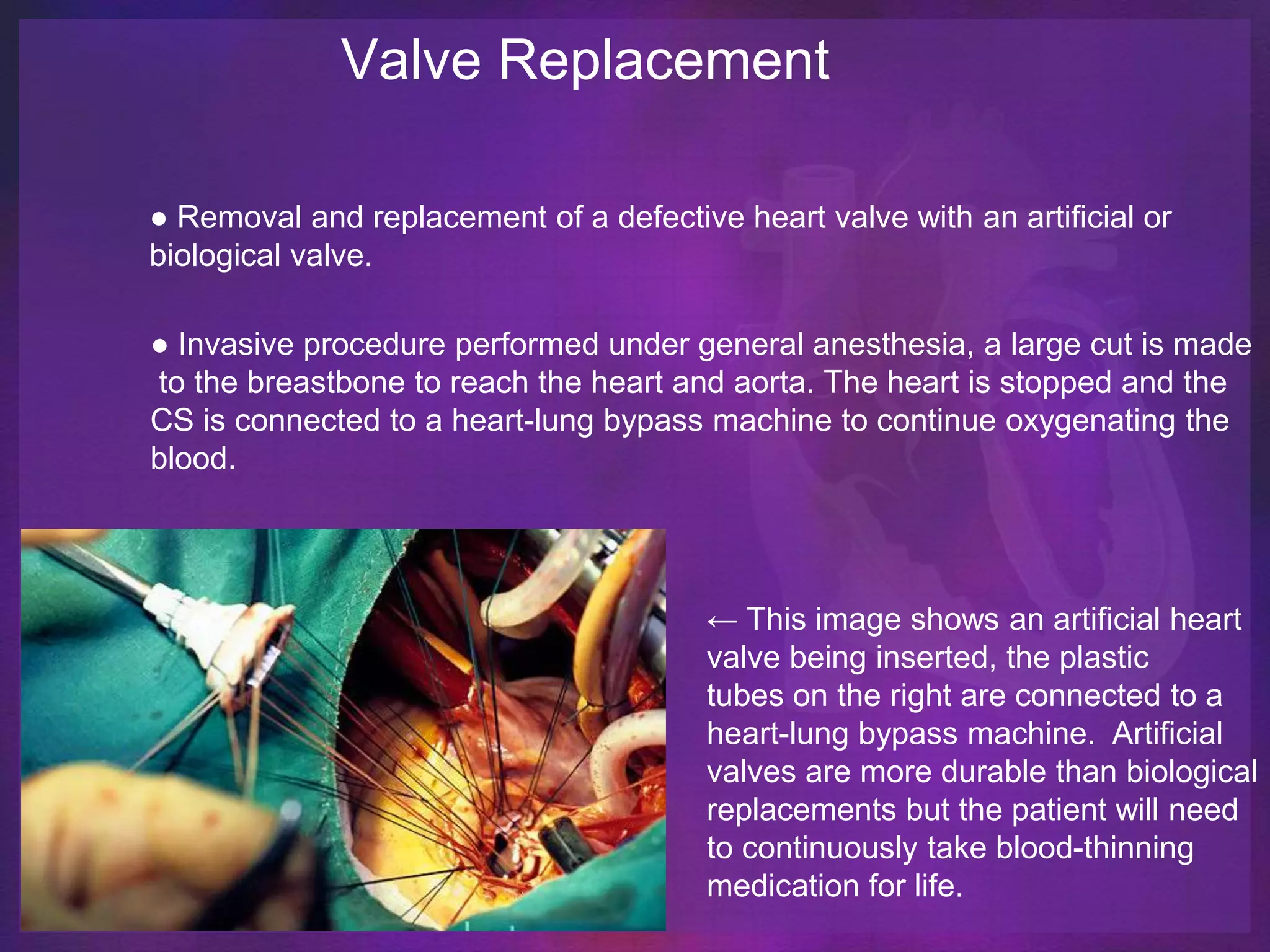
                                        ← This image shows an artificial heart
                                        valve being inserted, the plastic
                                        tubes on the right are connected to a
                                        heart-lung bypass machine. Artificial
                                        valves are more durable than biological
                                        replacements but the patient will need
                                        to continuously take blood-thinning
                                        medication for life.
Angioplasty
Also known as Percutaneous Coronary Interventions [PCI], Balloon
Angioplasty, Coronary Artery Balloon Dilation, and percutaneous
transluminal coronary angioplasty (PTCA).

   ● Minimally invasive surgical procedure to correct localized narrowing
     of artery.

   ● Involves the insertion of a balloon catheter through the skin into
   the coronary artery, the balloon is dilated to help widen the vessel
   and compress plague blocking the artery.


                                     ← Often times a stent is implanted during
                                     the procedure to help the artery remain open
                                     and decrease the chance of another blockage
Coronary Artery Bypass Graft

● Open-heart procedure where (usually) the saphenous vein (leg vein) is
grafted onto the aorta and coronary artery to reroute blood around a blockage.

● The coronary arteries supply blood to the heart muscle, a significant
blockage will lead to death of the heart muscle. This is a myocardial infarction, or
“heart attack.”
.


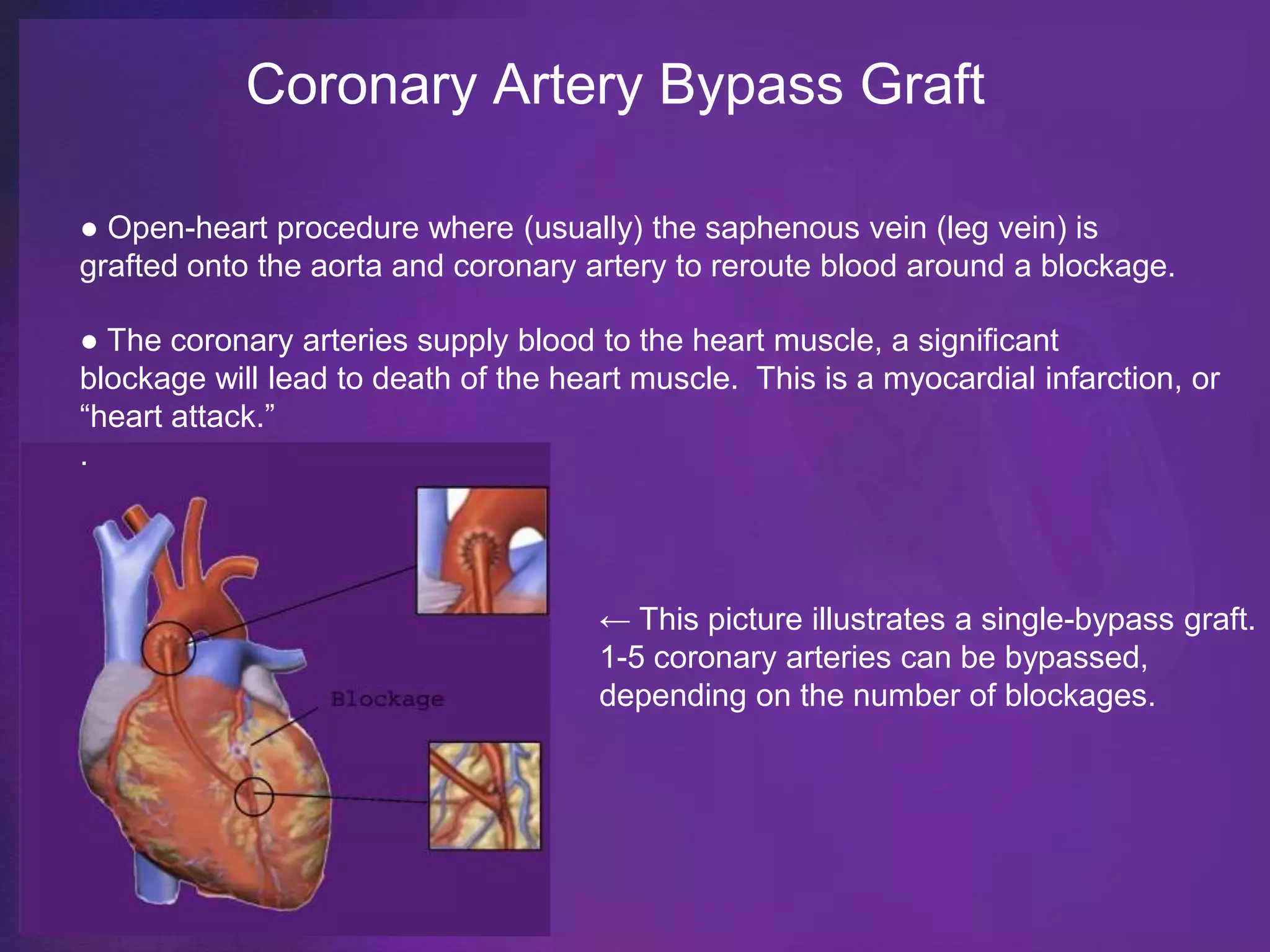
                                      ← This picture illustrates a single-bypass graft.
                                      1-5 coronary arteries can be bypassed,
                                      depending on the number of blockages.
Happy Valentines Day Everybody!

Procedures of the cardiovascular system

  • 1.
    Procedures of the CardiovascularSystem Nathaniel Namowicz Biology 120
  • 2.
    Valve Replacement ● Removaland replacement of a defective heart valve with an artificial or biological valve. ● Invasive procedure performed under general anesthesia, a large cut is made to the breastbone to reach the heart and aorta. The heart is stopped and the CS is connected to a heart-lung bypass machine to continue oxygenating the blood. ← This image shows an artificial heart valve being inserted, the plastic tubes on the right are connected to a heart-lung bypass machine. Artificial valves are more durable than biological replacements but the patient will need to continuously take blood-thinning medication for life.
  • 3.
    Angioplasty Also known asPercutaneous Coronary Interventions [PCI], Balloon Angioplasty, Coronary Artery Balloon Dilation, and percutaneous transluminal coronary angioplasty (PTCA). ● Minimally invasive surgical procedure to correct localized narrowing of artery. ● Involves the insertion of a balloon catheter through the skin into the coronary artery, the balloon is dilated to help widen the vessel and compress plague blocking the artery. ← Often times a stent is implanted during the procedure to help the artery remain open and decrease the chance of another blockage
  • 4.
    Coronary Artery BypassGraft ● Open-heart procedure where (usually) the saphenous vein (leg vein) is grafted onto the aorta and coronary artery to reroute blood around a blockage. ● The coronary arteries supply blood to the heart muscle, a significant blockage will lead to death of the heart muscle. This is a myocardial infarction, or “heart attack.” . ← This picture illustrates a single-bypass graft. 1-5 coronary arteries can be bypassed, depending on the number of blockages.
  • 5.