PROBLEMSOLVING
“Imagination is more important
Than Knowledge”
-Albert Einstein
Problem solving is the act of defining
a problem; determining the cause of
the problem.
Example of Problem
Solving
In customer service you might find a scenario like, “how would
you handle an angry customer?” Or “how do you respond when a
customer asks for a refund?” Practicing how you might handle
these or other scenarios common in your industry can help you
call upon solutions quickly when they arise on the job.
What are the steps to be
followed to way of solve the
problem Solving?
 The major steps to be followed the problem solving:
 Making Judgement.
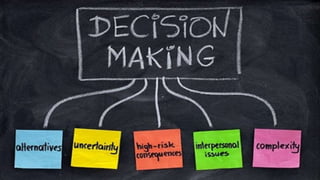
 Decision Making.
 Analytical Skill.
 Planning.
Making Judgement:
Good judgement includes prioritising, meeting
deadlines and carefully planning, which are tools that
enable us to effectively cope in difficult and stressful
situations. Making decisions which fail to consider the
future can lead to high levels of stress when we have
to rush deadlines and deal with pressing problems.
d judgement includes prioritising, meeting deadlines
carefully planning, which are tools that enable us to
ctively cope in difficult and stressful situations.
ng decisions which fail to consider the future can
to high levels of stress when we have to rush
dlines and deal with pressing problems.
Analytical Skill:
 Analytical skills refer to the ability to collect and
analyze information, problem-solve, and make
decisions. Employees who possess these skills can
help solve a company’s problems and improve its
overall productivity and success.
Planning:
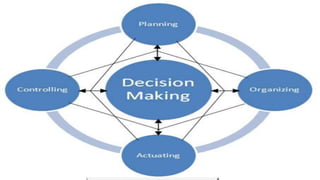
 Planning is thinking of doing. Decision-making is a
part of planning. Planning is the process of
selecting a future course of action, where
Decision-making means selecting a course of
action. ... Planning and decision making is the
most important step of all managerial functions.
Critical Thinking:
Critical thinking is the intellectually disciplined
process of actively and skillfully conceptualizing,
applying, analyzing, synthesizing, and/or evaluating
information gathered from, or generated by,
observation, experience, reflection, reasoning, or
communication, as a guide to belief and action.
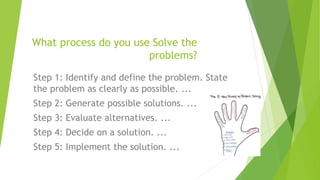
What process do you use Solve the
problems?
Step 1: Identify and define the problem. State
the problem as clearly as possible. ...
Step 2: Generate possible solutions. ...
Step 3: Evaluate alternatives. ...
Step 4: Decide on a solution. ...
Step 5: Implement the solution. ...
What is SWOT?
• S=Strengths
• W=Weakness
• O=Opportunities
• T=Threats
Thank you

PROBLEM SOLVING PPT.pptx

  • 1.
  • 2.
    “Imagination is moreimportant Than Knowledge” -Albert Einstein
  • 3.
    Problem solving isthe act of defining a problem; determining the cause of the problem.
  • 4.
    Example of Problem Solving Incustomer service you might find a scenario like, “how would you handle an angry customer?” Or “how do you respond when a customer asks for a refund?” Practicing how you might handle these or other scenarios common in your industry can help you call upon solutions quickly when they arise on the job.
  • 5.
    What are thesteps to be followed to way of solve the problem Solving?
  • 6.
     The majorsteps to be followed the problem solving:  Making Judgement.  Decision Making.  Analytical Skill.  Planning.
  • 7.
    Making Judgement: Good judgementincludes prioritising, meeting deadlines and carefully planning, which are tools that enable us to effectively cope in difficult and stressful situations. Making decisions which fail to consider the future can lead to high levels of stress when we have to rush deadlines and deal with pressing problems. d judgement includes prioritising, meeting deadlines carefully planning, which are tools that enable us to ctively cope in difficult and stressful situations. ng decisions which fail to consider the future can to high levels of stress when we have to rush dlines and deal with pressing problems.
  • 9.
    Analytical Skill:  Analyticalskills refer to the ability to collect and analyze information, problem-solve, and make decisions. Employees who possess these skills can help solve a company’s problems and improve its overall productivity and success.
  • 11.
    Planning:  Planning isthinking of doing. Decision-making is a part of planning. Planning is the process of selecting a future course of action, where Decision-making means selecting a course of action. ... Planning and decision making is the most important step of all managerial functions.
  • 12.
    Critical Thinking: Critical thinkingis the intellectually disciplined process of actively and skillfully conceptualizing, applying, analyzing, synthesizing, and/or evaluating information gathered from, or generated by, observation, experience, reflection, reasoning, or communication, as a guide to belief and action.
  • 14.
    What process doyou use Solve the problems? Step 1: Identify and define the problem. State the problem as clearly as possible. ... Step 2: Generate possible solutions. ... Step 3: Evaluate alternatives. ... Step 4: Decide on a solution. ... Step 5: Implement the solution. ...
  • 17.
    What is SWOT? •S=Strengths • W=Weakness • O=Opportunities • T=Threats
  • 18.