“If you can't describe what you are doing as a process, you don't
know what you're doing.”
W. Edward Deming
(Theory of quality management)
PRIZ Guru
Engineering Thinking Platform
Process Functional Modelling (PFM)
In Action with the PRIZ Platform
PRIZ Academy - Webinar - June 04, 2025
PROCESS FUNCTIONAL MODEL (PFM)
PFM is an analytical tool for
understanding processes
through modeling various
operations, solving
problems, and identifying
ways to improve process.
Understand how a process works
Understand each operation
Analyze and comprehend the functional
value and contribution of each operation
Make strategic and tactical decisions for
process improvements
Create a common language within the
organization
PROCESS FUNCTIONAL MODEL (PFM)
PFM is an analytical tool for
understanding processes
through modeling various
operations, solving
problems, and identifying
ways to improve process.
Design a process
Improve existing processes
Reduce the complexity of a process
Reduce costs of a process
Improve process yield
Identify redundant and low-value operations
Lean, Kaizen, and similar events
Use-cases
WHAT IS PROCESS?
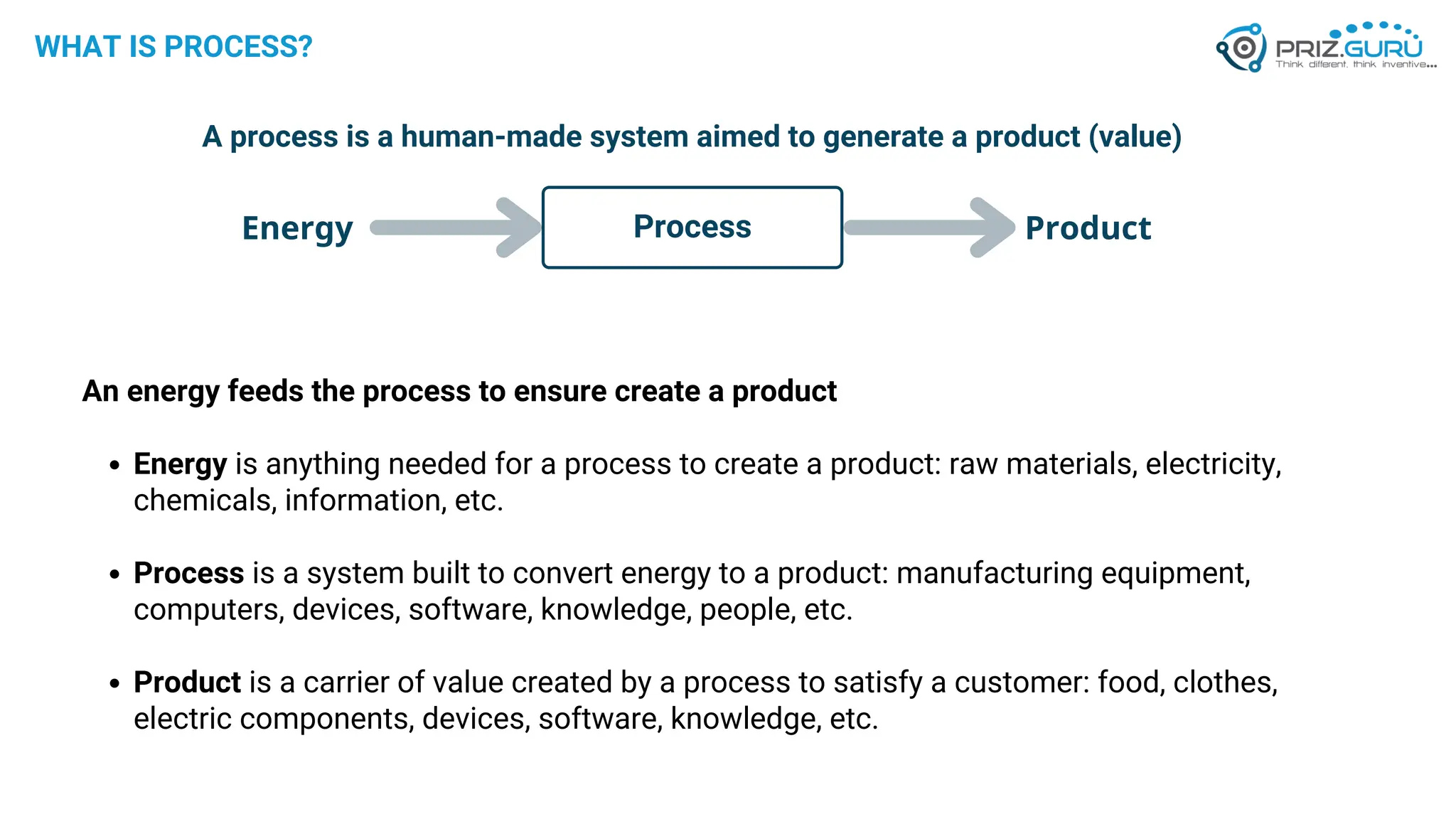
Process
Energy Product
A process is a human-made system aimed to generate a product (value)
An energy feeds the process to ensure create a product
Energy is anything needed for a process to create a product: raw materials, electricity,
chemicals, information, etc.
Process is a system built to convert energy to a product: manufacturing equipment,
computers, devices, software, knowledge, people, etc.
Product is a carrier of value created by a process to satisfy a customer: food, clothes,
electric components, devices, software, knowledge, etc.
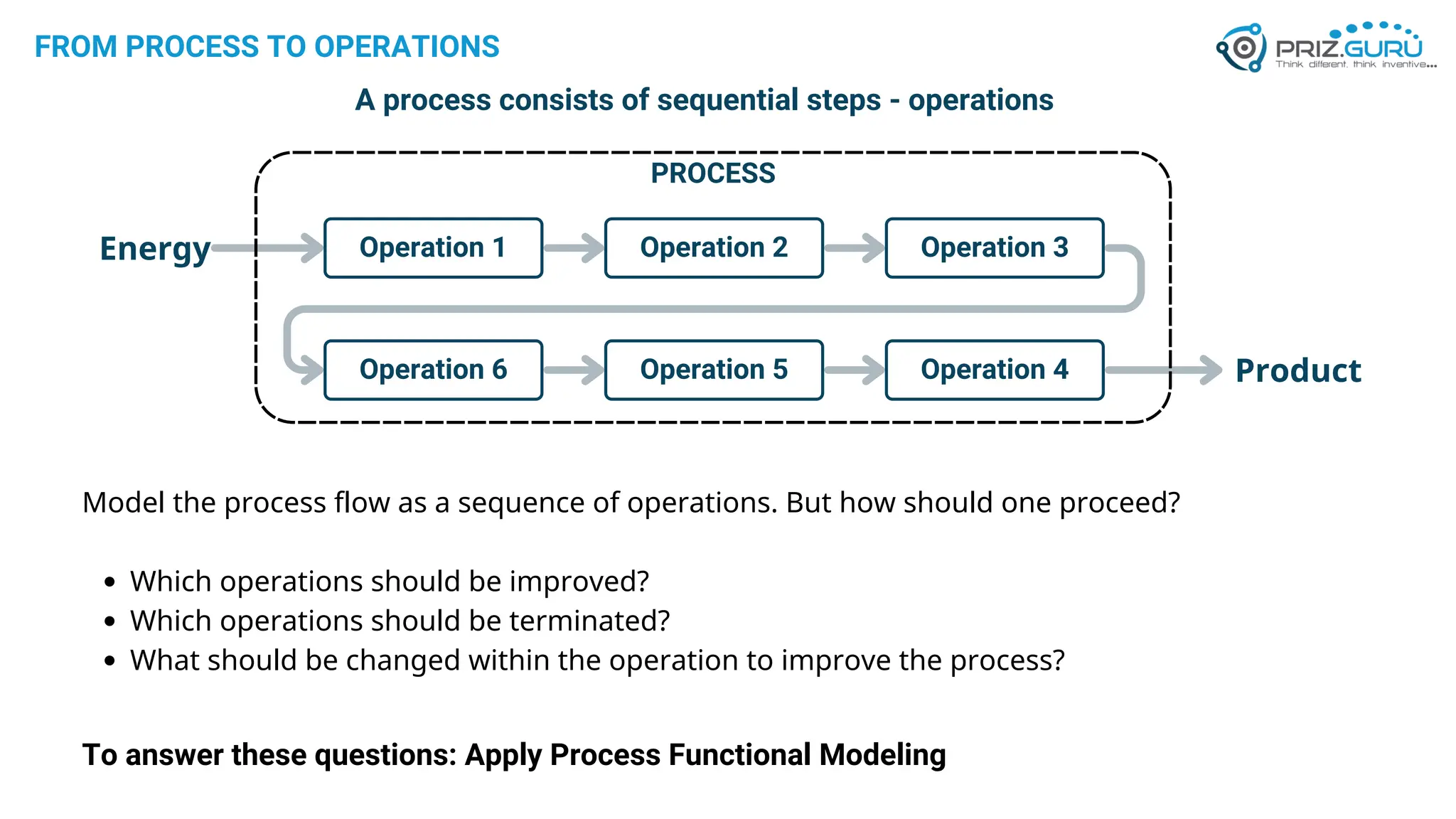
Operation 1
Energy Operation 2 Operation 3
Operation 4
Operation 5
Operation 6 Product
PROCESS
FROM PROCESS TO OPERATIONS
A process consists of sequential steps - operations
Model the process flow as a sequence of operations. But how should one proceed?
Which operations should be improved?
Which operations should be terminated?
What should be changed within the operation to improve the process?
To answer these questions: Apply Process Functional Modeling
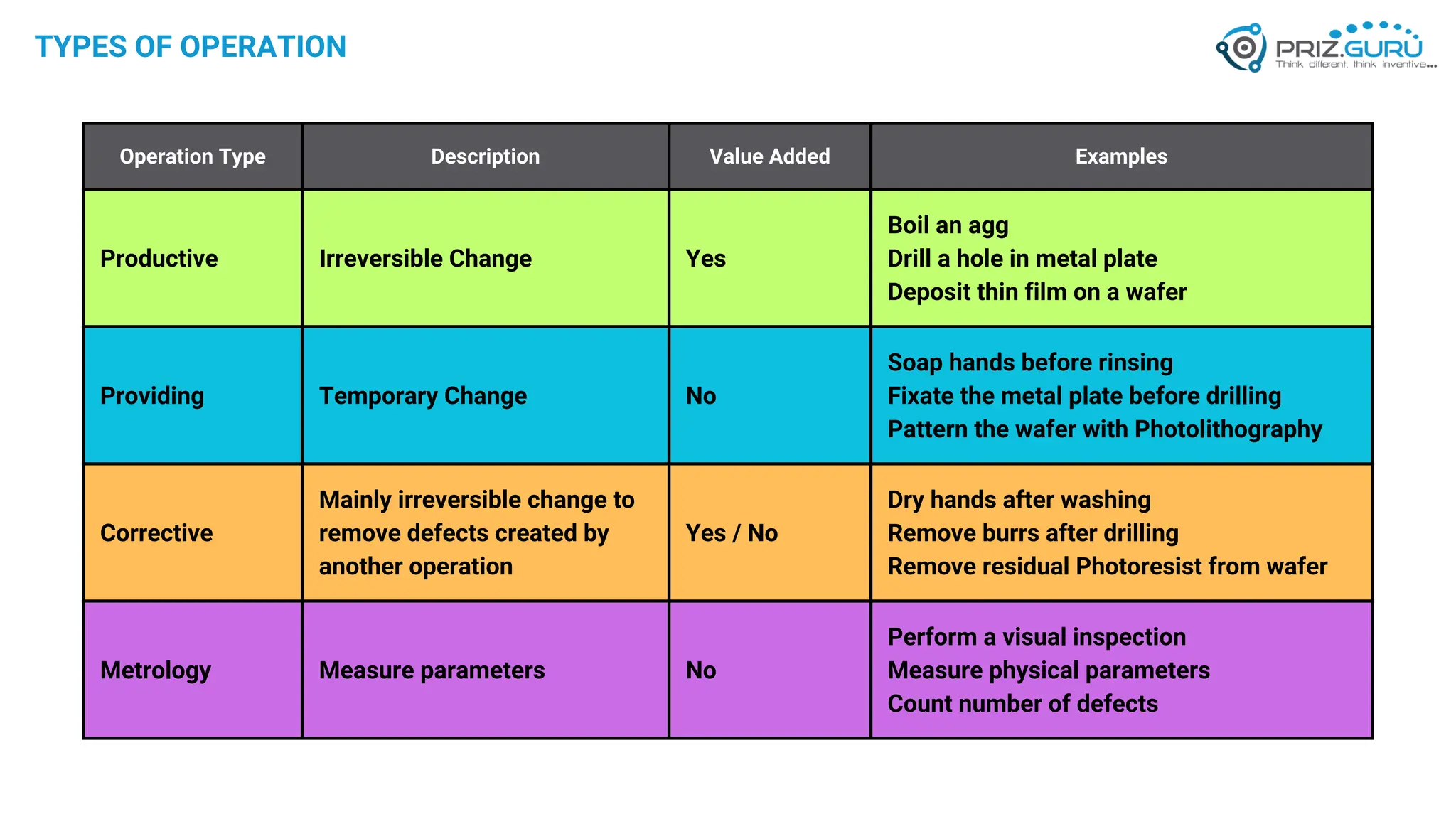
Operation Type Description Value Added Examples
Productive Irreversible Change Yes
Boil an agg
Drill a hole in metal plate
Deposit thin film on a wafer
Providing Temporary Change No
Soap hands before rinsing
Fixate the metal plate before drilling
Pattern the wafer with Photolithography
Corrective
Mainly irreversible change to
remove defects created by
another operation
Yes / No
Dry hands after washing
Remove burrs after drilling
Remove residual Photoresist from wafer
Metrology Measure parameters No
Perform a visual inspection
Measure physical parameters
Count number of defects
TYPES OF OPERATION
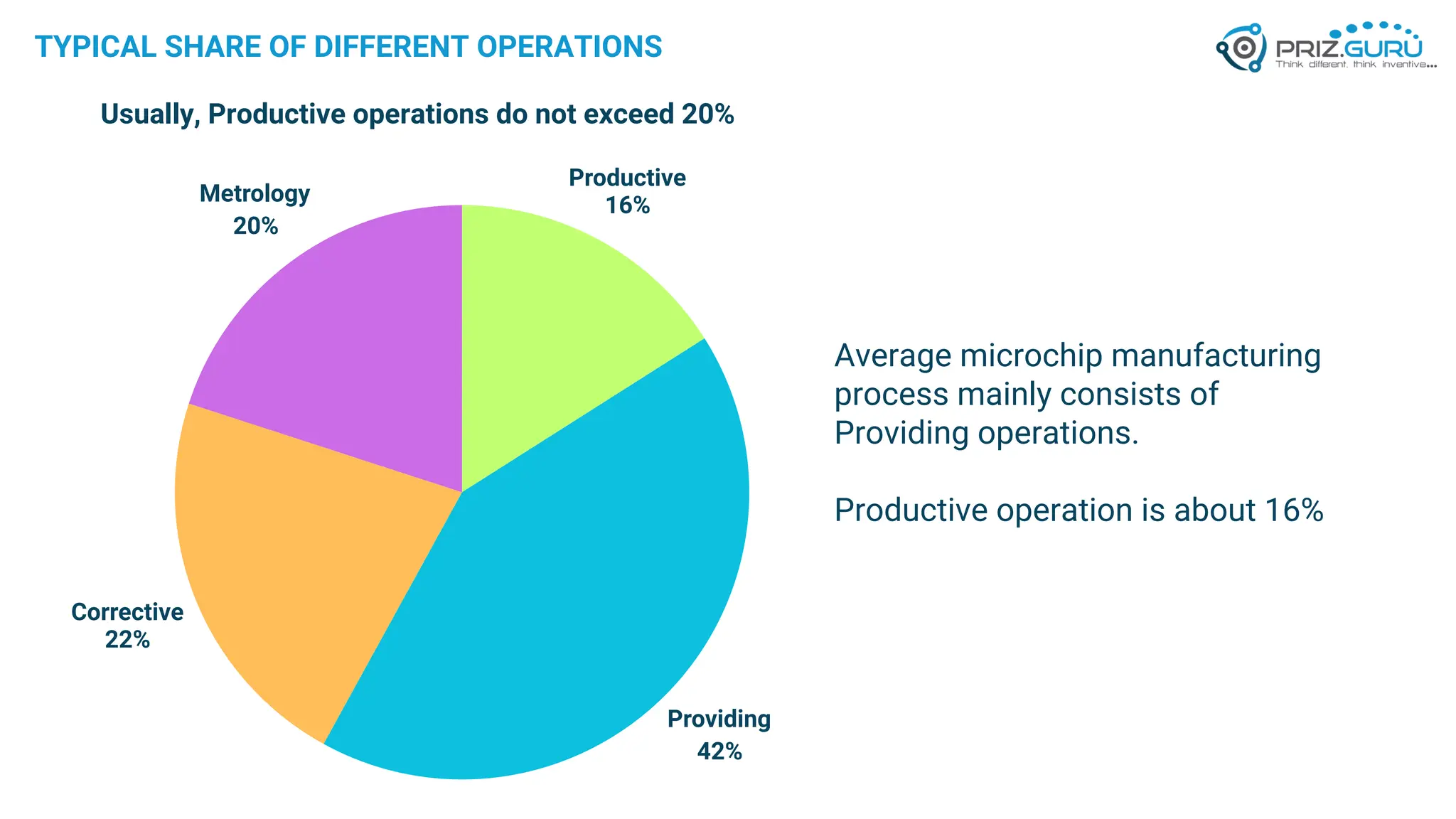
TYPICAL SHARE OF DIFFERENT OPERATIONS
Providing
42%
Corrective
22%
Metrology
20%
Productive
16%
Usually, Productive operations do not exceed 20%
Average microchip manufacturing
process mainly consists of
Providing operations.
Productive operation is about 16%
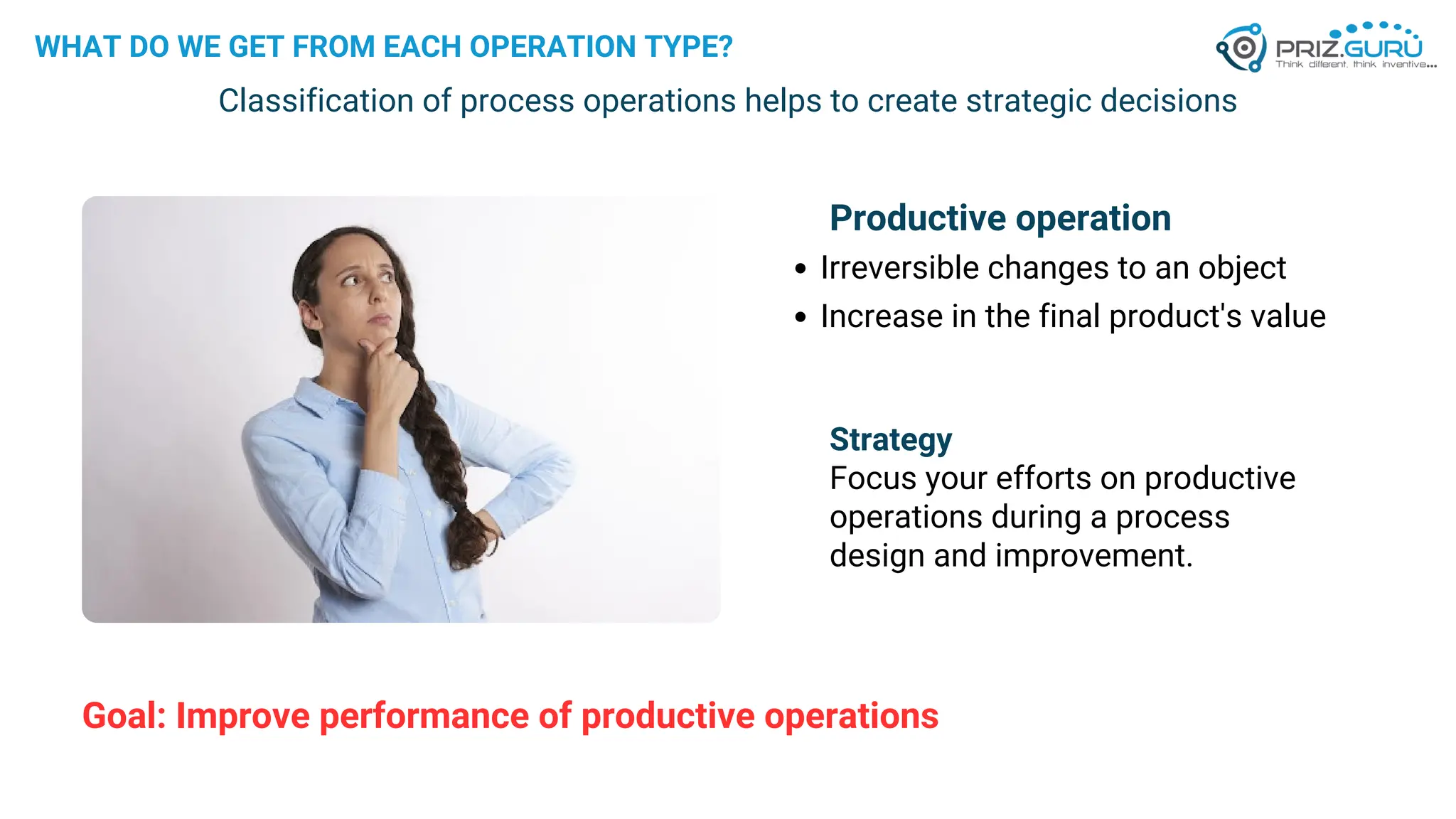
WHAT DO WE GET FROM EACH OPERATION TYPE?
Classification of process operations helps to create strategic decisions
Productive operation
Irreversible changes to an object
Increase in the final product's value
Strategy
Focus your efforts on productive
operations during a process
design and improvement.
Goal: Improve performance of productive operations
WHAT DO WE GET FROM EACH OPERATION TYPE?
Classification of process operations helps to create strategic decisions
Providing operation
Temporary changes on an object
Increases the cost of the final product
Never adds value to the final product
Strategy
Avoid developing providing
operations - simplify or eliminate
them entirely
Goal: Eliminate providing operations
WHAT DO WE GET FROM EACH OPERATION TYPE?
Classification of process operations helps to create strategic decisions
Corrective operation
Exists due to improper performance of
productive operations and the necessity
of providing operations
May add some value to the product as a
complement to the improper performance
of productive operations
Strategy
Do not improve or develop corrective
operations. Focus on enhancing
productive operations and eliminating
unnecessary ones to prevent the need
for corrective measures.
Goal: Eliminate corrective operations
WHAT DO WE GET FROM EACH OPERATION TYPE?
Classification of process operations helps to create strategic decisions
Metrology operation
No changes on the object
No value is added to the final product
The purpose is to create information
Strategy
Analyze the necessity of the
information and eliminate metrology
operations if possible
Goal: Analyze and remove metrology operations
Ask: “Do we really need this information?”
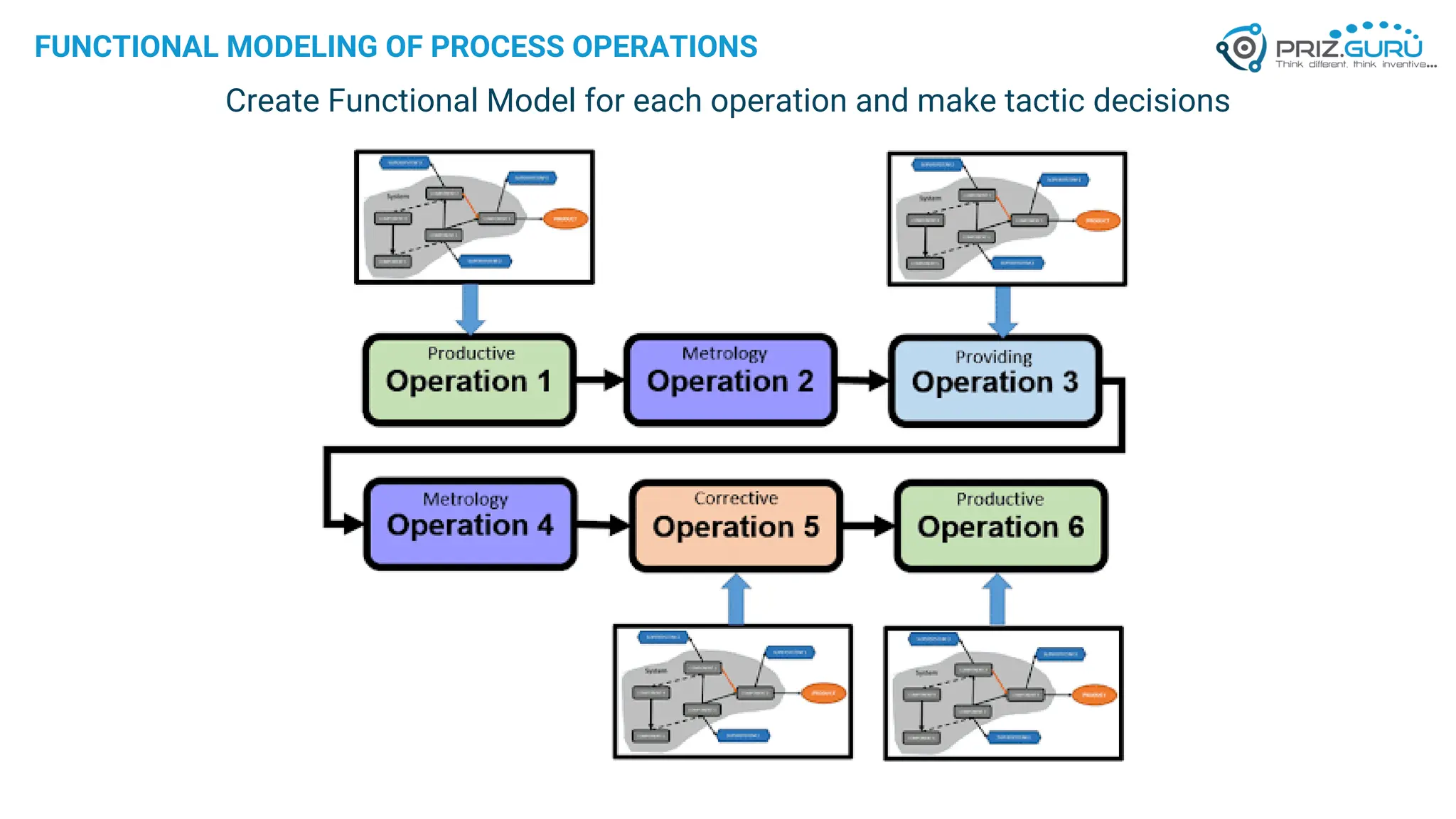
FUNCTIONAL MODELING OF PROCESS OPERATIONS
Create Functional Model for each operation and make tactic decisions
PRIZ - ENGINEERING THINKING PLATFORM
https://www.priz.guru
13

PRIZ Academy - Process functional modelling

  • 1.
    “If you can'tdescribe what you are doing as a process, you don't know what you're doing.” W. Edward Deming (Theory of quality management) PRIZ Guru Engineering Thinking Platform Process Functional Modelling (PFM) In Action with the PRIZ Platform PRIZ Academy - Webinar - June 04, 2025
  • 2.
    PROCESS FUNCTIONAL MODEL(PFM) PFM is an analytical tool for understanding processes through modeling various operations, solving problems, and identifying ways to improve process. Understand how a process works Understand each operation Analyze and comprehend the functional value and contribution of each operation Make strategic and tactical decisions for process improvements Create a common language within the organization
  • 3.
    PROCESS FUNCTIONAL MODEL(PFM) PFM is an analytical tool for understanding processes through modeling various operations, solving problems, and identifying ways to improve process. Design a process Improve existing processes Reduce the complexity of a process Reduce costs of a process Improve process yield Identify redundant and low-value operations Lean, Kaizen, and similar events Use-cases
  • 4.
    WHAT IS PROCESS? Process EnergyProduct A process is a human-made system aimed to generate a product (value) An energy feeds the process to ensure create a product Energy is anything needed for a process to create a product: raw materials, electricity, chemicals, information, etc. Process is a system built to convert energy to a product: manufacturing equipment, computers, devices, software, knowledge, people, etc. Product is a carrier of value created by a process to satisfy a customer: food, clothes, electric components, devices, software, knowledge, etc.
  • 5.
    Operation 1 Energy Operation2 Operation 3 Operation 4 Operation 5 Operation 6 Product PROCESS FROM PROCESS TO OPERATIONS A process consists of sequential steps - operations Model the process flow as a sequence of operations. But how should one proceed? Which operations should be improved? Which operations should be terminated? What should be changed within the operation to improve the process? To answer these questions: Apply Process Functional Modeling
  • 6.
    Operation Type DescriptionValue Added Examples Productive Irreversible Change Yes Boil an agg Drill a hole in metal plate Deposit thin film on a wafer Providing Temporary Change No Soap hands before rinsing Fixate the metal plate before drilling Pattern the wafer with Photolithography Corrective Mainly irreversible change to remove defects created by another operation Yes / No Dry hands after washing Remove burrs after drilling Remove residual Photoresist from wafer Metrology Measure parameters No Perform a visual inspection Measure physical parameters Count number of defects TYPES OF OPERATION
  • 7.
    TYPICAL SHARE OFDIFFERENT OPERATIONS Providing 42% Corrective 22% Metrology 20% Productive 16% Usually, Productive operations do not exceed 20% Average microchip manufacturing process mainly consists of Providing operations. Productive operation is about 16%
  • 8.
    WHAT DO WEGET FROM EACH OPERATION TYPE? Classification of process operations helps to create strategic decisions Productive operation Irreversible changes to an object Increase in the final product's value Strategy Focus your efforts on productive operations during a process design and improvement. Goal: Improve performance of productive operations
  • 9.
    WHAT DO WEGET FROM EACH OPERATION TYPE? Classification of process operations helps to create strategic decisions Providing operation Temporary changes on an object Increases the cost of the final product Never adds value to the final product Strategy Avoid developing providing operations - simplify or eliminate them entirely Goal: Eliminate providing operations
  • 10.
    WHAT DO WEGET FROM EACH OPERATION TYPE? Classification of process operations helps to create strategic decisions Corrective operation Exists due to improper performance of productive operations and the necessity of providing operations May add some value to the product as a complement to the improper performance of productive operations Strategy Do not improve or develop corrective operations. Focus on enhancing productive operations and eliminating unnecessary ones to prevent the need for corrective measures. Goal: Eliminate corrective operations
  • 11.
    WHAT DO WEGET FROM EACH OPERATION TYPE? Classification of process operations helps to create strategic decisions Metrology operation No changes on the object No value is added to the final product The purpose is to create information Strategy Analyze the necessity of the information and eliminate metrology operations if possible Goal: Analyze and remove metrology operations Ask: “Do we really need this information?”
  • 12.
    FUNCTIONAL MODELING OFPROCESS OPERATIONS Create Functional Model for each operation and make tactic decisions
  • 13.
    PRIZ - ENGINEERINGTHINKING PLATFORM https://www.priz.guru 13