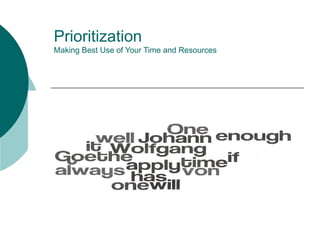
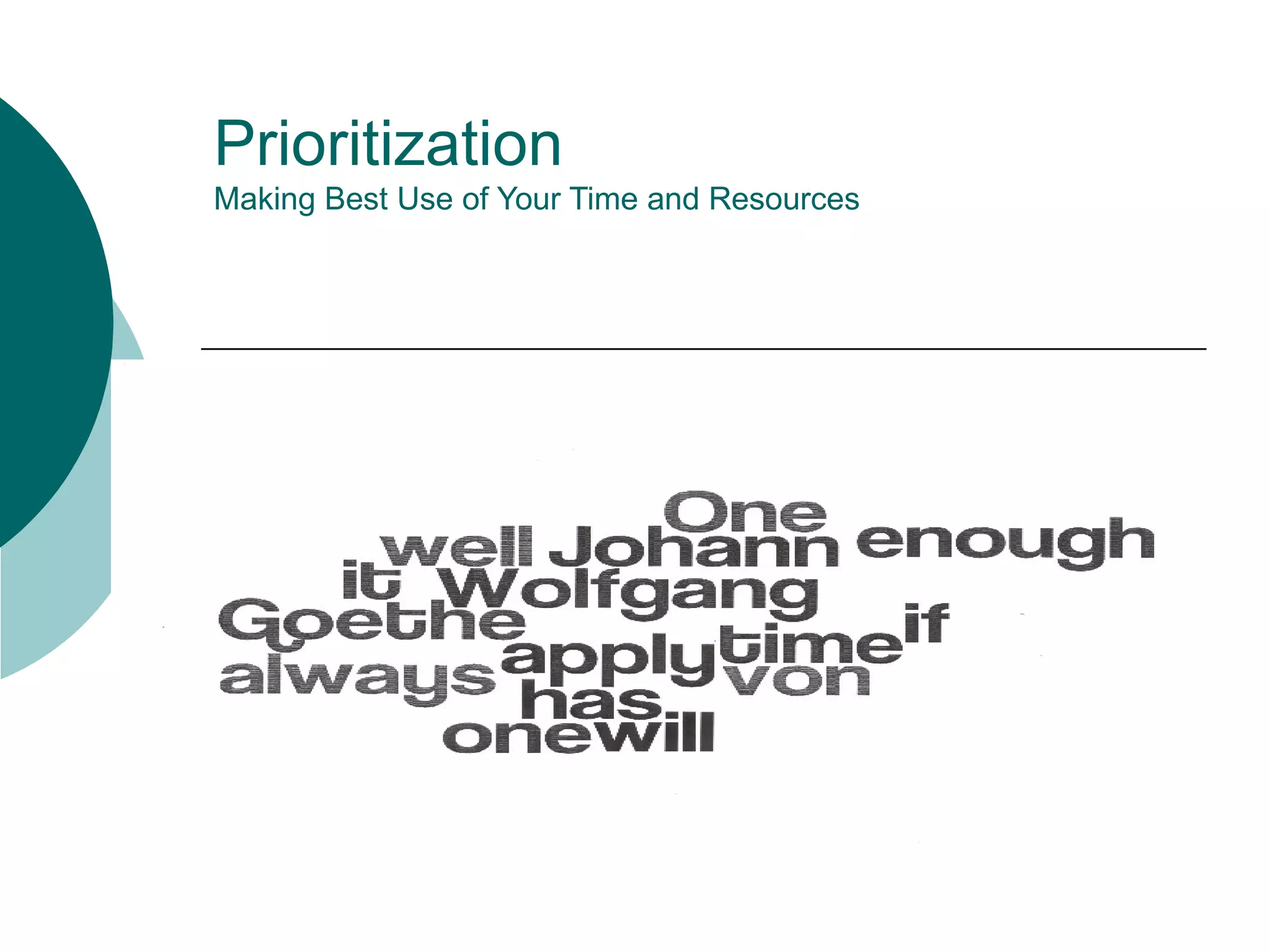
Prioritization
Making Best Use of Your Time and Resources
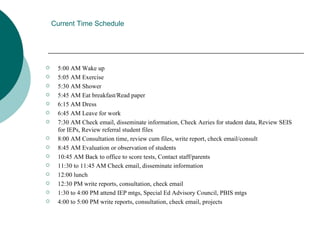
Current Time Schedule


    5:00 AM Wake up
    5:05 AM Exercise
    5:30 AM Shower
    5:45 AM Eat breakfast/Read paper
    6:15 AM Dress
    6:45 AM Leave for work
    7:30 AM Check email, disseminate information, Check Aeries for student data, Review SEIS
     for IEPs, Review referral student files
    8:00 AM Consultation time, review cum files, write report, check email/consult
    8:45 AM Evaluation or observation of students
    10:45 AM Back to office to score tests, Contact staff/parents
    11:30 to 11:45 AM Check email, disseminate information
    12:00 lunch
    12:30 PM write reports, consultation, check email
    1:30 to 4:00 PM attend IEP mtgs, Special Ed Advisory Council, PBIS mtgs
    4:00 to 5:00 PM write reports, consultation, check email, projects
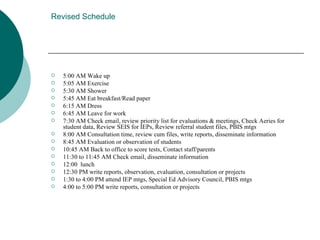
Revised Schedule


   5:00 AM Wake up
   5:05 AM Exercise
   5:30 AM Shower
   5:45 AM Eat breakfast/Read paper
   6:15 AM Dress
   6:45 AM Leave for work
   7:30 AM Check email, review priority list for evaluations & meetings, Check Aeries for
    student data, Review SEIS for IEPs, Review referral student files, PBIS mtgs
   8:00 AM Consultation time, review cum files, write reports, disseminate information
   8:45 AM Evaluation or observation of students
   10:45 AM Back to office to score tests, Contact staff/parents
   11:30 to 11:45 AM Check email, disseminate information
   12:00 lunch
   12:30 PM write reports, observation, evaluation, consultation or projects
   1:30 to 4:00 PM attend IEP mtgs, Special Ed Advisory Council, PBIS mtgs
   4:00 to 5:00 PM write reports, consultation or projects
Simple Prioritization
   Prioritization based on project value

   Time constraints

   Pressure to complete a task
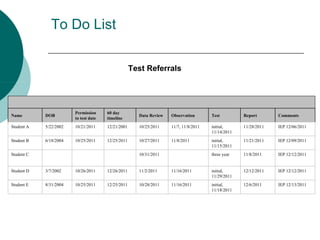
To Do List

                                                    Test Referrals


                        Permission     60 day
Name        DOB                                       Data Review   Observation       Test         Report       Comments
                        to test date   timeline
Student A   5/22/2002   10/21/2011     12/21/2001     10/25/2011    11/7, 11/8/2011   initial,     11/28/2011   IEP 12/06/2011
                                                                                      11/14/2011
Student B   6/18/2004   10/25/2011     12/25/2011     10/27/2011    11/8/2011         initial,     11/21/2011   IEP 12/09/2011
                                                                                      11/15/2011
Student C                                             10/31/2011                      three year   11/8/2011    IEP 12/12/2011


Student D   3/7/2002    10/26/2011     12/26/2011     11/2/2011     11/16/2011        initial,     12/12/2011   IEP 12/12/2011
                                                                                      11/29/2011
Student E   8/31/2004   10/25/2011     12/25/2011     10/28/2011    11/16/2011        initial,     12/6/2011    IEP 12/13/2011
                                                                                      11/18/2011
Prioritization Tools
   The Urgent/Important Matrix
    The system advocates the use of
    four quadrants to determine the
    tasks you “need” to do and deciding
    what should be made a priority.
The Matrix
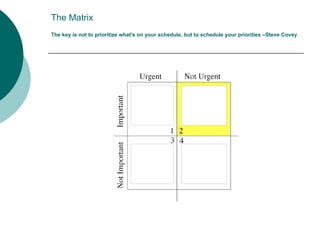
The key is not to prioritize what's on your schedule, but to schedule your priorities –Steve Covey
Covey’s Matrix

   In Quadrant 1 (top left) we have important, urgent items –
    items that need to be dealt with immediately.

   In Quadrant 2 (top right) we have important, but not urgent
    items – items that are important but do not require your
    immediate attention, and need to be planned for. This
    quadrant is highlighted because Covey emphasizes this is
    the quadrant that we should focus on for long term
    achievement of goals.

   In Quadrant 3 (bottom left) we have urgent, but unimportant
    items - items which should be minimized or eliminated.
    These are the time sucks, the “poor planning on your part does
    not constitute an emergency on my part” variety of tasks.

   In Quadrant 4 (bottom right) we have unimportant and also not
    urgent items – items that don’t have to be done anytime soon,
    perhaps add little to no value and also should be minimized or
    eliminated. These are often trivial time wasters.

Prioritization

  • 1.
    Prioritization Making Best Useof Your Time and Resources
  • 2.
    Current Time Schedule  5:00 AM Wake up  5:05 AM Exercise  5:30 AM Shower  5:45 AM Eat breakfast/Read paper  6:15 AM Dress  6:45 AM Leave for work  7:30 AM Check email, disseminate information, Check Aeries for student data, Review SEIS for IEPs, Review referral student files  8:00 AM Consultation time, review cum files, write report, check email/consult  8:45 AM Evaluation or observation of students  10:45 AM Back to office to score tests, Contact staff/parents  11:30 to 11:45 AM Check email, disseminate information  12:00 lunch  12:30 PM write reports, consultation, check email  1:30 to 4:00 PM attend IEP mtgs, Special Ed Advisory Council, PBIS mtgs  4:00 to 5:00 PM write reports, consultation, check email, projects
  • 3.
    Revised Schedule  5:00 AM Wake up  5:05 AM Exercise  5:30 AM Shower  5:45 AM Eat breakfast/Read paper  6:15 AM Dress  6:45 AM Leave for work  7:30 AM Check email, review priority list for evaluations & meetings, Check Aeries for student data, Review SEIS for IEPs, Review referral student files, PBIS mtgs  8:00 AM Consultation time, review cum files, write reports, disseminate information  8:45 AM Evaluation or observation of students  10:45 AM Back to office to score tests, Contact staff/parents  11:30 to 11:45 AM Check email, disseminate information  12:00 lunch  12:30 PM write reports, observation, evaluation, consultation or projects  1:30 to 4:00 PM attend IEP mtgs, Special Ed Advisory Council, PBIS mtgs  4:00 to 5:00 PM write reports, consultation or projects
  • 4.
    Simple Prioritization  Prioritization based on project value  Time constraints  Pressure to complete a task
  • 5.
    To Do List Test Referrals Permission 60 day Name DOB Data Review Observation Test Report Comments to test date timeline Student A 5/22/2002 10/21/2011 12/21/2001 10/25/2011 11/7, 11/8/2011 initial, 11/28/2011 IEP 12/06/2011 11/14/2011 Student B 6/18/2004 10/25/2011 12/25/2011 10/27/2011 11/8/2011 initial, 11/21/2011 IEP 12/09/2011 11/15/2011 Student C 10/31/2011 three year 11/8/2011 IEP 12/12/2011 Student D 3/7/2002 10/26/2011 12/26/2011 11/2/2011 11/16/2011 initial, 12/12/2011 IEP 12/12/2011 11/29/2011 Student E 8/31/2004 10/25/2011 12/25/2011 10/28/2011 11/16/2011 initial, 12/6/2011 IEP 12/13/2011 11/18/2011
  • 6.
    Prioritization Tools  The Urgent/Important Matrix The system advocates the use of four quadrants to determine the tasks you “need” to do and deciding what should be made a priority.
  • 7.
    The Matrix The keyis not to prioritize what's on your schedule, but to schedule your priorities –Steve Covey
  • 8.
    Covey’s Matrix  In Quadrant 1 (top left) we have important, urgent items – items that need to be dealt with immediately.  In Quadrant 2 (top right) we have important, but not urgent items – items that are important but do not require your immediate attention, and need to be planned for. This quadrant is highlighted because Covey emphasizes this is the quadrant that we should focus on for long term achievement of goals.  In Quadrant 3 (bottom left) we have urgent, but unimportant items - items which should be minimized or eliminated. These are the time sucks, the “poor planning on your part does not constitute an emergency on my part” variety of tasks.  In Quadrant 4 (bottom right) we have unimportant and also not urgent items – items that don’t have to be done anytime soon, perhaps add little to no value and also should be minimized or eliminated. These are often trivial time wasters.