

Printed RFID and Wireless
Sensor Solutions, PWiSE
        Nordite project
Our objectives

• Development of new tools for system integration of printed
  wireless sensor solutions
   – Basic research targeting printing of active or semi-active devices that
     allow integration of printed logics, sensor and wireless
     communication
• Printed RFID sensor solutions
   – We are targeting RFID sensor functionality at similar price levels as
     EPC type RFID tags (5 to 10 US cent). The main motivation for the
     printed part is to reach large area sensor functionality and low cost
     customization, and to allow disposable wireless sensor solutions.
• Sweep-over type or EAS wireless sensor solutions
   – We are targeting integration of printed sensor functionalities into
     fully printed RF structures. The readout solutions targeted are sweep
     over readers (VTT) and resonator circuits typically used in Electronic
     Article Surveillance systems (EAS).
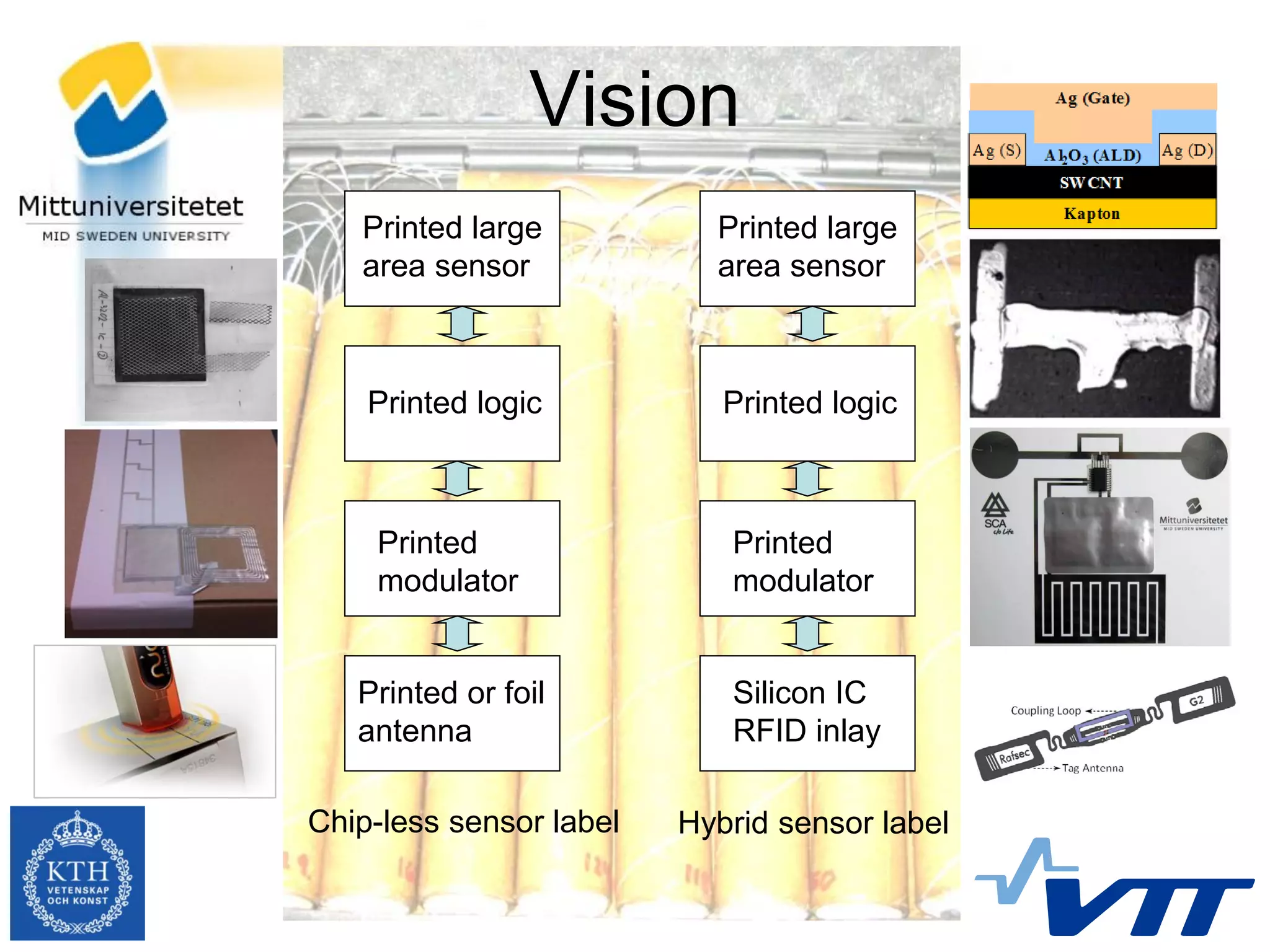
Vision
   Printed large           Printed large
   area sensor             area sensor


    Printed logic           Printed logic


    Printed                 Printed
    modulator               modulator


   Printed or foil          Silicon IC
   antenna                  RFID inlay

Chip-less sensor label   Hybrid sensor label
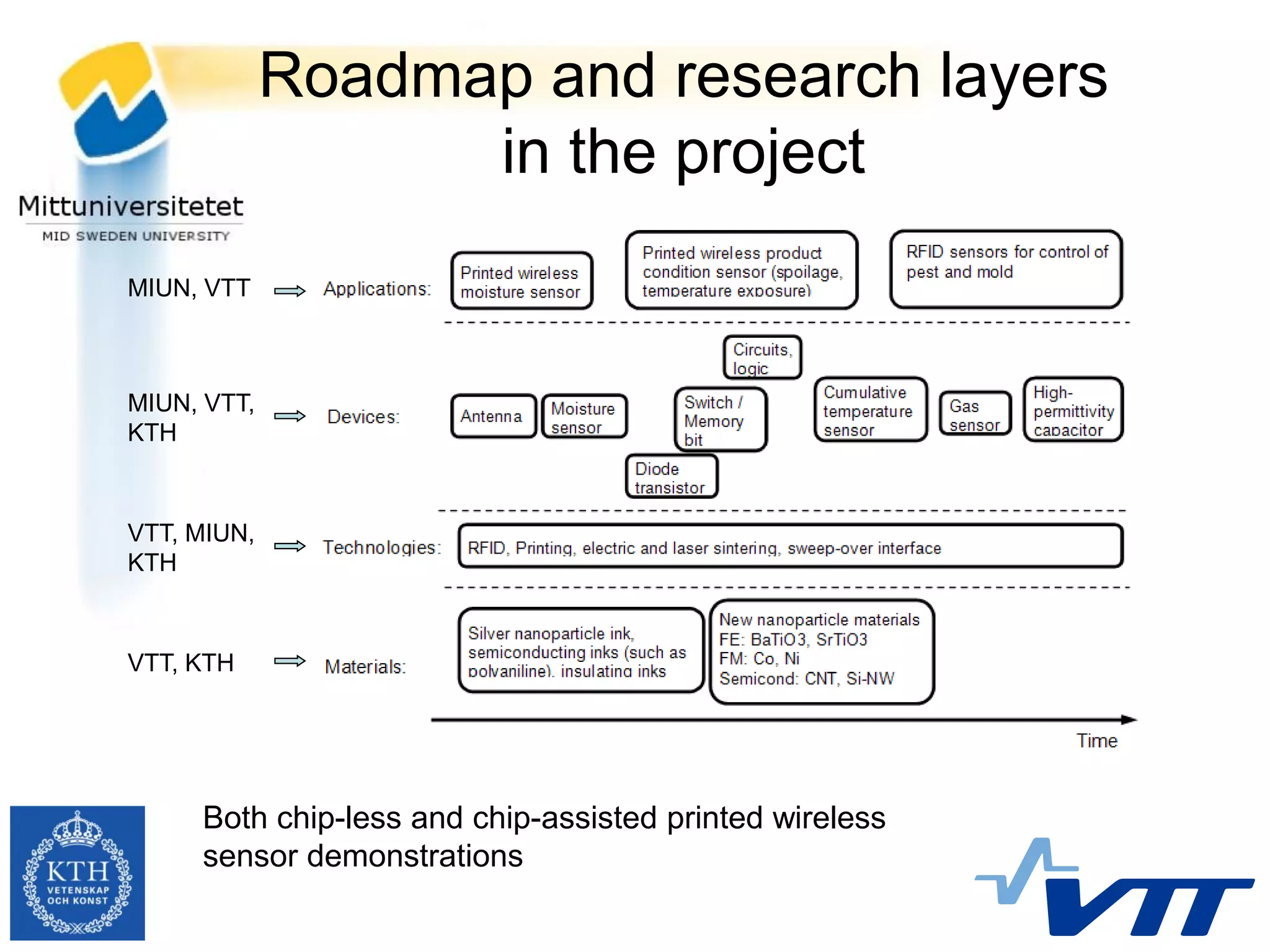
Roadmap and research layers
                   in the project
MIUN, VTT


MIUN, VTT,
KTH


VTT, MIUN,      ‘Optional’
KTH


VTT, KTH


     Both chip-less and chip-assisted printed wireless
     sensor demonstrations
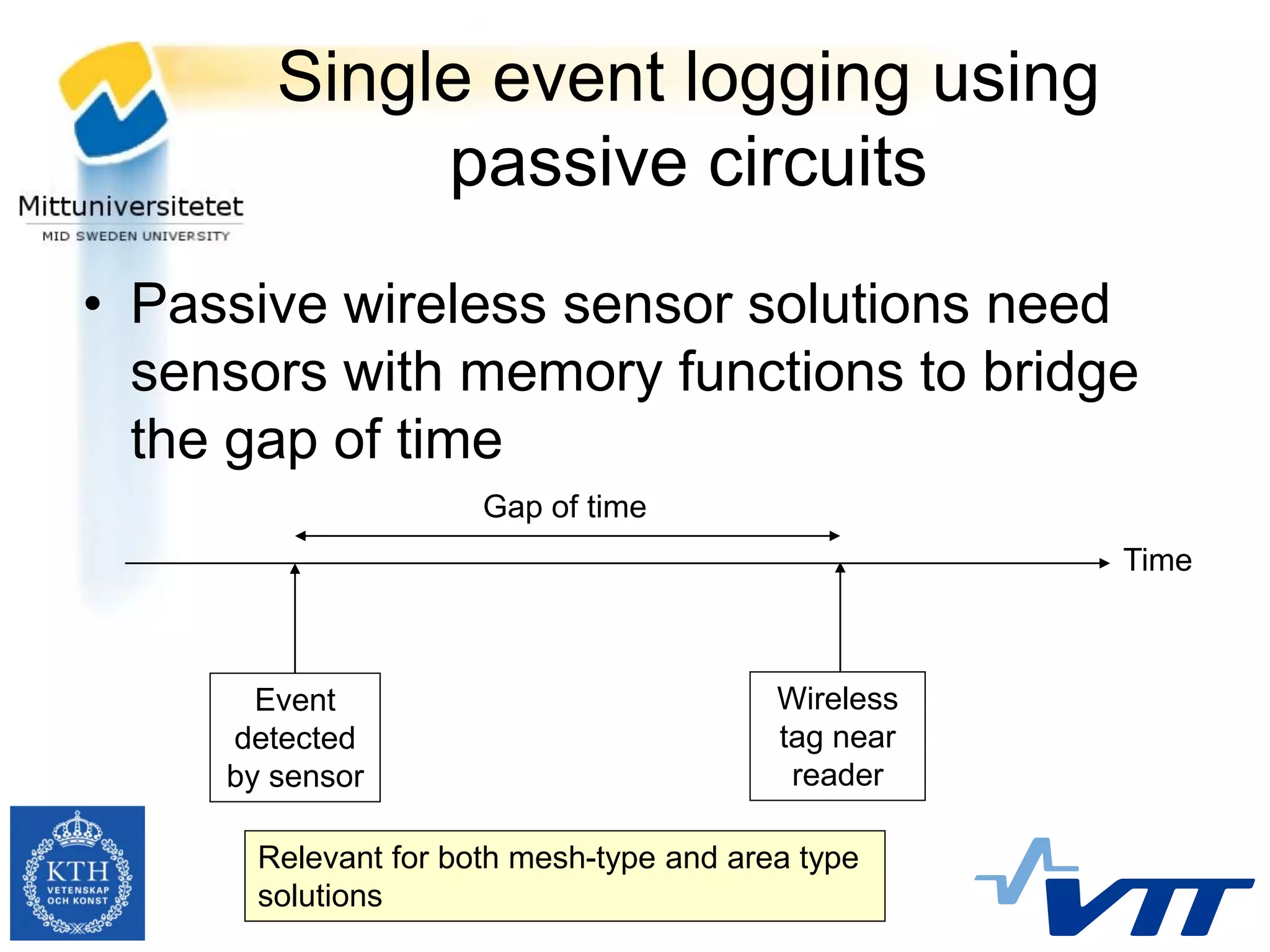
Single event logging using
             passive circuits
• Passive wireless sensor solutions need
  sensors with memory functions to bridge
  the gap of time
                      Gap of time
                                                     Time


       Event                              Wireless
     detected                             tag near
     by sensor                             reader

       Relevant for both mesh-type and area type
       solutions
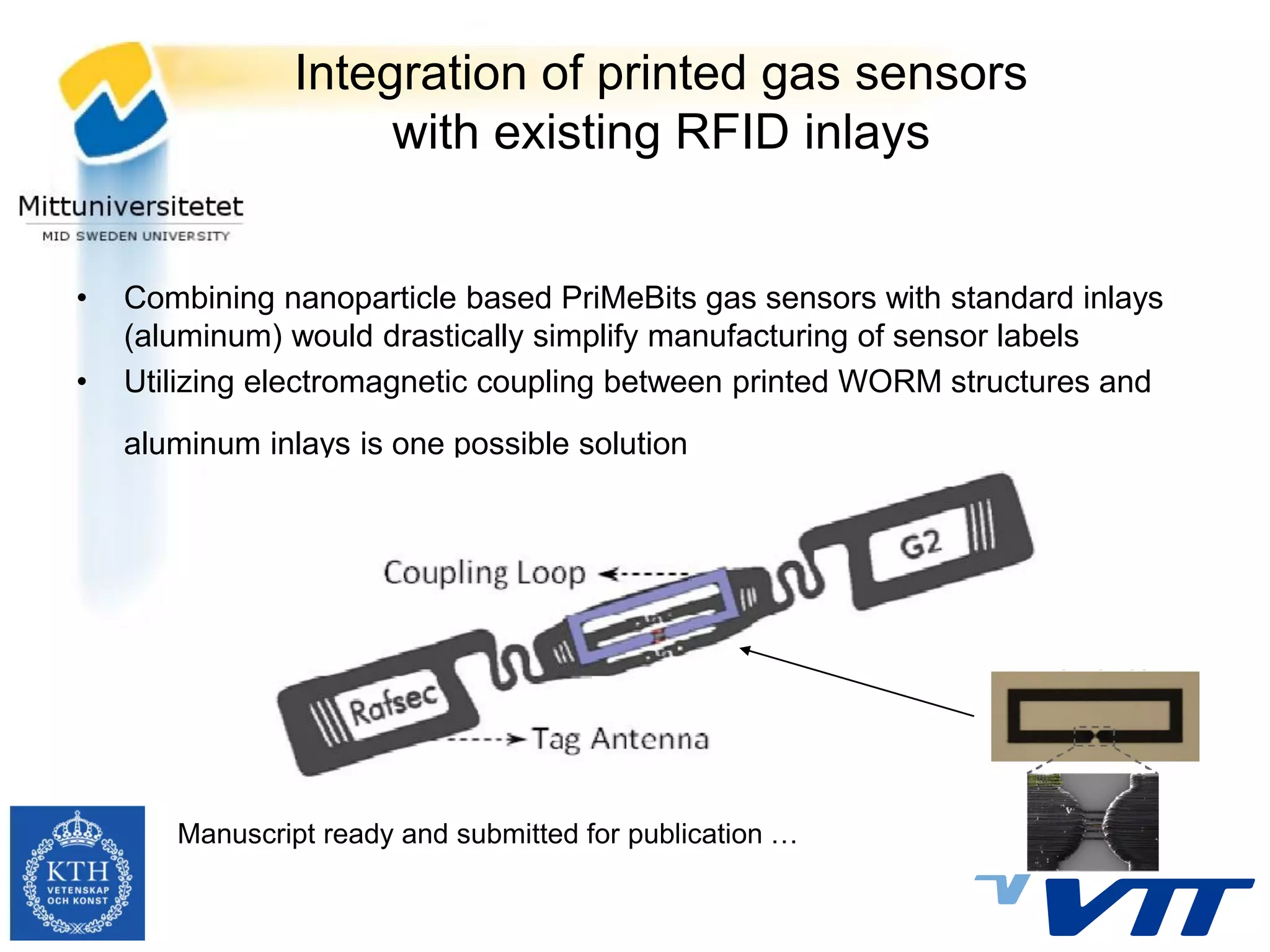
Integration of printed gas sensors
                     with existing RFID inlays


•   Combining nanoparticle based PriMeBits gas sensors with standard inlays
    (aluminum) would drastically simplify manufacturing of sensor labels
•   Utilizing electromagnetic coupling between printed WORM structures and
    aluminum inlays is one possible solution


       Manuscript ready and submitted for publication …
Measurements with moisture sensor
            integrated using EM coupled loops


Measured minimum required transmit power between sensor tag and reference
tag when located inside a laboratory wall with 80% humidity and with the RFID
reader positioned perpendicular 0.8 m from the labels. Two layer printed loop
with moisture sensitive WORM was plastered over the antenna loop. The WORM
sensor was pre-sintered to about 10 kW.
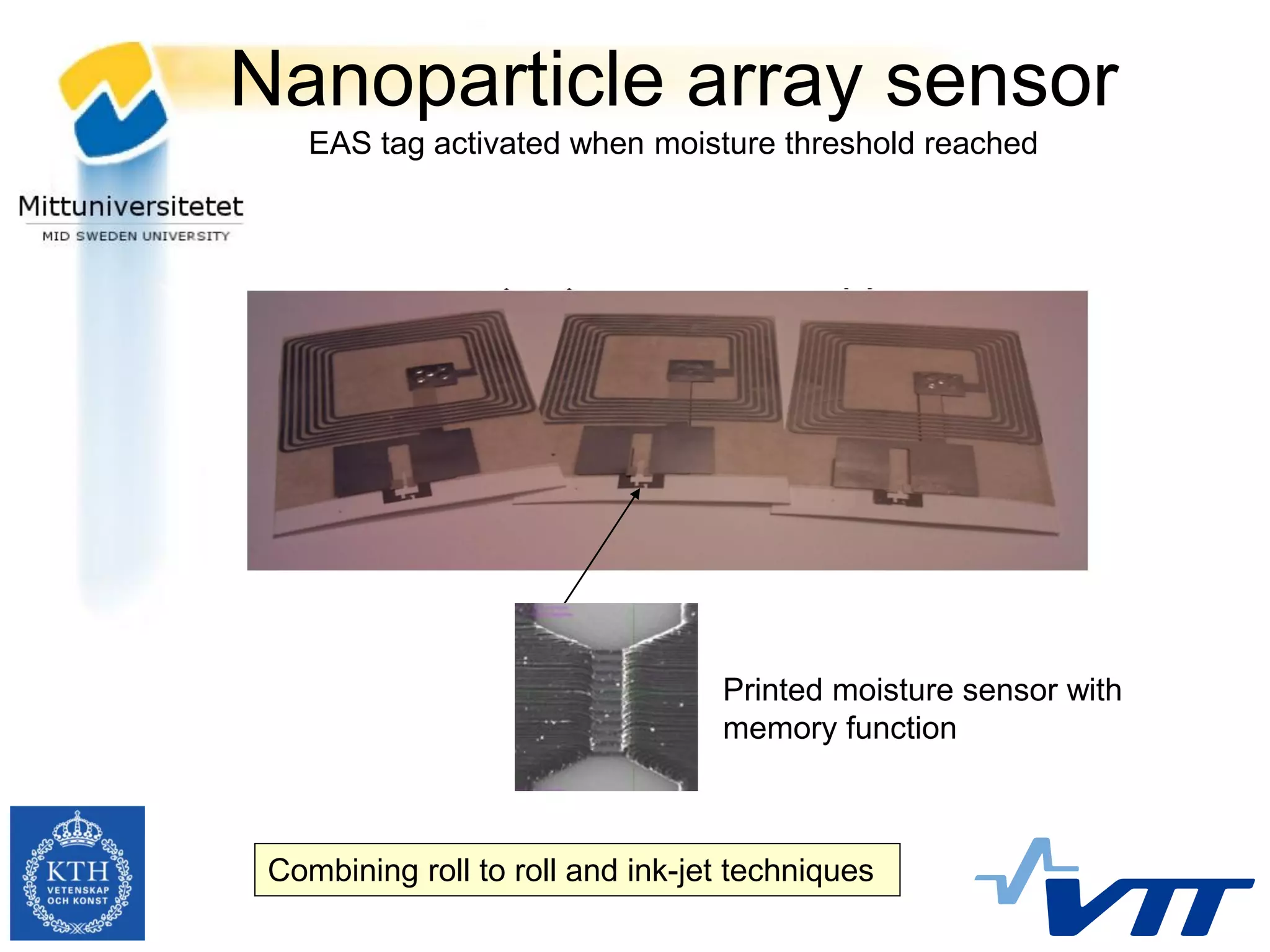
Nanoparticle array sensor
    EAS tag activated when moisture threshold reached


                                  Printed moisture sensor with
                                  memory function


 Combining roll to roll and ink-jet techniques
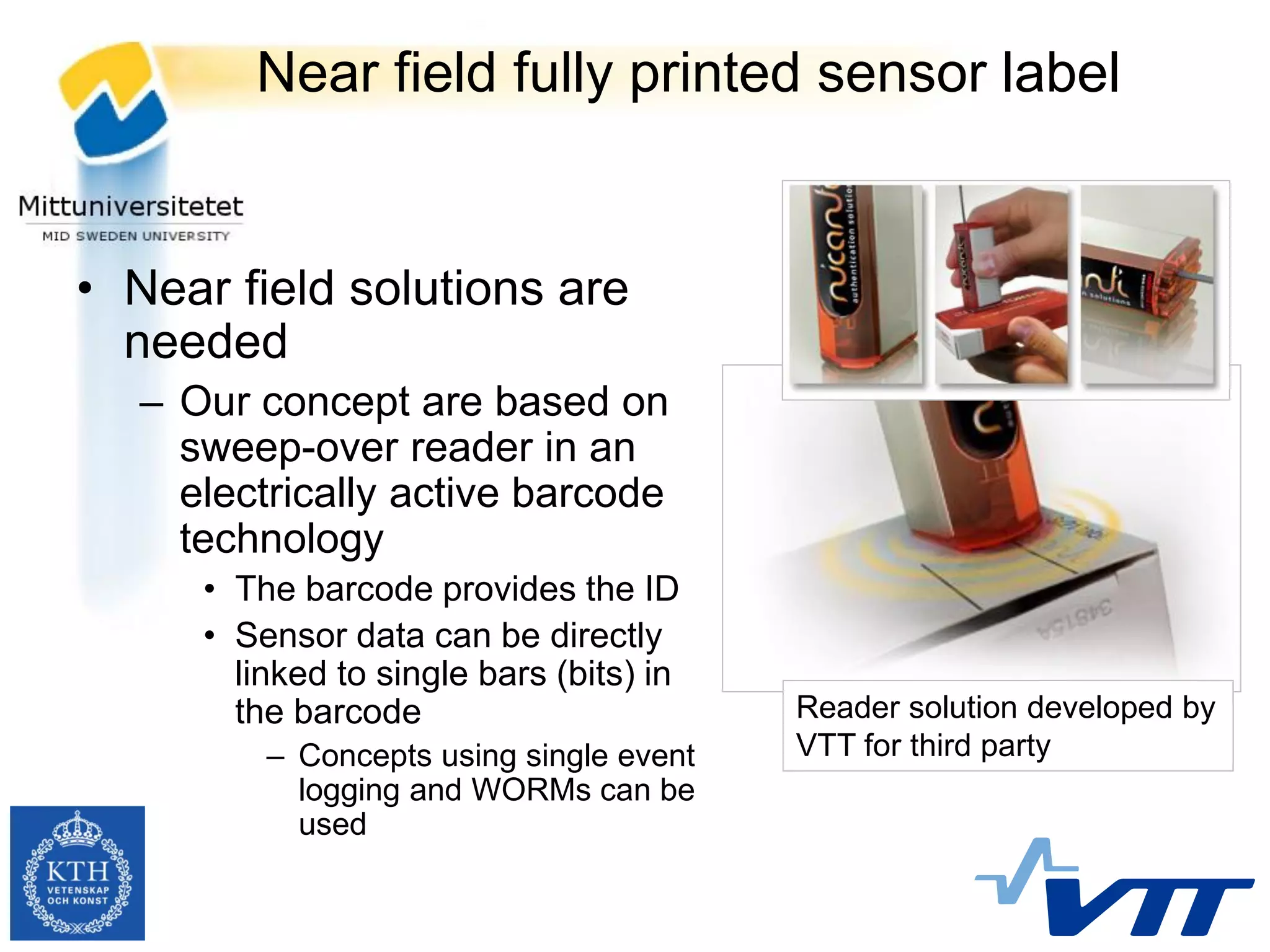
Near field fully printed sensor label


• Near field solutions are
  needed
  – Our concept are based on
    sweep-over reader in an
    electrically active barcode
    technology
     • The barcode provides the ID
     • Sensor data can be directly
       linked to single bars (bits) in
       the barcode                       Reader solution developed by
         – Concepts using single event   VTT for third party
           logging and WORMs can be
           used
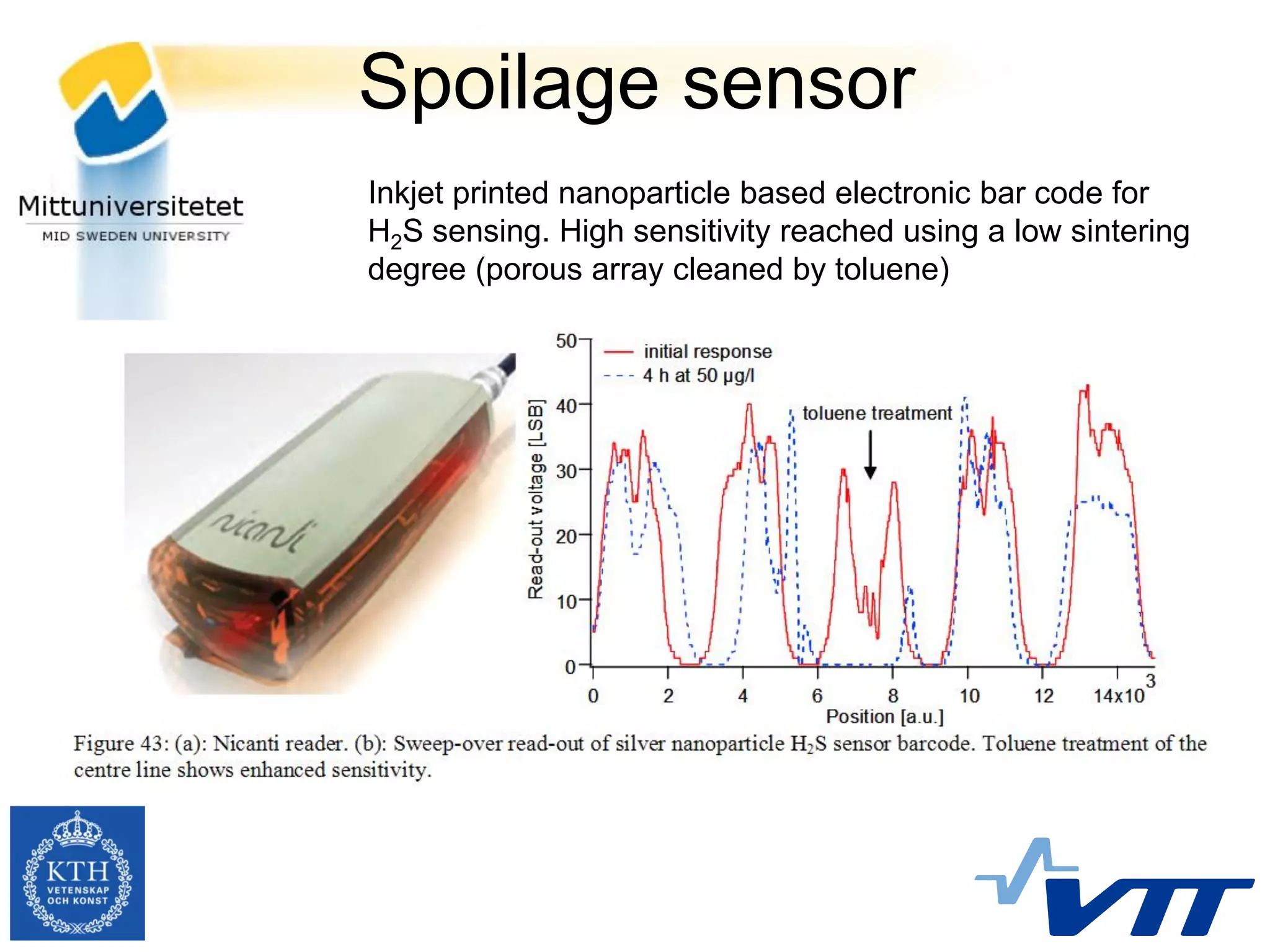
Spoilage sensor
Inkjet printed nanoparticle based electronic bar code for
H2S sensing. High sensitivity reached using a low sintering
degree (porous array cleaned by toluene)
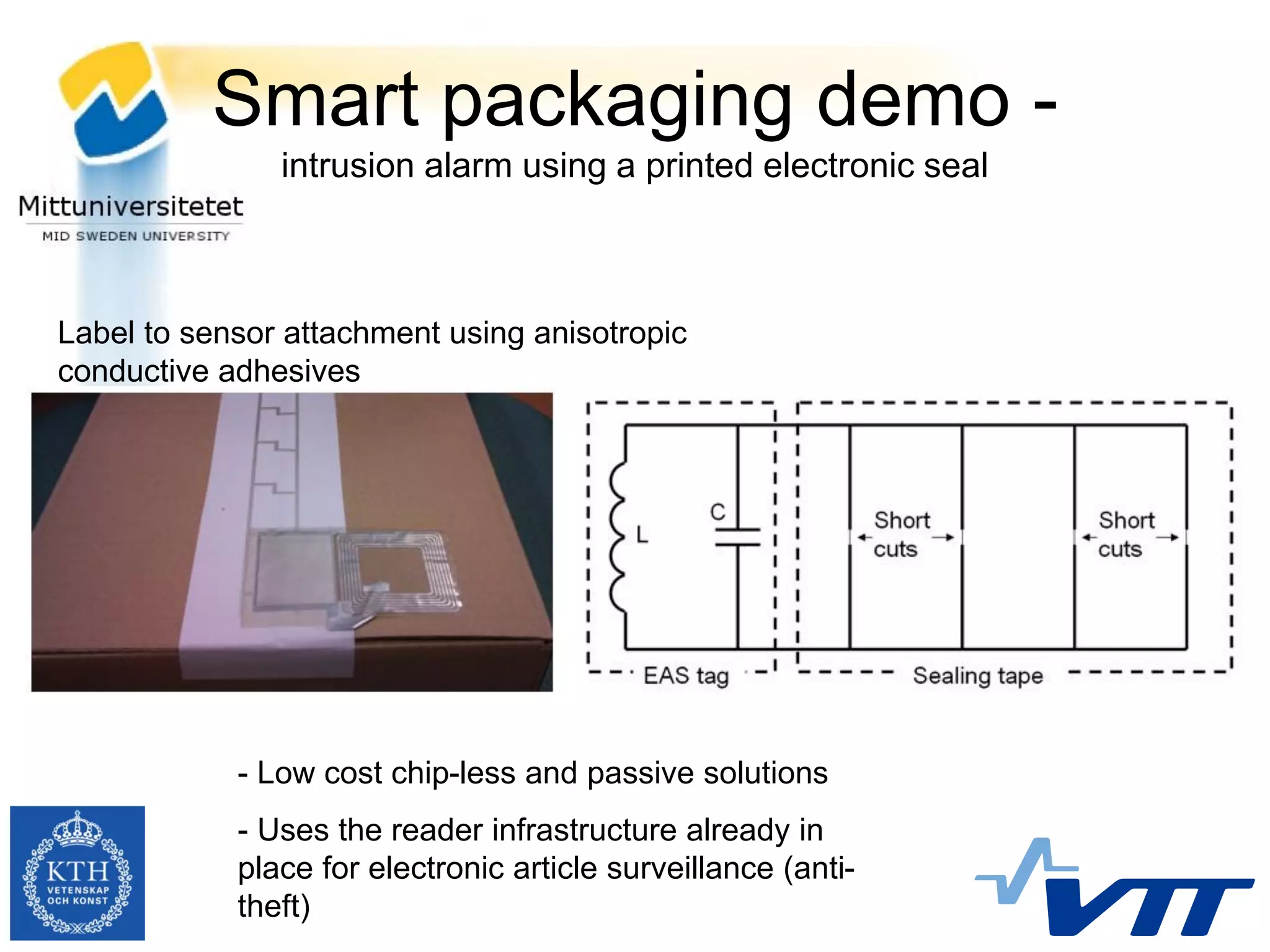
Smart packaging demo -
               intrusion alarm using a printed electronic seal


Label to sensor attachment using anisotropic
conductive adhesives


            - Low cost chip-less and passive solutions
            - Uses the reader infrastructure already in
            place for electronic article surveillance (anti-
            theft)
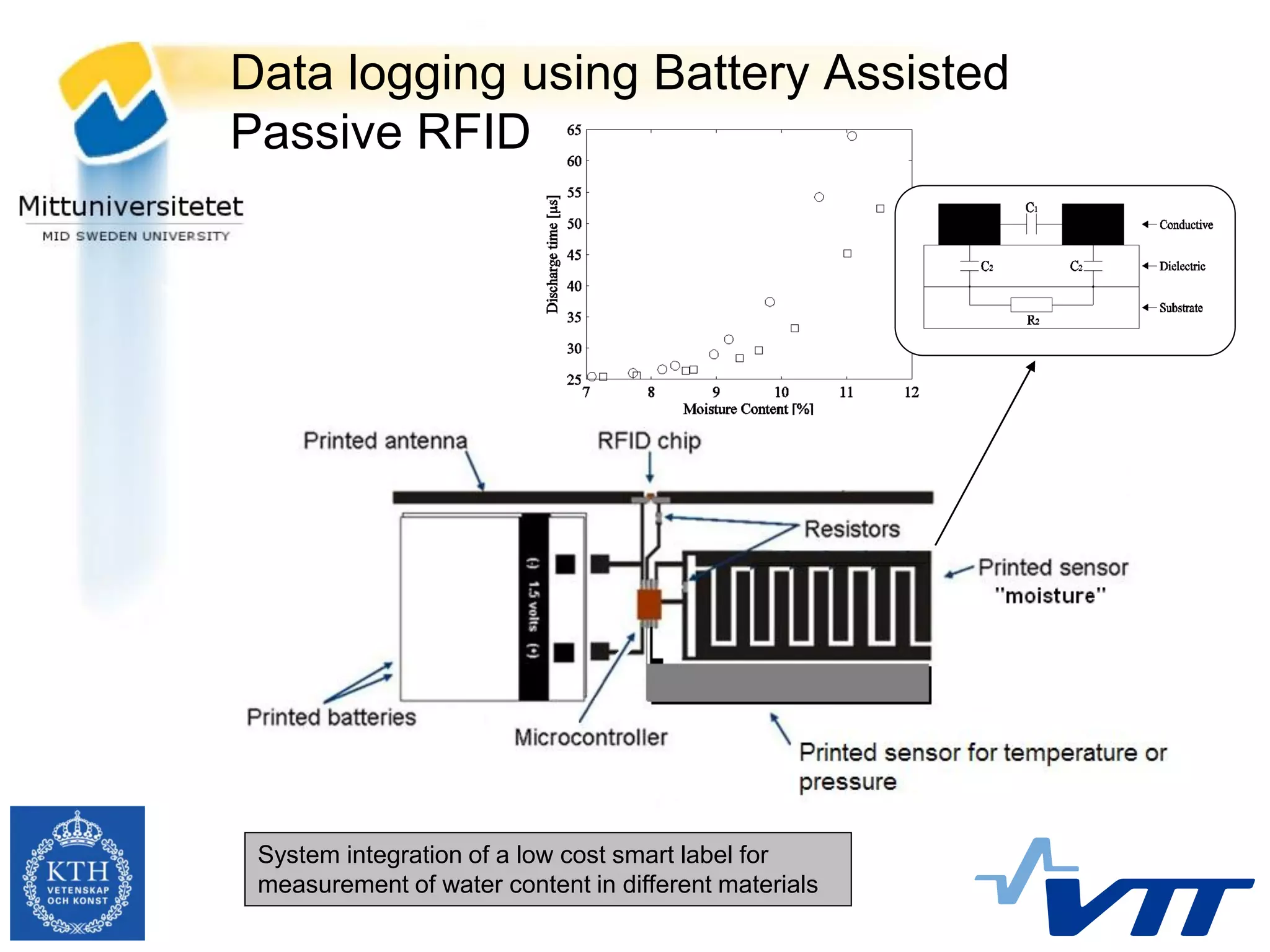
Data logging using Battery Assisted
Passive RFID


 System integration of a low cost smart label for
 measurement of water content in different materials
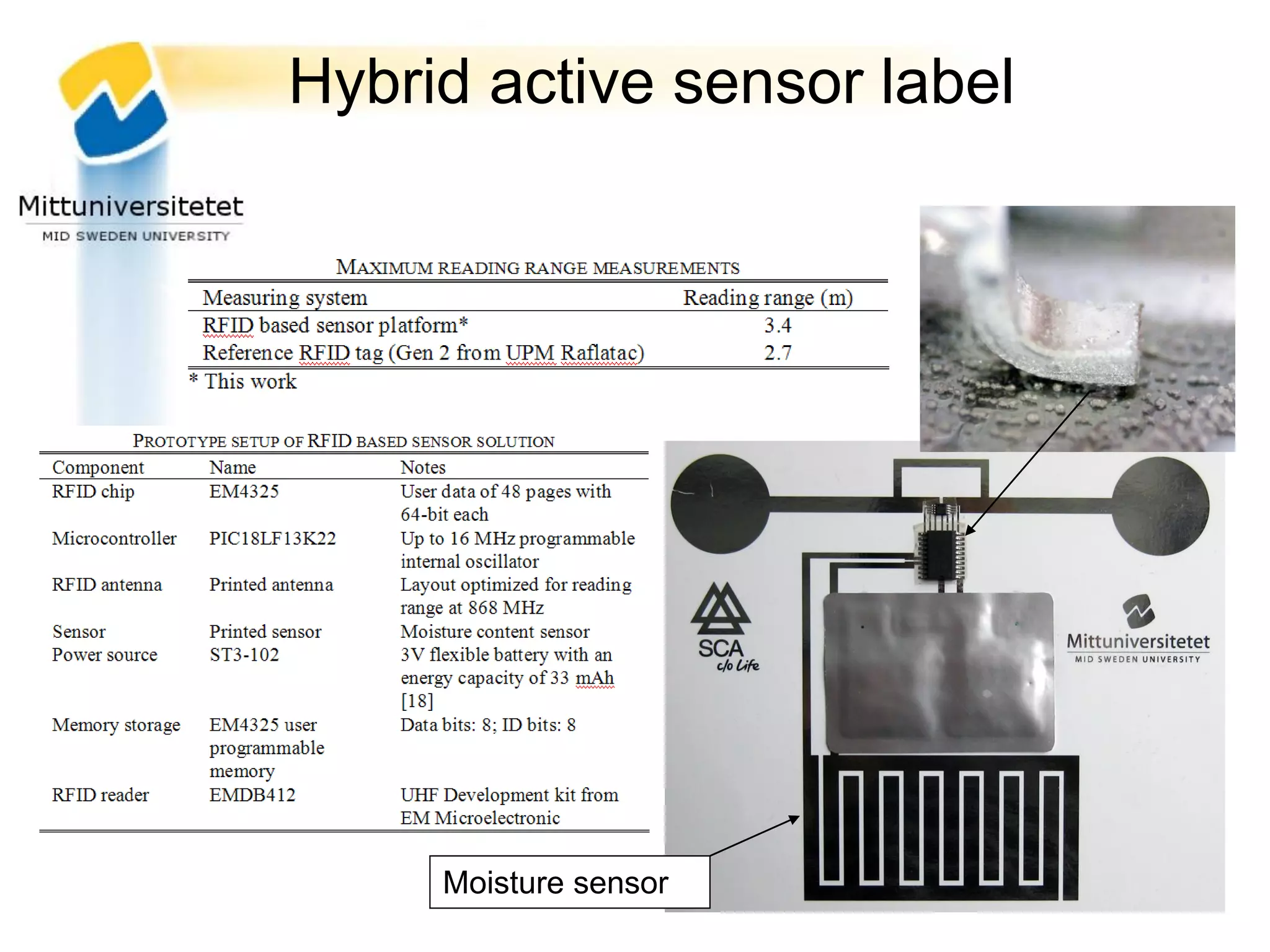
Hybrid active sensor label


     Moisture sensor
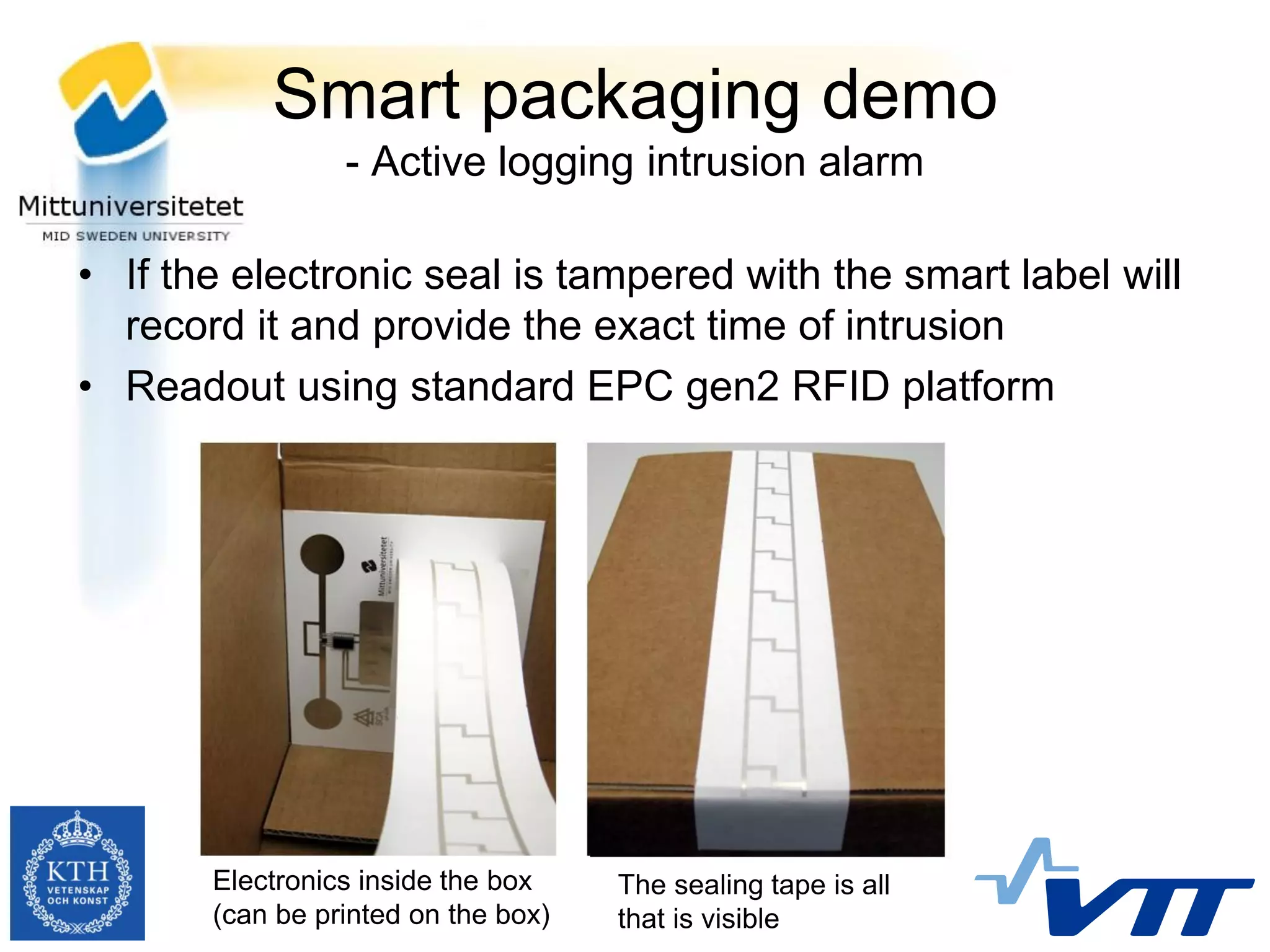
Smart packaging demo
                 - Active logging intrusion alarm

• If the electronic seal is tampered with the smart label will
  record it and provide the exact time of intrusion
• Readout using standard EPC gen2 RFID platform


       Electronics inside the box    The sealing tape is all
       (can be printed on the box)   that is visible
Additional demons to be presented using
       the semi-passive sensor platform

• System integration of RFID platform an
  – Accelerometers – chock and tilt
  – Light detection for intrusion alarm
    enhancement
  – Pressure for vacuum sealed packages
  – Simple gas sensors (nano particle based)
  – Strain
Conclusions

• Nanoparticle based printed thin film transistors
  have been developed and evaluated.
• Some concepts to integrate printed large area
  sensors with standard RFID technology has been
  demonstrated
• Printed moisture sensors have been evaluated and
  used in demonstrator setups
• Printed WORM memory technology has been
  developed and evaluated for use with EPC RFID tags
• Five patents have been filed during the project and in
  total 45 publications have been published

Printed RFID and Wireless Sensor Solutions, Hans-Erik Nilsson, Mid Sweden University

  • 1.
    Printed RFID andWireless Sensor Solutions, PWiSE Nordite project
  • 2.
    Our objectives • Developmentof new tools for system integration of printed wireless sensor solutions – Basic research targeting printing of active or semi-active devices that allow integration of printed logics, sensor and wireless communication • Printed RFID sensor solutions – We are targeting RFID sensor functionality at similar price levels as EPC type RFID tags (5 to 10 US cent). The main motivation for the printed part is to reach large area sensor functionality and low cost customization, and to allow disposable wireless sensor solutions. • Sweep-over type or EAS wireless sensor solutions – We are targeting integration of printed sensor functionalities into fully printed RF structures. The readout solutions targeted are sweep over readers (VTT) and resonator circuits typically used in Electronic Article Surveillance systems (EAS).
  • 3.
    Vision Printed large Printed large area sensor area sensor Printed logic Printed logic Printed Printed modulator modulator Printed or foil Silicon IC antenna RFID inlay Chip-less sensor label Hybrid sensor label
  • 4.
    Roadmap and researchlayers in the project MIUN, VTT MIUN, VTT, KTH VTT, MIUN, ‘Optional’ KTH VTT, KTH Both chip-less and chip-assisted printed wireless sensor demonstrations
  • 5.
    Single event loggingusing passive circuits • Passive wireless sensor solutions need sensors with memory functions to bridge the gap of time Gap of time Time Event Wireless detected tag near by sensor reader Relevant for both mesh-type and area type solutions
  • 6.
    Integration of printedgas sensors with existing RFID inlays • Combining nanoparticle based PriMeBits gas sensors with standard inlays (aluminum) would drastically simplify manufacturing of sensor labels • Utilizing electromagnetic coupling between printed WORM structures and aluminum inlays is one possible solution Manuscript ready and submitted for publication …
  • 7.
    Measurements with moisturesensor integrated using EM coupled loops Measured minimum required transmit power between sensor tag and reference tag when located inside a laboratory wall with 80% humidity and with the RFID reader positioned perpendicular 0.8 m from the labels. Two layer printed loop with moisture sensitive WORM was plastered over the antenna loop. The WORM sensor was pre-sintered to about 10 kW.
  • 8.
    Nanoparticle array sensor EAS tag activated when moisture threshold reached Printed moisture sensor with memory function Combining roll to roll and ink-jet techniques
  • 9.
    Near field fullyprinted sensor label • Near field solutions are needed – Our concept are based on sweep-over reader in an electrically active barcode technology • The barcode provides the ID • Sensor data can be directly linked to single bars (bits) in the barcode Reader solution developed by – Concepts using single event VTT for third party logging and WORMs can be used
  • 10.
    Spoilage sensor Inkjet printednanoparticle based electronic bar code for H2S sensing. High sensitivity reached using a low sintering degree (porous array cleaned by toluene)
  • 11.
    Smart packaging demo- intrusion alarm using a printed electronic seal Label to sensor attachment using anisotropic conductive adhesives - Low cost chip-less and passive solutions - Uses the reader infrastructure already in place for electronic article surveillance (anti- theft)
  • 12.
    Data logging usingBattery Assisted Passive RFID System integration of a low cost smart label for measurement of water content in different materials
  • 13.
    Hybrid active sensorlabel Moisture sensor
  • 14.
    Smart packaging demo - Active logging intrusion alarm • If the electronic seal is tampered with the smart label will record it and provide the exact time of intrusion • Readout using standard EPC gen2 RFID platform Electronics inside the box The sealing tape is all (can be printed on the box) that is visible
  • 15.
    Additional demons tobe presented using the semi-passive sensor platform • System integration of RFID platform an – Accelerometers – chock and tilt – Light detection for intrusion alarm enhancement – Pressure for vacuum sealed packages – Simple gas sensors (nano particle based) – Strain
  • 16.
    Conclusions • Nanoparticle basedprinted thin film transistors have been developed and evaluated. • Some concepts to integrate printed large area sensors with standard RFID technology has been demonstrated • Printed moisture sensors have been evaluated and used in demonstrator setups • Printed WORM memory technology has been developed and evaluated for use with EPC RFID tags • Five patents have been filed during the project and in total 45 publications have been published