WHY STILL WORK WITH PRINCE2®?
“PRINCE2® IS DEAD! LONG LIVE AGILE!”
WHAT’S THE STORY?
2
WHAT IS THAT CHANGE?
3
WAS IT THAT CHANGE?
4
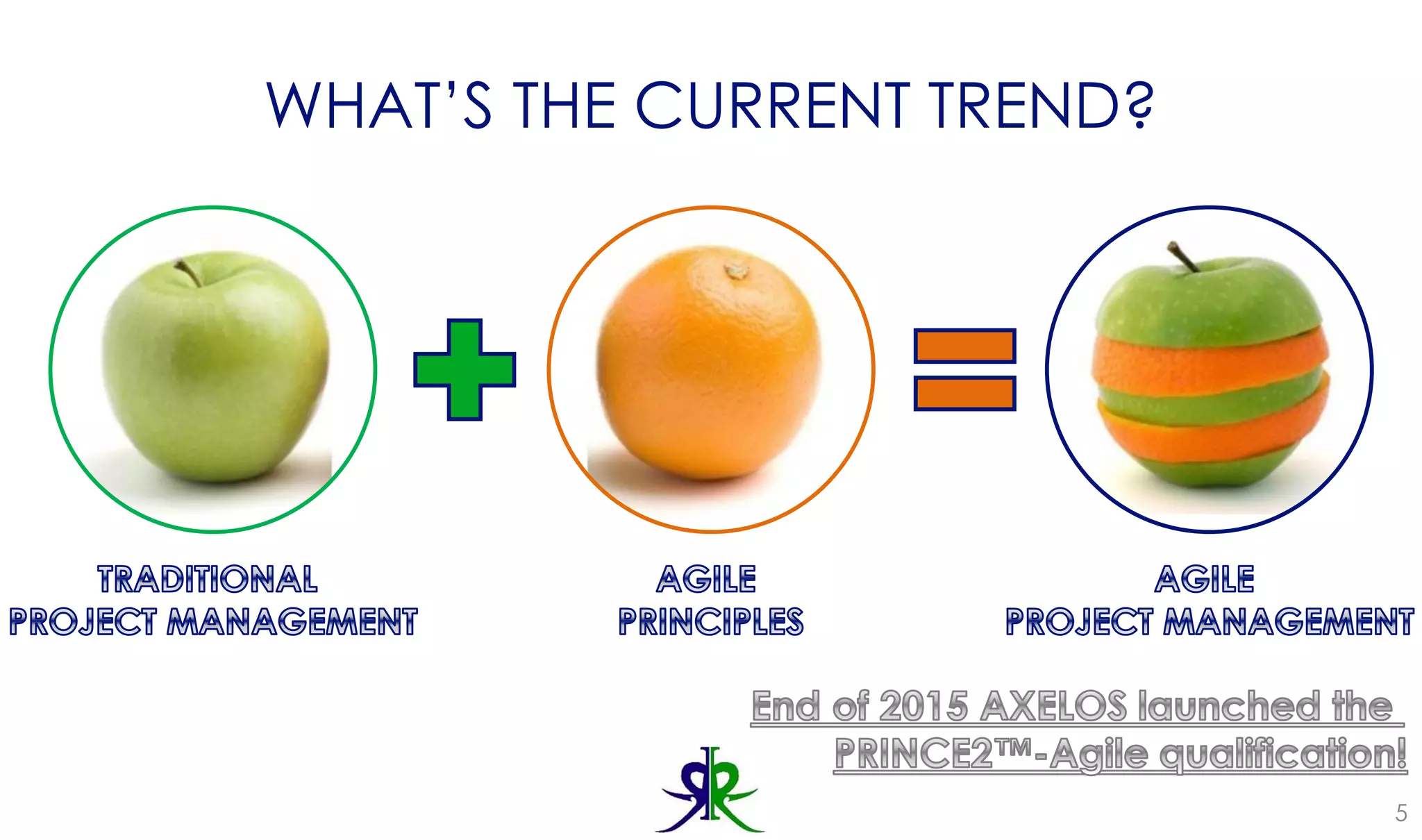
WHAT’S THE CURRENT TREND?
5
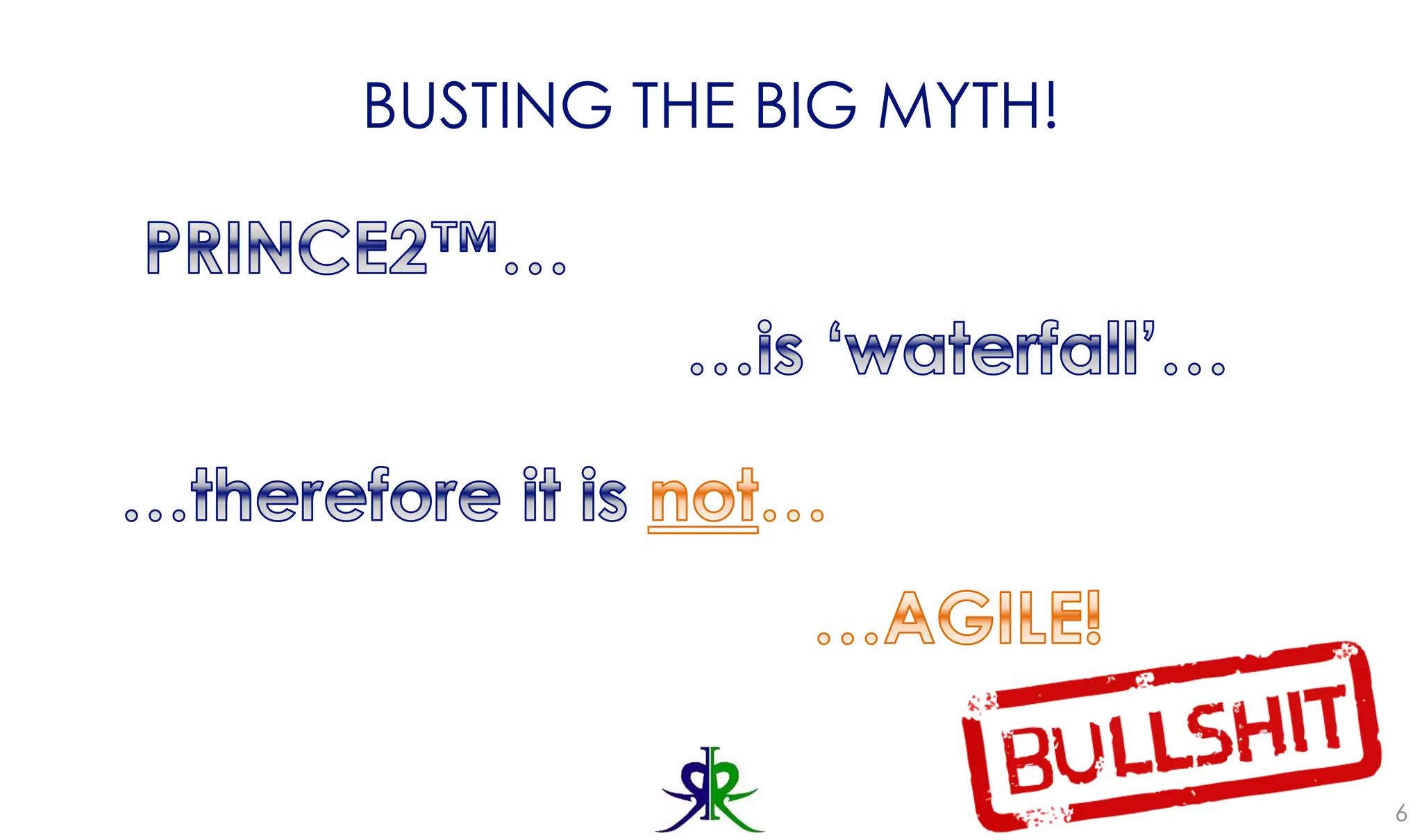
BUSTING THE BIG MYTH!
6
SO WHAT’S THE DIFFERENCE?
7
WHAT’S GOING ON IN THE REAL WORLD?
8
WHICH METHODOLOGY SUITED THESE
PROJECTS BEST?
9
WHAT’S GOING ON IN THE REAL WORLD?
10
WHICH METHODOLOGY SUITS THEIR CORE
BUSINESS?
11
WHAT DO YOU THINK?
12
WHAT DO YOU THINK?
13
LET THE AGILISTS DECIDE!
14
WHAT DO THE PROS THINK?
15
Consultant, Mentor, Speaker and Author developing multinationals
to make their tricky projects work.
Check out Penny’s publications @ koganpage.com!
WHAT DO THE PROS THINK?
16
Accredited MSP®, MoP®, PRINCE2®, PRINCE2 Agile™ & Agile Project
Management trainer, project manager (PMP®), ScrumMaster and
management consultant.
Check out Key Result’s training and consulting
possibilities @ keyresult.nl !
WHAT DO THE PROS THINK?
17
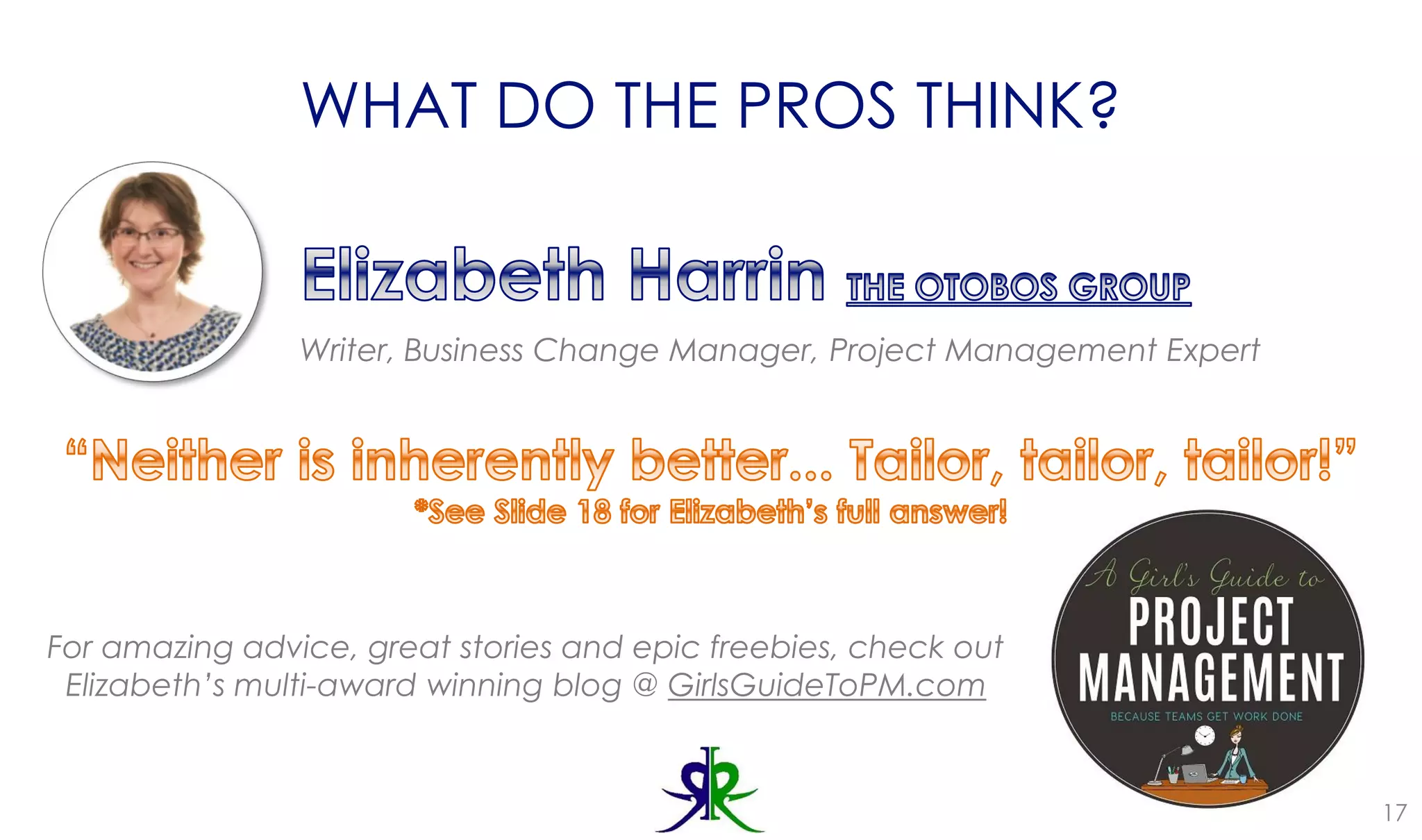
Writer, Business Change Manager, Project Management Expert
For amazing advice, great stories and epic freebies, check out
Elizabeth’s multi-award winning blog @ GirlsGuideToPM.com
18
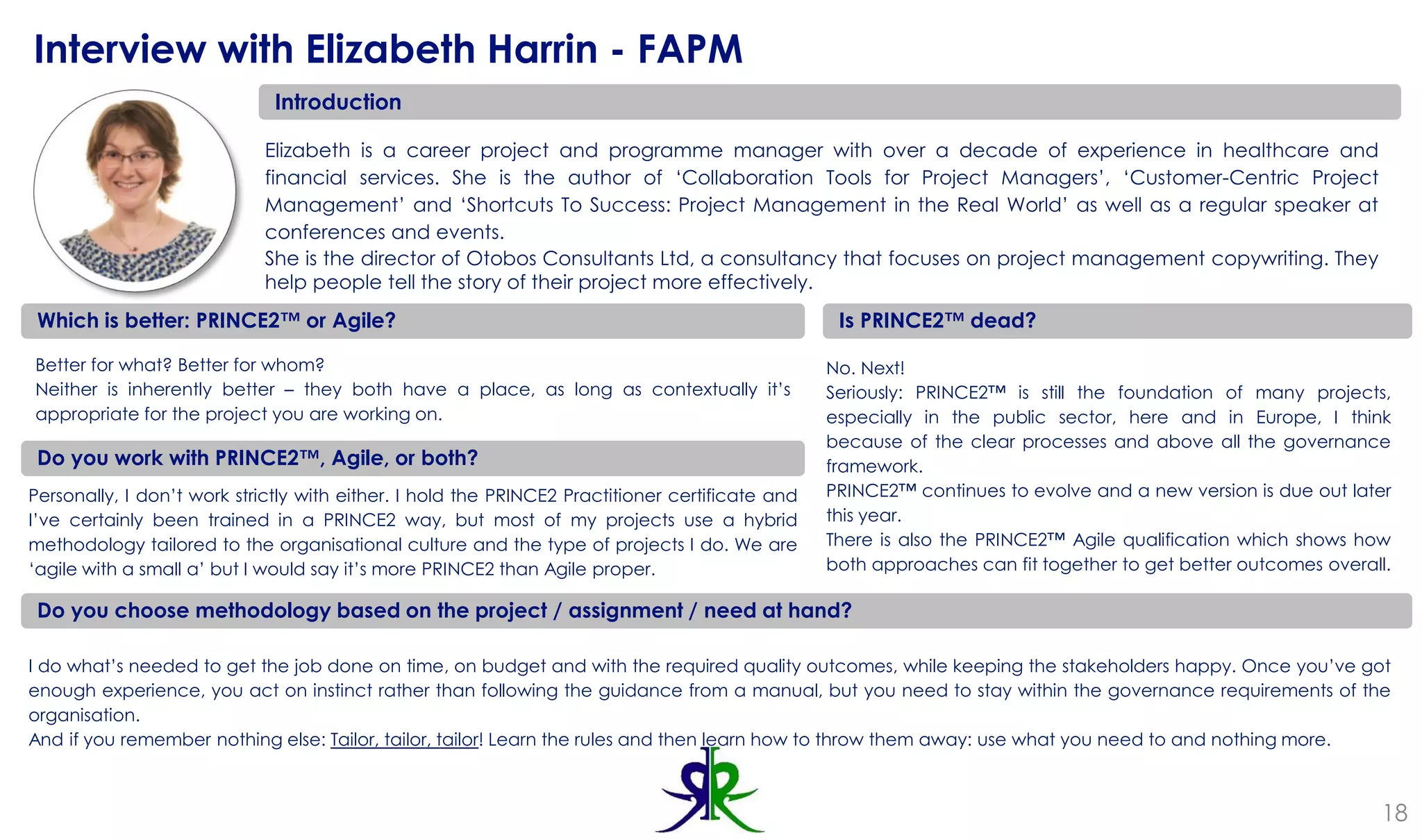
Interview with Elizabeth Harrin - FAPM
Introduction
Elizabeth is a career project and programme manager with over a decade of experience in healthcare and
financial services. She is the author of ‘Collaboration Tools for Project Managers’, ‘Customer-Centric Project
Management’ and ‘Shortcuts To Success: Project Management in the Real World’ as well as a regular speaker at
conferences and events.
She is the director of Otobos Consultants Ltd, a consultancy that focuses on project management copywriting. They
help people tell the story of their project more effectively.
Which is better: PRINCE2™ or Agile?
Better for what? Better for whom?
Neither is inherently better – they both have a place, as long as contextually it’s
appropriate for the project you are working on.
Is PRINCE2™ dead?
No. Next!
Seriously: PRINCE2™ is still the foundation of many projects,
especially in the public sector, here and in Europe, I think
because of the clear processes and above all the governance
framework.
PRINCE2™ continues to evolve and a new version is due out later
this year.
There is also the PRINCE2™ Agile qualification which shows how
both approaches can fit together to get better outcomes overall.
Do you work with PRINCE2™, Agile, or both?
Personally, I don’t work strictly with either. I hold the PRINCE2 Practitioner certificate and
I’ve certainly been trained in a PRINCE2 way, but most of my projects use a hybrid
methodology tailored to the organisational culture and the type of projects I do. We are
‘agile with a small a’ but I would say it’s more PRINCE2 than Agile proper.
Do you choose methodology based on the project / assignment / need at hand?
I do what’s needed to get the job done on time, on budget and with the required quality outcomes, while keeping the stakeholders happy. Once you’ve got
enough experience, you act on instinct rather than following the guidance from a manual, but you need to stay within the governance requirements of the
organisation.
And if you remember nothing else: Tailor, tailor, tailor! Learn the rules and then learn how to throw them away: use what you need to and nothing more.
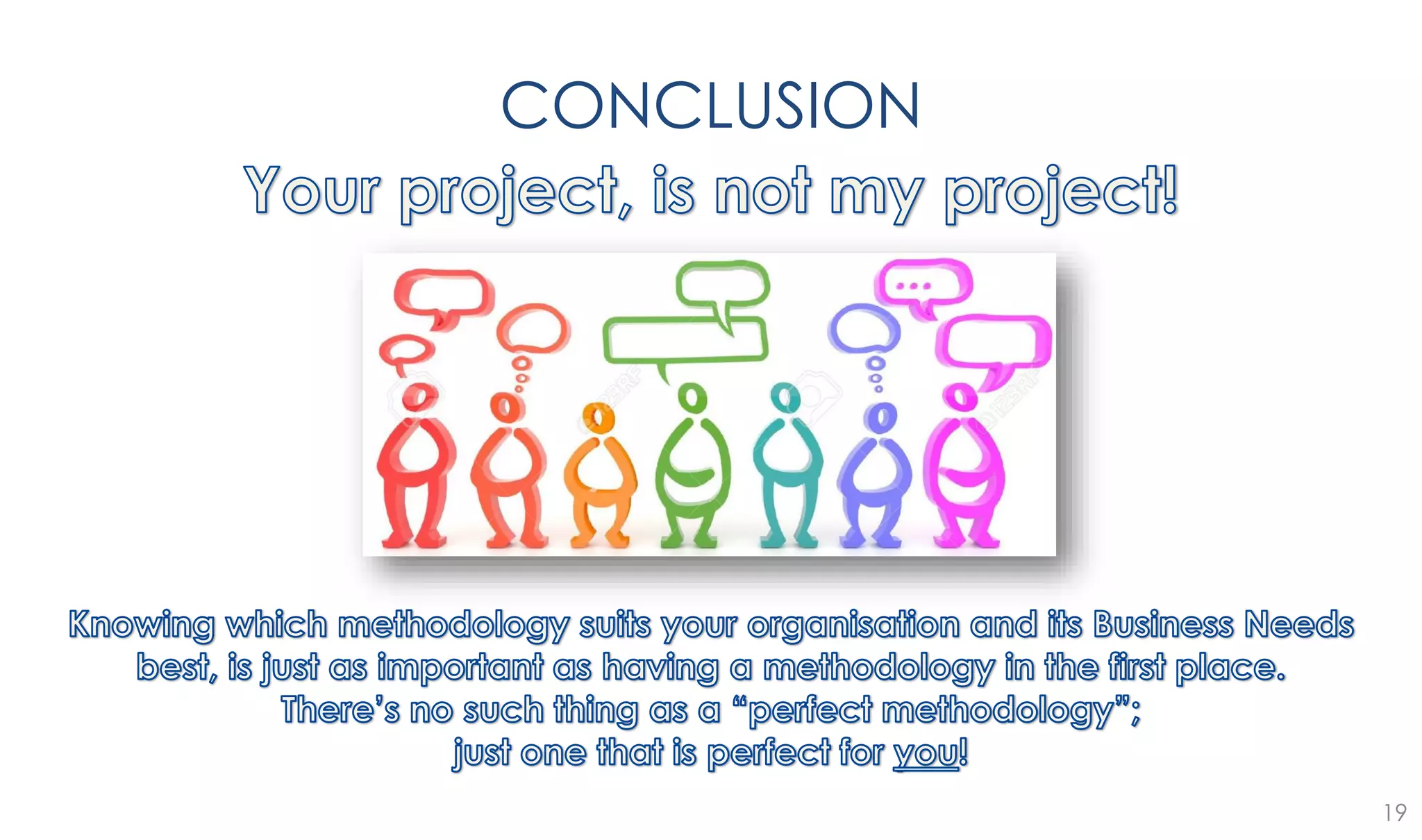
CONCLUSION
19
THANK YOU
20

PRINCE2 is dead! Long live Agile!

  • 1.
    WHY STILL WORKWITH PRINCE2®? “PRINCE2® IS DEAD! LONG LIVE AGILE!”
  • 2.
  • 3.
    WHAT IS THATCHANGE? 3
  • 4.
    WAS IT THATCHANGE? 4
  • 5.
  • 6.
  • 7.
    SO WHAT’S THEDIFFERENCE? 7
  • 8.
    WHAT’S GOING ONIN THE REAL WORLD? 8
  • 9.
    WHICH METHODOLOGY SUITEDTHESE PROJECTS BEST? 9
  • 10.
    WHAT’S GOING ONIN THE REAL WORLD? 10
  • 11.
    WHICH METHODOLOGY SUITSTHEIR CORE BUSINESS? 11
  • 12.
    WHAT DO YOUTHINK? 12
  • 13.
    WHAT DO YOUTHINK? 13
  • 14.
    LET THE AGILISTSDECIDE! 14
  • 15.
    WHAT DO THEPROS THINK? 15 Consultant, Mentor, Speaker and Author developing multinationals to make their tricky projects work. Check out Penny’s publications @ koganpage.com!
  • 16.
    WHAT DO THEPROS THINK? 16 Accredited MSP®, MoP®, PRINCE2®, PRINCE2 Agile™ & Agile Project Management trainer, project manager (PMP®), ScrumMaster and management consultant. Check out Key Result’s training and consulting possibilities @ keyresult.nl !
  • 17.
    WHAT DO THEPROS THINK? 17 Writer, Business Change Manager, Project Management Expert For amazing advice, great stories and epic freebies, check out Elizabeth’s multi-award winning blog @ GirlsGuideToPM.com
  • 18.
    18 Interview with ElizabethHarrin - FAPM Introduction Elizabeth is a career project and programme manager with over a decade of experience in healthcare and financial services. She is the author of ‘Collaboration Tools for Project Managers’, ‘Customer-Centric Project Management’ and ‘Shortcuts To Success: Project Management in the Real World’ as well as a regular speaker at conferences and events. She is the director of Otobos Consultants Ltd, a consultancy that focuses on project management copywriting. They help people tell the story of their project more effectively. Which is better: PRINCE2™ or Agile? Better for what? Better for whom? Neither is inherently better – they both have a place, as long as contextually it’s appropriate for the project you are working on. Is PRINCE2™ dead? No. Next! Seriously: PRINCE2™ is still the foundation of many projects, especially in the public sector, here and in Europe, I think because of the clear processes and above all the governance framework. PRINCE2™ continues to evolve and a new version is due out later this year. There is also the PRINCE2™ Agile qualification which shows how both approaches can fit together to get better outcomes overall. Do you work with PRINCE2™, Agile, or both? Personally, I don’t work strictly with either. I hold the PRINCE2 Practitioner certificate and I’ve certainly been trained in a PRINCE2 way, but most of my projects use a hybrid methodology tailored to the organisational culture and the type of projects I do. We are ‘agile with a small a’ but I would say it’s more PRINCE2 than Agile proper. Do you choose methodology based on the project / assignment / need at hand? I do what’s needed to get the job done on time, on budget and with the required quality outcomes, while keeping the stakeholders happy. Once you’ve got enough experience, you act on instinct rather than following the guidance from a manual, but you need to stay within the governance requirements of the organisation. And if you remember nothing else: Tailor, tailor, tailor! Learn the rules and then learn how to throw them away: use what you need to and nothing more.
  • 19.
  • 20.