Prince2 Basics
Vision
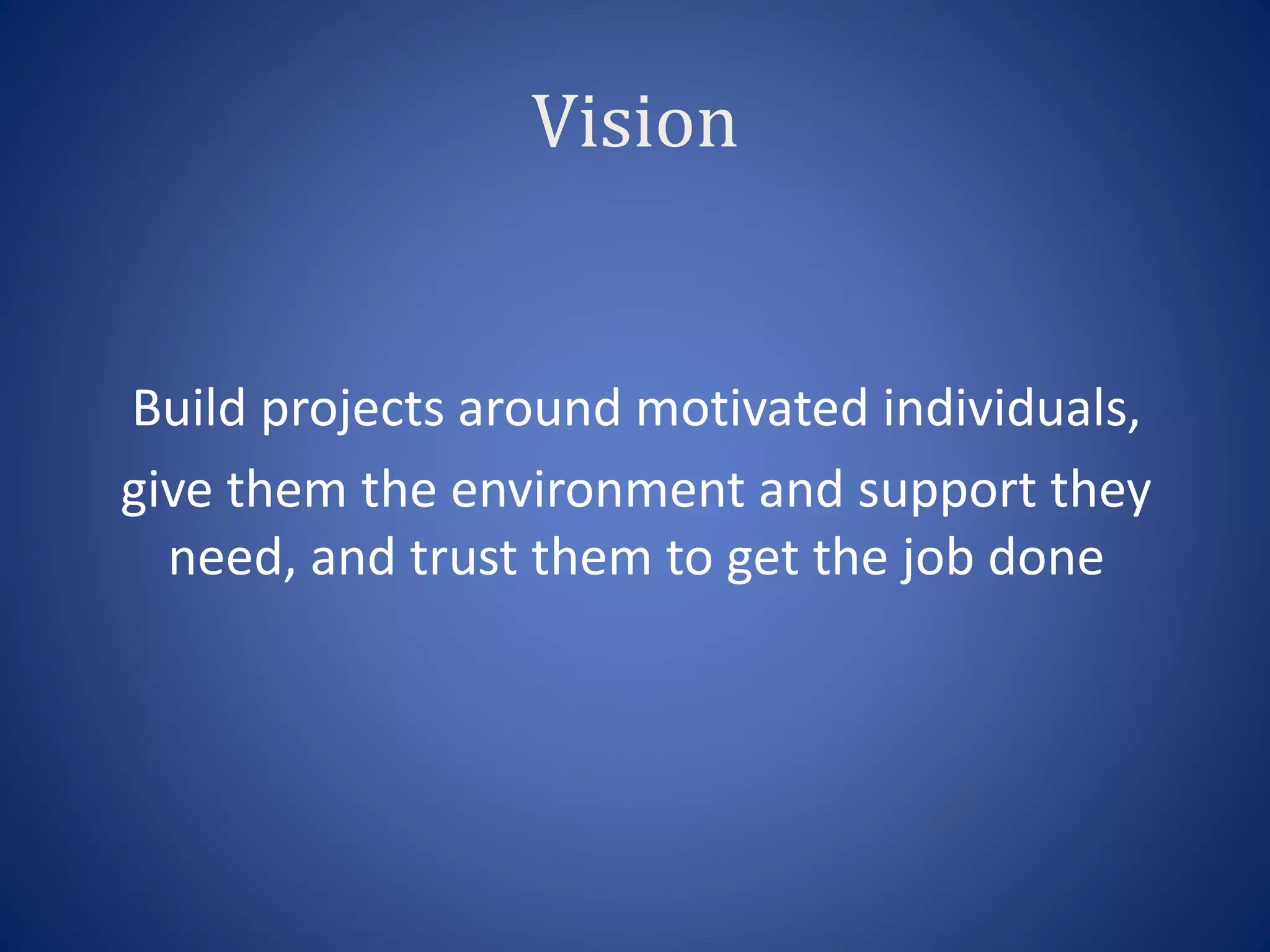
Build projects around motivated individuals,
give them the environment and support they
need, and trust them to get the job done
Prince2 Environment
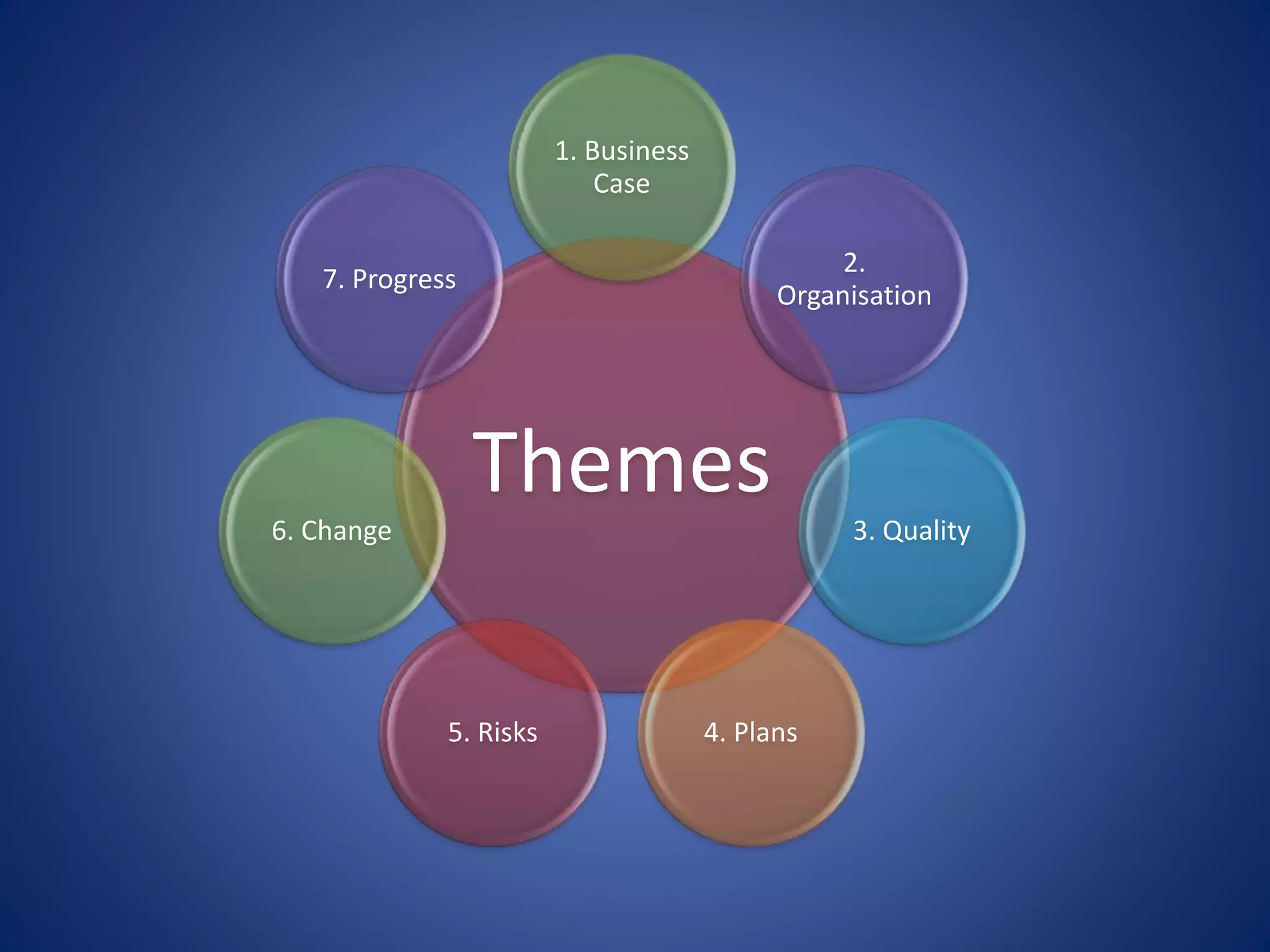
Themes
1. Business
Case
2.
Organisation
3. Quality
4. Plans5. Risks
6. Change
7. Progress
Principles
1. Continued
business
justification
2. Learn from
experience
3. Defined roles
&
responsibilities
4. Manage by
stages
5. Manage by
exception
6. Focus on
products
7. Tailor to
project
environment
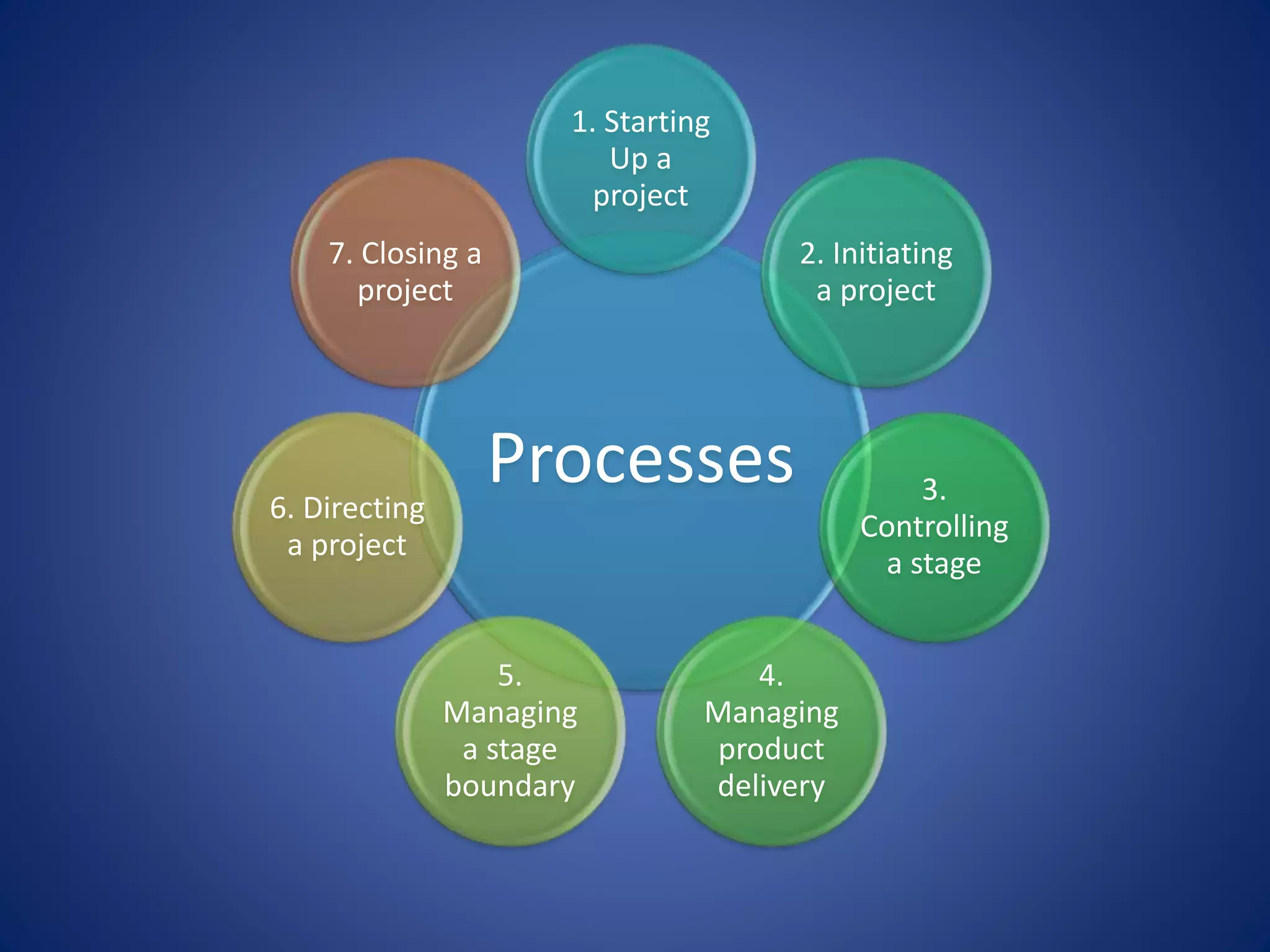
Processes
1. Starting
Up a
project
2. Initiating
a project
3.
Controlling
a stage
4.
Managing
product
delivery
5.
Managing a
stage
boundary
6. Directing
a project
7. Closing a
project
Principles
1. Continued
business
justification
2. Learn from
experience
3. Defined
roles &
responsibilities
4. Manage by
stages
5. Manage by
exception
6. Focus on
products
7. Tailor to
project
environment
Themes
1. Business
Case
2.
Organisation
3. Quality
4. Plans5. Risks
6. Change
7. Progress
Processes
1. Starting
Up a
project
2. Initiating
a project
3.
Controlling
a stage
4.
Managing
product
delivery
5.
Managing
a stage
boundary
6. Directing
a project
7. Closing a
project
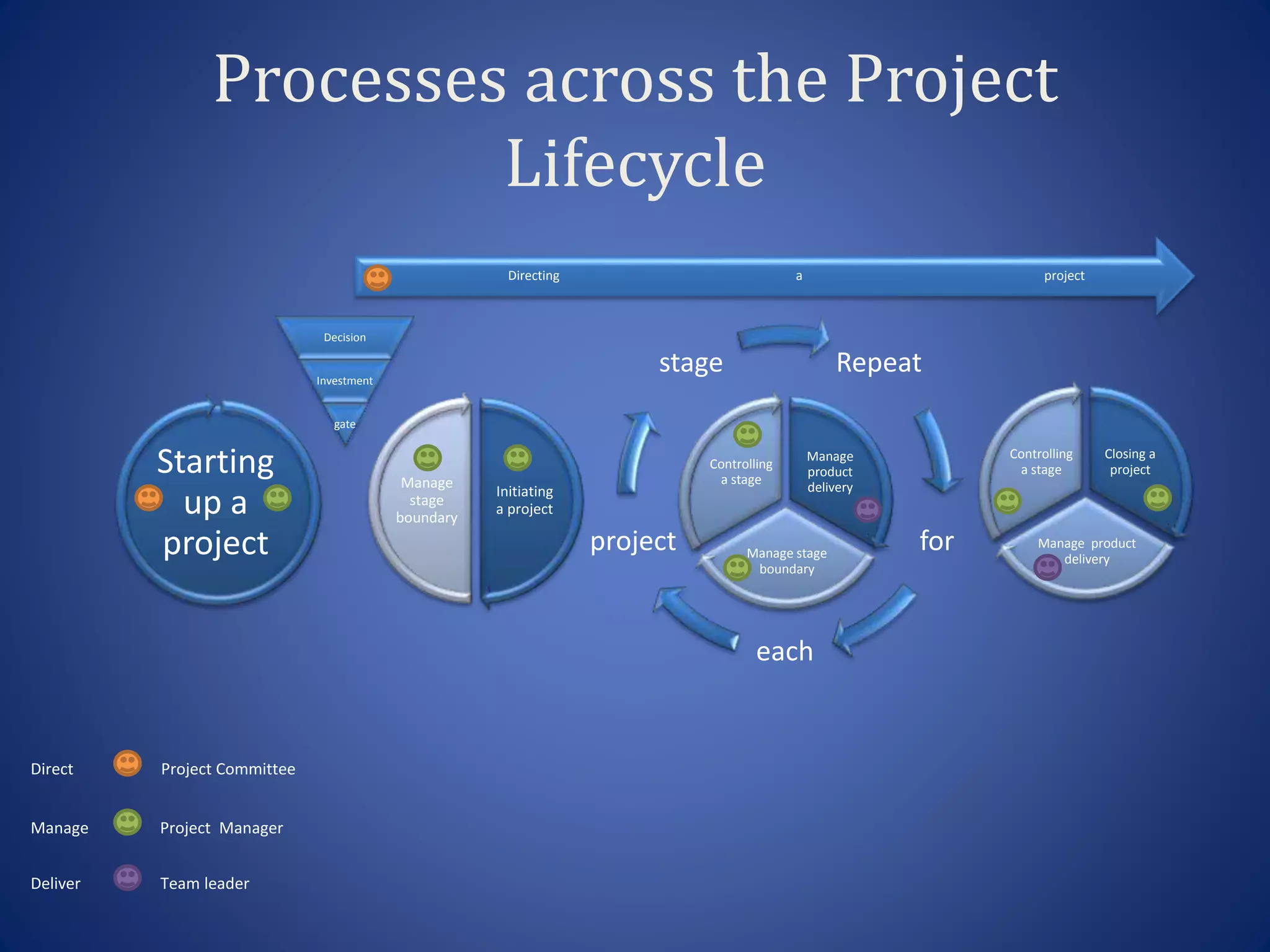
Direct Project Committee
Deliver Team leader
Manage Project Manager
Processes across the Project
Lifecycle
Starting
up a
project
Initiating
a project
Manage
stage
boundary
Manage
product
delivery
Manage stage
boundary
Controlling
a stage
Closing a
project
Manage product
delivery
Controlling
a stage
Repeat
for
each
project
stage
projectaDirecting
Decision
Investment
gate
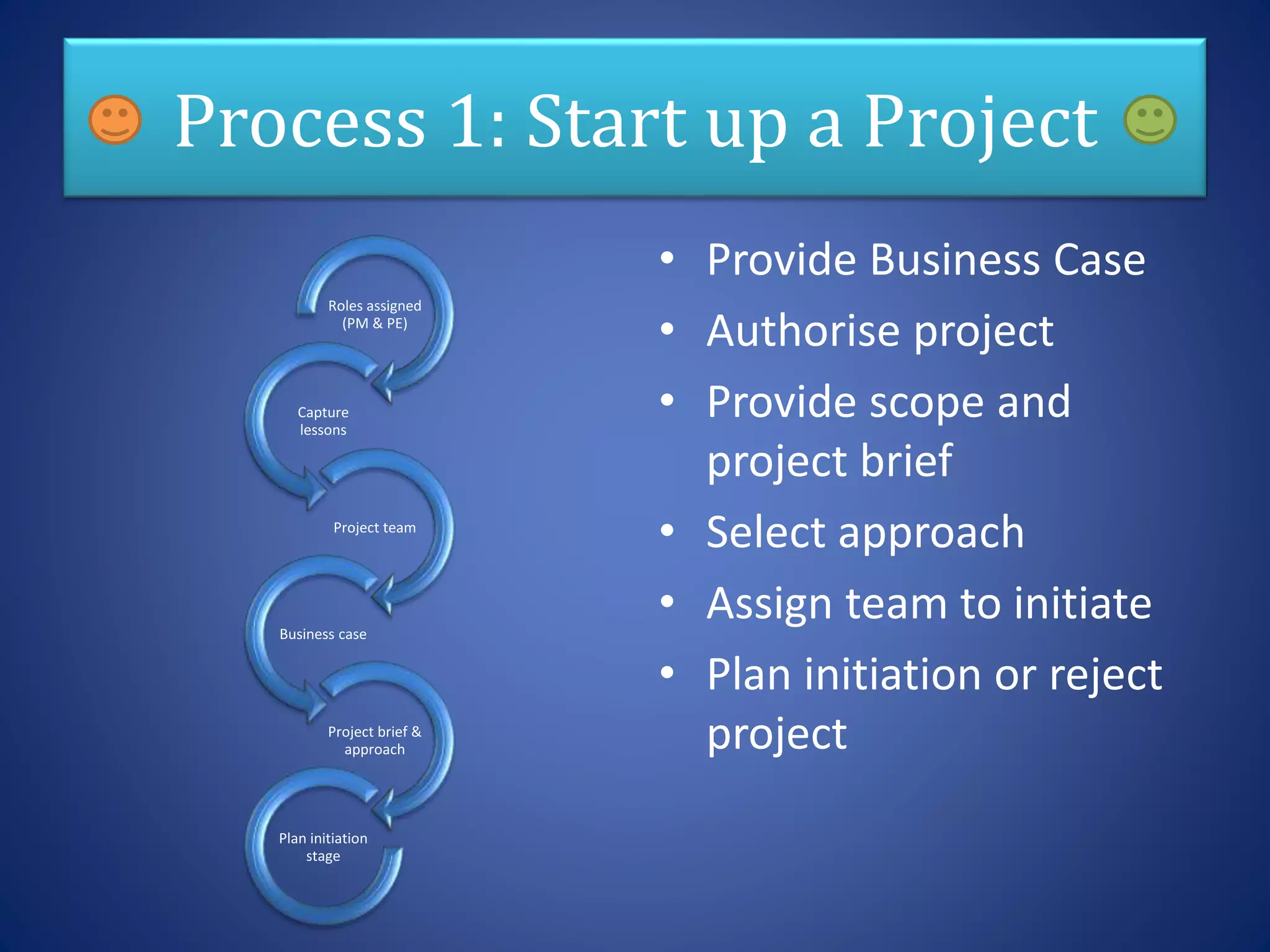
Process 1: Start up a Project
Roles assigned
(PM & PE)
Capture
lessons
Project team
Business case
Project brief &
approach
Plan initiation
stage
• Provide Business Case
• Authorise project
• Provide scope and
project brief
• Select approach
• Assign team to initiate
• Plan initiation or reject
project
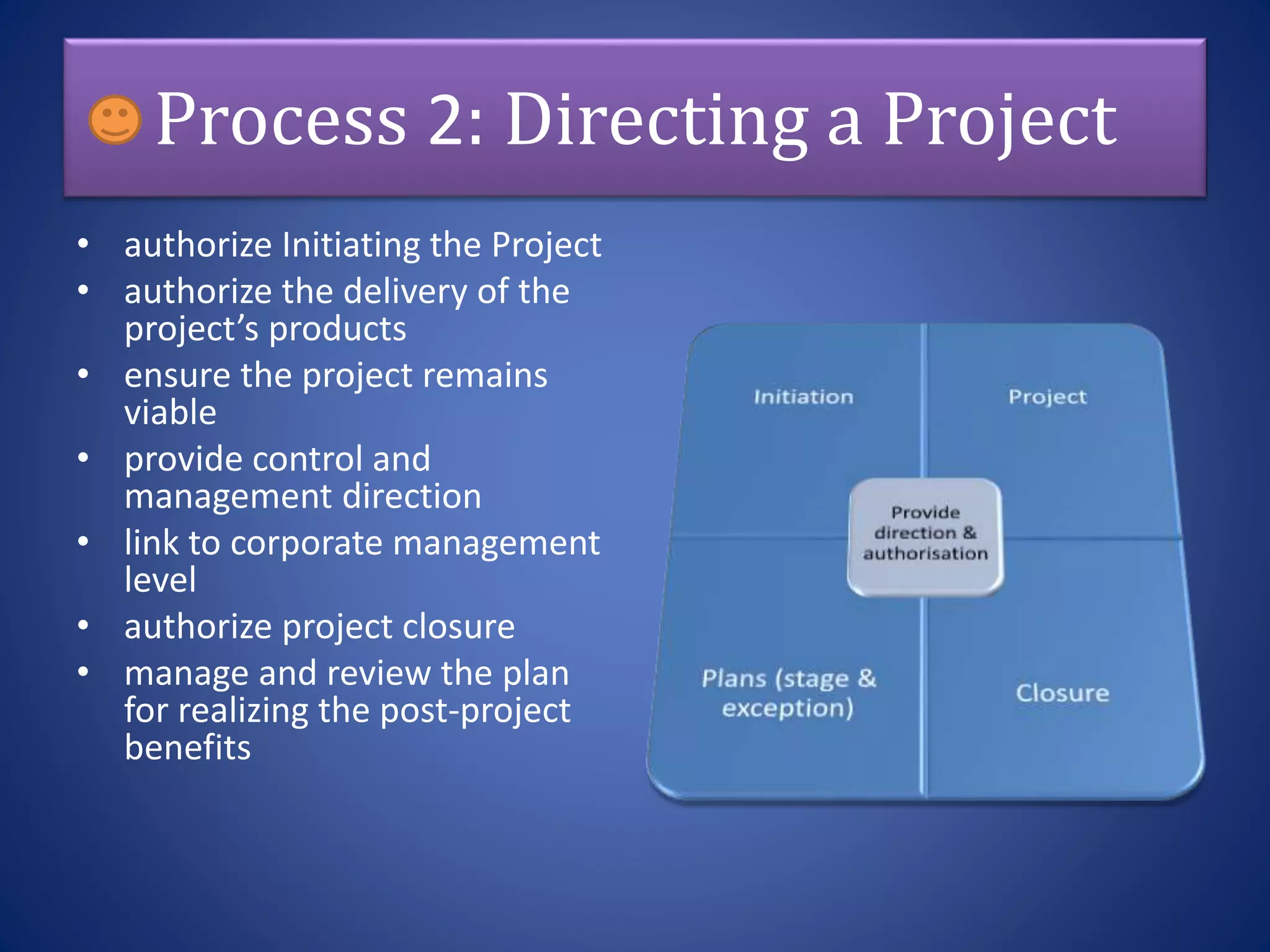
Process 2: Directing a Project
• authorize Initiating the Project
• authorize the delivery of the
project’s products
• ensure the project remains
viable
• provide control and
management direction
• link to corporate management
level
• authorize project closure
• manage and review the plan
for realizing the post-project
benefits
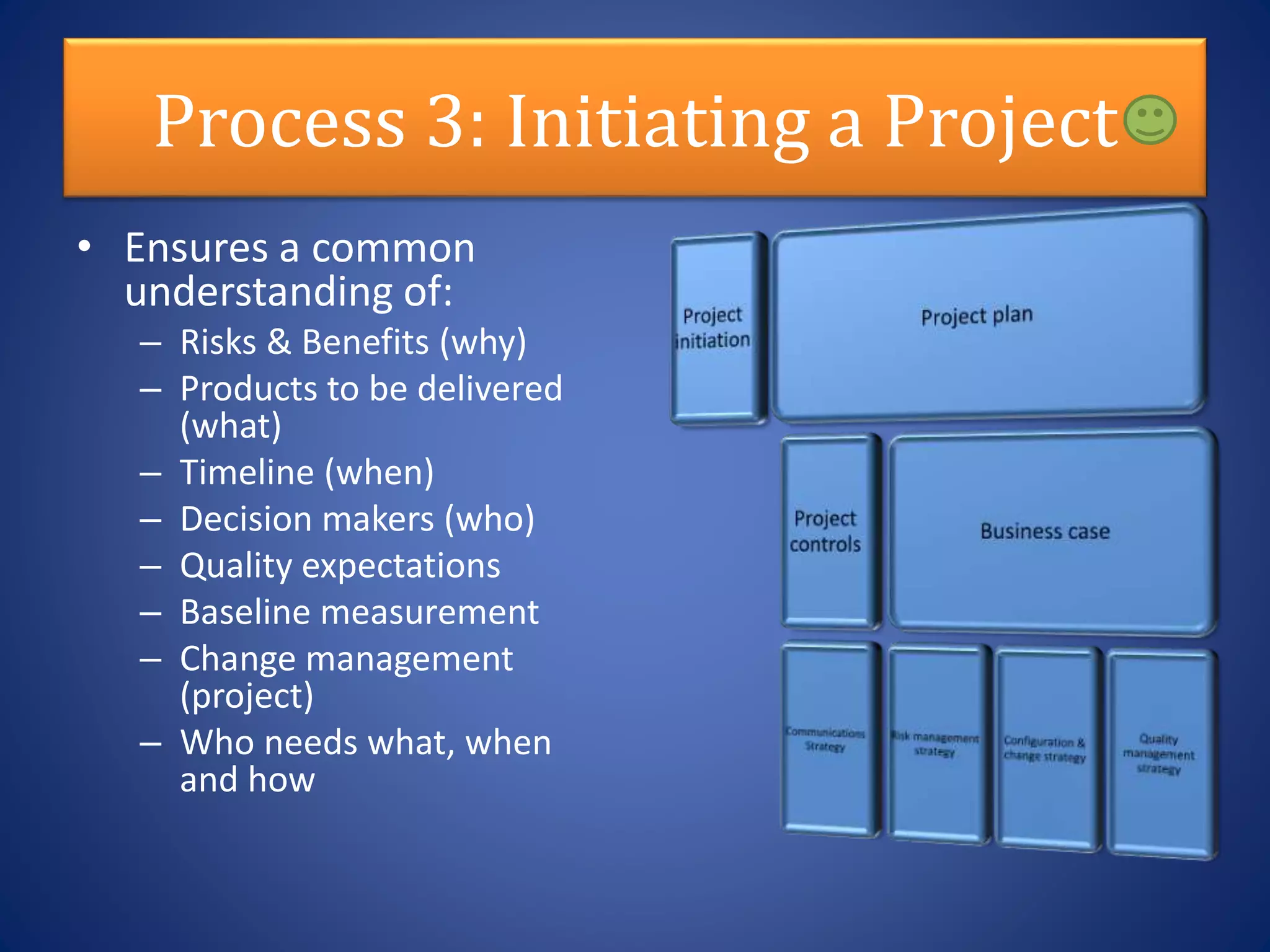
Process 3: Initiating a Project
• Ensures a common
understanding of:
– Risks & Benefits (why)
– Products to be delivered
(what)
– Timeline (when)
– Decision makers (who)
– Quality expectations
– Baseline measurement
– Change management
(project)
– Who needs what, when
and how
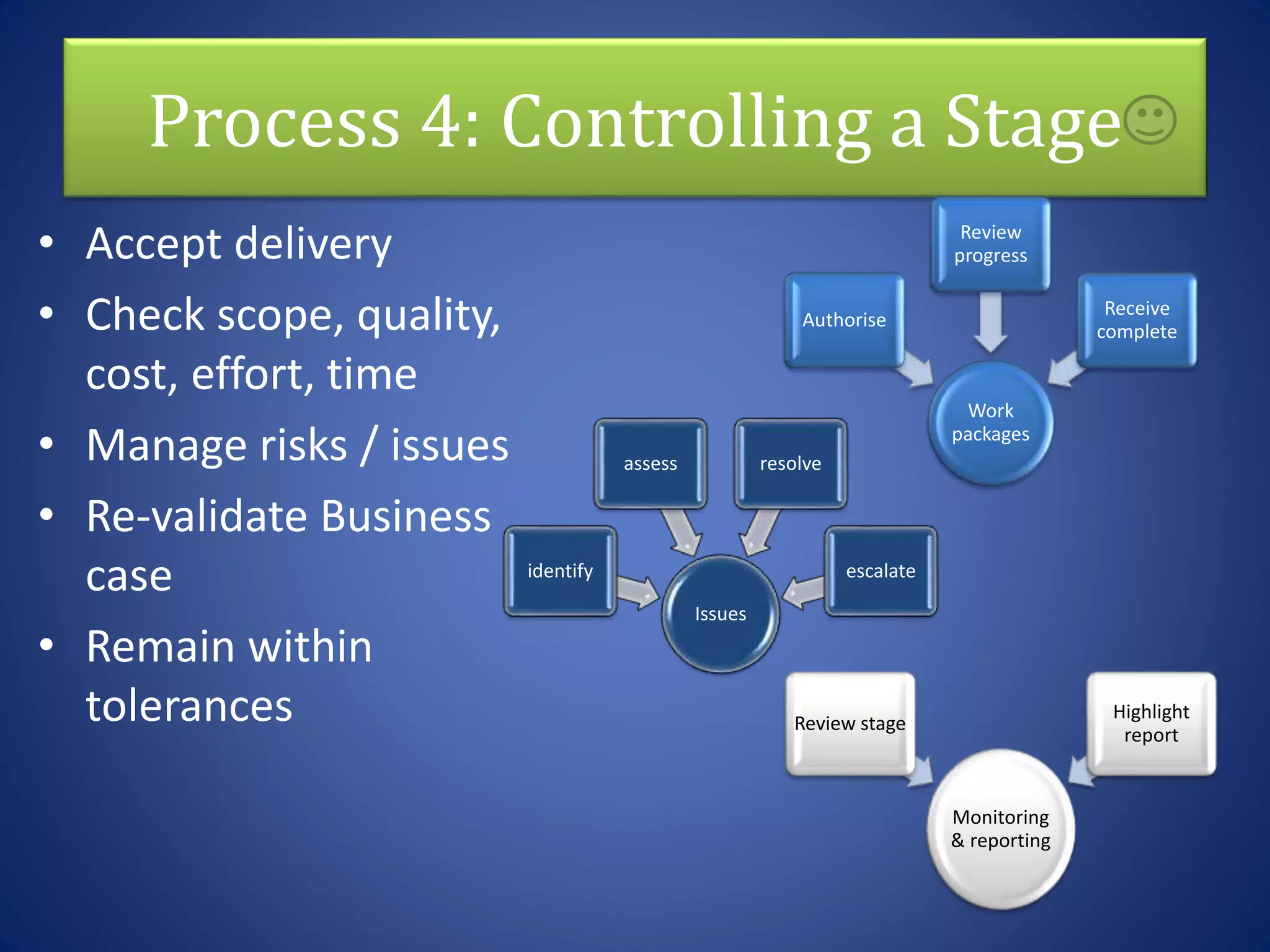
Process 4: Controlling a Stage
• Accept delivery
• Check scope, quality,
cost, effort, time
• Manage risks / issues
• Re-validate Business
case
• Remain within
tolerances
Work
packages
Authorise
Review
progress
Receive
complete
Monitoring
& reporting
Review stage
Highlight
report
Issues
identify
assess resolve
escalate
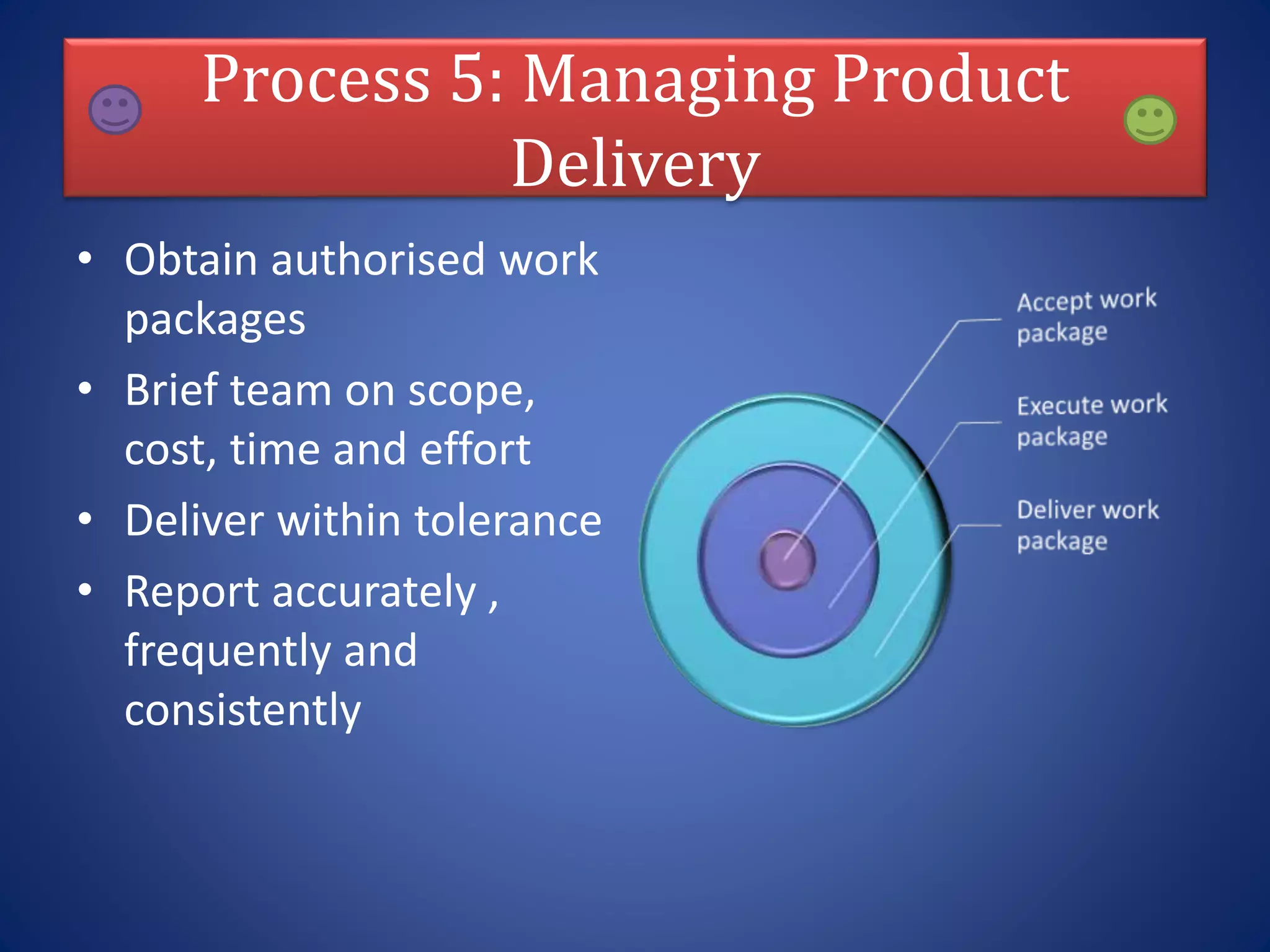
Process 5: Managing Product
Delivery
• Obtain authorised work
packages
• Brief team on scope,
cost, time and effort
• Deliver within tolerance
• Report accurately ,
frequently and
consistently
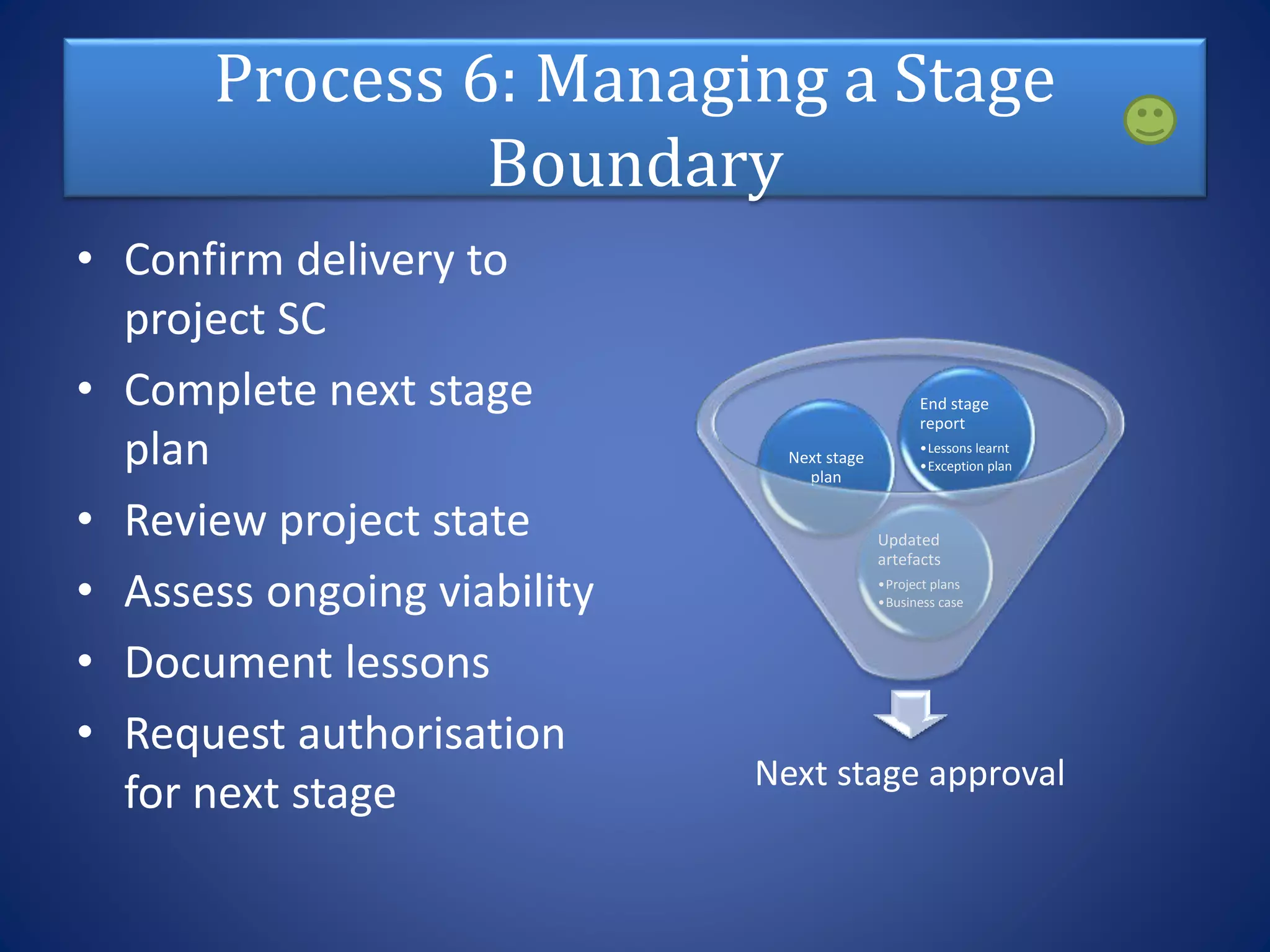
Process 6: Managing a Stage
Boundary
• Confirm delivery to
project SC
• Complete next stage
plan
• Review project state
• Assess ongoing viability
• Document lessons
• Request authorisation
for next stage Next stage approval
Updated
artefacts
•Project plans
•Business case
Next stage
plan
End stage
report
•Lessons learnt
•Exception plan
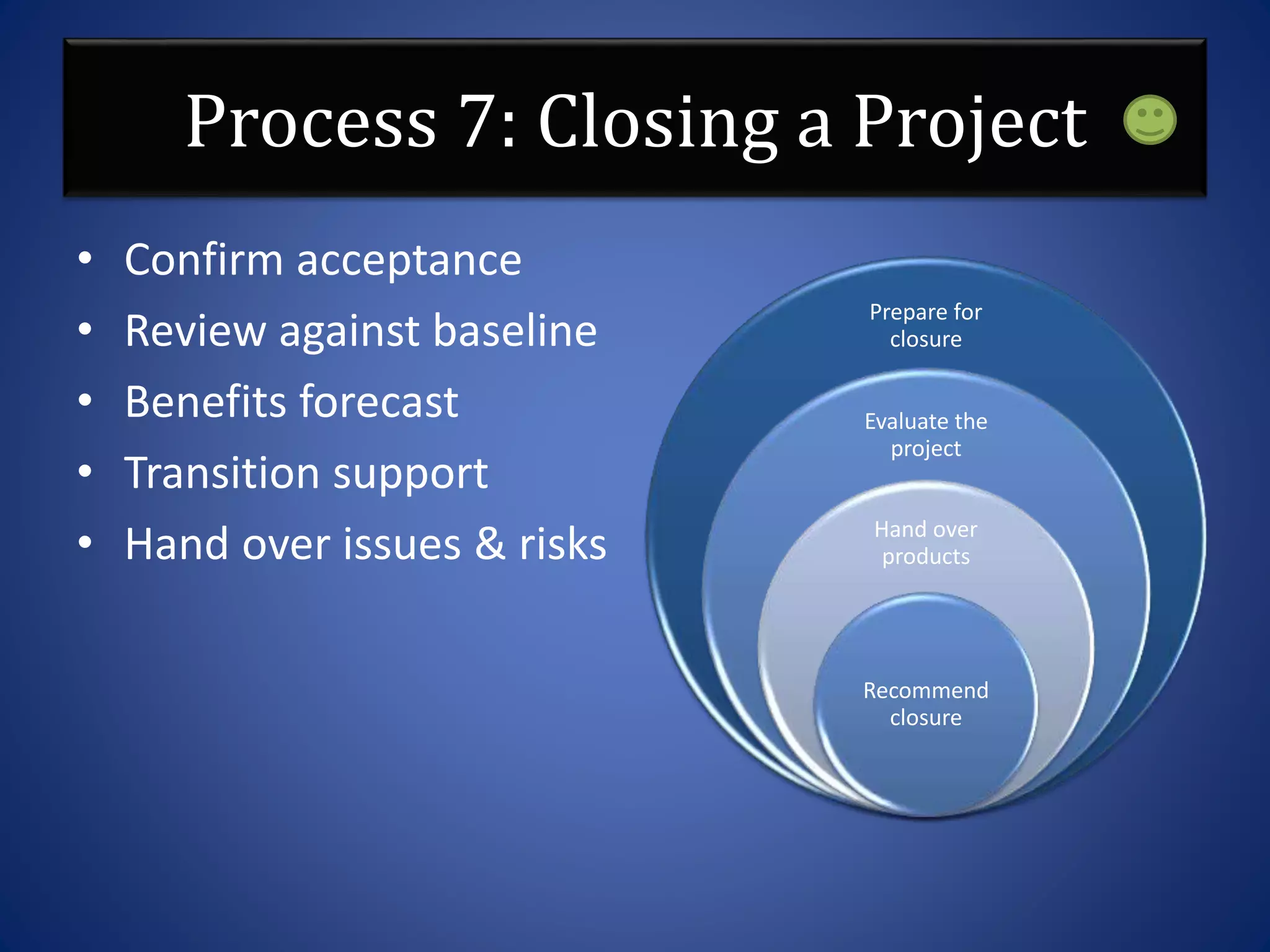
Process 7: Closing a Project
• Confirm acceptance
• Review against baseline
• Benefits forecast
• Transition support
• Hand over issues & risks
Prepare for
closure
Evaluate the
project
Hand over
products
Recommend
closure

Prince2 basics

  • 1.
  • 2.
    Vision Build projects aroundmotivated individuals, give them the environment and support they need, and trust them to get the job done
  • 3.
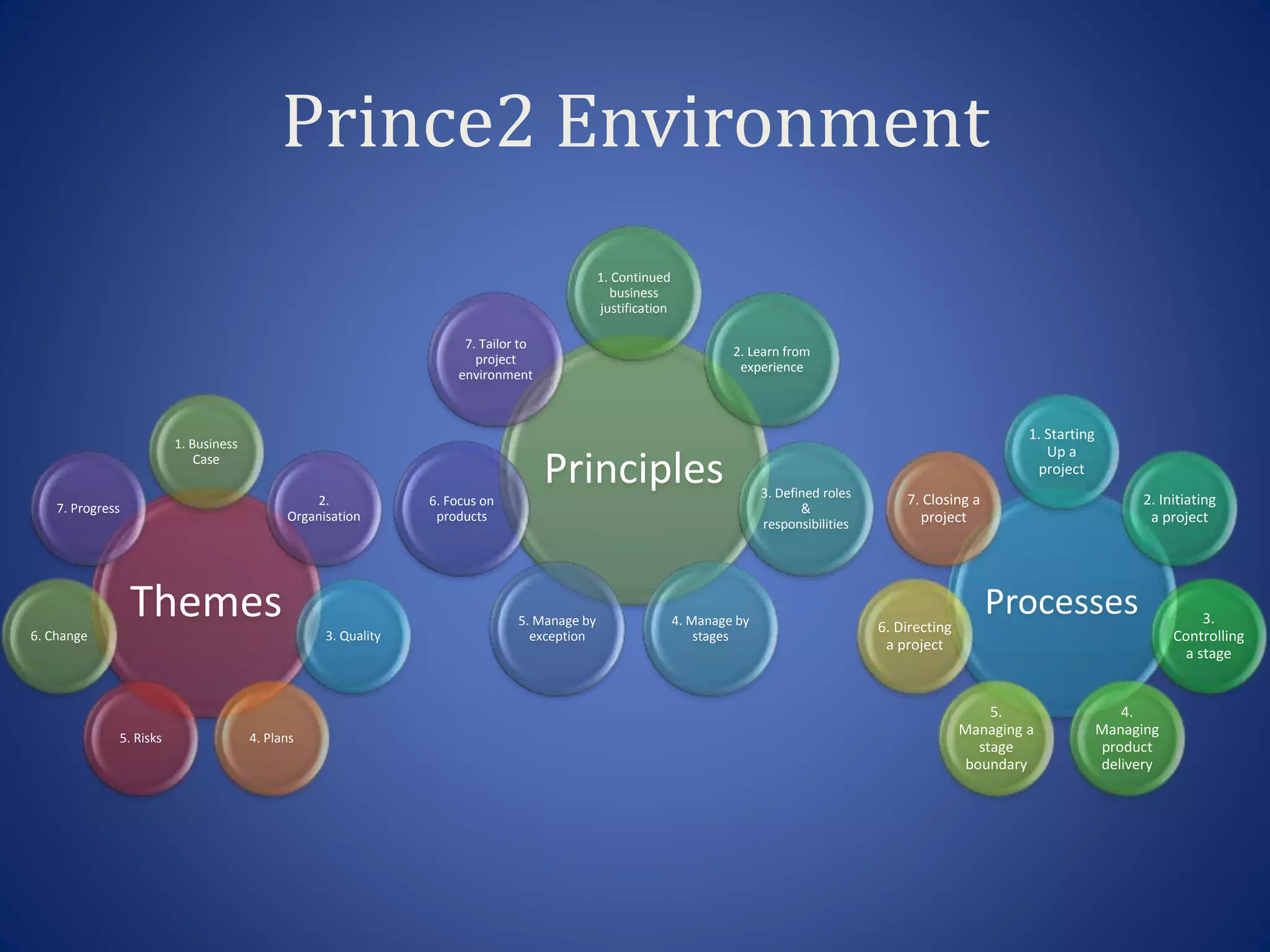
    Prince2 Environment Themes 1. Business Case 2. Organisation 3.Quality 4. Plans5. Risks 6. Change 7. Progress Principles 1. Continued business justification 2. Learn from experience 3. Defined roles & responsibilities 4. Manage by stages 5. Manage by exception 6. Focus on products 7. Tailor to project environment Processes 1. Starting Up a project 2. Initiating a project 3. Controlling a stage 4. Managing product delivery 5. Managing a stage boundary 6. Directing a project 7. Closing a project
  • 4.
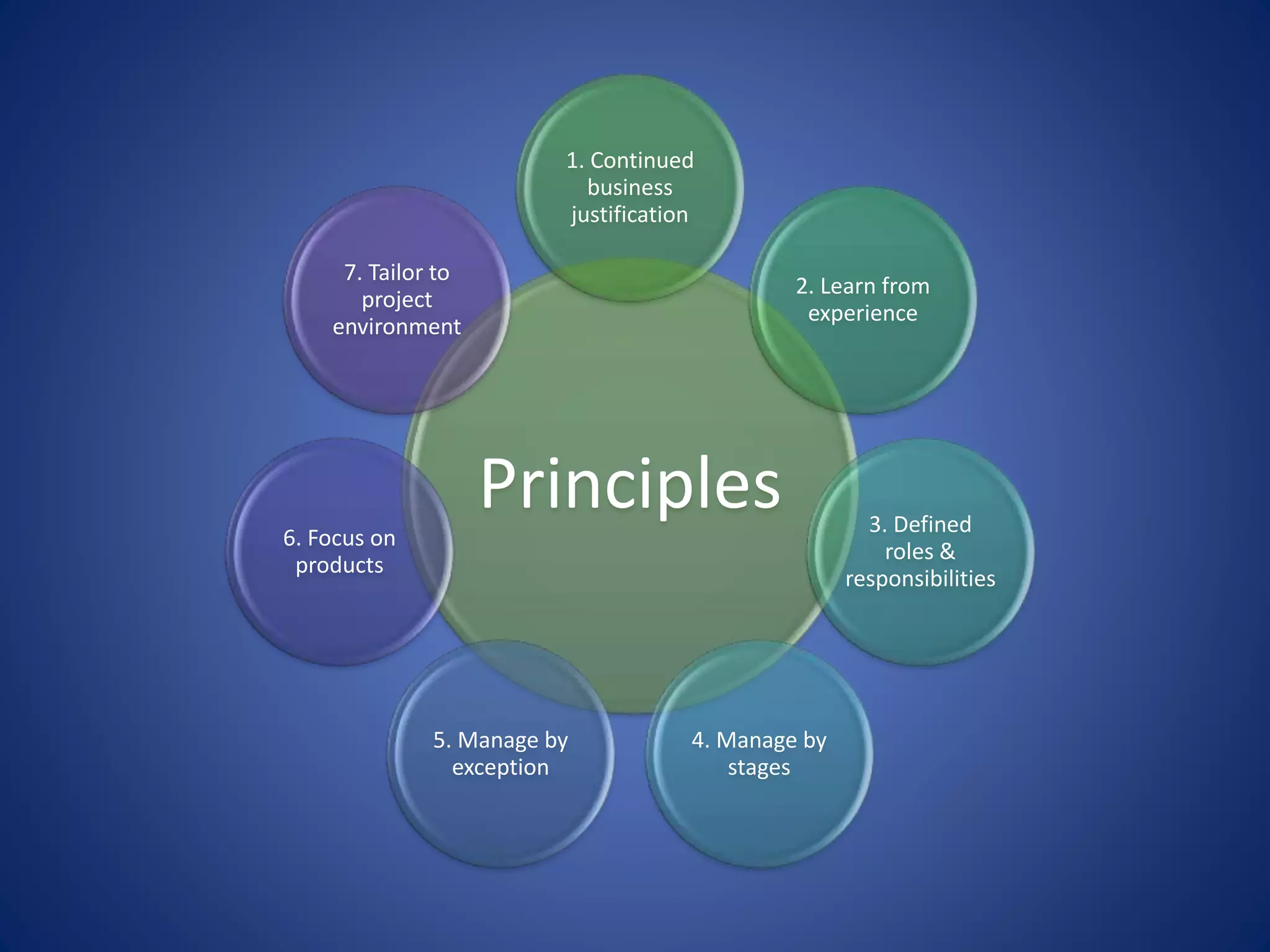
    Principles 1. Continued business justification 2. Learnfrom experience 3. Defined roles & responsibilities 4. Manage by stages 5. Manage by exception 6. Focus on products 7. Tailor to project environment
  • 5.
    Themes 1. Business Case 2. Organisation 3. Quality 4.Plans5. Risks 6. Change 7. Progress
  • 6.
    Processes 1. Starting Up a project 2.Initiating a project 3. Controlling a stage 4. Managing product delivery 5. Managing a stage boundary 6. Directing a project 7. Closing a project
  • 7.
    Direct Project Committee DeliverTeam leader Manage Project Manager Processes across the Project Lifecycle Starting up a project Initiating a project Manage stage boundary Manage product delivery Manage stage boundary Controlling a stage Closing a project Manage product delivery Controlling a stage Repeat for each project stage projectaDirecting Decision Investment gate
  • 8.
    Process 1: Startup a Project Roles assigned (PM & PE) Capture lessons Project team Business case Project brief & approach Plan initiation stage • Provide Business Case • Authorise project • Provide scope and project brief • Select approach • Assign team to initiate • Plan initiation or reject project
  • 9.
    Process 2: Directinga Project • authorize Initiating the Project • authorize the delivery of the project’s products • ensure the project remains viable • provide control and management direction • link to corporate management level • authorize project closure • manage and review the plan for realizing the post-project benefits
  • 10.
    Process 3: Initiatinga Project • Ensures a common understanding of: – Risks & Benefits (why) – Products to be delivered (what) – Timeline (when) – Decision makers (who) – Quality expectations – Baseline measurement – Change management (project) – Who needs what, when and how
  • 11.
    Process 4: Controllinga Stage • Accept delivery • Check scope, quality, cost, effort, time • Manage risks / issues • Re-validate Business case • Remain within tolerances Work packages Authorise Review progress Receive complete Monitoring & reporting Review stage Highlight report Issues identify assess resolve escalate
  • 12.
    Process 5: ManagingProduct Delivery • Obtain authorised work packages • Brief team on scope, cost, time and effort • Deliver within tolerance • Report accurately , frequently and consistently
  • 13.
    Process 6: Managinga Stage Boundary • Confirm delivery to project SC • Complete next stage plan • Review project state • Assess ongoing viability • Document lessons • Request authorisation for next stage Next stage approval Updated artefacts •Project plans •Business case Next stage plan End stage report •Lessons learnt •Exception plan
  • 14.
    Process 7: Closinga Project • Confirm acceptance • Review against baseline • Benefits forecast • Transition support • Hand over issues & risks Prepare for closure Evaluate the project Hand over products Recommend closure

Editor's Notes

  • #3 Prince2 and MSP were designed by government and for government. After the many failed projects of the 70s and 80s the OGC were looking at what caused projects to fail and how this could be changed. Causes of failure: Project teams were hampered by hierarchy; lack of delegated authority (introduce concept of tolerance and give delegated authority to PM up to the tolerance) Team members were all trying to be accountable to their line manager – divided loyalties and conflicting agendas (make the project an independent entity accountable only to the project board) Team members had BAU jobs (allocate to a project with defined start, end; where not possible allocate an agreed work package with defined timeframe, cost, acceptance criteria – and make individual accountable for their work package) Etc, etc. Focused on what had to be done (tasks), lost focus on aims of project (deliverables). Many tasks were done because ‘we always do this’ and might have no relevance to project outcomes. Led to the creation of the Principles.
  • #4 The 7 principles are mandatory – without these you are not using Prince2 The 7 themes are a refocus of the standard PM approach; the fabric of managing a project which permeates all activity on the project The processes provide an organised approach to getting the job done – going from start to finish applying appropriate governance and controls.
  • #5 Applying these 7 principles are mandatory if you want to use PRINCE2 methodology for managing your projects. PRINCIPLES: 1- Continued business justification – re-validate against BC at each stage (timebox) to ensure it remains sound – if not, stop the project 2- Learn from experience – flexible mentality – adjust and keep moving – capture and share learnings (retrospectives) 3- Defined roles and responsibilities – engage business user and supplier interests; let all know what is expected of them – always define roles clearly Directing – project SC – Exec; Snr User; Snr supplier Managing – PM Delivering – TL Doing – team member 4- Manage by stages – break into deliverable chunks – provide snr management with control points for decision making 5- Manage by exception – PM keeps going unless out of tolerance – time; dollars; scope- delegation of management to the PM from above – PM escalates when PM knows tolerance is or will be exceeded 6- Focus on products – product based planning- output oriented – plan what to deliver and when, don’t lose focus and get lost planning tasks 7- Tailor to suit the project environment. – fit-for-purpose – relate the method to the project, no rigid adherence to any method e.g. waterfall or agile; take scale, complexity, resource availability into consideration.
  • #6 1- Business Case – blueprint for scope, budget, timeframe; iteratively update as project progresses 2- Organization – controlled and organised start, middle and end; define the roles; define stakeholders; define delivery streams; 3- Quality – health checks; fit-for-purpose 4- Plans – common consistent approach – note the concept of responding to change vs rigid adherence to a plan 5- Risk – managed – address weaknesses & threats 6- Change – manage issues as changes (note: organisational change is part of a program although projects often take on these activities – if doing this apply MSP principles to management and the realisation of business outcomes); enable organisation to manage the big picture; negotiate scope to ensure delivery success 7- Progress – regular reviews of progress against plan; manage by exception, stages, deliverables
  • #7 1- Starting up a project - Do we have the capability to do the project and is it worth spending money on 2- Directing a Project – Implements governance, Makes important decisions, holds the project manager to account but lets them get on with delivering the project. Does NOT tell the PM how to do their job, makes business decisions that the PM uses to guide their management activities. 3- Initiating a project - How much is this project going to cost; what do we need to do and how long will it take? 4- Controlling a stage - Assigning tasks, check that they get done and report progress of the tasks. Deal with and sort out any issues. 5- Managing product delivery - How the Team Manager will be receive, complete and hand back tasks to the Project Manager (work package process) 6- Managing a stage boundary - What the Project Manager must do when reporting to the Project Board. (enables review of successes, business justification and OK to continue) 7- Closing a project - Making sure the project is definitely complete with the produced products accepted or that there is nothing left for the project to do.
  • #8 Talk through the stages left to right acknowledge iterations; staged delivery mechanisms
  • #9 NOTE: this is the time to decide on staging breakdown; team design; agile or waterfall methods etc.
  • #10 Role of the Project Executive and the Project Board
  • #14 Project steering committee / Project Board