Pricing
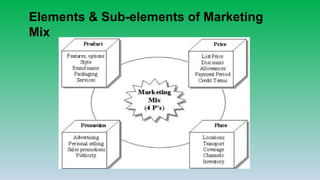
Elements & Sub-elements of Marketing
Mix
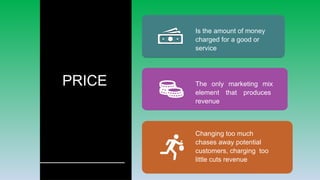
PRICE
Is the amount of money
charged for a good or
service
The only marketing mix
element that produces
revenue
Changing too much
chases away potential
customers, charging too
little cuts revenue
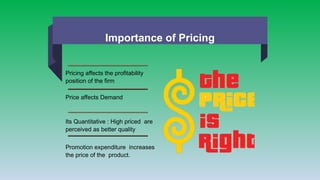
Importance of Pricing
Pricing affects the profitability
position of the firm
Price affects Demand
Its Quantitative : High priced are
perceived as better quality
Promotion expenditure increases
the price of the product.
Objectives of Pricing Strategies
• To increase profits of the company
• To increase sales of the company
• To increase market share
• Discourage market entry by competitors
• Create perception of brand quality and exclusiveness
• Encourage trial purchase- When company launches a
product, its price should be attractive to customers to
buy.
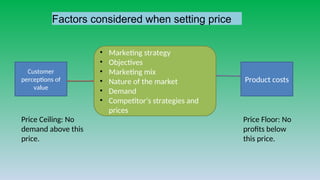
Factors considered when setting price
Customer
perceptions of
value
• Marketing strategy
• Objectives
• Marketing mix
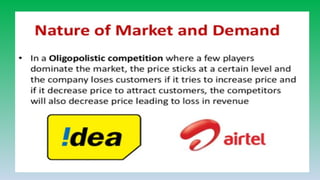
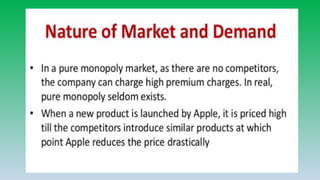
• Nature of the market
• Demand
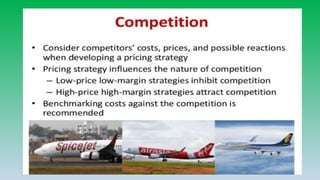
• Competitor’s strategies and
prices
Product costs
Price Ceiling: No
demand above this
price.
Price Floor: No
profits below
this price.
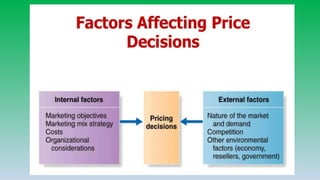
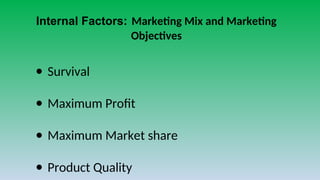
Internal Factors: Marketing Mix and Marketing
Objectives
● Survival
● Maximum Profit
● Maximum Market share
● Product Quality
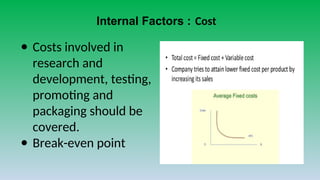
Internal Factors : Cost
● Costs involved in
research and
development, testing,
promoting and
packaging should be
covered.
● Break-even point
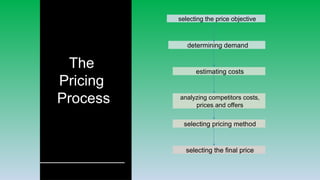
The
Pricing
Process
selecting the final price
selecting pricing method
analyzing competitors costs,
prices and offers
estimating costs
determining demand
selecting the price objective
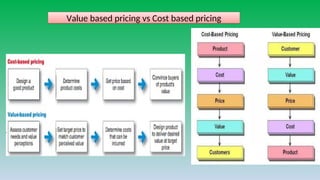
Value based pricing vs Cost based pricing
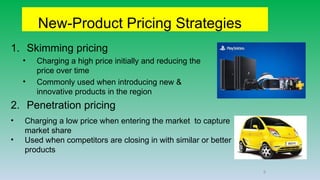
New-Product Pricing Strategies
1. Skimming pricing
• Charging a high price initially and reducing the
price over time
• Commonly used when introducing new &
innovative products in the region
2. Penetration pricing
• Charging a low price when entering the market to capture
market share
• Used when competitors are closing in with similar or better
products
6
Pricing Methods
• Cost based pricing
• Target Return Pricing
• Competition based
pricing
• Demand based pricing
• Perceived value pricing
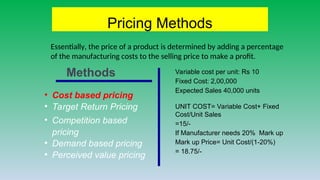
Variable cost per unit: Rs 10
Fixed Cost: 2,00,000
Expected Sales 40,000 units
UNIT COST= Variable Cost+ Fixed
Cost/Unit Sales
=15/-
If Manufacturer needs 20% Mark up
Mark up Price= Unit Cost/(1-20%)
= 18.75/-
Methods
Essentially, the price of a product is determined by adding a percentage
of the manufacturing costs to the selling price to make a profit.
Pricing Methods
• Cost based pricing
• Target Return Pricing
• Competition based
pricing
• Demand based pricing
• Perceived value pricing
–
–
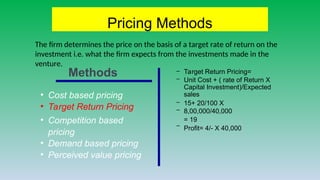
Target Return Pricing=
Unit Cost + ( rate of Return X
Capital Investment)/Expected
sales
–
–
15+ 20/100 X
8,00,000/40,000
= 19
– Profit= 4/- X 40,000
Methods
The firm determines the price on the basis of a target rate of return on the
investment i.e. what the firm expects from the investments made in the
venture.
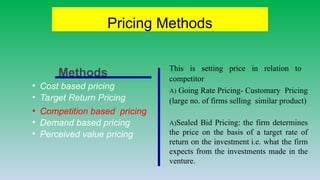
Pricing Methods
• Cost based pricing
• Target Return Pricing
• Competition based pricing
• Demand based pricing
• Perceived value pricing
This is setting price in relation to
competitor
A) Going Rate Pricing- Customary Pricing
(large no. of firms selling similar product)
A)Sealed Bid Pricing: the firm determines
the price on the basis of a target rate of
return on the investment i.e. what the firm
expects from the investments made in the
venture.
Methods
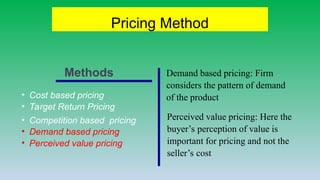
Pricing Method
• Cost based pricing
• Target Return Pricing
• Competition based pricing
• Demand based pricing
• Perceived value pricing
Demand based pricing: Firm
considers the pattern of demand
of the product
Perceived value pricing: Here the
buyer’s perception of value is
important for pricing and not the
seller’s cost
Methods
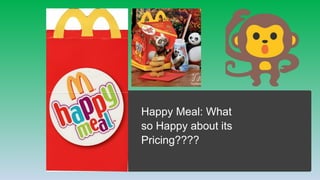
Happy Meal: What
so Happy about its
Pricing????

Pricing ppt.ppt good for 1st year students

  • 1.
  • 2.
    Elements & Sub-elementsof Marketing Mix
  • 3.
    PRICE Is the amountof money charged for a good or service The only marketing mix element that produces revenue Changing too much chases away potential customers, charging too little cuts revenue
  • 4.
    Importance of Pricing Pricingaffects the profitability position of the firm Price affects Demand Its Quantitative : High priced are perceived as better quality Promotion expenditure increases the price of the product.
  • 5.
    Objectives of PricingStrategies • To increase profits of the company • To increase sales of the company • To increase market share • Discourage market entry by competitors • Create perception of brand quality and exclusiveness • Encourage trial purchase- When company launches a product, its price should be attractive to customers to buy.
  • 6.
    Factors considered whensetting price Customer perceptions of value • Marketing strategy • Objectives • Marketing mix • Nature of the market • Demand • Competitor’s strategies and prices Product costs Price Ceiling: No demand above this price. Price Floor: No profits below this price.
  • 8.
    Internal Factors: MarketingMix and Marketing Objectives ● Survival ● Maximum Profit ● Maximum Market share ● Product Quality
  • 9.
    Internal Factors :Cost ● Costs involved in research and development, testing, promoting and packaging should be covered. ● Break-even point
  • 17.
    The Pricing Process selecting the finalprice selecting pricing method analyzing competitors costs, prices and offers estimating costs determining demand selecting the price objective
  • 18.
    Value based pricingvs Cost based pricing
  • 19.
    New-Product Pricing Strategies 1.Skimming pricing • Charging a high price initially and reducing the price over time • Commonly used when introducing new & innovative products in the region 2. Penetration pricing • Charging a low price when entering the market to capture market share • Used when competitors are closing in with similar or better products 6
  • 20.
    Pricing Methods • Costbased pricing • Target Return Pricing • Competition based pricing • Demand based pricing • Perceived value pricing Variable cost per unit: Rs 10 Fixed Cost: 2,00,000 Expected Sales 40,000 units UNIT COST= Variable Cost+ Fixed Cost/Unit Sales =15/- If Manufacturer needs 20% Mark up Mark up Price= Unit Cost/(1-20%) = 18.75/- Methods Essentially, the price of a product is determined by adding a percentage of the manufacturing costs to the selling price to make a profit.
  • 21.
    Pricing Methods • Costbased pricing • Target Return Pricing • Competition based pricing • Demand based pricing • Perceived value pricing – – Target Return Pricing= Unit Cost + ( rate of Return X Capital Investment)/Expected sales – – 15+ 20/100 X 8,00,000/40,000 = 19 – Profit= 4/- X 40,000 Methods The firm determines the price on the basis of a target rate of return on the investment i.e. what the firm expects from the investments made in the venture.
  • 22.
    Pricing Methods • Costbased pricing • Target Return Pricing • Competition based pricing • Demand based pricing • Perceived value pricing This is setting price in relation to competitor A) Going Rate Pricing- Customary Pricing (large no. of firms selling similar product) A)Sealed Bid Pricing: the firm determines the price on the basis of a target rate of return on the investment i.e. what the firm expects from the investments made in the venture. Methods
  • 23.
    Pricing Method • Costbased pricing • Target Return Pricing • Competition based pricing • Demand based pricing • Perceived value pricing Demand based pricing: Firm considers the pattern of demand of the product Perceived value pricing: Here the buyer’s perception of value is important for pricing and not the seller’s cost Methods
  • 24.
    Happy Meal: What soHappy about its Pricing????