Running head: PRICE ELASTICITY 1
Price Elasticity
Robert L. Brown
Indiana Wesleyan University
ECON-510
Professor Gary Wilkinson, MA, PhD.
September 1st, 2013
I have read and understand the plagiarism guidelines as outlined in the syllabus and the sections
in the Student Bulletin relating to the IWU Honesty/Cheating Policy. By affixing this statement
to the title page of my paper, I certify that I have not cheated or plagiarized in the process of
completing this assignment. If it is found that cheating and/or plagiarism did take place in the
writing of this paper, I understand the possible consequences of the act/s, which could include
expulsion from Indiana Wesleyan University.
Price Elasticity 2
Price Elasticity Excel Spreadsheet
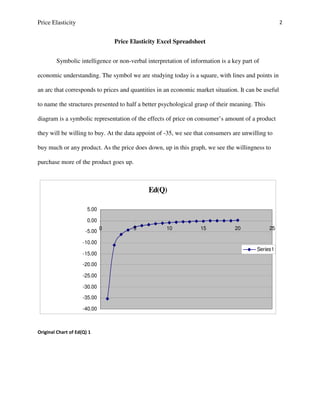
Symbolic intelligence or non-verbal interpretation of information is a key part of
economic understanding. The symbol we are studying today is a square, with lines and points in
an arc that corresponds to prices and quantities in an economic market situation. It can be useful
to name the structures presented to half a better psychological grasp of their meaning. This
diagram is a symbolic representation of the effects of price on consumer’s amount of a product
they will be willing to buy. At the data appoint of -35, we see that consumers are unwilling to
buy much or any product. As the price does down, up in this graph, we see the willingness to
purchase more of the product goes up.
Ed(Q)
-40.00
-35.00
-30.00
-25.00
-20.00
-15.00
-10.00
-5.00
0.00
5.00
0 5 10 15 20 25
Series1
Original Chart of Ed(Q) 1
Price Elasticity 3
-5.00
0.00
5.00
10.00
15.00
20.00
25.00
30.00
35.00
40.00
0 5 10 15 20 25
Ser ies1
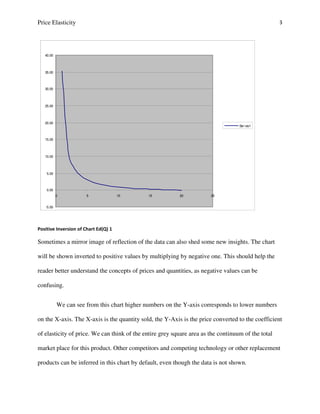
Positive Inversion of Chart Ed(Q) 1
Sometimes a mirror image of reflection of the data can also shed some new insights. The chart
will be shown inverted to positive values by multiplying by negative one. This should help the
reader better understand the concepts of prices and quantities, as negative values can be
confusing.
We can see from this chart higher numbers on the Y-axis corresponds to lower numbers
on the X-axis. The X-axis is the quantity sold, the Y-Axis is the price converted to the coefficient
of elasticity of price. We can think of the entire grey square area as the continuum of the total
market place for this product. Other competitors and competing technology or other replacement
products can be inferred in this chart by default, even though the data is not shown.
Price Elasticity 4
The section of our potential market share is the area to the left and behind the line abutted
against the X and Y-axis. In that area, we see the map of our “country” or market share. Like any
sovereign nation, we want the most territory as that is what will generate us revenue. We can see
we get the best balance between quantity sold and price at about the medium of this chart. Lets’
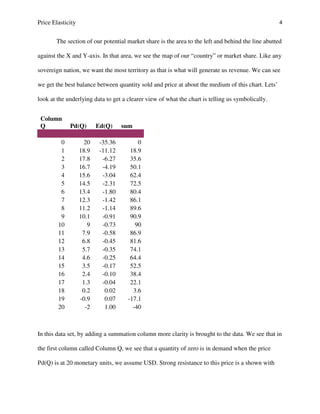
look at the underlying data to get a clearer view of what the chart is telling us symbolically.
Column
Q Pd(Q) Ed(Q) sum
0 20 -35.36 0
1 18.9 -11.12 18.9
2 17.8 -6.27 35.6
3 16.7 -4.19 50.1
4 15.6 -3.04 62.4
5 14.5 -2.31 72.5
6 13.4 -1.80 80.4
7 12.3 -1.42 86.1
8 11.2 -1.14 89.6
9 10.1 -0.91 90.9
10 9 -0.73 90
11 7.9 -0.58 86.9
12 6.8 -0.45 81.6
13 5.7 -0.35 74.1
14 4.6 -0.25 64.4
15 3.5 -0.17 52.5
16 2.4 -0.10 38.4
17 1.3 -0.04 22.1
18 0.2 0.02 3.6
19 -0.9 0.07 -17.1
20 -2 1.00 -40
In this data set, by adding a summation column more clarity is brought to the data. We see that in
the first column called Column Q, we see that a quantity of zero is in demand when the price
Pd(Q) is at 20 monetary units, we assume USD. Strong resistance to this price is a shown with
Price Elasticity 5
the elasticity coefficient at -35.36. By added the sum we see the amount of dollars generated will
be zero. At a quantity of none, we see the best balance between quantity sold and price charged
for this item. The amount is 90.90 and will serve several purposes, generate the highest revenue
for the item, have a market share and presence that is larger and hopefully, and keep the demand
for more of the product. As managers of a company we can see that we can have some slack and
leeway in the middle range of this data set, on the price and we can vary the price based on
competition, cost of raw materials, weather conditions, labor and machines that will affect our
cost of producing this product.
The charts and data sets show that elasticity at the medium range of numbers will
produce the most profit for the company, and will give the company more market share, which in
turn can help keep more competitors out. The temptation to charge higher prices will narrow the
demand for the product, decrease market share and allow the competition to expand their control
over the entire square or market place. Careful consideration and economic analysis will insure
that the company’s short and long-term profits are protected against get rich quick schemes that
will anger customers, damage market share and cause the company to layoff employees do to
lack of customer orders furthering damaging the economy.

Price Elasticity Lecture

  • 1.
    Running head: PRICEELASTICITY 1 Price Elasticity Robert L. Brown Indiana Wesleyan University ECON-510 Professor Gary Wilkinson, MA, PhD. September 1st, 2013 I have read and understand the plagiarism guidelines as outlined in the syllabus and the sections in the Student Bulletin relating to the IWU Honesty/Cheating Policy. By affixing this statement to the title page of my paper, I certify that I have not cheated or plagiarized in the process of completing this assignment. If it is found that cheating and/or plagiarism did take place in the writing of this paper, I understand the possible consequences of the act/s, which could include expulsion from Indiana Wesleyan University.
  • 2.
    Price Elasticity 2 PriceElasticity Excel Spreadsheet Symbolic intelligence or non-verbal interpretation of information is a key part of economic understanding. The symbol we are studying today is a square, with lines and points in an arc that corresponds to prices and quantities in an economic market situation. It can be useful to name the structures presented to half a better psychological grasp of their meaning. This diagram is a symbolic representation of the effects of price on consumer’s amount of a product they will be willing to buy. At the data appoint of -35, we see that consumers are unwilling to buy much or any product. As the price does down, up in this graph, we see the willingness to purchase more of the product goes up. Ed(Q) -40.00 -35.00 -30.00 -25.00 -20.00 -15.00 -10.00 -5.00 0.00 5.00 0 5 10 15 20 25 Series1 Original Chart of Ed(Q) 1
  • 3.
    Price Elasticity 3 -5.00 0.00 5.00 10.00 15.00 20.00 25.00 30.00 35.00 40.00 05 10 15 20 25 Ser ies1 Positive Inversion of Chart Ed(Q) 1 Sometimes a mirror image of reflection of the data can also shed some new insights. The chart will be shown inverted to positive values by multiplying by negative one. This should help the reader better understand the concepts of prices and quantities, as negative values can be confusing. We can see from this chart higher numbers on the Y-axis corresponds to lower numbers on the X-axis. The X-axis is the quantity sold, the Y-Axis is the price converted to the coefficient of elasticity of price. We can think of the entire grey square area as the continuum of the total market place for this product. Other competitors and competing technology or other replacement products can be inferred in this chart by default, even though the data is not shown.
  • 4.
    Price Elasticity 4 Thesection of our potential market share is the area to the left and behind the line abutted against the X and Y-axis. In that area, we see the map of our “country” or market share. Like any sovereign nation, we want the most territory as that is what will generate us revenue. We can see we get the best balance between quantity sold and price at about the medium of this chart. Lets’ look at the underlying data to get a clearer view of what the chart is telling us symbolically. Column Q Pd(Q) Ed(Q) sum 0 20 -35.36 0 1 18.9 -11.12 18.9 2 17.8 -6.27 35.6 3 16.7 -4.19 50.1 4 15.6 -3.04 62.4 5 14.5 -2.31 72.5 6 13.4 -1.80 80.4 7 12.3 -1.42 86.1 8 11.2 -1.14 89.6 9 10.1 -0.91 90.9 10 9 -0.73 90 11 7.9 -0.58 86.9 12 6.8 -0.45 81.6 13 5.7 -0.35 74.1 14 4.6 -0.25 64.4 15 3.5 -0.17 52.5 16 2.4 -0.10 38.4 17 1.3 -0.04 22.1 18 0.2 0.02 3.6 19 -0.9 0.07 -17.1 20 -2 1.00 -40 In this data set, by adding a summation column more clarity is brought to the data. We see that in the first column called Column Q, we see that a quantity of zero is in demand when the price Pd(Q) is at 20 monetary units, we assume USD. Strong resistance to this price is a shown with
  • 5.
    Price Elasticity 5 theelasticity coefficient at -35.36. By added the sum we see the amount of dollars generated will be zero. At a quantity of none, we see the best balance between quantity sold and price charged for this item. The amount is 90.90 and will serve several purposes, generate the highest revenue for the item, have a market share and presence that is larger and hopefully, and keep the demand for more of the product. As managers of a company we can see that we can have some slack and leeway in the middle range of this data set, on the price and we can vary the price based on competition, cost of raw materials, weather conditions, labor and machines that will affect our cost of producing this product. The charts and data sets show that elasticity at the medium range of numbers will produce the most profit for the company, and will give the company more market share, which in turn can help keep more competitors out. The temptation to charge higher prices will narrow the demand for the product, decrease market share and allow the competition to expand their control over the entire square or market place. Careful consideration and economic analysis will insure that the company’s short and long-term profits are protected against get rich quick schemes that will anger customers, damage market share and cause the company to layoff employees do to lack of customer orders furthering damaging the economy.