PRESENTED BY , SAYANDIP SANTRA (UG 3rd year,roll:275)
RAMAKRISHNA MISSION VIDYAMANDIRA
TYPES OF FERMENTATION
what is fermentation?
 Fermentation is metabolic process which convert carbohydrates to
alcohols,organic acids or gases by the activity of enzymes of microbial origin.
 Actually,fermentation is the production of ATP by the degradation of organic
nutrients anaerobically
 EXAMPLE: a) production of alchoholic beverages,organic acids,anibiotics.
INDUSTRIAL FERMENTATION
 The intentional use of fermentation technology for large scale production of
microbial metabolites is called industrial fermentation.
 Modern indusrial fermentation units use genetically engineered microbes for
the rapid production of desired metabolites.
 Three types of industrial fermentation occurs
1. CONTINUOUS FERMENTATION
2. BATCH FERMENTATION
3. FED BATCH FERMENTATION
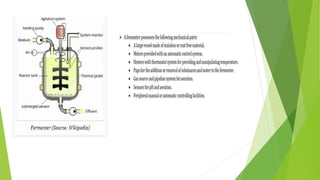
what is fermenter ?
 The heart of industrial fermentation is a fermenter
 It is type of bioreactor
 here fermentation takes place
 It is a system provided with controlled environmental condition for the growth
of microbes in liquid culture
 It is the device where microbes are cultivated and motivated to form desired
product
 Fermenter prevents the entry and growth of contaminating microbes from
outside.
continuous fermentation
 It is an open system
 It involves the removal of culture medium continuously and replace of this
with a fresh sterile medium in fermenter
 Both removal and addition are done in same rate ,so working volume remain
constant.
 Under these condition(addition and removal) the cells remain in logarithimic
phase of growth
 Then microbes reach the exponential growth rate and continue till due to
availability of nutrients.
 This exponential growth rate continue untill the fermenter filled with cells.
Continuous Fermentation
 When overflow happen from the vessel then the metabolite or the product of
fermentation is extracted by downstream process
 This kind of fermentation process in between and continues to run for a long
period of time with the addition of nutrients and hervesting the metabolite at
reguler interval.
Advantages of Continuous Fermentation
 Productivity in faster rate
 The ability to start the process automaticaly, makes this process more cost
efficient and less sensitive to the impact of human error.
 More continuty of product due to continuous adding of nutrients.
 Less labour require due to automation
 Quality of product is better than other process due to maintain steady state
in this fermentation
 Can use smallest vessel and here microbes maintain optimal growth
 This fermentation maintain higher degree of control than other and here
growth rate can be regulated and extended for long period of microbes.
Disadvantages of Continuous Fermentation
 Hard to achieve constant sterility
 If contaminated, more is loss and wasted
 Fermenter only suitable for one process
 Cell aggregation also cause to wash out or prevent optimal steady state
growth
 The original product stain could be lost over time if a faster growing one
overtakes it
 Due to longer growth period, the risk of contamination more
 The heterogenous nature of mixture can also make it difficult to maintain
filamentious microorganisms .
BATCH FERMENTATION
 Batch fermentation is a discontinuous process, the fermenter has to be
cleaned after each process and a fresh batch started
 It includes five steps
1. Medium added
2. Fermenter sterilised
3. Inoculam added
4. Fermentation followed to completion
5. Culture harvested
BATCH FERMENTATION
BATCH FERMENTATION
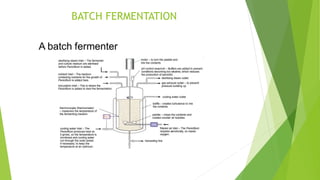
 A batch fermentation is a closed system
 A sterilised nutrient solution is inoculated with microorganism into fermenter
and incubation is allowed proceed at a suitable temperature and gaseous
environment for a particular period of time
 In the course of entire fermentation nothing is added except oxygen (in case
of aerobic microorganisms) and add antifoam agent ,acid or base to control
pH.
 As the growth takes place, nutrients are consumed and product of growth
accumulates into the fermenter.
 The nutrient environment is continuously changed into the fermenter. For the
changing of the environment fermenter will enforce to change in metabolism
of the cell.
 When the microbes reached stationary, they start to accumulate metabolite.
 Metabolites are extracted from the fermenter by downstream process and
then fermenter clean and sterilised for next batch .
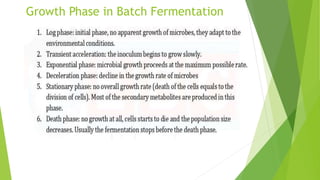
growth phase in batch fermentation
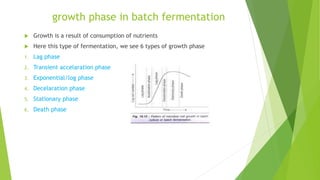
 Growth is a result of consumption of nutrients
 Here this type of fermentation, we see 6 types of growth phase
1. Lag phase
2. Transient accelaration phase
3. Exponential/log phase
4. Decelaration phase
5. Stationary phase
6. Death phase
Growth Phase in Batch Fermentation
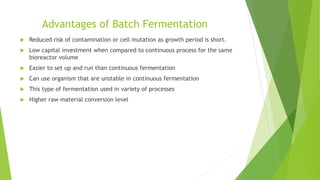
Advantages of Batch Fermentation
 Reduced risk of contamination or cell mutation as growth period is short.
 Low capital investment when compared to continuous process for the same
bioreactor volume
 Easier to set up and run than continuous fermentation
 Can use organism that are unstable in continuous fermentation
 This type of fermentation used in variety of processes
 Higher raw material conversion level
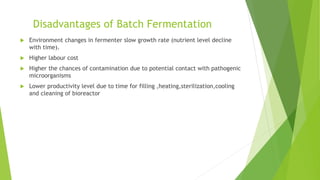
Disadvantages of Batch Fermentation
 Environment changes in fermenter slow growth rate (nutrient level decline
with time).
 Higher labour cost
 Higher the chances of contamination due to potential contact with pathogenic
microorganisms
 Lower productivity level due to time for filling ,heating,sterilization,cooling
and cleaning of bioreactor
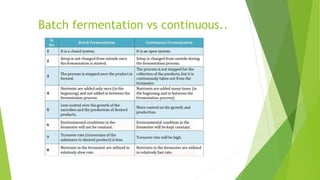
Batch fermentation vs continuous..
Fed Batch Fermentation
 It is modified version of batch fermentation
 Here substrate is added at different times thoughout the fermentation and no
medium is removed untill the end of the process
 Periodical added of substrate keeps prolonged log and stationary phase of
microbes in fermenter
 This result in the rapid increase in biomass.
 In Fed batch fermentation,the medium added first in small concentration and
then add these substance in a small doses during process
 As cell not removed this fermentation ,so in fed batch the production of
compound is well suited in zero growth or no growth stage
 Unlike the continuous fermentation is followed growth and removal process ,
here it is followed growth and dilution process to accumulate biomass
 The reacter followed batch fed batch batch,here fed= nitrogen
source,to manipulate maximum product formation
 Example; vinegar,amylase production, antibiotic production.
ADVANTAGES OF FED BATCH FERMENTATION
 Here we get high yielding at low substate concentration
 Fed batch fermentation can increase product yield compare to batch
 Well defined cultivation period which no cell are added or removed
 Here we optimising environmental condition of microorganisms in regard to
age and growth of culture
 High flexibility to maintain
DISADVANTAGES OF FED BATCH FERMENTATION
 High cost in labour
 Here low production yield during filling ,heating,sterilisation,cooling,
 Here steady state can not maintain like continuous because here cannot
maintain specific growth rate
THANK YOU

Presentationfermentation @sayandip

  • 1.
    PRESENTED BY ,SAYANDIP SANTRA (UG 3rd year,roll:275) RAMAKRISHNA MISSION VIDYAMANDIRA TYPES OF FERMENTATION
  • 2.
    what is fermentation? Fermentation is metabolic process which convert carbohydrates to alcohols,organic acids or gases by the activity of enzymes of microbial origin.  Actually,fermentation is the production of ATP by the degradation of organic nutrients anaerobically  EXAMPLE: a) production of alchoholic beverages,organic acids,anibiotics.
  • 3.
    INDUSTRIAL FERMENTATION  Theintentional use of fermentation technology for large scale production of microbial metabolites is called industrial fermentation.  Modern indusrial fermentation units use genetically engineered microbes for the rapid production of desired metabolites.  Three types of industrial fermentation occurs 1. CONTINUOUS FERMENTATION 2. BATCH FERMENTATION 3. FED BATCH FERMENTATION
  • 4.
    what is fermenter?  The heart of industrial fermentation is a fermenter  It is type of bioreactor  here fermentation takes place  It is a system provided with controlled environmental condition for the growth of microbes in liquid culture  It is the device where microbes are cultivated and motivated to form desired product  Fermenter prevents the entry and growth of contaminating microbes from outside.
  • 6.
    continuous fermentation  Itis an open system  It involves the removal of culture medium continuously and replace of this with a fresh sterile medium in fermenter  Both removal and addition are done in same rate ,so working volume remain constant.  Under these condition(addition and removal) the cells remain in logarithimic phase of growth  Then microbes reach the exponential growth rate and continue till due to availability of nutrients.  This exponential growth rate continue untill the fermenter filled with cells.
  • 7.
    Continuous Fermentation  Whenoverflow happen from the vessel then the metabolite or the product of fermentation is extracted by downstream process  This kind of fermentation process in between and continues to run for a long period of time with the addition of nutrients and hervesting the metabolite at reguler interval.
  • 8.
    Advantages of ContinuousFermentation  Productivity in faster rate  The ability to start the process automaticaly, makes this process more cost efficient and less sensitive to the impact of human error.  More continuty of product due to continuous adding of nutrients.  Less labour require due to automation  Quality of product is better than other process due to maintain steady state in this fermentation  Can use smallest vessel and here microbes maintain optimal growth  This fermentation maintain higher degree of control than other and here growth rate can be regulated and extended for long period of microbes.
  • 9.
    Disadvantages of ContinuousFermentation  Hard to achieve constant sterility  If contaminated, more is loss and wasted  Fermenter only suitable for one process  Cell aggregation also cause to wash out or prevent optimal steady state growth  The original product stain could be lost over time if a faster growing one overtakes it  Due to longer growth period, the risk of contamination more  The heterogenous nature of mixture can also make it difficult to maintain filamentious microorganisms .
  • 10.
    BATCH FERMENTATION  Batchfermentation is a discontinuous process, the fermenter has to be cleaned after each process and a fresh batch started  It includes five steps 1. Medium added 2. Fermenter sterilised 3. Inoculam added 4. Fermentation followed to completion 5. Culture harvested
  • 11.
  • 12.
    BATCH FERMENTATION  Abatch fermentation is a closed system  A sterilised nutrient solution is inoculated with microorganism into fermenter and incubation is allowed proceed at a suitable temperature and gaseous environment for a particular period of time  In the course of entire fermentation nothing is added except oxygen (in case of aerobic microorganisms) and add antifoam agent ,acid or base to control pH.  As the growth takes place, nutrients are consumed and product of growth accumulates into the fermenter.  The nutrient environment is continuously changed into the fermenter. For the changing of the environment fermenter will enforce to change in metabolism of the cell.  When the microbes reached stationary, they start to accumulate metabolite.  Metabolites are extracted from the fermenter by downstream process and then fermenter clean and sterilised for next batch .
  • 13.
    growth phase inbatch fermentation  Growth is a result of consumption of nutrients  Here this type of fermentation, we see 6 types of growth phase 1. Lag phase 2. Transient accelaration phase 3. Exponential/log phase 4. Decelaration phase 5. Stationary phase 6. Death phase
  • 14.
    Growth Phase inBatch Fermentation
  • 15.
    Advantages of BatchFermentation  Reduced risk of contamination or cell mutation as growth period is short.  Low capital investment when compared to continuous process for the same bioreactor volume  Easier to set up and run than continuous fermentation  Can use organism that are unstable in continuous fermentation  This type of fermentation used in variety of processes  Higher raw material conversion level
  • 16.
    Disadvantages of BatchFermentation  Environment changes in fermenter slow growth rate (nutrient level decline with time).  Higher labour cost  Higher the chances of contamination due to potential contact with pathogenic microorganisms  Lower productivity level due to time for filling ,heating,sterilization,cooling and cleaning of bioreactor
  • 17.
  • 18.
    Fed Batch Fermentation It is modified version of batch fermentation  Here substrate is added at different times thoughout the fermentation and no medium is removed untill the end of the process  Periodical added of substrate keeps prolonged log and stationary phase of microbes in fermenter  This result in the rapid increase in biomass.  In Fed batch fermentation,the medium added first in small concentration and then add these substance in a small doses during process  As cell not removed this fermentation ,so in fed batch the production of compound is well suited in zero growth or no growth stage  Unlike the continuous fermentation is followed growth and removal process , here it is followed growth and dilution process to accumulate biomass  The reacter followed batch fed batch batch,here fed= nitrogen source,to manipulate maximum product formation  Example; vinegar,amylase production, antibiotic production.
  • 19.
    ADVANTAGES OF FEDBATCH FERMENTATION  Here we get high yielding at low substate concentration  Fed batch fermentation can increase product yield compare to batch  Well defined cultivation period which no cell are added or removed  Here we optimising environmental condition of microorganisms in regard to age and growth of culture  High flexibility to maintain
  • 20.
    DISADVANTAGES OF FEDBATCH FERMENTATION  High cost in labour  Here low production yield during filling ,heating,sterilisation,cooling,  Here steady state can not maintain like continuous because here cannot maintain specific growth rate
  • 21.