Aspects of Narrative

Brainstorm your ideas about
what narrative is and how it
        is created?
AO1 – Section A, 2nd question
       Section B

• Articulate creative, informed and
 relevant responses to literary
 texts, using appropriate
 terminology and concepts, and
 coherent, accurate written
 expression
AO2 – Section A, 1st question
      Section B


• Demonstrate detailed critical
 understanding in analysing the ways
 in which structure, form and
 language shape meanings in literary
 texts
AO3 – Section A, 2nd question
      Section B


• Explore connections and
 comparisons between different
 literary texts, informed by
 interpretations of other readers
AO4 – Section A, 2nd question


• Demonstrate understanding of the
 significance and influence of the
 contexts in which literary texts are
 written and received
The
•
    Road is set in a post-apocalyptic world, date
    The story
  and place unnamed, though the reader can assume
  it's somewhere in what was the United States
  because the man tells the boy that they're walking
  the "state roads.”
• Neither the man nor the boy is given a name; this
  anonymity adds to the novel's tone that this could
  be happening anywhere, to anyone.
• Stylistically, the writing is very fragmented and
  sparse from the beginning, which reflects the
  barren and bleak landscape through which the man
  and boy are traveling. McCarthy also chooses to use
  no quotation marks in dialogue and for some
  contractions, he leaves out the apostrophes.
  Because this is a post-apocalyptic story, the
  exemption of these punctuation elements might
  serve as a way for McCarthy to indicate that in this
Beginnings
• Read the following comments on
  openings and pick out the point
  which seems to you most
  interesting or helpful when
  thinking about The Road.
• Present it, explaining the point and
  adding a comment of your own,
  related to The Road:

Ian McEwan draws attention to the
fact that beginnings are constructed.
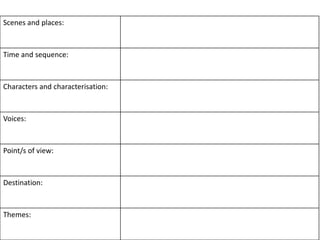
Scenes and places:


Time and sequence:


Characters and characterisation:


Voices:


Point/s of view:


Destination:


Themes:
Line of continuum
• We are going to be placing these
  chapters in order of importance to
  the narrative.

• Will they go in numerical order?
• Why?
• What are we saying about
  narrative?
Homework – due Tuesday (hand in to Mr
          Lawrence, or email me:
jrawlings@woolwichpoly.greenwich.sch.uk
        or jorawlings78@gmail.com
• Write about the ways
  that McCarthy tells
  the story in section 1 of
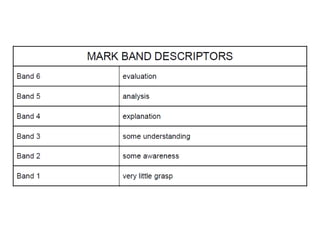
  The Road.                 Band 6 answers:
                                         • evaluation of how
                                           the author’s
• 30 minutes – Language,                   narrative methods
  Structure, Form (the                     work;
                                         • several points
  overall effect, it’s the                 fully developed
  opening chapter of a                     and evaluated;
  novel).                                  structure/voice
                                           evaluated;
• Use the ‘building                        excellent
  blocks’ as ideas.
AO2: Demonstrate detailed critical
                                           illustration;
understanding in analysing the ways in
which structure, form and language       • integrated
shape meanings in literary texts.          evaluation of the
                                           story and

Presentation2

  • 1.
    Aspects of Narrative Brainstormyour ideas about what narrative is and how it is created?
  • 2.
    AO1 – SectionA, 2nd question Section B • Articulate creative, informed and relevant responses to literary texts, using appropriate terminology and concepts, and coherent, accurate written expression
  • 3.
    AO2 – SectionA, 1st question Section B • Demonstrate detailed critical understanding in analysing the ways in which structure, form and language shape meanings in literary texts
  • 4.
    AO3 – SectionA, 2nd question Section B • Explore connections and comparisons between different literary texts, informed by interpretations of other readers
  • 5.
    AO4 – SectionA, 2nd question • Demonstrate understanding of the significance and influence of the contexts in which literary texts are written and received
  • 7.
    The • Road is set in a post-apocalyptic world, date The story and place unnamed, though the reader can assume it's somewhere in what was the United States because the man tells the boy that they're walking the "state roads.” • Neither the man nor the boy is given a name; this anonymity adds to the novel's tone that this could be happening anywhere, to anyone. • Stylistically, the writing is very fragmented and sparse from the beginning, which reflects the barren and bleak landscape through which the man and boy are traveling. McCarthy also chooses to use no quotation marks in dialogue and for some contractions, he leaves out the apostrophes. Because this is a post-apocalyptic story, the exemption of these punctuation elements might serve as a way for McCarthy to indicate that in this
  • 8.
    Beginnings • Read thefollowing comments on openings and pick out the point which seems to you most interesting or helpful when thinking about The Road. • Present it, explaining the point and adding a comment of your own, related to The Road: Ian McEwan draws attention to the fact that beginnings are constructed.
  • 9.
    Scenes and places: Timeand sequence: Characters and characterisation: Voices: Point/s of view: Destination: Themes:
  • 10.
    Line of continuum •We are going to be placing these chapters in order of importance to the narrative. • Will they go in numerical order? • Why? • What are we saying about narrative?
  • 11.
    Homework – dueTuesday (hand in to Mr Lawrence, or email me: jrawlings@woolwichpoly.greenwich.sch.uk or jorawlings78@gmail.com • Write about the ways that McCarthy tells the story in section 1 of The Road. Band 6 answers: • evaluation of how the author’s • 30 minutes – Language, narrative methods Structure, Form (the work; • several points overall effect, it’s the fully developed opening chapter of a and evaluated; novel). structure/voice evaluated; • Use the ‘building excellent blocks’ as ideas. AO2: Demonstrate detailed critical illustration; understanding in analysing the ways in which structure, form and language • integrated shape meanings in literary texts. evaluation of the story and