PRESENTED BY :AQSA JAVAID
END OF TRAGEDY IS TO SHOW
DIGNITY OF MAN
TRAGEDY
Tragedy is serious and intensifies the mood.
Tragedy is a play with sorrowful ending.
According to Aristotle ,tragedy is an imitation
of a serious and complete action which have
some magnitude.
Tragedy is a representation of stupendous
experiences in lives of conspicuous people
which result in sorrow.
TRAGEDY SHOWS DIGNITY OF MAN
Attitude towards value in tragedy
Tragedy reveals greatness of man.
Tragedy is a spectacle of consent and
inevitable relation between good and evil
Tragedy represents absoluteness in values
The period of equilibrium of tragedy consists
in a Terror with Pride.
TRAGIC TRAIT
Tragic trait in hero’s character indicates the
dignity of man.
Tragic trait is that which makes the hero an
enigma.
The tragic trait is within man and it kills him.
VISION OF TRAGEDY
 The vision of tragedy is the outcome of
greatness.
It’s man attempt to deal creatively with fear
and pain.
Direction and focus may change , but the
vision is constant.
TRAGIC ELEMENTS
Terror
Pity
Sense of Waste and Mystery of Life
Poetic justice
Values of tragic art
The end and purpose of tragic art
CONCLUSION
Tragedy is concerned with resistance to
circumstances.
The concept of tragedy invariably depict the
trial and tribulations of great personages like
queens , kings, mighty generals and nobles.
Even a wicked hero Macbeth has a lot of
conscience in him , which reassert one’s faith
in dignity of man.
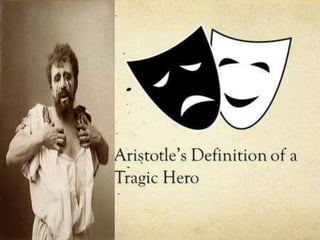
TRAGIC HERO
 Aristotle defines a tragic hero as a person
who must evoke a sense of pity and fear in
audience.
A person who faces difficulties in the face of
danger.
A person for which pity being felt.
BASIC ELEMENTS OF TRAGIC HERO
Hamartia
Hubris
Usually noble by birth
Audience must feel pity and fear for this
character
IDEAL TRAGIC HERO
CHARACTERISTICS
Goodness
Realistic
Appropriate
Consistent
Hamartia
Likeness
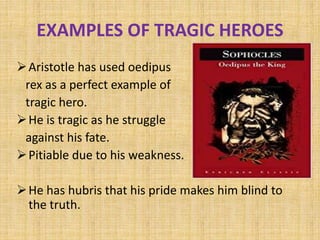
EXAMPLES OF TRAGIC HEROES
Aristotle has used oedipus
rex as a perfect example of
tragic hero.
He is tragic as he struggle
against his fate.
Pitiable due to his weakness.
He has hubris that his pride makes him blind to
the truth.
CONCLUSION
Emotions are evoked by ideal tragic hero
Aristotle stipulates that the tragic hero must
be good but not perfect.
He must be true to type.
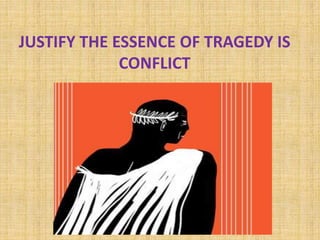
JUSTIFY THE ESSENCE OF TRAGEDY IS
CONFLICT
CONFLICT IN TRAGEDY
Tragedy is the exhibition of man in unsuccessful
conflict with mighty forces.
There is conflict of feelings , desires , will and
purposes.
End of tragedy related with conflict of the hero
which wrought his actions.
Shakespearean tragedy
Medieval age
Senecan age
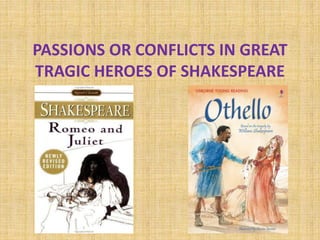
PASSIONS OR CONFLICTS IN GREAT
TRAGIC HEROES OF SHAKESPEARE
HAMLET
Hamlet is the study of passion of grief.
His excessive grief makes his memory fade.
Shakespeare did not fail to see and to show
the essential humanness of grief in its
passionate refusal of the consolations of
philosophy.
He is an idealist .
Hamlet stresses the joy-grief pair of passions.
OTHELLO
Othello is a tragedy of jealousy.
It is a derivative passion.
Jealousy is opposed to love ,as it often comes
from love.
Othello is not jealous by nature and is noble
and loveable.
Passion has again caused innocent of guilty.
Othello develops the love-hatred of jealousy.
KING LEAR
This is the tragedy of wrath in old age.
Anger always rises from injured self-esteem.
Shakespeare has presented several problem
I. Old age
II. Anger
Lears appeals from his daugthers to the
heavens
MACBETH
Macbeth is a study of fear.
He is a man of guilt.
Pair of passion here is of fear and
cowardliness.
Fear is painful, it has to do with future rather
than present , arises from mental picture of an
evil in mind.
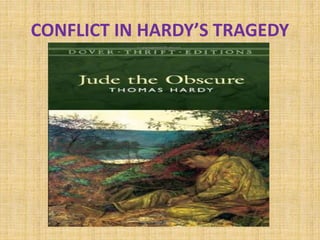
CONFLICT IN HARDY’S TRAGEDY
CONFLICT IN HARDY TRAGEDY
All his tragedies deal with the problem of sex.
His novels tackle the internal mutual relations
of Man and Women.
Conflict is the outcome of the sex relations
among the characters which spins the action
of his tragic novels.
Hardy has given his own interpretation of love.
Hardy’s conviction that there is a fundamental
conflict between humanity and ruthless fate.
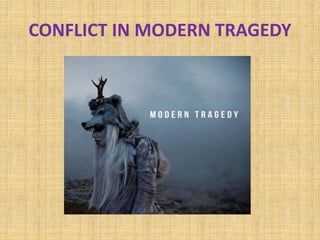
CONFLICT IN MODERN TRAGEDY
That man’s weakness, his susceptibility to
passion, is not necessarily responsible for his
doom.
Two modern writers are Galsworthy and Prem
Chand.
Both mirror the tyranny of social forces.
People suffer since there is in practice one law for
the poor and another for the rich .this is called
social tragedy.
There is a conflict of classes and communities.
CONCLUSION
Tragedy is always the outcome of a conflict.
Passions must spin the actions of the tragic art
Tragedy is a painful mystery.
Tragedy occurs when tragic events are
uncontrollable and beyond human power.
Its essence is conflict , resulting in suffering and
misery.
Human failings and towering passions led to the
greatness of man.
Presentation1

Presentation1

  • 2.
  • 3.
    END OF TRAGEDYIS TO SHOW DIGNITY OF MAN
  • 5.
    TRAGEDY Tragedy is seriousand intensifies the mood. Tragedy is a play with sorrowful ending. According to Aristotle ,tragedy is an imitation of a serious and complete action which have some magnitude. Tragedy is a representation of stupendous experiences in lives of conspicuous people which result in sorrow.
  • 6.
    TRAGEDY SHOWS DIGNITYOF MAN Attitude towards value in tragedy Tragedy reveals greatness of man. Tragedy is a spectacle of consent and inevitable relation between good and evil Tragedy represents absoluteness in values The period of equilibrium of tragedy consists in a Terror with Pride.
  • 7.
    TRAGIC TRAIT Tragic traitin hero’s character indicates the dignity of man. Tragic trait is that which makes the hero an enigma. The tragic trait is within man and it kills him.
  • 8.
    VISION OF TRAGEDY The vision of tragedy is the outcome of greatness. It’s man attempt to deal creatively with fear and pain. Direction and focus may change , but the vision is constant.
  • 9.
    TRAGIC ELEMENTS Terror Pity Sense ofWaste and Mystery of Life Poetic justice Values of tragic art The end and purpose of tragic art
  • 10.
    CONCLUSION Tragedy is concernedwith resistance to circumstances. The concept of tragedy invariably depict the trial and tribulations of great personages like queens , kings, mighty generals and nobles. Even a wicked hero Macbeth has a lot of conscience in him , which reassert one’s faith in dignity of man.
  • 12.
    TRAGIC HERO  Aristotledefines a tragic hero as a person who must evoke a sense of pity and fear in audience. A person who faces difficulties in the face of danger. A person for which pity being felt.
  • 13.
    BASIC ELEMENTS OFTRAGIC HERO Hamartia Hubris Usually noble by birth Audience must feel pity and fear for this character
  • 14.
  • 15.
    EXAMPLES OF TRAGICHEROES Aristotle has used oedipus rex as a perfect example of tragic hero. He is tragic as he struggle against his fate. Pitiable due to his weakness. He has hubris that his pride makes him blind to the truth.
  • 16.
    CONCLUSION Emotions are evokedby ideal tragic hero Aristotle stipulates that the tragic hero must be good but not perfect. He must be true to type.
  • 17.
    JUSTIFY THE ESSENCEOF TRAGEDY IS CONFLICT
  • 18.
    CONFLICT IN TRAGEDY Tragedyis the exhibition of man in unsuccessful conflict with mighty forces. There is conflict of feelings , desires , will and purposes. End of tragedy related with conflict of the hero which wrought his actions. Shakespearean tragedy Medieval age Senecan age
  • 20.
    PASSIONS OR CONFLICTSIN GREAT TRAGIC HEROES OF SHAKESPEARE
  • 21.
    HAMLET Hamlet is thestudy of passion of grief. His excessive grief makes his memory fade. Shakespeare did not fail to see and to show the essential humanness of grief in its passionate refusal of the consolations of philosophy. He is an idealist . Hamlet stresses the joy-grief pair of passions.
  • 22.
    OTHELLO Othello is atragedy of jealousy. It is a derivative passion. Jealousy is opposed to love ,as it often comes from love. Othello is not jealous by nature and is noble and loveable. Passion has again caused innocent of guilty. Othello develops the love-hatred of jealousy.
  • 23.
    KING LEAR This isthe tragedy of wrath in old age. Anger always rises from injured self-esteem. Shakespeare has presented several problem I. Old age II. Anger Lears appeals from his daugthers to the heavens
  • 24.
    MACBETH Macbeth is astudy of fear. He is a man of guilt. Pair of passion here is of fear and cowardliness. Fear is painful, it has to do with future rather than present , arises from mental picture of an evil in mind.
  • 25.
  • 26.
    CONFLICT IN HARDYTRAGEDY All his tragedies deal with the problem of sex. His novels tackle the internal mutual relations of Man and Women. Conflict is the outcome of the sex relations among the characters which spins the action of his tragic novels. Hardy has given his own interpretation of love. Hardy’s conviction that there is a fundamental conflict between humanity and ruthless fate.
  • 27.
  • 28.
    CONFLICT IN MODERNTRAGEDY That man’s weakness, his susceptibility to passion, is not necessarily responsible for his doom. Two modern writers are Galsworthy and Prem Chand. Both mirror the tyranny of social forces. People suffer since there is in practice one law for the poor and another for the rich .this is called social tragedy. There is a conflict of classes and communities.
  • 29.
    CONCLUSION Tragedy is alwaysthe outcome of a conflict. Passions must spin the actions of the tragic art Tragedy is a painful mystery. Tragedy occurs when tragic events are uncontrollable and beyond human power. Its essence is conflict , resulting in suffering and misery. Human failings and towering passions led to the greatness of man.