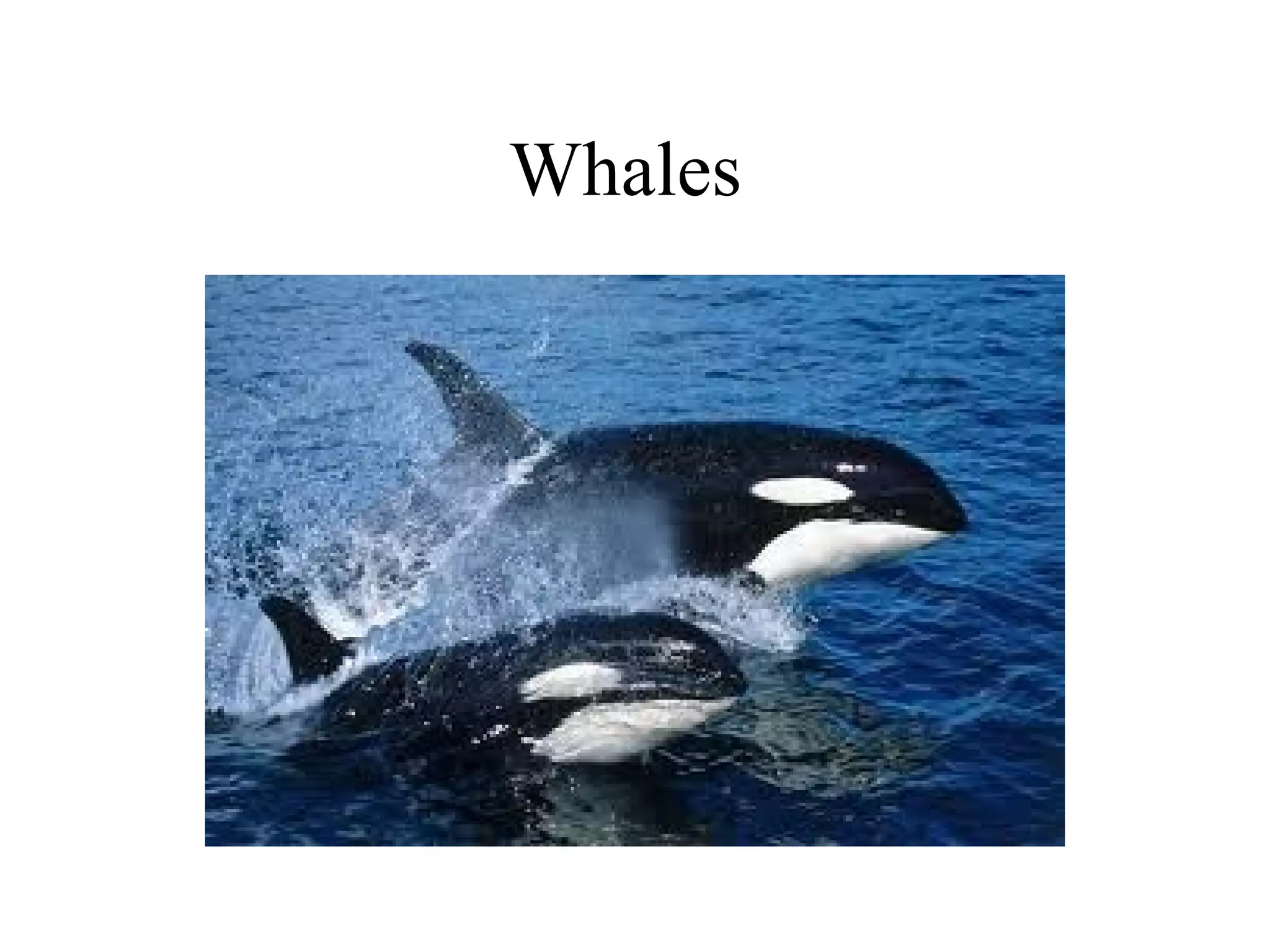
Whales
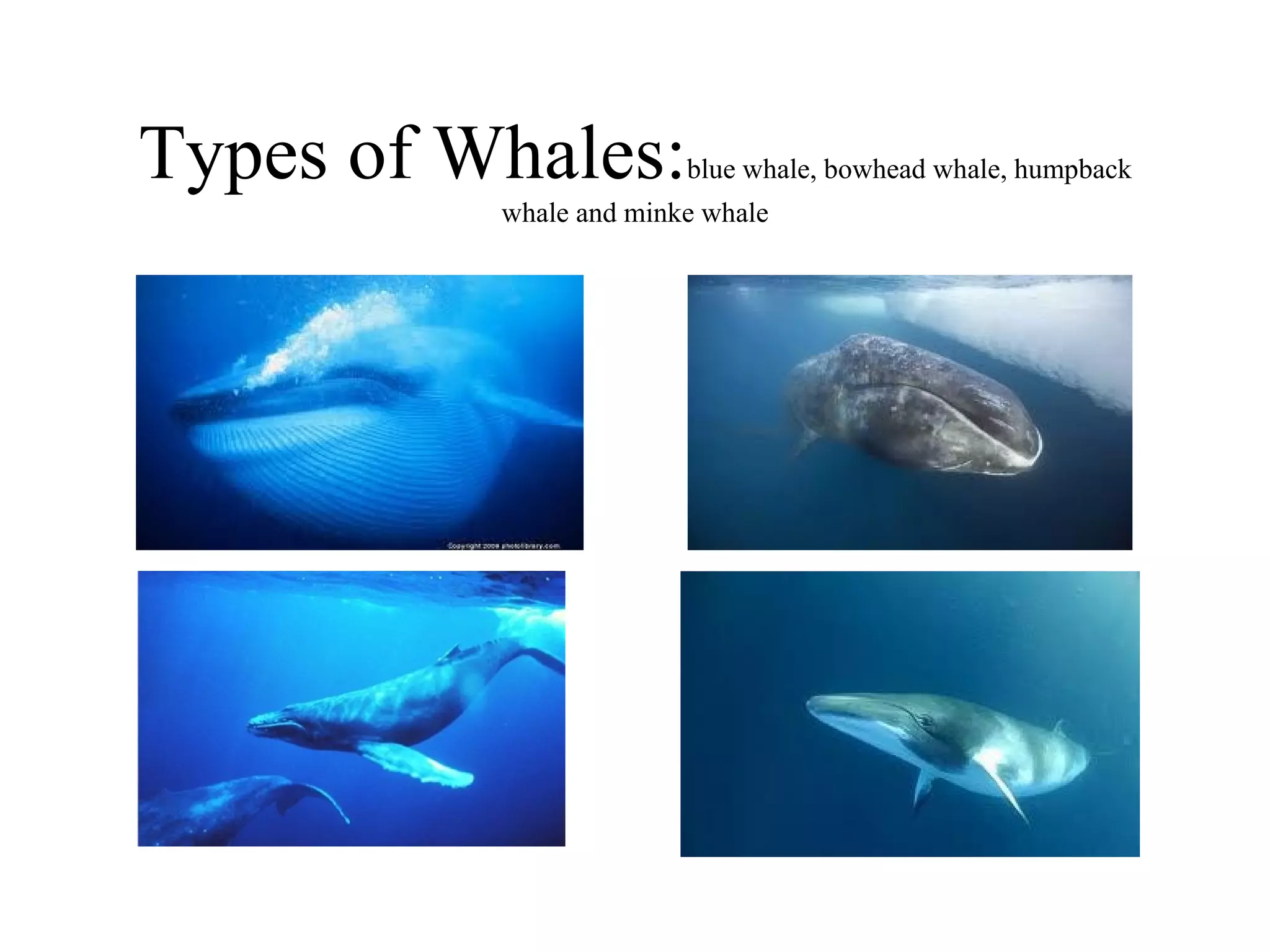
Types of Whales: blue whale, bowhead whale, humpback whale and minke whale
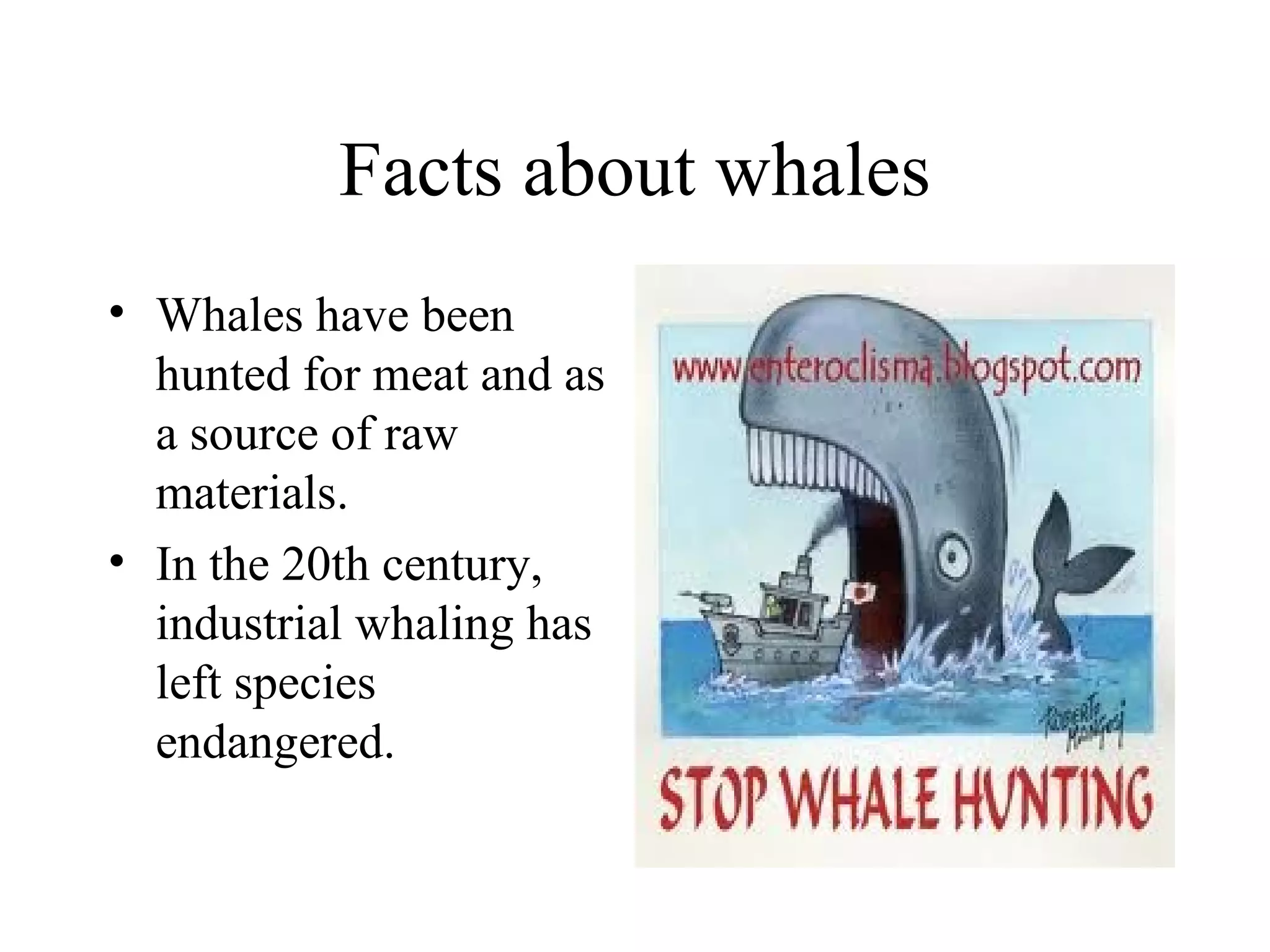
Facts about whales Whales have been hunted for meat and as a source of raw materials.  In the 20th century, industrial whaling has left species endangered.
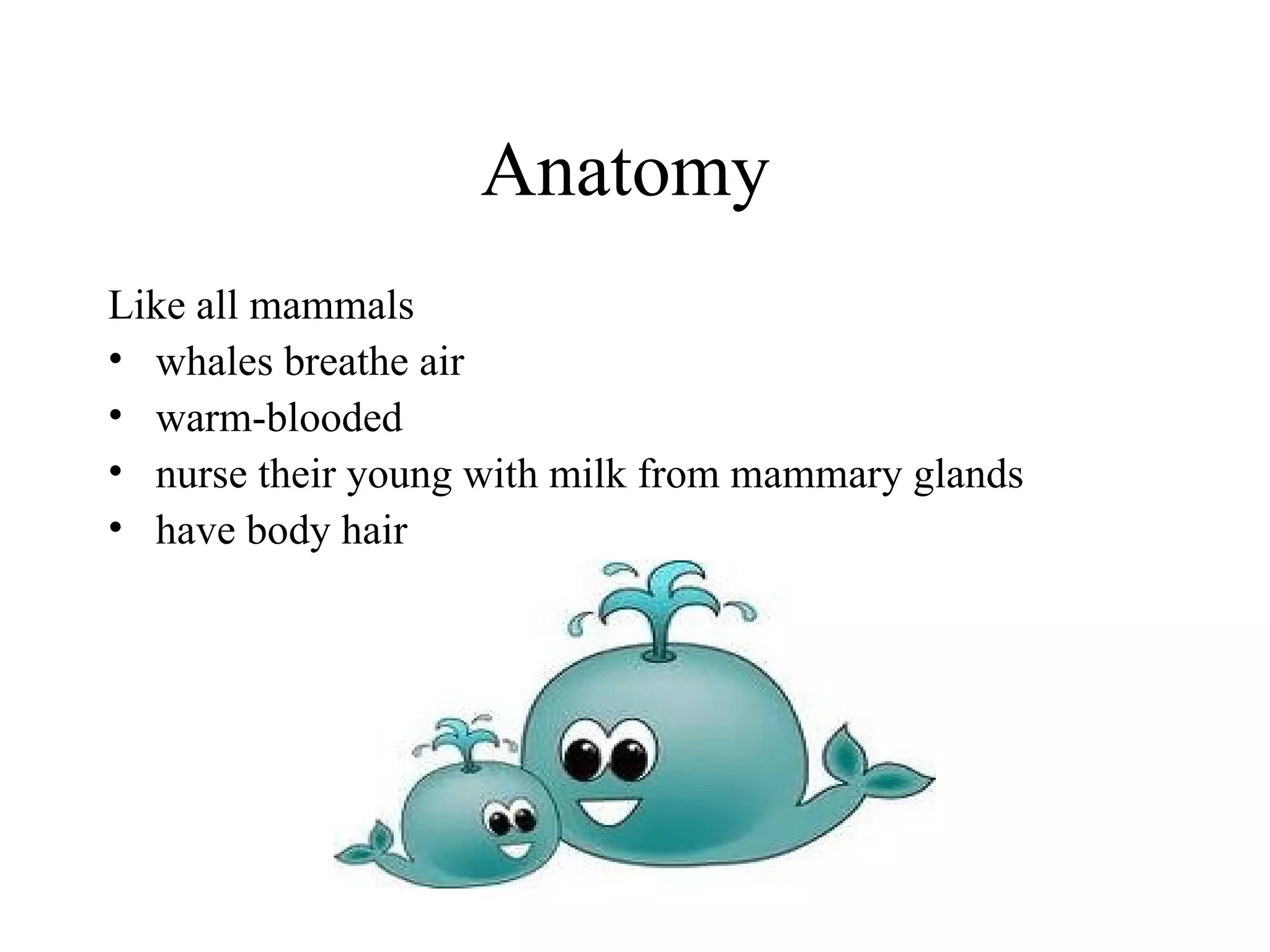
Anatomy  Like all mammals  whales breathe air warm-blooded nurse their young with milk from mammary glands have body hair
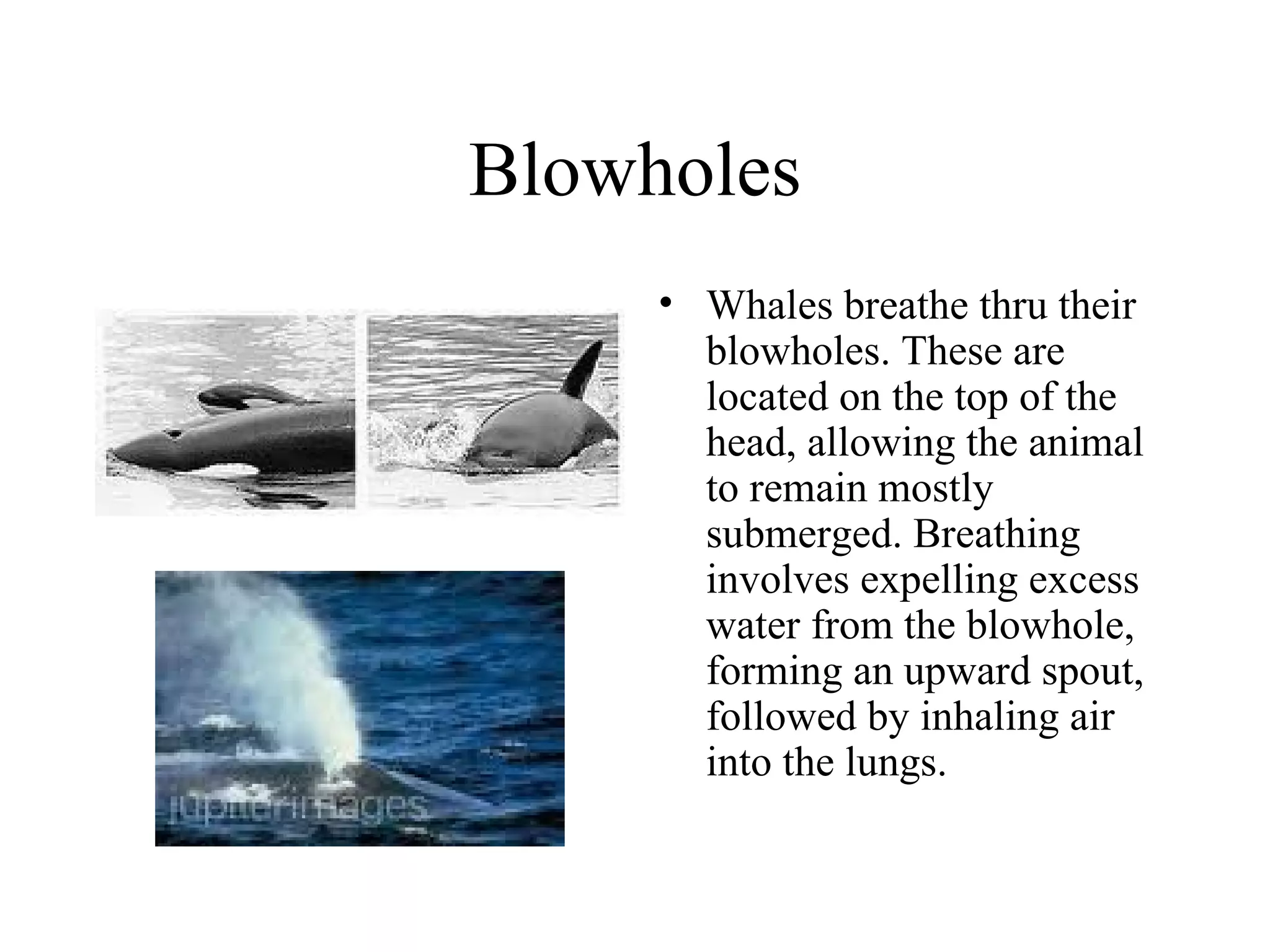
Blowholes Whales breathe thru their blowholes. These are located on the top of the head, allowing the animal to remain mostly submerged. Breathing involves expelling excess water from the blowhole, forming an upward spout, followed by inhaling air into the lungs.
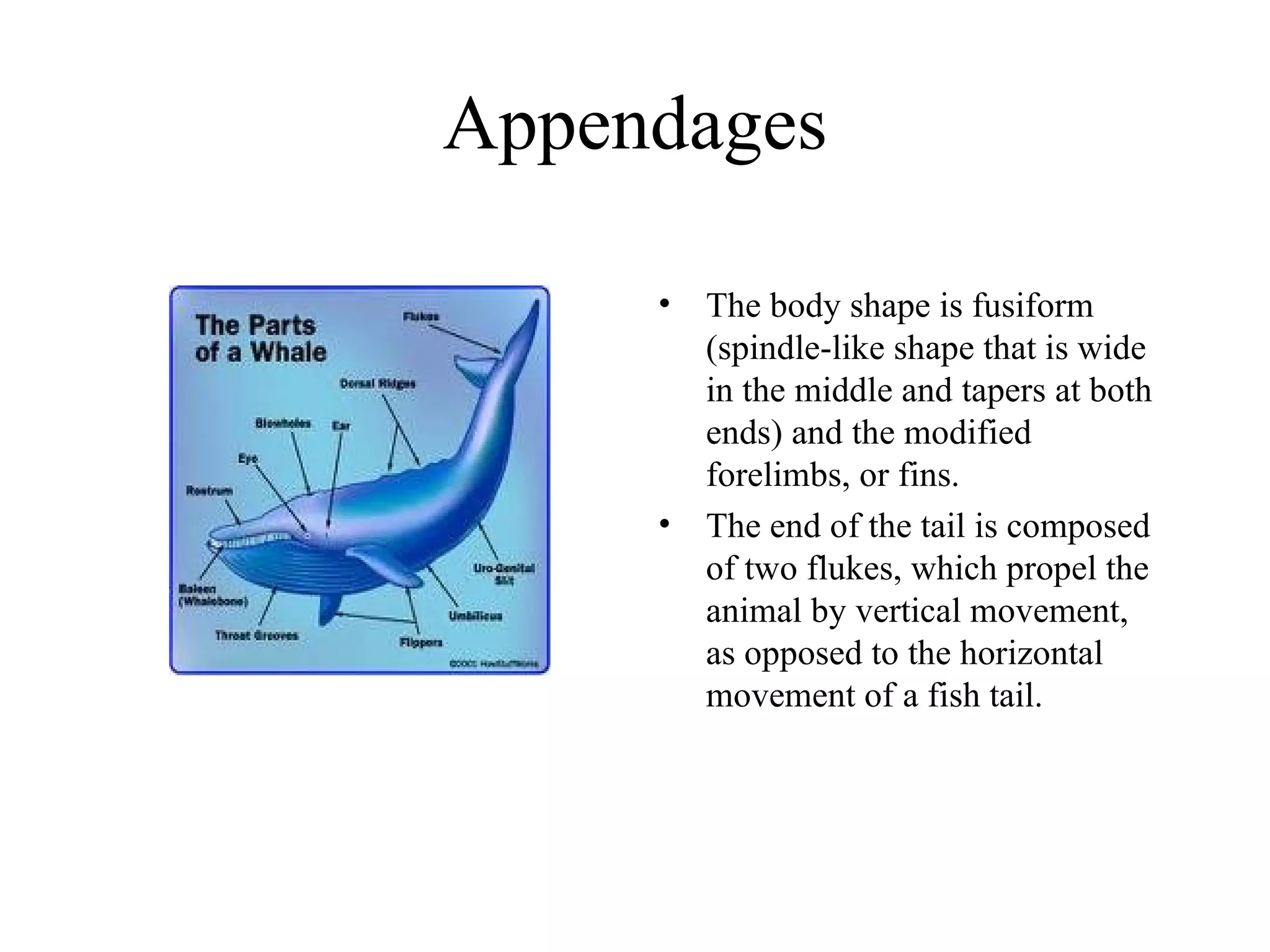
Appendages The body shape is fusiform (spindle-like shape that is wide in the middle and tapers at both ends) and the modified forelimbs, or fins.  The end of the tail is composed of two flukes, which propel the animal by vertical movement, as opposed to the horizontal movement of a fish tail.
Ears  whales receive sound through the throat, from which it passes through a low-impedance fat-filled cavity to the inner ear.
Other random facts to end with……. Whales are known to teach, learn, cooperate, scheme, and even grieve All mammals sleep, but whales cannot afford to become unconscious for long because they may drown. It is thought that only one hemisphere of the whale's brain sleeps at a time, so they rest but are never completely asleep

Presentation1

  • 1.
  • 2.
    Types of Whales:blue whale, bowhead whale, humpback whale and minke whale
  • 3.
    Facts about whalesWhales have been hunted for meat and as a source of raw materials. In the 20th century, industrial whaling has left species endangered.
  • 4.
    Anatomy Likeall mammals whales breathe air warm-blooded nurse their young with milk from mammary glands have body hair
  • 5.
    Blowholes Whales breathethru their blowholes. These are located on the top of the head, allowing the animal to remain mostly submerged. Breathing involves expelling excess water from the blowhole, forming an upward spout, followed by inhaling air into the lungs.
  • 6.
    Appendages The bodyshape is fusiform (spindle-like shape that is wide in the middle and tapers at both ends) and the modified forelimbs, or fins. The end of the tail is composed of two flukes, which propel the animal by vertical movement, as opposed to the horizontal movement of a fish tail.
  • 7.
    Ears whalesreceive sound through the throat, from which it passes through a low-impedance fat-filled cavity to the inner ear.
  • 8.
    Other random factsto end with……. Whales are known to teach, learn, cooperate, scheme, and even grieve All mammals sleep, but whales cannot afford to become unconscious for long because they may drown. It is thought that only one hemisphere of the whale's brain sleeps at a time, so they rest but are never completely asleep