• AS WE ALL KNOW, PRE PRODUCTION IS
  MAYBE THE MOST IMPORTANT ELEMENT IN
  FILMING AND PRODUCING A SHORT FILM

• THIS GIVES US A CLEAR VIEW AND PLAN OF
  WHAT WE ARE GOING TO SHOOT, AS WELL AS
  ALLOWING US TO CREATE A SCRIPT AND
  STORYBOARDS PREEMPTING WHAT WE ARE
  SPECIFICALLY GOING TO SHOOT.
   SHOT TYPES
   POSITIONING OF ACTORS
   MOVEMENT OF CAMERA
   POSITIONING OF PROPS
   SPEECH
   ACTION
PRODUCTION
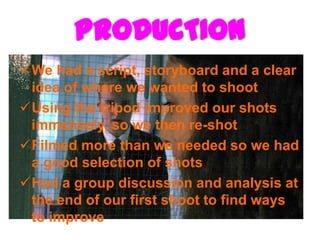
We had a script, storyboard and a clear
 idea of where we wanted to shoot
Using the tripod improved our shots
 immensely, so we then re-shot
Filmed more than we needed so we had
 a good selection of shots
Had a group discussion and analysis at
 the end of our first shoot to find ways
 to improve
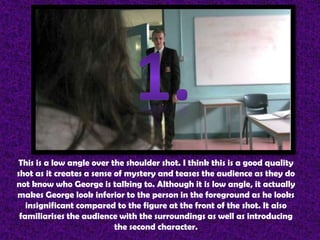
This is a low angle over the shoulder shot. I think this is a good quality
shot as it creates a sense of mystery and teases the audience as they do
not know who George is talking to. Although it is low angle, it actually
makes George look inferior to the person in the foreground as he looks
   insignificant compared to the figure at the front of the shot. It also
 familiarises the audience with the surroundings as well as introducing
                           the second character.
This is an example of ‘match on action’. We go from a low angle point of
  view medium shot where George walks around the camera, then we
switch to a high angle tilting shot of George bending down behind Alice.
These two shots flow smoothly as we used the tripod in both shots, as well
as having two cameras filming the same action from different locations.
  This is why it is not a messy cut or different action just put together.
This is an example of ‘shot reverse shot’. This shows the two characters
  having a conversation and also establishes where they are in the room
and in relation to each other throughout the dialogue. We have also had
to keep to the 180˚ rule to keep the shot balanced and to not disorientate
                               the audience.
• Post production is the main process of editing our film
  and deconstructing the film to specifically create certain
  shots together.

However, There are many things which can happen in post-
production. Common tasks include:
• Editing video footage
• Editing the soundtrack, adding sound effects, music, etc.
• Adding titles and graphics
• Colour and exposure correction
• Adding special effects
• Re-shooting certain scenes if required ("pick-up" shots)
Presentation on prenimilary task

Presentation on prenimilary task

  • 2.
    • AS WEALL KNOW, PRE PRODUCTION IS MAYBE THE MOST IMPORTANT ELEMENT IN FILMING AND PRODUCING A SHORT FILM • THIS GIVES US A CLEAR VIEW AND PLAN OF WHAT WE ARE GOING TO SHOOT, AS WELL AS ALLOWING US TO CREATE A SCRIPT AND STORYBOARDS PREEMPTING WHAT WE ARE SPECIFICALLY GOING TO SHOOT.
  • 3.
    SHOT TYPES  POSITIONING OF ACTORS  MOVEMENT OF CAMERA  POSITIONING OF PROPS  SPEECH  ACTION
  • 5.
    PRODUCTION We had ascript, storyboard and a clear idea of where we wanted to shoot Using the tripod improved our shots immensely, so we then re-shot Filmed more than we needed so we had a good selection of shots Had a group discussion and analysis at the end of our first shoot to find ways to improve
  • 7.
    This is alow angle over the shoulder shot. I think this is a good quality shot as it creates a sense of mystery and teases the audience as they do not know who George is talking to. Although it is low angle, it actually makes George look inferior to the person in the foreground as he looks insignificant compared to the figure at the front of the shot. It also familiarises the audience with the surroundings as well as introducing the second character.
  • 8.
    This is anexample of ‘match on action’. We go from a low angle point of view medium shot where George walks around the camera, then we switch to a high angle tilting shot of George bending down behind Alice. These two shots flow smoothly as we used the tripod in both shots, as well as having two cameras filming the same action from different locations. This is why it is not a messy cut or different action just put together.
  • 9.
    This is anexample of ‘shot reverse shot’. This shows the two characters having a conversation and also establishes where they are in the room and in relation to each other throughout the dialogue. We have also had to keep to the 180˚ rule to keep the shot balanced and to not disorientate the audience.
  • 10.
    • Post productionis the main process of editing our film and deconstructing the film to specifically create certain shots together. However, There are many things which can happen in post- production. Common tasks include: • Editing video footage • Editing the soundtrack, adding sound effects, music, etc. • Adding titles and graphics • Colour and exposure correction • Adding special effects • Re-shooting certain scenes if required ("pick-up" shots)