objectives;
1. Explain thedifferent stages involved in the
production phase;
2. Differentiate between various types of shots;
3. Demonstrate problem-solving skills during
unexpected situations on set.
4. Identify the key elements of post-production.
5. Utilize basic editing software functionalities.
6. Integrate the different key elements in editing
videos.
3.
Video Editing
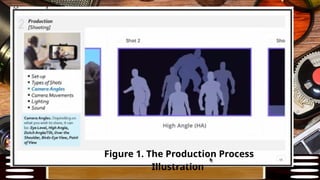
1. ProductionPhase (Set-up, types of shots,
camera angles, camera movement, lighting,
sound)
2. Post-Production Phase (Organizing Footage,
Music Background, Lower Thirds, Captioning,
Effects, Editing Software)
review
Scriptwriting - writethe story and dialogue.
Shot Listing - plan exactly what shots we
need to film.
storyboard- visual representation of the
scenes
Talent Scouting - find the perfect actors for
our characters
Securing Equipment - make sure we have all
the cameras, lights and sound equipment
ready
Production
is the phasewhere the actual
shooting and recording happens.
This is where the story comes alive
on screen, one scene at a time.
8.
post-Production
is the finalstage where all the raw
footage, sound recordings, and
creative elements come together to
be transformed into the polished
film. The phase where a film is
really made.
9.
setup
refers to thearranging the
equipment and environment for
filming.
refers to the arranging the
equipment and environment for
filming.
Types of Shots
10.
Camera Angles
refers tothe position of the camera in
relation to the subject (e.g., high angle, low
angle, eye level).
refers to the motion of the camera
during a shot (e.g., pan, tilt, zoom,
dolly).
Camera Movement
11.
Production Phase
The productionphase in filmmaking is the thrilling
stage where your meticulously planned script and pre-
production efforts transform into raw footage. The
Production stage also known as principal photography
is when all the actual shooting and recording happens.
This is where the story comes alive on screen, one
screen at a time. It is the most exciting part of the
filmmaking process. This is when the cameras roll and
the footage is captured.
1. Proper setup
involvespreparing the shooting
environment, actors, props, and
equipment before filming begins. This
ensures a smooth workflow and
minimizes disruptions during filming.
15.
2. Type ofCamera Shots
refers to how much of the subject is
framed within the camera. Camera shots
determine how much of the environment
surrounding the subject is included in the
shot. Different shot sizes convey different
emotions and information.
16.
Camera Angles
refer tothe position of the camera in relation to
the subject. Camera Shots and Camera Angle are
two distinct tools that filmmakers use to create a
visual interest and convey meaning in their films.
Camera Shots determine how much of the
subject and their environment is visible while
Camera Angles influence the viewer’s
perspective and perception of the scene.
17.
Camera Movement
Understanding theeffects of the different types
of camera movements in film is essential for
every filmmaker to understand. It not only
makes them better cinematographer or
directors, but better storytellers. Using the right
movement that best serves your story will help
you make each shot as effective as possible.
18.
sounds
effects were usedas comic relief or to signify an
action happening off screen. Sound design has
become a powerful tool. Sound plays a big role as
the visual elements in film. It is a tool to immerse
the audience in cinematic experience or bring a
fantastical creature to life or ramp up the tension in
a scene. Sound effects can impact an audience's
emotions just as powerful as an actor’s
20.
1: Post-Production Phase(Storage,
Picture Editing, Sound Editing,
Scoring, Sound Mixing, Visual
Effects, Color Grading, Titles and
Credits, Distribution, and Trailer)
21.
post- production
There areso many people or talents involved in Post-
Production, and trusting each other matters more in “post”
than any other time in the filmmaking process. Post
production is the final step. Post-production involves
EDITING. In Post-production, all tasks associated with
cutting raw footage, assembling that footage, adding
music,dubbing, sound effects, are just some of the many
works. Post-production process is highly collaborative,
across a few months to even a year, depending on the size
and need of the project.
22.
post- production workflow
1. Provide reliable storage. Make sure you have reliable storage
to house all the footage you spent hours shooting.
2. Picture editing. The most important of all - picture editing.
The first draft of the film is called “Rough Cut”, and the final
version will be called the “Answer Print”, and when the maker
is happy with the visuals, they then “Lock the Picture”. Then
the sound editing can begin.
3. Sound editing. Once the picture is locked, it is time for sound
editing. Assembling the audio tracks of your film, cutting
dialogue tracks, removing unwanted noise and even enhancing
23.
post- production workflow
4. Secure music or scoring. It is working with the composer to have an
original soundtrack for your film rather than the headache of
licensing other people’s music. Some would hire a musician to create
an original score.
5. Sound mixing. Now that you have your music, sound effects, and re-
recorded dialogue, it is time to start layering each track on top of each
other - mixing. Sound mixers will adjust all of the volume levels,
eliminate anything too distracting, basically making sure everything
sounds just right.
6. Visual effects or Adding VFX. Visual effects may be achieved through
using computer-generated imagery or CGI, to create visuals
24.
post- production workflow
7. Color correction or color grading. It may be done before the VFX
but sometimes it is done after. As long as the picture is locked, a
colorist can go in and digitally alter the shots. They lighten frames
to adjust hues for continuity as well as to reflect the scene tone.
8. Titles, credits, and graphics. Editors can create title cards, credits
and any graphics necessary and add them in the film.
9. Gather distribution materials. Distribution stage is where your
film shall be distributed by advertising your film, campaign image or
poster, and many others.
10. Make a trailer. A trailer can be one-to-two minutes.
25.
Formative Assessment
1. Whyis the production phase considered as the most exciting stage of
filmmaking? Answers may vary but here is desired:
● Because it is where the script and planning come to life. It is the stage
where the filming actually happens and the actors bring the story to life
visually.
2. What is the primary function of the editing process in post-production?
The editing process assembles the footage from filming into a
●
cohesive sequence, adding transitions, sound effects, and music to tell
the story in the most impactful way.
26.
formative assessment
3. Explainthe importance of sound design in filmmaking and how it
contributes to the overall experience.
● Sound design is all the sounds you hear in a movie, including sound
effects, music and dialogue. It helps a sense of realism, immerse the
viewer in the story, and build emotions.
27.
PERFORAMNCE OUTPUT NO.3
Title: Comprehensive Video Production and
Editing
-A VIDEO TRAILER OF YOUR INCOMING
PERFORMANCE IN MUSIC AND ARTS.
28.
Pre-Production Planning Activity(20
minutes)
Students fill out the planning sheet together.
Include the following sections:
• Group Members & Roles: Director, Camera Op, Editor,
Sound, Talent
• Title of Trailer/Event
• Concept/Theme: (e.g., dramatic, mysterious, exciting,
elegant)
• Target Audience
• Storyboard or Shot List: 5–8 planned shots (wide shot
29.
Pre-Production Planning Activity(20
minutes)
• Audio/Music Plan: Background music or live sounds
• Text/Graphics: What on-screen text will appear?
Instructor roams and checks for creative direction,
feasibility, and group roles.


 Most read