Welcome To OurWelcome To Our
Presentation OnPresentation On
MacroeconomicsMacroeconomics
Presentation topics are..
• Inflation.
• Consumption.
• Savings.
• Investment.
• Unemployment.
Our Team Members..
• Name: Ahmad Kawser
• Id : 111-43-76
• Name: Shrastha Sarker
• Id : 111-43-04
• Name: Md Rasel
• Id :111-43-69
• Name: Saifur Rahman
• Id :111-43-88
• Name: Sajiya Afrin
• Id :111-37-139
Presentation onPresentation on
InflationInflation
Contents
• Definition of Inflation.
• Types of Inflation.
• Inflation effect in developing
countries like Bangladesh.
Definition of Inflation
• By inflation we mean a general
rise in prices.
• To be more correct, inflation is a
persistent rise in the general
price level rather than a once for
all rise in it.
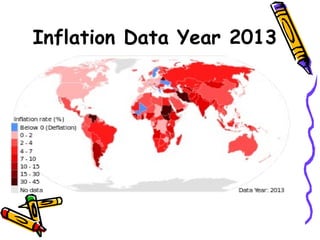
Inflation Data Year 2013
Types of Inflation
• Demand-pull inflation.
• Cost-push inflation.
• Structural inflation.
• Excessive growth in money
supply.
Demand-pull Inflation
• Demands pull inflation, wherein the
economy demands more goods and
services than what is produced.
• The types of inflation happens when
the aggregate demand increases
more than the supply.
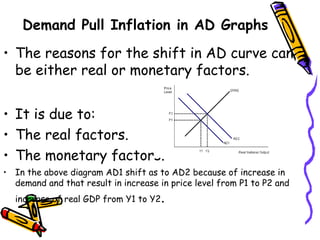
Demand Pull Inflation in AD Graphs
• The reasons for the shift in AD curve can
be either real or monetary factors.
• It is due to:
• The real factors.
• The monetary factors.
• In the above diagram AD1 shift as to AD2 because of increase in
demand and that result in increase in price level from P1 to P2 and
increase of real GDP from Y1 to Y2.
Cost-push Inflation
• When cost of production increases the
price level automatically increases.
• Cost push inflation or supply shock
inflation. wherein non availability of a
commodity would lead to increase in prices
Cost Push Inflation in AD Graph
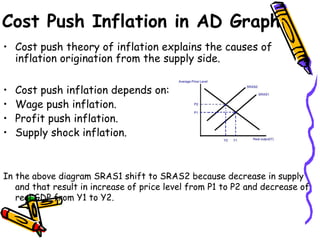
• Cost push theory of inflation explains the causes of
inflation origination from the supply side.
• Cost push inflation depends on:
• Wage push inflation.
• Profit push inflation.
• Supply shock inflation.
In the above diagram SRAS1 shift to SRAS2 because decrease in supply
and that result in increase of price level from P1 to P2 and decrease of
real GDP from Y1 to Y2.
Inflation effect In developing
countries like Bangladesh.
• Discourage investment and savings.
• Add inefficiencies in the market.
• Difficulties with budgeting.
• Demand of rapid wages increase.
• Causes of hyper-inflation
• Hidden tax inflation
Presentation on Inflation

Presentation on Inflation

  • 1.
    Welcome To OurWelcomeTo Our Presentation OnPresentation On MacroeconomicsMacroeconomics
  • 2.
    Presentation topics are.. •Inflation. • Consumption. • Savings. • Investment. • Unemployment.
  • 3.
    Our Team Members.. •Name: Ahmad Kawser • Id : 111-43-76 • Name: Shrastha Sarker • Id : 111-43-04 • Name: Md Rasel • Id :111-43-69 • Name: Saifur Rahman • Id :111-43-88 • Name: Sajiya Afrin • Id :111-37-139
  • 4.
  • 5.
    Contents • Definition ofInflation. • Types of Inflation. • Inflation effect in developing countries like Bangladesh.
  • 6.
    Definition of Inflation •By inflation we mean a general rise in prices. • To be more correct, inflation is a persistent rise in the general price level rather than a once for all rise in it.
  • 7.
  • 8.
    Types of Inflation •Demand-pull inflation. • Cost-push inflation. • Structural inflation. • Excessive growth in money supply.
  • 9.
    Demand-pull Inflation • Demandspull inflation, wherein the economy demands more goods and services than what is produced. • The types of inflation happens when the aggregate demand increases more than the supply.
  • 10.
    Demand Pull Inflationin AD Graphs • The reasons for the shift in AD curve can be either real or monetary factors. • It is due to: • The real factors. • The monetary factors. • In the above diagram AD1 shift as to AD2 because of increase in demand and that result in increase in price level from P1 to P2 and increase of real GDP from Y1 to Y2.
  • 11.
    Cost-push Inflation • Whencost of production increases the price level automatically increases. • Cost push inflation or supply shock inflation. wherein non availability of a commodity would lead to increase in prices
  • 12.
    Cost Push Inflationin AD Graph • Cost push theory of inflation explains the causes of inflation origination from the supply side. • Cost push inflation depends on: • Wage push inflation. • Profit push inflation. • Supply shock inflation. In the above diagram SRAS1 shift to SRAS2 because decrease in supply and that result in increase of price level from P1 to P2 and decrease of real GDP from Y1 to Y2.
  • 13.
    Inflation effect Indeveloping countries like Bangladesh. • Discourage investment and savings. • Add inefficiencies in the market. • Difficulties with budgeting. • Demand of rapid wages increase. • Causes of hyper-inflation • Hidden tax inflation