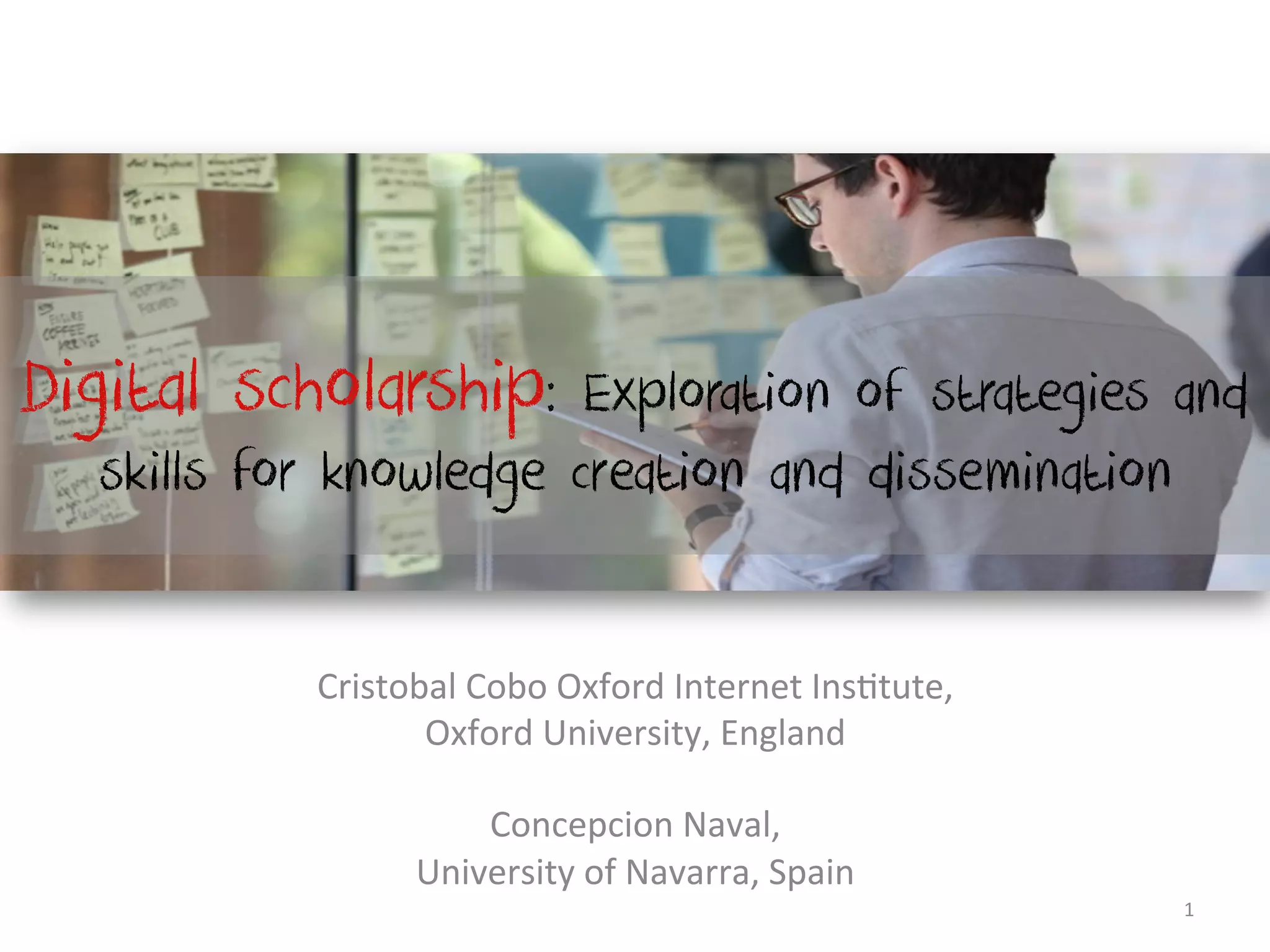
Digital scholarship:    Exploration of strategies and
  skills for knowledge creation and dissemination


           Cristobal	
  Cobo	
  Oxford	
  Internet	
  Ins2tute,	
  	
  
                  Oxford	
  University,	
  England	


                         Concepcion	
  Naval,	
  	
  
                 University	
  of	
  Navarra,	
  Spain	
  
                                     	
                                   1	
  
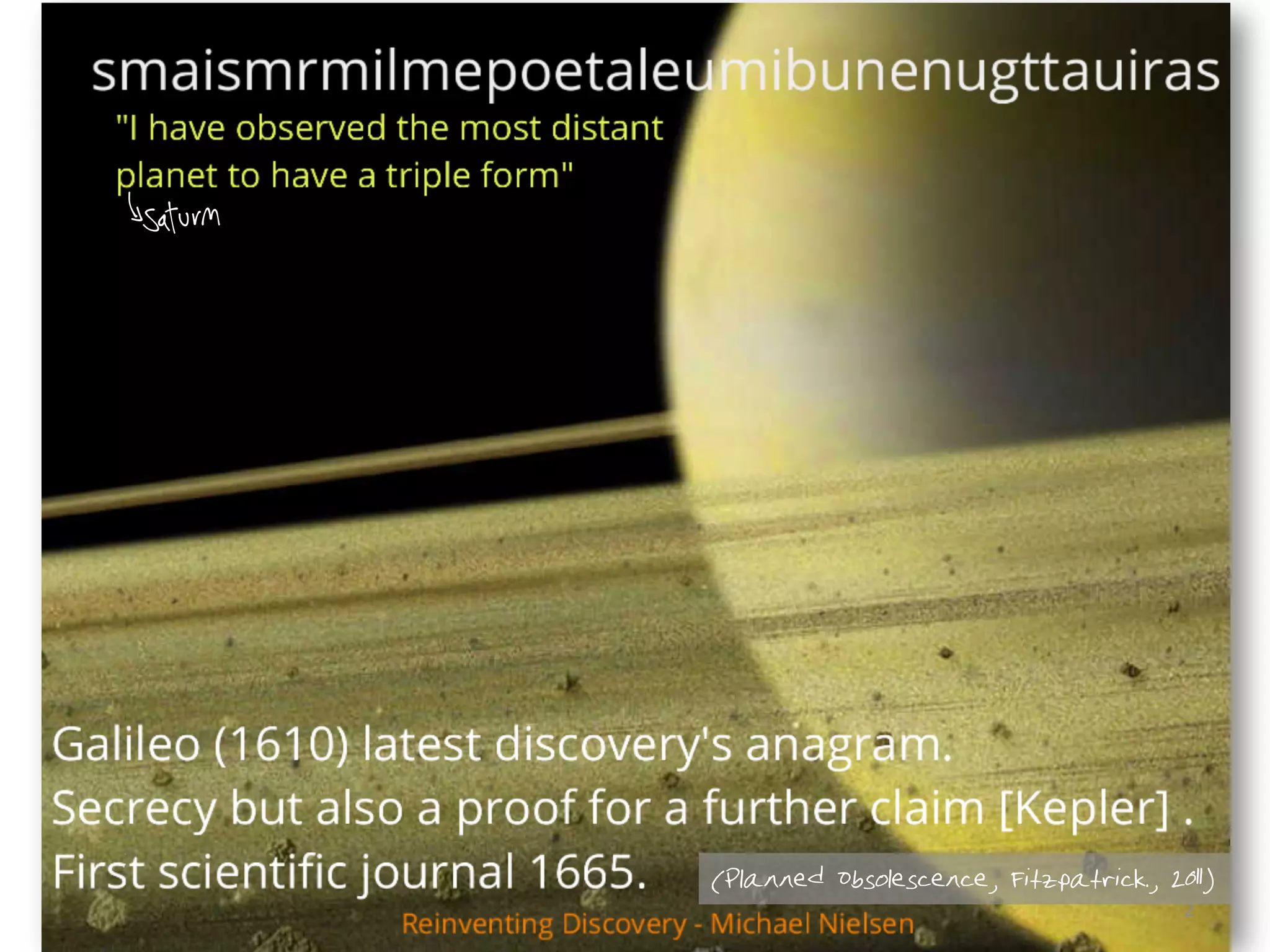
(Planned Obsolescence, Fitzpatrick., 2011)
                                       2	
  
348


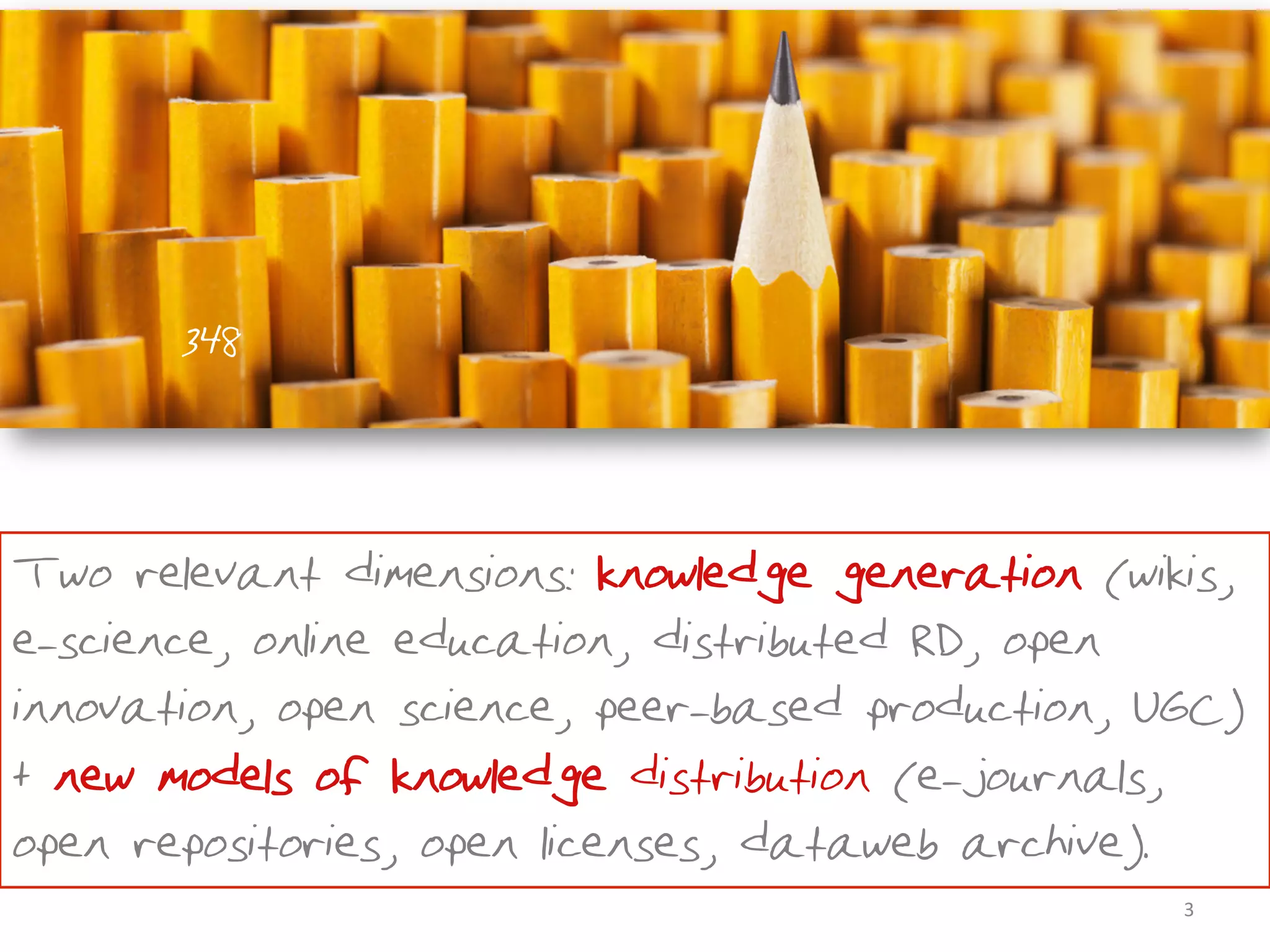
Two relevant dimensions: knowledge generation (wikis,
e-science, online education, distributed R&D, open
innovation, open science, peer-based production, UGC)
+ new models of knowledge distribution (e-journals,
open repositories, open licenses, dataweb archive).
                                                  3	
  
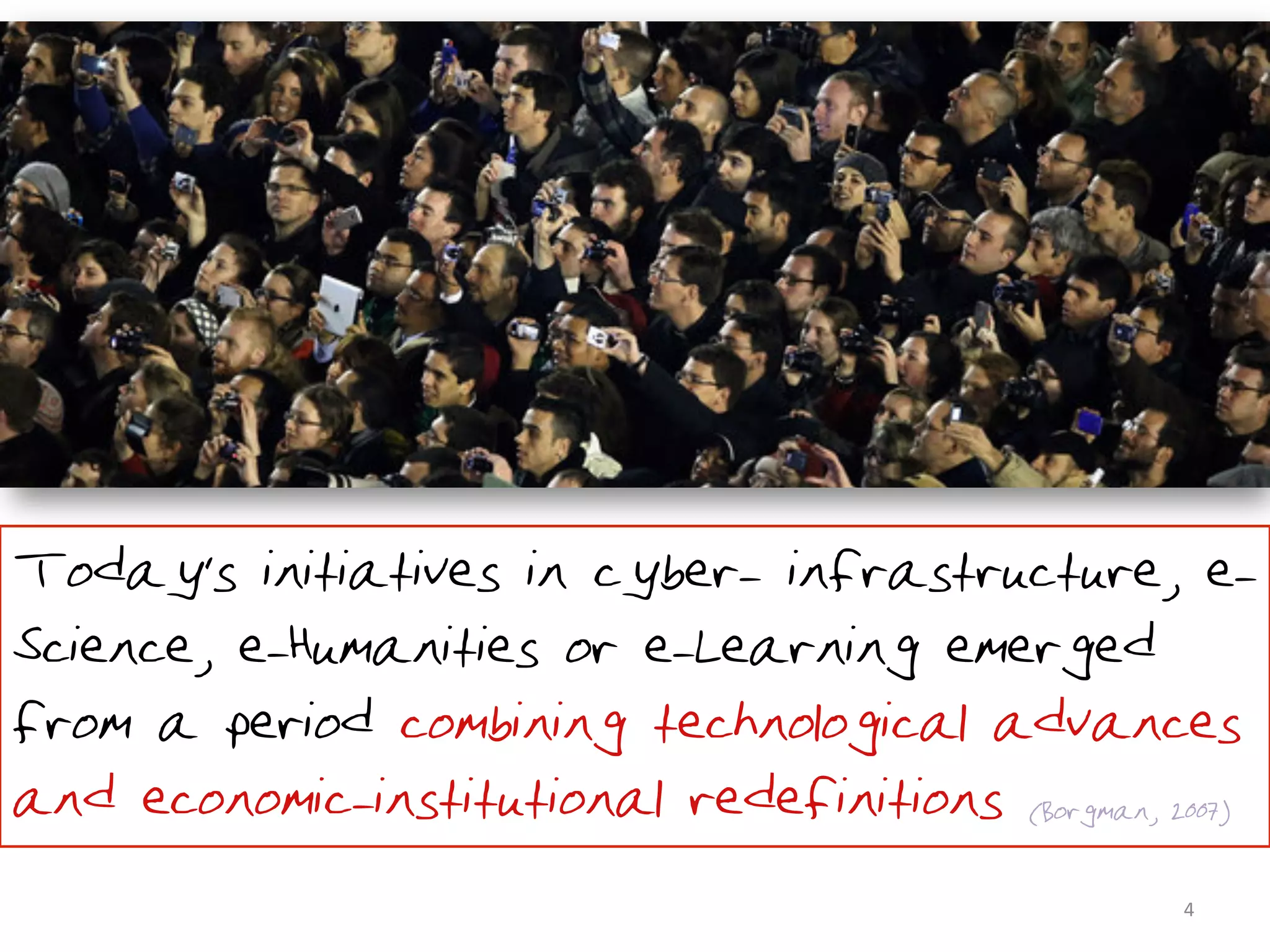
•Today's initiatives in cyber- infrastructure, e-
Science, e-Humanities or e-Learning emerged
from a period combining technological advances
and economic-institutional redefinitions (Borgman, 2007)
                                                    4	
  
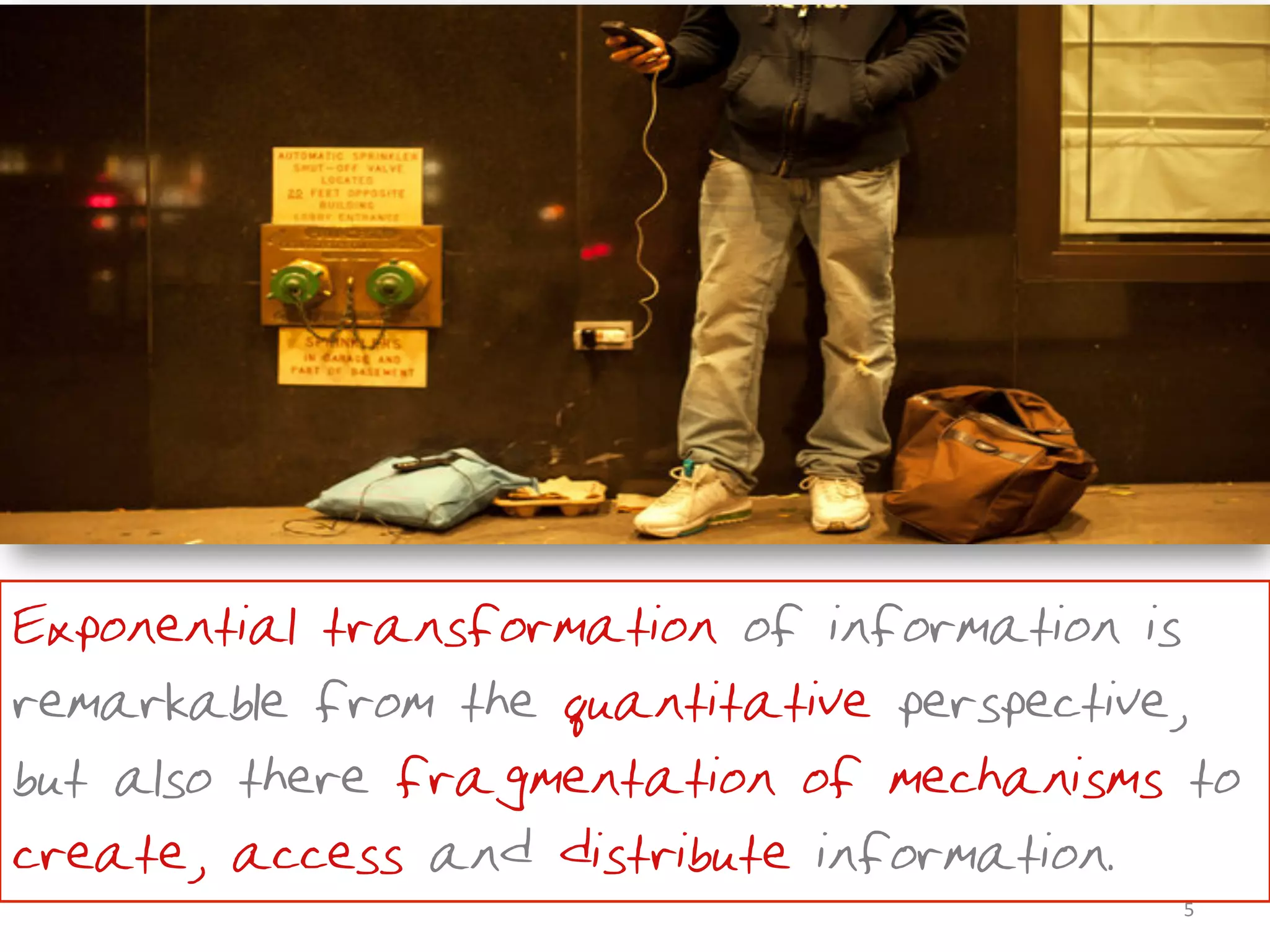
•Exponential transformation of information is
remarkable from the quantitative perspective,
but also there fragmentation of mechanisms to
create, access and distribute information.
                                          5	
  
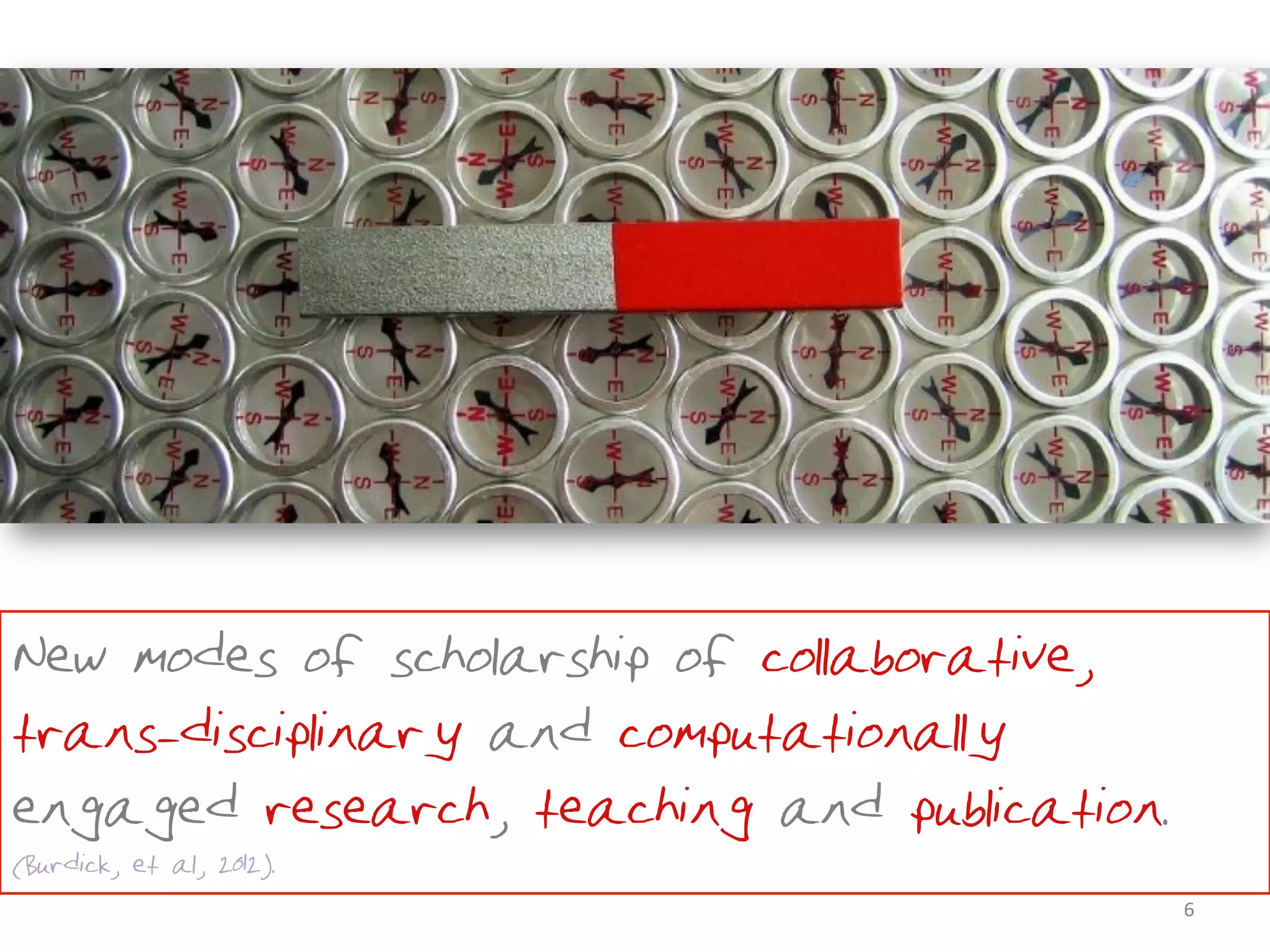
•New modes of scholarship of collaborative,
trans-disciplinary and computationally
engaged research, teaching and publication.
(Burdick, et al, 2012).
                                              6	
  
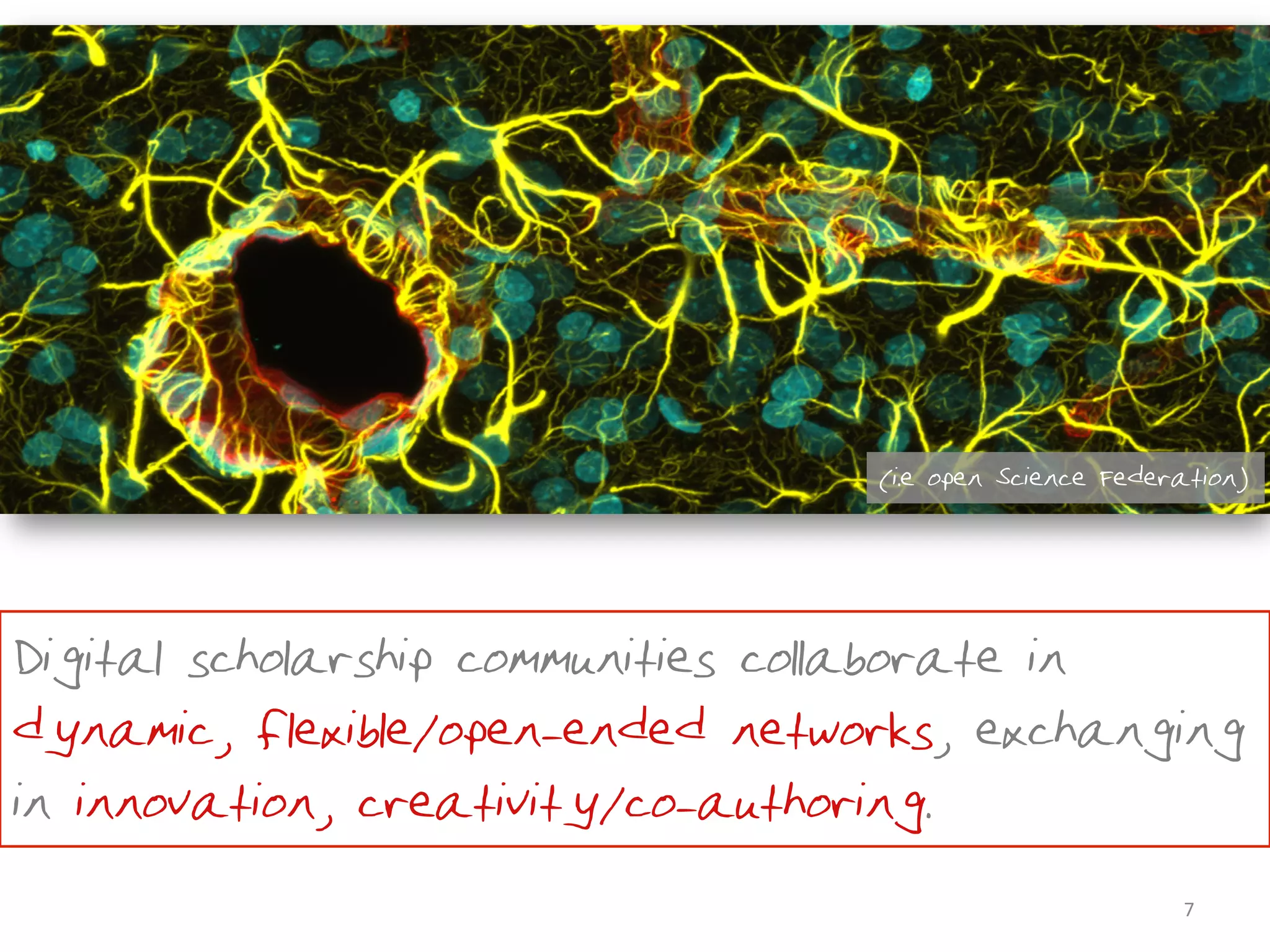
(i.e open Science Federation)


•Digital scholarship communities collaborate in
dynamic, flexible/open-ended networks, exchanging
in innovation, creativity/co-authoring.
                                                             7	
  
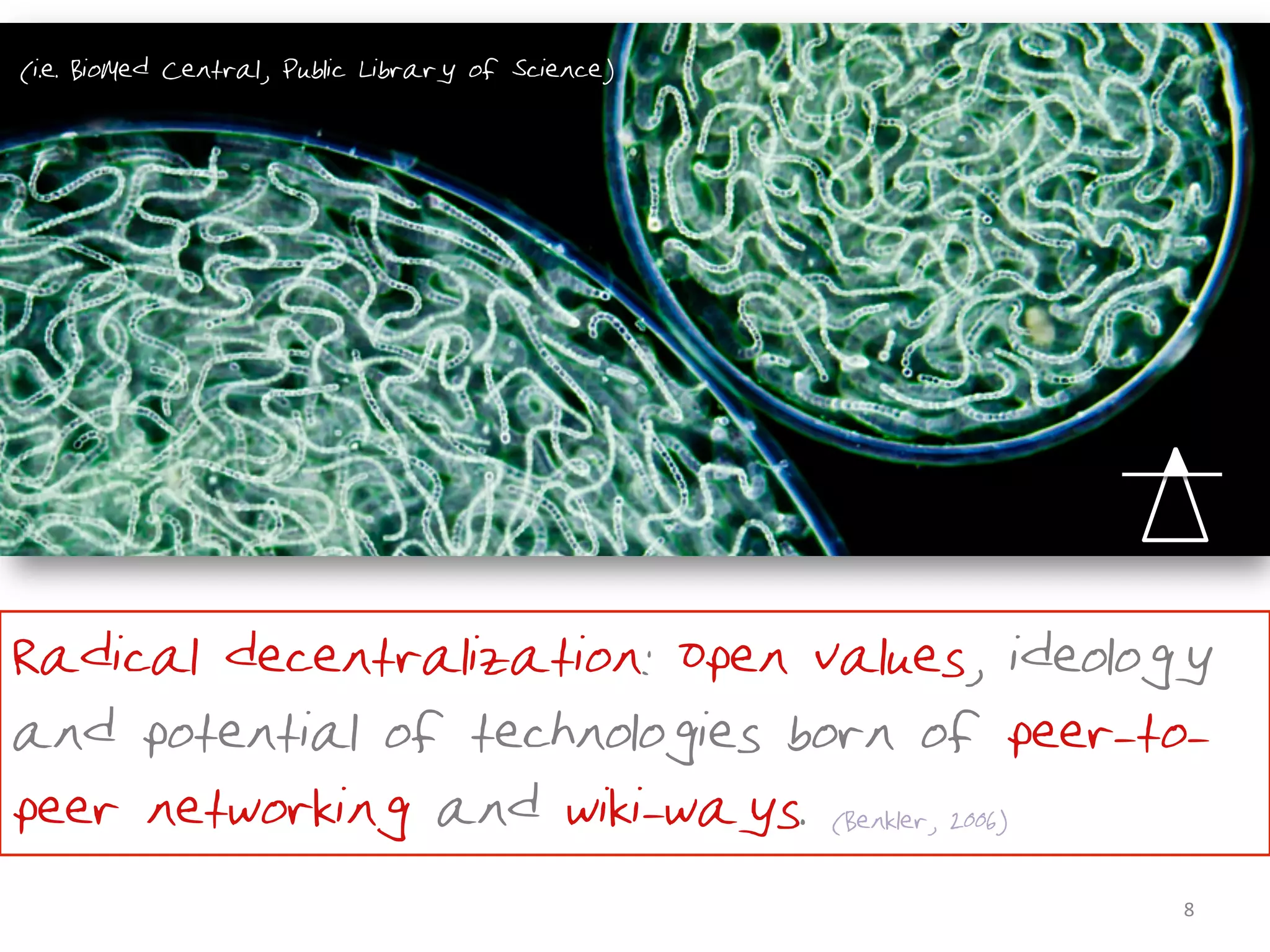
(i.e. BioMed Central, Public Library of Science)


•Radical decentralization: Open values, ideology
and potential of technologies born of peer-to-
peer networking and wiki-ways. (Benkler, 2006)
                                                   8	
  
drivers


          9	
  
1.  Technology: Coordination mechanisms ‒
  exchange and codify tacit knowledge, simplifying its
  translation into more interchangeable resources
                                         (Heimeriks & Vasileiadou, 2008).


(i.e. DOAJ, PeerJ, Rubriq)

•EU Commission + ESRC: Accelerate open access..

OA journals + databases facilitating mechanism of
open peer revision + visibility/impact (avoid duplication).
                                                                  10	
  
2. Co-creation: Networking +Coordination +Cooperation
+Collaboration. (Rheingold, 2012)
The higher the level of negotiation the more
complex the set of skills required.


(i.e. Flat World Knowledge, Creative Crowdwriting)


•Books > dialogical tool not simply
“finished*published but open to dynamics +
iterations (i.e. versioning, crowd-source, peer
reviewed, remix). Burdick (et al., 2012)             11	
  
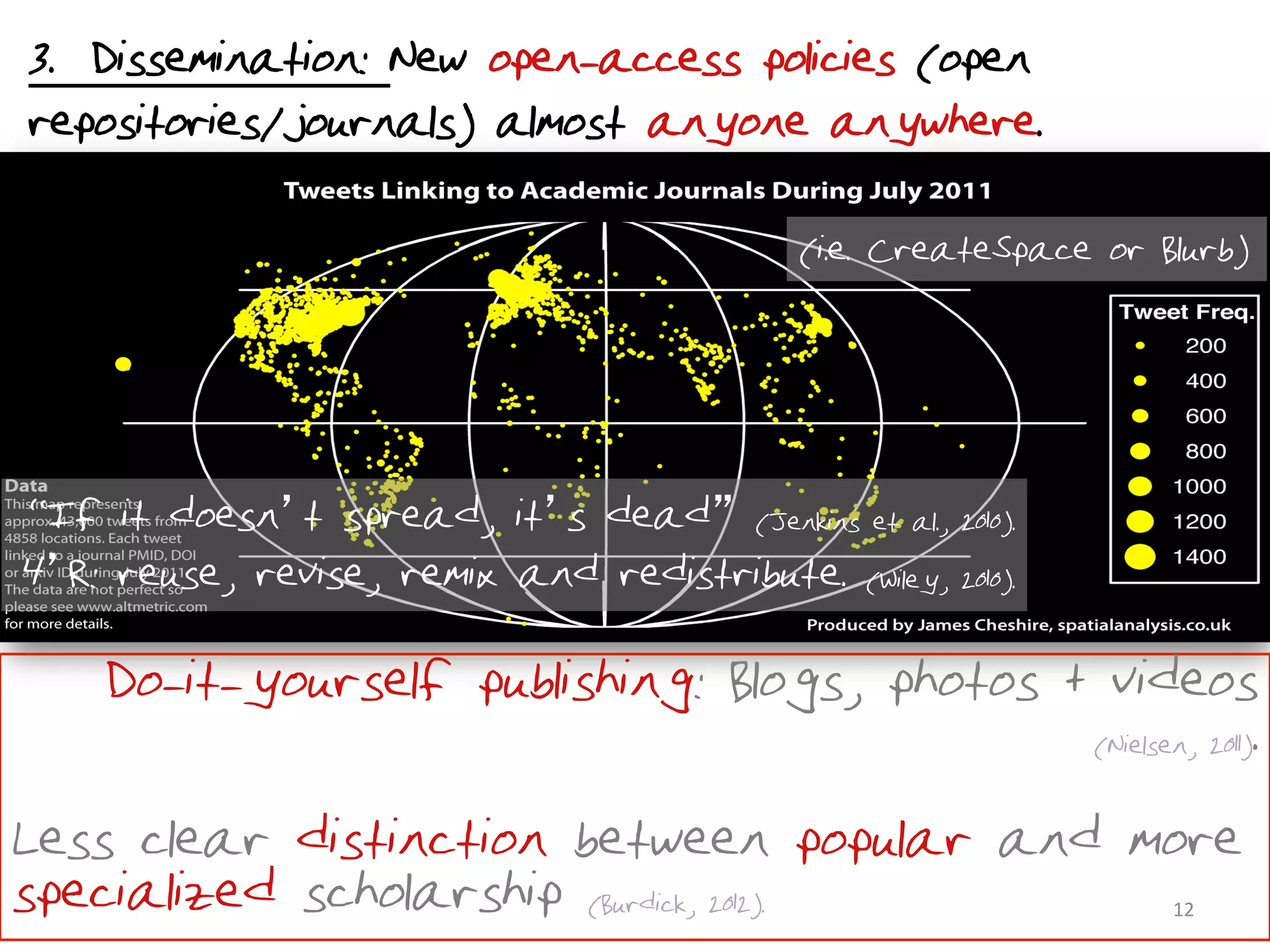
3. Dissemination: New open-access policies (open
repositories/journals) almost anyone anywhere.

                                                (i.e. CreateSpace or Blurb)


“If it doesn t spread, it s dead (Jenkins et al., 2010).
4 R: reuse, revise, remix and redistribute. (Wiley, 2010). 	
  

     •Do-it-yourself publishing: Blogs, photos + videos
                                                (Nielsen, 2011).


Less clear distinction between popular and more
specialized scholarship (Burdick, 2012).                              12	
  
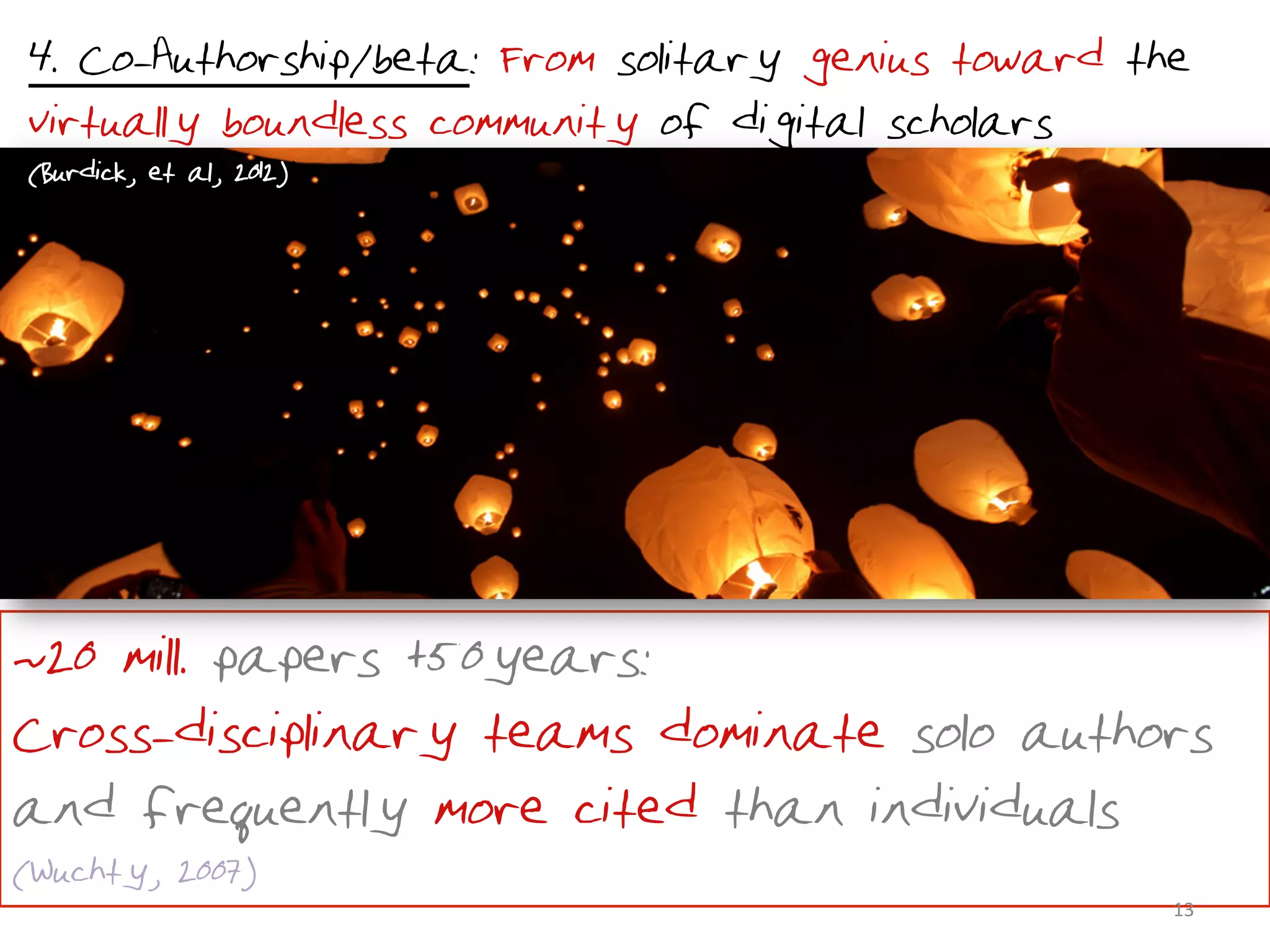
•4. Co-Authorship/beta: From solitary genius toward the
virtually boundless community of digital scholars
(Burdick, et al, 2012)).


•~20 mill. papers +50years:
Cross-disciplinary teams dominate solo authors
and frequently more cited than individuals
(Wuchty, 2007)
                                                      13	
  
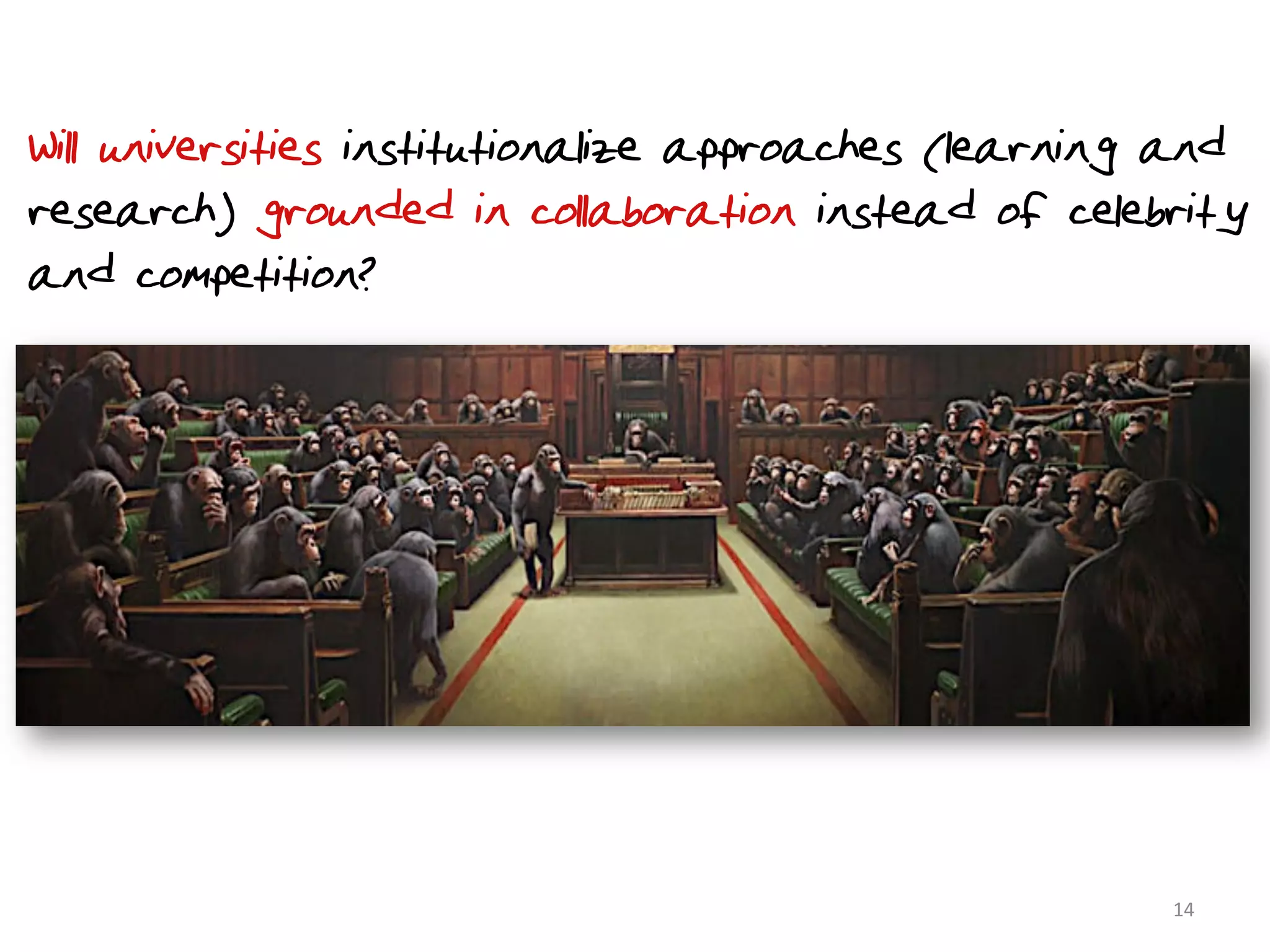
Will universities institutionalize approaches (learning and
research) grounded in collaboration instead of celebrity
and competition?


                                                       14	
  
Critique: Need to recognize distinction between DIY
 scholarship and high scholarship.
 •


                                                  (i.e Wikipedia)


•a) traditional practices of peer-review. To
assure the quality of knowledge creation /
dissemination .
b) Mode 2, post-normal science + technoscience           15	
  
(Burdick, et al, 2012).
Is not easy to determine to what extent traditional
and new practices of scholarship will coexist.


(i.e. Reinventing Discovery, Nielsem) 2011)


•More appropriate institutional recognition are needed
(i.e. A tenure evaluation system that recognizes the
value of more flexible mechanisms of knowledge
creation and new publication formats).             16	
  
•The Stick or the carrot: academic mechanisms of
recognition (in many cases) are limited to metrics
such as h-index' affecting to possibilities to
facilitate peers based collaboration (Hirsch, 2005)
                                                      17	
  
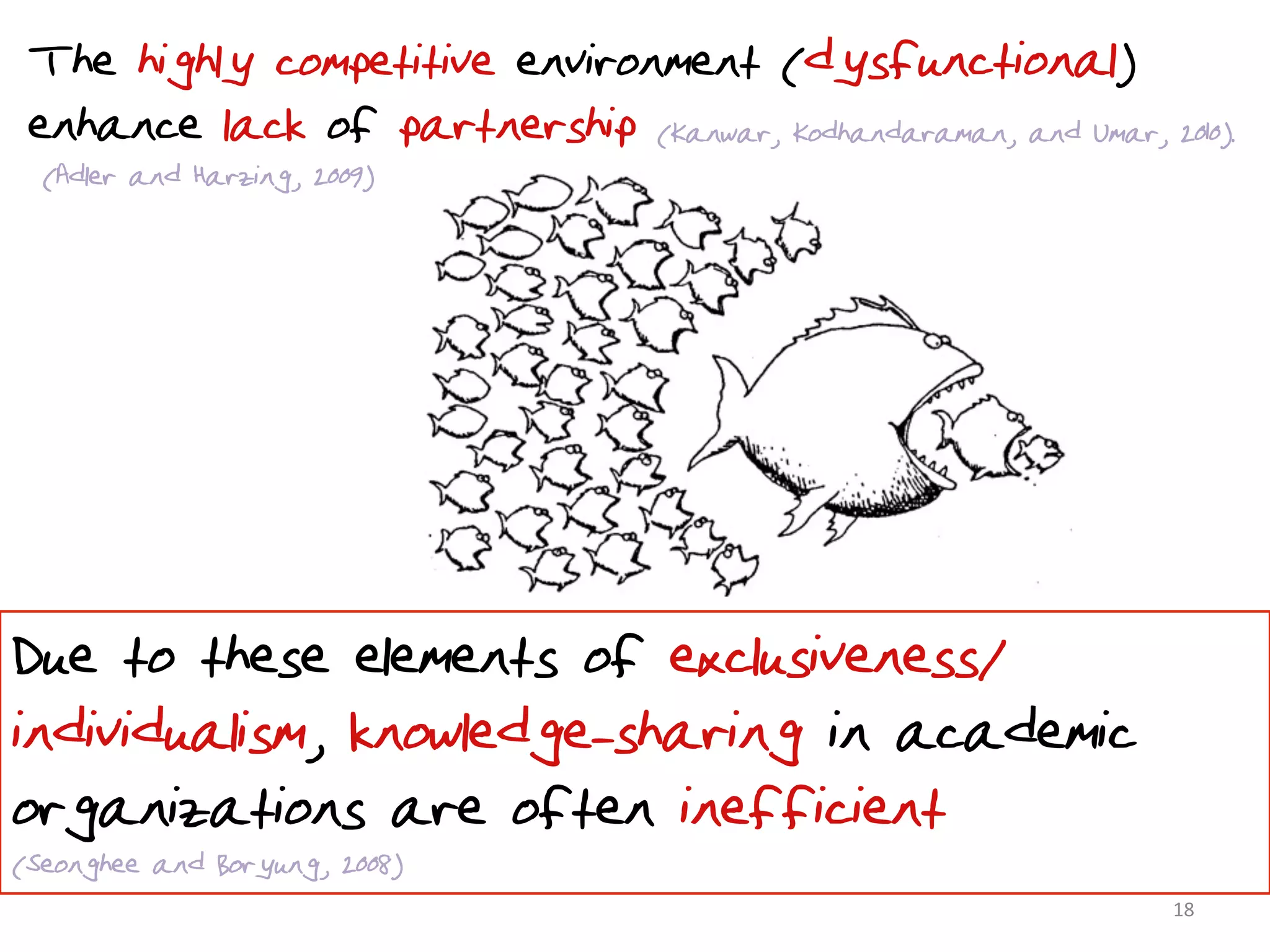
The highly competitive environment (dysfunctional)
 enhance lack of partnership (Kanwar, Kodhandaraman, and Umar, 2010).
  (Adler and Harzing, 2009)


Due to these elements of exclusiveness/
individualism, knowledge-sharing in academic
organizations are often inefficient
(Seonghee and Boryung, 2008)
                                                                 18	
  
The shift in knowledge landscape is disturbing to
people familiar with the earlier paradigm .
(Chesbrough, 2006)


                                                     19	
  
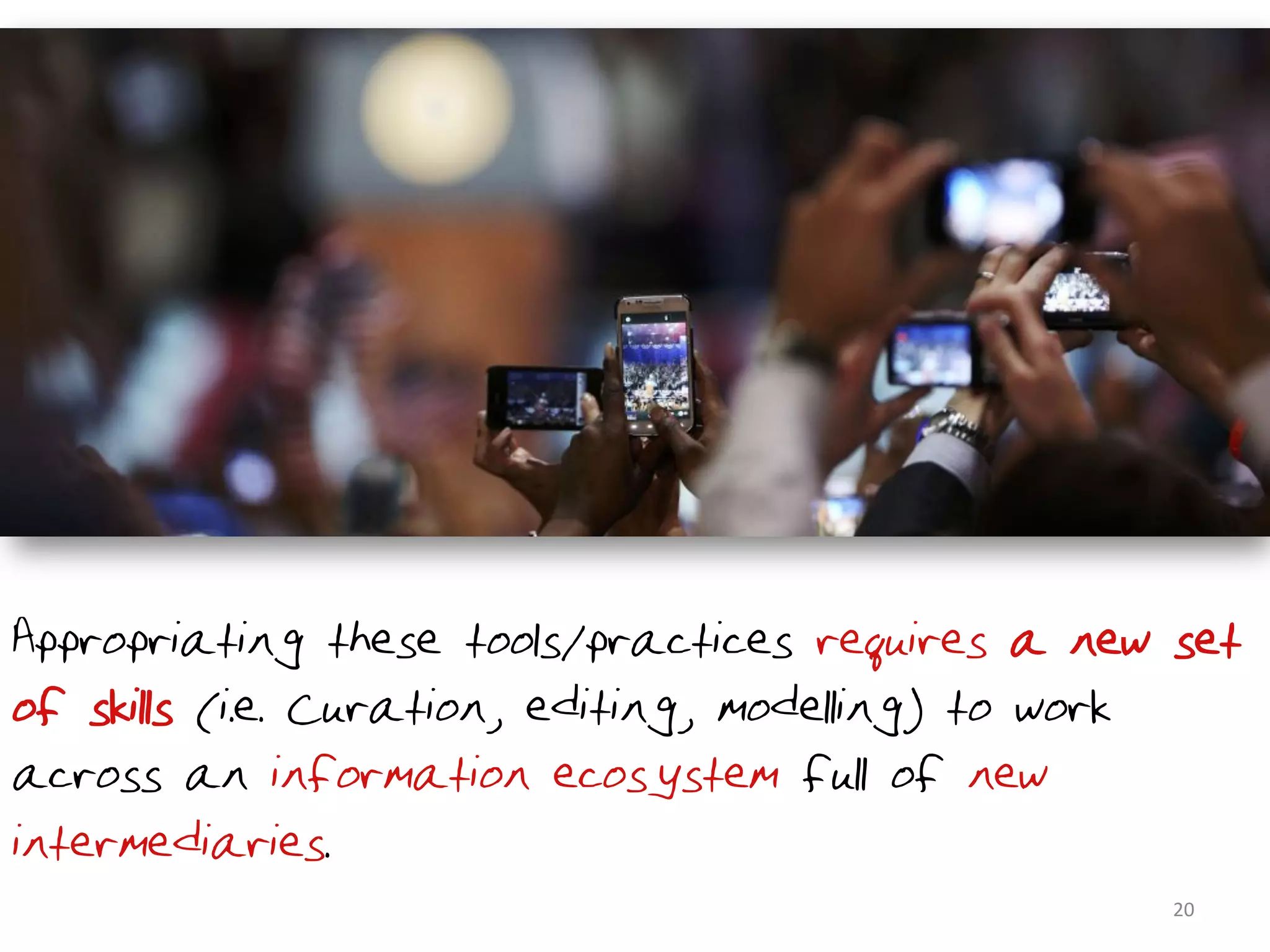
Appropriating these tools/practices requires a new set
of skills (i.e. Curation, editing, modelling) to work
across an information ecosystem full of new
intermediaries.
                                                  20	
  
New cultural practices: institutional flexibility (i.e.
diversifying tenure track, re- understand concepts
such as academic visibility or digital influence).
                                                   21	
  
@cristobalcobo	
  
                                                    hJp://2ny.cc/ppts	


                                                                            22	
  
Oxford	
  Internet	
  Ins2tute	
  Research	
  Fellow.	
  

Digital scholarship: Exploration of strategies and skills for knowledge creation and dissemination

  • 1.
    Digital scholarship: Exploration of strategies and skills for knowledge creation and dissemination Cristobal  Cobo  Oxford  Internet  Ins2tute,     Oxford  University,  England     Concepcion  Naval,     University  of  Navarra,  Spain     1  
  • 2.
  • 3.
    348 Two relevant dimensions:knowledge generation (wikis, e-science, online education, distributed R&D, open innovation, open science, peer-based production, UGC) + new models of knowledge distribution (e-journals, open repositories, open licenses, dataweb archive). 3  
  • 4.
    •Today's initiatives incyber- infrastructure, e- Science, e-Humanities or e-Learning emerged from a period combining technological advances and economic-institutional redefinitions (Borgman, 2007) 4  
  • 5.
    •Exponential transformation ofinformation is remarkable from the quantitative perspective, but also there fragmentation of mechanisms to create, access and distribute information. 5  
  • 6.
    •New modes ofscholarship of collaborative, trans-disciplinary and computationally engaged research, teaching and publication. (Burdick, et al, 2012). 6  
  • 7.
    (i.e open ScienceFederation) •Digital scholarship communities collaborate in dynamic, flexible/open-ended networks, exchanging in innovation, creativity/co-authoring. 7  
  • 8.
    (i.e. BioMed Central,Public Library of Science) •Radical decentralization: Open values, ideology and potential of technologies born of peer-to- peer networking and wiki-ways. (Benkler, 2006) 8  
  • 9.
  • 10.
    1.  Technology: Coordinationmechanisms ‒ exchange and codify tacit knowledge, simplifying its translation into more interchangeable resources (Heimeriks & Vasileiadou, 2008). (i.e. DOAJ, PeerJ, Rubriq) •EU Commission + ESRC: Accelerate open access.. OA journals + databases facilitating mechanism of open peer revision + visibility/impact (avoid duplication). 10  
  • 11.
    2. Co-creation: Networking+Coordination +Cooperation +Collaboration. (Rheingold, 2012) The higher the level of negotiation the more complex the set of skills required. (i.e. Flat World Knowledge, Creative Crowdwriting) •Books > dialogical tool not simply “finished*published but open to dynamics + iterations (i.e. versioning, crowd-source, peer reviewed, remix). Burdick (et al., 2012) 11  
  • 12.
    3. Dissemination: Newopen-access policies (open repositories/journals) almost anyone anywhere. (i.e. CreateSpace or Blurb) “If it doesn t spread, it s dead (Jenkins et al., 2010). 4 R: reuse, revise, remix and redistribute. (Wiley, 2010).   •Do-it-yourself publishing: Blogs, photos + videos (Nielsen, 2011). Less clear distinction between popular and more specialized scholarship (Burdick, 2012). 12  
  • 13.
    •4. Co-Authorship/beta: Fromsolitary genius toward the virtually boundless community of digital scholars (Burdick, et al, 2012)). •~20 mill. papers +50years: Cross-disciplinary teams dominate solo authors and frequently more cited than individuals (Wuchty, 2007) 13  
  • 14.
    Will universities institutionalizeapproaches (learning and research) grounded in collaboration instead of celebrity and competition? 14  
  • 15.
    Critique: Need torecognize distinction between DIY scholarship and high scholarship. • (i.e Wikipedia) •a) traditional practices of peer-review. To assure the quality of knowledge creation / dissemination . b) Mode 2, post-normal science + technoscience 15   (Burdick, et al, 2012).
  • 16.
    Is not easyto determine to what extent traditional and new practices of scholarship will coexist. (i.e. Reinventing Discovery, Nielsem) 2011) •More appropriate institutional recognition are needed (i.e. A tenure evaluation system that recognizes the value of more flexible mechanisms of knowledge creation and new publication formats). 16  
  • 17.
    •The Stick orthe carrot: academic mechanisms of recognition (in many cases) are limited to metrics such as h-index' affecting to possibilities to facilitate peers based collaboration (Hirsch, 2005) 17  
  • 18.
    The highly competitiveenvironment (dysfunctional) enhance lack of partnership (Kanwar, Kodhandaraman, and Umar, 2010). (Adler and Harzing, 2009) Due to these elements of exclusiveness/ individualism, knowledge-sharing in academic organizations are often inefficient (Seonghee and Boryung, 2008) 18  
  • 19.
    The shift inknowledge landscape is disturbing to people familiar with the earlier paradigm . (Chesbrough, 2006) 19  
  • 20.
    Appropriating these tools/practicesrequires a new set of skills (i.e. Curation, editing, modelling) to work across an information ecosystem full of new intermediaries. 20  
  • 21.
    New cultural practices:institutional flexibility (i.e. diversifying tenure track, re- understand concepts such as academic visibility or digital influence). 21  
  • 22.
    @cristobalcobo   hJp://2ny.cc/ppts   22   Oxford  Internet  Ins2tute  Research  Fellow.