Future Urban Design !
for the Emergence of a Fluid Sense of Self
Shima Beigi, PhD. !
Environmental Engineer and Urban Resilience Scientist !
Research on Resilience and Sustainability of Complex Adaptive Systems !
University of Oxford and Global Brian Institute !
Based in Brussels, Belgium !
globalbraininstitute.org
shima.beigi@gmail.com
Challenges of Our World
• Urbanisations
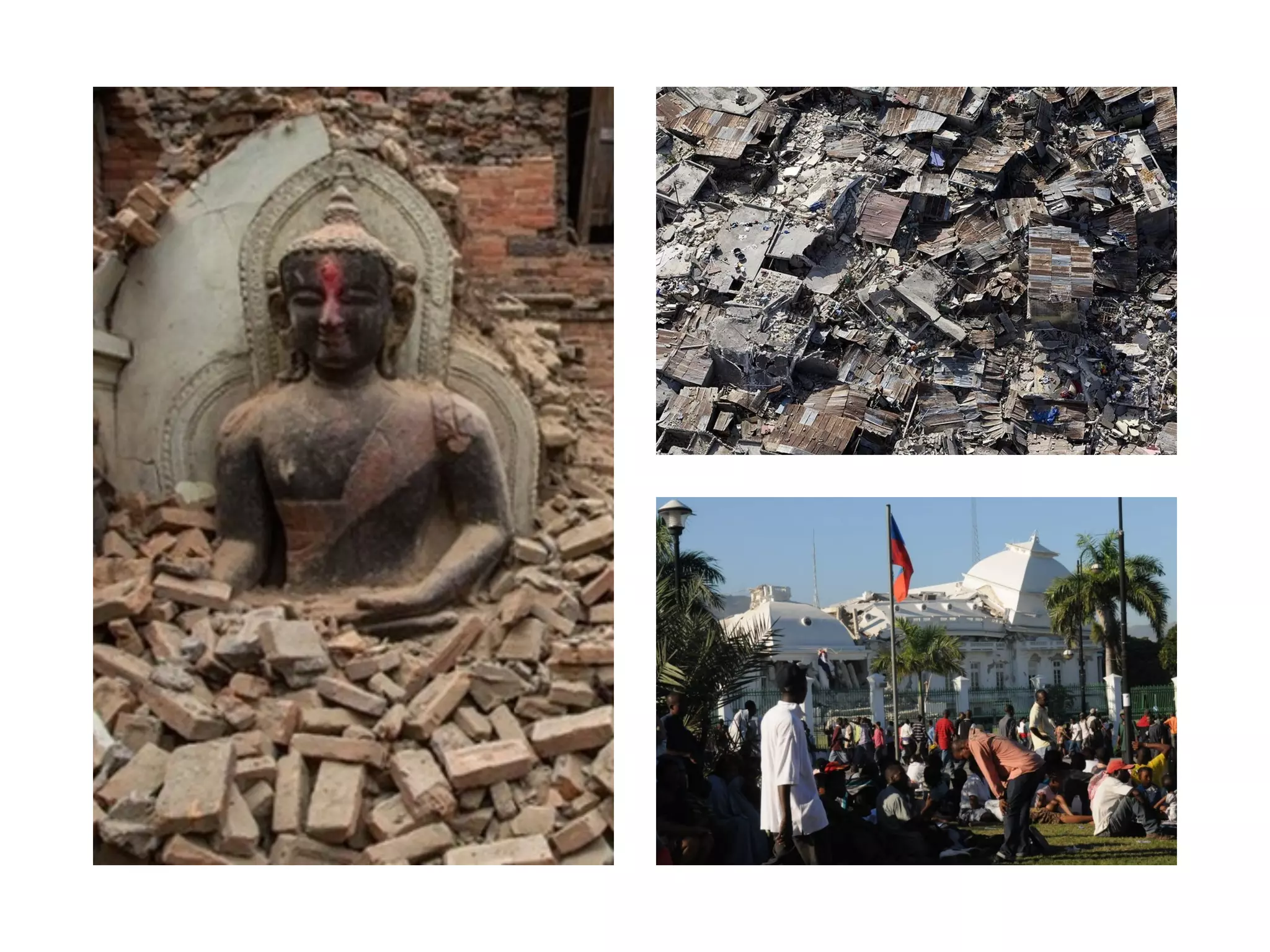
• Resilience
• Resilient Cities
• Harnessing Distributed Intelligence
• Future Urban Design
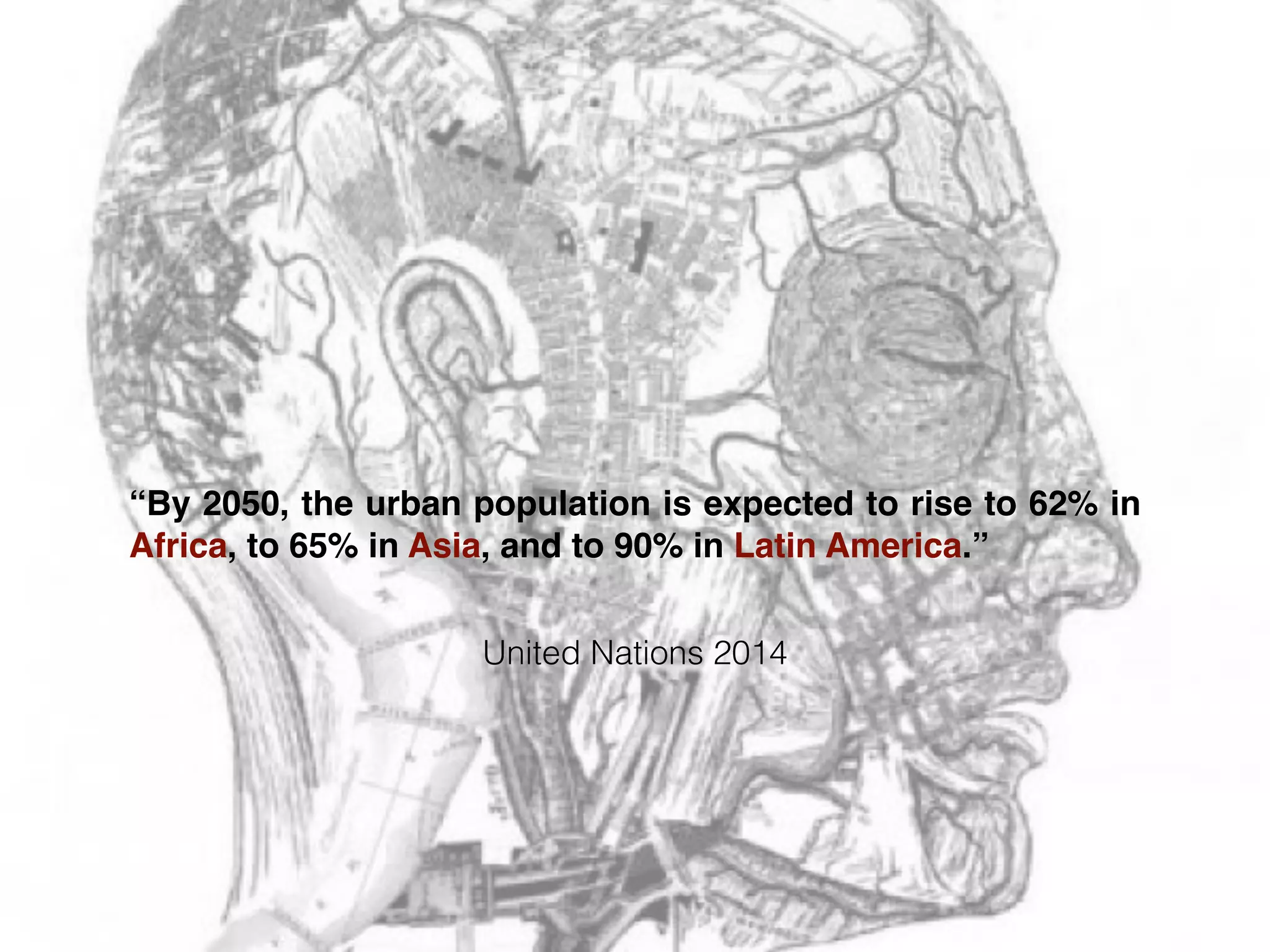
United Nations 2014
“By 2050, the urban population is expected to rise to 62% in
Africa, to 65% in Asia, and to 90% in Latin America.”
“Resilience and Urbanisation Interplay”
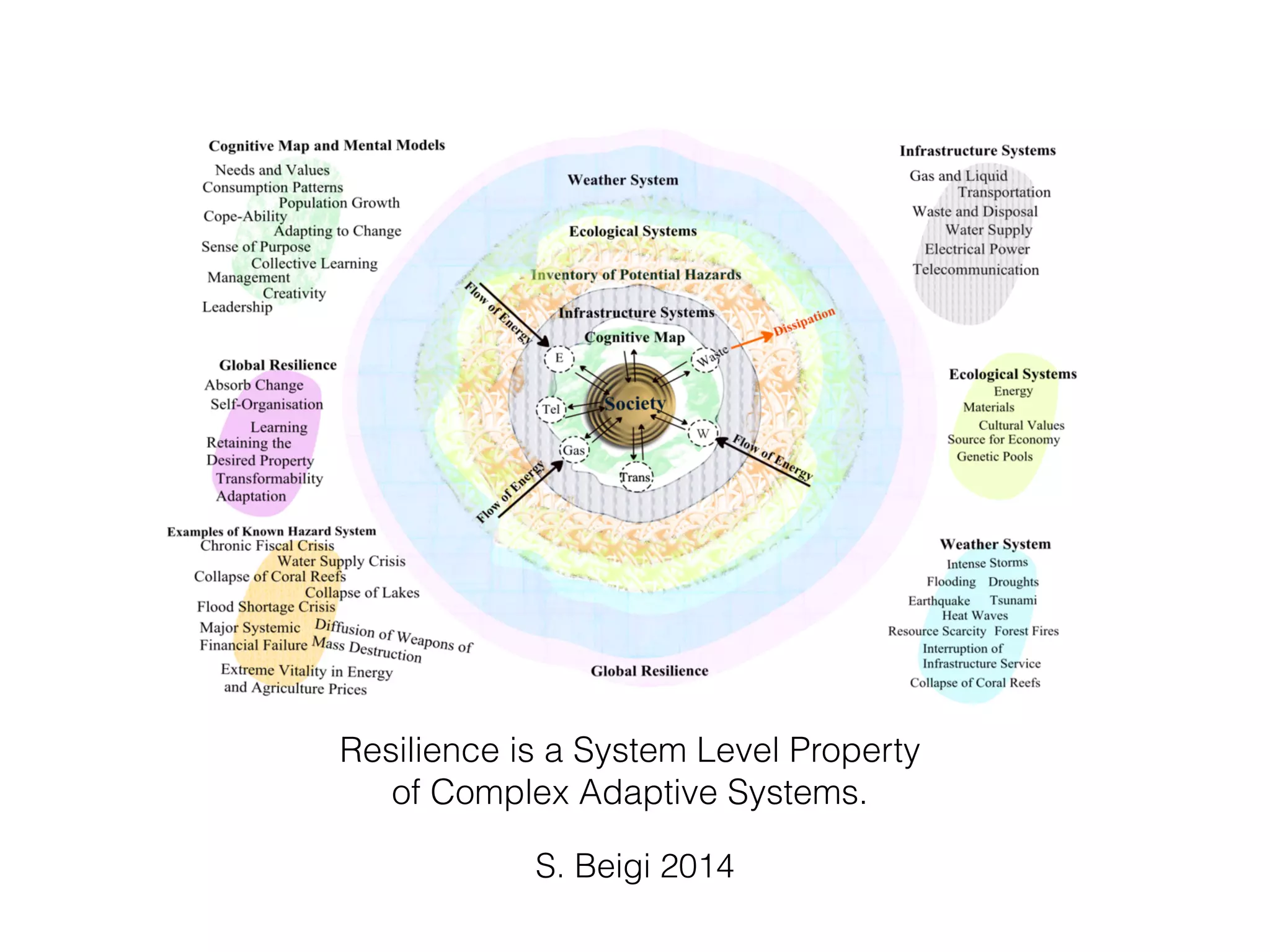
Resilience is a System Level Property
of Complex Adaptive Systems.
S. Beigi 2014
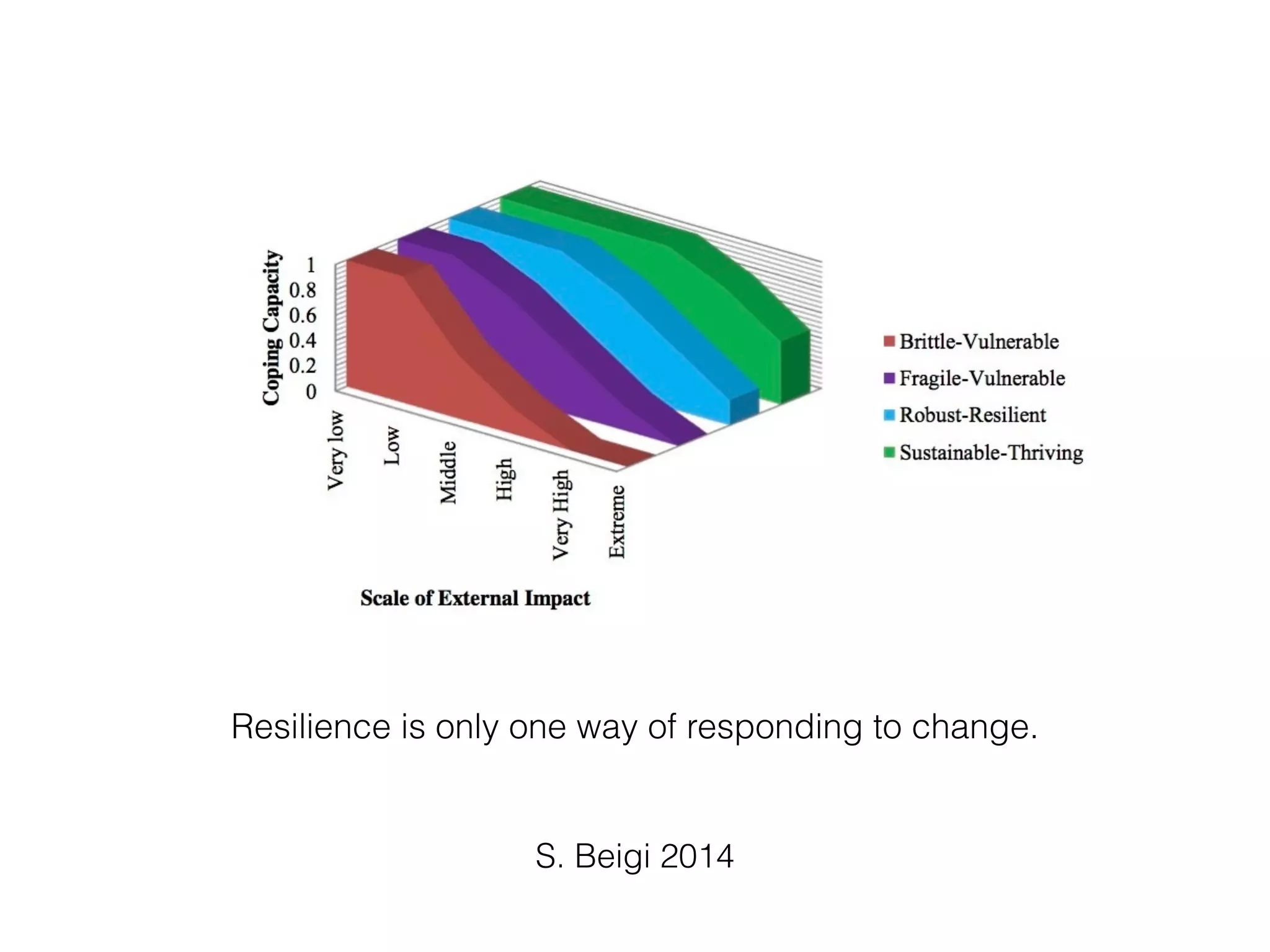
Resilience is only one way of responding to change.
S. Beigi 2014
How to Move from Resilience to Thriving?
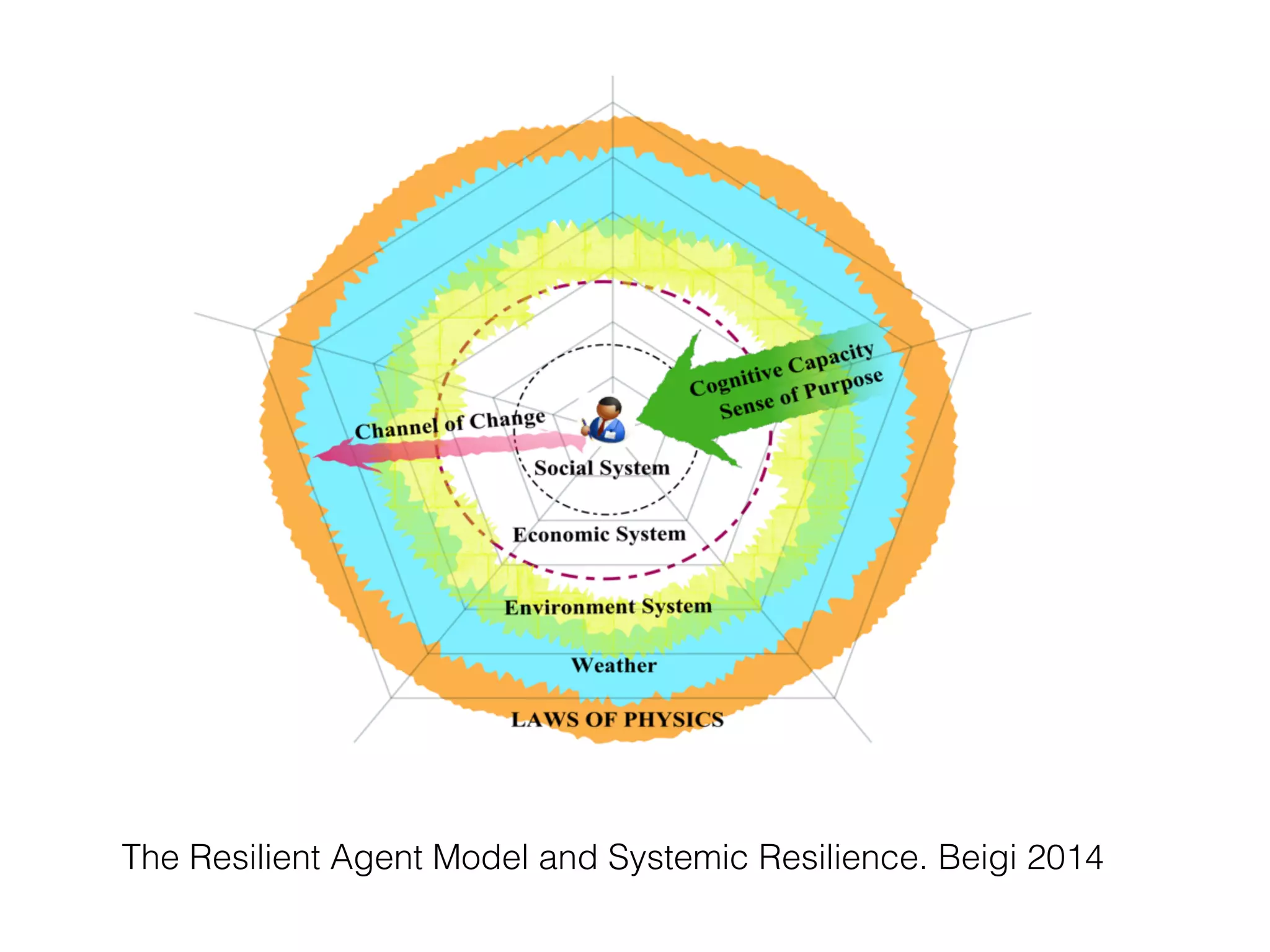
The Resilient Agent Model and Systemic Resilience. Beigi 2014
“Transforming Agents’ Control Mechanisms.”
Hacken 2006
“A system is self-organising if it acquires a spatial, temporal, or
functional structure without specific interference from the
outside. By ‘specific’ we mean that the structure or functioning is
not impressed on the system but that the system is acted upon
from the outside in a nonspecific fashion. For instance, the
fluid which forms hexagons is heated from below in an entirely
uniform fashion and it acquires its specific structure by self-
organisation.”
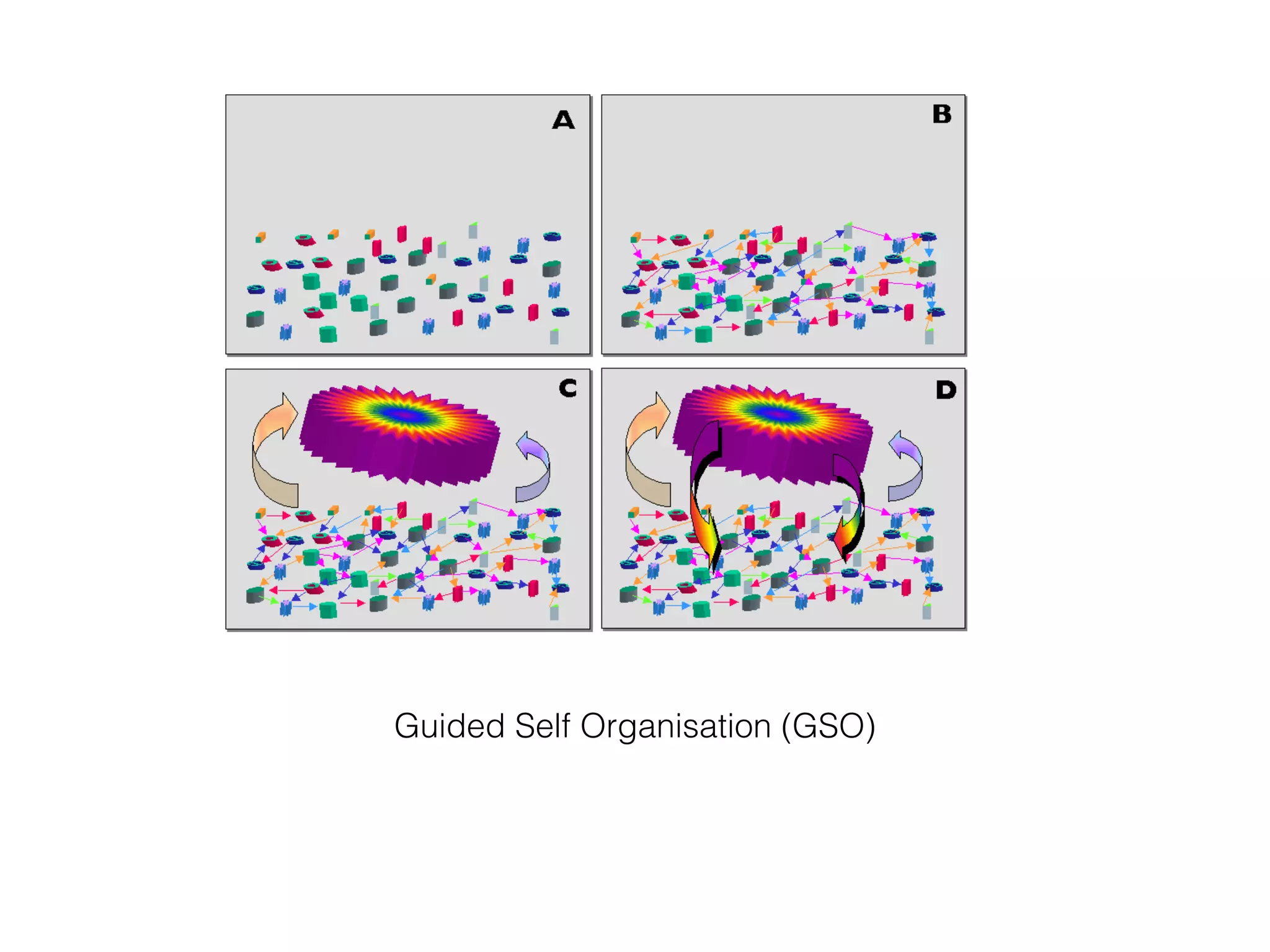
Guided Self Organisation (GSO)
Dirk Helbing 2014
Distributed control means that, if we wish to “guide” the system
towards a certain desirable mode of behaviour, we must do so
by applying the guiding influences in many "local" parts of the
system, rather than trying to impose a single global behaviour on
all the individual components at once.”
Francis Heylighen 2014
“Guided Self-Organisation is developing strategies, programs,
and institutions that will facilitate and to some degree steer the
self organisation of the global brain in what appear to be the
most fruitful directions.”
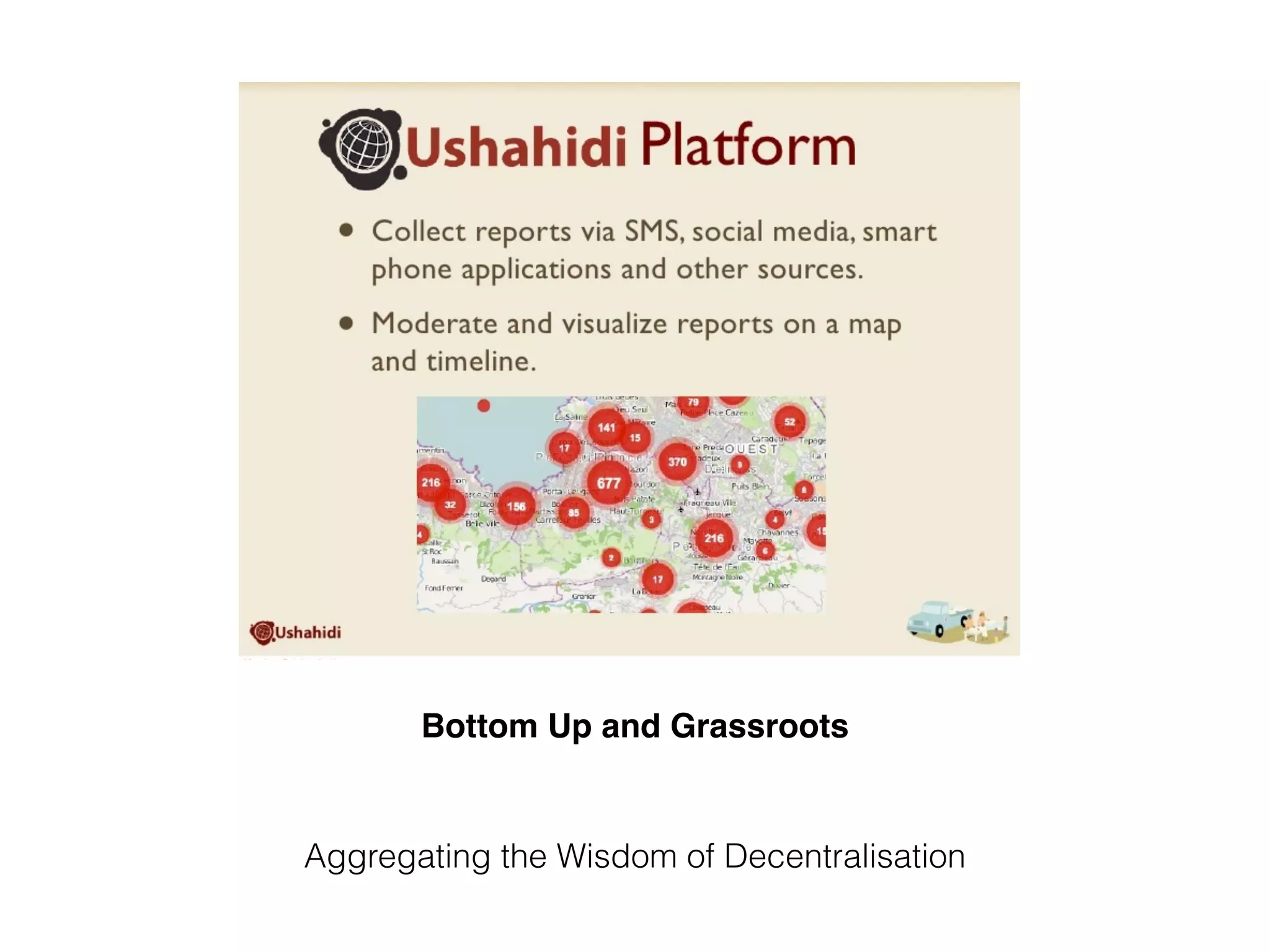
Bottom Up and Grassroots
Aggregating the Wisdom of Decentralisation
Emily Y. Y. Chan Nature Geoscience 2013
“…A bottom-up approach [to disaster resilience] that focuses on
the opportunities for individual people and communities to take
more responsibility could also be effective and may help to save
even more lives.”
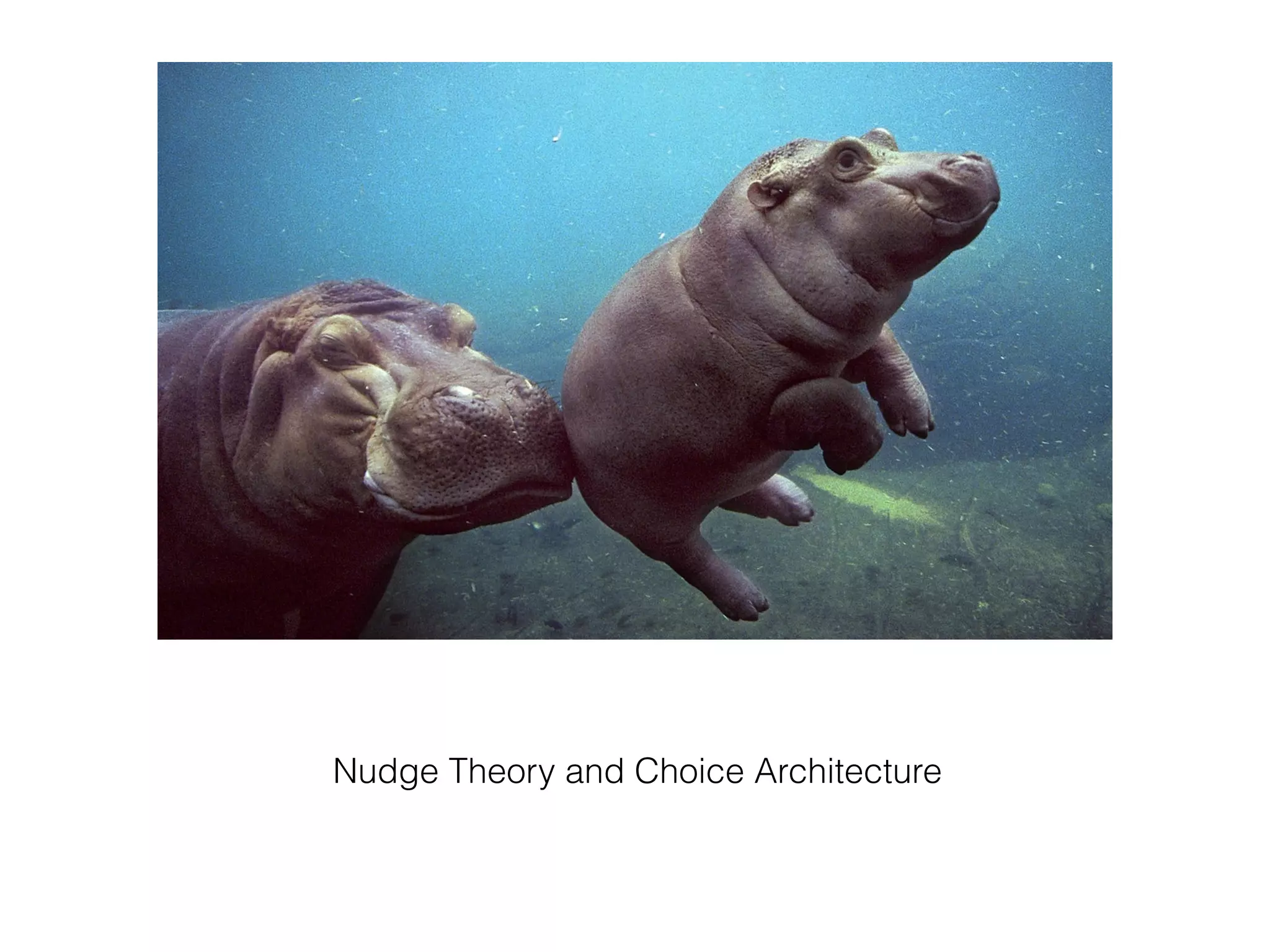
Nudge Theory and Choice Architecture
Richard Thaler and Cass Sunstein 2008
“A nudge, as we will use the term, is any aspect of the choice
architecture that alters people’s behaviour in a predictable way
without forbidding any options or significantly changing their
economic incentives. To count as a mere nudge, the intervention
must be easy and cheap to avoid. Nudges are not mandates.
Putting fruit at eye level counts as a nudge. Banning junk food
does not…”
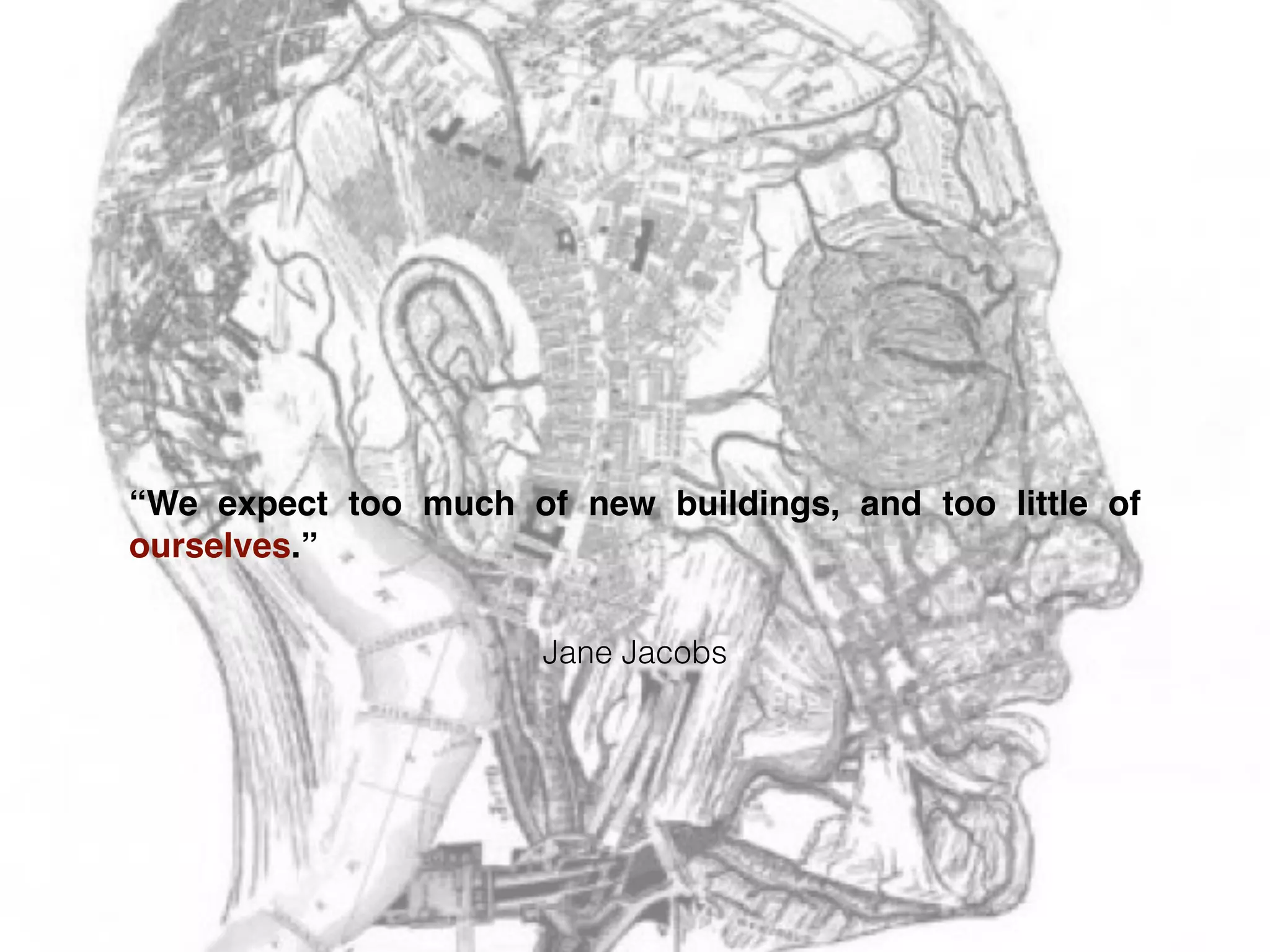
Jane Jacobs
“We expect too much of new buildings, and too little of
ourselves.”
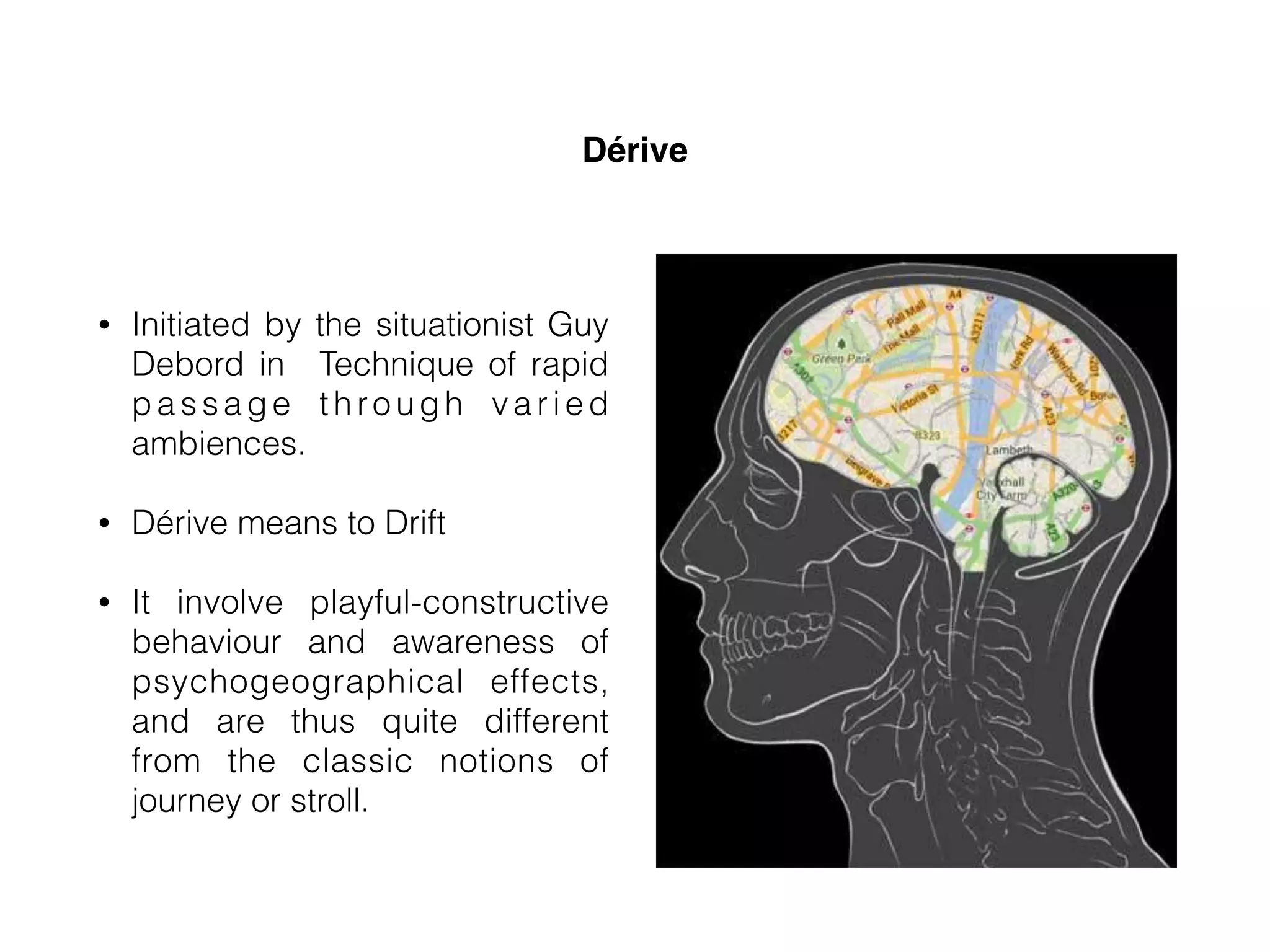
Dérive
• Initiated by the situationist Guy
Debord in Technique of rapid
passage through varied
ambiences.
• Dérive means to Drift
• It involve playful-constructive
behaviour and awareness of
psychogeographical effects,
and are thus quite different
from the classic notions of
journey or stroll.
“Harnessing the Intelligence of Crowd.”
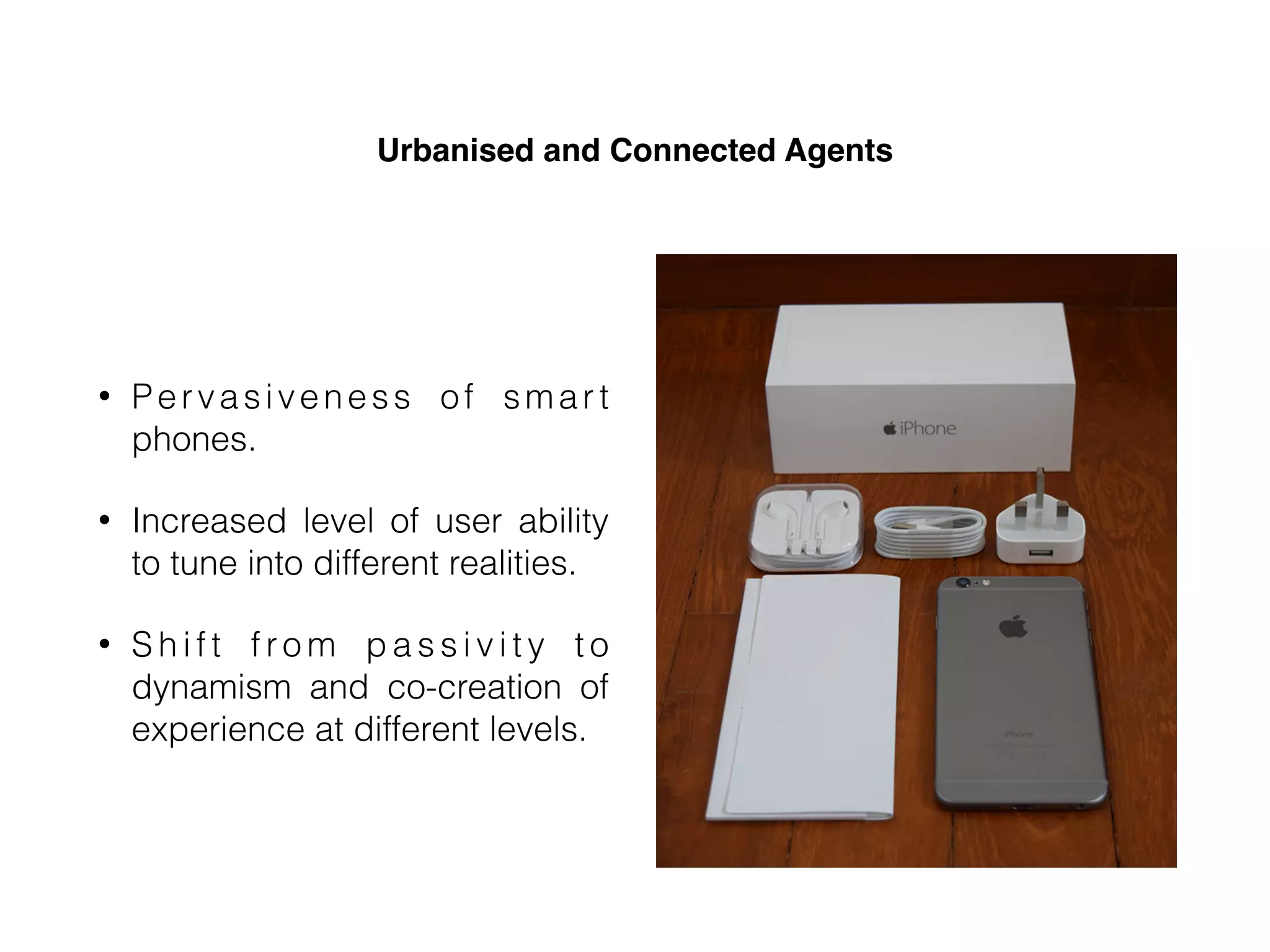
Urbanised and Connected Agents
• Pervasiveness of smar t
phones.
• Increased level of user ability
to tune into different realities.
• S h i f t f ro m p a s s i v i t y t o
dynamism and co-creation of
experience at different levels.
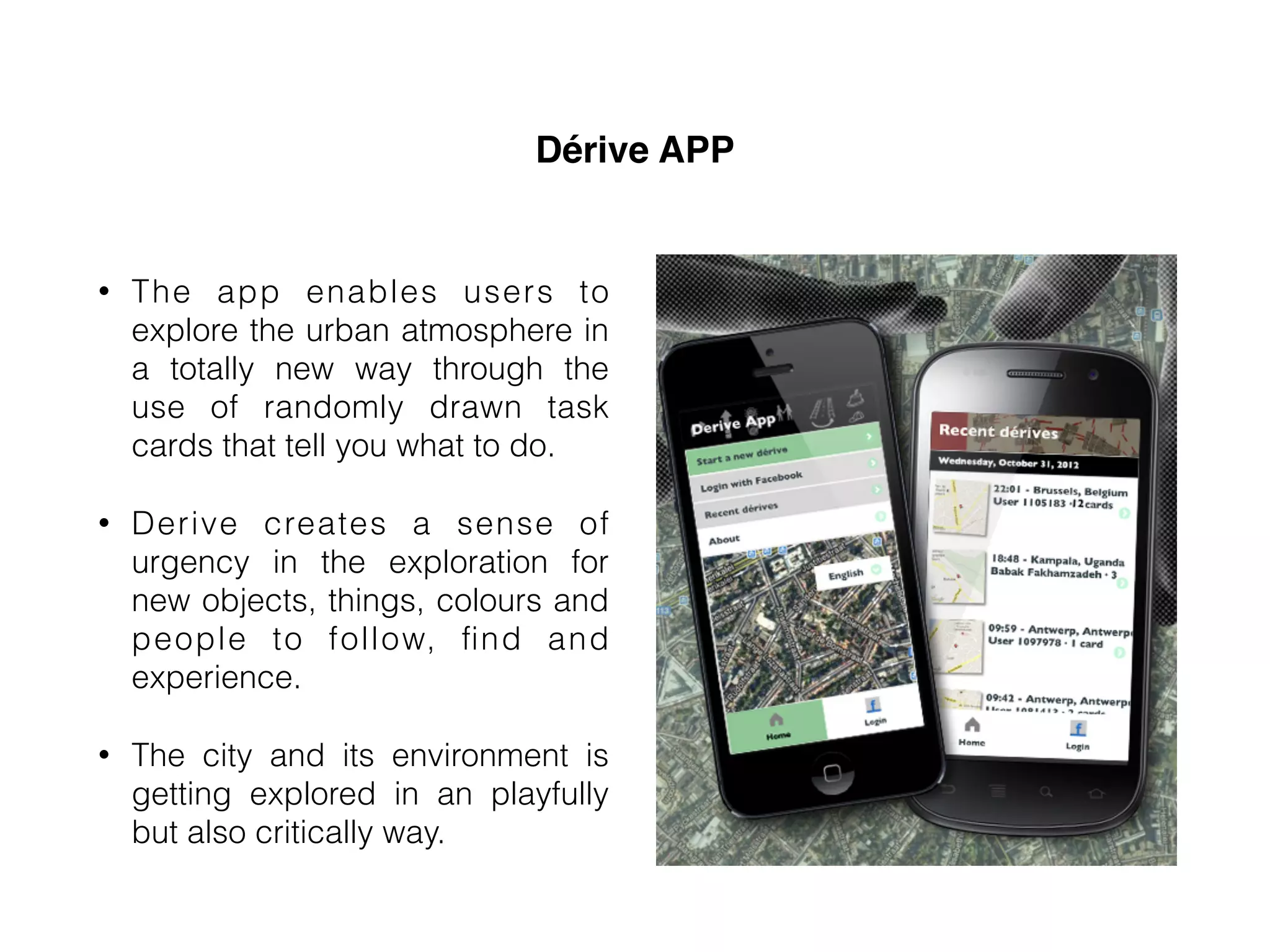
Dérive APP
• The app enables users to
explore the urban atmosphere in
a totally new way through the
use of randomly drawn task
cards that tell you what to do.
• Derive creates a sense of
urgency in the exploration for
new objects, things, colours and
people to follow, find and
experience.
• The city and its environment is
getting explored in an playfully
but also critically way.
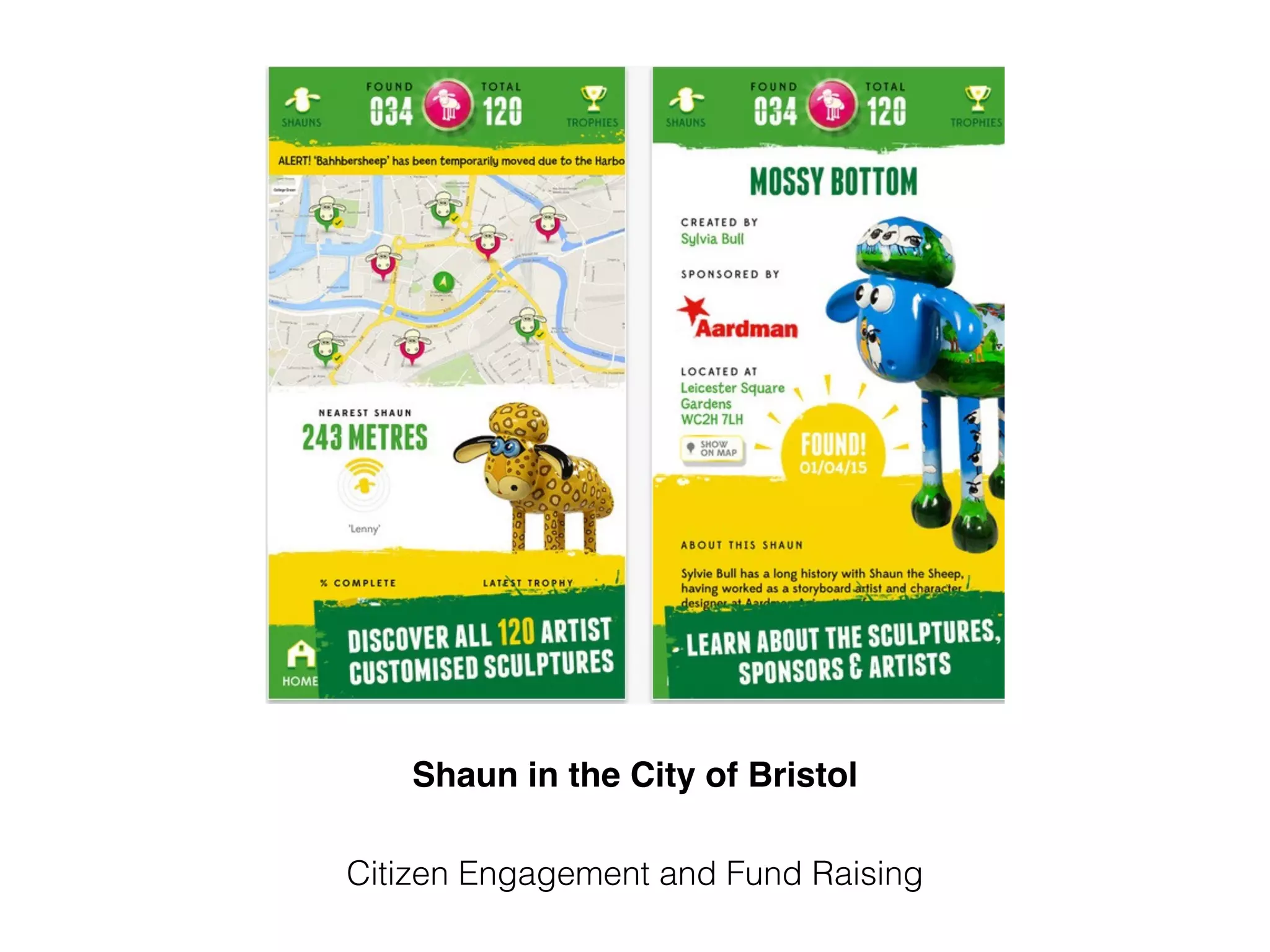
Shaun in the City of Bristol
Citizen Engagement and Fund Raising
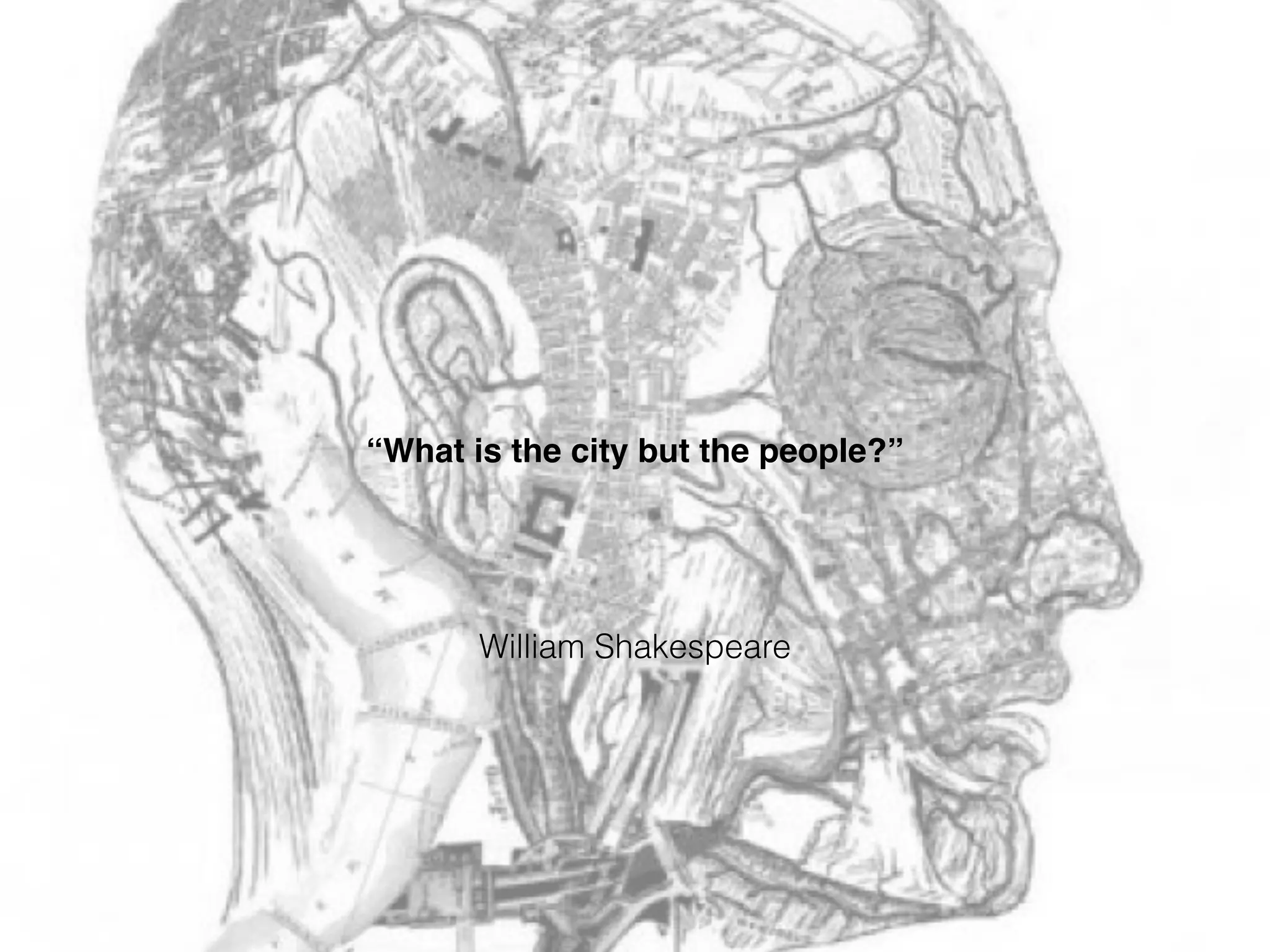
William Shakespeare
“What is the city but the people?”
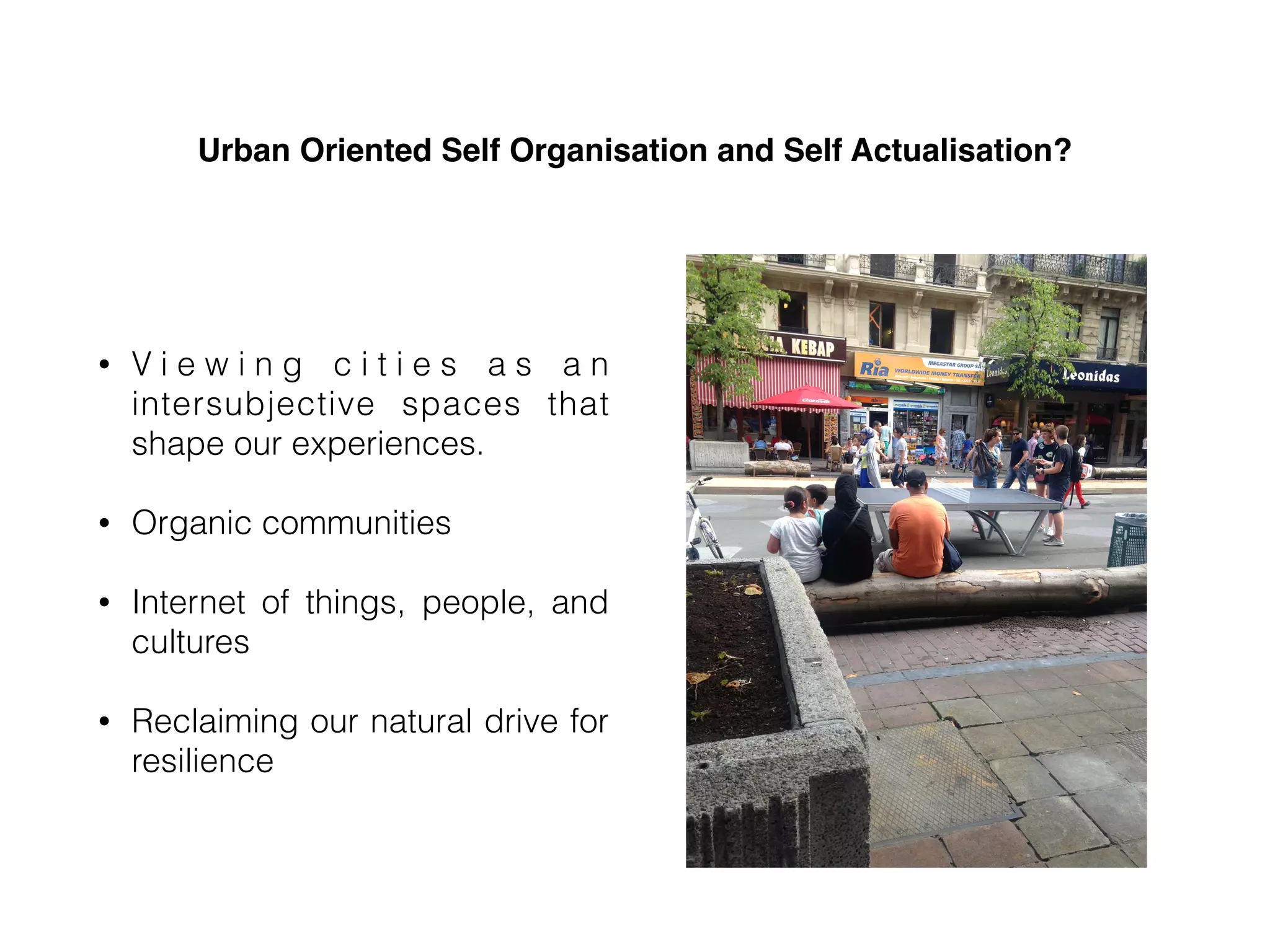
Urban Oriented Self Organisation and Self Actualisation?
• V i e w i n g c i t i e s a s a n
intersubjective spaces that
shape our experiences.
• Organic communities
• Internet of things, people, and
cultures
• Reclaiming our natural drive for
resilience
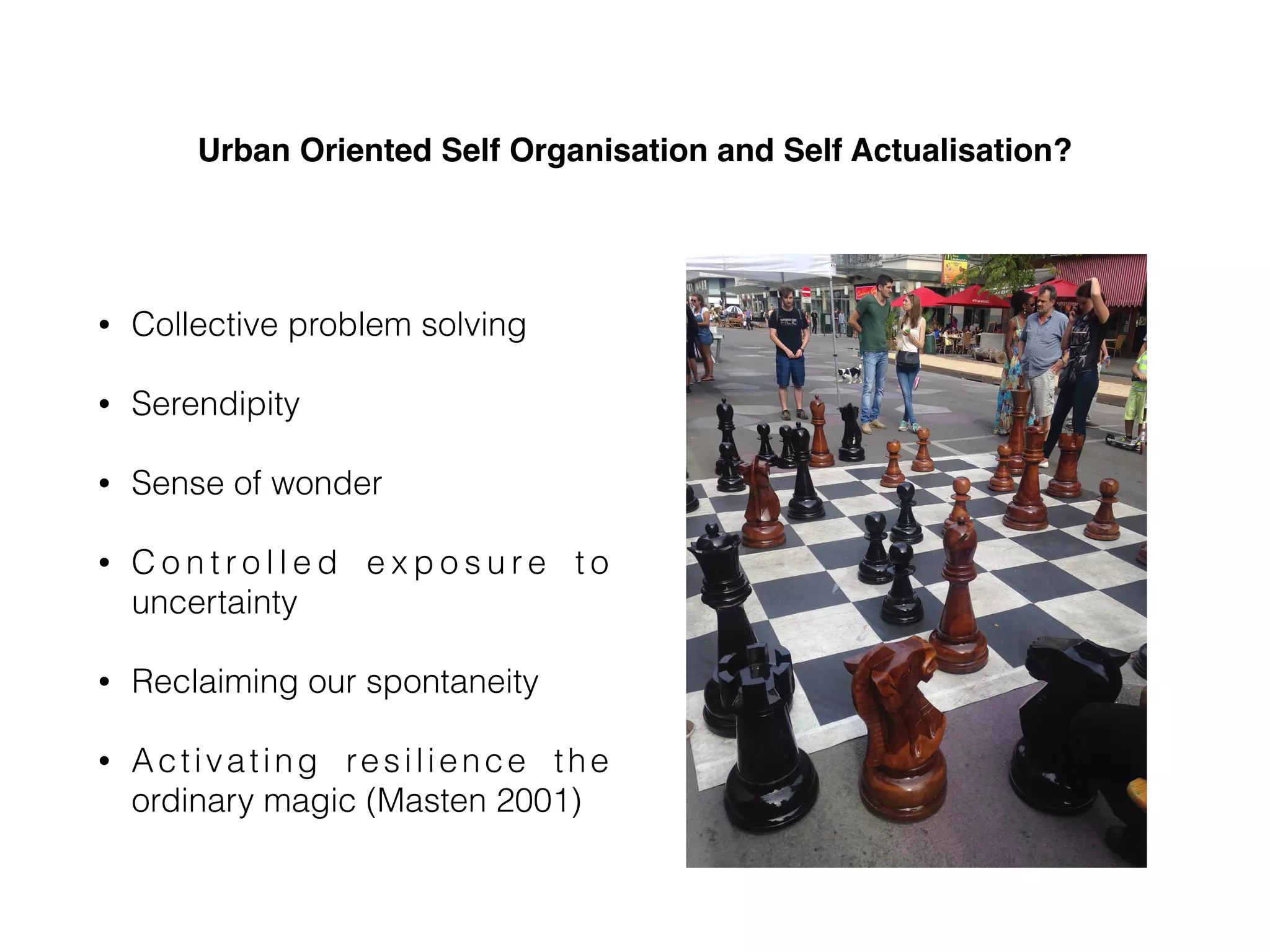
Urban Oriented Self Organisation and Self Actualisation?
• Collective problem solving
• Serendipity
• Sense of wonder
• C o n t r o l l e d e x p o s u r e t o
uncertainty
• Reclaiming our spontaneity
• Activating resilience the
ordinary magic (Masten 2001)
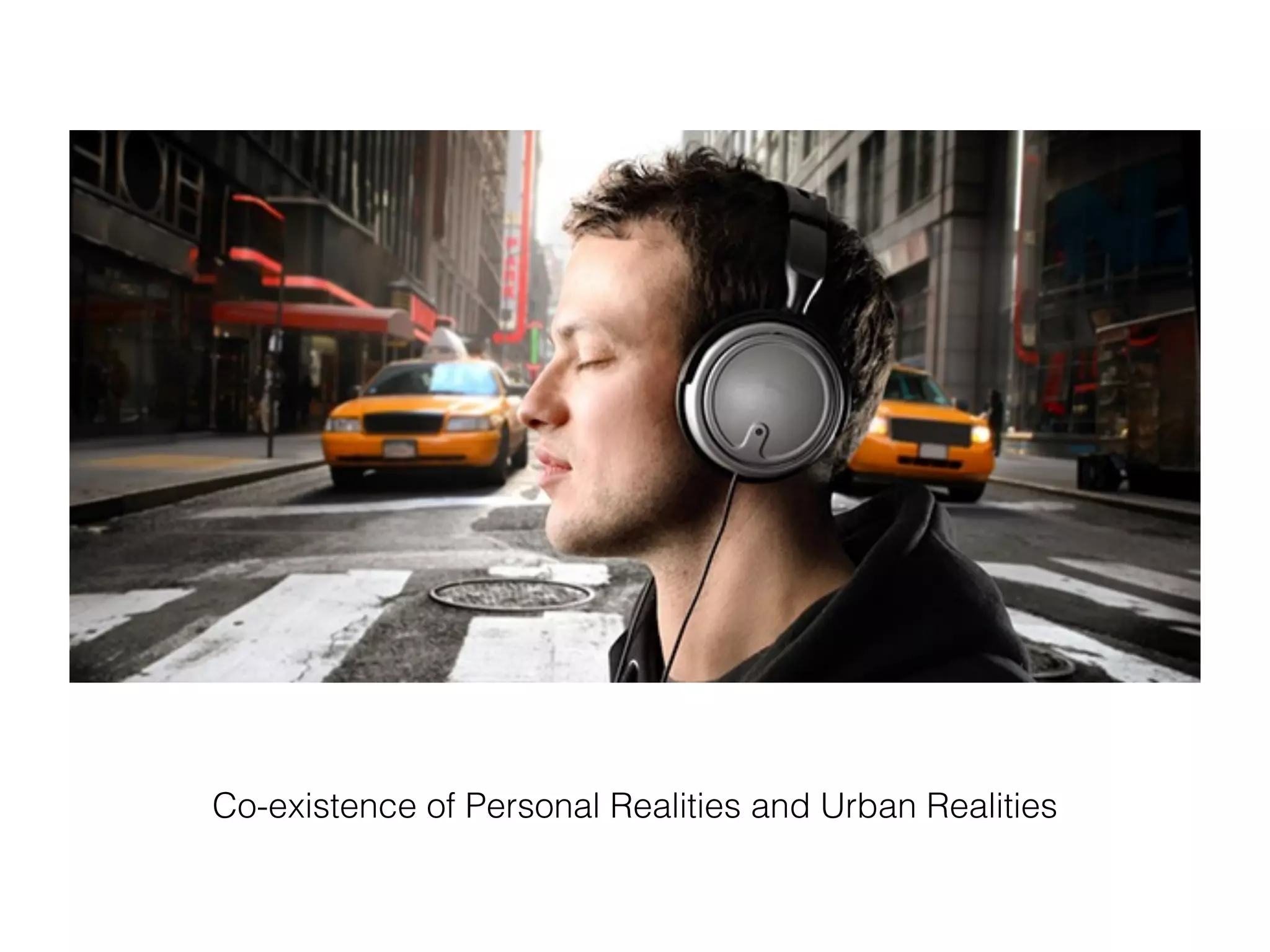
Co-existence of Personal Realities and Urban Realities
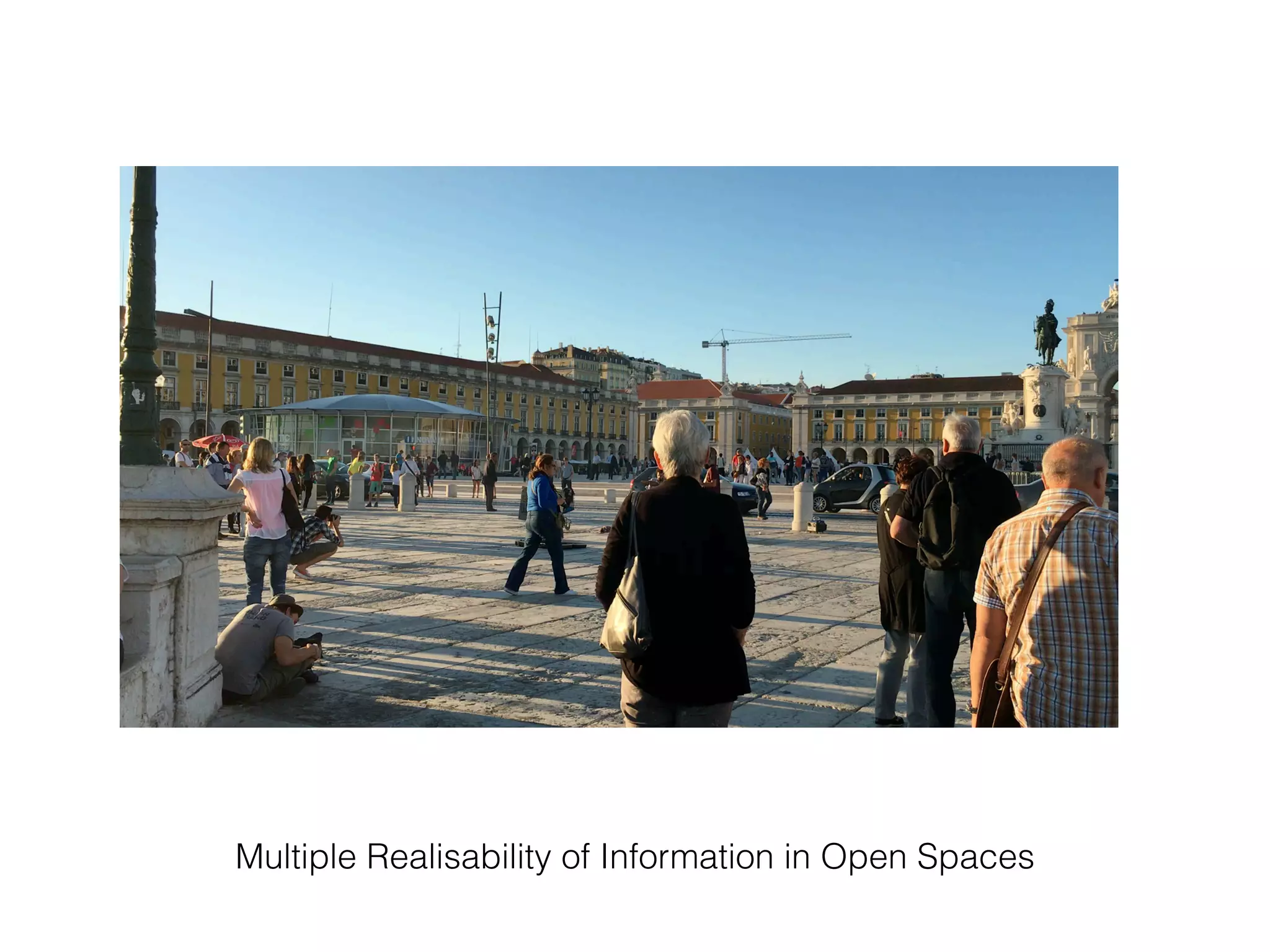
Multiple Realisability of Information in Open Spaces
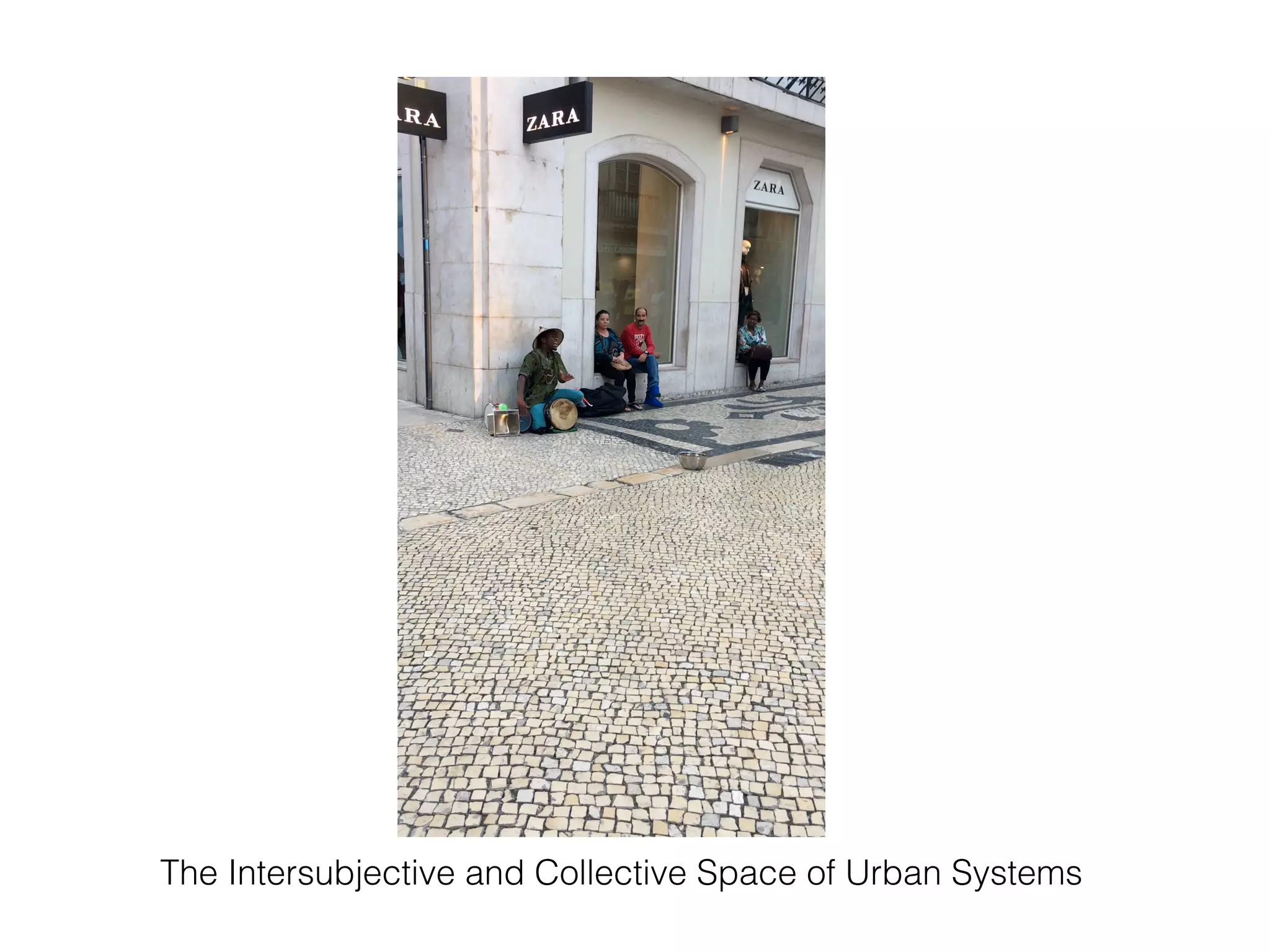
The Intersubjective and Collective Space of Urban Systems
Emergence of Fluid Sense of Self in Urban Systems

Future Urban Design for the Emergence of a Fluid Sense of Self

  • 1.
    Future Urban Design! for the Emergence of a Fluid Sense of Self Shima Beigi, PhD. ! Environmental Engineer and Urban Resilience Scientist ! Research on Resilience and Sustainability of Complex Adaptive Systems ! University of Oxford and Global Brian Institute ! Based in Brussels, Belgium ! globalbraininstitute.org shima.beigi@gmail.com
  • 2.
    Challenges of OurWorld • Urbanisations • Resilience • Resilient Cities • Harnessing Distributed Intelligence • Future Urban Design
  • 3.
    United Nations 2014 “By2050, the urban population is expected to rise to 62% in Africa, to 65% in Asia, and to 90% in Latin America.”
  • 5.
  • 6.
    Resilience is aSystem Level Property of Complex Adaptive Systems. S. Beigi 2014
  • 7.
    Resilience is onlyone way of responding to change. S. Beigi 2014
  • 8.
    How to Movefrom Resilience to Thriving?
  • 9.
    The Resilient AgentModel and Systemic Resilience. Beigi 2014
  • 10.
  • 11.
    Hacken 2006 “A systemis self-organising if it acquires a spatial, temporal, or functional structure without specific interference from the outside. By ‘specific’ we mean that the structure or functioning is not impressed on the system but that the system is acted upon from the outside in a nonspecific fashion. For instance, the fluid which forms hexagons is heated from below in an entirely uniform fashion and it acquires its specific structure by self- organisation.”
  • 12.
  • 13.
    Dirk Helbing 2014 Distributedcontrol means that, if we wish to “guide” the system towards a certain desirable mode of behaviour, we must do so by applying the guiding influences in many "local" parts of the system, rather than trying to impose a single global behaviour on all the individual components at once.”
  • 14.
    Francis Heylighen 2014 “GuidedSelf-Organisation is developing strategies, programs, and institutions that will facilitate and to some degree steer the self organisation of the global brain in what appear to be the most fruitful directions.”
  • 15.
    Bottom Up andGrassroots Aggregating the Wisdom of Decentralisation
  • 16.
    Emily Y. Y.Chan Nature Geoscience 2013 “…A bottom-up approach [to disaster resilience] that focuses on the opportunities for individual people and communities to take more responsibility could also be effective and may help to save even more lives.”
  • 17.
    Nudge Theory andChoice Architecture
  • 18.
    Richard Thaler andCass Sunstein 2008 “A nudge, as we will use the term, is any aspect of the choice architecture that alters people’s behaviour in a predictable way without forbidding any options or significantly changing their economic incentives. To count as a mere nudge, the intervention must be easy and cheap to avoid. Nudges are not mandates. Putting fruit at eye level counts as a nudge. Banning junk food does not…”
  • 19.
    Jane Jacobs “We expecttoo much of new buildings, and too little of ourselves.”
  • 20.
    Dérive • Initiated bythe situationist Guy Debord in Technique of rapid passage through varied ambiences. • Dérive means to Drift • It involve playful-constructive behaviour and awareness of psychogeographical effects, and are thus quite different from the classic notions of journey or stroll.
  • 21.
  • 22.
    Urbanised and ConnectedAgents • Pervasiveness of smar t phones. • Increased level of user ability to tune into different realities. • S h i f t f ro m p a s s i v i t y t o dynamism and co-creation of experience at different levels.
  • 23.
    Dérive APP • Theapp enables users to explore the urban atmosphere in a totally new way through the use of randomly drawn task cards that tell you what to do. • Derive creates a sense of urgency in the exploration for new objects, things, colours and people to follow, find and experience. • The city and its environment is getting explored in an playfully but also critically way.
  • 24.
    Shaun in theCity of Bristol Citizen Engagement and Fund Raising
  • 25.
    William Shakespeare “What isthe city but the people?”
  • 26.
    Urban Oriented SelfOrganisation and Self Actualisation? • V i e w i n g c i t i e s a s a n intersubjective spaces that shape our experiences. • Organic communities • Internet of things, people, and cultures • Reclaiming our natural drive for resilience
  • 27.
    Urban Oriented SelfOrganisation and Self Actualisation? • Collective problem solving • Serendipity • Sense of wonder • C o n t r o l l e d e x p o s u r e t o uncertainty • Reclaiming our spontaneity • Activating resilience the ordinary magic (Masten 2001)
  • 28.
    Co-existence of PersonalRealities and Urban Realities
  • 29.
    Multiple Realisability ofInformation in Open Spaces
  • 30.
    The Intersubjective andCollective Space of Urban Systems
  • 31.
    Emergence of FluidSense of Self in Urban Systems