VARDHAMAN COLLEGE
  OF ENGINEERING

           ppt
     presentation by
     B.Manoj kumar
         ECE-A
Importance of forests
    Forests provide important products for human use
     and consumption, and they provide valuable
     ecosystem services. Let's look at each in turn.

    Forest Products
 In  poor areas where wood is scarce, people, usually women,
    walk long distances to gather wood for cooking.
 
 Forests provide useful wood products. Round wood (whole logs)
  can be processed into building materials, or made into plywood
  products, furniture, etc. Pulp is used not only for paper and boxes,
  but for a wide variety of products (including the “sponge” you used
  to wash your dishes).

 Forests are the source of numerous non-wood products, including
  bark, dyes, fibers, gums, incense, latexes, oils, resins, shellac,
  tanning compounds & waxes. Fruits, nuts and berries are harvested
  as food. Maple syrup is an example of a unique non-wood product
  from the sap of the maple tree.
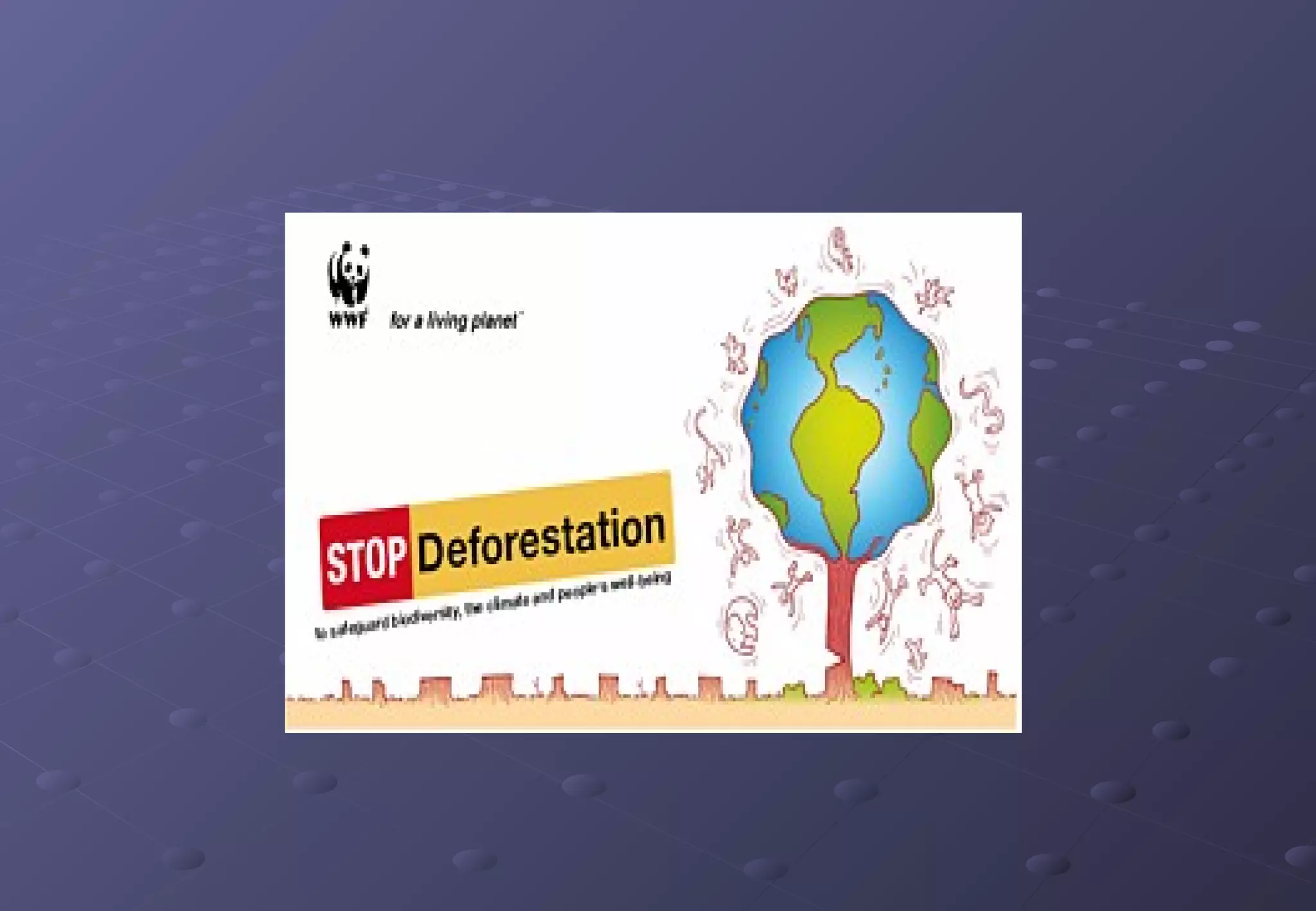
Deforestation
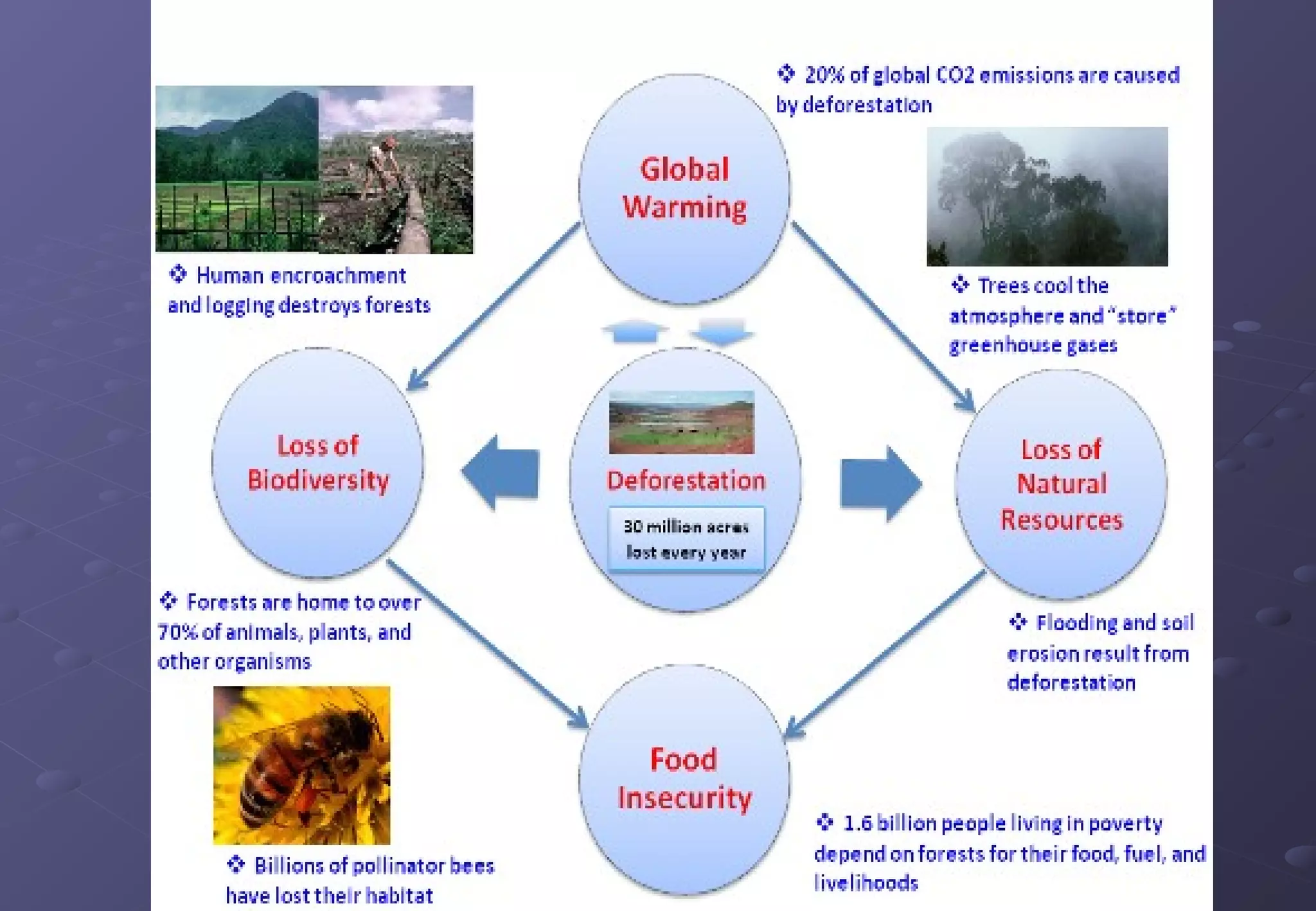
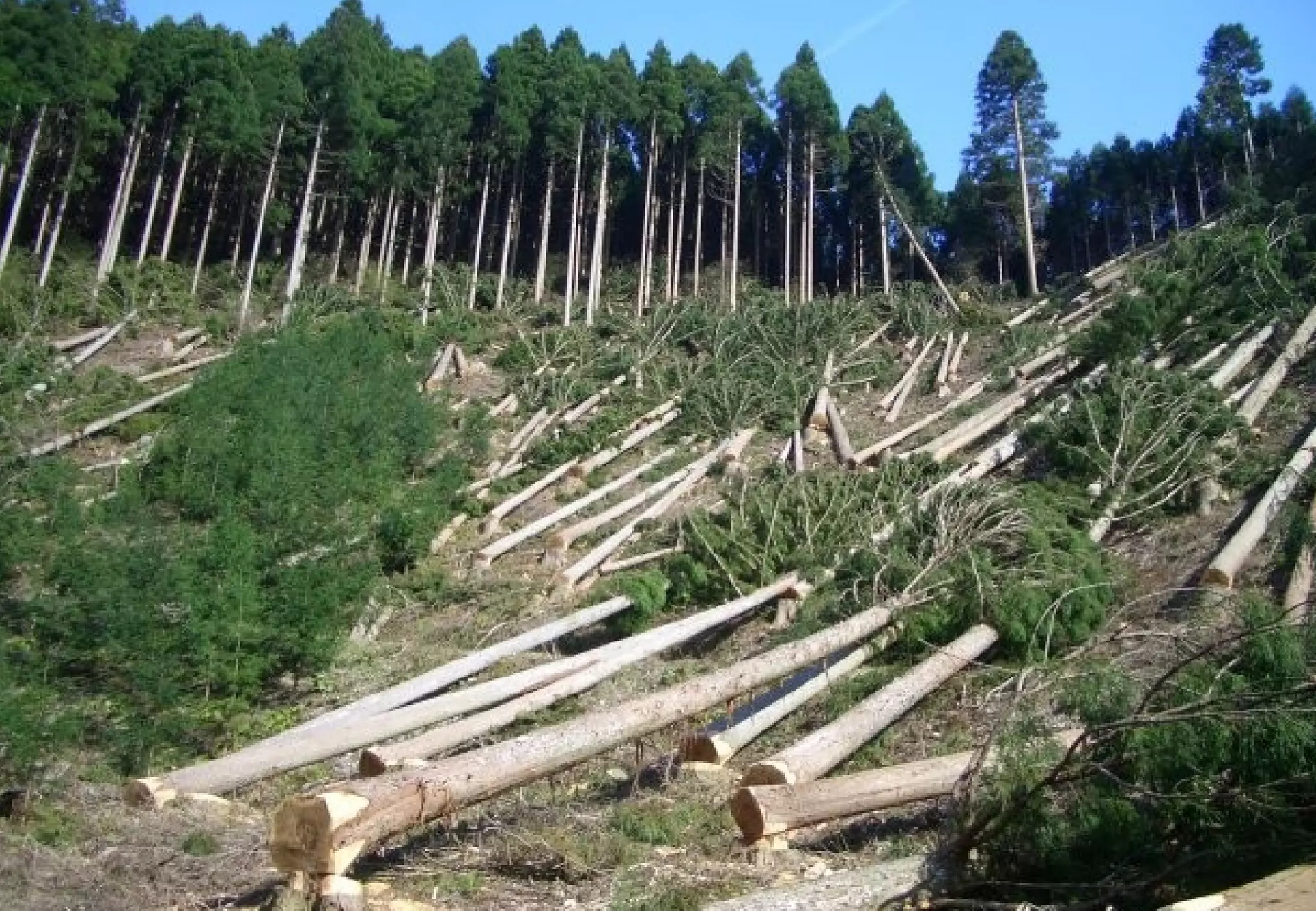
   Deforestation is the permanent destruction
    of indigenous forests and woodlands. The
        term does not include the removal of
      industrial forests such as plantations of
    gums or pines. Deforestation has resulted
      in the reduction of indigenous forests to
     four-fifths of their pre-agricultural area.
     Indigenous forests now cover 21% of the
                earth's land surface.
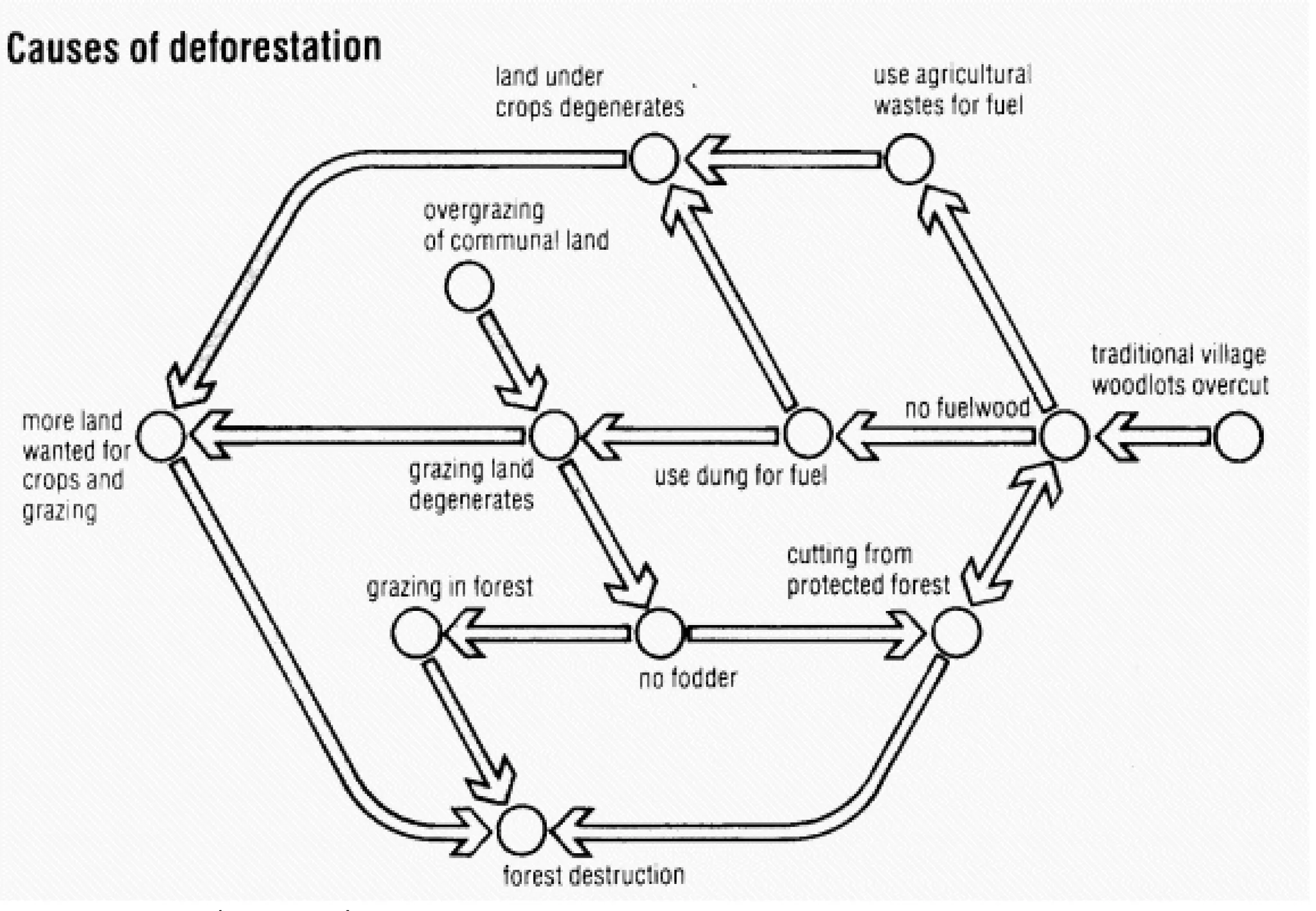
Causes of deforestation
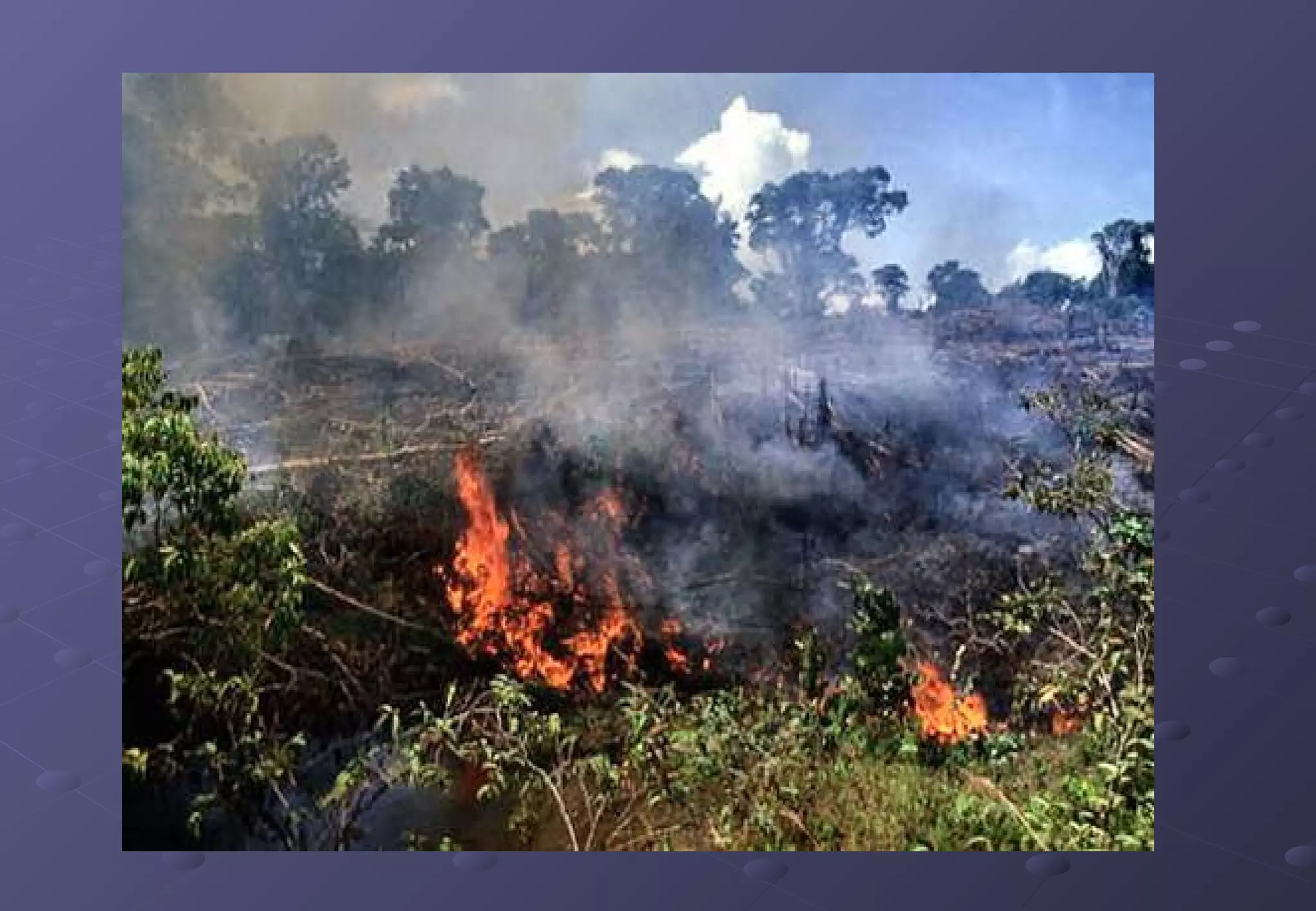
  Logging
 Mining
 Oil and gas extraction
 Cattle ranching
 Agriculture: Cash crops
 Local, National, and International factors:
  development, land titles, government subsidies to
  attract corporations into developing countries, trade
  agreements (NAFTA, CAFTA), civil wars, debt, lack of
  resources, and lack of law enforcement.
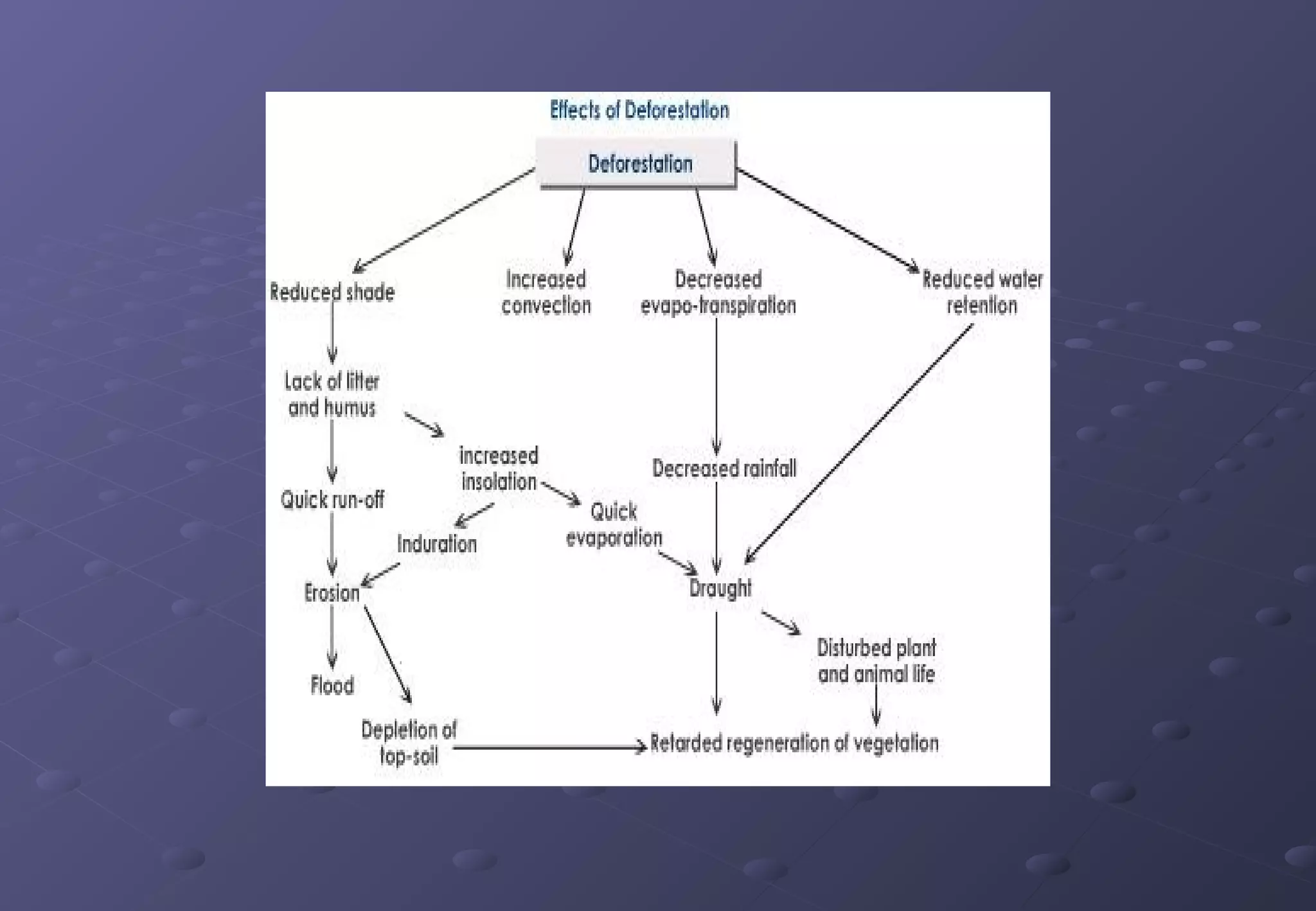
Effects of deforestation
Extinctions (loss of biodiversity of microbes (bacteria),
plants, insects, animals, indigenous peoples, etc.
Habitat fragmentation. This disturbes the animals'
habitat and may force them to enter habitats which are
already occupied. This can pose many problems such as
territorial conflicts, homelessness (loss of habitat), lack
of food availability, migration disturbances, etc.
Soil erosion occurs when trees and plants are removed;
the rain water washes the nutrients in the top soil away.
Desertification (dry, hot, arid conditions).
Edge effects can change microclimates (small climates)
which affect endemic species (native species which can
only live in specific environmental and habitat
conditions).
Climate change (more carbon dioxide is released into the
atmosphere, thus increasing the effects of global
warming).
Pollution (ground, water and air pollution from oil
extraction and mining chemicals).
Changes in watershed geomorphology.
Impacts of deforestation
    Loss of culture (indigenous peoples subsistence
    living in the rainforest). People who live in the
    rainforest depend on the natural environment for
    food, shelter, materials for cooking, clothing,
    etc. If the forest is cut down or if their
    environment becomes polluted from oil
    extraction and mining, they are forced to move or
    risk starvation and sickness.
    Displacement of people (loss of farmland, forest
    resources, etc).
 
Social conflicts and struggles over land and
natural resources.
Conflicts over racial and ethnic rights.
Poisoning from oil and mining waste.
Economic uncertainty (price fluctuations and high
interest rates on outstanding international loans
with The World Bank and International Monetary
Fund. 
presentation by manoj kumar

presentation by manoj kumar

  • 1.
    VARDHAMAN COLLEGE OF ENGINEERING ppt presentation by B.Manoj kumar ECE-A
  • 2.
    Importance of forests Forests provide important products for human use and consumption, and they provide valuable ecosystem services. Let's look at each in turn. Forest Products  In poor areas where wood is scarce, people, usually women, walk long distances to gather wood for cooking.  
  • 3.
     Forests provideuseful wood products. Round wood (whole logs) can be processed into building materials, or made into plywood products, furniture, etc. Pulp is used not only for paper and boxes, but for a wide variety of products (including the “sponge” you used to wash your dishes).  Forests are the source of numerous non-wood products, including bark, dyes, fibers, gums, incense, latexes, oils, resins, shellac, tanning compounds & waxes. Fruits, nuts and berries are harvested as food. Maple syrup is an example of a unique non-wood product from the sap of the maple tree.
  • 6.
    Deforestation  Deforestation is the permanent destruction of indigenous forests and woodlands. The term does not include the removal of industrial forests such as plantations of gums or pines. Deforestation has resulted in the reduction of indigenous forests to four-fifths of their pre-agricultural area. Indigenous forests now cover 21% of the earth's land surface.
  • 12.
    Causes of deforestation  Logging  Mining  Oil and gas extraction  Cattle ranching  Agriculture: Cash crops  Local, National, and International factors: development, land titles, government subsidies to attract corporations into developing countries, trade agreements (NAFTA, CAFTA), civil wars, debt, lack of resources, and lack of law enforcement.
  • 14.
    Effects of deforestation Extinctions(loss of biodiversity of microbes (bacteria), plants, insects, animals, indigenous peoples, etc. Habitat fragmentation. This disturbes the animals' habitat and may force them to enter habitats which are already occupied. This can pose many problems such as territorial conflicts, homelessness (loss of habitat), lack of food availability, migration disturbances, etc. Soil erosion occurs when trees and plants are removed; the rain water washes the nutrients in the top soil away.
  • 15.
    Desertification (dry, hot,arid conditions). Edge effects can change microclimates (small climates) which affect endemic species (native species which can only live in specific environmental and habitat conditions). Climate change (more carbon dioxide is released into the atmosphere, thus increasing the effects of global warming). Pollution (ground, water and air pollution from oil extraction and mining chemicals). Changes in watershed geomorphology.
  • 17.
    Impacts of deforestation Loss of culture (indigenous peoples subsistence living in the rainforest). People who live in the rainforest depend on the natural environment for food, shelter, materials for cooking, clothing, etc. If the forest is cut down or if their environment becomes polluted from oil extraction and mining, they are forced to move or risk starvation and sickness. Displacement of people (loss of farmland, forest resources, etc).  
  • 18.
    Social conflicts andstruggles over land and natural resources. Conflicts over racial and ethnic rights. Poisoning from oil and mining waste. Economic uncertainty (price fluctuations and high interest rates on outstanding international loans with The World Bank and International Monetary Fund.